Coming out poly in light of mainstream images


I’m out.  Anyone who knows me personally and socially who does not know that I’m polyamorous (or an atheist, for that matter), is either not paying attention or is just saying that they know me to look cool to their friends.  OK, that last thing never happens.  But that fact is that not everyone who is polyamorous is open about it, and they often have anxieties about if, when, and how they should come out to people around them, especially family.
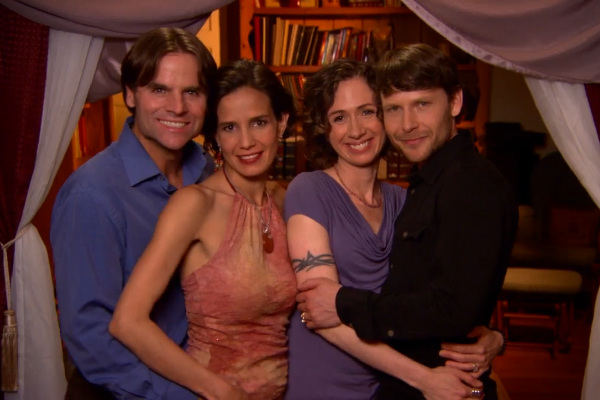
The “pod” from Showtime’s Polyamory: Married and Dating

Recently, I started watching the Showtime series, Polyamory: Married and Dating.  It’s a fairly good show, and this issue of coming out is dealt with, but I’m concerned with how the show will effect coming out for the rest of us.  I have a hypotheses that when a fringe or minority  idea, group, etc comes into the mainstream, it is almost always has serious misrepresentations attached to it.   Anyone serious about understanding the minority worldviews, upon its being portrayed in the mainstream, needs to do some personal research to get to the reality beneath the sexed-up mainstream presentation.

And that is true here, as well.  The people in the Showtime series are not “bad” representations of polyamory; in fact, they seem at least mostly realistic and genuine.  But what I think most people will take away from watching the series is that polyamory is a lot of sex with young, hot people all the time.  And, I’m sure, for some people it is just that.  At least, it is for a little while.  I certainly had a lot more sex, with more people, in the beginning of my polyamorous life.

I’ve been around many polyamory meetups, a few parties, and have talked with poly people form various backgrounds over the last several years.  The Showtime series, while somewhat good at presenting the open and honest form of communication between the people, is very focused on sex.  I cannot think of too many times when an episode goes more than 5 minutes without some kind of sex being displayed.  It’s not that I don’t like seeing hot, naked people enjoying each other, it’s that in my poly life nakedness and sex are not ubiquitous, and I think that’s probably true for most polyamorous people.

But I’m not here to analyze the saturation of nakedness in mainstream portrayal of polyamory, but rather the effect that such things have on other poly people, especially those who may be thinking about coming out to their family, friends, etc.  My thought is that while such shows may give some context and grounding of what polyamory is to a larger audience, it also creates a stereotype with which we will be associated.

It’s not all about the sex, right?

It is somewhat common, in some poly resources, to emphasize that it’s not all about the sex.  And this is true! Because while we do share some overlapping lifestyles with swingers, we are not swingers.  The emphasis of polyamory is, obviously, love.  And without getting all cheesy and hippy about it, the relationships we have with people around us are what are most important, and sex is often a part of that (but not always).  So now when people I know see me, especially if they have seen Showtime’s presentation, they will associate  that overly-sexualized perpetual orgy with what I mean when I say I’m polyamorous.

According to some people Gina knows, she has like 15 husbands (and she has not introduced me to 14 of them!).  My mom (hi mom) thinks, or at least thought, that I was just going to keep adding women to my life.  She says that I’m just using this as an excuse to sleep with many women (but at least I’m doing it openly, unlike say, my father when they were married).  And when I have 500 lovers, my wife will leave me, knowing her turn won’t come around for a year and a half, or someshit.  I, after all, will eventually have my own compound with thousands of adoring subjects, and watch over them as the great prophet of polyamory.

Yuck

The fact is that I actually have less sex partners than some of my monogamous friends (who are single), and that my life is not actually a perpetual orgy. (This is not to say that orgies are bad).  I would actually not want 500, or 50(!), lovers all at once.  Relationships are work, and while I am open to having more lovers if they come around, I’m not looking.  This is not to say there are not people in my life I’m attracted to, only that so far nothing has come of it, because my life is not a perpetual pursuit of pussy.  I’m afraid that a series like Polyamory: Married and Dating might give the impression that my life is such a persuit, when it is more about loving who I love, as I love them, without artificial constraints.

Getting Perspective

Soon enough, we here at the polyskeptic compound will have a chance to get a little piece of our life out to the world, and what they will see is that we are actually pretty normal most of the time.  We watch movies, have dinner, and go out and get drinks together, just like monogamous people.   It’s just that we have sex, with consent and knowledge of all involved, with more people rather than just go home and wish we could, like monogamous people often do.

When I was monogamous as a 20-something with a job and disposable income, I would go out with my girlfriend to meet up with male friends and their girlfriends, and everyone would flirt playfully as part of being drunk, young, and horny.  We’d make jokes about how much we wanted to make out with the other people there, would steal sexy glances at each other, and then we would go home with our allotted partner.   But many times, and this was true for a few of the girls I dated as well, I would sometimes be thinking of this other awesome person I met that night, and what I wanted to do with them.  I would find myself wishing I could go home with them instead of, or perhaps in addition to, my girlfriend.  It never meant I didn’t love my partner, it just meant I was capable of more and wanted more.  And I’m sure some people out there didn’t think about that or want that, but I doubt that that this is true for the majority of people.

My hypothesis is that most people are potentially polyamorous, swingers, or cheaters.

And those people who accept that and are honest about it often become polyamorous or swingers.  Some of them have tons of sex with lots of people, like they do in the Showtime series, and some take different routes.  There are many ways to approach polyamory, and I wish that the mainstream presentations were more balanced.  What I think Showtime should have done was to include a family who are less sex-driven, and more about focusing on relationships.  Or at least de-emphasized the sex.

But then, of course, less people would watch it, right?

But this way, we are likely to attract people who just are only looking for tons of sex.  Because while the relationships, discussions, etc are dealt with, they are overshadowed by sex.  Monogamous couples watching the series might become intrigued by the idea, but get the message that the sex is prominent, which may cause them to jump in too fast and get hurt, which is the story of people who have tried polyamory and didn’t find it to be “for them.”  It’s sort of like trying a relationship, not having it work, and then giving up on relationships.  Thus, if people are truly going to try and challenge themselves to open up and be honest with what they want with their relationships, sexing it up and getting hurt will only damage the image of polyamory in the long run for many people.

Sex with as many, or as few, people as you want is a good thing.  But making it look like sex is the thing that polyamory is about will cause people to overlook the emotional work that needs to be done, not just for the sake of having more sex with more people, but for the sake of becoming a more mature and capable adult.  That’s what this culture needs right now.

If we as individuals and as a culture improve ourselves and our current relationships, the sex will come.  It’s not like we humans don’t already want the sex, we just need to do the work to be ready to do it well.  What Showtime’s series seems to leave out is the work it takes to get where those people are; it gives a glimpse of where we all could be, but not how to get there.

For that, everyone obviously needs to be reading polyskeptic.com!

😉

New Film about Deepak Chopra


So, I just got an email about a movie about Deepak Chopra, called Decoding Deepak.  This was the content of the email:

Hi Atheist,


SnagFilms would like to get your expert opinion on the figure of Deepak Chopra.  Our film DECODING DEEPAK will be in theaters, on cable on demand, and on iTunes October 5th.  Gotham Chopra follows his father Deepak for a year to try to better understand him not only as a person but also as a spiritual leader.  Controversially, the film shows a side of Deepak that lacks spiritual sincerity.

We would love to get your feedback regarding the film and about Deepak.  If you would like to do a post about the film we will include it on our site/through SnagFilms social media network.  Please share this film with your readers, and you can find more information at http://www.snagfilms.com/decodingdeepak/.

Thanks and please let me know if you have any questions.

Best,

Jamie

Now, i have not written much about Deepak Chopra on this blog (I have mentioned him, as an example of spiritual idiocy a few times), and I am not an expert on his ideas, so I am curious how Jamie go my contact information.  I intend to ask.

If you browse over to the website, you can find this video:

You’ll see that the film is made by, or at least prominently features, his son Gotham Chopra.  The film is presented as a sort of personal journey shared by the Chopras, but because I have known a little about Deepak Chopra’s vague, meaningless, spirituality for some time, I am not compelled to watch this film.

Will any skeptics out there watch this film and report? I do not plan on wasting my time.


See my article about my visit to the America for Jesus rally on Saturday


I visited the America for Jesus rally/festival on Saturday September 29th, and wrote up an article for The Friendly Atheist blog which went up this morning.  Go take a look!

My Day at the ‘America for Jesus’ Rally


(Posting this makes me wonder how many people read this blog but don’t read Hemant Mehta’s, making me further wonder if this is redundant.)

Sam Singleton in Philadelphia October 3rd


My friend, Brother Sam Singleton, will be bringing his revival tent (metaphorically speaking) to Philadelphia this week.  So, this Wednesday, at 8pm on North Second Street (near the bars of the trendy Northern Liberties neighborhood of Philly), I should be seeing you!

If you don’t know about Sam, you should.  He has a wonderful show, and is always up for a beer or two after the show, so you don’t want to miss this.  He does two kinds of shows, one which is called Patriarchs and Penises (which I have seen and is hilarious) and his mock revival, which has the look and feel of an old time Christian revival, only funnier and with more “God damns” thrown in for the sake of making baby Jesus cry.

I already have my tickets, and so I will certainly be there.  I hope we get a full house, so bring all your friends!

For more information about Sam and his upcoming tour schedule, check out SamSingleton.com.

Here’s a bit of Sam to chew on in the meantime.

Where in the world is Shaun McGonigal this evening?


Seeing Herb Silverman speak in Philadelphia, of course!

Herb Silverman

Herb has a new book out called Candidate Without a Prayer, and he will be speaking about it this evening in Philadelphia at the Ethical Humanist Society at Rittenhouse Square at 7:00,  as well as at the PA atheist conference this weekend in Harrisburg.

Since I am unable to make the conference this weekend, I wanted to at least get a chance to partake in some of the weekend fun by hopping on PATCO and strolling over to Rittenhouse Square (a place I like to sit and read anyway) and catch Herb Silverman speak with some like-minded people.

If you are in the Philadelphia area this evening and want to stop in as well, then I may see you.

If you don’t live in the area or you have other plans (what else could you be doing on a Friday evening?), then you could at least check out the new book, about his life, including an unsuccessful run for office in South Carolina.  Here’s the blurb from Amazon:

In this deeply revealing and engaging autobiography, Herb Silverman tells his iconoclastic life story. He takes the reader from his childhood as an Orthodox Jew in Philadelphia, where he stopped fasting on Yom Kippur to test God’s existence, to his adult life in the heart of the Bible Belt, where he became a legendary figure within America’s secular activist community and remains one of its most beloved leaders. Never one to shy from controversy, Silverman relates many of his high-profile battles with the Religious Right, including his decision to run for governor of South Carolina to challenge the state’s constitutional provision that prohibited atheists from holding public office. Candidate Without a Prayer offers an intimate portrait of a central player in today’s increasingly heated culture wars. It will be sure to charm both believers and nonbelievers alike, and will lead all those who care about the separation of church and state to give thanks.

I hope to see some of my atheist friends tonight, and I hope that everyone enjoys their weekend!

Provisionality, Offense, and Conviction


I was just reading a short post by Tristan D. Vick about the difference between beliefs and assumptions, and it got me thinking about conviction and offense.

Last week, Ginny and I were talking about offense.  I’m not easily offended, and we were talking about why that is.  Part of the reason, I concluded, is that I don’t have many things I find to be sacred; I don’t have ideas which are beyond criticism, unavailable for investigation, or held with great conviction.  I am bereft of sacred cows to tip over, or something.

My beliefs, accepted facts, and interpretations—in short my worldview—is tentative and provisional, just as Tristan says about his beliefs.  Thus, it’s hard to find ways to offend me because it would imply that some harm is being done to me to challenge or question something I believe.  Since I have already questioned my beliefs (ideally, anyway) on my own, someone else challenging them is redundant and not harmful.  Thus and form of poking fun, mocking, or calling my ideas stupid or silly in itself cannot offend me.  I can be annoyed by poor attempts at criticism, but I cannot be offended by things which are not held with conviction.

So when I see people in the streets of Benghazi, Egypt, or elsewhere protesting the insult to their religion, I have trouble sympathizing with the offense they take.  I can’t sympathize with having a sacred belief which cannot be mocked, questioned, or even illustrated.  I find the idea that offense is taken by such mild acts as making a shitty video, drawing a picture of some guy who is believed to be a prophet, or simply saying that a set of beliefs is silly or unjustified as, well, offensive.

That is, if there is anything sacred to me, it is the freedom of expression, thought, and therefore of criticism.  My ideal that ideas are subject to analysis and discussion is an idea which I don’t think I could be convinced out of.  I am convicted to the idea of freedom of expression, and so the only way to offend me would be to protest such freedoms based on an idea or set of ideas.

And for someone to point of an inconsistency here; to say that I should hold the ideal of freedom of expression provisionally, seems to commit the same error as those who try to criticize what is sometimes called scientism, but which I think is better thought of as consistency in application of skepticism.  That is, there must be some ground upon which we found other ideas and conclusions.  For example, if we don’t accept that our senses are capable of giving us reliable (although not infallible) information, we cannot claim certainty about anything.  If we don’t have some methodological basis for testing ideas (such as skepticism/empiricism), then we cannot test the veracity of hypotheses with any reliability.  If we do not allow free expression free reign to all subjects, then we have no real (legal) freedom to believe what we want, because it becomes to easy to allow bias to inform which ideas are given privilege.

But most importantly, the only means to question the idea of free expression is with free expression.  It is a self-founding idea, or a meta-value.

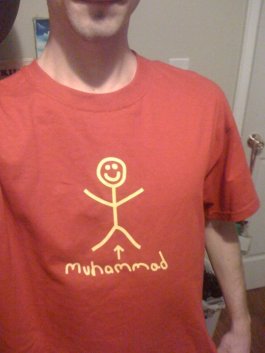
One of my favorite shirts

Finding offense in criticism, whether of ideas you hold or which are held by others, is a sign of placing value on the wrong thing.  There is no good reason to accommodate sets of ideas over the ability to question those ideas.  The meta-value of our world, our species, and of all sentient beings should be the freedom of expression of all ideas.  Privileging a set of ideas, even if those ideas are right, is absurd.  True ideas will survive the light of criticism, and do not need sanctions to survive.  The truth, as Kosh once said, points to itself.

I have no fear of my ideas being questioned, mocked, etc.  If they are good ideas, they will survive.  If they are bad ideas, they will be replaced by argumentation whether in the form of polite discussion or mockery.  The question I have for people who are easily offended, for their own sake or the sake of others, is where your values are?  You can be sympathetic with the hurt feelings people have about having their ideas mocked, but at the end of the day if their ideas cannot survive that mockery, or even polite questioning, then perhaps that sympathy needs to be understood to be about their feelings, not their ideas.

There is a point when we have to take responsibility for our ideas, rather than coddle them.  Ideas are not people, and they cannot be injured.  Ideas are either good (justified) or not (unjustified).  And if you are hurt because your ideas are mocked, then you are either protecting an unjustified idea or one that does not need protection.

Just like gods (if they are to exist), ideas cannot be harmed by our criticism,  mockery, or polite disagreement.  There is no reason to protect such ideas or beings, except to protect the fact that they are bad ideas and free expression might expose such a weakness.

Oh!  That explains it now, doesn’t it?


In response to the Monogamous Bisexual


I am watching this video put up by Dan Fincke, which is a discussion about bisexuality amoung other things, and I am particularly interested in the point made by Eponymous Fliponymous about being monogamous and bisexual.  When I first saw the post about this issue a few days ago, I was unable to write anything because I was out of state and I subsequently got distracted by other things (ie Guild Wars 2) and forgot about writing about this.

Eponymous Fliponymous (henceforth Patrick) makes some good points, and I don’t think we would disagree too much, but I want to address something he said in the conversation that irked me a little bit.  But first, let’s cover what is being discussed in context.  From the post:

Several of the myths about bisexuality come from the common root that we are defined by our partners.  This misconception is a direct cause of bisexual invisibility, and is frequently compounded into erasure.  The common myths that come directly or indirectly from this include
1) Bisexuals are incapable of monogamy – they will cheat on you with another gender, can’t be satisfied with one partner, aren’t really bisexual if they aren’t polyamorous.

2) Bisexuality is a transitional phase rather than a stable identity – bi now, gay later.

And this is, of course, true.  To be bisexual does not imply that one would have to be polyamorous.  I would guess that many bisexual people are monamorous, if not monogamous, and it is true (as Patrick says) that it is harder to visibly be bisexual when in a relationship with one person; you appear as either heterosexual or homosexual in most circumstances.  Thus, many people would have trouble understanding what it means to be bisexual if you are not doing some sort of non-monogamy, since people do assume that our sexual orientation implies something about who we date, and monogamy certainly does cut out about half the population for bisexual people.  What I want to address, today, is why this question does not make any sense for more than the reasons that Patrick adeptly dealt with.  Because while he is dead on correct that you can be monogamous and be bisexual, I think the question still remains how this is different than asking how anyone can be monogamous even while heterosexual or homosexual.

Before we get to making that point, however, let me acknowledge that Patrick is not dealing with polyamory directly in his post.

Polyamorous bisexuals would seem to be able to make their bisexuality more visible.  This is debatable, because what they make visible by walking down the street tends to be myths about polyamory rather than about bisexuality.  In any case, polyamory isn’t my subject here. I leave that to the polyamorous, who while they certainly represent a significant segment of the LGBT population, don’t by any means represent everybody.

Very well, so here I am.  And while I define myself as heterosexual, I am close with people who are queer, trans, etc and so I know the LGBT community fairly well.  In any case, I am glad to hear that Patrick made an attempt at polyamory, but did not find it suited him.

In those early heady days of blooming sexuality, I experimented with polyamorous options, but quickly found that was not the path that works for me.  On an emotional and romantic level, monogamy suits me best. I’m one of those people who wants the intimacy and mutual trust that I can best develop in a dyadic relationship.

Now, I have some questions about what he means when he says that monogamy suits him emotionally and romantically.  I have an idea that very few people actually desire monogamy per se, but rather don’t prefer to exert the effort it takes to be polyamorous due to constraints of time, inclination, or emotional insecurities (jealousy, for example).  But I will let that go and trust him at his word that he has given this question thought and has made a rational choice.  What I will say is I think it is a myth that a dyadic relationship allows intimacy and mutual trust that a polyamorous arrangement cannot.  Perhaps Patrick (and many others) cannot develop that level of intimacy with two people, but that does not make it inherently impossible.  (I know that was not what he said, but I wanted to address this myth about polyamory).

Again, I’m glad we have more allies out there.

Nothing against polyamory – if it works for you, it works for you, and I’m the last person to judge you for it, whether your polyamory expresses itself as multiple dyads, a triad, a group arrangement with or without in-group exclusivity, gay, straight, or bi, it just doesn’t bother me.  The only reason I bring it up is that while I have (ultimately unsuccessful) polyamory in my history, it doesn’t make me poly.

Agreed.  And the rest of the post is a good assessment of the myths associated with bisexuality.

So where is my issue?

Watch the segment of this video from about 11:30 to about the 13 minute mark.  There is more relevant discussion beyond that (say, until around minute 16 or so), but that’s the essential part I want to address.

Dan Fincke is asking Patrick about whether there is something missing in being monogamous, in that there is a large segment of the population he’s attracted to which he does not have an outlet for.  He’s essentially being asked if he misses men in his sexual and romantic life.  Patrick’s response is to draw an analogy between hair color and gender.  He basically says that in the same way that his wife has brown hair, and he likes red heads, he isn’t going around lamenting the lack of red heads in his life.  This might seem to be a good point, at first glance, but let me address why I think it fails to make the point I think it sets out to make.

One of the reasons I am polyamorous is because I want to be authentic with the range of my sexuality.  And the simple fact is that I like women of various personalities, physical attributes, etc.  That is, I like red heads and I like brunettes.  As well as black hair.  Not so much blondes, historically.  I like petite curvy women.  I like tallish skinny girls.  I like other body-types as well, but the point is that I am interested in relationships, whether sexual, romantic, or friendships, with people of various kinds.  The point is that I recognize the reality that I am attracted to people, almost always women but sometimes those who gender-bend catch my interest as well, of varying shapes, sizes, and brains.  And I don’t understand why it is considered better to choose one person to be with, since that is the case.

So, Patrick’s analogy not only fell flat for me, but it seems to actually backfire from my perspective.  Patrick being bisexual, at least in the context of this question about polyamory, is equally as relevant as my being attracted to many women, so I am confused how this point he makes is supposed to make any point at all.  The same problem which needs to be addressed by monogamous heterosexual or homosexual people about why they choose monoamory is equally as relevant as with bisexuals.

That is, the issue with polyamory is no more relevant for bisexuals than it is for anyone else, since whether one is bisexual or not, people are actually interested in more than one person sexually and romantically.  (I’ll grant that some very small segment of people may be interested in nobody, and some larger, but also small segment, genuinely interested in only one person, but the overwhelming majority, I’d wager, are potentially polyamorous in inclination at least).  The question, therefore, is not how a bisexual person can be monoamorous and still really be bisexual any more than how any person of any orientation can be monoamorous and really be authentically, fully, sexual.

If (as is the thinking behind the question posed by Dan in the video) a bisexual man, married to a woman, is cutting himself off from part of his sexuality by not being with men, then not only is he also cutting himself off from other women besides his wife, but so is every other heterosexual or bisexual married man in the same situation.  If it’s a problem for bisexuals, then it is a problem for anyone who is attracted, whether romantically and/or sexually, to more than one person.  Because yes, Patrick may desire sex and/or romance with men, but this is no more to the point than a heterosexual person is capable of sexual and romantic interest in two or more people.  Patrick is in the same exact circumstance as any other monoamorous person, in terms of polyamory.  His bisexuality does not make him more relevant to non-monogamy.  The question of if we are cutting off our sexuality is true for all people who do not choose non-monogamy.

So, I agree with Patrick that this myth about bisexuality and non-monogamy is something which needs to be addressed.  I was just somewhat interested in his analogy, since it does not solve the problem so much as it misses another one; why not polyamory?

I know many people are not interested in the work it takes to be successfully polyamorous, but at bottom the same question applies to everyone as it does to bisexual people; if you are attracted to more than one (type of) person (irregardless of their genders), then why wouldn’t you want to do the work to be able to love (or lust openly for) all the people you desire, as you actually desire them, rather than arbitrarily cut yourself off from sex, romance, etc?

I understand if you don’t actually have the time or inclination to do such work, but otherwise why be so conservative sexually and romantically?

Please, please, please read this post.


http://www.patheos.com/blogs/wwjtd/2012/09/please-please-please-read-this-post/ I’m in North Carolina for a wedding and mimi-vacation. I have no reason to believe that anyone who reads this blog would not already know about this. But in the very small set of universes where I might get some more votes for some organizations I urge support for, in order to get them some more funding, I post this. Shaun

So, we call it PolyBar, or something…


This is the bar at the PolySkeptic compound:

Let it suffice that this is among the nerdiest bars I have ever seen.  There is no real point to this post, I just wanted to share how awesome the area behind my desk is.  I mean, I only have to walk like 10 feet to get to the closest bar!

I live a charmed life.

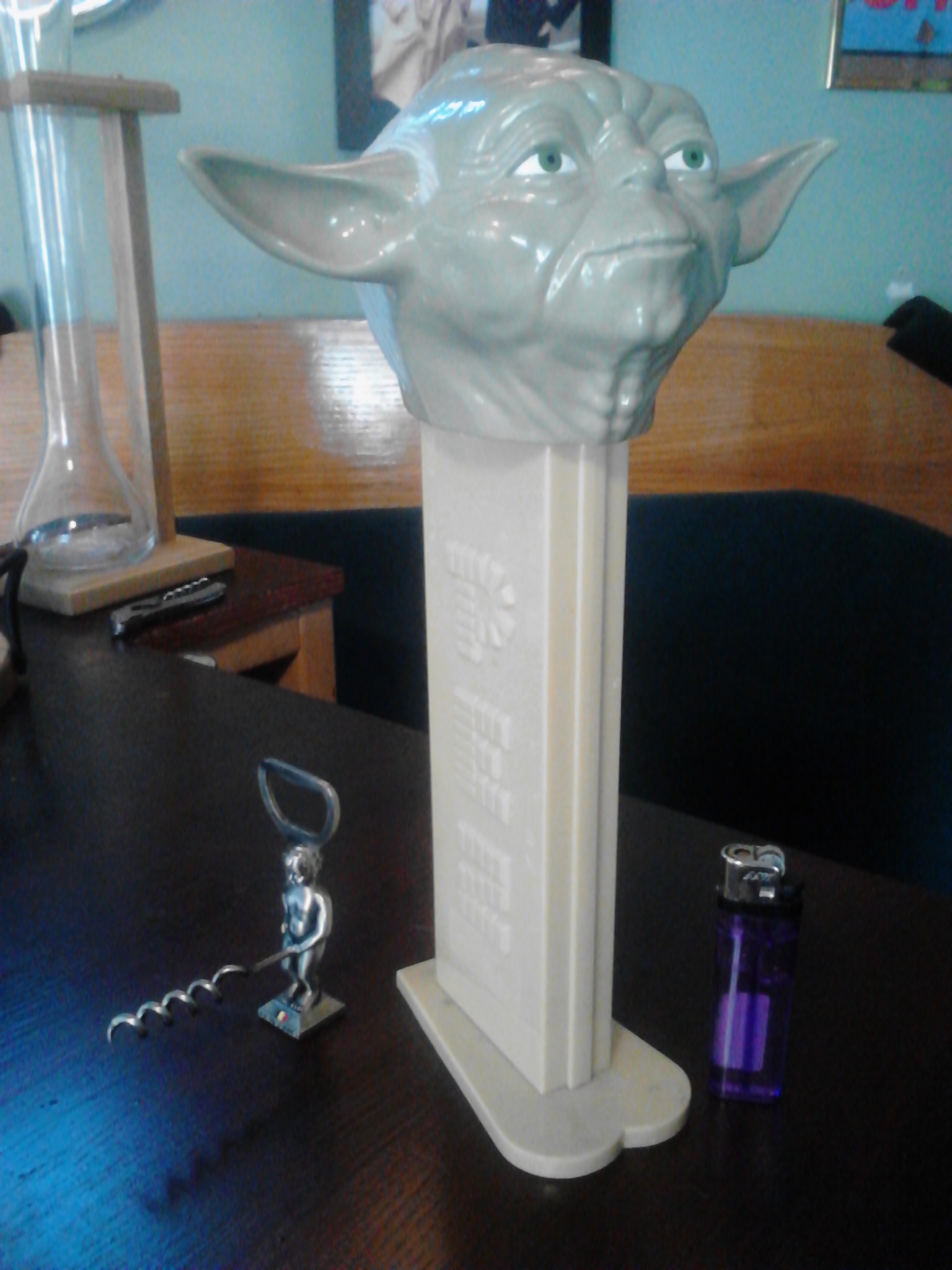
Hilarious corkscrew and lighter shown for scale

But the question becomes what we should call this bar.  It is dominated by Star Trek paraphernalia, so we could call it Ten Forward, but I’m not very fond of that.  I considered Trek, but the fact is that there is also a huge Yoda Pez dispenser, which means that there is a mingling of Star Trek and Star Wars.  Our goal is to piss off as many nerds as we can, I suppose.

So, here are some of the ideas we have come up with:

  • Trek
  • PolyBar Galactica
  • Bar Noir
  • Polycule (which is a term we like generally for our little family, as well)
  • Nerdgasm
  • The Fenzorselli-McBrownigal Liquor Depot
  • The Real Classy Booze Shack (because the nicer the description of the bar, the worse it is, amirite?)
  • [insert clever bar name here]

In any case, I’m sure we will settle on something eventually.  In the meantime, here’s some more close-ups.

Yes, those are rubber duckies in a basket.


Notice, below, the huge Pauwel glass, designed for drinking lots of Kwak, apparently.  If you have not had it, Kwak is a quite delicious Belgian amber ale.  You should try some.

That, in the background, is a signed picture of Brent Spiner (Data) with Patrick Stewart (Jean Luc-Picard), wearing 20’s style garb.

So, we should totally throw more parties.  Also, you should all come.
Now, to make myself a drink or something….