Family as a Ka-tet: The Dark Tower as a lesson in living well


dt7-12So, I really love the Dark Tower series. I’ve read the books twice (I read the first three before the 4th came out, then read them again when the fourth came out, and then all of them again before book 7 came out). I’ve listened to the audio books, twice, and am listening to them again on my work commute. I’m currently on book three.

I also own some of the graphic novels, but am more interested in the earlier ones, which filled in the gaps of the story, rather than the ones which re-tell the story in graphic novel form. I’m not a huge fan of the graphic novel style, and prefer the details of the books.

As I was listening to the audio book this morning, something occurred to me. There are many reasons I love the story, the universe, and even how it ended (I know many people don’t like many things about how it ended, or even the direction Stephen King went with the later books), but something else poked it’s head out at me about the series which has, perhaps unconsciously, created a set of expectations about how the concept of family has formed for me.

I will not give any major spoilers, but if you plan of reading the books, graphic novels, etc in the future and don’t want to be spoiled at all, skip this.


Ka-tet, Vulnerability, and Family

Starting in book 2, we start seeing the formation of Roland’s little pack of gunslingers, on their way to the Dark Tower. We meet them, as they are drawn into Roland’s world through detailed and often deeply life-altering ways which expose the dark corners of these characters. Each character has to confront major personal struggles in order to find their way on the path of the beam, and each of them finds inner strengths through their adventure together.  It is a metaphor, I believe, for the intimacy which people must share to truly be a part of another’s world, at least as much as we can be a part of each-other’s world.

This is a story of people drawn together by what in the mythology of the universe calls ka, and is related to the concept of fate. As they become entangled into ka’s web, they become ka-tet.  They are more than friends, more than family, and they are intimately connected in ways that only the closest of friends, family, etc ever reach. Any of us are lucky if we ever have one person who gets this close, and some people may have a few people who become as close as these travelers become in Stephen King’s fantasy.

darktowerkatet
If you understand why this image pangs my heart, remember well all the times you find true love and success, and say thankee sai

They, in short, are completely vulnerable with each other, sharing their lives, thoughts, minds, and bodies with each other in ways which defy distance and secrets (as well as actual possibility; it is fantasy, after all). In the end, they are as close as people can be to each other. There are moments of anger, regret, arguing, intimacy, victory….and defeat. But whether they will all reach their goal or not, whether their heart-breaking story ends well or not, all the while they were together, they were vulnerable and intimate with each other in ways that draw me closer to them, and has inspired me to become closer to the people I love, especially myself.

They were all in, withholding nothing.


Taking lessons from fantasy and real research

Related to this, I have just started reading Brene Brown’s Daring Greatly at the recommendation of a friend, who daring greatly, recently reached out to us to reconnect. This book, and other resources of my continuing project of allowing myself to simultaneously find my inner ability to love myself and make myself more open, intimate, and vulnerable to other people, are stepping stones to a better me and a better life. And as I was reflecting on these things over the last few days, I suddenly became aware of another facet of love I have for Stephen King’s magnum opus of a series; the concept of ka-tet.

The characters in this story of The Dark Tower are imperfect, complicated, and all have traumatic personal stories. They overcome shadowy pasts of various kinds to find within themselves strengths that they needed each other to cultivate.  They have all made mistakes, have the capability to do so again, but their relationships are built upon a level of sharing and honesty which has few parallels in our culture. This leads to a level of trust, respect, and love which acts as a mysterious goal of my own–a destination not unlike Roland’s Tower.

We, in this culture, are not trained to be vulnerable, and so when we see true vulnerability we may admire it but find it difficult to do ourselves. Vulnerability, like responsibility, is an attribute admired in others and feared in ourselves. In reading Brene Brown’s book, I’m seeing that the values which our culture holds in esteem are counter-productive for mental, interpersonal, or social health. These are concepts I have been aware of, at many levels, for many years, but seeing it articulated in such a compact, vulnerable, and honest way is refreshing and perhaps a little bit of a slap to the face.

In a world (this real word) where there are no gods, no actual ka, and no Dark Tower weaving our fate, what are we to do? There is no actual ka-tet; no overarching and unavoidable power forcing us together in circumstances where intimacy is almost unavoidable. We will not literally experience the inner minds of others in order to draw them to our world, like with The Dark Tower’s second book, but we might be able to take a few pages from book three onward into our own lives.  Whether it is shared traumatic experiences, overcoming uncertainty and fear of our capabilities, or facing death together there are things which we, as real people, can relate to in book three and many other examples of literature, mythology, etc.

JericoHill-HileForwardIn walking our own paths towards our goals, we find ourselves together and have a desire, almost a need, to share our stories, find strengths and skills encouraged by each other, and to dare (greatly) to achieve successes together we will inevitably create bonds. These bonds may be rare, but however many of these deep bonds you have in your life, for your father’s sake appreciate them and cultivate them well. This is what family is. This is the only refuge of the meaningless, cold, empty universe which cares not if you are happy, sad, or bored. It is only with the people we walk the path with that make the difference between living well and living poorly.

There is a moment, I believe it is in the early chapters of book three (it’s all a blur), where Roland is thinking to himself about what he has done (there was a boy!/there was not a boy!) and the tension for his quest for the tower and the relationships he is forming. He is reminiscing how many have fallen next to him in his quest. In a sense, he has sacrificed them all, and this haunts him. He’s thinking about the balance for the ultimate goal and how he treats the people who walk with him.

It occurs to him that this developing ka-tet provides him with an opportunity for redemption, to change his ka. Whether he succeeds in this redemption is up for debate, but the moment of realization holds powerful emotional potency for me. He stands at a cross-roads, of sorts, looking back at the many people lost in his path of the Tower. He has sacrificed so many others for his quest, and the moment when he becomes aware that he’s gathering more sacrifices, like a snowball rolling down a hill gathers more snow, he decides not to be a monster. For if he were to become that monster, he would sacrifice everything that his quest represents.

Would he hurl his friends, like weapons, at anything in his path? Will his ka-tet be another means to his ends? Such is the future; all of our futures. The ends, he realizes, do not justify the means. Utility, consequentialism, and all other mere goals are not enough to rationalize the path he could take. He recognizes that in the quest for his goal, he is almost certain that these people will almost certainly die like his Hawk, David, which he chose as a weapon in his very first step in the direction of the Tower (whether he knew it then, or not).  But he decides, in that moment, that he will not use his new ka-tet as mere tools, as weapons. He will make them partners, and share a goal with them.

All the while knowing that they may all die, in this quest. As we all, eventually, will.


Stopping to smell the crimson roses
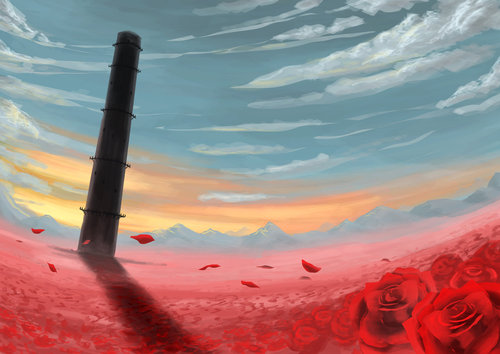
tower_rosesIf you have not read The Dark Tower, but you want to, I want to alert you to something. There is a point, late in the last book (book 7), where Stephen King gives you a choice. He tells you to stop reading. But before this, earlier in the book, he also asks you to stop and appreciate a moment of victory. He reminds you to stop, take a look around, appreciate the circumstances you (because you’re invested in his characters, hopefully) are in, before moving on. Later, he simply asks you to stop reading.

In both cases, you have a choice. In the first, the choice is whether you will take a break in your reading at that point and reflect on the gathered ka-tet and appreciate them, or simply turn the page. Later, your choice is whether to keep reading at all. King actually suggests, knowing you will almost certainly not do so, you to put the book away and not finish the story. The reasons for this are not important for us here (it’s also a spoiler), but it is this kind of moment which stands stark against the wall of eternity, for me.

We need to stop, occasionally, and recognize what we have in our lives. We need to halt, take stock, and appreciate when there is something to appreciate, so that we can look back later and see those moments for what they were; beauty, love, and good feelings. But there may also come a time, in our stories, where there may be nothing left to see. There may be times when you should put the book away.

And yet we do not, much of the time.

The first time I read book 7, I actually did put the book down, and didn’t continue immediately. I thought, seriously, about taking the advice and not finishing the book. I walked away, thought about it, but inevitably picked it up again. I wanted to know, needed to know–burned to know–what would happen. Many uncertainties and blind-spots in my life are represented by this metaphor, and no matter how much I might know that it’s better to walk away, I feel the pull of curiosity and (sometimes) hope. What happened next in the book, in both cases where I paused, was hard to read even if it was necessary and compelling.

We all have our Dark Towers to climb, I suppose. Perhaps it is better to not open that door, when we get to it. Perhaps we would all be happier if we simply took in the sight of reaching our destination, then moved on. But as Eve learned (metaphorically, of course), the fruit is too tempting. And just like Eve, warned against tasting the fruit, no matter how long you may be warned against the consequences of such an action, eventually, in all of eternities (and eternal returns; yes, even Nietzsche is relevant to The Dark Tower) you will eat the fruit, open that door, and climb that Tower.

Imagine Eve, obediently avoiding the fruit for years, decades, millennia! Eventually, curiosity will get the better of her. Imagine a reader, at the end of a 7 book series, poised at the edge of the secrets of the story and never finishing it (I imagine at least a few have done so…so far). Gods! No creature capable of curiosity can withstand such a temptation forever, if forever were given to us. In eternities contains all things, I suppose.

We want to know. We want to understand. We can avoid looking for a while, but eventually, we must peek.

tet2I see the inner lives of people the same way. My tower is understanding, of myself and of others with whom I  walk the path of the beam. Many have been lost from my path, whether through death, enmity, or because we were questing for different Towers, ultimately (“Go then. There are other worlds than these”). And each meeting and separation is a moment of choice, where we have the choice of putting the book down or to turn the page. Sometimes, I turn the page and experience the heart-break that follows, and sometimes I put the book down. Sometimes, I turn the page and find my tower where intimacy, vulnerability, and love welcome me in. And perhaps, worst of all, sometimes I put the book down, and leave the hope of all that is beautiful behind.

We don’t know what is inside each Tower, and whether we open them, walk away, or stand with curious grasps at the handle to that great door with indecision, those moments tell our stories. I look forward to the many quests for towers I will find, and I hope that those who walk the path with me will not sacrifice me, or be sacrificed by me, on the way to their own towers, because that way lies madness. Because we are the only real towers, dark or not. All the other towers are illusions, idyllic distractions, and ultimately vanity.

Just like the Dark Tower series, the beauty is in the quest itself, not any hypothetical goal. All the goal will do, ultimately, is put us back on the path where we will either make the same choices or try something else. As Nietzsche observed, if we look at any moment in our lives as a metaphor for all choices, as an option to do this again, eternally, how would we behave? With such a perspective, does the goal matter? If we are forced to reflect on this life and all its choices, would we do the same? As we approach each Dark Tower, each person, will we open it? Will we walk the path with them? Will we hurl them as weapons? Will we sacrifice them for something else?

There is only one final destination we will all approach, either suddenly or with clear foresight. That “clearing at the end of the path” is the only goal we all must travel to, and no Tower lies there. But what friends, family, and ka-tet we bring with us to the edge of that clearing will allow us to look back at our lives with the complexity and unambiguous reality. What we see there may cause us pain, a smile, and most likely both.

It’s only what happens before that which matters. Make the most of it.
A bit of optimism, if I can allow myself to see it


I have a lot of people who love me. I know this, intellectually. Most of the time, I can feel it as well. But sometimes I can’t feel it. Sometimes, my own lies get in the way. My lie, an illusion which obscures reality all too often, is that I’m not worth being loved.

Therapy, over various points in my life, as well as many open conversations with loved ones, has shown me the deep feelings of lack of self-worth which are responsible for this set of experiences, so I have a fairly good grasp of the nature of this problem. But this problem is one that expresses itself in a different way, as a polyamorous person, than it did previous to that. In a strange way, a way which has become a focus for my continuing personal growth, therapy, and knowing myself, the more people in my life who love me, the more my own lack of self-worth becomes exposed.

It’s almost as if hearing, feeling, and seeing acts of love towards me keeps poking at the part of my mind which whispers, perpetually, you don’t deserve this. This voice is not merely the voice of all my past mistakes and transgressions. No, that’s too simple. it’s deeper than that.

The feelings of little self worth are not the result of mistakes I have made, the mistakes I have made ultimately come from this feeling that I do not deserve love. This is an old realization, and implementing the changes which would help heal this wound is not a quick and easy fix. Were I capable of merely snapping my fingers and fixing it, I’d be further lying to myself.

This feeling compels a strong desire to be loved, as a kind of cover or disguise for this feeling, and when I get it I feel guilty as if I had manipulated that love out of people. I have trouble believing, sometimes, that the love I receive is because of who I really am. I don’t really have an alternate explanation for why it exists, but my mind flutters away from this uncertainty and insists that it must be some illusion or lie.

In moments of sober reflection, it becomes repeatedly obvious that this feeling itself is the illusion. The distortion in reality, the lie I tell myself, is the persistent sense of something being wrong with me. Not that I am perfection incarnate (as if that idea had any meaning), but that my lack of self-worth does not spring from anything real. There is a difference between the recognition of responsibility and the illusion of worthlessness.

It’s a very specific kind of illusion, one which not many people share. And for those close to me, understanding that this illusion is persistent and deep is the key to understanding how I hurt. Not understanding this illusion is the first step in mis-attributing my insecurity for something else.

It’s a problem which belongs to me, ultimately. And I’m becoming more and more aware of how used to an environment of cold, persistent, lack of validation I lived in most of my life. I’m coming to the realization that I grew up in a world where vulnerability was seen as weakness, encouragement was rare, and love felt like it was something to be earned, and taken away as punishment if I didn’t follow along the right way.

The polyamorous world is not immune to such things, being full of people. Having the intellectual, cultural, and often selfish insight into the possibility of “loving” more than one person does not imply the necessary creation of an actual healthy environment. A world of transactions, rights, and rules follows from this, all too often.

But, because the polyamorous world is full of people, sometimes it is actually wonderful. The problem for me, right now, is allowing myself to see the good. The other side of that problem is to trust my instincts when I sense something is off. In other words, I need to trust myself, trust other people, and allow what’s happening around me to inform me, rather than the fears in my mind.


Allowing people into my world

Ginny has been having a good summer. She has made, strengthened, and re-connected relationships (we both have) which have extended our immediate group of friends and acquaintances significantly. Our social life has grown, and Ginny has people close to her who are providing her with joy, pleasure, and love.

And this has been an emotional challenge for me, especially since the last few months have been hard, emotionally. All the while this has been happening, that deep and uncertain part of my mind reaches its tendrils up to my consciousness and says she’ll be happier with them, forget about you, and you’ll eventually be alone. But those voices are not reflecting reality. Those voices are dark reminders of the deep places I have been in my life, the fears of loneliness and of the impending solitude of dismissal, separation, and death.

These deep feelings are instincts I desire, very much, to be quiet. Because there is another option, one which will lead to greater happiness, fulfillment, and health. These people are not trying to take anything from me. These people just see what I see; a beautiful, intelligent, and loving woman and they are drawn to her. My feelings of fear, pain, or jealousy are from a place which has no real foundation.

But the fact that they are not real does not mean I can afford to simply ignore them. No, they must be dealt with. They must be communicated. They must be taken into the sunlight, to either whither away and die or to be exposed for what they really are. Only by examining the illusion can we hope to counter it.

So, rather than keep these people at bay, I should be inviting them in. In a non-polyamorous context, these people could be threats (although, not necessarily), but as a polyamorous person I have no immediate reason to fear them. This fear is my illusion insisting itself into quasi-existence, forcing me to move left, right, down, and inward like a puppeteer. And if these people are any possible source for harm, I will see it; not through the hazy fog of fear, but with the sober, intelligent perception of experience.

To allow my experienced perception to operate at full capacity, the haze must be cleared. The shining brightness of daylight, of trusting and open seeing, must not allow the lies to tug at my leg, begging for attention. I must learn to better trust myself. I have cognitive and physical powers which have been honed by time, places, people, and circumstances. The time for fearing has come to an end, and I must move forward believing not only that people love me, but knowing that I love myself.

Because I deserve that. Because we all deserve that. Because the surest way to act such that I wouldn’t deserve that is to believe the lie.

We all have our own lies. Mine is lack of self worth. Finding what our own lies are are the only way to avoid the traps which they set all around us. If you have not yet spotted your own lies, the conclusion is not necessarily that there are no lies to be found. A person who cannot admit to their own flaws, illusions, and insistent uncertainties either cannot see them yet, or the lie covers so much of them that they become lying incarnate. Such people are a danger, ultimately to themselves but in the mean time to people around them.

Luckily, for us, the people we surround ourselves with seem to be aware of their own imperfections. We may not all have solutions, at least not yet, but at least we’re trying to see past our own lies. I cannot say the same for others.

Screw them. There are other people worth my time. I’ll make more effort to not allow my fear become a distance between us.

Welcome, friends!

Being a good helper


There’s been a lot of conversation going on in one Captain Awkward post about “helping” relationships, where one person is needier, more vulnerable, and often advice-seeking, and the other is giving, caretaking, and wisdom-dispensing. I looove when the Awkward Army addresses this topic because it’s been a very common dynamic in my life, and there are a lot of ways it can turn sour for both parties. The helper can become overly invested in their helping role and refuse to see/accept when the helpee has developed strength and wisdom of their own. The helpee can feel completely entitled to the helper’s support forever and suck the life out of the helper. The helper can use the helpee’s perceived weakness as an excuse to control and dominate them. The helpee can consciously or unconsciously keep generating problems because they feel like that’s the only connection they have with the helper.

It’s potentially bad news all around, if both parties aren’t careful about boundaries and responsibility and self-care. That said, sometimes a person is in a more vulnerable or more needy place and needs extra care and support from loved ones. And some of us *cough* find that pouring out love, support, and nurturance just feels good, feels satisfying, makes us feel at home in the world. I don’t think that all relationships need to be perfectly balanced forever. But I do think that both parties in a helping relationship need to be very careful and self-aware, if the relationship is going to sustain time and growth and avoid becoming toxic.

Over the years, I’ve picked up a lot of attitudes and skills that have helped me have some functional helping relationships. These are all from the helper side, as I have very little experience being the helpee. I’d welcome further thoughts and additions.

1: Take care of yourself. Since I went to school with educators and therapists, we talked about “self-care” a lot. Every single one of us is way better at preaching it than practicing it. Have your own support network in place, the people you can go to with your stuff no matter how trivial or burdensome you feel it is. Have your personal rituals for when you need to be kind to yourself and recharge. If you’ve never taken all that compassion and lovingkindness you have and directed it at yourself, do that. Figure out what that looks like for you. And do it, on the regular, and especially when you’re in the middle of a strenuous helping situation.

2: Own your shit. I think most of us helpers have some not-100%-healthy baggage behind our helping instincts. Narcissist parents. Feeling like we’re only valuable if we’re giving. Feeling like helping allows us intense intimacy without making ourselves vulnerable. I don’t think you have to be past that and come at helping with an entirely balanced, zero-dysfunctional-history perspective in order to be a great helping person — I don’t think that’s even possible. We’ve all got our shit, and learning to use our shit in ways that make us and the world better is a pretty stellar way to handle it. But definitely know what your shit is, and how it can turn toxic.

Owning your shit can help you spot the line between those helping dynamics that feel good because they’re meeting both people’s needs in a productive way, and the ones that feel good because they’re scratching an itch deep down inside you that keeps getting inflamed. It also protects against internalizing the sense of “I’m mentally stable and healthy, and you are damaged and fucked-up” that can sometimes come into helping relationships. You can be mentally stable and healthy and damaged and fucked-up all at the same time, actually. Drawing a sharp line between the two just makes it harder for the helpee to ever imagine being in a position of strength. And it makes it harder for the helper to actually work on their own damage, because you have to see something in order to fix it.

3: Give yourself permission not to help. This really incorporates both #1 and #2. Not helping, whether it’s for the afternoon or the week or maybe forever, is sometimes the only self-care that matters. But it can be really hard, if you’re dealing with some of that baggage that says you always have to help or you will be unloved and unworthy and alienated. Being able to say “No, I’m sorry, I can’t listen today” and walk away without guilt (hahahahaha ok I mean without soul-crushing guilt that will make you spend your time off just as focused on the helpee as if you were actually talking to them) is a pretty essential skill — I think it’s a prerequisite for a functional helping relationship.

Taking a short break also tests whether the thing is sustainable on the helpee’s side. It takes two to have a functional helping relationship. If they cannot go a day (or whatever) without drawing from your well of support and compassion, it strongly suggests that they are not up for their side of this tango. They need to have some level of respect for the fact that you are also a person with needs and priorities that don’t revolve around them.

There are kinder and less kind ways to take a break. “Hey, listen, I need to take some time for myself right now, I will call you again on X day to hear all about it, ok?” sends the message that you are not abandoning them forever, but that you also have needs that are a priority for you. Helping and helping and helping until one day you just can’t take it and stop answering their calls — not so kind. (I have done this. Urgh, and I’m sorry to those people.) It’s one reason I think it’s so important to work in self-care and time off early. If you’re suffering severe burnout, you might just have to do that, especially if they roll right over your first “Hey, I need to deal with my own shit today,” but it’s better to avoid that situation by taking regular breaks and making that an understood part of your relationship from the first.

If you say “I’ve got some of my own stuff going on, I need to take a break,” they may come back with “Oh I’m so sorry! Let’s talk about you!” This might be okay, but it’s often a (likely unintentional) trap. We have this idea in our culture that all good relationships are balanced with equal give and take. The helpee likely feels uncomfortable with the idea that this relationship is unbalanced, and would welcome the chance to be the one helping you for a change. The problem is, if they’re usually the helpee in relationships, their helping skills may not be very well developed. Listening and lending compassionate, appropriately critical but non-judgemental support is hard. Setting our own stuff aside to be present for another person and their needs is hard. To us helper-types it often feels easy and natural, but someone who isn’t practiced in it will likely end up floundering and feeling inadequate. Or they will end up listening for about 45 seconds and then turning it around and making it about them, because they just don’t know how else to operate. Or you, the helper, will find that you’re not actually comfortable being vulnerable with them, because that’s not how your relationship functions and you likely have some vulnerability issues that mean it’s only a select few people you can feel okay going there with (high-five, fellow vulnerability-averse helpers!)

So I think it’s better, if they counter-offer with “Let me help you!” to say, “Thanks, but I really just need some me time, that’s how I process best.” Me time can mean talking to your go-to support buddy, they don’t have to know. And if they can’t deal with this or have a shit fit or try to get you to help them process their feelings of rejection around not being allowed to help you, that’s all the more reason to get away. Which brings us to…

4: Boundaries. You get to have them, they gave to have them. Everybody has to respect them or this thing is fucked. Just because you’re a helper doesn’t mean you get to know or comment on every little detail of their life. If you’re giving them a lot of care and support over their relationship with their mom, that doesn’t mean you get to tell them how to relate to their boyfriend, if they don’t want your help there. They are a grown-ass adult who is talking to you because they respect your wisdom and perspective in one area. That doesn’t mean you get an all-access pass to their life, or that you’re responsible for making sure they don’t screw up elsewhere. Maybe they’re making a mistake. Grown-ass adults get to do that.

Just because you’re a helper doesn’t mean they get access to you all the time for everything. YOU don’t have to listen to details of their sex life if that’s uncomfortable for you. You don’t have to invite them to everything you do (or anything you do). As discussed above, you don’t have to and probably shouldn’t be available to them at all hours of every day.

When one person sets a boundary, the other person needs to respect it, period. If the boundary is confusing or upsetting to you or you think it means something really uncomfortable or bad, you can say this: “Okay, I will respect that, but I have some concerns. Can we make time to talk about them at some point?” And the boundary-setter gets to say yes or no, and the boundary-setter gets to decide when that conversation happens, and the boundary-setter gets to decide when that conversation needs to be over. And the other person respects the boundary before and after the conversation (with any revisions or improved understanding that happened in the course of the conversation.) If anything else happens? Run away and don’t look back.

I’ve had a lot of helping relationships go bad. I’ve had a lot of helping relationships successfully convert into more balanced relationships. (Because I lean helper, I tend to gravitate toward people who lean helpee, and a lot of my intimate relationships involve me doing more listening and caretaking than vice versa. I can and do turn around and receive support from them; it just happens less often than the other way around. That might be another whole blog post.) I’ve had a lot of helping relationships that were good for both of us at the time, and then we drifted apart because they were moving on to a new stage and there wasn’t enough in the relationship to sustain a friendship built on anything other than that one helping dynamic. That’s an okay outcome too. These are the principles I’ve found to be essential to making a helping relationship constructive on both sides. I’d love to hear from others who have insights of their own, and especially from people who tend to be helpees, on how things look from their side.

I used this one simple trick to make my language more gender-inclusive!


The clickbaity headline is there because it amuses me, but also because when this dawned on me today it felt pretty much that way: there’s a really simple tool for gender-inclusive language that I feel like I didn’t fully appreciate before. We use it a lot, but it hadn’t dawned on me just how many applications it can have.

The tool is “people.” The word itself, not the referent. People are not tools. The word “people” is a fantastic tool that most of us have already recognized as being a pretty great way to talk about … well, people, in a gender-neutral way. But this week I’ve been discovering more and more ways of using it effectively, and it’s surprisingly cool.

It started when I was preparing a lecture on anatomy and physiology for my online sexuality class. (Wait… have I not written about that here before? Bad blogger! Bad!) One of the perennial problems of being a sex educator is that we do a lot of talking about things that are mostly gender-specific: things like penes* and vaginas, or gendered socialization. Most people with vaginas are women, and vice versa, but not all of them, and it’s very important to me to acknowledge this verbally so that the women-without-vaginas and the not-women-with-vaginas feel fully included in the discussion. And yet saying “people with vaginas” gets unwieldy fast, especially when the sentence you’re trying to construct goes something like, “People with vaginas sometimes find that their vaginas lubricate more…” Ugh, no. Way awkward.

Because this is an online class, a lot of my lectures are written, which means I can be very precise and thoughtful about my language, and so it was that it occurred to me: I can just say “people.” If I’m talking about vaginas, I can say “people sometimes find that their vaginas lubricate more…” and nobody is going to be confused. People pretty much know what sexyparts they have, and can apply the appropriate sentences to themselves without my needing to specify a gender category.

I also like it because it increases the universal identification. One of the things I hate most about the way our culture uses gender is that it’s treated as such an essential categorical distinction. Men are a completely different type of people than women, and men can understand other men the way that women can’t, and vice versa. As a slightly genderqueer person myself, and someone who has always been closest to people who have a lot of cross-gender traits, this has always irritated me. My innate instinctive understanding of Femme-Lady-Women is just as poor as my innate instinctive understanding of Manly-Man-Men. (Nothing against people who are strongly gender-identified and gender-congruent at all… I just don’t really get you.) I get really uncomfortable and grumpy when I’m expected to consider Men as a category strongly distinct from myself.

And I think it’s better for human relationships all around when we start to think of other people as people, first and foremost, rather than as members of a gender category. We listen differently to a sentence that begins with a person-descriptor that doesn’t apply to us: a man, hearing a sentence beginning “Women often…” is going to listen differently to the rest of that sentence than if it began “Men often…” By starting the sentence with “People…” I feel like I’m more likely to have everybody tuning in as if the sentence following might apply to them. And even when they find it doesn’t, maybe they listen to the rest of it with a closer sense of identification with the people to whom it does apply. If I hear the sentence “People on cruise ships often get seasick” I don’t feel alienated from the people described, even though I’ve never been on a cruise ship and likely never will be and don’t get seasick. I feel like we’re all people together, those people just have different circumstances and experiences than I do. And that’s the feeling that I hope, maybe, using “People…” can encourage about even very sex-linked things.

I used it again today, when asking a question about typical male socialization and how it impacts an exercise we’re doing for the class. As I was asking for feedback, the automatic way to write the sentence would have been, “Men, what do you think about this? Is this true for you?” Instead I wrote, “People who were socialized in that ‘be tough and manly’ way, is this true for you?” This does more than be gender-inclusive: it also allows for the fact that cultures and families differ, and some men didn’t receive much if any of that “be tough and manly” socialization (and some women did!). It allows the reader to determine for themselves exactly to what extent the sentence applies to them, rather than being automatically included or excluded by a gender category that only imperfectly matches the category we’re actually talking about.

People. It’s a good word. I’m going to use it more often.


*Little-known fact about me: I find the irregular plural of “penis” delightful for reasons I cannot explain, and I often go around repeating it to myself inside my head.

Moving on


The clouds are parting.

The last three nights I spent no time unable to sleep due to immense anxieties, self-doubts, or anger. For context, nearly every night over the last few months have been full of anxiety, anger, and pain keeping me up way too late, and this my not getting enough sleep. I know that this does not mean I will never have insomnia again. I know that this does not mean that I am forever out of the woods of mental health concerns. What I also know, however, is that I have dealt with the majority of the trauma that has plagued the last several months of my life, and I am finally ready to move on.

Yes, I will still have some processing to do about what to learn and how to grow, moving forward. Yes I will still have to deal with the presence of our former family as part of our local poly network, which will cause continued tension for us. But rather than drowning in the effects of those things, they will become small obstacles now, and I can try and create a newer, better, sense of self. I can re-build and re-define what this blog is and what I have to say with all of my experience as am atheist, polyamorous skeptic.

I have seen a lot, done a lot, understood a lot, and been completely vexed and overwhelmed by a lot more. What I have been through has made me stronger, wiser, and better able to see myself and the world around me. One consequence of this is I will be writing things which will contradict some older posts which exist here.

But this is not a contradiction in any personal sense. Anyone who would potentially quote something I wrote 2 years ago, compare it to what I would say now or in a month to demonstrate that I’m inconsistent, confused, or perhaps just a flip-flopper will fail to understand what growth and change means on a personal level. The person I was 2 years ago is, in many ways, not the person I am now or who I want to be. I was very angry 2 years ago, about things I didn’t even understand at that time.

Take, for example, the tag line of this blog: “criticism is not uncivil.” The idea behind this, originally, was that the truth is primary to any other concern. The idea was that if a disagreement about some fact, interpretation, etc poked its head up, rationally constructed criticism was not an inappropriate response. If you believe that a god exists, my criticism of this idea did not have to consider your emotional association to this idea, because there is a distinction between attacking an idea and attacking a person (is what I argued). And no, emotional attachments do not change the truth of a thing, but they should change how we have the conversation.

Now, if we were unemotional robots we wouldn’t have to worry about such things. The problem is that our very rational thinking itself is at least partially dependent upon not only emotion, but cognitive biases and self-justification. Our opinions, even if they happen to be opinions which would stand up to careful and empathetic scrutiny, exist in a soup of feelings, associations, rationalization, and will often have room for improvement.

So, what of that tagline? I am not sure yet. I don’t know if I want to keep it or change it. I could still keep it, and have it mean more that criticism, at least when done with consideration of all our human facets, is not uncivil. I still believe that criticism is essential for our personal and cultural growth, I just don’t accept that our criticism has to be unconcerned with our emotional realities.

Empathetic criticism is not uncivil?

Nah, I don’t like that.

In any case, the blog will indeed go on. The podcast may also continue (we did some recordings, but much of it was either lost or was not really good enough to release), but we’ll see when and how often that happens.

If you have any suggestions, thoughts, etc, please share them.


My version of the record


For months now, Ginny and I have remained quiet about our side of the unfortunate events that led to and followed the breakup of our former family in Collingswood (including our former co-bloggers). I have felt that making any of our own version of events public would be a bad idea. It probably still is a bad idea, but writing it has been necessary for my own healing and for my ability to move on.

There are things about those events which are not known to most people, but which are very relevant to anyone who has any kind of opinion about me or what happened between the five of us.

Ginny and I have collaborated on such an account and it is available to [almost] anyone who wants to read it. You cannot search for it, but I can send you a link if you want to see it. I doubt many, if any, will want to read it, but if I’m wrong, let me know (either privately or in the comments below).

I may decide to publish the link publicly, at some point in the future, depending on how I feel about it going forward. I have been vacillating about doing that since I started writing it. I would very much rather move on and put this behind me, but months of nightmares, inability to sleep, and many long and difficult conversations with Ginny would only start to give way as I started to write about this.

And yes; I have been vague about my issues in the past (intentionally), and had reasons for doing so. That stops now, as I have recorded the essential events of what transpired from our point of view, to stand against a narrative which I have seen trickle through various channels to me over the last several months.

Going forward, I want to put this situation behind me.  It’s harder to do so while the people who have hurt us (and have continued to do so) are part of our extended polyamory network. Therefore, I a offering to give a link to anyone who wants to read it so that their side of events is not the only side available.

The full account will not appear as a blog post, here, most likely.

[edit: The account is public, and can be viewed here.]

PhillyCOR 8th annual Unity Picnic: July 27th @1pm


For the last 8 years, the Philadelphia area branch (PhillyCOR) of the Coalition of Reason has thrown an annual picnic, and this year’s picnic is coming up.  My friend Staks, who is the coordinator for the local group, wants to get the word out for this event, so I figured the 3 of you who read this might be interested. I’m hoping to make it, so if you’re interested please join us!

Here are the details:


Picnicflier

PolySkeptic page-thingies!


So, sometimes we mere humans don’t finish a book in one sitting because we might have to go to work, take a shower, or maybe eat something.  Neither you nor I want to have to remember what page we’re on, because that’s hard. This is a problem that has plagued the human species for millions of years.

Here at PolySkeptic R&D, we have been working on a new technology to make your book-reading life easier. We call it a page-you-left-off-reading-marking-device. Marketing still needs to come up with a better name, but for now I’m calling them ‘page-thingies,’ for short.

In any case, they look like this:

bookmark
books not included

So, if you want one, you can go to LoveInfinitely Gifts (on etsy) and get one or two.  Also, while you’re there, get a necklace or even a pair of earrings!

Linky McLincolnstein (he was Abe’s Jewish cousin, I think)

Let me know if you think of a better name for these things, and let me know what you’re reading. I’m currently reading Middlemarch, by George Eliot. I have not finished it yet because I keep having to start from the beginning, since I forget where I left off. But no more! Finally, I can read past page 3 (or so)!


Checking Ourselves: Mental Health, Cognitive Bias, and Rifts


Proposition:

Mental health and cognitive errors are the foundation upon which we struggle with interactions with groups, individuals, and ourselves. Whether we are diagnoseable in a mental health context or not and whether our cognitive biases are significantly problematic or not, how these types of factors interact with each other will influence how we understand ourselves and the world around us. These individual concerns will supervene into group dynamics, whether for good or bad, and if we are interested in any kind of cohesion, cooperation, or truth as any kind of group then we must pay primary attention to our personal tendencies towards cognitive errors and mental health concerns.

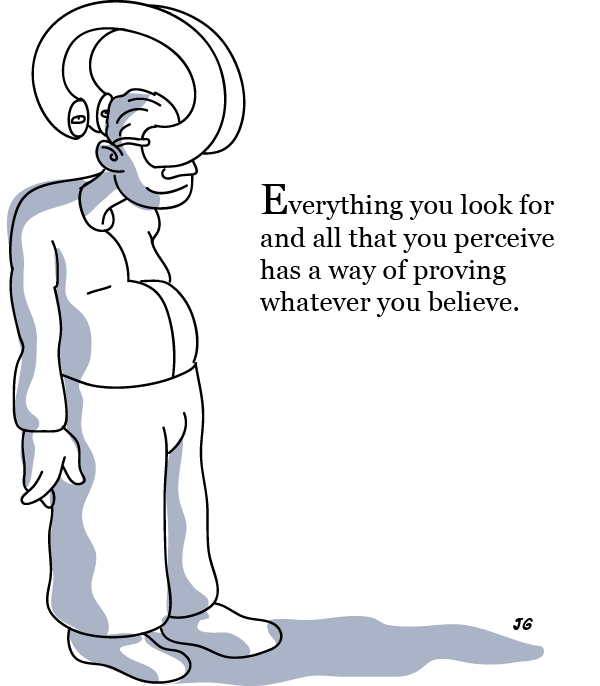
confirmation-biasIt’s pointless to merely defend our position with logical argumentation if our very position is subject to biases and potentially mentally unhealthy attitudes. Before we can be concerned about being right philosophically, we have to first be attentive to the effects of mental health, cognitive biases, and self-justification. Being a skeptic means first being skeptical of our own internal processes, because if an error lies there then that error will expand exponentially at every level of our argument, very likely.  The very basis of motivated reasoning, self-justification, and rationalizations arise when we fail to recognize our own errors in forming opinions.

To trust ourselves or other people, we have to pay attention not only to our intentions and overt logical steps, but also to the emotional and cognitive foundations of our ideas. Thinking we are being rational, honest, and forthright is pointless if we don’t pay attention to the self-correcting steps we need to take in order to be truly authentic as feeling and thinking beings. Intention and honesty are not enough if we are blind to biases which lie under those intentions and our desire to be honest. Honesty is impotent if we’re wrong.

In terms of this, I agree mostly with Peter Boghossian in the following video:

Yes, we need to be forthright.  But in addition to being forthright, we also need to be willing to be wrong, to self-correct, and to head off cognitive biases, whether they take the form of emotional or  rational patterns. If we start out being unwilling to self-correct, this will have obvious ramifications for how we interact with the world, other people, and with our own internal concerns.

Cognitive Biases

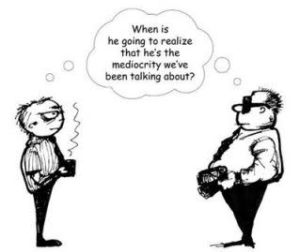
mediocreWhen I started writing in blog-like form more than 15 years ago (college newspaper columns mostly, but also some essays I wrote for various publications as well), I was writing almost exclusively about atheism. I was writing screeds against religion, “new atheist” style, back in the lat 1990’s. In college, I studied world religions, cultures, and some philosophy, and my senior thesis was about the philosophical and cultural influences of Greece/Rome on the development of the Catholic Church. I had heard all the apologetics (I have not heard anything really new in years), became fairly good at responding to them, and this helped me discover and become part of the atheist community in early 2002, when I started graduate school.

In talking with theists and other atheists, I had come to witness all sorts of rationalization, motivated thinking, and cognitive biases. I became fairly good at spotting when people are subject to these cognitive errors.  I’m not immune to such things myself (none of us are), but I’m fairly good at noticing it during or at least shortly after doing so (especially with Ginny around to help point it out), and I try to correct it as best I can. The more emotional I am, the more likely I am to be subject to biases. But exposure and attention to these things has helped make me less prone to such things, even if I do occasionally find myself twisted up in logical rationalizations from time to time.

So, when I later started hanging around polyamorous people at meetups, private parties, etc, I started to utilize those tools which I had honed within the atheist community, and started to notice patterns of motivated reasoning, biases, and rationalizations there too.  it’s not just theists (or atheists) who are subject to these concerns.

Most of the motivated reasoning, biases, and rationalizations I ran into was pretty low-level every day stuff, but occasionally I would spot a behavior which was really dug deep in self-justification. And over the years, I have gotten to know various levels of these types of cognitive errors in belief, behavior, and preferences which exist among polyamorous people.

What I have come to believe (tentatively, of course) is that we bring cognitive biases, rationalizations, and self-justification with us into whatever communal or social networks in which we spend significant time.  Those cognitive concerns influence how we will interact with other people, how we will think about issues which come up, and will be the foundation of where we will stand in the case of any disagreements, rifts, or enmity. When things go bad, where you will be stand relative to an argument will be at least partially based upon what kinds of cognitive errors you are prone to.

Going back to the atheist community for a second, let us take a moment to recognize the various splits, rifts, and arguments which have raged over the last several years. A-plussers, slymepitters, and freethought blogs, oh my! Now, I have not seen any significantly complicated analyses of how things like cognitive biases, self-justification, and personal preferences determine where a person will lie on these battle lines, but I’d bet we would start seeing some correlations if we did (which says nothing about causation, I know).

We’re all subject to cognitive errors.  We all have to be cautious with certainty, whether we err on the side of servility or arrogance. We all have to improve at making sure we are paying attention to how our cognitive biases and mental health issues help determine our opinions, behaviors, and relationships. All too often people will demonize another person out of a need for self-justification.  We will idolize someone else for similar reasons.

We need to have the bravery to demand complete honesty, vulnerability, and willingness to be wrong (or right) when not only the facts support it, but also various perspectives on those facts support it. Because facts are also subject to bias. That is, they may seem like simple facts, but memory is subject to emotion and bias, and perhaps we don’t remember that “fact” correctly. When people disagree over events, I’m willing to bet that all sides are not only subject to memory fault, but also with their ability to think intersubjectively about the issues well enough. That is, even if the actual facts are not in dispute, certainly our values, preferences and biases will shade how we skew how those facts interact with the world.

And then all we have is arguments steeped in motivated reasoning, mental health issues conflicting into personality disputes, and rifts with people who do not understand each other. We can do better.

Mental Health

keep-talking-about-mental-healthConcerning mental health, we have a similar problem at hand. The symptoms of mental health concerns are common among all of us, to varying degrees. Even if we are not diagnoseable per se, we may have behavior patterns, emotional issues, or cognitive impairments which cause us to miss seeing important influences on how we perceive and interact with the world. We should all be willing to recognize the symptoms of our behavior, how we are seen by people, and how we can improve.

If you suffer from symptoms consistent with anxiety, depression, or even a personality disorder, then you need to understand how those symptoms effect how you behave and think. You don’t have to be diagnoseable as a borderline to be subject to problems with emotional management, for example. You might not fall under 5 out of the 9 symptoms to learn something about yourself as a person, if you struggle with some of the symptoms.

Consider the difference between having to interact with a person who displays symptoms which cause conflicts but who is aware of them and is trying to solve them, rather than behave defensively and deny or rationalize their behavior as if nothing was wrong. I know that when I have been defensive and have rationalized my behavior, I have caused immense tension for other people. I care about that and I care about my mental health, so I work to overcome such struggles.  Because I know I am capable of rationalization and self-justification, I have to check myself in order to see if I’m not just emotionally or cognitively compromised when I’m in conflict with someone else. Learning how to see past your own biases is perhaps one of the hardest things we have to do, as humans.

Watching someone who is in defensive denial about their behavior is among the most frustrating and powerless positions I have dealt with in my life. For a person to get better, they first have to admit there’s a problem. If they are not willing or able to see the problem, any conversation, criticism, or attempt to help is met with a wall, emotional reactions (feeling “attacked”), or a counter-attack. Combine this with with intelligence and you have a recipe for bullying, enmity, and potential abuse. I’ve seen both sides of this, and we can do better.


Please, be willing to look honestly and fully at yourself. Do not merely invite criticism, but hear it. Do not merely argue your case, but try to understand your interlocutor as well. Learn as much as you can about not only logical fallacies but also cognitive biases, memory, self justification, cognitive dissonance, and mental health.  If we all do this more, there will be less drama in the world (wouldn’t that be nice!).

There are genuine causes for personal and cultural rifts. Sometimes, people are just harmful and wrong. But sometimes those narratives we tell ourselves about how terrible someone else is are based in cognitive errors and may be related to mental health concerns. Sometimes, when all sides are a little wrong, we can convince ourselves that it’s just them.

Own your mistakes, try and mitigate our blame of others’ mistakes, and do not allow tribal thinking, self-justification, and anger to shape how we interact with each other. Because even if you have reason to be angry with someone, there is often room to step back and realize why they are angry with you, and what you both might learn from each other if you just stop drowning in your own emotional and cognitive crap. If we fail to do so, we risk exacerbating conflicts rather than potentially solve them.

Of course, I don’t expect some people to hear or understand what I mean here. That might mean that I’m just wrong, but it could also mean that those people are just too biased to comprehend.

More likely, however, is the possibility that I’m a little wrong, and they are a little biased.

I still have to try.