Adventures in Therapy: Owning Up to the Truth


[Content Note: Sexual assault, abuse]

This might be a difficult read.  Please know that yes, I am starting with a new therapist next week who I think will give me the help I desperately need.  I write here because the process deserves documentation and because to have it concretely down in words is a step toward recovery.

Things that are true: Emotional strength doesn’t usually feel strong.  Fear accompanies courage. Sometimes the wounds of what has been done to you do not open until years after the damage is done.  Many lessons we learn as children are false lessons.

I am a survivor.

Many of you may assume somewhat rightly that I am referring to being a survivor of sexual assault. Yes, I am a survivor of that.  I could not say that until recently because I refused to call it sexual assault and because it could have been worse, I couldn’t credit myself with “surviving”.  You know how it goes don’t you?  There are levels of assault and you only get to feel a certain amount of bad depending on the level.  It’s like the terror alert system, accept there are a lot of things you’re not supposed to not feel bad about and if you do, well, you’re weak and probably brought it on yourself anyway.  I mean, having sex you regret isn’t assault.

Or whatever.  Fuck you. Regret born from fear and a feeling of lack of concern or consent is assault.  Yes, internet, I said it.  Having sex you didn’t want to have is nonconsensual and is therefore rape.  Plain and simple.  I’m tired of this shit.  You don’t get to police people’s pain.  It hurts because a wound has been inflicted. It hurts and it shouldn’t fucking happen.

Seriously, you guys.

But actually, I want to talk about how I ended up there and why I was quiet and felt I had no choice in the matter back then.  It is because I am a survivor of insidious emotional abuse…abuse I endure for my entire young life for as long as I can remember.  My first memories were knowing certain truths that were so very false.  But I was a kid.  I was a good kid.  What defenses did I have?

I remember lying there bracing myself for pain I had asked to please not be inflicted upon me wondering why I didn’t just get up and go home.  At the time I thought, “well, I let it get this far.  This is my fault.  You can’t just stop at this stage of the game.  You deserve this.”  But what that really was about was a profound belief, barely conscious, that I do not matter.  My well-being does not matter.  My safety does not matter.  My happiness is irrelevant.

Where would I pick up such an idea?  I mean, I’m an American for fuck’s sake! Individualism! Westward expansion!  Killing buffalo on the way to Oregon in order to make a life in the gold filled mountains.  Seizing life by the hojos in order to fulfill your own desires! That’s ‘Merica!

But, I assumed that was for someone else.  Or more to the point, I was taught from the earliest age that to be of service to others who have big dreams, to sacrifice of yourself until you have nothing left to aid in the achievement of those desires, to put my own well-being aside when someone else had problems, was the only way to be a Good Person.  More accurately, it was the only way to earn love.  I believed that putting myself first would directly result in a loss of love.  I did not believe that I had any value other than what I could do for other people and if there was ever a time when I could have done more (and you can always do more), I was not doing enough and was unworthy of happiness or love.

Pretty fucked up, right?  It didn’t get better once I was in school and I attracted friends who exploited this about me.  I was exploited for my kindness, obedience and lack of self worth at home and at school…and wasn’t even really aware of it until I was well into my 20’s.

I was depressed for most of my young life as well.  I didn’t think of it as clinical because I was surrounded by awful people almost all the time.  At home, my parents were my best friends.  I didn’t like people my own age.  This is mostly because I grew up fast.  I had a lot of responsibilities at the house, not the least of which was being a counselor, almost a contemporary to them.  I took on their weaknesses and worries and didn’t know it was happening.  I was a kid and learned a bunch of wrong lessons, interpreting what I heard in the worst way and then not having it disproven.  When I tried to question the “truths” with which I was raised, I was told to be quiet, to not cop an attitude, to not argue.  Sometimes when I was upset, I was told to cut it out because it was inconvenient.

At school, I was manipulated and guilt-tripped on a daily basis over the problems of my peers.  I was an easy mark, as I would accept whatever blame people wanted to place on me.  If I was at all involved in a less than ideal situation, I would take as much blame as there was because I could have done more to have avoided the situation.  I could always have had more control over my part of things and for that I felt nothing but guilt and fear.  I feared that I was not worthy of friends, that if I was not as selfless and sacrificial as I could be that being treated poorly was punishment for my imperfection.

I believed that if I was not the most supportive, the most giving, the nicest, the humblest, I would inevitably be left by anyone who made the mistake of loving me or even just liking me.  I watched as the decision to no longer speak to extended family members or family friends was made without consulting me.  I always heard the reasons though…usually something about not being supportive or selfless enough or giving enough.  How could I unlearn that?  How could I get away from that truth?  Anyone’s head could be on the chopping block at any time.

And so I live with this today.  It is a deep, unmoving cut surrounded by years of scar tissue.  I have a home full of wonderful people who love me dearly.  They want to be near me.  They want to build a life with me, all of us looking forward to becoming the caricatures of cantankerous old people we know we will be together.  I believe this, when I am not looking through the veil of depression and fear.  Even then, I believe them intellectually, but deep in my heart I remember all those years of worthlessness.

When I was about to graduate from highschool, I had a boyfriend who was the darling of the computer department.  Everyone expected to go on to do great Bill Gates level kind of things.  It was pretty accepted by everyone that we were going to get married because you think that way when you’re 18.  One day, one of the computer teachers took me aside and told me that it was my responsibility to make sure he stayed motivated for greatness in life.  Basically, I would best serve the world by standing behind him, by holding him up.  I was heart broken at that moment because, for me, that summed up everything I thought I already knew about life.  I asked her, “Don’t you care if I succeed on my own merits?” And she said, “Oh, I’m not worried about you.  You’ll be fine.”

I think I was supposed to take this as a compliment, but in reality it was icing on this particular Reality Cake.  That was everyone’s excuse for minimizing me.  I have always been so independent, so well behaved, so self-sufficient, so uncomplaining.  I didn’t need to be cared for because I was going to be fine.  I wouldn’t be great though.  I would be fine.  My job was to make sure that geniuses achieved their greatness, whether those geniuses be my partner or my parent.  If greatness failed to be achieved? Why didn’t I do everything possible?  What more could I have done? Why didn’t I give until I was dead?

And therein lies why I was never suicidal.  Did I want my constant guilt and sense of uselessness and sadness to end? Of course.  But if I were to die by my own hand, I would no longer be in service.  I would cement my legacy as the mule, but mule who didn’t care enough or give enough to live for everyone.

So as I lay on that bed those few years ago waiting for it to be over, hoping it didn’t turn violent, wondering why I didn’t yell or fight to have concern paid to me, to be cared for, I knew that it was because I believed that my purpose was service to anyone who wished to take from me.  I was part of a cycle that had ruined parts of the lives of some of the women who came before me.  It manifested differently in each generation.  For them it was choosing to be selfish and being blind to that fact.  For me, it was desperately grasping to inclusion and believing whole heartedly that if I stopped grasping for just one second, I would lose everything.

I could say more history of them, but this isn’t a story about them.  This is a story about me and I am a survivor of abuse and assault.  Perhaps the assailants were unwitting in their crimes, but crimes they were.

I matter.  My well-being and happiness are important.  I mean more to those who love me than the sum of the services I provide.  I am strong.  I am courageous. I deserve the life that I have built.

I am completely terrified.

And I am finally loved.

Free Speech and the Value of Social Punishment


Editorial Note: This post was written by Wes Fenza, long before the falling out of our previous quint household and the subsequent illumination of his abusive behavior, sexual assault of several women, and removal from the Polyamory Leadership Network and banning from at least one conference. I have left Wes’ posts  here because I don’t believe it’s meaningful to simply remove them. You cannot remove the truth by hiding it; Wes and I used to collaborate, and his thoughts will remain here, with this notice attached.

—–


So, this happened the other day:

Image

The first part was a question by me. The second part was the other guy’s answer. It was part of a discussion about the value of boycotting Barilla pasta. Other Guy was arguing, basically, that people should never be punished for voicing problematic opinions because “free speech.” Needless to say, this is a problem.

Freedom of speech is one of America’s founding principles (no – that does not make it magically a good idea). It is guaranteed by the First Amendment to the Constitution. It has been a stated value of most democratic societies dating back to ancient Greece. It’s an incredibly important bulwark against tyranny. Freedom of speech is a cornerstone of a free society, without which democracy cannot function.

But here’s the thing: freedom of speech only applies to the government! The reason it’s important is that if the government can censor the public, the government can get away with anything by suppressing all dissent. It also has tons of exceptions, and is a sophisticated legal doctrine, which incorporates a healthy dose of nuance and weighing of factors. “Freedom of speech” does not, and never did, mean that there are no consequences for saying problematic things.

The suppression of ideas is not always a problem. In any movement to change public opinion on a topic, a big milestone is the point at which advocacy of the offending idea is no longer safe to do in public. The fact that voicing an anti-gay opinion in public is now a liability is kind of a big deal. As few as five years ago, it probably wouldn’t have even been news. Now, not only has it cause a public uproar, competitors are now rushing to express their support for homosexual relationships. Not only is this a sign of progress, but it’s actually helpful to the movement.

Descriptive norms are one of the most powerful ways to change public opinion. Saying “support gay rights” is much less effective than saying “everyone else supports gay rights.” When people see negative reactions to anti-gay sentiment and positive reactions to support for equality, people are much more likely to support equality themselves.

And at the risk of stating the obvious – suppressing ideas through social disapproval, far from being a violation of free speech, is a validation of it. Criticism of speech is also speech. Expressing our collective disapproval of an idea is a form of political speech, which is the most protected form of speech.

Tl;dr: if you’re not talking about government censorship, “freedom of speech” doesn’t apply. If your CEO publicly expresses bigotry, I’m not going to buy your pasta.

Whirling, Twirling Towards Sanity


As you saw in Shaun’s most recent post, there’s a lot going on at Polyskeptic Compound in terms of new people appearing on the scene.  It appears everyone has new partners and is excited about them and that is pretty awesome!

Well, not everyone has new people. I don’t…but I have something else: an increased Zoloft dose, a new therapist (soon) and emotional development!  And really, people, isn’t that the BEST partner?

I’m sure it’s easy to read sarcasm into that statement, and sometimes when I am feeling alone in the ginormous emotional task I have presented myself with maybe I feel a little broken and bitter.  But honestly, this time I don’t feel alone.  I feel loved and supported, and despite all the newness around everyone has been there for me.  I feel very cared for, which will make my recovery speedier.

The last few months have been harrowing, to put it gently.  In this time I have: Come clean about the fact that I was raped with those who love me, had terrible experiences with unprofessional and uncaring therapists, made a final attempt at civility with a biological family I already felt abandoned by at the time of the attempt, finally said things in a not-so-civil way so that we could just get this shit over with, ceased communication with said bio family, spiraled deep into depression and anxiety, made an appointment with a therapist my dear friend goes to and thinks will be an excellent match, lost my sense of humor and had panic attacks about my partners replacing me with their new partners and my chosen family falling apart because I am not worthy of them, got a Zoloft dosage increase, got my sense of humor back, and am happy for my family’s new connections.

I cannot say enough good things about antidepressants.  I fought with myself about the dosage increase, calling myself weak and undisciplined.  I was also depressed and depression lies.  When I made the decision, I let everyone in the house know (since adjustment before was really tough).  The first night was awful.  I had been really depressed all day (and all week, which is why I made the call to up my dose) and taking the second pill in the evening threw me for a loop.  Meanwhile, Wes had one of our friends over so I felt inclined to try and hide my anxiety, but that never works very well.  In addition, Shaun was in the process of getting things to work out with his newest partner and was bringing her over.

I was convinced that this was the beginning of the end, that I was obsolete and imminently replaceable.  I envisioned everyone in the house finding families that fit better with them than me.  I was waiting to be told that I am the weakest link and that everyone would be happier if the family I want didn’t exist.  I was absolutely terrified and had the closest thing I have ever had to a full blown panic attack.  Wes came upstairs to comfort me and as I fall deeper into chaos I whispered, “I would die without this family.  I don’t want to live without all of you.”  When I uttered these words, something crystalized for me and I gained a greater level of understanding. Then Wes said, “Me too.”

All the while, I was very aware that this was my depression lying to me and that these fears I have are deep rooted and persistent as they were taught to me at a very young age.  It is so easy to learn the wrong things, harmful things when you are young and unaware and soaking everything up like a sponge.

While this may sound dire and horrible, it was actually somewhat positive.  For one thing, I wasn’t feeling jealousy.  I was feeling fear of abandonment while also feeling in favor of the new relationship.  I recognized the fear for what it was, and while that did not make it go away, I was able to see a light at the end of it.  Forcing myself to think through what is happening while have an emotional meltdown meant that I clearly saw the problem and that pinpointing it allows me to have well defined, achievable goals for therapy.

The next day I woke up still not doing too well, but I took the next dose anyway and hoped for the best.  By lunchtime I was a different person.  Or, more to the point, I was what I have learned to accept as Normal Gina.  I was talking to people, getting work done, laughing, cracking jokes, and being helpful to coworkers.  Even better was I was observing myself and felt confident and could see, finally, why people would love me and want me around.  This may sound trivial and absurd, but the belief that I am worthless is entrenched and ruthless.

It has been a few days and I am still feeling like myself.  I have a lot of work to do, but I feel capable of doing it and know that I will succeed.  And though I am still feeling some of the stress and fear of new people replacing me (it will take a while and a lot of effort to remove that fear) or of being treated poorly because I am now Old News and Broken, I will trust in my loved ones and let them show me that neither of these things will come to pass.

Don’t get me wrong, antidepressants are not a cure-all.  I am still having a very hard time with life but I can manage and even have fun and have some release.  I was getting to the point where I wanted to be a hermit on a hill somewhere, and the Zoloft brought me back down to the village at the foot of the hill.

So, no, I don’t have anyone new in my life.  But I am working towards something just as exciting: A new me.  A freer me.  A happier, more self-possessed me.  A sexually liberated me.  A me without constant shame and fear.  And then? Maybe new people.  Maybe not.  Who knows what the future holds?

The Fat Kid, 1994-2013


Editorial Note: This post was written by Wes Fenza, long before the falling out of our previous quint household and the subsequent illumination of his abusive behavior, sexual assault of several women, and removal from the Polyamory Leadership Network and banning from at least one conference. I have left Wes’ posts  here because I don’t believe it’s meaningful to simply remove them. You cannot remove the truth by hiding it; Wes and I used to collaborate, and his thoughts will remain here, with this notice attached.

—–


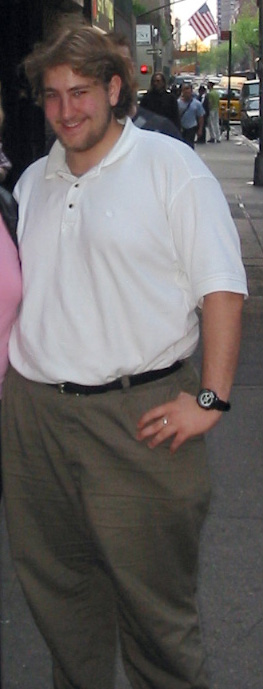
When I was in 5th grade, I found out that I was fat. I was cast to play Santa Clause in the school Christmas play, Some kid, I don’t remember who, said something to the effect of “heh, you won’t even need any stuffing.” It wasn’t until that moment that I learned to be ashamed of my body. Before then, I didn’t really think about it. But at that moment, it was revealed to me that my body was ugly and unpleasant. That was the moment where I changed from being able to watch “Stand By Me” unaffected to flinching every time Jerry O’Connell got referred to as “the fat kid.” That was the moment where I stopped wanting to take my shirt off at the beach.

Being “the fat kid” makes life difficult in a lot of ways, but none so much as dating. I’ve been interested in girls since first grade, and probably before that. Dating in elementary school is just weird, so I don’t really count that. I even had a girlfriend in 5th grade. It seems like a ridiculous thing, to have a girlfriend in 5th grade. I don’t think we even kissed, but it because very important to me later. She and I didn’t particularly interact after we dated, and I can’t even begin to remember how or why we broke up, but I it meant a lot to me all through middle school that someone was willing to give me that kind of attention.

Middle school (6th-8th grade, in my district) was a near-constant stream of rejection. I watched my classmates form romantic connections and hold hands in the hallways. I would hear stories of experiments with adolescent sexuality. Girls would express interest in my friends. I would look around, and clearly see what all of these people had in common – no fatties. The point was driven home by social rejection in other ways, most notably a regular outpouring of teasing for my weight, my fat ass, my “tits.”

Remember how I said that my 5th grade girlfriend ended up being important to me? That’s this part of the story. That “relationship” was probably the only thing that kept me from feeling like a complete loser throughout middle school. As with most adolescent boys, I was obsessed with girls, not only because I had strange new desires, but also because I wanted to be a person with a girlfriend. Somewhere along the line, I internalized the idea that having a girlfriend was the most important thing a person could do to be worthwhile. The longer I spent single, the more pathetic I felt. The only thing staving off complete despair was the fact that I had a girlfriend and one point in my life, so clearly I wasn’t completely worthless to girls.

Except, really, I always knew I wasn’t completely worthless to girls. Girls liked me. I had a number of female friends, and I tended to get along well with girls in general. There was only one part of me that was worthless to girls – my body. No matter how much of a connection I formed with a girl, she would be repulsed at the idea of touching me on any level beyond a friendly hug. My body was disgusting to girls. Sometimes, they would tell me so. Most of the time, they would give me one of those so-called “polite” rejections, e.g. “I just don’t feel that way about you,” or “I don’t have time to date right now,” or “I’m busy on [every evening you ask me out].” Until Mandy.

met Mandy in 9th grade. Well, back up. I met Mandy in 7th grade and thought she was really cute, but she disappeared over the summer. I next saw her again once I got to high school (turns out she skipped a grade). Mandy changed everything. Mandy liked me. Mandy like-liked me. She was beautiful, and smart, and fun, and soft, and amazing to touch, and she. liked. me. Naturally, I had no idea what to do. We dated for over a month before I would even kiss her. But I did kiss her, and she kissed me, and we didn’t stop kissing each other for two months. I, being 15 years old, made some poor decisions, and Mandy left me in July of that year, but I never believed that it was because of my body.

After Mandy, I didn’t date again for almost six years. Oh, I went out with girls. But they would make it clear that we were not on a “date.” As before, girls still liked me, just not my body. In the latter half of high school, I started developing real, deep feelings for girls. I started getting emotionally close with people, even intimate. But none of that changed the fact that my gross, fat body was undesirable at best and repulsive at worst. And every year, I got fatter.

By 2002, my freshmen year of college, I was 275 pounds, and my body-shame was at an all-time high. I was a 19-year-old virgin and hadn’t kissed a girl since 1997. I would fall in love with any woman who even looked in my direction. My shame was so great that I felt unable to turn away any attention, even if it wasn’t the kind I wanted. I let myself be used as not much more than an emotional sounding board. I had a drunken makeout with someone whose name I didn’t even know at a party and I looked at it like I’d just been awarded a Nobel Prize. Hey! A girl who was near-falling-down drunk could stand to touch me! It was pathetic. By the time I went home for the summer, I was convinced that college was going to be a lot like high school.

The Fat Kid, 2000
The Fat Kid, 2000

Mandy saved me again. She randomly came into the record store where I worked that summer. It had been four years since we dated, but she was as attractive to me as ever, probably moreso, since I was now convinced that nobody else would ever be interested in my stupid, fat body. The situation was a complete mess. She was going to school in Pittsburgh, and she had a boyfriend that she would break up with, and then get back together with in the course of a week. But I didn’t care. I wanted her so badly, and we finally had awkward sex in the front seat of my Oldsmobile 98, ducking to make sure nobody on the not-10-feet-away sidewalk could see us. It didn’t matter to me how awkward it was. It wasn’t the sensation that was important. It was the status. I wasn’t a virgin any longer. I wasn’t a total loser. I wasn’t undesirable. This person desired me. She desired me so much that she was willing to massively complicate her relationship situation to be with me.

The Fat Kid, 2001
The Fat Kid, 2001

Unsurprisingly, the situation went to hell within a few months. I visited her in Pittsburgh a few times, and those are some of my fondest memories of that entire time period. She made me feel amazing, and sexy, and she reminded me that not everyone saw my big belly or my fat face as revolting.

Sadly, and to my shame, I didn’t do the same thing for her. While all I wanted was someone to take an interest in my body and my sexuality, she was all-too-familiar with such things. Her life had been a mirror image of mine, and she was convinced that her body and her sexuality were her only assets. While the relationship did wonders for my self-esteem, I suspect it did the opposite for hers. In retrospect, I used her as a self-esteem booster and a status object. I think she just wanted to be valued, and didn’t know how to say “no.” She tried to tell me, and I didn’t listen. Mandy, if you’re reading this, thank you, and I’m sorry.

The Fat Kid, 2002
The Fat Kid, 2002

Around that time, I tried the Atkins diet. It was in vogue at the time, and it was the first time that I tried any kind of rigid diet. It worked amazingly well. I lost 10 pounds in a week. 5 pounds the following week. Another 5 pounds in the next two weeks, for a total of 20 pounds in a month. Eating bacon. I was still 250 pounds, but I felt great. My clothes fit looser, and when I looked in the mirror, I looked thinner! I decided to keep it going, and signed up for Weight Watchers (I figured Atkins would give me a heart attack if I actually kept it up). Over the next year, I lost about 40 more pounds. The need for smaller pants gave me indescribable joy.

Spring 2003 was when I got to know Gina, and fell for her almost immediately. This, also, was a mess. She had a boyfriend at the time, and we were all in a 6-person show together. This was not new to me. By this point, I was used to having unrequited feelings for “taken” women. Even with my new smaller size, I was still “obese” according to my handy BMI calculator, and didn’t harbor any illusions that my body looked good to anyone but me.

It’s a long story, mostly involving me being too desperate to give up and Gina not wanting to admit her feelings. BUT it all worked out, and we’ll be celebrating 10 years together this January.

The Fat Kid, 2005
The Fat Kid, 2005

My body image issues got better after that, but they still weren’t great. I still saw my body as unattractive, but actually having a girlfriend, especially one as great as Gina, was helpful.

Wanting to feel wanted while in a monogamous relationship is a strange thing. Up to that point, I always wanted to be wanted for practical reasons – I hated being single, and I wanted somebody to be with. Now, I was with somebody, and didn’t need to impress anyone but her – but I still wanted to. I still wanted to be wanted, not for any practical reason, just for how it made me feel. Or, more accurately, how not being wanted made me feel. Being wanted by one person was great, but I still didn’t feel attractive, and I still didn’t like what I saw when I looked in the mirror.

The Fat Kid, 2009
The Fat Kid, 2009

It wasn’t until Gina & I opened our relationship, and I lost another 30 pounds, that I started actually feeling good about my body. My first relationship after opening up was kind of a disaster. I was still feeling vulnerable due to my body issues, and she represented all the girls I couldn’t “get” when I was younger. She was skinny, outgoing, popular, and every guy I knew wanted to be with her. When she kissed me, I felt like the coolest kid in school, like I’d never felt before. She was also self-absorbed, inconsiderate, and within a handful of weeks, her attraction to me waned, and she started seeing a much skinnier guy. Like I said, kind of a disaster, but she meant a lot to me at the time.

The Fat Kid, 2011
The Fat Kid, 2011

In February of 2010, I started dieting again. March 27, 2010, was a big day for me. That morning, I weighed myself, and the scale came out to 201.5 pounds. That number might not mean a lot to you, but it meant everything to me. For my height, weighing less than 202 pounds moved me from “obese” to “overweight” on the BMI scale. I honestly never thought I would get there. It felt great. Over the next year, I lost another 25 pounds, and bottomed out at about 175.

More than the weight loss, my body image was improved by joining okcupid. On okcupid, I could meet women who actually found me attractive, and who were ok (or even enthusiastic) about dating a married man. I stopped being able to count on one hand all of the women I ever knew who found me attractive. I started seeing real evidence that my body and my sexuality were not generally looked at as disgusting and repulsive. Women appreciated my body. I even met women who didn’t seem to like me that much, but were still interested in my body. It was surreal at first.

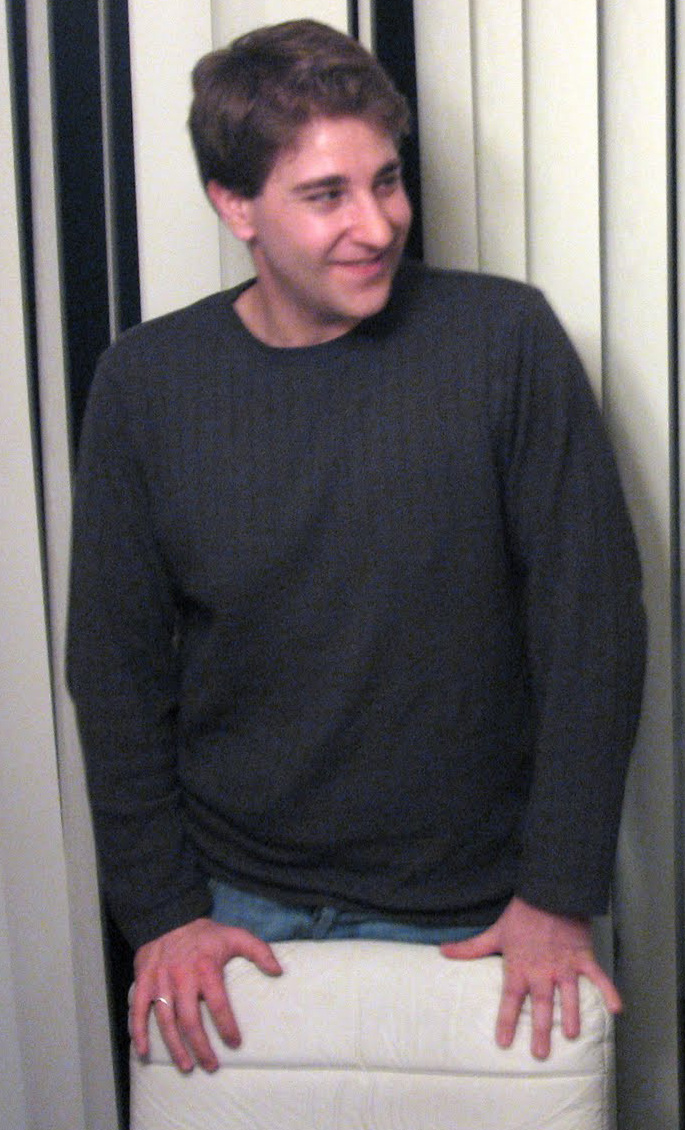
Since then, things have gotten much better. I’ve gained back about 30 of the pounds I lost. I’m not happy about it, but I no longer believe that I need to be thin in order to be attractive. I’ve also stopped viewing women as status objects that I can use to prove to myself how not-hideous I am. Because my insecurities are under control, I’m able to connect with people on a much deeper level. It still hurts when people tell me that my body holds no value to them, but it’s bearable. I love Gina more than I ever did, and I have an amazing fiancee who can’t get enough of me. I’m performing in a burlesque show (and yes, I take my clothes off).

This week is weight stigma awareness week. This morning, I weighed 208 pounds. I’ve eaten 1,397 calories today. My pants fit a little tight. The buttons on my shirt are pulling a bit. I have a lot of love in my life. So it goes.

The Fat Kid, 2013
The Fat Kid, 2013

Fear is a compelling illusion


If you meet me at a poly meetup, for the sake of Lord Xenu and all the minions of Cthulhu don’t ask me how we deal with jealousy or other such banal questions.  Instead, ask yourself how you would do so.

I know.  Life is scary.  You saw your boyfriend check out that cute girl at the bar.  Your boyfriend is currently making out with that saucy minx in the hot tub.  You think that maybe your partner is having a good time, without you, on their date right now.  Maybe in a bedroom somewhere.  Hell, you might just be worried that the person you are in the current process of sexually pleasuring might prefer the way another person does it.  They might be thinking about the flirtatious sex bot at the party you just came from.  You know, the one that triggered your insecurities about your own imperfections.

All of that shit is in your head.

And it’s in my head too.  I worry whether I do enough to keep my partners happy.  I worry about all sorts of things related to insecurity and fear.  But I realize, even while suffering emotional throws of uncertainty, that it’s all an illusion.  It’s all stupid, terrible, lies told by a madman who pulls the levers of fear in my head.  I hate that madman sometimes.  But that madman is me.  And I don’t want to hate myself. So, instead it tell that madman to cut that shit out, because it isn’t helping.

He doesn’t usually listen to me, though.

I understand why people create boundaries, rules, and restrictions in relationships.  I understand the impulse to want to stake a claim of ownership, or at least of permission, around your lovers so that this madman inside your head does not go crazy and start making you feel terrible and afraid.  Monogamy, and polyamory with restrictive rules around things like sleeping over with another partner, not getting too emotionally attached, or something as simple as no sexual intercourse, makes sense from the point of view of accommodating this madman.

But those restrictions don’t solve the problem because that madman is, well, unreasonable.

Your partner really wanting to have sex with someone, but only being “allowed” to make out, touch, and get worked up with them while not doing what they want does not make you feel better.  That’s an illusion.  If your partner come back home from a date, does it matter exactly how much sexual contact they had with some other person (or people?) Isn’t the exact point of pain there either at the desire itself or your own fear? What does it really matter if they did what you were afraid of? Is the act itself the problem?

No.  That’s all bullshit.  When I’m feeling uncertain or jealous about what my wife or other partner is doing with someone else, the problem is not what “base” they got to (oh man, how stupid is that shit?), but my own fear of inadequacy.  And my concern with what parts of their date was touching what part of them is not the location of the problem.  And no matter how much it hurts, how many emotions flare up and demand to be attended to, the problem is illusory and stupid.

Whether a matter of social training about the possessiveness of relationships, an evolutionary/genetic set of dispositions, or something else, it’s all an illusion.  The emotions are real, but the emotions are lying to you about the source of the pain.  It’s a cognitive sleight of hand (and a good one, I’ll admit!), and even us poly people are susceptible to it.  It’s very similar to “religious experience;” the experience really happened, but the experience is lying about its sources. It’s all in your head.

Fear is the mind killer.  Emotions are powerful, and sometimes exist for legitimate reasons, but it is what we choose to do with those feelings that matters.  Jealousy might make you want to punch the guy hitting on your partner, but that guy is not the source of the pain and fear.  A sense of injustice might make you want to rant and rave against a clueless person (whether racist or not), but that person is not the source of the injustice.  In those (and many other) cases, emotion can take us off the path of being the best people we can be.  Fear, like depression, lies.

Don’t get me wrong. I am not advocating any sort of Vulcan-esque repression of emotion or even a complete distrust of our feelings.  Emotions are wonderful, powerful, and useful parts of out human experience (when used well).  I just want us to realize that there is a thing called rationalization, illusion, and a set of cognitive red herrings which compel belief in untruths.  Emotions can convince us we are being reasonable when we are not.  So whether it is possessiveness, righteous indignation, or many other forms of emotion which may compel action, we need to keep in mind that we might be being lied to, by our own brain.

Anger, fear, jealousy, and all the other emotions that are often called “bad” sometimes exist for good reasons.  I will not tell anyone they cannot be angry, annoyed, etc.  I will say that they should be careful with how they use those weapons.  if you are not well trained in the use of a weapon, you are likely to hurt yourself or a loved ones with it.

The First of Likely Several Angry Tirades about Feelings


Writing about what is going on with me these days is difficult to do coherently and concisely.  In the coming weeks, I will likely only be able to muster fragments that will perhaps give you insight into my head and my process.  I am unpacking 25 years or so of consciousness and pain and scars.  Hopefully, brighter days are coming.

I am angry about the emptiness of words.

Or rather, I am angry about the empty way people throw around words and phrases that should be packed with truth and meaning.  We’re taught this early on in our lives.  When you say hello, ask how someone is.  It’s the polite thing to do.  You don’t have to care or even want to know, but the other person should believe that you would like to know.

And then you hear people whine about if you ask a particular person how they are, “They will tell you EVERYTHING.  Jeez, I didn’t actually want to know.  What an annoying jerk!” Why do you ask if you have no actual desire to know anything about how that person is doing?

But there are countless other examples of this.  Take, for example, the sentence, “I am here for you”.

Some people mean this when they say it.  I am lucky enough to have 5 people in my life who mean that.  How do I know they mean it?  They show me.  They swoop in when I am sinking and do their best to lift me, to help me work through the feelings, whatever is needed.  They sometimes ask how they can help, but mostly they know me so well that they know what I need or what would help without me telling them.  It can be as simple as wrapping their arms around me and helping me ride out the badness.

But many people say this because it’s what you’re supposed to say when people confide difficult things.  They say it, but they don’t know what it really means.  When they say it, it translates to, “See? I am a good friend/family member!” But if it is not followed by any action, any actual effort to be present and to help lighten the load that the afflicted is bearing, then it is empty and ultimately hurtful, because you likely won’t follow through with anything.

For instance, I am currently dealing with some major Emotions about my biological family.  Recent communications have resulted in my making the decision to not speak to them anymore, at least for quite a long while.  Why? Well, there are a bunch of reasons, but there are too many to enumerate here and it’s painful to speak about them at length on here.  But it was revealed that none of them knew how depressed I have been for years, and all of them suspected that they have been “losing me for a while now” and my recent communications served as a “final blow” to my relationships with them. Everyone ignored my rather obvious depression and watched as I drifted away and chose to do nothing, because doing would require effort and possible discomfort on their part.

But they claim they are there for me and always have been.

In addition, they have gaslighted me about my experience growing up and in recent years and have made statements about my being selfish and inconsiderate.  I am the black sheep.  I am the bad one.

But…they are here for me.  Every message has contained this sentiment.  Well, I call bullshit.

Another loaded but often meaningless thing people say is, “I love you”.  All of the communications claim this as well, but I think that people say this without knowing what that really means.

People tell each other that they love each other because we’re supposed to love our family.  We’re supposed to love our partners. But I think it loses its meaning when there’s nothing there to back it up.  How do I know I love my people? Because when they are happy, I am happy, even if what they are happy about scares me (new relationships, being far away).  Because I try to be as available as possible for them for when they might need me, and if I fail in knowing what they need, I take the criticism and learn from it so that I can offer better care the next time.  Because envisioning my life without them is a bleak and desolate landscape that I want no part of.  This is because my life with them is bright and full of potential.  It is full of potential for long term happiness and continued blossoming into the people we want to and can be.  I love them because their presence, the people that they are adds to the person that I am.  To say that you love someone when it is conditional or simply a sentiment that requires no action or growth on your part is meaningless and ultimately hurtful.

What I’m saying is that lies hurt, even the vague societally approved lies of everyday language.  Happiness, I think, has a lot to do with trusting the people close to you because trust in the people around you results in feeling safe and we cannot flourish unless we feel safe in our intimate lives.  Trust cannot be attained with the use of empty words.  A thin veil of care does nothing but give way immediately when pressure is applied, and the person needing care will fall fast, this time knowing that you were not prepared to follow through with your claims of love and presence.

I’m going to go look at pictures of otters now.

Adventures in Therapy: PICK UP THE PHONE


Life is…life. No, let me not be so cynical.  Life right now has a lot of good going on, despite the anger/sadness/anxiety party going on in my head here and there. Our burlesque show opened and has been going wonderfully well, and generally dancing around in awesome costumes and allowing myself great vulnerability amongst happy patrons has been exactly what I need at the end of the day.  I often feel this way about Arcati Crisis shows.  I have spent many a show getting my stress out with the power of rock.

I think I would have become “certifiably crazy” years ago if I didn’t have a very healthy and eclectic sense of humor and multiple artistic outlets.  I have very bad days where I can’t seem to laugh at anything and I have zero inspiration for creative endeavors.  Those days are the bleakest.  But most days are at least peppered with moments where I laugh a lot to myself or out loud and where I have ideas for projects I want to do.  Thank goodness.

The show yesterday was absolutely awesome (a blend of no technical problems and fun and appreciative energy from a fab audience).  My final piece takes a lot out of me, as it is about peeling away the artificial layers in order to reveal the true version of myself…yes, I’m such a fucking artist.  Stop rolling your eyes.  Anyway, it is emotional and I haven’t been getting enough sleep.  Long story short, I cried hysterically all the way home out of a sense of loneliness and loss and it was great.  (Note: it was not great)

I have a lot going on and am in the process of making some difficult and life changing decisions to finally rise above the much and mire of my teens (I know…I probably should have done this, you know, in my teens, but whatever…better late than never).  I’m also still dealing with that whole sexual assault thang and in the process of learning to think about myself as important and worthy of considering.

As you might imagine, this is not easy.  So, you know, a competent therapist would be hella sweet right about now, but…GUESS WHAT? Apparently, therapists don’t check their voicemail for days at a time.  And if they do, it doesn’t matter because they have no time for me, but they totally have some names of other therapists I can call and wait around for!  Aren’t they helpful?!?

Dear therapists, I know you are busy because a lot of people need help and I am really happy that some of the stigma is lifting and people are coming to you for the help you need.  But…I really don’t understand why it’s this hard to just get a call back from people.  I know that my experience thus far is not a reflection of the profession as a whole, but what exactly am I supposed to think?  Has therapy really been reduced to an “I know a guy” industry?  I feel like my experience in finding a therapist has been similar to the search for a non-awful/cheating/unethical mechanic.

Look, all I’m saying is if you are going to insist that people call you and leave messages (because for some reason you don’t want people to email you), CHECK YOUR VOICEMAIL AND RESPOND TO PEOPLE IN A TIMELY GODDAMN MANNER.  It’s not hard.  But you know what is hard? Calling a hundred therapists and being treated like you’re just calling to shoot the shit or something.

I cannot say this enough: The process of coming to terms with the fact that you would greatly benefit from professional therapy is a hard one.  If you’re like me, you think that you can do everything on your own and that you should leave the doctors and the therapists and the flu vaccinations and everything else to the people who had it the absolute worst.  I am strong and can take the hit, so if you need this resource please don’t let me take it from you.  This is me giving too much credit to my own privilege and ignoring how much I am hurting and all the stupid shit I believe.  Does that sound easy to you?  It shouldn’t and you should be pretty happy that I have gotten that far without you calling me or respecting me.  But the process of actually finding a therapist should not be this hard.  Picking up the phone is hard, but you shouldn’t have to keep worrying after you get the nerve to do that.

So yeah, I’m aggravated.  I thank all the people who gave me recommendations.  Perhaps it’s me or something though…because people either cannot see me or don’t want to talk to me (apparently).  What I’m really good at finding are useless therapists who do more harm than good!  So if anyone is looking for one of them, hit me up.

I know, I know, I’m sounding cynical again.  Let me assure you that despite the fact that I am developing a general distaste for the therapy industry, I am actually making a lot of progress on my own (well, not strictly on my own…I have some pretty amazing people helping me on a daily basis and I can’t emphasize enough how grateful I am for their presence in my life now and for years to come).  I am a different person than I was even a month ago and things that were hard for me to do before are getting easier and I am learning quickly how to be my own person in a way that others can see.  I knew after my ridiculous therapy appointment a couple of weeks ago that this whole finding not-a-douchebag was going to be long and arduous, so I couldn’t wait around to start the work.  So I’m getting there and I’m functioning well, even if I still have some meltdowns.  It’s ok to have meltdowns.  Things are upsetting right now but I’m living with it and showing it whose boss.  Or something.

Soon I will write a great feminist triumph story that was a light in my life recently.  So there’s that!  But if you have a therapist you love and you are local, ask them if they have evening or weekend hours available and I’ll give them a call.  I will keep calling.  I will keep trying.

Keep moving forward.

Feminism and Artificial Intelligence


Yet while Ada was lucky in the education she received, she has scarcely more ground for optimism than any other intellectually enthusiastic women of her day as regards finding an outlet for her mental energies after her education was completed.

For a woman of Ada’s day and social class who wished to lead a mentally fulfilling life, the opportunities were close to non-existent.  There was generally little alternative but to marry, produce children, and live for one’s husband.

Jacquard’s Web, p. 126.

377px-Ada_Lovelace
Augusta Ada King, Countess of Lovelace

The Ada above is Ada Byron, the only legitimate child of Lord Byron, later known as Ada Lovelace (after marrying a man who later became the Earl of Lovelace).  If you don’t know the name Ada Lovelace, you should.  A close friend of Charles Babbage, who is sometimes referred to as the father of computers, she was inspirational and influential in the development and the spreading of Babbage’s Analytical Engine, which was the conceptual framework for the eventual practical creation of computers.

Over 100 years later.

The reasons why the development of computers happened closer to 1950 than 1850 is in part due to Babbage’s poor diplomatic and interpersonal skills, but also to politics of 1840’s England (Sir Robert Peel, then the Prime Minister of the United Kingdom, had a part in this, being the miser who refused Babbage’s funding in 1842).  Ada Lovelace, a woman of enthusiasm and wonderful ability to explain the concepts that Babbage ingeniously foresaw, was not able to be the spokesperson nor the valuable colleague that she might have been had Babbage’s stubbornness not been so potent.

The ‘Interpretor’

Charles Babbage
Charles Babbage

Many men in academia and technology may have some traditional precedent, with Charles Babbage, in treating women collaborators as mere assistants or, in this case ‘interpreters,’ but at least there is no evidence or reason to believe that Babbage sexually harassed Lovelace (although it would not be impossible that they were lovers, although there is little evidence of this as well).  Babbage was not especially misogynistic or awful, he was actually generally liked as far as I can tell, especially by Ada herself.  But this was the 19th century, and misogyny was simply a stark truth about the European world.

Suffice it to say, Ada Lovelace may have had a much more profound influence on the earlier development of information technology had Babbage’s stubbornness and selfishness not been so debilitating to his obvious intellect.  Perhaps there is a lesson in there for all intelligent and yet stubbornly selfish and short-sighted men in the various places where skepticism and technology reign.

But more universally, there is a lesson for all of us.  Our intelligence, even if great, is often insufficient.  We need more than mere processing power and memory to be wise, and perhaps it is wisdom which we should seek in addition to intellect.  In too many cases, we see people with obvious intelligence (and memory, especially with everything logged online), but not as often do we see actual wisdom, perspective, or a willingness to challenge oneself.  Had a man like Babbage been more wise, we might have had computers by 1900 rather than 1950.  Further, the name Ada Lovelace may be remembered for much more than a mere interpreter or (dare I say) cheerleader for Babbage’s work, but as a fully recognized pioneer in information technology of which she was more than capable.

Notes of the ‘Interpreter’

I made reference, above, to Charles Babbage shrugging Ada Lovelace off, despite their very close friendship and collaboration, as a mere ‘interpreter’ of his work.  This flippant title was bestowed upon her due to her translation of a paper about Babbage’s Analytical Engine by an Italian mathematician, Luigi Menabrea (Lovelace’s translation can be found here). But in addition to translating the paper, she added 20,000 words or so of ‘Notes’  which give more detail and depth to Babbage’s ideas.

For example:

A new, a vast, and a powerful language  is developed for the future use of analysis, in which to wield its truths so that these may become of more speedy and accurate practical application for the purposes of mankind than the means hitherto in our possession have rendered possible. Thus not only the mental and the material, but the theoretical and the practical in the mathematical world, are brought into more intimate and effective connexion with each other. We are not aware of its being on record that anything partaking in the nature of what is so well designated the Analytical Engine has been hitherto proposed, or even thought of, as a practical possibility, any more than the idea of a thinking or of a reasoning machine.

The “idea of a thinking or a reasoning machine.”  This was written in 1843, but the fundamental ideas were older than that, possibly tracing back as far as the night when Babbage conceived of the idea of the Analytical Engine in December of 1834 when he explained the idea to three women, one of which was a 17 year old Ada.

Mind and Machine (skip this section if philosophy annoys you)

I have been thinking a lot recently about the so-called mind-body problem.  I remember when I first was exposed to this philosophical problem, when I started reading philosophy around age 16 or so.  I also remember, when I got to college, being surprised that people still thought it was a problem.  I remember listening to people, usually Christians, that would defend a form of dualism, or at least of perceived difference, between their personal subjective experience and the seeming objectivity of the matter that was their brain.  For many people, there really seems to be a disconnect here.  I honestly don’t get it.

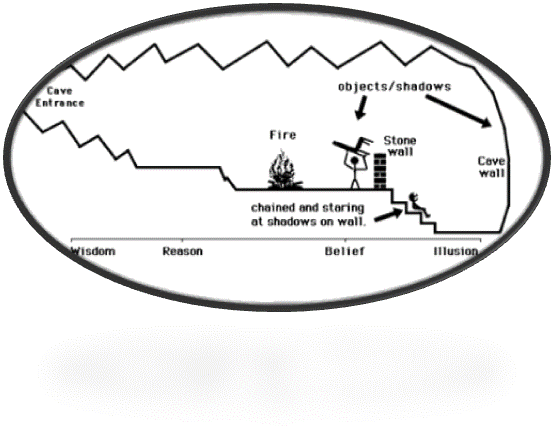
Plato_Cave
An illustration of Plato’s Cave

The idea that my subjective experience simply is what it is (like) to be my brain (well, my whole body really, but mostly my brain) seems intuitive to me.  I don’t feel the disconnect between subjective experience and an objective (projected, really) external reality of ‘my brain.’  I recognize that the illusion is that separation, not either of the sides of the proposed dualism (I’m getting overly philosophical, I know).

This is why I understand idealists sometimes, I just think they are making the same basic error that dualists make–the conceptual distinction between subjectivity and where that subjectivity occurs.  (stupid subject-predicate language making it really difficlt to express that idea!)

Some might balk at this and claim that they have no idea what it’s like to be a brain, but I will argue that this is all you know.  You may say that you have never seen your brain, so you can only assume it exists, but this is disingenuous.  You don’t literally see the light reflecting off of any surface of your brain, to be focused and sent to your brain for processing, but everything you think is your brain.  You could use the same argument for the back of your head.  You will never directly see the back of your head (this bothers me for some reason…).  All of the light reflecting and refracting, entering your eyes, etc happens somewhere else.  You are your brain, and so you have intimate knowledge of what it is like to be a brain.

Continuing with Plato’s cave as the basis for explanation, it is the (metaphorical) shadows on the wall–what Plato called the illusion– which are real.  In other words, all that we ever really experience is our physical body.  Our subjective experience is what it is like to be that body, experiencing the world.  There is no separation of mind and body, because your mind is your body.

Believe it or not, this image was woven with silk on the first automated loom
Believe it or not, this image (1839) was woven with silk on the first automated loom (first demonstrated in 1801) by Joseph-Marie Jacquard.

The looming question of AI (getting less philosophical)

Our brain is a machine.  It’s a complicated machine and we don’t understand everything about how it works, but it is a machine.  It is unlike computers we build, because we designed our computers to work in a different, logical, way (one that is largely based upon the technological ancestors of computer architecture, such as Jacquard’s Loom; the subject of the book I’m currently reading).

The bottom line is that our mind is a process which exists within matter–neurons and supporting tissue–within the brain.  We are fully physical beings, made up of actual material stuff, like chemicals, atoms, and quarks.

There is no soul.  There is no supernatural or dualistic spirit or soul here.  There is no reason to believe that, and the very idea of dualism is fundamentally broken, in that to even talk about some supernatural substance has to steal from naturalism at very least, and that if it were truly separate, they could not interact (creating a more perplexing problem for dualism that I will not dwell on).  Mind, put overly simply, is a process of matter arranged in a complex and delicate way.

And at some point, it may be possible to replicate this type of process artificially.  Now, I’m not much of a transhumanist, at least in the sense of being overly optimistic (or pessimistic) about some potential Singularity which may occur at some point in the (near or distant) future, but I do believe that it is technically possible to create intelligence with computers, and I’m fascinated that Ada Lovelace seemed to foresee this possibility 170 years ago.

Learning from mistakes and successes

For those of you who are disappointed that I didn’t make any horribly misogynistic jokes about women and being artificially intelligent, fuck off.  For those of you who see that our ability to progress–socially, politically, culturally, and technologically–is hampered by our inability to see past the mundane and conservative elements of our nature, then I gladly embrace you as a collaborator, no matter your gender.

We as a culture have come a long distance, and we have a long way yet to go.  We must learn from our errors, yes, but we also must pay attention to when, and how, we succeed.  Babbage didn’t succeed with his project to create an Analytical Engine in his lifetime because he was stubborn, unwilling to re-consider his abilities and deficiencies, and because some of the powers to which he was subject were more concerned with politics than the potential of human ingenuity.

Babbage dropped the ball in arguing his case for government funding to Sir Robert Peel (who was, it is agreed, already prejudiced against the project) in complaining about mistreatment and loss of reputation from people in his community.  And yes, hindsight makes judging Peel’s refusal more biased for us living in a computer age.  But it is worth remembering that rather than take the time to humble his admittedly great intellect and challenge himself to see the problem from another angle, or even to accept Lovelace’s suggestion to be his spokesperson in procuring funding for his work, he never succeeded in creating his Analytical Engine probably because of those faults.

But he left plenty of notes behind, and people used them.  The eventual development of the computer was largely dependent upon the work he and his colleagues did in the middle of the 19th century.  Imagine how much more, and better, they would have done had they not excluded more voices than they heard.  Imagine how much Babbage could have accomplished had he not been so stubborn and, well, conservative (I realize the term ‘conservative’ in this context, is anachronistic).

Further, imagine how much we can accomplish if we all start being inclusive in all aspect of our social, cultural, and technological pursuits.  Or maybe, it will take the Singularity to reach such inclusiveness, since so many people seem unable to escape their own tribalistic nature.  And  then ironically accuse others of tribalism.  Much like the inseparability of mind and body, the great rift is the community.  The problem, of course, is differentiating between the healthy tissue and the cancer.

When a community has some individuals with an un-drifting mission to merely replicate and spread with more concern for freedom than safety, while other parts listen to the world in order to to decide what to do and how to do it better, I think that is called brain cancer.

Coming soon: Masters of Sex! And reviews!


There are three new shows coming up this fall that I’m super-excited about. Agents of SHIELD, because Whedon! Blacklist, because Spader! And Masters of Sex, because duh, I’m a sexologist and Masters and Johnson were two of the most influential sexuality researchers of the 20th century.

The history of sexuality research is almost as fascinating as the study of sexuality itself. Pioneers in the field cannot help but wrestle with both personal and social implications of their chosen field of study — and in a field that’s less than two centuries old, in some ways every sex researcher is a pioneer, even to this day. The movie Kinsey gave a great look into the complicated interpersonal, social, and professional issues connected to choosing to be a sexuality researcher in a profoundly anti-sex world. I’m excited to see Masters and Johnson getting the same treatment.

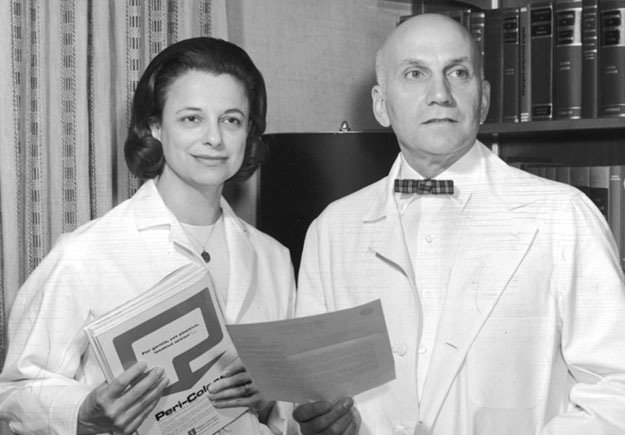
I know a lot of people are curious about how accurate the show will be, and to help with that, I’m planning to review each episode weekly. (I’m notoriously bad at keeping this kind of regular writing commitment, but I’m hoping between my passion for the subject and the nagging of my housemates, I’ll get it done.) Most of my knowledge about the lives of William Masters and Virginia Johnson comes from Thomas Maier’s biography (also called Masters of Sex), which the show is also supposed to be based on. There aren’t a lot of other sources out there, particularly when it comes to Johnson, as I discovered when I was writing a paper on her last year. (I feel a strong natural affinity towards her for some reason.) As far as I’m aware the biography is pretty reliable: it draws from a wide range of sources, and while it gives a central interpretation of the characters, their personalities, thoughts, and motivations, it also includes other people’s differing perspectives and interpretations at many points. (It’s also a great read, if you enjoy biographies or are interested in sex research, and you should be!) So my accuracy commentaries will mostly be based on how true the show stays to the biography, with any additional information I happen to have thrown in.

To get you started, here’s a little basic info about Masters and Johnson (without giving away anything that will likely become plot points in the show.) They worked primarily in the 50s and 60s, a decade or so after Kinsey’s groundbreaking sociological research into human sexuality. Unlike Kinsey, they took a laboratory approach, using medical facilities and sometimes technology they’d developed themselves to measure physiological responses during sex in both male and female volunteers. Most of what we know about physical sexual response (apart from what’s obvious from the outside) comes from their work. Unsurprisingly, there was all kinds of secrecy, controversy, and scandal surrounding their work at various points. Their first and second books, Human Sexual Response and Human Sexual Inadequacy, are hugely important works in the history of sexuality research. (Their later books are increasingly less validated and less important.)

It’s a bad idea to make a hero of anyone, and Masters and Johnson are no exception. We owe them a tremendous debt in terms of our knowledge and understanding of sex, and they helped normalize many, many aspects of human sexuality that were previously stigmatized (like clitoral orgasm.) But they had a number of problematic areas as well, which I hope to see explored in the show. Their work on homosexuality was frankly terrible. And the entire working dynamic and balance of power between William Masters and Virginia Johnson is complex and often troubling. I hope the show digs deeply into the issues of feminism, research ethics, and power in the workplace that are entwined through their story.

So far, everything I’ve heard about the show tells me it’ll be great. I feel good about the casting, although of course both characters (especially Masters) have gotten the Hollywood Looks Upgrade. Stay tuned for more!

black-and-white photo of Masters and Johnson
William Masters and Virginia Johnson

World Religion Tree


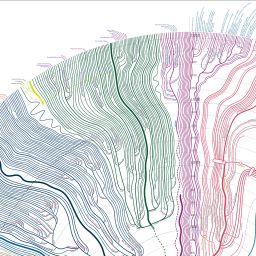
So, this is pretty awesome.  I have spent many years reading about the history of religion, and i think that the subject is very interesting.  I could have spent all of those years doing nothing except reading about religion, and still only scratched the surface of this:

tree
Just a segment of the awesome.


That’s just a snapshot.  To see the whole thing (and to zoom in and scroll around), click here or the image itself.  The complex history and sheer number of religious traditions is astonishing to see displayed this way.  I could get lost in this image for hours.

Perhaps it’s worth pointing out that the fact that we can categorize religious traditions into a tree says something about the nature of religion, and of human culture in general.  Human culture, including religion, does not come out of a vacuum.  Religion is not revelations from up high, it is natural, organic, and growths from us.

In one sense, religions are beautiful in that they represent not only what is amazing and sublime, but also what is terrifying and dangerous, about our ability to create and to interpret the world.  They are windows into our “souls;” glimpses of what we could be–both good and bad.  They are dreams and nightmares all at once, prying under our mundane lives into the engines of possibility.

And yet, for all that is good in them, there are paths which can clean up the mess and the grime attached to these fantastic reveries.  There is a way to drain out the dirty water of fantasy and to know what is real, and as we advance in our understanding we learn more and more about how to do this.  The growth of this religion tree will not cease, but it may be pruned by this method.  There will always be branches of this religious tree, I’m willing to wager, but the branches which survive will have to contest with another tree.

Science, empiricism, and skepticism generally owe much of its existence to the  intellectual traditions of this religion tree, but it is a different type of organism.  Entangled, all too often, with this massive faith tree, skepticism takes root in a part of us which seeks to avoid the siren songs of Nietzsche’s old metaphysical bird catchers.  That ground is fertile, but for many it is foreign soil.  I hope that changes, because our culture needs better soil, if we are too grow, thrive, and survive.

So, once again I get to quote my favorite passage from Nietzsche, referred to above, because I think it encapsulates my values better than just about any collection of words I’ve yet seen:

To translate man back into nature; to become master over the many vain and overly enthusiastic interpretations and connotations that have so far been scrawled and painted over the eternal basic text of homo natura; to see to it that man henceforth stands before man as even today, hardened in the discipline of science, he stands before the rest of nature, with Oedipus eyes and sealed Odysseus ears, deaf to the siren songs of old metaphysical bird catchers who have been piping at him all too long, “you are more, you are higher, you are of a different origin!”—that may be a strange and insane task, but it is a task