Mental health and cognitive errors are the foundation upon which we struggle with interactions with groups, individuals, and ourselves. Whether we are diagnoseable in a mental health context or not and whether our cognitive biases are significantly problematic or not, how these types of factors interact with each other will influence how we understand ourselves and the world around us. These individual concerns will supervene into group dynamics, whether for good or bad, and if we are interested in any kind of cohesion, cooperation, or truth as any kind of group then we must pay primary attention to our personal tendencies towards cognitive errors and mental health concerns.
It’s pointless to merely defend our position with logical argumentation if our very position is subject to biases and potentially mentally unhealthy attitudes. Before we can be concerned about being right philosophically, we have to first be attentive to the effects of mental health, cognitive biases, and self-justification. Being a skeptic means first being skeptical of our own internal processes, because if an error lies there then that error will expand exponentially at every level of our argument, very likely. The very basis of motivated reasoning, self-justification, and rationalizations arise when we fail to recognize our own errors in forming opinions.
To trust ourselves or other people, we have to pay attention not only to our intentions and overt logical steps, but also to the emotional and cognitive foundations of our ideas. Thinking we are being rational, honest, and forthright is pointless if we don’t pay attention to the self-correcting steps we need to take in order to be truly authentic as feeling and thinking beings. Intention and honesty are not enough if we are blind to biases which lie under those intentions and our desire to be honest. Honesty is impotent if we’re wrong.
In terms of this, I agree mostly with Peter Boghossian in the following video:
Yes, we need to be forthright. But in addition to being forthright, we also need to be willing to be wrong, to self-correct, and to head off cognitive biases, whether they take the form of emotional or rational patterns. If we start out being unwilling to self-correct, this will have obvious ramifications for how we interact with the world, other people, and with our own internal concerns.
—
Cognitive Biases
When I started writing in blog-like form more than 15 years ago (college newspaper columns mostly, but also some essays I wrote for various publications as well), I was writing almost exclusively about atheism. I was writing screeds against religion, “new atheist” style, back in the lat 1990’s. In college, I studied world religions, cultures, and some philosophy, and my senior thesis was about the philosophical and cultural influences of Greece/Rome on the development of the Catholic Church. I had heard all the apologetics (I have not heard anything really new in years), became fairly good at responding to them, and this helped me discover and become part of the atheist community in early 2002, when I started graduate school.
In talking with theists and other atheists, I had come to witness all sorts of rationalization, motivated thinking, and cognitive biases. I became fairly good at spotting when people are subject to these cognitive errors. I’m not immune to such things myself (none of us are), but I’m fairly good at noticing it during or at least shortly after doing so (especially with Ginny around to help point it out), and I try to correct it as best I can. The more emotional I am, the more likely I am to be subject to biases. But exposure and attention to these things has helped make me less prone to such things, even if I do occasionally find myself twisted up in logical rationalizations from time to time.
So, when I later started hanging around polyamorous people at meetups, private parties, etc, I started to utilize those tools which I had honed within the atheist community, and started to notice patterns of motivated reasoning, biases, and rationalizations there too. it’s not just theists (or atheists) who are subject to these concerns.
Most of the motivated reasoning, biases, and rationalizations I ran into was pretty low-level every day stuff, but occasionally I would spot a behavior which was really dug deep in self-justification. And over the years, I have gotten to know various levels of these types of cognitive errors in belief, behavior, and preferences which exist among polyamorous people.
What I have come to believe (tentatively, of course) is that we bring cognitive biases, rationalizations, and self-justification with us into whatever communal or social networks in which we spend significant time. Those cognitive concerns influence how we will interact with other people, how we will think about issues which come up, and will be the foundation of where we will stand in the case of any disagreements, rifts, or enmity. When things go bad, where you will be stand relative to an argument will be at least partially based upon what kinds of cognitive errors you are prone to.
Going back to the atheist community for a second, let us take a moment to recognize the various splits, rifts, and arguments which have raged over the last several years. A-plussers, slymepitters, and freethought blogs, oh my! Now, I have not seen any significantly complicated analyses of how things like cognitive biases, self-justification, and personal preferences determine where a person will lie on these battle lines, but I’d bet we would start seeing some correlations if we did (which says nothing about causation, I know).
We’re all subject to cognitive errors. We all have to be cautious with certainty, whether we err on the side of servility or arrogance. We all have to improve at making sure we are paying attention to how our cognitive biases and mental health issues help determine our opinions, behaviors, and relationships. All too often people will demonize another person out of a need for self-justification. We will idolize someone else for similar reasons.
We need to have the bravery to demand complete honesty, vulnerability, and willingness to be wrong (or right) when not only the facts support it, but also various perspectives on those facts support it. Because facts are also subject to bias. That is, they may seem like simple facts, but memory is subject to emotion and bias, and perhaps we don’t remember that “fact” correctly. When people disagree over events, I’m willing to bet that all sides are not only subject to memory fault, but also with their ability to think intersubjectively about the issues well enough. That is, even if the actual facts are not in dispute, certainly our values, preferences and biases will shade how we skew how those facts interact with the world.
And then all we have is arguments steeped in motivated reasoning, mental health issues conflicting into personality disputes, and rifts with people who do not understand each other. We can do better.
—
Mental Health
Concerning mental health, we have a similar problem at hand. The symptoms of mental health concerns are common among all of us, to varying degrees. Even if we are not diagnoseable per se, we may have behavior patterns, emotional issues, or cognitive impairments which cause us to miss seeing important influences on how we perceive and interact with the world. We should all be willing to recognize the symptoms of our behavior, how we are seen by people, and how we can improve.
If you suffer from symptoms consistent with anxiety, depression, or even a personality disorder, then you need to understand how those symptoms effect how you behave and think. You don’t have to be diagnoseable as a borderline to be subject to problems with emotional management, for example. You might not fall under 5 out of the 9 symptoms to learn something about yourself as a person, if you struggle with some of the symptoms.
Consider the difference between having to interact with a person who displays symptoms which cause conflicts but who is aware of them and is trying to solve them, rather than behave defensively and deny or rationalize their behavior as if nothing was wrong. I know that when I have been defensive and have rationalized my behavior, I have caused immense tension for other people. I care about that and I care about my mental health, so I work to overcome such struggles. Because I know I am capable of rationalization and self-justification, I have to check myself in order to see if I’m not just emotionally or cognitively compromised when I’m in conflict with someone else. Learning how to see past your own biases is perhaps one of the hardest things we have to do, as humans.
Watching someone who is in defensive denial about their behavior is among the most frustrating and powerless positions I have dealt with in my life. For a person to get better, they first have to admit there’s a problem. If they are not willing or able to see the problem, any conversation, criticism, or attempt to help is met with a wall, emotional reactions (feeling “attacked”), or a counter-attack. Combine this with with intelligence and you have a recipe for bullying, enmity, and potential abuse. I’ve seen both sides of this, and we can do better.
—
Please, be willing to look honestly and fully at yourself. Do not merely invite criticism, but hear it. Do not merely argue your case, but try to understand your interlocutor as well. Learn as much as you can about not only logical fallacies but also cognitive biases, memory, self justification, cognitive dissonance, and mental health. If we all do this more, there will be less drama in the world (wouldn’t that be nice!).
There are genuine causes for personal and cultural rifts. Sometimes, people are just harmful and wrong. But sometimes those narratives we tell ourselves about how terrible someone else is are based in cognitive errors and may be related to mental health concerns. Sometimes, when all sides are a little wrong, we can convince ourselves that it’s just them.
Own your mistakes, try and mitigate our blame of others’ mistakes, and do not allow tribal thinking, self-justification, and anger to shape how we interact with each other. Because even if you have reason to be angry with someone, there is often room to step back and realize why they are angry with you, and what you both might learn from each other if you just stop drowning in your own emotional and cognitive crap. If we fail to do so, we risk exacerbating conflicts rather than potentially solve them.
Of course, I don’t expect some people to hear or understand what I mean here. That might mean that I’m just wrong, but it could also mean that those people are just too biased to comprehend.
More likely, however, is the possibility that I’m a little wrong, and they are a little biased.
It’s back! We’ve finally got a new episode of PolyskeptiCast, with hopefully many more to follow. We talk about a lot of things, and we’re guessing you have some thoughts and opinions about them
Discussion questions: What are your personal red/green flags with new partners? Things that indicate early on that someone might or might not be a good partner for you specifically?
Where do you draw the line between looking for specific character traits and hunting for people to fill a particular slot?
I love me some subconscious gender bias and its hidden malevolent effects on society. So you’d think I’d have been excited when reports came out of a study claiming that female-named hurricanes are more deadly than male-named ones, because people don’t take them as seriously and don’t prepare or evacuate adequately.
Even more than rooting out subconscious gender bias, though, I love critically digging into scientific work and picking apart how strong its data, interpretations, and conclusions are. Especially when they sound fishy to me, and this one sounded a bit fishy. Gender bias is trendy right now, and while I think it can and does have powerful effects, that hurricane-deadliness thing is a huge claim. So as interested as I was in the original study, I didn’t get really excited until I started seeing some critiques.
Even more than both those things? I love names and naming and the psychology of names and name trends and all that. I try to keep that particular love quiet most of the time because it’s boring and weird to most people and not particularly useful. But this vortex of three keen interests of mine amounted to my spending a solid chunk of the last 24 hours reading, analyzing, playing with numbers, and generally geeking out in the worst way.
Unfortunately, I don’t have access to the actual writeup of the study… fortunately, some of the data is available for public view here, which is awesome. So I’m doing the best I can with what I have.
The authors took data on all hurricanes since 1950, including the hurricane name’s position on a scale from most masculine to most feminine, and number of deaths associated with the hurricane.
Statistical analysis showed that names that were ranked as more feminine were associated with more deaths.
To test their hypothesis that the higher death toll was due to social perceptions of a female-named hurricane as milder than a male-named, the authors did a series of experiments where participants predicted the severity of an invented hurricane, or indicated whether they’d evacuate or take other precautions for it. The scenarios were identical except for the gender of the hurricane name: Victor or Victoria, Alexander or Alexandra, as examples. Participants overall took the male-named hurricanes more seriously than the female-named ones.
The authors take the hypothetical scenario response results as evidence that people in general take female-named hurricanes less seriously, and are less likely to adequately prepare or evacuate, leading to a higher death toll.
Up until 1979, all hurricanes had female names. Over time since 1950, hurricanes have become less deadly, which confounds the study’s data. (The study authors did do a separate analysis of hurricanes from 1950-1978 and 1979-2012, but the results did not reach statistical significance, which the authors say is because each group is too small.)
None of the six studies on hypothetical scenarios, which the authors used to demonstrate the causal link they’re claiming, used a population that is necessarily representative of the coastal town-dwellers who are actually impacted by hurricanes: three of the studies used undergrads, three used participants recruited via an online platform.
There are a lot of known major factors that impact a hurricane’s deadliness, and it’s unlikely (and insufficiently demonstrated) that a subconscious gender bias is strong enough to have a significant effect above those other factors. (I know, I worded that vaguely. That’s not the part that I examined, so read the article for more details if you’re interested.)
The first bullet point is huge. If it’s true that hurricanes in earlier decades were more deadly than hurricanes in more recent years, then that’s a major confound that potentially overthrows the whole study. The other issues are relevant and important, but the first one is major.
The analysis looked not only at male or female designation of names, but at the perceived masculinity or femininity of a name. (For non-hurricane examples, most people likely perceive Angelica as a more feminine name than Jean, and Brock as a more masculine name than Julian.) It was the name’s place on the masculine-to-feminine scale that related to its deadliness, not simply the male/female designation of the name, and those results held true even before 1979 with more feminine female names accompanying more deadly hurricanes.
Years elapsed since the hurricane (in other words, how long ago the hurricane happened) is not correlated with the hurricane’s deadliness.
They addressed the other critiques, but their commentary amounted to “Well, yeah, that’s an unfortunate feature of the resources we had available, but that doesn’t disprove it.” Which is true.
From reading the articles linked above, I had two major questions:
Have hurricanes actually become less deadly over time? It seems to me that the study’s authors and its critics are saying directly contradictory things about this, and it makes a huge difference.
How did the study authors determine the relative masculinity and femininity of names? And how valid was this ranking?
To my delight there is a spreadsheet available giving the hurricane names, ranking on masculinity or femininity, death toll, and lots of other data. So I’ve been able to play around with it a bit myself, and while my stats knowledge is pretty limited, I can do basic math.
To the first question, “have hurricanes become less deadly over time?” there seems to be a direct contradiction between what the study authors say — “how long ago the storm occurred did not predict its death toll” — and what the critics say — “hurricanes have also, on average, been getting less deadly over time.” Of course those sentences have different words in them, and it’s possible for both to be literally correct. And in fact, as far as I can tell, they are. This is why you have to read your science reporting carefully, kids!
I am sure there’s a sophisticated statistical regression thingy one could do with this data, and it might be that I’m doing it completely wrong, but here’s what I got. Using the good ol’ average formula, I came up with these numbers:
The average death toll of all hurricanes from 1950-1978 (when all hurricanes got female names) was 27.
The average death toll of all hurricanes from 1979-2012 (when hurricanes got male and female names) was 16.
Thus far, the critics seem to be winning. That’s a pretty substantial difference between the all-female group and the male-female group. Without doing any fancier calculations, this layman’s eye is gleaming with suspicion.
To get a sense of whether the decline was smooth over time, I did the average death toll by decade, and here’s what I got:
50s: 24
60s: 36
70s: 16
80s: 6
90s: 15
00s: 19
10s: 68
Two major things jump out: the 80s were a great time to be in a hurricane, and the 10s were terrible. Of course, there were only three years counted in the 10s, 2010-2012, and in fact only three hurricanes happened in those years, so as a decade it should be discounted entirely. And one of those hurricanes was Sandy, which has the third highest death toll on the list (159, after Diane in 1955 with 200 deaths, and Camille in 1969 with 256. Hurricanes Audrey and Katrina were excluded as huge outliers, with death tolls above 400 and 1800.)
The authors’ statement, “how long ago the hurricane occurred did not predict its death toll,” may well be true. The weirdly low-fatality 80s plus the highly deadly Sandy coming right in at the end could blur the overall trend. (Please, someone who’s competent with statistics chime in and explain all the things to me!) But that doesn’t change the fact that hurricanes in the three decades of female-only names were, on average, more deadly than hurricanes since male names began being used.
So what about the author’s second rebuttal, that it wasn’t just male or female designation of a name, but ranking on a scale of masculinity to femininity, that predicted deadliness? They argue that even in the all-female era of hurricane names, a Hurricane Angelica would be taken less seriously than a Hurricane Jean, and thus lead to more fatalities. They rated all hurricane names on a scale from 1 to 11, with 1 being extremely masculine and 11 being extremely feminine, and used that rating in their analysis.
I wasn’t able to find out how they assigned the masculinity-femininity ratings to each name, and I’d be much obliged if someone who has access to the article could tell me. Because obviously, the analysis is only as good as the validity of those ratings. And I am — to put it mildly — skeptical of how valid such ratings could possibly be, especially in terms of supporting the authors’ hypothesis.
Name perception is a tricky thing. It’s formed by a lot of factors, sound and association being the biggest. I felt fairly confident that most people reading this would agree that Angelica is a more feminine name than Jean: it’s got more syllables, an ‘a’ ending, and the word ‘angel’ contained in it. Those are three big markers of femininity that add up to a pretty indisputable trend in how we’re likely to perceive it. But what about, say, Flossy and Edith? Alma and Ione? Erin and Sandy? In each of those pairs of names, which do you think is more feminine? How easy is it for you to judge? I’ll put the answers according to the authors in white text: (Edith, Alma, Sandy) Is that what you’d have said?
I did a little quick and dirty experiment on my facebook wall, asking friends to rank five names from the list in order of least to most feminine. The names were Erin, Sandy, Barbara, Cleo, and Ginger. After 13 respondents (I SAID it was quick and dirty) I tallied up my results. One thing I noticed was that absolutely no one ranked all five names the same way. Ginger was always in the top 3, Erin always in the bottom 3, but the others were all over the map. Sandy was particularly interesting: 5 of my respondents ranked it as a 1 (least feminine), and 5 ranked it as a 4 or 5. When the scores were averaged it ended up ranked right in the middle. I was curious about Sandy because I think of it as an androgynous name that’s used mostly for females, and thus on a 1-11 scale of masculinity/femininity, I’d rate it around a 7. The study authors rated it at 9, solidly in the middle of the feminine category, above names like Florence, Jeanne, Connie, and Opal. One person suggested that it’s an association with Sandy from Grease which leads to a more feminine impression of the name. So some people hear “Sandy” and think Olivia Newton-John, while others hear it and think, “Probably a girl but could be a boy.”
Interestingly, when I averaged my respondent’s ranking of each name, I came up with the exact same order that the study’s ratings of each name gave: Erin, Cleo, Sandy, Barbara, Ginger. Although none of my friends ranked them in exactly that order, the average matched neatly with the names’ order in the study. So yes, while individual ratings of a name may differ considerably, the aggregate impression over a large group of people might be stable.
But the question then comes in, which large group of people? If there’s one thing you can say definitively about name perceptions, it’s that they change dramatically over the years. Names like Florence, Mildred, Bertha, and Edith were once considered youthful, fresh, sweet names for a baby girl. Now they conjure up an image of a grandma or great-grandma. I think of Ashley, Stephanie, Jennifer and Samantha as normal feminine, young-woman names, but they’re on the cusp of becoming mom names, the kind of names that Barbara, Carol, and Donna are to me. Our impression of a name is profoundly tied to the generation we were born in. And this is important to assessing the study because the whole argument is based on the assumption that people’s subconscious impressions of a name — and specifically its masculinity or femininity — are shaping their behavior.
I don’t doubt for a minute that the name given to a hurricane gives people a qualitative impression of it, based on how they normally think of that name. Names shape how we see things and people; that’s why I find them so fascinating. But the impression I have of Hurricane Carol now is very different than the impression a community in 1954 would have had of Hurricane Carol. In 1954, most Carols were in their teens and twenties. Carol then was something like Madison today, just in terms of when it became popular and was being commonly used.
I assume that the study authors’ name ratings were obtained by asking a (hopefully large and diverse) sample of people to rate the names on femininity and masculinity. If they did their job right, they also checked their ratings for validity among a few different groups of people. Even if they did, though, that doesn’t mean the ratings are valid when applied to the specific people relevant to their hypothesis: the community of people that was responding to news of an incoming hurricane.
In fact, when it comes to earlier decades, we can be pretty confident that they aren’t: the entire cultural milieu, the people that were associated with a name, and the names that people thought sounded perfect for their baby girls and boys were entirely different.
Barbara then.Barbara now.
None of this disproves the study. It’s possible that perceptions of a name’s “femininity” remain stable over time even while the images of what kind of person goes with that name shift decade by decade. But in my view there is not nearly enough evidence that this is the case, and some good reasons to think that it may not be.
I also question how valid the correlation is between masculinity-femininity rating and associated deaths based simply on the distribution of names on the masculinity-femininity scale. The names tend to cluster at one end of the scale or the other, with the overwhelming majority lying up at the feminine end. There are 25 names in the bottom half of the scale, rated between 1 and 6: all but 3 of these are rated between 1 and 3. So the bottom half of the scale has fewer names and they’re heavily weighted toward the low end. There are 58 names in the top half of the scale, 46 of which are rated between 8 and 10. So the top half has over twice as many names, and they’re weighted toward the top end but nearer the middle than on the masculine side of things. There is only one name each in the 3, 4, and 5 zones, and only three in the 6. Hopefully the authors did some fancy math to correct for any effects that this grossly uneven distribution might have contributed to, but without seeing the study I don’t know, and I remain skeptical.
TL;DR
As best I can tell from what’s available to me, the criticisms of the original study by Jeff Lazo are sound. Hurricanes did kill more people on average in the era of all-female names than since then. The authors’ counter-argument that they also found an effect of relative femininity of a name depends on fine-tuned rankings of a name’s femininity and masculinity, the validity of which I’m highly skeptical. It is possible that the authors’ contention is true and that the name given to a hurricane impacts people’s preparedness level, to an extent that its effect is noticeable over the other relevant factors (media coverage, economic issues, etc.) but it is not sufficiently demonstrated by the study thus far.
OK, I give up on the analysis of Ayn Rand. It’s repetitive, annoying, and it’s not getting us anywhere. Ayn Rand was a terrible philosopher, she should not be taken seriously, and selfishness simply cannot be the basis for anything ethical. So, instead, let’s look at some idea which might actually get us towards an objective ethics.
Or, more precisely, an intersubjective ethics.
Why not objectivism?
Clearly, Rand’s rationalized whims dubbed objective was a philosophical failure. Her system was egoism in disguise, a projected set of values onto the tapestry of the universe. In the end, it was no different from Plato’s ironic projection of his thoughts onto the outside of the cave (ironic because it was the very phenomenon of projection that he thought he was correcting). Ayn Rand thought her selfish values were universalizable.
But beyond Rand’s particular brand of “Objectivism”, there is a further problem with moral objectivism as it is conceived in ethical philosophy. Here, for example, is how the distinction between objective and relativistic ethics is described on the Internet Encyclopedia of Philosophy:
The metaphysical component of metaethics involves discovering specifically whether moral values are eternal truths that exist in a spirit-like realm, or simply human conventions. There are two general directions that discussions of this topic take, one other-worldly and one this-worldly.
If you read the rest of that section, you will see this distinction played out between immutable objectively true moral codes or values pitted against either individualistically derived or culturally maintained sets of ideas which are dependent upon human thought. Here are a couple snippets from that page:
Proponents of the other-worldly view typically hold that moral values are objective in the sense that they exist in a spirit-like realm beyond subjective human conventions. They also hold that they are absolute, or eternal, in that they never change, and also that they are universal insofar as they apply to all rational creatures around the world and throughout time.
…
Technically, skeptics did not reject moral values themselves, but only denied that values exist as spirit-like objects, or as divine commands in the mind of God. Moral values, they argued, are strictly human inventions, a position that has since been called moral relativism…. In addition to espousing skepticism and relativism, this-worldly approaches to the metaphysical status of morality deny the absolute and universal nature of morality and hold instead that moral values in fact change from society to society throughout time and throughout the world. They frequently attempt to defend their position by citing examples of values that differ dramatically from one culture to another, such as attitudes about polygamy, homosexuality and human sacrifice.
Ever since I started reading philosophy, around the age of 14 or so, something about this distinction bothered me. It bothered me so much that my MA thesis was geared around the ontological aspects of this same distinction, as it pertained to the relationship between science and religion (ontology, to be more specific) especially.
I have come to conclude (tentatively, of course) that this philosophical dichotomy–whether between ontological realism or anti-realism, objectivism or relativism, etc–is a kind of cognitive splitting. And sure, I’m aware that many thinkers have existed in the many grey areas between such extremes, but I feel that defining the problem in such dichotomies isn’t helping and perpetuates us thinking of these questions in terms of ethics being either objective or relative, when it might be neither.
I believe that there is a nuanced and subtle way to appeal to the cognitive, emotional, and social advantages of both objective morality and relativism. If this approach is sufficiently powerful, it could establish a metaethical, normative, and potentially applied ethical way of thinking which achieves the best of both worlds, as it were, without sacrificing either reality or the sense of shared values. That is, such an approach may satisfy our desire for consistency and meaning which objectivist approaches provide, while at the same time allowing our individual subjective experiences to not be truncated by proposed “objective” truths which those experiences might contradict.
Truth, after all, must rise out of subjective experience and be weeded out by empirical methodologies. Truth is not derived from meditating on universal imaginary worlds, revelation from gods, or ideologies. Truth is the thing that individual people conceive of and offer to the rest of us to test, criticize, and perhaps accept as worthy of adoption. We should think of whims, values, and ethical preferences the same way.
The parts of us that are attracted to the certainty of an objective moral foundation, whether from religion, reason, etc, look for a way to project our individual experiences, values, and conclusions onto the world. It creates the illusion that our values are not merely opinion. But the parts of us which recognize the diversity and (often) contradictory nature of those subjective experiences will balk at the possibility of there being an objective reality to ethics. Whether people see this subjective diversity as the source of evil, chaos, or mere inefficiency, it creates a problem in establishing any shared ethics.
Whether we feel compelled to myopically obsess over our own values and desires or to altruistically sacrifice for the sake of the whole (as well as all the grey areas in between, of course) are one type of approach to addressing this problem, but it is not the only way.
Ethics as an emergent property of society
There is no Platonic world of Ideas, divine creator, or some other objective source of moral conclusions or values. Moral values only make sense within the scope of a plurality of sentient beings who interact, and it is only with such beings that questions of harm, welfare, rights, etc can become relevant. This, to most, might seem to imply that any conversation about morality must be relativistic, subjectivist, and possibly ultimately selfish or nihilistic in nature.
Oh Jack Chick….
And it is certainly possible to construct a normative ethic which stays within this realm of relativism. Ayn Rand did it (poorly), Nietzsche did it (brilliantly, but often misunderstood), and there are many others to choose from. But if we remain convinced of and mired in the realm of relativism, problems arise related to whose subjective whims to follow (if we should follow any, of course) and how to proceed with establishing guidelines, social rules, or even laws. If there is no objective source, how can we escape pure, selfish, ethical egoism?
This has been the lament of many moralists, and not only from religious conservatives. Their arguments are sophomoric and trite, but they are obviously hitting on an issue with cognitive, emotional, and social weight because it keeps working. The lament of meaninglessness, poignantly illustrated by Dostoevsky with his claim that without god “all is permitted,” is trotted out frequently by those terrified of subjectivism and relativism.
And relativists of all stripes will attempt to respond with other meaningful values. Some might say that we can and should create our values. We can get together, agree on some basic principles and rules, and decide to abide by it or face whatever consequences we also agreed to. Social contract theory, in essence, is where potentially conflicting and disagreeing people agree on how to run our lives as a group.
Some might point to an ideal as a sort of agreed upon arbitrary replacement for the idea of an objective source. It would be sort of like creating an idol, giving it qualities, and asking everyone to try and emulate this idol. In the absence of a clear objective source, we idolize either a person (which we might deify), an idea (such as democracy, freedom, etc), or even a set of traditions which define who we are, how we behave, and who we demonize. We often do all of these things to various degrees.
All of these approaches necessitate that we utilize our subjective perspectives in some manner. But because they emerge as private experience, walled away from the rest of the world behind a veil of subjectivity, does not mean that we have to conclude that morality is a selfish enterprise. In fact, if we remain behind those walls, then we cannot do ethics at all. The ideas have to come from us, ultimately, but we have to use our ability to communicate, understand, and agree to implement any of these ideas as ethical constructs.
The usual suspects
While such a set of values would grow out of subjective soils, it would either live or die in the real, intersubjective, world based upon how well it survives the trials of communication, interaction, and contradictions between other individuals and ourselves. A selfish whim or value will either work as a shared value, or it will not. No one individual can decide this alone (although individuals may articulate it better), because whether it works is not subject to any one person (or even a set of persons who happen to accidentally agree), but to how the value supervenes on the group.
When a value is presented by a person to a group, society, or even all of sentient life, it can be evaluated in a different environment from which it grew. As this idea moves away from individuals and towards the diversity of subjective opinions, it will either survive as a value which can be shared, or it won’t. No matter how well this value suits a person, or even a small group of like-minded individuals, if it cannot be applied to the group then its value as a moral foundation or value may be weak.
If you cannot show how the idea which you value in your life among yourself, friends, or family, is useful or helpful to everyone then it might not be a value which most people can share. My (hypothetical) selfish interest to do whatever I want, and not care about the desires of others, cannot be a shared value because there is a logical contradiction to applying it to the group. The idea is self-refuting when applied to the ethically relevant group;society.
Kant and the Scientists
Much like Kant’s categorical imperative, if the value a person presents to the world cannot provide value to the group, then the idea may be useless and possibly amoral (if not down right immoral). The philosophical and scientific study of ethics is, therefore, an epiphenomenon of subjectivist, relativistic, preferences. But rather than remaining at that limited and myopic level of description, looking at the effects of introducing those subjectivist preferences to the group dynamic creates an emergent property, ethical philosophy, which acts as a sieve for what moral principles are valid for consideration.
Thus, it does not create an objectivist ethic, because such a thing is impossible. It creates, however, a level of description which acts very much like objectivity in relation to our minds. It is a reality outside of us, but it was created by our collective effort, communication, and understanding. Being intersubjective, it is always being revised and updated just like a scientific theory. The strength of its propositions is directly related to how well it survives criticism and attempts to sink it.
It is not selfish, because selfishness is incapable of the relevant understanding and concern necessary to create the conversation which could sustain it. It is not absolute, because it is subject to actual circumstances which might change. It adjusts to our preferences, values, and thus is perfectly suited for progression and improvement as our understanding of ourselves, the world, and communication is improved.
It is also not relativistic. It is not culturally relative because all cultures have to deal with the realities of the facts about human psychology, harm, and the inter-related aspects of human existence. All cultures are subject to the same reality, and merely having the mass opinion that, for example, slavery is acceptable does not survive the larger skeptical, empirical, and rational analysis of the effects of slavery on people. It’s also not relativistic in the sense of being a matter of whims, because being subjected to scrutiny from any and all people erases that.
It is, however, skeptical and scientific. While this approach begins as individual subjective preferences, just like with other questions about the nature of reality it gets exposed to other people who will try to demonstrate problems with those ideas. Morality, values, and meaning are not ontologically different from other facts. The facts about how I feel, why I feel that way, etc are empirical questions. Once we realize that we are talking (when talking about ethics) about how to best implement ideas about how to behave in relation to other people, the question is one of doing the empirical work to find out how my feelings interact with the feelings of other people.
Because if I accept the reality that other people exist, have similar types of internal experiences as I, and that I’m capable of figuring out some things about those feelings, preferences, and whims, then ethics becomes a philosophical puzzle about how best to arrange guidelines, rules, or laws about how to interact which maximizes the experience of people. And then we can pull in questions of consequences, best habits and personality traits, and fairness (among other considerations) in order to figure out the details.
Ethics is an enterprise for science. Just like with facts about the nature of reality, it starts with subjective experiences and through epiphenomenal processes the emergent property of true things comes about(ideally). But for it to work we all have to be willing to be wrong, especially about our own values. Our preferences, even if they are working for us, might be better supplanted by other values (in some cases). We cannot allow ourselves to rationalize our selfish preferences as a fundamental value. We cannot allow self-justification, groupthink, or tribalism to convince us that our group has superior values. If our values are hurting other people, it is very possible they are not the best values.
And, most importantly, we can not allow ourselves to idolize, deify, or even consider settled, our values. They must always be open for criticism and debate. There is no room for sacred ideals, ideologies, or tribalistic jingoism in values. The more isolated our values are, the more exposure makes them defensive or aggressive, and the less communication with alternatives exists, the less powerful those values will be.
Ethics is not merely relative and it is not objective. But it can be shared as an intersubjective reality and it can draw from our most personal experiences and values. In the end, ethics cannot rely on either any ultimate reality or personal preference; it must rely on reality potentially telling us that our preferences might be harmful and in need of alteration.The truth points to itself, but the truth is also not written in stones, ideals, or hearts. It is only written, collectively, in the great conversation which I hope we all keep having.
Overwhelming emotion has been a story of much of my life. From a bad temper as a child to the likelihood of anxiety and traumatic memories suddenly paralyzing me or causing dramatic behavior today, it is a thing I deal with most days. I can be calm one moment and in a minute I can be full of flurries of fear, hurt, and am shaking so much that it’s hard to type. This, in fact, happened to me while I was composing the draft of this blog post, because I received news that triggered fear, anxiety, and anger in me. I had to walk away from the post for several hours before continuing, knowing that had I continued as was, the post would have been full of anger. Parts may still contain a bit of that.
The Cause
The neuroscience of BPD says that borderlines tend to have smaller amygdalas, and when a stressful stimuli occurs what happens in the parts of the brain responsible for emotional managements (amygdala included) is that it acts sort of like a small engine which revs up really fast, putting the person in a situation where they pass the appropriate level of emotion for that situation and often towards emergency levels of emotion. This, combined with the decreased activity in the pre-frontal cortex, where executive decision making, complex problem solving, and the ability to cognitively distinguish between nuanced ideas happens, causes a potentially explosive situation.
It’s like having the fight/flight reflex happen merely at hearing bad news. Wait, no, it’s not merely like that; that actually happens to me sometimes..
This state of affairs leads to a mood where impulses become much more problematic. For me, these impulses feel like swimming within an ocean of a new mood which I am drowning in. It’s like I was suddenly inundated with the waters of fear, anxiety, etc and the sudden desire to say something, do something, or hide in a corner alone is like being near something which is floating. To have the wherewithal to recognize that I’m not actually drowning and the floating thing is actually a hungry bear is a difficult challenge.
These sudden changes in the emotional environment within me may persist over an extended period of time, which for me is usually hours rather than days or longer (as with, for example, bipolarity, where the mood may last for weeks or longer.). Often, the mood will pass within minutes, depending on the severity and the cause. Adjusting to the emotion, allowing it to calm over time and through positive stimuli (affection usually helps), and preventing it from perpetuating via re-engaging the triggers all help avoid giving into the impulses.
Essentially, radical mood swings can sometimes mean going from calm to crazy in a few seconds. And because the parts of the brain responsible for emotional control and rational thinking are suddenly compromised, suddenly and often without much warning, one doesn’t always have time to prevent the emotion from taking over. The real strategy is to avoid triggering stimuli where you can, which can hard when sometimes that stimuli is a memory or a person (who might show up at any time at a social event, for example).
While there are medications which might help with this, for many borderlines the medication sometimes has little to no effect or the side effects may be worse. I am currently on no medication, and given my progress I am not convinced that I will need to start taking them. I will continue to monitor how mood shifts continue in the future, and re-evaluate whether I might want to consider medication in the future as that monitoring continues.
Stress, Anxiety, and Trauma
Being me, some days, is like walking around with a box full of fireworks in a warehouse partially on fire. If I pay enough attention, am diligent and careful, and if the fires around me are not too close, I will be fine. Triggers can range from specific people, being treated a certain way, having plans I was looking forward to cancelled, etc. One minute I’m fine, but hear some news, see a person, or am reminded of something painful. The next thing I know I’m (at worst) crying, alone, fighting of really strong impulses which will probably not end well, even if they are sometimes meant with the best intentions.
I don’t always succeed in resisting such impulses. Sometimes the radical mood shifts lead to dramatic behaviors. Sometimes it just leads to periods of depression punctuated by moments of intense hurt, unloving behavior towards people I genuinely care about, and further distance from everyone.
We all have things which cause anxiety, stress, and many of us have traumatic memories. I have lots of all of these. One specific traumatic event which happened shortly after college and involved a woman who I was engaged to, a daughter we had and gave up for adoption, and my finding out that my fiance had taken me for every cent I was worth and put me in massive debt was probably the major event that pushed me over the line of being diagnoseable (although it was years before I was diagnosed).
And as more traumatic life circumstances perpetuated, the amount of raw emotion present in my day-to-day life increased. Over the last few years of my life, I have dealt with being abandoned in a city where I knew almost nobody by someone I decided to trust. There was one bad living situation where Ginny and I were treating like servants, living in a basement and permitted to come upstairs only at allotted times. And while the events of a few years back still sting, they don’t have the potential, most of the time, to hijack my mood completely. More recent events of another unhealthy living situation are still quite fresh and have caused me a lot of trauma which have caused a variety of radical mood shifts over the last few months.
Those experiences existed alongside the many other complications of coming to grips with a diagnosis which excavates many deeply buried feelings, triggers, and memories. Much of the last few years have been a mine-field of sadness, trauma, and anger for me, especially very recently.
What I need from people close to me is some level of genuine consideration, and ideally care and love. (It’s fair to point out that this is also what I need to be giving, rather than allow the effects of these mood shifts to cause bad behavior on my part). And I get these things from many people, and my appreciation for that is immense.
But I cannot receive this from every direction, nor would it be rational to expect or hope that it would. We need to pay attention to where the love comes from, where the abuse comes from, and also that just because love or abuse came from somewhere it does not mean it will always come from there. People change, especially after formative events, and we should allow for the possibility that people will grow or that we had them wrong all along.
This is something I am constantly trying to remind myself of; the people that hurt me are not all evil nor will they necessarily always hurt me. I cannot lock in my view of a person for all time based purely on previous behavior and treatment, even if this is a significant or primary factor. I must also consider factors such as their willingness to change, their continued behavior to other people, and what they also did that was good towards me. Loss of trust, in other words, can be compared to how we think about prison; we can think of it as a pace to keep dangerous people away, or a place to give people a chance to be rehabilitated.
Because I recognize that I am a person who is capable of very good things but have also done terrible things, I have to accept the possibility that people who have hurt me might be equally capable of good, even towards me. Perhaps I’m being overly optimistic right now (where earlier I was much more cynical), but most of the time I want to give people an opportunity to surprise me and to prove my estimation of them wrong.
Of course, there is always a line beyond which forgiveness and opportunities is too far removed. I would not advocate for this mentality to be applied to all situations, and am not precisely sure where the line is. I do, however, believe that when trust is attached to pain, it rarely will grow back. When trust is attached to our ability to grow, it slowly heals pain.
Causes and Types of Mood Swings
On Monday (Memorial Day), Ginny and I were driving back from Delaware where we had been visiting my mom for the weekend. We had been doing holiday weekend beach-bumming and drinking happy hour drinks, and on that ride back we were listening to one of my favorite albums (Collective Soul’s Dosage, if you’re curious). This is relevant for two reasons.
One, this album always makes me feel good (just like Counting Crows’ August and Everything After and Daft Punk’s Random Access Memories, among a few others) so it is a good example of a trigger than can effect my mood. But in this case, it’s relevant because despite the previous reason, I was suddenly, while driving and listening, struck with some recent and painful memories which started to suck me into a hole of hurt, anger, and depression. I had to fight them off by singing along, which got easier as I forced myself to ignore those memories. I was in a tug of war with the sadness, hurt, and overwhelming sense of existential loneliness inside me as well as the music which I love surrounding me and with my lovely and amazing wife next to me.
Such juxtapositions are very common for me, and they can be confusing for people close to me. There may seem to be a contradiction about being surrounded by people who love you and feeling crappy anyway, but it happens. Close temporal proximity of moods with conflicting natures is just part and parcel of my borderline existence.
Music can be a trigger for emotions, sure, but what about other things?
Clutter, disorder, and mistakes (especially if I make them) are a big source of mood shift for me. Staying too long in a messy place has a visceral and powerful effect on my mood. I may appear calm and normal, but if the space I’m in is especially dirty or disorganized (and not in a minor way; it has to be pretty significant to bother me) then I will be fighting back feelings of discomfort and the constant struggle against such feelings will make me more susceptible to other kinds of triggers, since I’m already taxing my mind by managing strong feelings.
If I make a mistake, I often punish myself internally. I have been known to get really angry if I miss an exit on a highway, especially if it’s because I got distracted. Not rational or proportional, I know. Remember the emotional management part of the brain going from calm to crazy? Yeah, it’s that. What should be a minor annoyance at most turns into heightened anger at myself or others for minor issues.
click for an unrelated, but interesting, story
Dismissal or inconsiderate behavior is another. The closer someone is to me, the more powerful any level of rejection will feel. If a girlfriend were to dismiss a a struggle of mine, a desire of mine, etc it would really hurt. Luckily for me, all of my partners are very unlikely to do such a thing, so this is not a major concern for me. If a close acquaintance perpetually ignores me or scoffs at me, this is also painful and can trigger all sorts of mood shifts, but usually hurt and anger. This also does not usually happen (anymore), so it is not an every day concern.
A person who is coldly indifferent to the needs, preferences, or desires of others is also a major trigger from me. It’s one of the reasons one of my values is attention and empathy.
What about every day things? Well, as Ginny can attest, any annoying problem with (for example) one of my computers, especially if it was just working, makes me hella cranky. If I’m writing, being interrupted also makes me cranky and I will more likely ignore or be rude to someone who does so. Also, if I’m thinking really hard about a problem I have not yet solved, being asked about it makes me (you guessed it) cranky.
Why? Well, in these cases it is because I have managed to avoid radical mood shifting events for a while, and have settled into a place of some peace, order, and productivity where I am capable of moving forward and creating something worthwhile. But one idiosyncratic aspect of my mind is that (for many complicated reasons) I can lose a whole idea very very easily. Ideas form in my head like holograms, the whole is in a part, and the parts contain the whole. If I lose a train of thought and lose an idea, I might not get it back. Losing that train is one of the most powerful triggers, day-to-day, which can cause me to feel a lack of control and brings forth feelings of incompetence and frustration.
So, given this, one would think that the best thing to do, if I look like I’m concentrating and alone, would be to leave me alone. But then theirs the other side of this.
If I’m feeling crappy, I’ll sometimes lose myself in a game (although not always a game) as a sort of escape from the pain for what’s getting to me. If I stay there too long then I don’t want to leave, due to the numbing effect of the escape. The problem is that from the outside, telling the difference between the two can be hard, and even Ginny does not often know the difference all the time. If depression and deep contemplation look the same, what is a partner to do?
This, oddly, seems appropriate here.
Well, as I have told Ginny, if a person comes over to me and touches me affectionately in order to get my attention and I don’t respond in any way or I pull away, then something is wrong. If I respond, but make it calmly , lovingly, verbally clear I’m working on something, then I’m fine. When I’m not fine, however, I sometimes need a tug away from the funk I’m in. And here is where these mood shifts have always become a problem for relationships, especially if we’re cohabiting.
One of the easiest ways that I can reel towards unhealthy and abusive behavior is when I continue to not be fine for extended periods of time, and then when I finally pull myself up a little bit the mood has not lifted and I am, you guessed it, exceedingly cranky. Then any communication becomes hard, and my deep feelings surface in the form of lashing out. If I’m in the funk, my behavior becomes erratic, hurtful, and sometimes mean. And I hate that part of me. I need to stop hating that part of me because hating it only makes it worse.
I have so many horrible memories of being in deep funks of depression and having a loved one try and reach out to me for attention, affection, and time together only to have me push them away. This, over time, turns into a cycle of emotionally abusive treatment which I desperately want to avoid. The problem is one of lack of communication about how I’m hurting, and it is unacceptable and needs to stop. I may occasionally need a loved one to pull me out of a funk. but it’s my responsibility to communicate about feeling shitty before I get sucked into that funk in the first place.
Which means that I need to exist, most of the time, in an environment conducive to emotional openness and vulnerability. I need not to be scared, feel bullied, or out-right abused myself. And if I’m not feeling scared, bullied, and abused then I am much better at communicating and not treating partners badly due to a mood swing sinking me into a depressive funk. Depression will still happen, but so long as I can communicate on the way down and keep my loved ones close, walking out of it in a few hours will be easy and the ensuing communication will lead to more intimacy and closeness rather than distance, hurt, and damage to trust.
The Solution (a work continually in progress)
So, how can this mess be fixed? How can I, as a person who struggles with symptoms of a disorder which fills me with fear of abandonment, feelings of emptiness, has the potential to make relationships difficult, makes me impulsive, and which subjects me to radical mood shifts succeed in the environment of polyamory? How can I navigate these harsh seas without sinking the ship?
In many ways, it’s akin to writing a symphony. Or, since I’m not a composer, it’s akin to appreciating the complexities, inter-weavings, and beauty of a symphony. If you have an idea of a theme for a piece of music, you can both anticipate and be moved by it. It may not do exactly as you’d expect or like, and there may be moments when you yearn for a note or a phrasing which will either be left silent or returned to later in beautiful and often emotionally powerful ways.
Over here, we have a deep, trembling, emotional tone (perhaps of a cello) which demands patience but is also capable of providing a sense of grounding and power to the music. Over there is the dancing quickness of the violin (for example), capable of soaring to emotional heights of joy and depths of sadness, but it’s part is different from the low tones and can often grab a hold of your attention in order to drags you along with it. The people in our lives play different parts, in different ways. And sometimes, according to what piece of music you want to play, the bassoon, piano, or timpanis may not work where in another they would be an appropriate addition.
But more important is the fact that we are not any one piece of music. Perhaps today I’m a playful divertimento, but tomorrow I’ll be a morose requiem (I’m been listening to Mozart today). With each mood, comes a different kind of music, and different people can play different roles in these moments. The people who keep coming back to play parts in our lives are the people we will develop close ties with. They fit us in different ways, at different times, and they help fill out the whole of our lives. Each mood, even the unpleasant ones, have people who can play parts within them.
We are complicated beings. We are not one thing, and we cannot (and should not) be defined by a single ideal or goal. We have to learn to move freely between our selves, including our moods, because they will happen whether we like it or not. We will change as people, both in the short term ups and downs of mood as well as the slow progression of intellectual, emotional, and social growth over years. We will learn new things about ourselves frequently, and we have to become comfortable with the fact that we are not people defined by either our past (our mistakes or successes), our present (how we are currently feeling), or our future (our ideals or goals). We are in flux, a Heraclitean river unto ourselves.
I am not a borderline. My disorder, as it exists right now, does not define me in any ultimate or unchangeable way. My past mistakes do not define me. The mood I’m in now will not determine who I am, because I know that it will change and I will float through sadness, happiness, and all the spaces around from day to day. My future is not limited to neither the ideals I might hold nor the symptoms which seek to imprison me. Ideals and anxieties of the future are not reality, and they don’t have to become real.
As a person who does not believe in free will as a possible state of affairs, I must recognize that the deterministic processes around me are the ultimate choosers. At the same time, I cannot see all of what those factors are. My will is as much a part of that process as it is a result of it. I cannot know the future, so there is no difference, from my limited scope, from being free and being constrained by the laws and forces of a deterministic nature..
My disorder is not an excuse, it is not a definition, and it is no more permanent, in the larger frame of time of my life, than my mood is right now to the frame of time of this week. I have hurt people, I will likely hurt people in the future, and I have many regrets in my life. My goal is not to never hurt anyone again because that would be futile and the prophesy it’s own failure. My goal is to continue to be aware of the geography of my mental landscape and to find the people who will contribute to the many symphonies which I am capable of playing.
Ludvig van Beethoven
And when hard moments, days, weeks, and months come (and they will), I will hope to allow them to pain my heart the way that Beethoven does in his 7th symphony, second movement; it will ache, it will make me want throw myself to the fire, but when that next piece of music come son I’ll be ready to dance. Those moments of paralyzed distance, where I need to be pulled out by loved ones, need to be moments of perspective and opportunities for intimacy, not potential for lashing out. Where I’m hurting, I need to recognize that there are people close by who wish to see me dance as well.
What the world has to offer, whether self-centered jerks, beautiful creative people, or all the NPCs of our lives, will give us all sorts of boons and banes. But the jerks can’t always hurt us nor can the beautiful people always raise us up. And remember; sometimes the jerks and the beautiful people are interchangeable from year to year, month to month, and maybe day to day. We are, all of us, legion. They, like you and I, are not defined by their past, present, or future. There may be many parts of them unseen by us. Remember to allow people to surprise you and I will try the same..
In the end I will continue to be optimistic about the people who have hurt me, knowing very well that this consideration may never be returned to me. I will not resign to classify others any more then I will allow them to classify me. Caution, not borders, is what is needed. I’ll try to remain cautiously optimistic, and not allow any person to define me any more than my moods.
And hopefully, soon, I will be on the borderline of not being constantly afraid, hurt, and angry.
I look forward to that day and I hope there will be many others with me along the road. The road to recovery is difficult but manageable with appropriate levels of compassion, empathy, and willingness not to define each other merely by the hurt we cause.
I first read Jean-Paul Sartre when I was about 15 or 16. And, being an angst-ridden teenager, much of his writing resonated with me. For many years after first reading it, Nausea was a specific novel which stuck with me. Here, for example, is a scene about half way through the book. Here, the narrator (it takes the form of a diary) is recording his thoughts about writing a biography of a deceased “M. de Rollebon.”
M. de Rollebon was my partner; he needed me in order to exist and I needed him so as not to feel my existence. I furnished the raw material, the material I had to re-sell, which I didn’t know what to do with: existence, my existence. His part was to have an imposing appearance. He stood in front of me, took up my life to lay bare his own to me. I did not notice that I existed any more, I no longer existed in myself, but in him. I ate for him, breathed for him, each of my movements had its sense outside, there, just in front of me, in him….
From here, our narrator moves on to realize that he exists. Profound, I know. Through the rest of the novel, this existence presents itself as a sort-of ubiquitous, nauseating, inescapable heaviness of things. Much later, in the climax of his “nausea,” our narrator sits in a park where he looks at the root of a tree beneath where he sits. The tree, and its existence, becomes a metaphor for all of existence, and therefore also for ourselves.
…I was floating. I was not surprised, I knew it was the World, the naked World suddenly revealing itself, and I choked with rage at this gross, absurd being. You couldn’t even wonder where all that sprang from, or how it was that a world came into existence, rather than nothingness. It didn’t make sense, the World was everywhere, in front, behind.
…
It was unthinkable: to imagine nothingness you had to be there already, in the midst of the World, eyes wide open and alive; nothingness was only an idea in my head, and existing idea floating in this immensity. This nothingness had not come before existence, it was an existence.
This tension between feelings of nothingness and the ubiquity of existence has always resonated with me. The feeling of emptiness, of meaninglessness, and of nothing has an inescapable insistence about it. I exist, certainly, but this existence often carries with is a heavy, unyielding, absurd sense of emptiness.
In other words, I was a fun teenager to hang out with at parties.
Lack of identity
One of the aspects of a diagnosis of Borderline Personality Disorder is the lack of clear identity.Without a clear sense of self, one can easily define themselves via their relationships, and hold onto that relationship as a defining part of themselves long after the relationship is healthy. This makes letting go of a relationship difficult, because a sense of self, of identity, is still wrapped up in another person either gone or going.
We can dress our inescapable existence, our identity, in any way we like. We can take on the persona of M. de Rollebon. We can feel the absurdity of ceaseless existence in the dark bark of a tree in a park. We can peel away at the layers of ourselves to realize that there is no sense of self which is not constructed and narrated. For me, the sense of self is largely an illusion, if not an out-right delusion.
We are stories that we tell ourselves. And sometimes, when we really like a certain kind of story, we insist upon it at the sake of the truth. The truth is that we are often contradictory, inconsistent, and variable. We are a legion of selves, many parts of the brain processing many things which (in a metaphorical sense) fight to achieve consciousness and control. I believe that those people who maintain a static sense of self are just much better at weaving one narrative than I am, but ultimately that narrative is still woven and illusory.*
If we were to take a person with a strong sense of self, and take away the things that they define ourselves by–whether it be a place, a group of people, or an activity–such a person might be left with a kind of boredom and restlessness. In order to relieve that boredom, a person might yearn for meaning, fulfillment of empty desires, and other people. In some cases, thoughts about suicide, impulsive (often destructive) behavior, and ultimately the fear of abandonment (or pain from having been abandoned) might feed depression and loneliness.
Being a borderline is like having the definition of who we are never quite forming in the first place. This lack of identity, at least in my case, is generally not felt as a lack at all. A borderline (in many cases) never had their identity taken away, they never had a solid sense of self to begin with, or at least had one grown weakly or stunted. And so long as we aren’t borrowing our identity from other people, leading to a dependent relationship, we might occasionally become aware of this emptiness.
And, what’s worse is that this feeling of emptiness can exist even while surrounded by people. It is a perception of emptiness, not an actually being alone and without loved ones, necessarily. It is a feeling that can happen while at a party, at home with people who love you, or even if you have a wife and two girlfriends. It is a sort of delusion which insists itself upon you, and colors everything you feel, think, or are surrounded by. For me, this emptiness is a depression and it feeds off of fear (of abandonment, for example) and does not believe that people can actually love you.
Filling the void with others. Lots and lots of others.
There are good reasons to seek companionship, and there are less good reasons to do so. There are also ways to evaluate the means by which we do so. Many borderlines will seek out solutions of this boredom and emptiness through destructive behavior, including seeking out sex and relationships merely in order to distract themselves from the loneliness within them. The tension of the desire for intimacy and the fear of being engulfed leads to them sometimes seek out temporary solutions.
This has not been a major factor in my own life, but I have sometimes felt the pull of this emptiness pushing me in that direction. That is, even if I had not often sought companionship in this way, I am familiar with the impulse. If I’m feeling lonely, I do sometimes feel the impulse to go out to a bar, hoping to meet someone. Many years ago, when I would occasionally do this, I realized that not only do I not meet people this way (at least, not often), but that even if I did it would not fill the emptiness.
For me, this feeling takes a different path. Sometimes, the people you love are not there when the feeling of loneliness and emptiness strikes. I have had moments of severe anxiety and emptiness while (for example) Ginny was on a date that was running much longer than I expected, especially if I receive no communication about it. While I can be fine alone for much of the time (whether through writing, reading, etc) there comes a time when the feeling of emptiness and loneliness becomes overwhelming, and then each minute of the lack of presence becomes painful. And this feeling can come on suddenly, without obvious cause, and become quite compelling.
Just because it’s bizarre and strange, I include this
In those moments, the desire to seek out more people can arise. And here is where I think some people might use polyamory (or, in the case of monogamous people, affairs or serial and shallow relationships) as a means to fill in the emptiness, rather than for the sake of pursuing a healthy relationship. It must happen sometimes to us poly people, us being human and all. The question is the extent to which this impulse is universal, and thus part of all of our behavior to some extent.
The question is how much of our healthy seeking of others contains some of this emptiness and loneliness at its heart, and whether this heart is always an abyss or whether this perception of darkness and pain are the illusions. I am not sure these questions have good universal answers.
I say this because I am not convinced that any of our motivations are purely good or bad. I believe that when I feel a genuine desire to be closer to someone, part of this is because they are a person worth being close to but also because there is a need to fill up the emptiness inside of me. In the end, all there is in this absurd and ultimately meaningless world is each other. And so to fill up the emptiness with people we love is a wonderful thing, so long as this desire to fill holes in ourselves is more than just a dependency or a temporary fix.
Relationships can be co-dependent, and this is is equally true within polyamory. The ability, and practice, of loving other people does not prevent co-dependency. The trick, I believe, is to navigate the waters of filling the emptiness inside us without either creating a narrative of ourselves, others, or the relationship which cannot be shattered or dirtied. We cannot allow ourselves to create a visage of ourselves, our partners, or our relationships which are not subject to criticism or change. In creating identities for ourselves, we cannot allow ourselves to create ideals which cannot change, heroes which cannot be questioned, or spaces which cannot be profaned.
We may need identities, but those identities don’t have to be static, idealized, sacred facades.
*This, by the way, is one of the major differences between Borderline Personality Disorder and Narcissistic Personality disorder; where the narcissist is quite good at creating a narrative sense of self–an identity which cannot be questioned!–a borderline lacks this singular definition of self.
Welcome back to explaining basic ethical thinking to sociopaths. OK, that’s not fair. Not all Objectivists are sociopaths.
Today’s chapter is a short one, but one that seems to follow along nicely from where we left off before, with Chapter 4: The Conflicts of Men’s interests. Those of you who are familiar with how numbers work will have noticed that I have skipped from chapter 4 to chapter 7, missing two chapters. I’m doing this for the same reason as I skipped chapter 2, which was because some of the chapters were not written by Ayn rand, and Rand later disassociated herself from the author of those other chapters.
Also, reading this stuff is frustrating, and I’m trying to minimize the pain. I know, I know…I’m a selfish bastard.
In any case, on with it!
—
What is compromise?
A compromise is an adjustment of conflicting claims by mutual concessions. This means that both parties to a compromise have some valid claim and some value to offer each other. And this means that both parties agree upon some fundamental principle which serves as a base for their deal.
This is not an Ayn Rand quote. No, really!
It is the nature of agreement in a trade-relationship. The nature of compromise is to make sure that each side agrees to what is being traded. A compromise is not a sacrifice:
But if one wanted to be paid and the alleged buyer wanted to obtain one’s product for nothing, no compromise, agreement or discussion would be possible, only the total surrender of one or the other.
Rand likens this to burglary; there is no compromise between a robber and the robbed, and if one asks another to give up something, then this is not compromise.
What value or concession did the burglar offer in return? And once the principle of unilateral concessions is accepted as the base of a relationship by both parties, it is only a matter of time before the burglar would seize the rest.
Don’t give an inch, because if you do you may end up with nothing. Robbed blind.
Hey! stop compromising my TV!
And this is true! Don’t give the person who breaks into your house anything if you don’t want to. They genuinely have not earned it, and you don’t have to give it. And if you do, perhaps the robber will come back for more. The problem here is the extent of the robber metaphor, because Rand is not merely talking about literal burglars. Rand means much more than that.
There can be no compromise between freedom and government controls; to accept “just a few controls” is to surrender the principle of inalienable individual rights and to substitute for it the principle of the government’s unlimited, arbitrary power, thus delivering oneself into gradual enslavement. As an example of this process, observe the present domestic policy of the United States.
Whoa! Where did that come from? We were just talking about compromise as a tool for fair and equal trade rights, or something to that effect, right? Then we were talking about how that relationship is not like being burgled. Which was all a fair point to make, and I agree with the idea that being burgled is not like a fair trade. But where did government control come into this?
This is one of the major plot points for the rest of the book. We’ve dealt with individual ethics already, and now we will start talking about the relationship between freedom and government control, whether in the form of taxes, trade law, etc. In later chapters, Rand will expound on the issue in more detail.
I’m not an expert of law orthe relationship between individual freedoms, the social contract, or governmental power. I cannot speak with any authority about the relationship between freedom and government power in specific details concerning the United States’ Constitution or “domestic policy.” What I can do, however, is spot a false dichotomy.
Once again, Rand has set up up with a situation where there is the reasonable side of freedom of the individual set up against an oppressive and “arbitrary” power which seeks to force us to sacrifice against our will. We are the reasonable individual who finds a burglar in our house (the government), and we should not have to sacrifice to their demands. The relationship, Rand seems to be saying, between the people and the government is not a compromise because one side (the individual) does not have the ability to haggle for a better trade or to opt out.
And I have some sympathy for that feeling. I used to argue that we should have an opt-in tax system. You choose what you pay for. Don’t care about roads? Don’t pay those taxes (but then should you be permitted to use them?). Don’t care about education? Then don’t pay local school taxes (then should your children be able to use them?). Don’t agree with the war in [insert country here]? Then don’t pay those taxes (but don’t complain when we are attacked). Etcetera.
The problem here (and I want to gloss over the many intricacies of this issue, because I am not that interested in getting sucked into this maelstrom of a topic) is that there are certain roles of government which are inherently shared responsibilities. We need roads, schools, and defense (to varying degrees, which is the part where it gets complex). There are certain things which we benefit from paying for, collectively, which if people saw as theft (and some do *cough* tea party *cough*) they might not want to pay for. But all to often people are blind to the advantages of giving of ourselves for the greater good, in the long run, which that selfish impulse to frame that relationship as theft overlooks.
With government, we all benefit from some level of tax-based collective effort. With interpersonal questions, we all benefit from some level of self-sacrifice, empathy, and effort which does not immediately benefit us. The question, with each, is how much to give up, to whom, etc. This false dichotomy between pure freedom and government (or ethical) theft is laughably simplistic and absurd.
But Rand sees this as a dichotomy, much in the same way as life and death (rather than degrees of health, well being, etc).
There can be no compromise on basic principles or on fundamental issues. What would you regard as a “compromise” between life and death? Or between truth and falsehood? Or between reason and irrationality?
Well, I would consider the choices we make and how they affect the likelihood of healthy living in general, how likely those choices were to actually reach truth or merely rationalized subjective opinions, and how they are to promote actual reason, and not subjective irrationality labeled as objectively true values.
But, then again, I’m not Ayn Rand.
The question “Doesn’t life require compromise?” is usually asked by those who fail to differentiate between a basic principle and some concrete, specific wish.
What, you could ask, could that mean? She continues.
Accepting a lesser job than one had wanted is not a “compromise.” Taking orders from one’s employer on how to do the work for which one is hired, is not a “compromise.” Failing to have a cake after one has eaten it, is not a “compromise.”
Yeah, take that lazy moochers! You can’t get whatever you want! Only Objectivists get that!
The idea here becomes more clear when we read on. But before we do, I just have to quote this, because every time I read sentences like this in Ayn Rand my head thumps on the desk.
Integrity does not consist of loyalty to one’s subjective whims, but of loyalty to rational principles.
Keep telling yourself that. I’m not going to keep stomping on the error of mixing up what one decrees to be rational, subjectively, and what is actually rational. Because seriously, that shit is getting old. But back to the point about differentiating between a basic principle and concrete, specific wishes:
A “compromise” (in the unprincipled sense of that word) is not a breach of one’s comfort, but a breach of one’s convictions. A “compromise” does not consist of doing something one dislikes, but of doing something one knows to be evil.
Like, what?
Accompanying one’s husband or wife to a concert, when one does not care for music, is not a “compromise”; surrendering to his or her irrational demands for social conformity, for pretended religious observance or for generosity toward boorish in-laws, is.
So, being nice and going to that movie or concert that your sweetie-pie wants to see is fine, but any other kind of demand for social conformity, especially if it involved their parents or religion, is not fine. Now, I might agree with this distinction, but this does strike me as at least somewhat arbitrary. Perhaps another example will clarify the core issue here.
Working for an employer who does not share one’s ideas, is not a “compromise”; pretending to share his ideas, is.
OK, better. You don’t have to like your boss, but you shouldn’t pretend to if you don’t. Got it. I thought we were talking about freedom and oppression here? I suppose we aren’t going to address that any more, then. Now, it seems, we’re talking about personal compromises and agreements again. This is an issue which is very relevant when it comes to polyamory, and relationships in general, especially when we are talking about boundaries and relationships rules.
The idea seems to be that we should be able to come to an agreement with people, but we should not give up our integrity or “compromise” our values in doing so. If we were to, we would be acting unethically.
The excuse, given in all such cases, is that the “compromise” is only temporary and that one will reclaim one’s integrity at some indeterminate future date. But one cannot correct a husband’s or wife’s irrationality by giving in to it and encouraging it to grow. One cannot achieve the victory of one’s ideas by helping to propagate their opposite.
I want to tease out a distinction here. The first sentence above seems to be addressing the idea that by giving up, by sacrificing, now I will get something back in the long run. Rand is reacting to an idea, one which I think is true, that we should be willing to give up something of ourselves for the sake of long-term benefit, not only to oneself, but to other people as well.
But rather than address it in these terms, it becomes about both giving into irrationality (because when someone else’s desires conflict with ours, it’s probably irrationality on their part, amirite?) and achieving victory in the battle for ideas. Yeah, no narcissism going on there.
Listen, imaginary Objectivist interlocutor in my head, not everything is a competition. When other people want different things than you, value different things, etc it is not necessarily for irrational reasons. Your feelings and thoughts about things are not necessarily rational nor are they the only things that can be rational.
Nobody is asking anyone to give up their ideas or values, necessarily (which is to say, sometimes we might be doing so). What we might be doing is asking you to give up some of your time, mental effort, etc in order to determine what you might be able to learn not only from other people’s ideas but also their values, flaws, strengths, etc. By viewing this as a competition, you are almost certainly not going to be open to learning anything from people, especially if you disagree. If a conversation or a relationship is a competition you are trying to win, then you will not be likely to learn much, grow as a person, or to ever understand people who are drastically different than you.
A relationship is not something you win. A conversation is not something you win. A debate might be (but even then, not really), but not everything is a debate especially when someone is not trying to debate you. Your wife or husband is not trying to win a conversation about whether you will come to dinner with your in-laws (and if they are, they are not doing it right). I am not trying to win by criticizing Ayn Rand’s (or anyone’s) thoughts. I’m trying to understand. I do not seek out ideas in order to either bolster my own ideas or to show why I’m right. I seek out other ideas in order to test if mine can stand up to scrutiny (ideally, anyway. I’m human and err, including being occasionally defensive).
Perhaps, you Objectivist interlocutor, you should be more focused on understanding, rather than winning. And perhaps I, sufferer of a disorder that makes criticism feel painful, should try to remember that as well. Again, all my criticisms of everything are relevant to me.
If one found it difficult to maintain one’s loyalty to one’s own convictions at the start, a succession of betrayals—which helped to augment the power of the evil one lacked the courage to fight—will not make it easier at a later date, but will make it virtually impossible.
Conviction is more akin to religion than philosophy, Ayn Rand.
Or, perhaps, one should not have more than a minimal amount of loyalty to one’s convictions. Perhaps opinions and values are things that we should hold tentatively, and not with conviction. Other opinions and convictions are not the enemy. They are not the evil at the gates. Other ideas, opinions, etc are just that; other. You might learn something from them if you stopped clinging so hard to your own sacred ideas.
Nothing should be sacred. The ideas in your head, the ideals that you have, nor even the people in your life (in some cases). Because while trying to maintain a sense of integrity is good, integrity (as I mentioned in a previous post) is not necessarily conviction. We should not hold so tightly to our values, ideals, and opinions. We should hold them only insofar as they don’t get blown away by the facts from other sources.
Rand seems to be holding on too tight here, and because so many people value conviction, they see this as a strength of hers And when you are holding onto something too tight, you won’t notice when the wind of truth wants to carry it away. We are all too naturally good at self-justification, bias, and error to hold onto such things too tightly. Because of these biases, we should err on the side of self-correction, rather than trying to win. When you are trying to win, we become jingoistic, nationalistic, and tribal. When the goal of winning is all we see, we cannot notice our own errors.
There can be no compromise on moral principles.
If your moral principle is good, you have no need to defend it. One should test one’s moral ideals and principles, and insofar as they stay good, we should keep them. The truth, in the end, points to itself.
The next time you are tempted to ask: “Doesn’t life require compromise?” translate that question into its actual meaning: “Doesn’t life require the surrender of that which is true and good to that which is false and evil?” The answer is that that precisely is what life forbids—if one wishes to achieve anything but a stretch of tortured years spent in progressive self-destruction.
Oh, irony. What if your ideas are not true and good?
Sorry, of course they are; their yours. And you are an intelligent, good, honest person. How could a smart, good, and authentic person have ideas which may have flaws? Easily. And the problem is that this selfishness and this conviction to selfish, subjectively derived values, is a harbor for human flaws. Selfishness as a virtue leads to a mind where one must defend its opinions and ideals because those ideals are the very source of value. From there, everything looks like a competition.
I know, I know….I have not been keeping up with writing. The reasons for this are complicated and probably uninteresting to you, so I’ll just skip the laments and get to the goods.
OK, maybe not the goods. We’re talking about Ayn Rand here!
Last time, in chapter 3 (The Ethics of Emergencies), we continued with how we are, individually, the standard for our own ethic, yet somehow this is an “objectivist” ethic. This time, we are going to explore the nature of conflict in our competing interests.
Ayn Rand starts with an obvious issue
Some students of Objectivism find it difficult to grasp the Objectivist principle that “there are no conflicts of interests among rational men.”
Um, yes. I am having some problems with this principle. So I’m hoping Rand will sort it out.
Rand starts with a common example:
A typical question runs as follows: “Suppose two men apply for the same job. Only one of them can be hired. Isn’t this an instance of a conflict of interests, and isn’t the benefit of one man achieved at the price of the sacrifice of the other?”
This is, at least, a conflict in opportunity. There is an actual physical conflict here; only one man can get the job, not both. So, how is this not a conflict? In order to explain why, Rand presents us with four considerations. They are:
Reality
Context
Responsibility
Effort
Let’s look at each briefly. OK, I’ll strive for brevity, anyway. (I failed)
Reality
A man’s “interests” depend on the kind of goals he chooses to pursue, his choice of goals depends on his desires, his desires depend on his values—and, for a rational man, his values depend on the judgment of his mind.
Again, Rand is relying on this distinction between reason and whim (as we saw in all of the previous chapters, but especially chapter 1), a distinction which is not as clear as she thought, and as many people still seem to think today.
The next paragraph contains this continued error, but follows with a point I agree with.
Desires (or feelings or emotions or wishes or whims) are not tools of cognition; they are not a valid standard of value, nor a valid criterion of man’s interests. The mere fact that a man desires something does not constitute a proof that the object of his desire is good, nor that its achievement is actually to his interest.
Again, I disagree that desires, emotions, and “whims” are ontologically separate from reason. They can be different in structure, but we must be careful not to think that they come from different places; our reasons ultimately come from our desires, subjectivity, and whims, even if they actually do end up cohering with reality (the role of skepticism/science is to determine which ones actually do cohere).
And, of course the fact that a person desires something is not sufficient to declare that it is good or in their (rational) interest.
To claim that a man’s interests are sacrificed whenever a desire of his is frustrated—is to hold a subjectivist view of man’s values and interests. Which means: to believe that it is proper, moral and possible for man to achieve his goals, regardless of whether they contradict the facts of reality or not. Which means: to hold an irrational or mystical view of existence. Which means: to deserve no further consideration.
What I think she means here is that you get the job, the sandwich, or the girl (yes, she uses this example later) because they have done the work to deserve it. There is no realization of the role of privilege, bias, etc that goes into who actually gets the job. Not that every person that gets a job got it because of these reasons, but ignoring the fact that we think we are being rational when we are being led by “whims” is really the Achilles heel of Objectivist “philosophy.”
This, once again, is simply the same type of magical thinking (a la The Secret) that she is decrying in the very same paragraph. That is, while saying that a mystical view of reality is not worthy of further consideration, she is using magical thinking and calling it rational. Also, once again, this philosophy is subjectivist to the core. Projecting your personal whims onto the wall and calling it rational, reasonable, and objective just does not work.
When a person reaches the stage of claiming that man’s interests conflict with reality, the concept “interests” ceases to be meaningful—and his problem ceases to be philosophical and becomes psychological.
To a philosophy geek, this looks like an homage to Logical Empiricism, but whether Rand was familiar with this or the closely related idea of logical positivism is not clear.
I do find it interesting, however, that she identifies where the conversation has left philosophy and became psychology. In my opinion, this discussion never left psychology at all. But because Rand believes that reason is ontologically (or perhaps merely epistemologically) distinct from desires, emotions, or whims, she thinks that she is actually leaving behind mere pulls of desire and flying into what? The Platonic realm of Ideas or Forms?
It seems that, for Rand, to be meaningful means to be separate from mere emotion, desire, and whim. These things are subject to psychological analysis, not philosophy. Reason and philosophy are dependent on each other, in some way. I disagree on all counts. Not only is desire, whim, and emotion relevant to philosophy, but reason is relevant to psychology. Moreover, Psychology and philosophy are relevant to one-another.
In any case, let’s move on.
Context
Just as a rational man does not hold any conviction out of context—that is: without relating it to the rest of his knowledge and resolving any possible contradictions—so he does not hold or pursue any desire out of context. And he does not judge what is or is not to his interest out of context, on the range of any given moment.
The idea here is essentially to be internally consistent, mostly in the sense of not having any incongruity between various interests; don’t pursue an interest today which will conflict with another interest that will be relevant tomorrow. In short, a person “does not become his own destroyer by pursuing a desire today which wipes out all his values tomorrow.”
Which is all fine, and I have no quarrel with this. Later on, she further clarifies by saying that “a rational man never holds a desire or pursues a goal which cannot be achieved directly or indirectly by his own effort.” Here, it is the term “indirectly” which should hold our attention (she italicizes it in her own text). Let’s see why:
It is with a proper understanding of this “indirectly” that the crucial social issue begins.
So, since Rand has been somewhat quiet about how social issues come into play, my ears perks up (metaphorically, or course) when I read this. She continues.
Living in a society, instead of on a desert island, does not relieve a man of the responsibility of supporting his own life. The only difference is that he supports his life by trading his products or services for the products or services of others. And, in this process of trade, a rational man does not seek or desire any more or any less than his own effort can earn. What determines his earnings? The free market, that is: the voluntary choice and judgment of the men who are willing to trade him their effort in return.
The idea is that we achieve some things directly, by our own efforts, but so long as we are acting rationally and trading (and not sacrificing or asking others to sacrifice), then we are, as a society, achieving the indirect effects of that rationality and trade. That is, if I’m acting according to my own interests and so are you, what we achieve together is deserved, Just, and earned by both of us.
Is this the future of Galt’s Gulch?
This view is so idealistic, so optimistic, and in a strange way beautiful that I really want to believe it. when I first read Atlas Shrugged, this idea did tug at a part of me. It is a compelling vision, one which shares many of my values and which looks like a world worth working for.
I want to live in a world where people who value effort, responsibility, and (dare I say) fairness that this is their goal. However, when we actually look at those who argue for a free market, I don’t think this is what we get. This optimism of the human potential is not only unrealistic, but it fails to the same problems as before; separating rational interests from whims is a meaningless idea, and we merely end up rationalizing our whims and calling them “reason”.
This is a kind of bait-and-switch. Show me reason and fairness then when I move closer what I get is Ayn Rand’s own personal preferences, rationalized. It bothers me that Rand was unaware of the role of bias, emotion, and privilege in how we think rationally. Even when we are thinking rationally, and using empirical means to solve problems, we must pay attention to whim and irrationality because it is part of thinking rationally (for us humans, anyway) to be swayed by emotions and whims. Logic, after all, is only a tool to apply to the assumptions, feelings, and instincts we have. In the end, logic should weed out the bad ones, but not necessarily.
We cannot separate emotion and rational thought, fundamentally. We can follow the threads of skeptical thought, science, and logic to show which of our emotions, desires, and whims will lead us to a set of goals, values, etc which we want, but in the end all we will have is better emotions, desires, and whims, not some magical substance of reason pulled out of the void.
Reason, rationality, and logic are processes. They are the earned title that whims get when they pass the test of skeptical analysis. Not only are they relevant to ethics, value, etc, but without them ethics, value, and all the other things that matter could not exist at all. Every rational thought, conclusion, or worldview which has ever existed is fundamentally a whim. perhaps it’s not shared by everyone inherently, but that’s how they start. The ones that survive the tests are ones worth considering. The question is which one’s pass all the tests; individual (which is where Rand stops), interpersonal (the realm of ethics), social (the realm of policy, law, and morality), and universality (the supposed role of things like religion, Platonic philosophy, and any other attempt at objective truth, but really might just be a meaningless set).
I actually think that rational thought is just a specific kind of emotional experience, or at least a specific kind of subjective experience which includes emotion and rationality as part of a continuum. But it’s the kind of subjective experience which can be, with effort, sacrifice, and empathy, be shared through language and thus becomes intersubjective. The whims which can be communicated, agreed to, valued, and shared (which is what culture is) are the ones we can address as either rational or not, useful or not, or meaningful or not. But they are still whims; just not mere whims.
Let’s get back to Rand.
When a man trades with others, he is counting—explicitly or implicitly—on their rationality, that is: on their ability to recognize the objective value of his work. (A trade based on any other premise is a con game or a fraud.) Thus, when a rational man pursues a goal in a free society, he does not place himself at the mercy of whims, the favors or the prejudices of others; he depends on nothing but his own effort: directly, by doing objectively valuable work—indirectly, through the objective evaluation of his work by others.
If I were feeling nit-picky (and I am), I would quibble by saying that we recognize the intersubjective value of work. That is, it is work that starts out as subjectively valuable, but when someone else also recognizes the worth of that work, then it becomes intersubjective. At no point here did any objective perspective (like, for example a God) come into play here. There is nothing objective about any of this.
Aside from that quibble, this is all fine in general. It sounds nice, and gives the student of objectivism a warm fuzzy feeling in their chest, but it ignores the fundamental problem which I have been coming back to in this series of posts; there is a real, actual contradiction between selfishness and one’s ability to deal with other people. Our relationships are not mere trades, because to communicate and to interact is fundamentally a process which requires some level of sacrificing one’s “rational” interests. We have to give (potentially) undeserved effort to other people just to comprehend them enough to attempt to trade with them, in many cases.
Yes, we can merely trade goods, effort, and money without digging into the socially structural issues involved, but we can only then trade with those sufficiently similar to us, which leads to the balkanization of social networks. If we seek to trade ideas, goods, etc with a wide range of people, cultures, etc then we need to give more of ourselves.
We cannot understand our privilege, bias, or assumptions without spending some significant time putting other people’s concerns, ideas, and worldviews before our own. The very ability to have empathy, concern, or effort towards social justice of any kind is very difficult while being selfish. The only way one can agree with a position of social justice while being selfish is when the conclusion of the work of social justice happens to cohere with their selfish needs. But what happens when our selfish interests causes dissonance with the idea of social justice? Well, without giving up on selfish interest, all that can happen is self-justification, defensiveness, and rationalization for one’s place of privilege.
A selfish person can parrot the conclusions, enjoy the fruits of, and march along side the empathetic social justice people, but it will be at least partially a charade (perhaps even to oneself while doing it) because the very problem of bias and privilege is founded in the selfish impulse, along with the cognitive dissonance which must accompany it. I’ve known too many people who agree with social justice conclusions, but simply miss the boat when it comes to how what they do violates social justice, whether it takes the form of misogyny, bullying, or harassment.
Back to Ayn Rand. Is there any surprise that those fond of Ayn Rand look down upon social justice? Can there be any doubt that a selfish person could never be more than a poser if they espouse concern for social justice? Could such a person ever really internalize the fundamental concept of social justice outside of where the progress that such social movements coincide with their interests? It’s fine, for example, to have a person who sits on the side of social justice, so long as when it is them who is the perpetrator of some harm they don’t recoil behind a wall of defensiveness, excuses, and rationalization–if not out-right denial that they did anything wrong!
And no, I’m not an exception to such criticism. We all make mistakes, an hopefully we all learn from them. But we have to first be aware that there is a problem, before we can fix anything. We all have to be vigilant, honest, and open to criticism. This criticism, like all my criticism, is aimed at specific people, humanity in general, and at myself. We’re, everyone’s, susceptible.
But, I’m getting caught up in a tangent.
Responsibility
Most people hold their desires without any context whatever, as ends hanging in a foggy vacuum, the fog hiding any concept of means. They rouse themselves mentally only long enough to utter an “I wish,” and stop there, and wait, as if the rest were up to some unknown power.
The idea here is simply a continuation of her criticism that many people hold a magical view about reality in which the help that “welfare states” and such seem to want the help to come from somewhere, somehow. She makes reference to the author of chapter 2 (and some later chapters) Nathaniel Brand in saying that “‘somehow” always means “somebody.'” The implication is that if someone is needy, someone else has to help. Well, yes.
But I found this to be interesting.
But humility and presumptuousness are two sides of the same psychological medal. In the willingness to throw oneself blindly on the mercy of others there is the implicit privilege of making blind demands on one’s masters.
Yes, the entitlement of the needy that we, the masters, should give them crumbs off our table! Not every need is a demand. Not every request for fairness is a demand. The fact that it feels like a demand to them should tell us something about them, although I don’t know exactly what.
What I find interesting here is the use of the term “privilege.” I don’t know enough about the history of the social justice movement to know if this term was used in the way I use it back in 1964, but the association between entitlement and privilege is more complicated than this presentation. Sometimes, the masters take more than they should, while thinking they are taking their fair share, and what ends up happening is inequality that to the “master” looks like justice. The master works harder, hence why they are the master. They are blind to the fact that their taking more than they actually deserve creates a tension which the “entitled” person making “demands” understands better than they do.
This, in essence, is a rationalization for the “Haves” to feel superior to the “Have-nots.” Not because they necessarily deserve it…but since one cannot have without deserving it (“reality”), then I suppose they do necessarily deserve it. Or something. And if one does not have it, then that’s because of “reality” as well. Thus, for those interested in social justice who ask for “handouts,” it is a demand that the masters, who are just following “reality” and understanding “context”, it would be irresponsible to give it to them because they don’t deserve it. Isn’t rationalization great!
Effort
Since a rational man knows that man must achieve his goals by his own effort, he knows that neither wealth nor jobs nor any human values exist in a given, limited, static quantity, waiting to be divided. He knows that all benefits have to be produced, that the gain of one man does not represent the loss of another, that a man’s achievement is not earned at the expense of those who have not achieved it.
Yes, because resources and money are not limited resources. If we all are reasonable, rational, etc then we can all be wealthy, eradicate conflict, and never have to give up on any of our interests. That doesn’t have any contradictions at all.
But this essay has been a little lass straw-man focused, so let’s not ignore this:
It is only the passive, parasitical representatives of the “humility metaphysics” school who regard any competitor as a threat, because the thought of earning one’s position by personal merit is not part of their view of life. They regard themselves as interchangeable mediocrities who have nothing to offer and who fight, in a “static” universe, for someone’s causeless favor.
She goes on in that vein for a while, and it’s all the same trite as before so we don’t have to address it. But then Ayn Rand says something that will sound familiar to those of us in the polyamory community.
He knows also that there are no conflicts of interests among rational men even in the issue of love. Like any other value, love is not a static quantity to be divided, but an unlimited response to be earned. The love for one friend is not a threat to the love for another, and neither is the love for the various members of one’s family, assuming they have earned it. The most exclusive form—romantic love—is not an issue of competition. If two men are in love with the same woman, what she feels for either of them is not determined by what she feels for the other and is not taken away from him. If she chooses one of them, the “loser” could not have had what the “winner” has earned.
Notice that she says “if she chooses one of them,”which could be taken to mean if she chooses either of them or only one of them. I do not know Rand’s views on monogamy (her books seem to espouse some sort of sexual freedom, but not polyamory per se), but this certainly leaves room for nonmonogamy. This is interesting because she seems to have this notion that values, including love, are essentially infinite. This is an idea that has persists throughout the poly community, as we can see from the infinity heart symbol which was the inspiration for the PolySkeptic logo (in combination with the Dawkins scarlet A).
But she also seems to think that resources are limited. Because while love, as well as other values, may be unlimited (which is debatable), the resources for economic growth and prosperity are not unlimited, and so wealth must either be distributed (whether through planned economies of free markets) unevenly or evenly. I am not sure if Rand thought it was possible to have an egalitarian outcome of economics through her Objectivism, but what is clear is that she thinks that the level of inequality that existed then (and it has grown worse since) was Just. People have what they have because they deserve that.
Ah, Just-world fallacies….
So, what’s the conclusion?
Now let us return to the question originally asked—about the two men applying for the same job—and observe in what manner it ignores or opposes these four considerations.
(a) Reality. The mere fact that two men desire the same job does not constitute proof that either of them is entitled to it or deserves it, and that his interests are damaged if he does not obtain it.
(b) Context. Both men should know that if they desire a job, their goal is made possible only by the existence of a business concern able to provide employment—that that business concern requires the availability of more than one applicant for any job—that if only one applicant existed, he would not obtain the job, because the business concern would have to close its doors—and that their competition for the job is to their interest, even though one of them will lose in that particular encounter.
(c) Responsibility. Neither man has the moral right to declare that he doesn’t want to consider all those things, he just wants a job. He is not entitled to any desire or to any “interest” without knowledge of what is required to make its fulfillment possible.
(d) Effort. Whoever gets the job, has earned it (assuming that the employer’s choice is rational). This benefit is due to his own merit—not to the “sacrifice” of the other man who never had any vested right to that job. The failure to give to a man what had never belonged to him can hardly be described as “sacrificing his interests.”
I don’t want to live in Ayn Rand’s world. It’s not that I think her ideal vision is ugly, per se, it’s just that her world is fantasy. She rationalizes what is a real set of conflicts by calling them deserved fruits. She is blind to the fact that rationality cannot be divorced from emotion, bias, whim, and emotion generally. She’s blind to the fact that as a result of this inability to divorce these things, she is rationalizing her own whims into “objective” reality. She’s blind to her own magical thinking, which is exactly the Just-world fallacy, which is essentially the same as victim-blaming.
At bottom, again, her Objectivism is sophomoric philosophy. It’s dressed up subjectivist rationalization. It’s not stupidity but it is myopia. It sounds appealing (even occasionally to me), but all good rationalizations look good with it’s nice shiny new suit on! The Emperor has no clothes, Ayn Rand has no objective truth, and selfishness cannot be ethics The emperor’s garments , ideally, look rational, reasonable, and real but they are merely whims dressed up for a Halloween party, dressed as Reason.
Welcome back! Real life and nicer weather has prevented me from writing this up, but this morning I will trudge along to get this out.
You may have noticed, from the title, that I’m skipping chapter 2 of The Virtue of Selfishness (entitled Mental Health versus Mysticism and Self-Sacrifice). This is for two reasons. The first is that this chapter was not written by Ayn Rand. Usually, this would not be especially important, since she did include it in the book (which was first published in 1964), but there is a note at the introduction (added in 1970) that said that Nathaniel Branden, the author of chapter 2’s contents, “is no longer associated with me, with my philosophy or with The Objectivist [Rand’s newsletter].” The extent to which the contents of chapter to are at odds with Rand’s thought after 1970 or so are unknown to me, and not especially relevant here.
The second reason is that the content of chapter 2 are somewhat repetitive, and covering it would largely be redundant from what I wrote in response to chapter 1.
In that case, onto chapter 3: The Ethics of Emergencies
In this essay, Rand returns to talking about how we should treat other people, while focusing on the distinction between normal life and emergency situations. Previously, I criticized Rand’s views about sacrifice, and here she gets more specific about what it means to sacrifice as a selfish individual. In essence, to help those we care about is not a sacrifice and we should not be morally required to help those with whom we have no interest in helping.
But before she gets there, she wants to make clear that questions about emergencies–whether a stranger drowning, a fire, etc–are a means by which ethics of altruism tries to propose ways to think about ethics which are problematic. She will, later in the essay, try to show why there is a difference between emergencies and normal life, but first she wants to address why the altruistic approach is problematic.
If a man accepts the ethics of altruism, he suffers the following consequences (in proportion to the degree of his acceptance):
1. Lack of self-esteem—since his first concern in the realm of values is not how to live his life, but how to sacrifice it.
Rand, as we saw in earlier posts (parts one, two, and three of my analysis of chapter 1), asserts that the altruist ethic creates a dichotomy between selfishness and sacrifice. I believe that she is as guilty as anyone for perpetuating this dichotomy, as I have already argued (and will not dwell on further, here).
The essential thing to notice here is that this dichotomy is present here at the start. Rand will address it more below, as we shall see.
2. Lack of respect for others—since he regards mankind as a herd of doomed beggars crying for someone’s help.
There are two problems here. The first is that there are beggars, and they are not in their predicament necessarily because they did not employ reason and selfishness enough, and are therefore not necessarily responsible for their having to beg. The second problem is that it assumes that people who do work hard and who are not begging might still need our help, because sometimes the world we create is unjust. The fact that someone needs our help does not mean they are trying to mooch off of us, necessarily.
That’s not me in the photo, because I was too busy picking the pockets of nearby stock-brokers.
Also, if it were the case that the world were full of beggars crying for help, thinking so would not be disrespectful. Rand’s contention here seems to be that he world is not full of such beggars, and that where there are such people it’s their fault for not applying reason, productivity, and self esteem. The idea here seems to be the the moral duty or impulse to help people must imply that those people are not capable of helping themselves, which would be an offensive idea to an Objectivist.
She wants us to assume that other people are capable of helping themselves, and for us to believe in that ability rather than give handouts to them. Fine, but this ignores the realities of poverty, its systematic causes, and the fact that capable people still struggle and need help. This ignorance is somewhat relevant to her next consequence of altruism.
3. A nightmare view of existence—since he believes that men are trapped in a “malevolent universe” where disasters are the constant and primary concern of their lives.
This gets back to another of Rand’s criticisms of altruism. Altruistic ethics, she claims, paints the world as made up on confrontation and unfairness. I would argue that her reaction to this is to paint the world as fundamentally fair, which is equally problematic. This is another dichotomy which she employs, and I believe that the reality of fairness in the world is more nuanced, and less Just than Rand describes.
As I have argued, Rand’s metaphysics seems similar to The Secret or to the Prosperity Gospel. The difference is that Rand does not ask for belief, faith, or altruistic giving as the action which will pay off; Rand believes that being reasonable and productive pays off with success. If you have not succeeded, its because you are not being reasonable, working hard, or are not maintaining self-esteem by jettisoning altruistic demands of sacrifice.
This is a kind of faith unto itself, and it is blind to both privilege and the power dynamics at the core of most human social relationships. To maintain this belief in the universe paying you back for being reasonable and working hard requires a kind of metaphysics similar to faith and belief in (again) The Secret, or perhaps more appropriately The Invisible Hand.
And then, to the point of the essay:
4. And, in fact, a lethargic indifference to ethics, a hopelessly cynical amorality—since his questions involve situations which he is not likely ever to encounter, which bear no relation to the actual problems of his own life and thus leave him to live without any moral principles whatever.
Well, perhaps with principles, just not “reasonable” ones. But let’s see her spell out the problem in full, and go from there.
By elevating the issue of helping others into the central and primary issue of ethics, altruism has destroyed the concept of any authentic benevolence or good will among men. It has indoctrinated men with the idea that to value another human being is an act of selflessness, thus implying that a man can have no personal interest in others—that to value another means to sacrifice oneself—that any love, respect or admiration a man may feel for others is not and cannot be a source of his own enjoyment, but is a threat to his existence, a sacrificial blank check signed over to his loved ones.
I will admit that after reading chapter 1, the interpretation she is decrying above is a reasonable one to make. Having read the book previously, I knew that she would reject such an interpretation, so I leveled my criticism with a different weapon than this simplistic caricature of egoism. There are still problems with her argument, but they are not so sophomoric as to be simply based in the simple inability to care about anyone else. My criticism in part 3 of my critique from before are still relevant here, especially when we consider people we are not already committed to and love.
The important distinction to point out here is that, for Rand, other people only matter insofar as their interests directly affect a person’s selfish interests. That is, value, meaning, etc are only relevant insofar as they come from my interests. If I care about you, you matter. If I don’t care about you, then you don’t matter.
Today, a great many well meaning, reasonable men do not know how to identify or conceptualize the moral principles that motivate their love, affection or good will, and can find no guidance in the field of ethics, which is dominated by the stale platitudes of altruism.
…
This present discussion is concerned with the principles by which one identifies and evaluates the instances involving a man’s nonsacrificial help to others.
So, helping others is not necessarily a sacrifice. So, what does “nonsacrificial help” look like, and what’s the line between sacrificial and nonsacrificial?
“Sacrifice” is the surrender of a greater value for the sake of a lesser one or of a nonvalue.
…
The rational principle of conduct is the exact opposite: always act in accordance with the hierarchy of your values, and never sacrifice a greater value to a lesser one.
Whereas altruism, at least in the “mystical” and ascetic caricature of altruism which Rand employs, asks us to give of ourselves with non-proportional levels of value. Never act in such a way where your interests are hurt more than you are helped. In essence, this is a sort of utilitarian calculation of your own interests, which may sometimes coincide with the interests of others. Again, the ethic never leaves the realm of self-interest, and so never actually becomes a question of morality (as far as I’m concerned, anyway).
What about love?
Love and friendship are profoundly personal, selfish values: love is an expression and assertion of self-esteem, a response to one’s own values in the person of another. One gains a profoundly personal, selfish joy from the mere existence of the person one loves. It is one’s own personal, selfish happiness that one seeks, earns and derives from love.
And maybe you too, if you’re worthy of me.
I hope nobody ever loves me in that way. This sounds, to me, like love being based on whether the object of said feeling happens to have the amazing characteristics I have. It seems to make it impossible to find any different values which could possibly matter or be useful. This is “I love you because you validate my own value,” and never “I love you because you complement and add to my value, and challenge me to expand, grow, and learn.”
Whatever. What about why we might choose to help those close to us over strangers?
If a man who is passionately in love with his wife spends a fortune to cure her of a dangerous illness, it would be absurd to claim that he does it as a “sacrifice” for her sake, not his own, and that it makes no difference to him, personally and selfishly, whether she lives or dies.
…
But suppose he let her die in order to spend his money on saving the lives of ten other women, none of whom meant anything to him—as the ethics of altruism would require. That would be a sacrifice.
I am not sure who would argue with this. Oh, wait, except for the caricature of altruism. I’ve gotten so used to it by now that I forget that it’s bullshit. The idea that we should choose 10 strangers over our wife (and/or husband) is a consideration of trolley thought experiments in order to map actual human morality, but I don’t know any serious ethical system that would maintain this scenario (excepting some very specific examples we might imagine; but, again, that would the ethics of emergencies, not everyday life).
The proper method of judging when or whether one should help another person is by reference to one’s own rational self-interest and one’s own hierarchy of values: the time, money or effort one gives or the risk one takes should be proportionate to the value of the person in relation to one’s own happiness.
And if I don’t value someone, I shouldn’t be compelled help them. A sociopath who followed Ayn Rand would have no reason to help a person being attacked, robbed, etc. While Rand’s ethics are not sociopathic per se, they create a space for people with limited empathy to rationalize their selfish choices. If we assume generally empathetic and good people are Objectivists, then her ethics is probably largely practically indistinguishable from most other moral systems, because empathetic people will already include the plight of others into their interests. Again, unless someone is already predisposed towards empathy, Objective Ethics can only lead to rationalized selfish behavior.
All that is fine, I suppose, but then she makes the claim that
only a lack of self-esteem could permit one to value one’s life no higher than that of any random stranger.
And then we return to the myopia inherent to Objectivism. This is precisely the subjectivism that Rand decries in her introduction and chapter 1. This is nothing more than a subjectivist’s interpretation of value. What Ayn Rand misses is that things like value, ethics, and meaning have intersubjective components.
Individual value, meaning, and interests supervene and create emergent properties in groups of social animals (us included). Where my individual interest remains stuck in the realm of subjectivity, when I fail to perceive the social implications of my actions, I fail to do ethics. When I do perceive the emergent properties of the collected set of interests, values, etc from the other people around me, then all of a sudden I realize that I matter more to me only insofar as I’m blind to the simple fact that my interests exist within a pool of social interests.
And then I (hopefully) realize that it was only an inflation of my worth, relative to everyone, that led me to believe that my interests supersede, ethically, those of others. It is not a lack of self esteem that creates altruism, because self-esteem is neutral to both selfishness and selflessness. It is a myopic inflation of my value over others which leads to selfishness, and a depreciation of ourselves which leads to self-hatred and our own subjugation to others.
Self-esteem would have us realize that we are on equal footing with others (in general), and that by being self-deprecating or self-aggrandizing to ourselves we are starting to lean either towards selfishness or selflessness. Associating self-esteem with selfishness can only make sense to a person who is so insecure that they, whether deep down or consciously, believe or fear that they matter less than other people
There is a spectrum of arrogance and self-depreciation in feelings of self-worth, and Objectivism is largely consistent with a myopic arrogance, and possibly narcissism towards that one extreme. On the other side is a kind of ascetic, self-punishing, lack of self-esteem. This, however, is not a dichotomy but a continuum. Rand points to the self-depreciating aspects of human behavior and says no to it completely, but misses the strengths of self-correction, skepticism, and a healthy sense of humility. Around the middle of this continuum are those who are able to consider that their own personal interests are a part of a society of many interests which could be reined into conflict and/or cooperation. Self-worth, like interests, supervene and emerge (properly) into a social worth which leads to not selfishness or selflessness; it leads to compromise, fairness, and (ideally) a Just world.
Don’t hold your breath, however.
This leaves an important question for us to ponder.
What, then, should one properly grant to strangers?
…
A rational man does not forget that life is the source of all values and, as such, a common bond among living beings (as against inanimate matter), that other men are potentially able to achieve the same virtues as his own and thus be of enormous value to him.
and then,
Therefore, the value he grants to others is only a consequence, an extension, a secondary projection of the primary value which is himself.
That is, the standard of ethics is not humanity, human experience, or even the human condition. The standard of ethics is my experience and interests. Also yours, but only to you. This, again, is subjectivism. This is relativism. The ultimate irony of “Objectivism” as the name of this ethical philosophy is that it is wholly relativist and subjectivst. Or perhaps it’s a solipsistic ethics (which is an absurd idea). Perhaps Ayn Rand was the only sentient being who ever lived, and we are all her dreams or nightmares (depending on whether we reflect her values or not). That would be further ironic; that Ayn Rand might be akin to Shiva, the Hindu maintainer and destroyer, and the loved one of many mystics.
And then Ayn Rand says this.
Since men are born tabula rasa….
It does not matter what she says after that, because we are not born “blank slates.” We are not wholly responsible for all of our attributes. I’ll ignore that part because it’s not worth our time.
It is important to differentiate between the rules of conduct in an emergency situation and the rules of conduct in the normal conditions of human existence.
Sure.
In an emergency situation, men’s primary goal is to combat the disaster, escape the danger and restore normal conditions.
Fine.
But this does not mean that after they all reach shore, he should devote his efforts to saving his fellow passengers from poverty, ignorance, neurosis or whatever other troubles they might have.
Because everyone is responsible for all of ourselves; failures, success, and everything in between is our responsibility, right? There isn’t an entire social, economic, and cultural construct around us into which we are thrown with our varying skills, weaknesses, and experiences which other people won’t understand. There is no need to spend the time, energy, and even money to understand the situation of others, because all that matters is our interests (and where other people are so different from us, we may not see how their interests should matter to us).
Ugh, the pure inability to comprehend the vast complexities of human experience inherent to this is sickening. The Obtuseness, obliviousness, and self-centered myopia here is mind-boggling. If I never spent any effort to understand such ideas, I would find them evil and unforgiveable. As it is, I just find them pitiable.
We finish with this.
The moral purpose of a man’s life is the achievement of his own happiness. This does not mean that he is indifferent to all men, that human life is of no value to him and that he has no reason to help others in an emergency. But it does mean that he does not subordinate his life to the welfare of others, that he does not sacrifice himself to their needs, that the relief of their suffering is not his primary concern, that any help he gives is an exception, not a rule….
And if the pursuit of said happiness contributes to social unhappiness, then that’s everyone else’s problem.
And if we all try and follow these rules of life, as Ayn Rand spells them out, but some of us end up unsuccessful, unhappy, or just a douchebag to everyone else while unaware of it, then that’s everyone’s problem.
Well, perhaps not the first sentence, but the rest is right on.
Until next time, when we tackle chapter 4; The “Conflicts” of Men’s interests, I’ll take a shower, because I feel dirty after reading this trite rationalized “philosophy.”

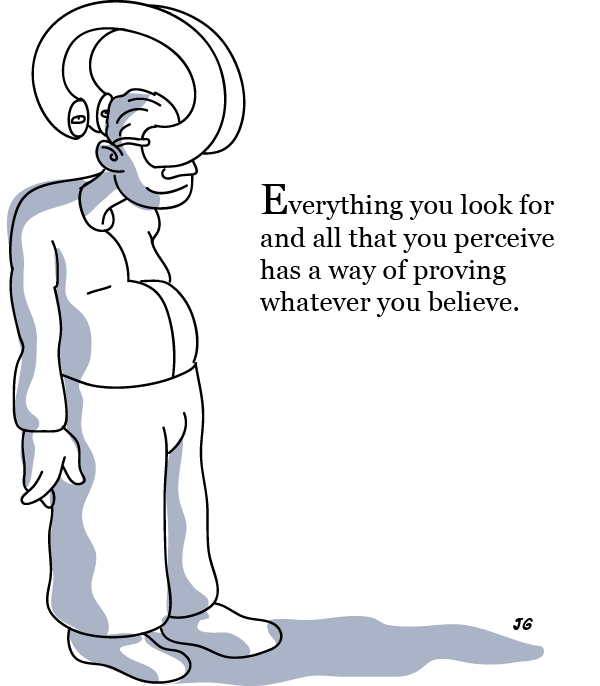 It’s pointless to merely defend our position with logical argumentation if our very position is subject to biases and potentially mentally unhealthy attitudes. Before we can be concerned about being right philosophically, we have to first be attentive to the effects of mental health, cognitive biases, and self-justification. Being a skeptic means first being skeptical of our own internal processes, because if an error lies there then that error will expand exponentially at every level of our argument, very likely. The very basis of motivated reasoning, self-justification, and rationalizations arise when we fail to recognize our own errors in forming opinions.
 When I started writing in blog-like form more than 15 years ago (college newspaper columns mostly, but also some essays I wrote for various publications as well), I was writing almost exclusively about atheism. I was writing screeds against religion, “new atheist” style, back in the lat 1990’s. In college, I studied world religions, cultures, and some philosophy, and my senior thesis was about the philosophical and cultural influences of Greece/Rome on the development of the Catholic Church. I had heard all the apologetics (I have not heard anything really new in years), became fairly good at responding to them, and this helped me discover and become part of the atheist community in early 2002, when I started graduate school.
 Concerning mental health, we have a similar problem at hand. The symptoms of mental health concerns are common among all of us, to varying degrees. Even if we are not diagnoseable per se, we may have behavior patterns, emotional issues, or cognitive impairments which cause us to miss seeing important influences on how we perceive and interact with the world. We should all be willing to recognize the symptoms of our behavior, how we are seen by people, and how we can improve.








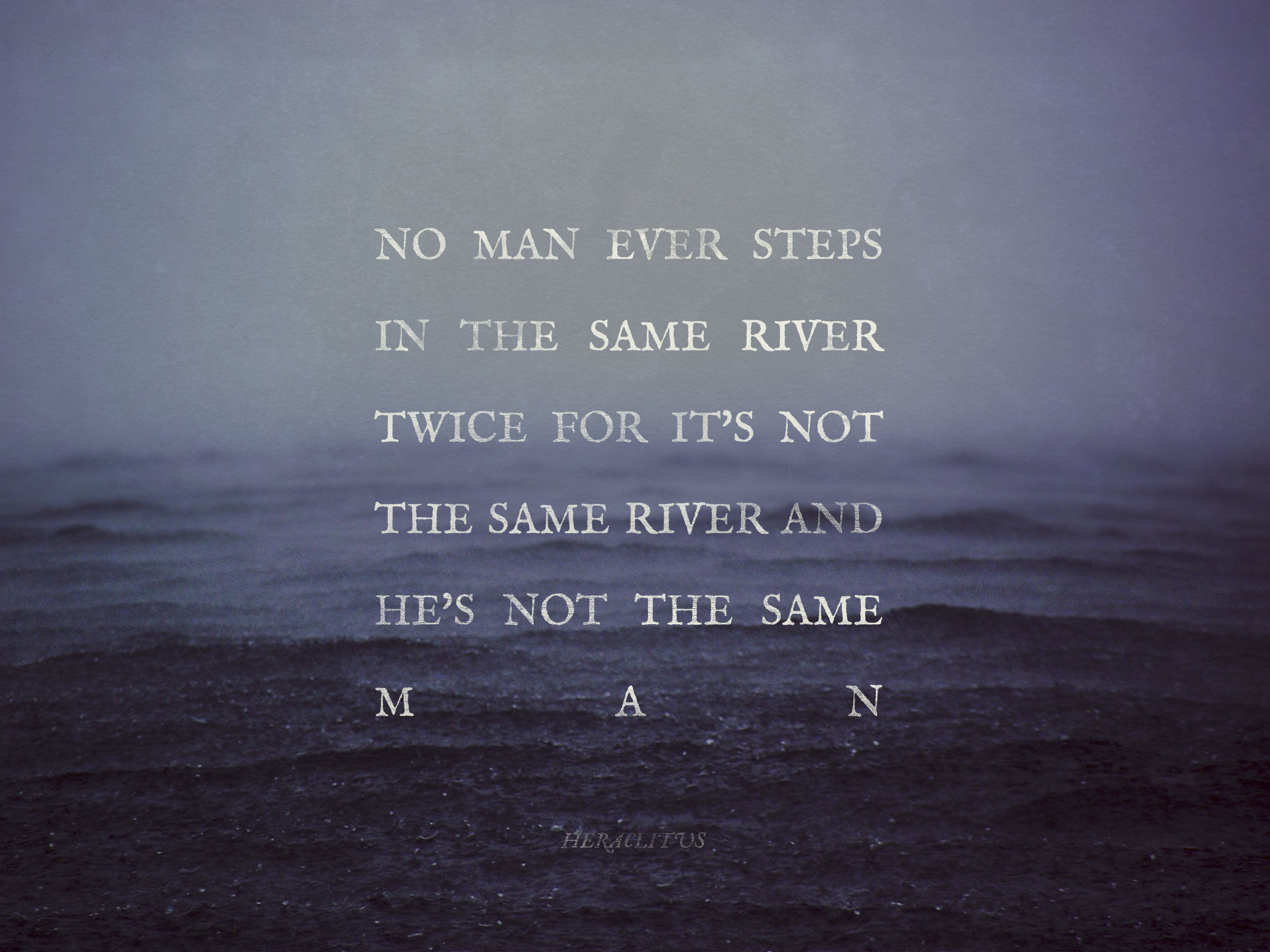




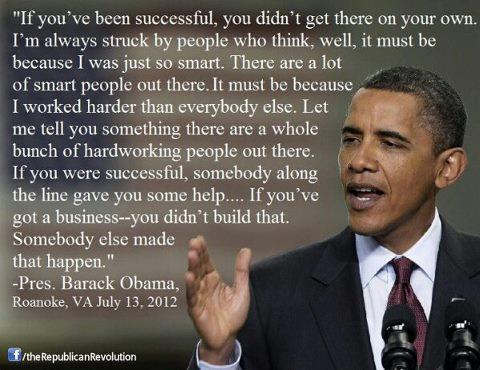









 Skepticism, Properly Applied