Carnival of the Godless


Well, I have not posted so much recently.  You know, life happens and stuff.  So, I decided that I would play host to a bunch of other people’s work to make up for it.  I will, as will not be a surprise to anyone who knows me, add a little commentary here and there.

Let’s start with the very first submission I received, from Arizona Atheist.  This blogger has recently underwent a back-an-forth with a non-atheist blogger concerning the topic of whether atheism and communism are linked.  It is clear that communism had more at it’s foundation than atheism, although atheism was an important factor in communist ideology.  The submitted post is apparently the last in the tit-for-tat, as not only has the interlocutor not responded, but the blog post that Arizona Atheist was posting in response to has disappeared.

(As a side-note, I too have had inter-blog conversations, such as this one and another one where the fellow blogger deleted the original post I criticized, so I feel your frustration Arizona Atheist)

The 360 Degree Skeptic is all around these days, it seems.  On of of his travels, he came upon one of those oh-so-entertaining end of days pamphlets.  360’s submission is a short deconstruction of one such pamphlet, noting the common generality and vagueness that infests such literature.  So, 360, who was first with the Sunday Sacrilege thing, you or PZ?

Now, I’ve never lived with Mormons.  And since I have spent most of my life in Philadelphia and now Atlanta, Mormons are not prominent in my world.  But when you do live with Mormons all around you (in other words, you live in Utah), you will tend to focus your godlessness on this particular theological backdrop.

Now, we’ve all heard the old quote which claims that if you “give me a child until he is seven and I will give you the man,” but perhaps ol’ Joe Smith was indeed onto something with making them wait for it until they’re eight, as Living With Mormons argues.  He ends this particular post with a morose rhetorical proposition which I have heard before, and which may illuminate the problem of valuing the afterlife over this life.  And while I know some believers have followed such advise in the past, I doubt that most believers recognize the devaluing of life that ideas such as heaven encompass.

Speaking of Mormons, apparently they throw parties!  And yet, Boho will not be attending this one, unfortunately.  I’ll add that I also prefer not to go to parties that don’t serve beer.

William Lane Graig is considered by many to be one of the best Christian apologists and debate interlocutors.  Craig is fond of the kalam cosmological argument, and it appears that ex-apologist might be fond of Craig…or maybe not; I’ll let you decide.  ex-apologist gives us a handy resource for looking at two of the major problems with Craig’s analysis.

I’ll also link, for those interested, another resource that I (I know, shameless…) have contributed to at ironchariots.org.  If you don’t know about it, it is maintained by those godless in Austin who have a wonderful TV show and podcast.

Atheist Revolution asks us to evaluate the role of patriotism in our efforts to support secularity in American government.  Should the atheist community, or at least the part of it that focuses on separation of church and state issues, try to create a “take back America” campaign like the religious right has?

I don’t know, but I will link a video of a lecture by Chris Eisgruber, Laurance S. Rockefeller Professor of Public Affairs in the Woodrow Wilson School and the University Center for Human Values.  His perspective on religion and American Constitutional law is quite different than than of those I hear from at, say, Americans United for Separation of Church and State, but not hostile to it either.  Fairness, is the question, says Eisgruber.

The Uncredible HallQ submits to us that believing in God in the face of Thor and Santa are not all that dissimilar.  He seems to advocate that we might need to maintain a more intimate relationship with believers to better understand apologetics, despite his inability to conceive how they believe.

Cubik’s Rube is frustrated, understandably.  I’m also tired of the old canard that atheists oppress Christians by simply making it known that we exist.  By using the recently de-faced billboard in North Carolina (the one which simply said “One Nation Indivisible”) as a launching pad, the frustrating claim of oppression is deconstructed as a screaming insecurity and persecution complex.

Yes, never am I more oppressive and offensive to believers then when I let people know I’m an atheist and that I exist.

OK, let’s take a minute to calm down after that rant, and see if maybe we can’t find some awareness.  Now, I became aware that my skeptical nature perked up in reading this post, but I’ll agree with the claim that

Awareness does not require you to believe, or to have faith, or to be strong, or diligent, or to be spiritual.

Let’s try it.

OK, fine.  But before you start thinking this is some woo, keep in mind that Buddhism, which seems to be what’s being presented to us here, can be seen as fundamentally atheistic, even if not always in line with the metaphysical naturalism that many atheists (such as me) espouse.

I don’t know what to say about this.  Granted, I’m no English major of any kind, and literature has not always been my thing (although I did write a science fiction novel).  But is this godless? I see shades of Postmodernism here, and methinks postmodernism sounds like someone suffering from a mild form of aphasia while stoned.  But godless? You decide.

Well, that was a fun carnival, and I hope you won some good prizes at the land the ‘cuffs on the Pope game we had back there.  Personally, I think that game was rigged, as it seems almost impossible to get those damned things to fit right.

n any case, I’ll simply wish you all well, and keep posting godless propaganda for our eventual atheistic utopia that will be serving beer.  And not that crap that people call beer (Miller Lite, anyone?), but real beer (ah, for a Rodenbach Grand Cru…).

Shaun

Atheism: definitions


I while back, I wrote this blog post about how I viewed the distinction between agnosticism and atheism, and offering a definition of atheism that I thought stood up to scrutiny in the world of discourse about such things. And despite some argument from some, I still hold that the best definition of atheist is someone who lacks beliefs in any gods.

Then just today I watched this video, whch makes many of the same points, and does so in a very tight little presentation.

It is a new video in a great series by Evid3nc3, all of which I highly recommend to theists everywhere.  He does a great job of charting his course from being a Christian with questions and becoming an atheist.

Being ‘just friends’ with lovers


I am still in love with a woman I went to college with.  Erin. I have not seen her in around 5 years, maybe 6.  We dated for 2 years in college, and it was with her, and another, that I discovered polyamory.  After some time of being apart from her and my feelings not dissipating, I knew I could never just be friends.  I loved her a way that made just being platonic impossible without great tension and frustration.  It’s easier that I’m not around her, because being in her presence was intoxicating.

I had to be her lover because that’s how I love her.

Some other exes since then I am friends with.  I still love them, but it is different.  I still am attracted to them, I would like to be with them sexually if it were desirable for both of us and it would not deleteriously affect other people, but I am capable of being friends with them, being aound them, without it being unbearable. The way I love them survived not being their lover, even if I would prefer it.  Although with at least one more, Jacque, that preference is close to overwhelming when I’m around her.  I suppose there is a continuum here.

But there are just some people that, for reasons of body chemistry, pheromones, or whatever that make it simply impossible to just be friends with them.  Being around such people is intoxicating and frustrating if you are not currently their lover.  I’ve only experienced this a few times in my life, and one of those times is now.

Just recently I wrote about New Relationship Energy.  This girl…she has an affect on me that is just out of this world.  I didn’t think it would be possible to have so much sexual tension, so raw and powerful.  I have never wanted anyone the way I want her when I’m around her.  To not be her lover is unbearable.  It is just too much.  The way I lust for her is akin to great art; to not be her lover is akin to Beethoven not composing music, a great chef not loving food, or a fat kid not to love cake (anyone else just love that lyric, or do you not get the reference?).  The attraction is simply unbelievable.

And we have never had sex.  We both want it, but for her a relationship is necessary for that to happen.  It’s much more conservative of a position than I am used to, but I just can’t help the way I feel.  When you love someone you just love them, balls to bones.

Now, it’s true that when I first met her the attraction was overwhelming and obvious to everyone–and two-way.  At first it was purely physical.  But as I got to know her, I saw more layers.  She’s intelligent, curious, dedicated, and just lovely in so many ways.  She’s also frustrating in many others, but I love how she makes me feel.  I have recently started to fall in love with her.  I have never told her this (she does not really read this blog, I don’t think, buit if she does then the cat is out….).

I asked her, just recently, to be my girlfriend.  Ginny is all for it, as she likes her too.  At first, it looked like it was inevitable, and a few days went by with the question hanging in the air.  The tension was building, I just couldn’t take it.  She needed time, I needed her, and she needed to think about it.  It is the polyamory, mostly, that is holding her back, although she and Ginny get along very well.

But then two days ago she said the answer was no.  Why? She was not convinced that I cared about her more than physically, and she was scared that if she allowed the relationship to form I would just lose interest.  I only feel this way because I want her so badly (I do), and that once I have it I’ll lose interest.  There is more to it than that, but it is complicated, and the details are not the point.

The point is that I have been telling her that I want more than just the sex, and that if she didn’t want to be in a relationship with me, I would still want to be close with her, to be friends. I really care about her.  But the point is not that I’d be willing to just be friends, it’s whether that is possible.  I could not just be friends with someone I feel this way about, could I?  Does it not betray how I genuinely feel?  I want to be her lover because that’s how I love her.

Yes, I’m willing to just be friends, but the fact is that it would be torture.  The passion I have for her is overwhelming, and this comes across as a bad thing because as a man I am obviously just after the sex, right?  A man who can’t just be your friend does not really care, right? No, I don’t think that’s always true.  Sometimes the attraction is just too intense.  To repress it, ignore it, or otherwise pretend it does not exist is inauthentic, in bad faith, and simply a lie.

I love this girl.  My sexual passion for her is not a sign that I don’t care about her or that I only care about one thing; it is part of how I love her.  I hope she will see that, eventually, because being around her is both intoxicating and frustrating.  I want so much just to love her as she is comfortable to be loved, but when the attraction is this powerful, it is difficult.

Sexual chemistry like this only comes along rarely.  I want to savor every drop and continue to get to know her, to love her, in many ways.  Love is a multi-layered cake, and the icing on top is hot, passionate, intense sex.

I don’t know what I’ll do if she wants to just be friends.  This chemistry is two-way, and while I admire her control over her desires, I wonder if she misses the beauty of this attraction we have.  Sex, after all, is beautiful.

So, here’s to being sex-positive, and to finding great lovers.

Here’s to a lovely girl requiting my love for her in all the ways that lovers love.

New Relationship Energy


I’ve been in a relationship for some time now with a wonderful woman called Ginny.  The circumstances of how our relationship started have to do with a heart-wrenching break up in January of this year and the right person at the right time and place.  Due to the timing of this meeting, it took a while to allow myself to grow closer to her, although closer I grew and I would not want to imagine life without her now. She will never fully understand how her presence in my life was essential for me through an awful time that still occasionally causes sleepless nights.

Because of the slow emotional growth that occurred between us and my emotional fragility in which it grew, there was not that intense emotional high that often punctuates the beginnings of a relationship.  I was emotionally cautious, having been hurt so badly so recently, and didn’t allow my emotions to flower in ways they had with previous lovers.  I had missed the high of the New Relationship Energy (NRE).

This is not to say that I don’t have intense feelings for her, only that they developed slowly, and thus settled deeper.  There is depth that may not have been created under more normal circumstances.  Well, normal is relative, right?

What I mean is the situation I am in now is relatively normal within polyamorous circumstances, but not so normal outside of that worldview.  You see, there is this girl (who I will leave nameless because I am not sure she would want to be identified)  that I have liked for quite a while now.  In fact, she was among the first people I met when I traveled to Atlanta last Summer to look for apartments for my ex and I to move into.  It just happened to be the weekend of Dragon*Con, so of course there was that too.

When we met, I was instantly attracted to her (and her to me), but I was not in a place to pursue a relationship with anyone else because my ex and I had decided to be exclusive for a while before opening up our relationship.  With us moving from Philadelphia to Atlanta and her constantly traveling for work, the amount of relationship tensions were going to be high so the arrangement seemed prudent.  I respected that arrangement in act and intention (not like it mattered in the long run) and kept a respectful distance between us despite the mutual attraction.

But once the ex abandoned me (after inviting me to move down here 3 months previous) I re-connected with her and re-initiated a friendship.  (You see, the ex didn’t approve of her at all, even as a friend, so…).  We have been talking over the last few months, spent some time together, and then this past weekend we spent a lot of time together.  She met my girlfriend, they liked each other, and I asked her is she wanted to be my girlfriend as well.  The answer is forthcoming (and it looks like she may say yes, but we shall see) but in either case the last couple of days have been filled with that high, that NRE, that I had not felt since the ex who I will not name (not out of any hatred or resentment on my part, but out of reverence for her wishes) and I first started spending time together. Ah, for the blissful days of innocence before the fall….

In any case, I’m experiencing NRE big-time, and I look forward to seeing her again (I will tonight).  I’m all giddy, tingly, and excited just thinking about it. I hope that she will say yes to my proposal, but even if she does not I will want to remain close with her because even if she does not want to be my lover, she’s gotta get with my friends…sorry.

So, what does this mean for Ginny? Well, she approves of my proposal and is happy for me being happy.  There are concerns about how it will effect our relationship, but we have talked (and will continue to talk) about any concerns she has. Open and honest communication is paramount in relationships, especially in arrangements like this.  If she accepts, it will change the dynamic of my relationship with Ginny to some degree.  The ideal is to add to the dynamic in ways that benefit everyone.  Whether that means a triad (three people in relationships with each-other), a “V” (me having separate relationships with both of them, ideally with them on friendly terms), or something in-between is yet to be seen.  But for now I will ride the NRE wave as long as it will last and try to allow it to settle into a relationship of genuine love, affection, and mutual growth.

The key is to not allow the NRE to take away from my existing relationship.  It is easy to get caught up in that NRE and to leave the other person feeling under-appreciated.  This is a difficult avenue to navigate, one that I have made mistakes with in the past, but I hope that I have learned sufficiently to not make those mistakes again.

And certainly this phenomenon is not unique to Polyamory.  How often have you noticed that early in an intense relationship you see your friends less, get less sleep, and otherwise get caught up with the intensity of it all?  Now imagine having this while another lover of yours sits aside watching you ride this wave.  While frubble or compersion might come into play (as it has for Ginny in the last couple of days), often some envy or jealousy might as well.  It is really important to be aware of this (even if it is with friends rather than other lovers), because those close to you will miss you while you ride that wave.

So, be aware that your NRE will affect others around you.  And if you can, try and spread some of those good feelings around; share some of that intensity with others so that they can get an idea of how good you feel.

Draw Muhammad Day


So, to day is draw Muhammad day.  It’s a silly sort of thing, actually.  It really does not even deserve the merit of being commented on.  The fact that some people’s lives are at risk because many Muslims don’t agree makes it worthy of comment.

So, here’s a picture of me wearing a shirt that I like.

He really looked exactly like that.

See, I don’t have any respect for Islam.  Nor do I have respect for Christianity of Judaism, but at least I can draw silly pictures of their gods and/or prophets.

And, for the record, it isn’t religion per se that I have the issue with, but the concept of faith, the inability to criticize beliefs, and so forth that I am so annoyed by.  Religion just tends to be the carrier of such things.  So, Muslims, get over yourselves.  We don’t have to play by your rules, and we will not be scared into submission (what Islam means) nor silence.

Happy day, everyone!

(And if I end up dead, you’ll know why)

The Bible and all other Books


(BTW, I’m adding the video as an afterthought because I thought it was appropriate)

I was just enjoying a warm (OK, towards the hot end…) day in downtown Decatur, GA when I was approached by a woman who looked like she may have been homeless, but after conversation she was just unemployed and struggling to keep afloat.  She was asking me if I may be willing to help her out because she wanted to get a burrito.  We were, after all, just outside the Raging Burrito, which is a great little place to get some good food and good ales.

In any case, we started talking, and ended up talking for quite a while.  She is a Christian, and through conversation I told her I am an atheist, and so we talked a little about religion.  The conversation was average, so I won’t bother relating it here, but one thing that stuck me was the fact that this discussion was not unlike what Socrates would have done during his time; talking with people in town about philosophy, religion, whatever.  And it struck me to ask her if she had read and Plato in her life.  She said she had, but it had been a long time.  And I said to her that if I had my copy of the Modern Library (you know, those old cloth-bound books that you see in old used books stores…I love them and have a collection of them on my shelf), I would give it to her since I have a larger collection of all of Plato’s works.  I told her about how Socrates would sit with people in Athens and they would talk, sort of like we were, about all sorts of things.

So, then,after a while, I thought that there was this great little used books store a few blocks away, and so I hopped over and bought a copy of the same book (The Works of Plato) that I have on my shelf at home and rushed back to the square to hope to catch her.  I found her, sitting outside of Raging Burrito enjoying a soda and handed her the book.  See, I believe that books are precious, and to be shared, and the book only cost me $5.  She took it, thanked me, and then proceeded to thumb through it.  I went off to read my own book (currently reading The Blind Watchmaker by Richard Dawkins for the first time–and enjoying it).

When I was done reading the chapter I was on, I decided to head to the Raging Burrito myself and get a Belgian Ale and maybe a burrito (where I sit now, as I type, enjoying a Leffe).  As I entered, I noticed that the table where she had been sitting before was unoccupied, but she had left the book there.

She did want it.

And then I re-played some of the conversation we had earlier.  She had said, several times, was that all people needed was Jesus.  Does that translate into all people need is the Bible? So, even if I were to give her a book with interesting ideas for free that she might enjoy now, later. or maybe even in a few years, she could not take it?

Had I insulted her in some way by giving her this book? I’m just not sure.  The cynical part of me thinks that she rejected it because it may challenge her beliefs.  Perhaps because it was recommended by a heathen like me, someone obviously in league with Satan, it could only be bad.  I had heard Christians before say that all that they needed was the Bible.

Nietzsche said once (in Beyond Good and Evil) that when one is cynical one should pay attention, for they might be onto something (OK, seriously paraphrasing from memory here…).

I hate to think that a Christian, especially one who was imploring me to be open-minded, could not accept a gift of Plato’s dialogues.  I was especially hoping she’d read the Euthyphro.

So, now I have an extra copy of Plato’s works in a nice cloth-bound volume.  The next person I run into who seems like they would like such a gift is free to take it.

Atheism and Skepticism


[edit: This issue continues to be relevant in the skeptical community.  I’ll link this.]

Within the skeptic community, there is a sort of fault, a split, that is often avoided because it is an issue of some contention.  And we know how much skeptics avoid contentious issues! I mean, to do that would be unfortunate–one might stir up some deep-held beliefs that people have.

I’m an atheist.  I’m also a skeptic.  And while I have participated in the atheist community longer than the skeptical community, I have been part of both for some time.  I listen to Skepticality regularly, will often refer to skepdic.com or snopes.com when looking up information.  And while I  have not yet gone to TAM (but would very much like to this year),  I have had the honor of meeting Randi himself once [and later again at DragonCon 2010, where I had dinner with him and Jamy Ian Swiss], who was very friendly in introducing himself with a joke during an Anti-Superstition party in Philadelphia a few years ago.  This coming weekend I am attending the Atlanta Skepticamp.  In general, I demand evidence for claims, as any good skeptic should.

That is what skepticism is all about, right? According to Skeptic.com’s about page,

“[s]kepticism is a provisional approach to claims. It is the application of reason to any and all ideas — no sacred cows allowed. In other words, skepticism is a method, not a position.”

A good start.  Like science, skepticism is not so much about what we conclude as being true (or at least supported by evidence) but the method by which we approach finding answers.  It is a disposition, perhaps, more than any set of conclusions.

To be skeptical is to demand evidence upon hearing a claim about the world. Of course, non-extraordinary claims may not be sufficient to demand evidence; claims such as “I had eggs for breakfast,” for example, may not get your skeptical dander up.  Extraordinary claims require extraordinary evidence (said Carl Sagan).  The common usage of the term ‘skeptic’, however, is often to conflate it with the term “cynic” (which is itself a term that has diverged from it’s ancient roots), which implies a kind of dismissive attitude towards claims rather than a desire to seek evidence for the claims.  Skeptics are not, ideally, debunkers of beliefs so much as investigators of beliefs and seekers of evidence.  And when such evidence does not exist (or is dubious), the belief is not held by the skeptic.

Within the skeptical community you will hear talk of cryptozoology, UFOs, psychics, and astrology, for sure, but not too much discussion about religion or faith.  Why is that? Well, it is because many people who identify as skeptics are, nonetheless, religious.  That is, they believe things about the universe such as the existence of god(s), but apply their skepticism elsewhere.

OK, well, let’s step aside for the moment and take a look at atheism.  I’ve addressed my definition of atheism before (as well as whether it can be considered a religion), and so I won’t go on at length.  Essentially, my definition oft atheism is the position of not having any belief in any gods.  That is, if ‘theism’ means belief in god(s), then atheism is simply the negation-causing ‘a-‘ attached to that term, meaning the lack of such a belief in god(s).  It is not the belief that there are no gods, because that is a subtle but importantly different position to hold; there is a difference between saying that there are no gods and saying that I don’t currently believe that there are.  The former assertion brings with it the burden of proof, while the latter lack of belief does not bring any burden of proof into play.

My position, as an atheist, is that of a response; when someone says that they think there is a god or that god exists, I simply am saying “I don’t believe you.”  This is an essentially skeptical position.  I am saying that the evidence is not sufficient, from my point of view, to accept such a claim.  Any person who calls themselves a skeptic must hold this position unless they have evidence for the existence of god; evidence which I have not seen (or accepted as sufficient). If they believe by faith alone, then they are not applying their skepticism to their belief in god(s), and thus lose some skeptical street cred (see video below). Faith and skepticism are at odds here.

Matt Dillahunty, the current president of the Atheist Community of Austin, host of the Atheist Experience and the Non-Prophets (both of which I have been following for several years now), has come out strongly with essentially the same position as mine (I think), as can be heard in the following:

Matt and I corresponded a little while back concerning a post at skepchick.com that addressed this very issue.  And while it is true that none of us are completely rational about everything, the bottom line is that by ignoring such a large aspect of one’s life, such as the belief in a god (whether one is a deist or a Christian) is a hit against one’s skeptical credentials.  Simply admitting that one is not being rational about something does not excuse the lack of skepticism.  It would be sort of like an astrologer admitting that they are not being rational about their belief in astrology, but considering themselves a skeptic because they are skeptical about vaccinations causing autism and Bigfoot.

So, can one be a skeptic and be a believer in god(s))?

No, I don’t think so.

I contend that there is no good evidence for the existence of a god.  If there is, I have not seen it.  And if there is good evidence or reasons to believe in god(s), I want to see it.  But in my many years of having discussions, thinking about this issue, and writing about it, I have not yet been presented with good reason to believe.  Not even those skeptical theists have good reasons to believe, from what I have seen.  Thus, believing in a god, despite the lack of evidence for it’s existence is a non-rational position.  A skeptic is supposed to reserve belief for positions that are supported by evidence, not believed despite the lack of evidence (or evidence to the contrary).  A skeptic believing in a god despite the lack of evidence is no different than a skeptic believing in the Loch Ness Monster with similar scanty evidence.

And despite the fact that stating this may cause some rifts among certain ‘skeptical’ people, I think it is important to address because of one very important reason; it is true.  And if it is not true, then it must be argued to be so, not simply stated.  If it is possible to be a consistent skeptic and be a believer in god(s), then that implies that there is good reason to believe in such entities.  And if there is reason to believe in deities, then the issue between skeptics and atheists is that atheists are wrong to lack belief in gods because there is evidence out there that is sufficient for belief.

But if there is not sufficient evidence to believe in any gods, then to be a skeptic and a theist is a contradiction.  A skeptic, being consistent, will be an atheist.  They will not say there is no god, but they will join me in saying that they simply see no reason to believe there is a god.

I’ll leave you with some more video:

Polyamory of the self


Love is difficult.  Relationships are difficult.  Maintaining more than one relationship is exponentially difficult, but perhaps it has joys that offset the difficulties therein.  That is the idea behind polyamory–or at least one of them, anyway.

It is difficult to maintain a relationship with two people when one is struggling with one of them.  The insecurities, fears, and other emotions and considerations which cause tension in relationships are compounded by the problem of another person being involved.  It can quickly look like the other is an escape for the problems of the one relationship, which can often become true.

Poly people often talk about the multiplied relationships; the relationship between one and their primary, one and their secondary, the primary and the secondary, etc.  But what is, perhaps, overlooked is an aspect of this complexity that applies to monogamous circumstances as well; the relationship between our various selves and with others.

We all, from time to time due to circumstances of profession, play, and intimacy wear different hats.  There are aspects of ourselves which are subdued or expressed due to their needs, and we have to maintain a relationship between these facades in our lives in much the same way that we have to maintain relationships with others.  And sometimes these different parts of ourselves don’t play nice, and conflict will emerge in much the same way as they do with polyamorous relationships or even in monogamous situations where friends and family influence the relationships (often through manipulation, but not always).

In short, I think that their are skills and lessons to be shared between the fields of psychology, relationships, and polyamorous wisdom.

I, for example, am usually seen by people that do not know me well as even-tempered, quiet, and perhaps even sweet.  Anyone who knows me well is probably already laughing or shaking their head slightly in disbelief at the description.  But the truth is that there is a large part of me that is temperate, reticent, and charming even.  But under that partial-facade is a passionate and opinionated individual with ideas that don’t conform well to much of contemporary culture.  That is, I’m not always a firebrand, but a firebrand I certainly am at times.

These parts of myself do not play well together.   And when the passionate storm inside meets the other, there is internal conflict over how to proceed behaviorally.  It is much like the argument in atheist circles about the tone of approaching religious folks–the passion of the so-called “new atheist” and the attempted respect of the  “accommodationist” meet in a swarm of disagreement where the issues are not so much about substance as style–although substance is a factor as well.

I’ll apologize in advance for all the Babylon 5 references to come, but to those with ears, hear;

There is order and chaos here.  Vorlons and Shadows live within this shell of a body, and the battle between harmony and conflict give rise to the conflict between them which, in turn, spawns beauty.

Perhaps it is a mistake to give too much exercise to the quieter and orderly aspects of me, because this side of me allows the other side to surprise people too much.  But it is not pretend, it is just not the whole story.  The part of me that is passionate enjoys a good argument, passion, and conflict.  I believe in these times we tap into something inside us that contains truths that are not as raw when calm, and this is why we will tend to be harsherand say things we would not otherwise say.  And when relationships survive these obstacles they only grow stronger where weaker ones are left dead.  And despite the feelings of loss at such times, we learn and grow because we ultimately become stronger as a result of the culling that the Shadows of our soul inflict.  The truth, as the Vorlons say, points to itself.  Who are you? What do you want?  These are questions which create conflict as well as provide us with perfect moments of beauty.

For me this is beautiful.  After all, truth is beauty, and beauty truth, right? But truth cannot come only through orderly living–one needs to get under the skin to prompt chaos to create its own patterns of revelation for us.  It’s why there is so much to be learned from tragedy.

But this is not seen as beautiful to many, and so this aspect of my personality is not seen for what it is for me, inside–in my “soul” if you would permit the antiquated term.  I long for those that can see my soul for what it is.  Perhaps I need practice with it to show it in full color all at once.  It can be blinding, after all, when only seen occasionally or at times of uncertainty.

In conclusion, I need to find a way–and I think this is applicable to others as well–to show the passionate side of my self in a way that is not so contrasting to the other parts of me, so that they don’t seem so bright and surprising when they surface.  Also, so that they are not so bright when they are let out of their common darkness due to starvation for air.  A starved beast is much more dangerous when left unattended, after all.

We must love our selves before we can love others.  Harmony in self before harmony in our relationships.  There is always work to be done.

Conversational music of sex and religion


Plato's Symposium

I’ve been thinking recently about conversations.  Polite conversations.  You know the kind I mean; you are at a dinner party with people you do not know well, having lunch with some acquaintances, or maybe you just popped into the local tavern for an ale or two and struck up conversation with some other people doing the same.  The circumstances are immense in number, but the basic situation is the same; you are talking with people casually, and polite conversation will evolve into touching on topics of all sorts.

There are a set of unspoken rules to such things, right?  They are not written (nor will I attempt to write them now), but they are accepted and understood (to some extent). And while those involved in such discussions are usually aware of the mental composition of ideas in relation to other non-verbalized thoughts, most of what they are thinking is left unsaid.  We can’t say everything we think.

There is that filter that I–as well as most people–have which allows me to say one thing and not several others that arose to consciousness but not quite to my tongue.  And some of those alternative thoughts remain in consciousness, treading the waters of my mind while waiting to sink or swim as the polite conversation continues to evolve.  The presence of these unsaid thoughts, in adjacent position to the conversation perceived in my mind as I listen and contribute, will sometimes form a theme of parallel thoughts that are left unsaid but play like a harmonizing phrase to the conversation shared by the society in which I find myself.  That’s how it often is for me, anyway.

But what I long for, what I hope for even, is when those silent themes emerge among the greater score.  When, while the orchestra of conversation begins to grow and increase in complexity, the whine of a violin makes it’s way into the background, playing with the theme in a way that is both beautiful and sublime.  And, eventually, that violin silences the rest of the orchestra, and plays itself while every ear perks to hear it in its quiet grace.  The music of conversation evolves such to set the stage for such moments.

And they often leave us silent.

But that silence is not always appreciation, but is sometimes a tumultuous composition being raised in the the mind of another who does not see the only the beauty of this moment.  They may feel discomfort, anger, annoyance, insecurity, indifference, or even a mad desire to hear more and to repeat the phrasing with another instrument–perhaps an oboe–but does not do so.

Oh what beautiful music we humans are capable of playing, but rarely we do.  Just like with the real world and music, it is often the monotonous babble of popular tones that drown out most of the world.  Subtlety and rarity is left, as Nietzsche commented, to the rare.

Out of metaphor

Enough of music metaphors.  What the hell am I talking about?

One of the things I like about such social situations is the uncertainty of what will transpire.  The anticipation of either heated argument, genuine curiosity and interpersonal intimacy, or polite indifference or discomfort.  It’s almost, well, sexy.

As a person who self-identifies as polyamorous and an atheist, I run into this type of communication anticipation on these two fronts from time to time, and I relish the expectation.  It’s not completely unlike meeting an attractive woman and, while talking with her, noticing her body through the clothes she wears, wondering if she is also trying not to let me notice her own interest while I try to thrust away images that my mind creates of the anticipation of passion thus far unrequited.  I eagerly watch the facial queues for subtle emotional indicators, body language, and changes in tone of voice as certain subjects are hinted at, caressed, and occasionally penetrated. Yes, a conversation is a lot like the anticipation of sex, which makes good conversation a lot like sex.

Good conversation–and good sex–is about the exploration of the other person.  It is about opening up and letting people in while trying to maintain the awareness of their needs as they seek to fulfill yours.  It is about saying what you think, hearing what is said, and responding to what is actuallysaid rather than what you wanted to hear.  It is about actual communication, and not merely saying your bit and then having done with it.

Wait, I thought I was done with metaphor….

*sigh*

I know, but in a sense is not all language metaphor?

You may find yourself with some people you don’t really know very well, and some talk about current events comes up. Perhaps it is Iraq, the healthcare bill, or local politics, but eventually something will approach a more sensitive and controversial topic. Perhaps it is a comment about the recent discovery of documents that indicate that the current pope was responsible for covering up child abuse; perhaps it is playful flirtation between two couples who meet at a bar and play with some rising sexual tension and making jokes about swapping or some other arrangement; or perhaps it is the discussion of polygamy as a force for female subjugation in some FLDS and Moslem communities, and why don’t you ever see a woman with four husbands rather than the other way around.

And then the voice inside me says well, I know this woman….

And that is the sort of thought, that lonely whine of that violin, which is rarely played.

Reactions

Some people are wound tight.  It may be traumatic experiences with either sex, relationships, or religion.   it might just be that some people need to just loosen up a little, but I really can’t generalize while being fair to each person’s circumstances.  What I can say is that in my experience some people react quite defensively, even if they have learned to do so quite subtly, to their comfort zones being poked at.

The part of me that is all about free speech, intelligent conversation, and personal growth wants to merely dismiss this as cowardice or emotional weakness, but that is not really fair nor true in many cases.  I cannot know the cause of such discomfort or caution in the face of certain topics, but I am almost always interested in knowing what those causes are.

It is the intimacy of it that I love.  And it is a desire for this intimacy that has caused some uncomfortable relationships in my life.  The reasons are sometimes clear to me, especially in hindsight.  I have been a person who has been closed off behind my own fears, defensive and reactive at certain questions, perceptions of criticism, etc.  But my desire to grow past this has left me sensitive to the behavior in others, perhaps to the point of projecting it when it is not there? (I cannot say).

Perhaps, but I have trouble imagining that I never recognize it accurately.  In at least one prior relationship, I am certain that I was correct in this conclusion, and I think that it was part of the reason that it is a prior relationship rather than a continuing one.

But I’m straying too far from the point.

Some topics of conversation will bore, frighten, or annoy people.  And often this is for good reason, but still those reasons are interesting in themselves.  And it may not always lead to a meta-conversation, but it may lead in that direction in some cases.  But I enjoy the ability to discuss things of moderate or ultimate concern; philosophical discussions, details about personal experiences or beliefs, or passionate defenses and debates about things of personal stake and interest.

It is in these moments of personal insecurity where intimacy grows.  There is a vulnerability about it, but that is what makes it rare and (perhaps thus) beautiful.  It is scary to trust to open up, especially to people we don’t know well, but there is a certain point where I think it is empowering and powerful to do so.  And in such conversations truth may occasionally be born, and we may find ourselves open to new possibilities and expand our boundaries a little at a time.

I may be wrong; there may be a god.  I may be wrong; polyamory may be ultimately unhealthy.  I may be wrong about many things.  So may you, and so let’s actually discuss them rather than sit silently and let those beautiful phrasings play silently in our heads while we try to imagine what melody plays in our neighbor’s head.  How often do people assume things only to find they are wrong when they actually talk with other people.

(How many times have I had to explain the definition of atheism/agnosticism or explain what polyamory is about if not a fear of commitment)

How many times has Glenn Beck sat and really listened to a progressive or liberal without replacing their music with his own biases?  How many times has Keith Olbermann listened to the music of the Tea Party people?  And no, I’m not advocating the view that necessarily some ideal in between opposing sides is always where the truth is.  “Teach the Controversy” is a joke when there is no controversy except that which is contrived for political or religious effect.  Listening does not compel respect for the idea listened to.  Respect has to be earned by reason and evidence, not merely demanded.

And while I may agree more often with Olbermann than Glenn Beck (who I think may be mentally ill), I still listen, really listen, to what is being said.  I only hope for the same.

Conversation avoids misunderstanding and mis-communication while it builds intimacy.  It works in relationships, religion, politics, and even sex.

We all need to communicate better, including myself.

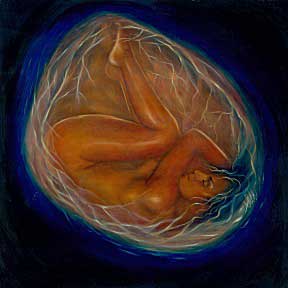
Rebirth


The concept of rebirth is a motif that repeats itself frequently in many parts of human creativity.  In the hero’s journey in mythology, a common metaphor or literal event in religion, and it permeates even the mundane, if not in smaller ways.

The “born again” concept is not unique to evangelical Protestantism, but perhaps that term is best associated with such groups.  The concept of coming back, especially through a transformation, is central to Christianity.  What is the resurrection but a kind og returning or rebirth?  What is being “born in Christ”?

Now, don’t worry too much, because I have not become a born-again Christian.  This is not a post about my rebirth as a new Christian or anything like that.  But in a sense it is a sort of small rebirth for me.  It has been some time since I have updated this blog.  It is a sort of return to writing, hopefully reborn as someone different in some small ways.  Perhaps not, but in any case it is a rebirth of the blog itself, having been away for a little while.

Recent events in my life, details of which are not necessary to explicate here, have put writing aside for me.  It was not that I did not have the time, it was that I did not have the will.  The muse of my creativity had vanished, and I needed to give the one that lay on life-support inside me time to heal.  In hurting deeply and profoundly, I found it difficult to compose much of anything.  But I believe that the time has come to attempt to regain my ability to compose and share my thoughts with the world.

Transformations

There have been times in my life when I felt like, in experiencing something powerful or intense, I needed to redefine myself.  Perhaps some loss has been felt, perhaps I have wronged someone, or perhaps I have found myself feeling the need for change.  I’m sure that everyone has felt something like this at some point in their life, and have found a change coming as a result.

Often, these moments are associated with some spiritual or religious feeling.  For many people, this many be their god reaching out to them, perhaps a change in their soul, or some other spiritual or religious feeling.  I am not unfamiliar with such feelings, myself.  It is as if a part of us switches on in such moments, seeking for meaning, structure, and purpose.   Religion seems to have evolved to answer such needs, which is why it compels us so easily; it is designed in part by people in such situations, thus it answers the call of these moments.

The association with the beliefs held, in order to give these feelings structure, is understandable.  Our brains are pattern-recognition devices, after all.  When we have complex experiences we will seek to explain them in some way, categorize them into our worldview. And that worldview was itself created by the same kinds of minds that feel these moments of need.

But for somebody like myself, such experiences do not point to something spiritual or godly.  When I feel the need for change, transformation, or longing it does not draw me closer to a god or to some larger power around me.  What it does is clue me into the fact that my brain is doing something abnormal (if it were normal, I would not be trying to figure out what the experience is because I’d have grown used to it and found the experience less interesting).  And a complex thing like a brain is bound to do abnormal things, especially when it receives abnormal stimuli.

Those moments of ennui, existential crisis, etc that strike us at times in our lives are, thus, not very surprising when you think about it.  I, for example, have been experiencing much stronger emotional states recently, and I understand it is  because I have experienced a change in my life that effects me day-to-day.  For some, this would be a wake-up call to attend to the divine or to some spiritual realm in some ritualistic way.  For me it is a time to re-evaluate and take stock on what is new, what is the same, and what is to be done about any of it.

And in a sense, am I not doing the same thing as those that resort to ritual, prayer, or divine wisdom?  Is there not some psychological similarity between one who prays, meditates, or merely thinks?  Surely, they are not exactly the same, but there seem to be similarities beyond the superficial.

What is the difference between one who transforms themselves “in Christ,” one who finds some small enlightenment in meditation, and one who, in re-evaluating their life, comes out feeling different, new, and having gained new perspective?  I’m sure that many differences and similarities could be discovered if we were to study such a question, but I would bet that those three individuals would be able to share many experiences and perspectives among one another after such a transformation.  After such a rebirth.

One of my goals in my life has been to continue the conversations between such people.  It is one of the reasons I think the conversation is important.  It is why I find religion and philosophy so  interesting, and it is why I write such a blog.

I’m glad I finally remembered that.