PolyskeptiCast Episode #1


[edit: If you tried to listen and it didn’t load, it may have been because I had to re-upload the file to podbean.  It should be fine now]

So, we here at the PolySkeptic compound (or “playhouse” as Jessie calls it) have been talking about getting our sexy voices out there for people to enjoy.  And what do you know, we have a microphone and some spare time, and I was willing to spend a couple of hours editing it, and here’s the first episode!

We would love to get some feedback, especially letters and comments that we could read for episode #2 (we will see how often we will do this).

In the mean time, enjoy!

Listen to this episode

OR

Download this episode (right click and save)

The Physical Touch Spectrum


Editorial Note: This post was written by Wes Fenza, long before the falling out of our previous quint household and the subsequent illumination of his abusive behavior, sexual assault of several women, and removal from the Polyamory Leadership Network and banning from at least one conference. I have left Wes’ posts  here because I don’t believe it’s meaningful to simply remove them. You cannot remove the truth by hiding it; Wes and I used to collaborate, and his thoughts will remain here, with this notice attached.

—–


Ace, at The Thinking Asexual has a great post up discussing a concept which Ace calls “the physical touch escalator”

The physical touch escalator is based on the premise that each form or level of touch on the spectrum automatically and undoubtedly implies a progression to the next form or level, usually beginning somewhere after “nonromantic/casual hugs.” Therefore, if you enthusiastically engage in one type of nonsexual, affectionate touch with someone, you are expected to eventually engage in whatever physical act comes after it on the spectrum—and keep going until you eventually reach penetrative sex.

If you don’t want to share Touch C with a person, then you better not agree to share Touch B, and if you go through with Touch C, you’re implying that you’re interested in Touch D, etc. The nonsexual forms of physical affection are only means to a sexual end, their main value the potential for sex that they carry by default.

It’s a fantastic post, and an important idea. I don’t really have anything to add to it. It reminded me, however, of a different concept. Ace began the post by saying:

I look at physical touch between two people via a spectrum model: on one end of the spectrum (of positive touch only) is the handshake and on the other end is full-blown penetrative sex. What falls in between progresses from that most casual and non-intimate/nonsensual type of touch to more intimate, more sensual, and ultimately sexual.

The nonsexual/nongenital forms of touch include: unemotional hugs, emotional hugs, holding hands, nonromantic kissing, romantic/erotic kissing (that breaks down further into “on the mouth, close-lipped,” “on the mouth, with tongue,” “on the body, close mouthed”, “on the body, open-mouthed”), cuddling (clothed or partially unclothed), caressing or petting the body affectionately, intimate paired dancing.

The erotic and/or sexual forms of touch include: mutual masturbation, sexual groping of the body with particular attention to the breasts or buttocks, dry humping, oral sex, anal sex, sex with toys, and penile-vaginal sex.

The “sexuality as a spectrum” model is very ingrained in our culture. The “correct” progression of a sexual relationships starts at one end of the spectrum, goes through each intermediate step, and ends at penetrative sex. This is why baseball is such a common metaphor to describe sex acts. You can’t go straight to second base without tagging first! It’s against the rules! Even if you hit a home run, you have to take a ceremonial lap around the bases or it doesn’t count.

I do not look at physical touch as a spectrum in that way, where there are “levels,” and each “step” progresses to a more intimate/sensual/sexual (hereafter abbreviated as “intimate”) level. In fact, I actively resist this model.

I resist it because I do not believe that any physical act is inherently more intimate or “more sexual” than any other. Certainly, there are acts which will mean more to us as individuals (for instance, cuddling tends to be more intimate to me than groping), more stimulating (genital touching is more stimulating to me than touching elsewhere), or more dangerous – and thus, requiring a higher level of trust (intercourse vs. outercourse), but these things are not universal. Some people consider kissing more intimate than sex, and some don’t. Some people consider anal sex to be more intimate than vaginal sex, and some don’t. Some people think oral sex “doesn’t count” as sex, and some emphatically argue that it does. This is, of course, not even getting into the endless variety and ranking of activities within the BDSM community. There is a world of variety is what is considered intimate to someone and meaningless to someone else. The dominant narrative encourages people to feel shameful or broken if certain steps don’t fit in to their proper place on the escalator. It’s uncool, and we should encourage people to experiment and make their own choices about what is intimate and what is not.

The other reason why I resist the spectrum model is that I don’t see anything wrong with consensually skipping steps if you don’t like them. Each physical touch is a completely different thing to me. Some people are very compatible kissers with me, but not compatible in terms of sexual groping. Sometimes, it’s the exact opposite. What if I’d like to engage in sexual groping (or something “higher” in the spectrum) with someone, but not kiss? I feel as though our society doesn’t have a narrative for that, and I wouldn’t know how to bring it up in a way that doesn’t result in offense and hurt feelings.

Another side effect of this view is that it encourages people to judge their compatibility on “higher level” activities by their compatibility on “lower level” activities. A few weeks ago, I had a conversation with a few friends whereby they all agreed that an incompatible kisser would almost certainly be incompatible sexually. I reject this view, mostly from experience than anything else. While I think that the emotional component of physical intimacy tends to remain largely unchanged from activity to activity, a person’s physical compatibility can be much different. Even changes as small as what part of my body a person is touching can result in vastly different amounts of pleasure.

The physical touch spectrum, though widely accepted, seems to be yet another socially-created norm that shortchanges everyone who doesn’t conform. Your thoughts?

Truth or Happiness?


In a conversation last night with a dear friend, the issue of what is more important—truth or happiness–arose.  As a skeptic, my answer is truth.  But I want to say a few words about that because I think that maybe the terms are not as clear as they may seem.

Is there a “truth”?

Yes.  Next?

….

…OK, so I should not be so flippant about that answer.  For some people, this question is not so clear, and for others the answer is no.  For the philosophically inclined, I will say that I reject the concept of reality being inaccessible or an illusion.  So While our perceptual tools are not always reliable on their own, there is a reality out there and it actually is what it is regardless of our often faulty perceptions.  Reality is there whether we think about it rightly or wrongly.

The issue following that (and in another way, preceding it) is which epistemological methodology we use; how do we figure out what reality is like while avoiding those mistakes of perception? Skepticism, obviously.  We demand demonstrable, repeatable, and rational evidence for things and the better that evidence the stronger our acceptance of that thing should be.  So our path to truth is an empirical, logical, and and ultimately a skeptical one.  We believe things when we cannot disprove them, for so long as the theories we generate maintain their justification.

A word about theories.

Remember, theories are things which have survived the assault of people who want to try and tear it down (for the sake of, perhaps, another potential theory).  Theory is the graduation point in science, not some mere guess.  But also, they are nothing but language; they are descriptions based upon the logical rules which make up thought, perception, etc within our heads.  The theories themselves are not real, objective things (they are, at best, intersubjective).  But they try and describe real events and phenomena, sometimes successfully.  Pointing out that the theories we use–the language we use–are subjective narratives which are not objectively real says nothing about the world itself.  The fact that our subjectivity is stuck in our own head, and that theories are subjective experiences, does not mean that the referents are not actually there.  It only means that the language we have to describe it is an imperfect map to the terrain.

Theories are not corresponding maps, in other words, but they try and describe reality in terms our minds can comprehend.  And many scientific theories do this so well that we can predict and construct to such a high degree of complexity and resolution that the computer you are reading this on can work.  Amazing, isn’t it? Such huge accomplishments, based on an empirical theory of truth, that provides some happiness for many people.  Technology is the evidence that our ideas can represent the world well.

Unless, of course, you believe some sort of solipsism is true.  In which case, you are writing a wonderful blog post right now!  And no, that is not me being full of myself, that is you being full of yourself.   Also, you are responsible for everything, including the things you hate and don’t believe are true.  If the world is an illusion, you are responsible for Republicans.

What is happiness?

Are you insane? Don’t ask a philosopher that! Unless you want to read 50 pages that will ramble in incoherently, don’t ask that.

Let’s say that happiness is some kind of emotional or intellectual (and no not “spiritual” because that word does not mean anything!) experience.  Whether it is a conglomeration of emotions, it’s own emotion, or even some kind of an intentional stance we take to ourselves, it is an experience or a background set of experiences.  It is a mind or body state, of some kind.  You want more detail, too bad.  All I am willing to say here is that it’s a real, physical thing like any other experience.  It happens in our brain (and possibly in other parts of our nervous system), and is a real phenomenon of some kind.

Happiness is nice.  it’s better than non-happiness, by definition.  It may (or may not) feel different for different people, but it’s a good thing.  People like happiness.

See, less than 50 pages! And only a little incoherent!

And yet you still have no idea what I think happiness is, do you? Well, I don’t give a flying purple fuck, because it’s not important to the point here. So go eat a pile of expertly-thrown monkey shit if you are left unsatisfied by that.

I’m apparently feisty today.

Are happiness and truth at odds?

There certainly is a tension between truth and happiness in our culture, but is that tension necessary?

Will learning more about the actual nature of reality cause happiness to decline?

Maybe.  There might be some (scientifically and empirically valid) studies which talk about that.  I’m not looking them up, mostly because I want to believe that the answer is no but I know deep down inside that the answer of yes would make me unhappy.  Try that mind-fuck on for size!

So, in other words, I want the truth to lead to happiness. I have an emotional interest in the proposition that valuing truth will at least not make us more unhappy.  That being said, here’s my rationalization; I have a value for truth, which trumps happiness, because I know that when people don’t know the truth it often causes harm.  If you don’t know what I’m talking about, then you need to browse this website:

http://whatstheharm.net/

False beliefs may seem harmless, but they are not.  Not always, but they are often harmful.  By demanding a level of evidence to accept something, you make it less likely (ideally) to get swindled or support a dangerous lie.  And because I care about my happiness, which is in part related to the state of the culture around me, I am motivated to care about truth prior to happiness.  Mostly this is because the harm of non-truth upsets me, and so if I try and consider happiness first, it backfires.  But, of course, this is only true because I care about what is true, fundamentally.  If I didn’t care what was true (or if I thought that truth was subjective or didn’t exist) then I could just be concerned with happiness since truth is, in that hypothetical world, not a real thing.

Of course, some might say that my belief that there is actually an objective reality is not true (or only true for me; from my subjective perspective), and so the harm is illusory.  Of course, I want to know what method they used to tell me that my belief in truth is not true!  If there is no truth, then we couldn’t tell the difference, rationally, between truth or untruth.  The concept of truth would be meaningless, and chaos and nihilism would ensue.  Pure hedonistic, lawless, chaos!  Well, not really, but if there is any means to make a distinction between two ideas in terms of which one is more in line with how the world operates, then we have a methodology to determine truth.  It may not always work, but when it does work we have access to the real world! Amazing!

Bu the more important point is that if we deny the distinction between a helpful and a not-helpful method and set of ideas, we ignore real-world harms.  There is no truth, eh? No objective reality? Tell that to the children who die because their parents choose prayer over medicine.  Tell that to people getting the Measles right now because other people believe that the MMR vaccine causes Autism (thanks Jenny McCarthy).  Tell that to creationists and other delusional people who deny evolution for the sake of an ancient mythological just-so story about a man, his wife/property, and a garden they were kicked out of because the property/wife was too skeptical.  Without a reality, we cannot be angry about these things because there is no objective truth to tell the difference.  But we can tell the difference.  and that very ability to rationally discern indicates a methodology of decision.  It indicates a way to choose between theories.

And yes, there are complicated problems with theory choice in the philosophy of science, but this does not point to the lack of objective truth, but only to problems in refining the methodology to attain it.  it’s sort of like how this is not a duck.  The empirical evidence can give us clues, even if we are missing pieces or are not sure which, among similar theories, to choose.

There are actual truths.  Evolution is true, the creation stories of the world religions are not.  This is not mere opinion, this is an idea backed up by evidence derived from experience of the world around us, meticulously tested and probed to the breaking point–but does has not broken.  Mythology is not true for the culture is exists within; it’s either verifiable or it is bullshit.  Saying that mythology is “true” seeks to conflate meaning with truth.  An idea might have meaning, but meaning does not imply truth.  If something is true and is understood by someone then that idea has meaning, but the fact that it is also true is a different question.  The Harry Potter Universe is largely internally coherent and meaningful, but magic isn’t real so the story is not true.  The concept of “spirituality” might have meaning for you, as if does for many people, but it does not correspond to anything intersubjectively real.  When it’s tested, it fails (there is $1,000,000 waiting for you if you can prove otherwise).  Things that have meaning to you might simply not be true.  Yeah, it sucks, but only because you prefer comfort to reality.

This is not about comfort v. truth, because if so comfort would win in a landslide election,  But mere comfort, for me anyway, is not enough.  Comfort is not happiness.  They might coexist, but not necessarily.

So what about happiness, then?

Some people might not like how reality is.  Compared to an emotionally powerful narrative of some religion, the apparent coldness of truth seems dry and is not conducive to happiness.  I don’t give a flying fuck.  Happiness within an illusion can only remain happiness in ignorance.  And this is where some people may come back with “well, I’d rather be happy and delusional than see the world through your eyes and be miserable!”

False analogy.

Christianity and it’s ideological ancestors and cousins may have tainted this question for us too much to see this clearly (Nietzsche sad that “the Christian resolution to find the world ugly and bad has made the world ugly and bad.”), but there are no mythologies more awesome than the intricacies of cosmology, biology, quantum mechanics, or even mathematics.   As I have argued previously (please read that post if you have not already, as it applies to more than just humanism), the attempts of many liberal-minded people to seek solace in some sort of religious or spiritual environment in the face of the wasteland left behind the wars between the powers of monotheism and science (which has created an illusory dichotomy between the beauty and meaningfulness of religion and spirituality versus the dead, meaninglessness of a world without divinity) are still stuck in that Platonic worldview.  The question is framed in such a way that to ask whether we want religion or science/atheism seems to be asking if we want happiness or boring, dry, grey “truth” (which is actually just a lie, a deception of Satan or at least Loki).  The idea that truth is a fiction is, surprisingly to some, a very Christian (Platonic) theme.

The narrative of Zoroastrian, Jewish, Christian, and Islamic (hell, it’s down-right Platonic, neo-Platonic even, of them) dichotomies between meaning and nothing, Heaven and Hell, etc is ubiquitous.  It’s so old, so natural-seeming to us, that most people simply don’t even know it’s there.  When I discovered it myself, I was blown away, and frankly I still reel from it.  I, who never believed in any gods, always distrusted Christianity, and who found the idea of Heaven silly from a young age, was susceptible.  It is one of the most invisible assumptions and ideological axioms in our culture, and it’s power to sway not only our actions but our very beliefs, cannot be underestimated.  And if we think that we avoid it by leaving those large-tent religions, we are fooling ourselves.

But replacing one version this narrative with another one, rather than discarding it, is much easier.  Christianity and New Age Paganism, for example, have a lot in common despite the fact that they hate one another in many cases.  They have very different theologies, for sure, but the similarities of their basic metaphysical assumptions are striking.  There is an implicit distinction between the spiritual and the physical, the sacred and the profane, and meaningful and the meaningless.  These are false distinctions.  They simply are not real except in the mind of believers, and then only as abstractions with no correspondence.

There is no meaninglessness.  If it were meaningless, we couldn’t conceive of it, think about it, etc.  We have a place-holder word, but it points to nothing.  (Also, there is no nothing.  Same reasons).  There is no ‘spiritual’ world or being.  Because of that, ‘physical’ is redundant.  Everything that exists is physical (or material, or whatever term you prefer.  It is made out of stuff).  Tell me the difference between the lack of marbles, the non-physical marbles, and the imaginary marbles again, please? In other words, the dichotomy between the area (or realm, or whatever) of the source of happiness and the (other) area from where happiness cannot derive, is not a real thing.  Wherever happiness comes from, it is coming from somewhere real.  And knowing more about that reality will give you more information about your happiness (if you look in the right places), and what causes it (or prevents it).  Must I invoke Sam Harris?

So, the best way to be happy, both individually and as a culture, is to value skepticism as a methodology towards truth.  That way, your worldview is accustomed to change, possibly being wrong, and since you have been using it you are more likely to already have ideas which are rationally justified, so more likely true.  No matter how open-minded your faith tradition is–no matter how new, radical, or enlightened it is–the nature of faith is to conserve itself.  Conservation of culture is stifling of curiosity, freethinking, and ultimately of the truth.  So while paganism and other forms of Western New Age might be tied to liberalism generally and may provide more happiness than the traditional religions, they can only become less so and never more so.

Not without truth, anyway.

The longer a tradition which is not skeptical stays around, the more tradition, and thus conservatism, becomes important.  So the new age is preferable to Christianity, but only because Christianity has been in a position of power, and power only seeks its own happiness, not yours.

Progress is in the direction of atheism and naturalism.  That’s where the truth leads.  So, again, what about happiness?

Spirituality and religion only look like better sources of happiness because, in our culture, we have been conditioned to see a relationship between meaning and belief in something more than this mere physicality.  Since Plato’s long influence, people have thought that the physical is cold and dead, and needed something more to give it life and meaning.  This is a disease which has been eating at our species for two and a half millennia.  And as Nietzsche said, in my favorite quote of his,

“To translate man back into nature; to become master over the many vain and overly enthusiastic interpretations and connotations that have so far been scrawled and painted over the eternal basic text of homo natura; to see to it that man henceforth stands before man as even today, hardened in the discipline of science, he stands before the rest of nature, with Oedipus eyes and sealed Odysseus ears, deaf to the siren songs of old metaphysical bird catchers who have been piping at him all too long, “you are more, you are higher, you are of a different origin!”—that may be a strange and insane task, but it is a task”

We need to ignore the siren calls of spirituality and religion, thinking they are the only possible source of happiness.  We cannot be content to lie happy in illusion.  There are more things in reality here on Earth, Horatio,
Than are dreamt of in your mythologies.

So, tell me that your religion provides happiness where the truth cannot, and I will say you are not looking closely enough at the truth, or are still viewing it though lenses with Platonic or Zoroastrian labels on them.  I think you need new glasses, ones with scientific lenses.  Because if you want to know more about happiness, you need truth.  Truth is the tool by which we better understand the potential for, as well as limits and causes of, happiness.  Because while we could experience happiness with little truth, the truth is the only sure way to lead to any more.  The better our access to truth is, the better we can be sure we are heading in the right direction.  Without truth, our forays into happiness will be a crap-shoot at best.  Being a good craps player means knowing the odds, and the odds are a kind of truth.

It’s not so much that truth causes happiness as untruth causes harm (or at least chaos and unpredictability).  But remember, even if the lack of truth in your world is not harming you (and it might be doing so without your knowledge), it is hurting someone else somewhere–possibly many others everywhere.  And I, personally, can’t remain happy knowing that is possible.  Or, at least I can’t without avoiding truth, which doesn’t seem like a good solution.  Ignorance is one thing, but willful ignorance is quite another.

I choose truth and happiness.

Born atheist into a crazy world


Every once in a while it strikes me that people really believe this god shit.  I mean the simple fact that theism exists and that people are actually religious never really escapes me, but occasionally I’m reminded that some people actually have to deal with the fact that they used to really believe it, and that they have friends, family, etc who really do, and that is a thing for them.  They think about the concept of identity after that change, how they have a feeling of either being split or otherwise unclear concerning their past self and the self they are trying to reconstruct.  They have to re-build their worldview in the context of a mind trained in crazy thinking.  I cannot fully sympathize, although I try to empathize.

I never believed in a god.  I played with the idea of a “philosopher’s god” for a while, but ultimately found it no more than mental masturbation.  People taking religion seriously, especially conservative Christians, was something I discovered towards my adulthood.  It was not something I grew out of, it was something I found after most of my cognitive development was done, and so it became a strange curiosity for me.  So I spent time around religious groups in college, talking and trying to understand.  What I saw was that it was hurting people.  They didn’t know it was hurting them, but I did.  So I grew to despise it.

As I learned more, I also learned about the history of such ideas, and the philosophical reasons why they were bankrupted–not only in terms of truth, but in terms of morality!  I know, some theists out there just read that and scoffed.  What could an atheist know about morality, right?  Well, frankly I believe that not only does religion not hold the title on morality, in many cases it actually fails at it spectacularly.  I’m not going to address that issue right now, because that’s too much content for what I want to keep a short post.

The point is that religion, theism, and especially conservative theologies which seek to rationalize atavistic emotions which hold us back from progressing, learning, and exploring human potential are things which  I sometimes forget are real.  Or, at least, I am incapable of fully accepting them as real, because they are so absurd.  Sometimes, it seems as if they are part of some intricate fantasy or sci-fi plot, part of a narrative which is not real, but only pretend.  But when I see recent legislative actions based upon these fantasies, read stories of how real people are actually hurt all over the world based on them, and watch as people close to me struggle with family, friends, and their own self over these narratives, it comes home for me.  And then I get annoyed, frustrated, and angry with our culture.

Our species would be better without faith, unjustified metaphysical doctrines, and the unconscious bowing to fear.  We would be better without Christianity (even the liberal types), Islam (oh, if only there were more liberal types), etc.  The ideas that most people hold, about religion, sex, relationships, politics, etc are, frankly, largely crazy.   And while I had to climb out of some of that mire, religion was not really one of the issues for me.  What little “indoctrination” I went through, at a Quaker school, was minimally harmful and I never really believed it anyway.  This world of religion is often an alien one to me.

I’ve always been an atheist, probably always will be, and I will continue to criticize the values of this culture because this culture, in many ways, is fundamentally broken.  We have a legal and political structure which has the potential to be a place for real human growth, and while much of our culture is squandering that right now there is room for improvement.  As a cynic, I don’t think we are getting there soon; too many really stupid people with poor fundamental values about truth and personal challenge.  But we have an opportunity within the rights we have been granted (they are not, in fact inalienable) by ourselves (some illusions are useful, I suppose) to push forward and make ourselves–and our culture–superior.

Conservatism will not help.  Theism will not help.

Skepticism fed by a desire to transcend oneself and grow will help.  Science will help.  Sound sex education will help.  Honesty, to ourselves and those around us, will help.

What else will help?

Ramadan at work


Islam2So, I work for Muslims.

Some people I know would wonder how I could do so (especially since I wrote this), if they were all Islamophobic and such, but it does not bother me.  I really don’t mind working for this Muslim family any more than working for Christians, Jews, or Hindus would bother me.  They are just people, who are from Syria, and who practice Islam.  From my perspective, it’s not much different than working for people, from Italy, who practice Christianity.  They are both silly religions with checkered pasts.

In the several months I have worked there, only once or twice has the issue of religion come up, and never in a proselytizing way.  They are fairly non-political (they have not expressed any strong opinions about what is going on in Syria right now, except to say that America should not be involved, and rarely talk about it at all as far as I know), they seem to support the concept of the separation of religion and government (their comments about groups such as the Muslim Brotherhood seems to indicate that religion should be separate from political and business decisions), and their two sons seem just as American-acculturated as any kids in the neighborhood.  They are not unlike most America citizens; they came here, love it here, and they have a cultural background they brought with them.  It just happens that theirs is a minority culture and religious perspective in America.

Hell, so is mine.

They are relatively observant Muslims.  They pray at least a couple time a day, that I see, in the back office (Muslims are supposed to pray five times a day, according to one of the five pillars of Islam).  They can be heard singing Arabic songs when in a good mood, they sometimes sit and read from the Koran when business is slower, and, well, recently it has become more obvious.

Ramadan feast
Ramadan feast

You see, recently Ramadan started and this has given me a peek into the reality that there is some cultural distance between us which was not as obvious before, but that distance has given me some perspective.  Watching them get more irritable as the day goes on (due to being hungry, thirsty, etc as they fast during daylight hours, which is longer during the summer) and watching the ritual of the sundown feast shows me, up close, how much these people are like everyone else I know from my mostly Christian family background.  Because while there is distance, culturally, between us, this distance is no so far as to make them alien.  In fact, they are so much like the Catholics on my father’s side of my family (many of whom dislike Islam greatly, for political reasons) in that the way they approach ritual and holy times is automatic and interwoven into their routine.

Have you even talked to a (moderately) practicing Catholic about why they do their daily or periodic rituals? Most of the Catholics I know don’t believe all the doctrines.  Hell, they likely don’t even know what most of the doctrine is, as I have had to explain concepts such as the Nicene Creed and other concepts to them, especially in historical context.  Ask a Catholic about the Council of Nicaea some time, and observe the blank stare you will probably get in return.  But when it comes to ritual, they’ve got it down.  There is a sort of sacred time and space and a set of behavior which provides order, meaning, and ‘right’ feelings at certain times.  When there is a baby, there is a baptism.  When they enter a church, they become serious and reverent where before they seem to not care about such reverence.  There is a seeming difference between everyday life and Catholic life, as observed from the outside.

What I have been observing recently is much the same at work.  Ramadan seems to be a sacred time, perhaps somewhat like how Lent is for Catholics, and it seemingly pulls them into a different space of awareness, because they have to fast during daylight which is a constant reminder.  I have not asked them much about it, mostly because they have been a little irritable (being hungry and all) but I suspect that following Ramadan for them is as natural as celebrating Christmas, baptizing one’s child, etc is for Christians.  I suspect that they don’t really think about why they do it, just like many Christians.  It’s just what you do, if you’re  Muslim.

There are other employees there who are Muslims as well.  When sundown comes, they eat with the family for the evening meal.  I have not been invited to join them.  Granted, I am not really hungry because I ate already, not being a practicing Muslim and all,  but I find it interesting that it does not even seem relevant to them.  They don’t even seem aware that this is happening.  As one of the few non-Muslims who works there, I am different.  I am an outsider.  I am kafir.  I don’t feel ostracized or discriminated against (that is, I don’t really care) but it highlights the role of cultural tradition and ritual to simultaneously pull together the in-group and to otherize the out-group.

Religion is not all bad.  However, one of its strengths, creating cultural bonds, has a complimentary function of clarifying cultural lines of division.  Religion fosters tribalism.  Thus, it’s only a strength to bring communities together for those in the community.

This is generally true, for all sorts of cultural traditions, rituals, or ideas.  Monogamy creates bonds within a coupling that others cannot be a part of, by definition.  There are levels of intimacy in all relationships, even in polyamory, which divide those inside and those outside the tribe, family, etc.  Pride of one’s national heritage, as in “I’m proud to be an American” serve the same function.  They pull together a group, but alienates at the same time.

Kirk: “Spock, you want to know something? Everybody’s Human.” Spock: “I find that remark… insulting.”
Kirk: “Spock, you want to know something? Everybody’s Human.”
Spock: “I find that remark… insulting.”

It’s quite unavoidable.  You can try to universalize the message, but this is only a temporary fix.  Define the in-group as humanity and if/when we make contact with alien sentient life, the other is them (I’ve been watching Babylon 5 again…).  It’s a tough knot to untie, and I am not sure there is a solution.  Because having groups of people who vary in importance to us, hierarchical or not, is a logistical and practical solution to only having so much time and energy to spend.  It’s nice to have people close to you, intimate with you, and who you can call family.  But the other side of this is the necessary alienation of others, especially those with whom we share few values.  Liberals, conservative; Democrats, Republicans; Capitalists, Socialists, Communists, Anarchists, etc.  There are people who are, in some way, ‘other’ to you.  Religion, tradition, ritual, and nationalism all use this aspect of human behavior to its simultaneous advantage and disadvantage.

And yes, it will be an improvement if and when humanity outgrows religion, nationalism, etc.  But I doubt that will solve the fundamental problem.  Personally, I’m not sure there is a solution.  I’m not writing this to say we should try to give up the concept of culture, and to transcend culture, because that would just create a new culture.  I’m writing this because we should all be aware of this phenomenon.  And those others who will not understand it are just stupid and evil, or something.  But we, the enlightened, will understand it.  Or something.

As for my employers and this Ramadan thing, I will say that the evening feast usually looks quite delicious.  Perhaps they are trying to convert me with the promise of delicious food.  It’s not working, alas.  Well, if the promise of 72 virgins (or raisins, whatever) won’t do it, food won’t do it, then I guess they are just going to have to verify their claims rationally and empirically.  Yeah, somehow philosophy wins over food and sex for me.  Sorry, religion.

Re-reading oneself


I just had a realization.

The more I (re-)read Nietzsche (although, how does one re-read anything, considering how much we change between readings?), the more I feel like I want to read those of whom he writes.  I want to read ChamfortMontesquieu, and more of Goethe.  But (and this was my realization) what I really want to do is keep reading Nietzsche!

Reading Nietzsche opens my mind to a world of concepts to which my every day life is alien, and what I realize is that this sense comes from the reading itself and not from the references or referents.  I’m inspired by the moment, and not necessarily by the potential or the ambition of that moment.  That ambition is not extensive, it is its own reward.  A

And yet….

And yet there is more ambition out there.

This is not unlike the realization, which I have from time to time, that it is the moment of beauty, and not the object of beauty, which is inspiring and awesome.  In a sense, art and our ability to appreciate it is a phenomenon of appreciating ourselves (both specifically and generally, as human beings).  Yes, it was the creativity and genius of the artist which is the efficient cause, but it is the commonality of interior architecture of our minds—the shared culture, language, and worldview of both observer and creator—which is the (metaphorical) location of the art.

Much like the blueness of an object is not contained within the object itself (and certainly not within some ultimate being, whether “god” or some Vedantic/Noumenal/Platonic reality), but within the relationship between our perceptual gear (our brain) and the actual material object which causes the light to exist in such a wavelength as it does.*  And the label, “blue”, a cultural construction used to identify the coherence and consistency of our shared experience (Assuming we are not color-blind), is mere convention of course.  We could learn new labels, but the material reality is not conventional.  It is real.

No, there is no inherent beauty, no inherent color, and no inherent meaning.  The world actually is—there is a reality and it is not an illusion—but there is no inherent perspective before we create it by perceiving.  There is no objective perspective, whether it be a “god” or some set of Platonic ideals.

Similarly, there is no inherent me, only the passing self that will change upon each re-reading.  In a very loose metaphorical sense, we are a book we are constantly re-reading.  And while the subject is unchanging and (perhaps) the words are the same, each time we look at it we come from a different point of view, we notice different parts of the narrative, and perhaps we remembered this or that part differently than we see on this reading.

Each time I re-read a book such as The Gay Science or The Catcher in the Rye I see it from a different point of view.  But the same basic phenomenon is the case each time I look into myself.  Depending on mood, memory, experience, etc I am a different person each moment, even if I know I’m holding the same ‘book’.

I still want to read some Chamfort, if only to make sure that the next time I re-read myself, there is some new perspective from which to read.  It is when we stop desiring new peaks to view the world from that we become bored–and boring!

*We never actually see the noumenal object not because the noumena is inaccessible to us, but because that concept is a category error.  The object does exist on its own, but the perception, including the color, shape, etc, are a simulation based on a physical relationships with the object.  The concept of noumena is an attempt to project that simulation onto reality, where that noumena is, in fact, merely an abstraction of the phenomena.  The noumena, in short, is a fabrication; an attempt to project our linguistic and cognitive constructs onto the world.  The noumena, therefore, is not inaccessible to us, since we create it.  This is precisely what many atheists, myself included, mean when we say that we create gods.  I’m an atheist, in part, because I recognize that we create the noumenal through projection of our own perception onto reality.  I don’t reject the supernatural because I am an atheist, I am an atheist because I reject the supernatural.

Also, I wanted to add this video here, not because it is (directly) related, but just because it’s amazing and beautiful.

High political drama with stakes I actually care about


I am currently watching the most riveting television I’ve seen in weeks. State Sen. Wendy Davis of Texas is filibustering SB5, which would effectively shut down nearly all of the state’s abortion clinics and ban abortion after 20 weeks. She has been standing at her podium without food, water, or bathroom breaks for nine and a half hours, and she’s got three and a half more to go.

I wasn’t following the story closely before today, but I was vaguely aware of it. More background can be found here. The most poignant part of the story, for me, is that earlier in the week masses of Texans assembled to share their testimony against this bill, but they were denied the opportunity to speak. Sen. Davis is speaking for them. For going on ten hours. It’s a beautiful thing.

I tuned in to the live stream (viewable here  if you’re reading this before midnight CST) around 6:15 CST. I was in time to catch the hour-long point of order discussion around whether Davis violated the rules of a filibuster by accepting a back brace from another senator. After 45 minutes of discussion, it was voted that she had, and she was given her second warning. One more warning and the senators can vote to remove her from the floor. (Which they will, because the majority supports the bill.) It was a nail-biter that ended disappointingly, but at least it ate up nearly an hour of time (and the questions immediately following about whether she could be penalized for receiving questions that were non-germane took up the rest of that hour). A handful of allies stood up at every opportunity for questions, clarifications, and occasionally actual arguments.

These points of order and parliamentary inquiries are where the whole thing is really just like watching any sport match: each side endeavors to introduce formalities, raise questions, and contend technicalities. For the pro-bill side, the goal is simply to find a reason to remove Sen. Davis from the floor. For the anti-bill side, it’s a little more fun, because they have to both combat their opponents’ efforts, and take up as much time as possible doing it. Asking for clarification, repeating questions, pointing out anachronisms in a bill’s wording… it all helps, because it’s one more minute Sen. Davis doesn’t have to fill by speaking. Key players in this fight have been Senators Rodney Ellis and Judith Zaffirini, to whom I want to give ALL the hugs. (For Senator Davis herself, ALL the drinks and maybe a weekend spa retreat.)

But then there are the other parts, where Davis herself is holding the floor. And unlike the West Wing episode from which I got most of my knowledge about filibustering, she can’t just say anything. Everything she says has to be germane to the bill — straying into a discussion of Roe v. Wade was what got her her first warning. So for about an hour I just heard her talking through a bill analysis, including a lengthy discussion of fetal pain, with lots of scientific evidence to back it up. Many people on facebook and twitter made the obvious joke that that was the most science that’s ever been read in the Texas senate. She went on to talk about the hardships that this bill puts on doctors and patients alike. She’s making real arguments, good arguments. At some point earlier, she was reading the personal testimonies of many women (and perhaps men) about the hardships that would be created by the passing of this bill. She’s speaking for the people and she’s making good arguments, and at the same time there’s a sort of bitter irony, because it doesn’t matter how good her arguments are. The game is not to convince the opponent, because she knows they won’t be convinced. The game is to hold the floor, and keep talking till they can no longer do the damage they’re intending to do. If the parliamentary games are a sport match, Davis’s extended solo sessions are a mountain ascent, an epic feat of endurance where one misstep could lead to disaster.

As I’ve been writing we’re down to 2 hours and 50 minutes, and Senator Zaffirini brought up another bill that needs to be voted on before the close of the session at midnight. I don’t think I can possibly go to sleep until I know what happens. Regardless of the outcome, I am more inspired than I’ve been by a politician in — possibly years. It’s so rare that we get to see one person, doing one thing, that will have a definitive outcome. I accept the complexity of most real-life political and social problem-solving, but this human heart loves a good story of a lone hero standing up to fight for what they believe in. And I’m watching one now.

Edited to update: The end was just as good, and just as dramatic, as the rest. Seriously, if they make a movie out of this they won’t have to tweak the material far at the climax. With less than 2 hours to go, a third warning was laid against Davis for talking about a sonogram bill which opposing senators claim was not “germane.” Senators Watson, Van de Putte, West, and Whitmire fought hard for the next hour and a half, arguing that there should be a debate, arguing that previous rulings didn’t warrant the ending of a filibuster with only two warnings on germaneness and one on something else. Meanwhile the opposing senators were working to fast-track this, end any debates, and shut things down. There were so many motions, points of order, and parliamentary inquiries raised in rapid succession that I think everybody got a little confused, to the point where it wasn’t just a delaying tactic when a senator asked to clarify what, precisely, was being voted on now. (At least, I think it wasn’t; perhaps they were following better than me.)

With only half an hour to go, Sen. Kirk Watson held the floor with a lengthy protest of the recent proceedings, arguing that opposing senators were not giving proper respect to parliamentary process and the right to filibuster by shutting Davis down on the flimsiest excuses. When he paused too long, an opposing senator put forward a motion to vote (not on SB5 but on whether to take back the earlier warning that took the vote from Davis.)  The vote was taken, despite protests, and the warning stood. Remember: in this environment, every vote is bad for the Democrats.

Sen. Leticia Van de Putte, who had been away earlier in the day to attend her father’s funeral, took the final leg of this endurance race. She stood up saying she had raised a motion to adjourn before that vote had been taken, but had been ignored by the chair, who claimed he hadn’t seen her. (Shouts from the crowd of “We saw her!” rose up, and Van de Putte stated that she had been seen by many in the senate.) She then voted against her party (again, not on SB5 but on one of the motions about proceedings) in order to have the standing to call some measure into question. She was essentially ignored again. With just ten minutes to go, she stood and said, “At what point must a female senator raise her hand or her voice to be heard over the male colleagues in the room?”

And the crowd went wild. Shouting, chanting, yelling, clapping. At first I believe it was a spontaneous, passionate response to Sen. Van de Putte’s comment and the building frustration many of us watching about the silencing of women that was going on on multiple levels here. But then it became clear that noise in the gallery was, perhaps, the only way left to stop the bill. Van de Putte took the final leg, but the crowd brought it home, shouting, chanting, and cheering for ten solid minutes so that the vote couldn’t be taken. (A vote was taken, somewhere in there, but it was a procedural thing, I have no idea what.)

After midnight the shouts died down, although there was still noise. Nobody was quite sure what had happened — was that vote taken in the last few minutes the bill or something else? Then the senators gathered around the dais and voted on SB5. Whether they thought they still had time or were just hoping to get away with it is unclear. Reports on what had happened divided along party lines, with Republican senators declaring that the bill had passed and Democratic senators declaring that the vote was invalid. At that point I went to bed, fearing that this was only going to be resolved with a lawsuit.

Happily, I woke to see that after 3 am a ruling was finally given that the vote wasn’t valid and that SB5 had failed to pass. They did it.

Dear Prudence; yet another advice columnist ignorant about polyamory


Through a polyamory contact on facebook, I found this letter to “Dear Prudence,” a advice column at Slate.com, this morning:

Dear Prudence,
I’m a 27-year-old woman who recently made friends with a nice, attractive 34-year-old man. He asked me out for drinks soon thereafter and made it clear that he’s interested in a romantic relationship. He’s my type, and I like him, but after our date he explained that he’s in an open marriage. I have no doubt that it’s a mutual agreement between him and his wife. And I’m in a situation that makes the idea especially appealing: I just got out of a two-year relationship that was sexually unsatisfying (my boyfriend rarely climaxed). It left me feeling as if there’s something wrong with me. The idea of a fling with someone new, with no commitment potential and nothing to lose, seems like it could be a positive ego boost for me as I look for single, available men to date. New guy is saying: Let me be your rebound! Let’s be friends with benefits! But most of my friends think it’s a morally objectionable thing to do and doubt that I can get involved without getting my feelings hurt in the long run. What do you think?

—Want a Fling

This letter concerns an issue that more and more people are going to be thinking about as non-monogamy starts to spread throughout our culture more relevantly.  And yet a relatively well-known advice columnist drops the ball on it, as I have seen many of them do in recent years.  I think we need a newer set of advice columnists in the world.

Now, before we start let me say that not all of the advice  is terrible, but what it demonstrates is a couple of things: For one, Yoffe is obviously unfamiliar with polyamory.  She may know the word, but she certainly has not bothered to educate herself about any form of responsible non-monogamy.  Another thing is that her views on relationships are, well, old hat.  Let’s look at her response in parts, and I will respond to them in terms of what I was thinking as I read the piece.

She starts:

I wish you’d explained why you are so certain that this guy’s wife is also party to the information that they have an “open marriage.”

This is actually a fair point, but the way it’s made makes me wonder a little whether “Prudie” may addressing the problem too strongly and in the wrong way.  Yes, it is important, when approaching polyamory, an open relationship, etc, that you have some way to be relatively sure that knowledge and consent exists from other people involved with your person of interest.  But in this case I’m willing to take the letter-writer’s certainty for granted, and hoped that Prudie would answer the question as if it were true.  It seems to me that the real issue here is how “Want a Fling” could  deal with an actual open relationship and not how to spot false ones.  Perhaps I’m being over-sensitive about that.

But hen, she goes on:

I’m assuming that he didn’t text a photo of you to his wife in the middle of your date with the note, “Things are going well!” I bet if you decided to have an affair with him, it would quickly become clear your relationship is surreptitious and you would have to go along with his rules.

Why are you assuming that? Has Prudie never actually met real people with open relationships? Does she assume this is code for “I’m cheating” or “my wife/husband will not really care…so long as nobody tells her/him” in most (or all) cases?  This is a kind of poisoning the well before we can even address how to think about dealing with a potential relationship with a married, but open, person.  Rather than address the real issue here, Prudie is tipping her hand and revealing that she is probably not in favor of open relationships.

Don’t worry, it gets better worse:

It doesn’t speak well for this this man’s character (no matter what arrangement he and his wife have) that he withheld the central fact of his being married until after the seductive banter and drinks.

So, this is a great example of monogamous privilege at work.  Prudie has obvious not thought this through.  There may be reasons that this man wanted to keep his open relationship hidden at first. They may have to do with his job, his family, etc and so he only tells people to whom this information is pertinent; like someone he’d like to date, have sex with, etc.  Perhaps he just wanted to spend some time with her to find out if that’s what he really wanted before telling her.

I have been in similar situations before, and done the same thing (although now I divulge this as early as possible to people I’m into, being that I’m completely out of the closet.  Not all people have the privilege of doing so).   I believe that one should always reveal the nature of their relationship status to potential partners early, certainly before any sexual relationship develops, but not always immediately.  During or after the first date is a pretty good time to let your interest know, I think, so I disagree with Prudie here pretty strongly.

It continues:

However, I understand the appeal of a commitment-free sex romp after coming out of a sexually frustrating relationship. But before you give him the benefit of the doubt regarding his friends-with-benefits proposal, make two counterproposals of your own. One is that you two get to know each other better first. I’m guessing he won’t want to invest too much time in activities unrelated to said benefits. Another is that given his history, you need to get a current STD status on him. Again, I assume he’s not going to be interested in generating any paperwork in order to get in the sack with you.

OK, so there is a lot here, so let’s break it down.

Want a Fling has made it pretty clear that she is at least fine with the idea of no commitment fun, and yet Prudie advises a counter-proposal that would imply taking it slow and safely to scare the (probably cheating and lying, amirite?) man away.  The problem with this is that the man has said (according to the letter-writer; the only source of information we have here) that he’s interested in a romantic relationship.  But rather than pick up on this, Prudie thinks that slowing it down and asking for proof of STD cleanliness (which any responsible non-monogamous person would be fine with demonstrating) will expose the lies, rather than potentially turn Want a Fling’s interest in some fun into a situation where it might actually become a potential relationship.  You know, like polyamory.

If the man is actually in an open relationship and is actually interested in a romantic relationship, then this advice will sound fine to him.  I know if I were this man and the woman came back with that counter-proposal, I’d be fine with it.  Now, if that’s Prudie’s intent (to separate the wheat from the chaff, as it were) then fine, but why all the cynical and distrustful language in the response? Why the negativity towards this being a real thing? Why the negativity towards non-monogamy?

Let’s continue:

But even if he demonstrates he’s disease free, consider that aside from the moral questions about a married man, investing your time in one does have a cost. You think you can be looking for that real partner while you are carrying on with this guy. But, as your friends have warned, you can’t anticipate what happens to your emotions once you get involved with someone.

And this revels the problem; Prudie seems to have a view that having a relationship with a married person is immoral in general.  It does not seem to matter whether the relationship is open or not, because even if the wife agrees there is something inherently wrong about this situation.  Because if Want a Fling actually starts to like this married man (and what if he starts to really like here? I don’t know what this particular man means by “open”) then that’s bad,  right?

Well, not necessarily.  I know many polyamorous people who use the term “open” to describe their relationship status.  I don’t know if this man, or his wife, would be OK with more than just sexy fun (they should be, IMHO), so I cannot say any more about that.  But Prudie demonstrates here that she is really unfamiliar with this dynamic which many people live with all the time, and this is problematic for an advice columnist. All she can do is warn of false openness or the fact that she might start to like him.  The horror.

But, to cap it all off:

If this affair gets hot and heavy, it will likely make the available men seem lukewarm and lightweight in comparison. Keep at the forefront of your mind that your goal is to find your own life partner, not borrow someone else’s.

Holy fucking shit she did not just say that! I mean, she did, but holy fuckballs how is this person an advice columnist? Should such people have some actual perspective on things before they are allowed to get paid for this shit?

Anyway, this is terrible.  One, this man is available.  He’s in an open relationship.  His wife does not own him.  He does not belong to her.  Want a Fling is not borrowing property the way she would go to a neighbor to borrow their weed-wacker or someshit.  She is considering having a relationship with another person, who also happens to have a relationship with other people.  Just like we all do (but with sex, which is apparently the way we own people).

And how would this relationship becoming hot and heavy effect other potential partners? The man is obviously non-monogamous, so Want a Fling could be so as well, if she wanted.  She could have a few lovers to help her gain some confidence in her sexuality again, if she wanted.  Perhaps she could even have relationships with, and care about, all of them.

And who said anything about Want a Fling’s goals? Why should her goal be to find a life partner? Perhaps she doesn’t want that at all.  Perhaps she just wants to have flings with men who are in open relationships.  Perhaps she does not know exactly what she wants, but she just wants to try some thing out to learn more (something that, perhaps, Emily Yoffe could have done more of).

Bottom line: Some people should not be giving advice.  I don’t know much about Emily Yoffe, but I think she needs to gain some more life experience and perspective about relationships before she starts giving more advice.  We need more poly-friendly advice-givers.

Hey Slate, hire me.


Why I can’t be a conservative


I was sitting at my desk the other day and was thinking about what conservatism means.  Ginny was at her desk, next to mine, so I bothered her by asking what she thought conservatism was, fundamentally.  I don’t remember her wording, but it seemed to agree with how I was thinking about it; an attempt to conserve the current social, political, and cultural norms.  The implication is that those who are conservative generally believe that the world, as it is, is fine.  The world is fundamentally right, and as old Pangloss said, “all is for the best in the best of all possible worlds.”

Yep!
Yep!

Now, I don’t think that the primary motivation, especially consciously, of conservatives is the mere preservation of their current cultural values (or what they think of as the best values of some past golden era, perhaps).  I don’t think that conservatives generally think about it in these terms. But in many cases, especially in relation to social justice issues, conservatives seem to side with preserving a status quo, at least in the sense that they maintain traditional definitions concerning mores, values, etc.

So, the question arose for me, in context of this question, as to whether there could be a possible world where I could be comfortable calling myself a conservative.  What I mean is that given the fundamentally broken nature of our current culture, society, and political atmosphere, I cannot be a conservative now (why would I want to conserve this?), is it potentially feasible that a future world might exist that has a culture I’d want to conserve?

But this question gets complicated really quick, which is related to two different questions:

1) Is my personality naturally contrarian?  That is, is my fundamental personality architecture such that no matter what culture I live in, I will be critical of something? If I was raised in what I would call an ideal culture, would I still feel so radical? I don’t know.  I would like to believe that I would follow the evidence, that I would only be critical where criticism is deserved.  That is my goal now, and I hope taht I’m at least close to being good about that.

But perhaps the more interesting question (especially to all of the people who are not me), is this one:

2) Is the value of freedom of criticism, of challenging the culture in which one lives, more important than conserving an ideal culture? That is, if humanity were to achieve some ideal culture, where no unnecessary (logically, that is) inequality exists and no social justice activism is necessary, then would it be more important to maintain that culture, or would it be more important to maintain the right to criticize, challenge, and question?

Because if the world is right as it is, then any challenge is simply a means to make the world not right.  And this, I believe, is how many conservative-minded people must see liberals or radicals; as acting to destroy something that isn’t broken.

This issue is related, at least in part, to The Crommunist’s recent series of posts about the culture wars, using the idea of the dueling myth hypothesis, which I summarized here.  The fundamental question is whether the world is fair or not, and the implications of those views.  I do not think the world is fair, and I think that this is because of the social constructs, derived from faulty individual cognitive and behavioral biases, which we live within.  In other words, I’m almost never a fan of traditionalism, because our history carries so many terrible traditions based on very oppressive ideas (hetero-normativity, patriarchal power structures, monogamy, etc).

I’m concerned with things such as gender equality (for an example which has been all the rage recently) because there are cultural constructs surrounding concepts of gender which are poorly conceived, and which we could make better with education and perspective.  There is a potential culture which would be much less unjust, concerning gender, than we have now and so I care to help implement those changes.

But if someone genuinely believed that the way that the majority our culture views gender (as being more or less digital; male and female and no room for gender-bending let alone actual transitioning), and that this is the right way to think about gender, then trying to change that would be an attempt to destroy a good thing–a correct thing.  From this point of view, conserving the traditional gender roles, including the many personality attributes associated with those gender roles, is defending what is “normal” or right.  And from the point of view of such a person, there is no significant philosophical difference between the rightness of those gender roles now and my hypothetical future world where an ideal social world exists that I might decide to defend.

This, I believe, exposes the fundamental flaw of what I call conservatism, and what Ian Cromwell was calling “the fairness myth.”  And yes, I know that Ian’s concept of the fairness myth does not always correspond with conservative politics (in The USA or elsewhere), but in the sense I’m using “conservative” here it overlaps quite well.  The problem is not that one is defending an idea they think is right, but in defending an idea that is entrenched in culture in such a way that they may be blind to how it is harmful.  Those who defend traditional gender roles don’t think they are causing harm (at least I hope not), because those roles seem natural, normal, and right to them.  That is the nature of mainstream ideas; they seem right to mainstream people (and often to non-mainstream people, which is another problem related to staying in closets and feeling guilty).

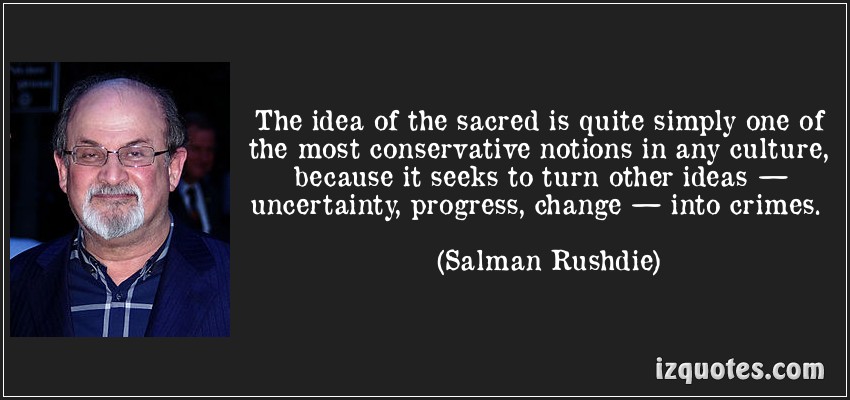
As you may have guessed, I think that the value of criticism, skepticism, and the ability to be contrarian (even if not for its own sake) is superior to the value of maintaining traditional ideas, even if those ideas happen to be defensible.  Thus, I do not think that the fairness myth, at least in the world I see, is a defensible myth.  I don’t think conservatism is good per se, even if it might be right on a case-by-case basis.  I cannot be a conservative in this world now, and for the sake of the possibility of my being wrong about what I might potentially try and conserve, I cannot be a conservative in any potential worlds where social justice “wins”.

I think there will always be room for critics, guardians of honesty and the pursuit of truth, and all others who seek to maintain the pursuit of ideals, rather than the defense of them.  True ideals don’t need defense, as the truth does indeed point to itself.  Thus I think that liberalism, radicalism (at least when things are very bad), and skepticism are the superior values in any culture, and thus I can never be a conservative.

Here’s a related article I wrote 2 years ago.  The Tea Party doesn’t want America to change:  I do

On privacy, and indifference to a cause


I know as much about the current NSA/social media scandals as one can glean solely from reading people’s twitter updates and headlines of articles they post on Facebook… which is to say, very little. I know that people are mad at Google and Facebook for handing information over to the government, and people are buzzing about how intrusive and spyey the NSA is, and I’m not even 100% sure whether these are the same thing incident or two different (but similar) ones. What I know is, there’s a lot of talk about privacy and how much access government agencies should have to our personal lives. The reason I don’t know more is chiefly because I don’t care that much.

Often when someone says “I don’t care about that issue” it comes with an implied “and I think it’s silly that other people do.” This is not that kind of “I don’t care.” I’m glad people are paying attention to privacy issues, because I suspect it’s more important than my personal intuitions would have me believe. So this post is partly an invitation for people who are concerned about privacy issues to educate me, if anyone feels so moved. For the rest of this, I’m going to lay out why I’m not really bothered by the idea that the NSA or CIA or whatever could see all of my internet browsing activity, or, hell, have a camera in my house.

A large part of it is privilege. As a white American-born woman, I am probably in the least vulnerable demographic for coming under unwarranted suspicion about… nearly anything. (Being suspected of troublemaking and rulebreaking is one area where males in our society have it worse than females, starting all the way back in preschool.) Apart from a speeding ticket or two (and assuming I don’t get raped), I can basically assume that the law will be kind to me. I recognize that’s not an assumption that most people can make. Furthermore, I don’t have any secrets, at least not of the kind that would be of any interest to a government. I’m not a political radical, I don’t generally partake of illegal substances, and all of my scandalous activities and beliefs are out on the internet for anyone to see. (Speaking of which, I and the rest of the Polyskeptic compound are putting on our second burlesque show! You should come see it if you’re in or near Philly.) I can’t imagine what the government could find out about me through monitoring my internet usage that they couldn’t find out just by reading my blog. (And yes, I recognize that being able to be public about burlesque and polyamory and atheism and being a sexologist is also a mark of privilege.)

My feeling of invulnerability could change when I have a child. Although it’s not common, there are poly families who have children taken away from them because of their lifestyle, even if there is no abuse or neglect going on. That’s something that will always be a niggling worry in my mind, once there are children about. But it’s still not going to raise a personal privacy concern, because I’ll still be open and public about my lifestyle. That’s a choice I made, based on principle and facilitated by privilege, and so I have very little to fear from a search of my private activity online. If the US is ever taken over by fascists (and no, it hasn’t happened yet, whatever you might say) who persecute atheism or non-monogamy, my family will be in deep trouble. I’m okay with that.

But my relative indifference about privacy has another root, weirder and more personal. Never, since I was a child, have I been able to really believe in privacy for myself. Maybe because I grew up believing in a God who was always watching, but I’ve always felt the same level of embarrassment in doing something privately that I would feel if there was someone to see. Up until I turned 20 or so, I pretty much avoided doing things in private that I wouldn’t be okay with someone else seeing, and even since then, it’s always a struggle with that irrational self-consciousness. (As you can imagine, this hampered my sexual growth considerably as a teenager.) So I find it hard to relate when people describe being creeped out or disturbed by the idea of someone spying on them.

All of this is to say: because of my assorted privileges, values, and weird mental quirks, I’m not bothered by governmental privacy invasions. But I’m not going to go around telling other people not to be bothered by it, because I realize that my privileges, values, and weird mental quirks are far from universal. I mostly wanted to write this to explore my own feelings, like, “Huh, lots of people whose opinions I generally respect are bothered by this, but I’m not at all; I wonder why.” But coming to the end, it occurs to me that I’m also writing a template for how I’d like to see other people respond in a similar position. If lots of people whose opinions you generally respect are bothered by something and you’re not, maybe take a look at the personal factors that give rise to your indifference. Doesn’t mean you have to become an activist: this is the first and probably the last I’ll write about privacy issues, because I have many other causes to put my efforts behind. But maybe take a stab at recognizing how the landscape could look very different to someone else, and avoid getting in their way.