Imagine yourself sitting in a room, of unknown shape, with mirrors at various angles making up the walls. It could very well be a mirror maze, like the ones you might find at a carnival, down the shore at one of the many boardwalk locales with rides and games, or perhaps in the mansion of some eccentric billionaire with interesting ideas about interior decorating.
If you had sufficient light, could you determine the shape of the room (within your line of sight) without moving around (you could rotate, but not move around)? With simple enough shapes perhaps you could, but as the complexity of the shape and the number of mirrors increases, the task of determining the exact shape would be difficult at best, impossible at worst.
If you placed a computer of sufficient complexity, with cameras and other accessories attached, perhaps it could do so more quickly and efficiently than you or I could. Perhaps some minds, better suited for such tasks, could do it as well. Of course, why you might spend your time calculating the shape of mirrored rooms is your issue.
Wait, I’m the one thinking up ridiculous scenarios. I hope I’m going somewhere with this….
I’m Going somewhere with this, honestly!
Sometimes, the internal cognitive structure of my mind feels like a hall of mirrors, where the light is insufficient and I can’t even turn my head in all directions. Trying to figure out the angles, turns, and shape of the environment seems like trying to figure out the shape of a hall of mirrors, similar to the description above. I think that if only I were super intelligent, I might be able to calculate the shape of my internal self and I could know exactly how to fix what seems broken, or at least what is not ideal.
If I were smart enough, my mental health could simply be rationalized away! Like magic, except rational. So, like rationalized denial, or something. Shut up! I’m really going somewhere with this, honest.
But then, another idea comes to mind; what if it weren’t a puzzle? What if the information at hand were not sufficient to calculate a solution? What if the mirrors in the hall were so complex that determining the shape of the room could never leave the mathematical realm of probability and enter into deductive logic?
What if you were perpetually forced to guess, anticipate, and be forced to be wrong much of the time? What would that be like?
Oh, right, that would be like reality.
What if it were not possible for me, or anyone, to know the shape of my mind? What if we were all problems, and not puzzles?
A dichotomy or a mere illusory problem?
In much of philosophical history, probably because Plato left so many footnotes, there is a hard, and often dichotomous, distinction between the intellect and the a-rational emotions, instincts, etc. As I have argued previously (mostly in relation to my ongoing series of critiques of Ayn Rand), this distinction is not really so hard, and the fact is that our rationality grows out of irrational soil. Our intellectual and emotional selves are intertwined in all sorts of complicated ways.
In philosophy, the distinction between a puzzle and a problem is essentially that a puzzle just takes time processing power, etc to solve. A problem is something that does not have a rational solution, and may have no solution at all. While some might say it is here where we dive into the realm of theology, I might lean a little more towards a positivist’s answer that such things might, in fact, be meaningless.
Or, they just might not have solutions that we can find, given our cognitive deficiencies, limited understanding, etc.
My intellect insists that the cognitive landscape within is a puzzle. When I’m feeling confident in this set of attributes which we refer to as intellect, I believe that given enough time and processing power, I can figure out the problems within my mind, personality, and social self and determine a rational solution to any mental health concerns I might have.
What of the other attributes? I am cautious to call them non-rational, because they are real physical processes which must adhere to some physical, and thus analog, rules. But they are at least convoluted puzzles, perhaps the parts of which are too hidden to determine how they work. (This, of course, is still my intellect insisting that this is a solvable puzzle, if not an excessively hard one).
Even if it were a puzzle, because the parts are not all accessible to me (I am not conscious of all the cognitive processes in my brain, which is one of the reasons why intelligence is insufficient), the practical result is that there is no difference between it being a potentially solvable puzzle and a problem, from my conscious point of view.
A brain cube!
So, am I a problem to myself, or am I a puzzle?
My intellect insists I’m a puzzle, and the rest of me insists, perhaps stubbornly, the opposite. In other words, my emotions insist I’m a problem (that’s a little Borderline Personality Disorder joke there…). The problem there is that my intellect is dependent upon emotion, instinct, and unconscious processes to exist, and all of those things rely of the intellect to correct them (assuming we value skepticism to any degree, of course).
I first read Jean-Paul Sartre when I was about 15 or 16. And, being an angst-ridden teenager, much of his writing resonated with me. For many years after first reading it, Nausea was a specific novel which stuck with me. Here, for example, is a scene about half way through the book. Here, the narrator (it takes the form of a diary) is recording his thoughts about writing a biography of a deceased “M. de Rollebon.”
M. de Rollebon was my partner; he needed me in order to exist and I needed him so as not to feel my existence. I furnished the raw material, the material I had to re-sell, which I didn’t know what to do with: existence, my existence. His part was to have an imposing appearance. He stood in front of me, took up my life to lay bare his own to me. I did not notice that I existed any more, I no longer existed in myself, but in him. I ate for him, breathed for him, each of my movements had its sense outside, there, just in front of me, in him….
From here, our narrator moves on to realize that he exists. Profound, I know. Through the rest of the novel, this existence presents itself as a sort-of ubiquitous, nauseating, inescapable heaviness of things. Much later, in the climax of his “nausea,” our narrator sits in a park where he looks at the root of a tree beneath where he sits. The tree, and its existence, becomes a metaphor for all of existence, and therefore also for ourselves.
…I was floating. I was not surprised, I knew it was the World, the naked World suddenly revealing itself, and I choked with rage at this gross, absurd being. You couldn’t even wonder where all that sprang from, or how it was that a world came into existence, rather than nothingness. It didn’t make sense, the World was everywhere, in front, behind.
…
It was unthinkable: to imagine nothingness you had to be there already, in the midst of the World, eyes wide open and alive; nothingness was only an idea in my head, and existing idea floating in this immensity. This nothingness had not come before existence, it was an existence.
This tension between feelings of nothingness and the ubiquity of existence has always resonated with me. The feeling of emptiness, of meaninglessness, and of nothing has an inescapable insistence about it. I exist, certainly, but this existence often carries with is a heavy, unyielding, absurd sense of emptiness.
In other words, I was a fun teenager to hang out with at parties.
Lack of identity
One of the aspects of a diagnosis of Borderline Personality Disorder is the lack of clear identity.Without a clear sense of self, one can easily define themselves via their relationships, and hold onto that relationship as a defining part of themselves long after the relationship is healthy. This makes letting go of a relationship difficult, because a sense of self, of identity, is still wrapped up in another person either gone or going.
We can dress our inescapable existence, our identity, in any way we like. We can take on the persona of M. de Rollebon. We can feel the absurdity of ceaseless existence in the dark bark of a tree in a park. We can peel away at the layers of ourselves to realize that there is no sense of self which is not constructed and narrated. For me, the sense of self is largely an illusion, if not an out-right delusion.
We are stories that we tell ourselves. And sometimes, when we really like a certain kind of story, we insist upon it at the sake of the truth. The truth is that we are often contradictory, inconsistent, and variable. We are a legion of selves, many parts of the brain processing many things which (in a metaphorical sense) fight to achieve consciousness and control. I believe that those people who maintain a static sense of self are just much better at weaving one narrative than I am, but ultimately that narrative is still woven and illusory.*
If we were to take a person with a strong sense of self, and take away the things that they define ourselves by–whether it be a place, a group of people, or an activity–such a person might be left with a kind of boredom and restlessness. In order to relieve that boredom, a person might yearn for meaning, fulfillment of empty desires, and other people. In some cases, thoughts about suicide, impulsive (often destructive) behavior, and ultimately the fear of abandonment (or pain from having been abandoned) might feed depression and loneliness.
Being a borderline is like having the definition of who we are never quite forming in the first place. This lack of identity, at least in my case, is generally not felt as a lack at all. A borderline (in many cases) never had their identity taken away, they never had a solid sense of self to begin with, or at least had one grown weakly or stunted. And so long as we aren’t borrowing our identity from other people, leading to a dependent relationship, we might occasionally become aware of this emptiness.
And, what’s worse is that this feeling of emptiness can exist even while surrounded by people. It is a perception of emptiness, not an actually being alone and without loved ones, necessarily. It is a feeling that can happen while at a party, at home with people who love you, or even if you have a wife and two girlfriends. It is a sort of delusion which insists itself upon you, and colors everything you feel, think, or are surrounded by. For me, this emptiness is a depression and it feeds off of fear (of abandonment, for example) and does not believe that people can actually love you.
Filling the void with others. Lots and lots of others.
There are good reasons to seek companionship, and there are less good reasons to do so. There are also ways to evaluate the means by which we do so. Many borderlines will seek out solutions of this boredom and emptiness through destructive behavior, including seeking out sex and relationships merely in order to distract themselves from the loneliness within them. The tension of the desire for intimacy and the fear of being engulfed leads to them sometimes seek out temporary solutions.
This has not been a major factor in my own life, but I have sometimes felt the pull of this emptiness pushing me in that direction. That is, even if I had not often sought companionship in this way, I am familiar with the impulse. If I’m feeling lonely, I do sometimes feel the impulse to go out to a bar, hoping to meet someone. Many years ago, when I would occasionally do this, I realized that not only do I not meet people this way (at least, not often), but that even if I did it would not fill the emptiness.
For me, this feeling takes a different path. Sometimes, the people you love are not there when the feeling of loneliness and emptiness strikes. I have had moments of severe anxiety and emptiness while (for example) Ginny was on a date that was running much longer than I expected, especially if I receive no communication about it. While I can be fine alone for much of the time (whether through writing, reading, etc) there comes a time when the feeling of emptiness and loneliness becomes overwhelming, and then each minute of the lack of presence becomes painful. And this feeling can come on suddenly, without obvious cause, and become quite compelling.
Just because it’s bizarre and strange, I include this
In those moments, the desire to seek out more people can arise. And here is where I think some people might use polyamory (or, in the case of monogamous people, affairs or serial and shallow relationships) as a means to fill in the emptiness, rather than for the sake of pursuing a healthy relationship. It must happen sometimes to us poly people, us being human and all. The question is the extent to which this impulse is universal, and thus part of all of our behavior to some extent.
The question is how much of our healthy seeking of others contains some of this emptiness and loneliness at its heart, and whether this heart is always an abyss or whether this perception of darkness and pain are the illusions. I am not sure these questions have good universal answers.
I say this because I am not convinced that any of our motivations are purely good or bad. I believe that when I feel a genuine desire to be closer to someone, part of this is because they are a person worth being close to but also because there is a need to fill up the emptiness inside of me. In the end, all there is in this absurd and ultimately meaningless world is each other. And so to fill up the emptiness with people we love is a wonderful thing, so long as this desire to fill holes in ourselves is more than just a dependency or a temporary fix.
Relationships can be co-dependent, and this is is equally true within polyamory. The ability, and practice, of loving other people does not prevent co-dependency. The trick, I believe, is to navigate the waters of filling the emptiness inside us without either creating a narrative of ourselves, others, or the relationship which cannot be shattered or dirtied. We cannot allow ourselves to create a visage of ourselves, our partners, or our relationships which are not subject to criticism or change. In creating identities for ourselves, we cannot allow ourselves to create ideals which cannot change, heroes which cannot be questioned, or spaces which cannot be profaned.
We may need identities, but those identities don’t have to be static, idealized, sacred facades.
*This, by the way, is one of the major differences between Borderline Personality Disorder and Narcissistic Personality disorder; where the narcissist is quite good at creating a narrative sense of self–an identity which cannot be questioned!–a borderline lacks this singular definition of self.
There is an idea which has always simultaneously fascinated and terrified me. It is an idea so simple and powerful, and so obviously true, that calling attention to it, at least for me, feels akin to perpetually indicating the nose on your face.
We are all alone.
David ray Griffin (Thanks, grad school!)
We are “thrown into the world” (as Jean-Paul Sartre put it), alone, terrified, and essentially forced to figure out what the hell is going on. The beginning of our lives is a sort of slow adjustment to the reality that there is more to the world than us. We have to learn that the world is not a mere extension of ourselves, and that many of the other things in the world have a similar subjectivity as we do. We have to discover other people! And, after doing so, while we slowly become individuals with our own identities, preferences, and personalities, we are then capable of having relationships with those other people (as David Ray Griffin put it, other people are indeed objects, just not “mere objects”).
However, sometimes something goes wrong along the way and our sense of self does not develop in the healthiest of ways. Whether through neglect, abuse, or some type of suffocation, some of us do not create an ideal sense of who we are and thus don’t have the tools to create healthy and proportional relationships with others. One aspect of this, especially for people within some personality disorders, specifically Borderline Personality disorder (in my case), is the fear of being abandoned, rejected, or in general not validated.
Being alone can sometimes feel overwhelmingly lonely and depressing for most of us, but for some this experience takes on another dimension. As the book I Hate You, Don’t Leave Me put it, borderlines often perceive “temporary aloneness as perpetual isolation.” Thus, many borderlines will flee from being alone, often in dramatic and destructive ways, and often repeatedly. There is a sense, for many people who suffer from this experience, that we become defined and meaningful through other people rather than through our own actions.
The resulting shifts in mood, potential impulsive (and often destructive) behavior comes from a place of deep insecurity, fear, and lack of clear identity. These feelings can be transient, chronic, or they can come and go (especially as other diagnoses, such as bipolarity, depression, and anxiety come into play). Whether feelings of emptiness, sadness, or rage emerge, it is clear that there is a significant problem to be addressed here.
And the issue becomes a question concerning to what extent others can help, and in what specific ways they should help. One potential outcome to these feelings, for many borderlines, is a kind of co-dependence (I Hate You, Don’t Leave Me mentions how narcissists and borderlines can fall into this trap), a relationship of manipulation, or one of out-right abuse. There are, of course, ways out of these traps. And navigating these issues becomes an important concern for anybody who has relationships with those who are subject to such fears of abandonment, neglect, etc.
And, naturally, someone who is polyamorous has a related set of concerns, which may differ from the general concerns of people in more traditional and culturally acceptable form of monogamy/monoamory.
So, the obvious questions; is the maintenance of multiple relationships merely an attempt, for a person who might suffer from these symptoms consistent with Borderline Personality disorder, to stave off abandonment, loneliness, etc by hedging their bets? After all, if you have 2 partners, one leaving will not be as bad when you have the other, right? Is polyamory not just another form of the oft-discussed (within borderline literature) issue of transient, unstable, and problematic relationships, where parallel is used in place of serial relationships? Whereas non-poly people might utilize “shingling” (overlapping serial relationships), polyamorous people might do the same thing when they add a new relationship if another is experiencing problems.
I believe that this is at least true for some people, but to what extent this is a motivation for polyamorous people I cannot judge. It is up to each of us to examine our own motivations, fears, and strengths in order to figure out whether we are doing what we are doing for mostly good or bad reasons. All of us are capable of selfishness, lack of empathy, as well as loving attention to varying degrees. If we can figure out where we are not behaving ideally and fix those spots, while simultaneously figure out where we are being good partners and emphasize those traits, I think we will slowly improve as partners as well as individuals. If we are to improve ourselves, we should do it for others but we should also do it for ourselves.
I could talk all day about how, ideally, we should be free to pursue the people we love in the ways that we love them, without undue deference to social expectations and traditional relationship structures. If I love 2, 3 or more people, I should be able to honestly, freely, and ethically pursue those relationships. But there will inevitably be some part of each of us which will self-justify and rationalize a deeper set of feelings and thoughts which derive from a place of fear and need for interpersonal validation. These feelings are essential factors within all of us, but they have more significance for people with some personality disorders, including BPD.
The lesson is that anyone who has such deep feelings and vulnerabilities should make sure that they are not dominated by them, and to make sure that they try to cultivate the good and minimize the bad. For people like me, diagnosed with a disorder, this becomes more important.
Polyamory as hedging our bets?
This leaves ammunition for critics to argue that people who are polyamorous are merely seeking validation through multiple relationships, overcompensating for insecurities, or possibly that they are incapable of true (monogamous) intimacy, so they seek multiple shallow intimacies to make up for that inability. And, I’ll admit, these charges hit me deep inside, in a place where I am not especially comfortable excavating late at night, when sleep will not come. I admit that this argument has an emotional potency which terrifies me, deep down. This criticism pokes at the very weakness within me, and so when the idea comes to mind, I feel like recoiling into myself and hiding.
But isn’t that just like a borderline? I, having a skewed sense of identity and self fueled by fear of rejection, abandonment, and even “impostor syndrome.” I have a fear that I might merely be doing all this having of multiple partners, and advocating for it, as a rationalization for being afraid of being alone. I think, in those moments which torment the soul (metaphorically speaking, of course), that I might just be the kind of person who only is with the people I love because I’m trying to make up for a set of fears, rather than because I genuinely appreciate and care about some people.
“splitting” as a cultural trope.
And then, as I allow my mind to calm down and think about this (that is, allow the fight/flight physiological response to wane), I realize that while these feelings might be potentially problematic in general, they are, at best, merely part of the tapestry which is me. I am neither the idealized guru of polyamory, contemplating sage-like inspirational maxims about love, living a life of relaxed, reasonable, loving harmony nor am I a manipulative, selfish, and fearful parasite. This cognitive phenomenon of “splitting“, which is so common for borderlines (as well as other personality disorders), prevents me (often, but not always) from seeing myself and others as nuanced, complicated, and often contradictory people.
It also doesn’t help when people, angry with me, offer me fuel to think of myself as the latter monster. Having written and said mean, injurious, and abusive things to other people while angry, I understand such outbursts, but they still hurt and get internalized, often.
And whereas the person within the cultural milieu of monogamy might find themselves afraid to leave someone who is not good for them until they have a potential replacement (because the times between relationships is so hard for many people), a polyamorous person still has to deal with loss of a relationship, no matter how many other people they have in their lives. Losing someone you love, especially if it’s because of the very thing which causes you the anxiety about abandonment, is always hard even if other people love you. Having other partners does not make it much easier to leave or to lose a partner.
Which is not to say it doesn’t help, at least a little, to have loving support around you when things go badly. Ultimately, however, it is a pain that a person has to handle alone, especially in the middle of the night when we torment and punish ourselves for our mistakes. But a person who cares and who will listen and give you emotional support does help, even if it doesn’t stick.
Just like in the beginning of life and at the end of life, when we all will face death, the middle is full of moments of being alone. And while this is a universal human experience, those of us who have a broken sense of self or experiences with neglect or rejection feel this pain in a different way. Abandonment will kick us all in the stomach from time to time. Sometimes it will be our fault, sometimes it will be theirs, but more likely the fault will be distributed around. And whether we are monogamous (serially or stably) or non-monogamous, that kick hurts.
I am still working out the solution to all this (I may never do so), but for the moment I’m trying to keep in mind that so long as I’m trying to learn from my mistakes, am not allowing my fears to dominate my behaviors, and accepting what is my responsibility, I will be less likely to have my fear of abandonment become a repeated self-fulfilling prophesy.
The tension between my yearning for intimacy, my fear of intimacy, my predilection to hide from the world in solitude, and my fear of that same solitude can only be healed by maintaining healthy, emotionally validating relationships with people who not only treat me well, but who understand that I’m struggling very hard to not push people away or to control, have power over, or to manipulate them. And while the responsibility for the behavior that does push people away or make people feel manipulated by or abused by me, falls on me alone, it is also true that a healthy cultural and social environment is the responsibility of the individuals which make it up. Everything from micro-aggressions, invalidating communication, to down right lack of consideration and abuse will exacerbate the issues within us all, rather than create a safe and emotionally healthy space.
I will continue to do better on that front, and I will try and seek people who will be trying to do the same, from now on.
In reading about Borderline Personality Disorder recently, I’m noticing a fair amount of conversation about a sort of lament for the loss of aspects of culture which have never really meant anything to me, personally. The shifts in social structure, changes in the definitions and practices of family, and the contradictions of life, some apparently think, are contributing to behaviors consistent with Borderline Personality Disorder. I hesitate to label it as conservative, but it’s certainly more traditional than I like.
Take the following as an example:
For many, American culture has lost contact with the past and remains unconnected to the future.
…
…texting, blogging, posting, and tweeting all avoid eye contact. Increasing divorce rates, expanding use of day care, and greater geographical mobility have all contributed to a society that lacks consistency and reliability. Personal, intimate, lasting relationships become difficult or even impossible to achieve, and deep-seated loneliness, self-absorption, emptiness, anxiety, depression, and loss of self-esteem ensue.
The overwhelming experience, for me, in reading about BPD is one of a nodding recognition. Out of the 9 criteria for diagnosis, 7 are strongly consistent with my experience. But when I read this, I’m left shaking my head and confused. Is this a generational interpretation? I don’t know, but this does not resonate with me at all. I will leave any conclusion about how I think about this view until I have read the rest of the book, but right now I’m feeling skeptical about this aspect of the analysis.
The sense of anxiety, loneliness, etc are things I feel but I don’t think the modern digital age, with technology creating some barrier to intimacy, is the cause. I think I would feel the same way even with eye-contact. You know why I think that? Because I do, in fact, feel that way when I have eye contact with people. Being at a party with people I don’t know well is often cause for similar feelings. An unhealthy environment with people unable or unwilling to understand or consider the complicated emotional landscape within me is as alienating as anything else could be. A person who demonstrates indifference, aggression, and lack of consideration is always worse than mere lack of direct eye contact.
Physical closeness is not the solution, because the problem is one of perceived emotional distance. I can feel emotionally close to someone through texting, blogging, etc, but there are some times when i cannot feel close to someone when they are holding me, trying to comfort me. The issue is not physical distance, the problem is that I don’t, often, believe, that anyone could possibly love me, or that I deserve it if they claim to.
The world can often be invalidating and cold, whether through a screen or in the face of human fears played out in little private rooms and public spaces everywhere. I’m not yet convinced that modernity is exacerbating the problem.
Then there’s this.
Like the world of the borderline, ours in many ways is a world of massive contradictions. We presume to believe in peace, yet our streets, movies, television, and sports are filled with aggression and violence. We are a nation virtually founded on the principle of “help thy neighbor,” yet we have become one of the most politically conservative, self-absorbed, and materialistic societies in the history of humankind. Assertiveness and action are encouraged; reflection and introspection are equated with weakness and incompetency.
(page 82)
This is more like how I feel; like a ball of contradiction. I yearn for intimacy, but appear cold and indifferent to people who don’t know me well. I don’t want to hurt the people that I love, but there are obvious examples of where I have. I’m intelligent, educated, and often feel I can do anything I put my mind to, and yet quite often I find myself in a funk of inaction, depression, and I feel inadequate (yesterday was one of those days).
One of the most resonant aspects of this disorder is what is called “splitting.” Essentially, it’s the kind of black and white thinking which occurs, especially during periods of intense anxiety (part of the physiology of BPD seems to be a hair-trigger for the fight/flight response, leading to times of sudden extreme anxiety and decreased activity in the Pre-frontal cortex, leading to less ability for nuanced thinking).
Splitting, for me, takes the form of seeing myself, others, or the whole world as either wonderful or fundamentally broken. The name of the book I’m reading, I Hate You, Don’t leave Me, encapsulates this nicely. Sometimes I hate myself and think myself worthless (which is not helped when I receive abuse, dismissal, or rejection from people I was or want to be close to). Sometimes I demonize another person who has hurt me, and sometimes I try very hard to empathize and understand why they did so in an attempt to give the very consideration and empathy I did not receive from them. Sometimes I think the world is ugly and not worth fighting for, and sometimes I want to see it all, warts and all.
Because even the imperfections can be beautiful.
I much prefer when I can see myself, and others, that way.
But I’m not quite ready to throw modern culture, technology, and the shifts in our social structures away. The lack of consistent identity within myself, as well as the shifting identities of our culture, are (perhaps) not necessarily bad. Perhaps the solution, for myself and for us all, is not to seek an identity, but to recognize and accept the flux of the many parts of ourselves, good, bad, and nuanced.
Sure, structure is helpful and (at least for me) comfortable. But perhaps one of the problems with traditional American culture, as well as who we are as people, is the reliance of singular identity, tradition, and consistency. We all need a revolution now and then, after all.
This is not a real post. This is more of an overture to future posts about the intersection of being polyamorous and having Borderline Personality Disorder.
Ginny pointed out to me today that I have a fair amount of experience being polyamorous, and while I was diagnosed about 4 years ago, all of my adult relationships have existed within the milieu of having the symptoms consistent with BPD. I have had relationships of varying degrees of intimacy, seriousness, and spans of time. I can say that I’ve honestly failed as a partner, been failed as a partner, been very good to partners, and had partners be very good to me.
The more I read and think about my disorder, the more I think about how the factors which play into making relationships more difficult for me are actually quite central to a borderline diagnosis. And this makes me want to delve into, chart, and analyze these waters where polyamory and BPD meet, not only for my own sake (of understanding myself better), but to possibly make some observations about the relationship between intimacy, fear, communication, and the nature of relationships in our culture.
I have already said much about how our culture views relationships in general, commenting on the expectations of monogamy and the perceived “perversion” of sex-positivity and non-monogamy. And while I agree with much of that cultural criticism still (I’m sure I could find many of my previous posts which I would disagree with now), I think there is more to be said about those issues.
I think the direction for me to go, in the future, is to take a closer look at the “emotional” and “dramatic” personality disorders, specifically Borderline but also Narcissistic, Antisocial, and Histrionic as well (which all have similarities), and take a look at how the symptoms which affect relationships might tell us more about mental health, social expectations, and relationship structures.
For now, I don’t want to say too much more. Instead, I might want to go back and take some notes about how the literature documents how BPD (and the others, perhaps) affects relationship health, and take a look at some of the things that polyamory might have to help, hinder, or perhaps be neutral concerning those struggles. I have certainly been able to understand (usually after the fact, unfortunately) how the symptoms of BPD were triggered, not communicated well enough, and were significant causes of the problems in a number of relationships (even the ones that didn’t end badly). I have a feeling that charting such things might tease out some patterns, and I might be able to tentatively conclude some philosophical and social implications of non-monogamy on some of the personality disorders as well as vice-versa.
I’ll admit that this is a challenging and terrifying project, and I hope not to get blown away by the potential scope of it. I know that each day I don’t succeed in brilliantly mapping out and explaining everything, perfectly, deep inside I will try to punish myself for this failure.
Because that’s part of being a borderline.
But I hope that I am able to work through those feelings and help myself (and hopefully some of you) understand a little more about the world. I’ll try and remain optimistic.
I received this from Margaret Downey recently, about their meeting next Tuesday:
Science, Society and Sex:
An Evening Conversation With Faye Flam
FOR IMMEDIATE RELEASE APRIL 10, 2014
PHILADELPHIA — Popular science writer, reporter and journalist Faye Flam will participate in a live “actor’s studio-style” interview involving all things science, society, sex and so much more. The Tuesday, April 29, 2014,highly anticipated event starts at 7:00 PM in the large meeting room of the Ludington Library and is sponsored by The Freethought Society (FS).
FS President Margaret Downey will moderate and interview Flam on a wide variety of subjects relative to today’s science and social interaction in what will be an evening of conversation no one will want to miss. Audience participation will also be incorporated.
“We are excited to present Faye Flam in this unique setting,” Downey said from the FS offices. “This setup allows a casual conversation to flow, and with Faye’s extensive science and research background and down-to-earth approach to knowledge, it’ll be a fantastic evening. It is sure to be a fun, educational and enjoyable time.”
Flam is well-known in the Philadelphia area for her past science, evolution and contemporary columns in The Philadelphia Inquirer. She currently teaches science writing at Ursinus College and also holds the respected position of Writer in Residence. She has also written for WHYY/NewsWorks, The Washington Post, Science, The Economist, and Science News. She was recently awarded the National Center for Science Education’s “Friend of Darwin Award” for her Philadelphia Inquirer column “Planet of the Apes.” Flam is also a critic for the Knight Science Journalism Tracker.
The Tuesday, April 29, 2014 presentation starts at 7:00 PM in the large meeting room of the Ludington Library, located at 5 South Bryn Mawr Avenue, Bryn Mawr, Pennsylvania.
Don’t miss this exciting evening, which is free and open to the public.
I’m hoping to make it (I have not been to too many Freethought Society events recently, but I hope to change that in the future, being back in Philadelphia). If you are in the Philadelphia area and are free Tuesday night, come join us.
In the past, I have been convinced (or convincing) to go to a nearby bar for a drink or two after, and may do so again. If any of that sounds good to you, I hope to see you there.
I know, I know….I have not been keeping up with writing. The reasons for this are complicated and probably uninteresting to you, so I’ll just skip the laments and get to the goods.
OK, maybe not the goods. We’re talking about Ayn Rand here!
Last time, in chapter 3 (The Ethics of Emergencies), we continued with how we are, individually, the standard for our own ethic, yet somehow this is an “objectivist” ethic. This time, we are going to explore the nature of conflict in our competing interests.
Ayn Rand starts with an obvious issue
Some students of Objectivism find it difficult to grasp the Objectivist principle that “there are no conflicts of interests among rational men.”
Um, yes. I am having some problems with this principle. So I’m hoping Rand will sort it out.
Rand starts with a common example:
A typical question runs as follows: “Suppose two men apply for the same job. Only one of them can be hired. Isn’t this an instance of a conflict of interests, and isn’t the benefit of one man achieved at the price of the sacrifice of the other?”
This is, at least, a conflict in opportunity. There is an actual physical conflict here; only one man can get the job, not both. So, how is this not a conflict? In order to explain why, Rand presents us with four considerations. They are:
Reality
Context
Responsibility
Effort
Let’s look at each briefly. OK, I’ll strive for brevity, anyway. (I failed)
Reality
A man’s “interests” depend on the kind of goals he chooses to pursue, his choice of goals depends on his desires, his desires depend on his values—and, for a rational man, his values depend on the judgment of his mind.
Again, Rand is relying on this distinction between reason and whim (as we saw in all of the previous chapters, but especially chapter 1), a distinction which is not as clear as she thought, and as many people still seem to think today.
The next paragraph contains this continued error, but follows with a point I agree with.
Desires (or feelings or emotions or wishes or whims) are not tools of cognition; they are not a valid standard of value, nor a valid criterion of man’s interests. The mere fact that a man desires something does not constitute a proof that the object of his desire is good, nor that its achievement is actually to his interest.
Again, I disagree that desires, emotions, and “whims” are ontologically separate from reason. They can be different in structure, but we must be careful not to think that they come from different places; our reasons ultimately come from our desires, subjectivity, and whims, even if they actually do end up cohering with reality (the role of skepticism/science is to determine which ones actually do cohere).
And, of course the fact that a person desires something is not sufficient to declare that it is good or in their (rational) interest.
To claim that a man’s interests are sacrificed whenever a desire of his is frustrated—is to hold a subjectivist view of man’s values and interests. Which means: to believe that it is proper, moral and possible for man to achieve his goals, regardless of whether they contradict the facts of reality or not. Which means: to hold an irrational or mystical view of existence. Which means: to deserve no further consideration.
What I think she means here is that you get the job, the sandwich, or the girl (yes, she uses this example later) because they have done the work to deserve it. There is no realization of the role of privilege, bias, etc that goes into who actually gets the job. Not that every person that gets a job got it because of these reasons, but ignoring the fact that we think we are being rational when we are being led by “whims” is really the Achilles heel of Objectivist “philosophy.”
This, once again, is simply the same type of magical thinking (a la The Secret) that she is decrying in the very same paragraph. That is, while saying that a mystical view of reality is not worthy of further consideration, she is using magical thinking and calling it rational. Also, once again, this philosophy is subjectivist to the core. Projecting your personal whims onto the wall and calling it rational, reasonable, and objective just does not work.
When a person reaches the stage of claiming that man’s interests conflict with reality, the concept “interests” ceases to be meaningful—and his problem ceases to be philosophical and becomes psychological.
To a philosophy geek, this looks like an homage to Logical Empiricism, but whether Rand was familiar with this or the closely related idea of logical positivism is not clear.
I do find it interesting, however, that she identifies where the conversation has left philosophy and became psychology. In my opinion, this discussion never left psychology at all. But because Rand believes that reason is ontologically (or perhaps merely epistemologically) distinct from desires, emotions, or whims, she thinks that she is actually leaving behind mere pulls of desire and flying into what? The Platonic realm of Ideas or Forms?
It seems that, for Rand, to be meaningful means to be separate from mere emotion, desire, and whim. These things are subject to psychological analysis, not philosophy. Reason and philosophy are dependent on each other, in some way. I disagree on all counts. Not only is desire, whim, and emotion relevant to philosophy, but reason is relevant to psychology. Moreover, Psychology and philosophy are relevant to one-another.
In any case, let’s move on.
Context
Just as a rational man does not hold any conviction out of context—that is: without relating it to the rest of his knowledge and resolving any possible contradictions—so he does not hold or pursue any desire out of context. And he does not judge what is or is not to his interest out of context, on the range of any given moment.
The idea here is essentially to be internally consistent, mostly in the sense of not having any incongruity between various interests; don’t pursue an interest today which will conflict with another interest that will be relevant tomorrow. In short, a person “does not become his own destroyer by pursuing a desire today which wipes out all his values tomorrow.”
Which is all fine, and I have no quarrel with this. Later on, she further clarifies by saying that “a rational man never holds a desire or pursues a goal which cannot be achieved directly or indirectly by his own effort.” Here, it is the term “indirectly” which should hold our attention (she italicizes it in her own text). Let’s see why:
It is with a proper understanding of this “indirectly” that the crucial social issue begins.
So, since Rand has been somewhat quiet about how social issues come into play, my ears perks up (metaphorically, or course) when I read this. She continues.
Living in a society, instead of on a desert island, does not relieve a man of the responsibility of supporting his own life. The only difference is that he supports his life by trading his products or services for the products or services of others. And, in this process of trade, a rational man does not seek or desire any more or any less than his own effort can earn. What determines his earnings? The free market, that is: the voluntary choice and judgment of the men who are willing to trade him their effort in return.
The idea is that we achieve some things directly, by our own efforts, but so long as we are acting rationally and trading (and not sacrificing or asking others to sacrifice), then we are, as a society, achieving the indirect effects of that rationality and trade. That is, if I’m acting according to my own interests and so are you, what we achieve together is deserved, Just, and earned by both of us.
Is this the future of Galt’s Gulch?
This view is so idealistic, so optimistic, and in a strange way beautiful that I really want to believe it. when I first read Atlas Shrugged, this idea did tug at a part of me. It is a compelling vision, one which shares many of my values and which looks like a world worth working for.
I want to live in a world where people who value effort, responsibility, and (dare I say) fairness that this is their goal. However, when we actually look at those who argue for a free market, I don’t think this is what we get. This optimism of the human potential is not only unrealistic, but it fails to the same problems as before; separating rational interests from whims is a meaningless idea, and we merely end up rationalizing our whims and calling them “reason”.
This is a kind of bait-and-switch. Show me reason and fairness then when I move closer what I get is Ayn Rand’s own personal preferences, rationalized. It bothers me that Rand was unaware of the role of bias, emotion, and privilege in how we think rationally. Even when we are thinking rationally, and using empirical means to solve problems, we must pay attention to whim and irrationality because it is part of thinking rationally (for us humans, anyway) to be swayed by emotions and whims. Logic, after all, is only a tool to apply to the assumptions, feelings, and instincts we have. In the end, logic should weed out the bad ones, but not necessarily.
We cannot separate emotion and rational thought, fundamentally. We can follow the threads of skeptical thought, science, and logic to show which of our emotions, desires, and whims will lead us to a set of goals, values, etc which we want, but in the end all we will have is better emotions, desires, and whims, not some magical substance of reason pulled out of the void.
Reason, rationality, and logic are processes. They are the earned title that whims get when they pass the test of skeptical analysis. Not only are they relevant to ethics, value, etc, but without them ethics, value, and all the other things that matter could not exist at all. Every rational thought, conclusion, or worldview which has ever existed is fundamentally a whim. perhaps it’s not shared by everyone inherently, but that’s how they start. The ones that survive the tests are ones worth considering. The question is which one’s pass all the tests; individual (which is where Rand stops), interpersonal (the realm of ethics), social (the realm of policy, law, and morality), and universality (the supposed role of things like religion, Platonic philosophy, and any other attempt at objective truth, but really might just be a meaningless set).
I actually think that rational thought is just a specific kind of emotional experience, or at least a specific kind of subjective experience which includes emotion and rationality as part of a continuum. But it’s the kind of subjective experience which can be, with effort, sacrifice, and empathy, be shared through language and thus becomes intersubjective. The whims which can be communicated, agreed to, valued, and shared (which is what culture is) are the ones we can address as either rational or not, useful or not, or meaningful or not. But they are still whims; just not mere whims.
Let’s get back to Rand.
When a man trades with others, he is counting—explicitly or implicitly—on their rationality, that is: on their ability to recognize the objective value of his work. (A trade based on any other premise is a con game or a fraud.) Thus, when a rational man pursues a goal in a free society, he does not place himself at the mercy of whims, the favors or the prejudices of others; he depends on nothing but his own effort: directly, by doing objectively valuable work—indirectly, through the objective evaluation of his work by others.
If I were feeling nit-picky (and I am), I would quibble by saying that we recognize the intersubjective value of work. That is, it is work that starts out as subjectively valuable, but when someone else also recognizes the worth of that work, then it becomes intersubjective. At no point here did any objective perspective (like, for example a God) come into play here. There is nothing objective about any of this.
Aside from that quibble, this is all fine in general. It sounds nice, and gives the student of objectivism a warm fuzzy feeling in their chest, but it ignores the fundamental problem which I have been coming back to in this series of posts; there is a real, actual contradiction between selfishness and one’s ability to deal with other people. Our relationships are not mere trades, because to communicate and to interact is fundamentally a process which requires some level of sacrificing one’s “rational” interests. We have to give (potentially) undeserved effort to other people just to comprehend them enough to attempt to trade with them, in many cases.
Yes, we can merely trade goods, effort, and money without digging into the socially structural issues involved, but we can only then trade with those sufficiently similar to us, which leads to the balkanization of social networks. If we seek to trade ideas, goods, etc with a wide range of people, cultures, etc then we need to give more of ourselves.
We cannot understand our privilege, bias, or assumptions without spending some significant time putting other people’s concerns, ideas, and worldviews before our own. The very ability to have empathy, concern, or effort towards social justice of any kind is very difficult while being selfish. The only way one can agree with a position of social justice while being selfish is when the conclusion of the work of social justice happens to cohere with their selfish needs. But what happens when our selfish interests causes dissonance with the idea of social justice? Well, without giving up on selfish interest, all that can happen is self-justification, defensiveness, and rationalization for one’s place of privilege.
A selfish person can parrot the conclusions, enjoy the fruits of, and march along side the empathetic social justice people, but it will be at least partially a charade (perhaps even to oneself while doing it) because the very problem of bias and privilege is founded in the selfish impulse, along with the cognitive dissonance which must accompany it. I’ve known too many people who agree with social justice conclusions, but simply miss the boat when it comes to how what they do violates social justice, whether it takes the form of misogyny, bullying, or harassment.
Back to Ayn Rand. Is there any surprise that those fond of Ayn Rand look down upon social justice? Can there be any doubt that a selfish person could never be more than a poser if they espouse concern for social justice? Could such a person ever really internalize the fundamental concept of social justice outside of where the progress that such social movements coincide with their interests? It’s fine, for example, to have a person who sits on the side of social justice, so long as when it is them who is the perpetrator of some harm they don’t recoil behind a wall of defensiveness, excuses, and rationalization–if not out-right denial that they did anything wrong!
And no, I’m not an exception to such criticism. We all make mistakes, an hopefully we all learn from them. But we have to first be aware that there is a problem, before we can fix anything. We all have to be vigilant, honest, and open to criticism. This criticism, like all my criticism, is aimed at specific people, humanity in general, and at myself. We’re, everyone’s, susceptible.
But, I’m getting caught up in a tangent.
Responsibility
Most people hold their desires without any context whatever, as ends hanging in a foggy vacuum, the fog hiding any concept of means. They rouse themselves mentally only long enough to utter an “I wish,” and stop there, and wait, as if the rest were up to some unknown power.
The idea here is simply a continuation of her criticism that many people hold a magical view about reality in which the help that “welfare states” and such seem to want the help to come from somewhere, somehow. She makes reference to the author of chapter 2 (and some later chapters) Nathaniel Brand in saying that “‘somehow” always means “somebody.'” The implication is that if someone is needy, someone else has to help. Well, yes.
But I found this to be interesting.
But humility and presumptuousness are two sides of the same psychological medal. In the willingness to throw oneself blindly on the mercy of others there is the implicit privilege of making blind demands on one’s masters.
Yes, the entitlement of the needy that we, the masters, should give them crumbs off our table! Not every need is a demand. Not every request for fairness is a demand. The fact that it feels like a demand to them should tell us something about them, although I don’t know exactly what.
What I find interesting here is the use of the term “privilege.” I don’t know enough about the history of the social justice movement to know if this term was used in the way I use it back in 1964, but the association between entitlement and privilege is more complicated than this presentation. Sometimes, the masters take more than they should, while thinking they are taking their fair share, and what ends up happening is inequality that to the “master” looks like justice. The master works harder, hence why they are the master. They are blind to the fact that their taking more than they actually deserve creates a tension which the “entitled” person making “demands” understands better than they do.
This, in essence, is a rationalization for the “Haves” to feel superior to the “Have-nots.” Not because they necessarily deserve it…but since one cannot have without deserving it (“reality”), then I suppose they do necessarily deserve it. Or something. And if one does not have it, then that’s because of “reality” as well. Thus, for those interested in social justice who ask for “handouts,” it is a demand that the masters, who are just following “reality” and understanding “context”, it would be irresponsible to give it to them because they don’t deserve it. Isn’t rationalization great!
Effort
Since a rational man knows that man must achieve his goals by his own effort, he knows that neither wealth nor jobs nor any human values exist in a given, limited, static quantity, waiting to be divided. He knows that all benefits have to be produced, that the gain of one man does not represent the loss of another, that a man’s achievement is not earned at the expense of those who have not achieved it.
Yes, because resources and money are not limited resources. If we all are reasonable, rational, etc then we can all be wealthy, eradicate conflict, and never have to give up on any of our interests. That doesn’t have any contradictions at all.
But this essay has been a little lass straw-man focused, so let’s not ignore this:
It is only the passive, parasitical representatives of the “humility metaphysics” school who regard any competitor as a threat, because the thought of earning one’s position by personal merit is not part of their view of life. They regard themselves as interchangeable mediocrities who have nothing to offer and who fight, in a “static” universe, for someone’s causeless favor.
She goes on in that vein for a while, and it’s all the same trite as before so we don’t have to address it. But then Ayn Rand says something that will sound familiar to those of us in the polyamory community.
He knows also that there are no conflicts of interests among rational men even in the issue of love. Like any other value, love is not a static quantity to be divided, but an unlimited response to be earned. The love for one friend is not a threat to the love for another, and neither is the love for the various members of one’s family, assuming they have earned it. The most exclusive form—romantic love—is not an issue of competition. If two men are in love with the same woman, what she feels for either of them is not determined by what she feels for the other and is not taken away from him. If she chooses one of them, the “loser” could not have had what the “winner” has earned.
Notice that she says “if she chooses one of them,”which could be taken to mean if she chooses either of them or only one of them. I do not know Rand’s views on monogamy (her books seem to espouse some sort of sexual freedom, but not polyamory per se), but this certainly leaves room for nonmonogamy. This is interesting because she seems to have this notion that values, including love, are essentially infinite. This is an idea that has persists throughout the poly community, as we can see from the infinity heart symbol which was the inspiration for the PolySkeptic logo (in combination with the Dawkins scarlet A).
But she also seems to think that resources are limited. Because while love, as well as other values, may be unlimited (which is debatable), the resources for economic growth and prosperity are not unlimited, and so wealth must either be distributed (whether through planned economies of free markets) unevenly or evenly. I am not sure if Rand thought it was possible to have an egalitarian outcome of economics through her Objectivism, but what is clear is that she thinks that the level of inequality that existed then (and it has grown worse since) was Just. People have what they have because they deserve that.
Ah, Just-world fallacies….
So, what’s the conclusion?
Now let us return to the question originally asked—about the two men applying for the same job—and observe in what manner it ignores or opposes these four considerations.
(a) Reality. The mere fact that two men desire the same job does not constitute proof that either of them is entitled to it or deserves it, and that his interests are damaged if he does not obtain it.
(b) Context. Both men should know that if they desire a job, their goal is made possible only by the existence of a business concern able to provide employment—that that business concern requires the availability of more than one applicant for any job—that if only one applicant existed, he would not obtain the job, because the business concern would have to close its doors—and that their competition for the job is to their interest, even though one of them will lose in that particular encounter.
(c) Responsibility. Neither man has the moral right to declare that he doesn’t want to consider all those things, he just wants a job. He is not entitled to any desire or to any “interest” without knowledge of what is required to make its fulfillment possible.
(d) Effort. Whoever gets the job, has earned it (assuming that the employer’s choice is rational). This benefit is due to his own merit—not to the “sacrifice” of the other man who never had any vested right to that job. The failure to give to a man what had never belonged to him can hardly be described as “sacrificing his interests.”
I don’t want to live in Ayn Rand’s world. It’s not that I think her ideal vision is ugly, per se, it’s just that her world is fantasy. She rationalizes what is a real set of conflicts by calling them deserved fruits. She is blind to the fact that rationality cannot be divorced from emotion, bias, whim, and emotion generally. She’s blind to the fact that as a result of this inability to divorce these things, she is rationalizing her own whims into “objective” reality. She’s blind to her own magical thinking, which is exactly the Just-world fallacy, which is essentially the same as victim-blaming.
At bottom, again, her Objectivism is sophomoric philosophy. It’s dressed up subjectivist rationalization. It’s not stupidity but it is myopia. It sounds appealing (even occasionally to me), but all good rationalizations look good with it’s nice shiny new suit on! The Emperor has no clothes, Ayn Rand has no objective truth, and selfishness cannot be ethics The emperor’s garments , ideally, look rational, reasonable, and real but they are merely whims dressed up for a Halloween party, dressed as Reason.
Over the last couple of years, I’ve been circling back repeatedly to the questions around the intersections of anger, marginalization, oppression, and social justice. I came to it with a knee-jerk, “Of course it’s better to restrain your anger and express yourself calmly and civilly no matter the provocation” stance, born out of my own Stoic Peacekeeper personality and the cultural values I picked up from my white educated middle-class environment. I did a lot of listening to the arguments that challenge that stance, and because this is the way I develop my understanding of knotty ethical problems, I threw myself as completely as possible into the “an oppressed person should get to express themselves however they feel like, even if it sounds unreasonably hostile and aggressive to others” viewpoint. I argued that side to others and put myself into communities where it was the rule, to see what the outcomes of having that rule are.
Based primarily on those experiences, I’ve pulled back a little and am working on settling myself somewhere in the territory between those two stances. I’m still working on where, exactly, that will be. But it’s distressing to me that the majority of the conversation I hear about the issue is pretty much either “How dare you say hostile things you mean meanyface!” or “How dare you silence someone’s expression of anger, whatever [verbal] form it took!” So I loved this post by Aoife over at Consider the Tea Cosy, which had a practical and nuanced view, affirming the right of marginalized people to express anger, allowing that the anger is not always going to be contained to the immediate oppressors, and exhorting people on all sides to be aware of how much they don’t know about the people who are in the immediate vicinity.
Bits I particularly appreciated:
When the status quo is oppressive (it is), then staying neutral just keeps things as they are.
The status quo needs shaking up. Anger- even messy outbursts of I CAN’T FUCKING DEAL WITH THIS SHIT ANYMORE WHAT THE FUCK ARE YOU PEOPLE DOING- shakes things up. Anger is a sign that someone’s been stressed to a breaking point. Anger reminds us that something is rotten. It knocks away a little of our complacency.
It has taken me a long time to really grasp that staying calm and absorbing emotional strain doesn’t always help situations. Sometimes it just allows really bad situations to linger far longer than they needed to. I will likely continue to struggle with this — stoic peacekeeper, over here. But I’ve been in enough situations where just quietly coping turned out to be a maladaptive strategy, and some anger, even messy and poorly-targeted anger, would have driven us much more quickly toward solutions.
While as oppressed people it’s often a good idea to focus our anger at appropriate targets when we can, when we are privileged it’s our responsibility to.. deal with it. Take some breaths. If we need to stew and simmer (we’re only human!), be careful about where we direct that hurt. Understand that whatever anger we’re receiving is magnified many times by the other crap the person has had to deal with. Accept that it’s not fair. It’s not fair for anyone involved.
I really like that she handles both sides of the coin here. The hurt I, as a privileged person (in a hypothetical scenario) feel from being lashed out at unfairly, is real. It counts. It’s not nothing. But it’s also (in this same hypothetical scenario) way less than the person doing the lashing-out has had to deal with, so it’s my responsibility to suck it up and cope in a way that doesn’t create more hurt for that person.
And then there’s the cases where maybe the hurt I feel isn’t way less, because of whatever shit I’ve got going on:
If the world were divided neatly into privileged and oppressed, we could all portion out how much anger we can take (and from who) and how much venting we get to do. It’s not, though. It’s messy- messier than our anger, messier than the hurt that leads to that anger or that results from it.
As people who are hurt and angry, intersectionality, I think, reminds us that other people could be dealing with things as opaque to us as our experiences are to them. There’s no such thing as the Last Acceptable Prejudice. All prejudices are the Last Acceptable Prejudices. While they all hurt us in different ways, the fact of that harm is always there. Vent if we need to, but understand that not-in-my-group doesn’t equal never-hurt, that not all things are visible to bystanders, and that this person might have a load of microaggressions of their own tipping them over an edge you never knew existed.
This is the piece of things that had me tearing my hair out when I was active in a heavily social-justice-oriented community. Situations would arise where one person’s hurt and anger and oppression redounded on another person in a way that aggravated that person’s hurt and anger and oppression, and trying to adjudicate those situations was frankly more than I was able to cope with, especially when I was one of the people being hurt.
Shock absorption: a model for looking at hurt and response
There are two different ways I’ve seen people look at anger, hurt, and response. The first is what I’ll call the “conflagration” model. People who love and trust each other, and have the right temperament for it, can get into screaming fights, yelling all over each other and maybe even breaking a dinner plate or two, and then once they’ve expressed themselves as loudly and fully as possible the anger dies down and they can hug and laugh and be close again. As far as I can tell (and I really don’t know, because this is an alien dynamic to me) the things each person said get filed away under “things I say when I’m angry” and both people know that they weren’t really meant, and don’t have a lasting hurtful impact. Maybe both people just grok that those are feelings expressed but not endorsed? The point is, in that model both people’s anger and hurt flares up like a bonfire, feeding on itself and growing for a while, and then naturally burning itself out and leaving very little residue to deal with.
Then there is what I’ll call the “shock absorption” model. In this one, hurtful things that were said and done while angry (or irritated or sleep-deprived or distracted) don’t go away… they react and rebound like shock waves. Jo, coming home from a shitty day at work, says something carelessly hurtful to Sal, who then has to do something with that hurt. Ze can bounce it right back to Jo, snapping back at hir, or ze can take it out on someone else, or ze can hold onto it and let it stew and fester, where it will likely gain momentum and fly out later at Jo or someone else with even more force. Any of these actions are going to cause an echoing effect, where the person who got hit by the rebound will then bounce it back to someone else, and on it goes. (If it’s just Jo and Sal volleying back and forth, hey presto! you have a fight.)
Sal can also do some conscious shock absorption, where ze thinks, “I know Jo is having a terrible time at work. I know Jo loves me and didn’t want to hurt me. I’m going to let that slide, and maybe bring it up later when Jo is in a better place to have a conversation about it.” This kind of shock absorption — reacting to hurt with understanding and patience — is what stops the endless cycle of hurt and anger rebounding all over the place. In the shock absorption model (which I think applies to any relationship where love, trust, and/or conflict-friendly temperaments are not firmly established, including nearly all the interactions social justice is concerned with) somebody, somewhere, has to do this before things will calm down. Often multiple people need to, as everybody takes deep breaths and works to get to a place of understanding and kindness.
A person’s ability to act as a shock absorber in this way is limited: by their temperament, by their maturity, and by the level of stress they’re currently under, including how much shock-absorption they’ve already been doing in the recent past. Once your shock pads are worn down, you’re back to Sal’s original choices in response to hurt: lash out (at the person who hurt you or someone else) or let it fester inside you, where it will only get worse and eventually emerge to do more damage. I didn’t mention it above, but sometimes if you go the “let it fester” route, the damage it does is to yourself and your own self-esteem. Taking on a lot of hurt and never dealing with or expressing it can eventually have you believing that you deserve to be treated badly, that you can’t expect any different in relationships, that this is just how things are.
When we’re talking about anger and social justice, asking a more privileged person to suck it up and deal with the occasional misdirected outburst is essentially saying, “The person who lashed out at you is likely near the end of their shock-absorption capacity. You have plenty left, so use it.” It’s saying, “One of the hazards of dealing with constant micro-aggressions is internalizing that sense of inferiority, starting to believe that you don’t deserve better. The person who lashed out at you is protecting themselves against that outcome; let them.” As long as you have some shock-absorption capacity left, it’s best to use it in those situations.
This is complicated by the fact that the apparently privileged person might also be at the end of their shock-absorption capacity, for any of a number of reasons (including having some invisible sources of marginalization.) This is what the third quote I pulled from Aoife’s post touches on. Saying, “you have to be the shock absorber here because you haven’t been hurt the way the other person has” is really, really upsetting — not to mention sometimes impossible to grant — when you’re staggering under the weight of your own stress and hurt.
And on the flip side, a lot of people who have the capacity to absorb hurt choose to rebound it instead. Absorption takes work, lashing back is easy. This is one reason I’m wary of the extreme “marginalized people get to express themselves however they want!” position. In some cases, I think it can turn into an abdication of any responsibility for acting as a shock absorber when you do have the capacity. This especially happens with people who are somewhere in the middle of the privilege ladder (assuming such a thing is a sensical concept, which it’s not, but it’ll do for the moment.) It is impossible to know what’s going on from outside: whether the person lashing out is doing so because their shocks are worn too thin, or just because they feel entitled to lash out. But I will say, that of the many and varied outbursts I’ve seen, statistically some of them are almost certainly being perpetrated by people who could have healthily chosen to absorb the hurt instead, and that just increases the strain on the system for everyone.
It’s even further complicated by the fact that, if you’re an internalizer, it can be hard to tell the difference between internalizing the hurt so that it festers, and absorbing it so that it dissipates. Impossible to tell the difference from the outside, and not always easy from the inside. If you’ve gone through most of your life acting as a shock absorber for other people, you can slide from “productively exercising patience and understanding” to “self-destructively internalizing hurt” without even noticing it. Another dynamic I’ve seen play out in social justice circles is that a bunch of people who tend to externalize are loudly rebounding hurt all over the place, while the people who tend to internalize are just getting quieter and quieter and eventually slip away from the circle, when they realize they’ve crossed that line and participation is becoming self-destructive. The people who externalize hurt are not always the ones most deeply hurt, but this tends not to get recognized in the conversations about anger and social justice.
Sometimes a situation is so tense that there’s just not enough shock absorption capacity to handle the level of hurt that’s bouncing around. When things get to this point, there’s nothing to be done except back away; any interaction is going to cause more damage, whether it’s internalized or externalized. If the connection is valuable enough, and the parties involved are able to replenish themselves elsewhere, they may be able to regroup and try again. But maybe not. I’m convinced that the main reason many relationships and communities fall apart is that the total shock absorption capacity of the group is worn too thin to handle the next wave of stressors.
Implications of the shock absorption model
What does this mean, both for social justice circles and for relationships? The guidelines I’m tentatively staking out are these:
In most situations, if you can be a shock absorber, do. If you can react to being hurt with patience, understanding, and kindness, and do so without damaging your own sense of self-worth, do that, because there are likely plenty of people in the situation whose capacity is lower than yours.
Recognize that for some people in some circumstances, letting hurt rebound so that it strikes someone else is the healthiest option. That doesn’t mean it’s a good thing, per se, but it’s the best way to deal with a bad situation. It also doesn’t mean that you personally deserve the attack that was sent your way. Draw a line between, “this person needed to vent their hurt toward me” and “I deserved what they said/did.” You don’t have to draw it publicly, in fact you shouldn’t. Just note that it’s true, and go seek reassurance and comfort somewhere else if you need to.
Work on being self-aware about when you absorb and when you don’t. If you’re an internalizer, get smart about the signs that you’re unhealthily internalizing rather than productively absorbing, and find ways to express your anger when you’ve hit the limit of your absorption capacity. If you’re an externalizer, don’t take “I get to express anger however I want” as carte blanche to throw your hurt around. Again, if you can be a shock absorber, do, because the fewer shock absorbers there are in a situation the more likely the whole group is to reach critical dissolution point.
Be wary of making judgements about how much absorption capacity the people around you have. The less you know them, the less clue you have about what’s going on with them and how thick their shock pads are at the moment. What matters (to you) is your hurt and how much you can take. You get to draw boundaries to protect yourself whether someone is willfully and carelessly throwing hurt around, or reacting in the only way possible to them.
When everybody’s shocks are wearing thin, the best thing to do is back away. Let everybody go off and replenish their emotional reserves. Sometimes, getting a situation resolved right now is not going to happen, and continued attempts are just going to wear everybody down even further. One of the sucky things about certain kinds of oppression is that it becomes very hard to find a retreat space where you’re not constantly being worn down by new stressors and microaggressions. This is part of why “safe spaces” are so important, and why people shouldn’t complain about being excluded from them. Having a space to vent and express and restore makes it easier for someone to come back and have a conversation that will be productive and healthy on both sides.
And my overall, foundational principle for these kinds of discussions: Be excellent to each other. We’re all hurting, in various ways and at various times. Wherever it’s possible, let’s do what we can to make less hurt, not more.
Welcome back! Real life and nicer weather has prevented me from writing this up, but this morning I will trudge along to get this out.
You may have noticed, from the title, that I’m skipping chapter 2 of The Virtue of Selfishness (entitled Mental Health versus Mysticism and Self-Sacrifice). This is for two reasons. The first is that this chapter was not written by Ayn Rand. Usually, this would not be especially important, since she did include it in the book (which was first published in 1964), but there is a note at the introduction (added in 1970) that said that Nathaniel Branden, the author of chapter 2’s contents, “is no longer associated with me, with my philosophy or with The Objectivist [Rand’s newsletter].” The extent to which the contents of chapter to are at odds with Rand’s thought after 1970 or so are unknown to me, and not especially relevant here.
The second reason is that the content of chapter 2 are somewhat repetitive, and covering it would largely be redundant from what I wrote in response to chapter 1.
In that case, onto chapter 3: The Ethics of Emergencies
In this essay, Rand returns to talking about how we should treat other people, while focusing on the distinction between normal life and emergency situations. Previously, I criticized Rand’s views about sacrifice, and here she gets more specific about what it means to sacrifice as a selfish individual. In essence, to help those we care about is not a sacrifice and we should not be morally required to help those with whom we have no interest in helping.
But before she gets there, she wants to make clear that questions about emergencies–whether a stranger drowning, a fire, etc–are a means by which ethics of altruism tries to propose ways to think about ethics which are problematic. She will, later in the essay, try to show why there is a difference between emergencies and normal life, but first she wants to address why the altruistic approach is problematic.
If a man accepts the ethics of altruism, he suffers the following consequences (in proportion to the degree of his acceptance):
1. Lack of self-esteem—since his first concern in the realm of values is not how to live his life, but how to sacrifice it.
Rand, as we saw in earlier posts (parts one, two, and three of my analysis of chapter 1), asserts that the altruist ethic creates a dichotomy between selfishness and sacrifice. I believe that she is as guilty as anyone for perpetuating this dichotomy, as I have already argued (and will not dwell on further, here).
The essential thing to notice here is that this dichotomy is present here at the start. Rand will address it more below, as we shall see.
2. Lack of respect for others—since he regards mankind as a herd of doomed beggars crying for someone’s help.
There are two problems here. The first is that there are beggars, and they are not in their predicament necessarily because they did not employ reason and selfishness enough, and are therefore not necessarily responsible for their having to beg. The second problem is that it assumes that people who do work hard and who are not begging might still need our help, because sometimes the world we create is unjust. The fact that someone needs our help does not mean they are trying to mooch off of us, necessarily.
That’s not me in the photo, because I was too busy picking the pockets of nearby stock-brokers.
Also, if it were the case that the world were full of beggars crying for help, thinking so would not be disrespectful. Rand’s contention here seems to be that he world is not full of such beggars, and that where there are such people it’s their fault for not applying reason, productivity, and self esteem. The idea here seems to be the the moral duty or impulse to help people must imply that those people are not capable of helping themselves, which would be an offensive idea to an Objectivist.
She wants us to assume that other people are capable of helping themselves, and for us to believe in that ability rather than give handouts to them. Fine, but this ignores the realities of poverty, its systematic causes, and the fact that capable people still struggle and need help. This ignorance is somewhat relevant to her next consequence of altruism.
3. A nightmare view of existence—since he believes that men are trapped in a “malevolent universe” where disasters are the constant and primary concern of their lives.
This gets back to another of Rand’s criticisms of altruism. Altruistic ethics, she claims, paints the world as made up on confrontation and unfairness. I would argue that her reaction to this is to paint the world as fundamentally fair, which is equally problematic. This is another dichotomy which she employs, and I believe that the reality of fairness in the world is more nuanced, and less Just than Rand describes.
As I have argued, Rand’s metaphysics seems similar to The Secret or to the Prosperity Gospel. The difference is that Rand does not ask for belief, faith, or altruistic giving as the action which will pay off; Rand believes that being reasonable and productive pays off with success. If you have not succeeded, its because you are not being reasonable, working hard, or are not maintaining self-esteem by jettisoning altruistic demands of sacrifice.
This is a kind of faith unto itself, and it is blind to both privilege and the power dynamics at the core of most human social relationships. To maintain this belief in the universe paying you back for being reasonable and working hard requires a kind of metaphysics similar to faith and belief in (again) The Secret, or perhaps more appropriately The Invisible Hand.
And then, to the point of the essay:
4. And, in fact, a lethargic indifference to ethics, a hopelessly cynical amorality—since his questions involve situations which he is not likely ever to encounter, which bear no relation to the actual problems of his own life and thus leave him to live without any moral principles whatever.
Well, perhaps with principles, just not “reasonable” ones. But let’s see her spell out the problem in full, and go from there.
By elevating the issue of helping others into the central and primary issue of ethics, altruism has destroyed the concept of any authentic benevolence or good will among men. It has indoctrinated men with the idea that to value another human being is an act of selflessness, thus implying that a man can have no personal interest in others—that to value another means to sacrifice oneself—that any love, respect or admiration a man may feel for others is not and cannot be a source of his own enjoyment, but is a threat to his existence, a sacrificial blank check signed over to his loved ones.
I will admit that after reading chapter 1, the interpretation she is decrying above is a reasonable one to make. Having read the book previously, I knew that she would reject such an interpretation, so I leveled my criticism with a different weapon than this simplistic caricature of egoism. There are still problems with her argument, but they are not so sophomoric as to be simply based in the simple inability to care about anyone else. My criticism in part 3 of my critique from before are still relevant here, especially when we consider people we are not already committed to and love.
The important distinction to point out here is that, for Rand, other people only matter insofar as their interests directly affect a person’s selfish interests. That is, value, meaning, etc are only relevant insofar as they come from my interests. If I care about you, you matter. If I don’t care about you, then you don’t matter.
Today, a great many well meaning, reasonable men do not know how to identify or conceptualize the moral principles that motivate their love, affection or good will, and can find no guidance in the field of ethics, which is dominated by the stale platitudes of altruism.
…
This present discussion is concerned with the principles by which one identifies and evaluates the instances involving a man’s nonsacrificial help to others.
So, helping others is not necessarily a sacrifice. So, what does “nonsacrificial help” look like, and what’s the line between sacrificial and nonsacrificial?
“Sacrifice” is the surrender of a greater value for the sake of a lesser one or of a nonvalue.
…
The rational principle of conduct is the exact opposite: always act in accordance with the hierarchy of your values, and never sacrifice a greater value to a lesser one.
Whereas altruism, at least in the “mystical” and ascetic caricature of altruism which Rand employs, asks us to give of ourselves with non-proportional levels of value. Never act in such a way where your interests are hurt more than you are helped. In essence, this is a sort of utilitarian calculation of your own interests, which may sometimes coincide with the interests of others. Again, the ethic never leaves the realm of self-interest, and so never actually becomes a question of morality (as far as I’m concerned, anyway).
What about love?
Love and friendship are profoundly personal, selfish values: love is an expression and assertion of self-esteem, a response to one’s own values in the person of another. One gains a profoundly personal, selfish joy from the mere existence of the person one loves. It is one’s own personal, selfish happiness that one seeks, earns and derives from love.
And maybe you too, if you’re worthy of me.
I hope nobody ever loves me in that way. This sounds, to me, like love being based on whether the object of said feeling happens to have the amazing characteristics I have. It seems to make it impossible to find any different values which could possibly matter or be useful. This is “I love you because you validate my own value,” and never “I love you because you complement and add to my value, and challenge me to expand, grow, and learn.”
Whatever. What about why we might choose to help those close to us over strangers?
If a man who is passionately in love with his wife spends a fortune to cure her of a dangerous illness, it would be absurd to claim that he does it as a “sacrifice” for her sake, not his own, and that it makes no difference to him, personally and selfishly, whether she lives or dies.
…
But suppose he let her die in order to spend his money on saving the lives of ten other women, none of whom meant anything to him—as the ethics of altruism would require. That would be a sacrifice.
I am not sure who would argue with this. Oh, wait, except for the caricature of altruism. I’ve gotten so used to it by now that I forget that it’s bullshit. The idea that we should choose 10 strangers over our wife (and/or husband) is a consideration of trolley thought experiments in order to map actual human morality, but I don’t know any serious ethical system that would maintain this scenario (excepting some very specific examples we might imagine; but, again, that would the ethics of emergencies, not everyday life).
The proper method of judging when or whether one should help another person is by reference to one’s own rational self-interest and one’s own hierarchy of values: the time, money or effort one gives or the risk one takes should be proportionate to the value of the person in relation to one’s own happiness.
And if I don’t value someone, I shouldn’t be compelled help them. A sociopath who followed Ayn Rand would have no reason to help a person being attacked, robbed, etc. While Rand’s ethics are not sociopathic per se, they create a space for people with limited empathy to rationalize their selfish choices. If we assume generally empathetic and good people are Objectivists, then her ethics is probably largely practically indistinguishable from most other moral systems, because empathetic people will already include the plight of others into their interests. Again, unless someone is already predisposed towards empathy, Objective Ethics can only lead to rationalized selfish behavior.
All that is fine, I suppose, but then she makes the claim that
only a lack of self-esteem could permit one to value one’s life no higher than that of any random stranger.
And then we return to the myopia inherent to Objectivism. This is precisely the subjectivism that Rand decries in her introduction and chapter 1. This is nothing more than a subjectivist’s interpretation of value. What Ayn Rand misses is that things like value, ethics, and meaning have intersubjective components.
Individual value, meaning, and interests supervene and create emergent properties in groups of social animals (us included). Where my individual interest remains stuck in the realm of subjectivity, when I fail to perceive the social implications of my actions, I fail to do ethics. When I do perceive the emergent properties of the collected set of interests, values, etc from the other people around me, then all of a sudden I realize that I matter more to me only insofar as I’m blind to the simple fact that my interests exist within a pool of social interests.
And then I (hopefully) realize that it was only an inflation of my worth, relative to everyone, that led me to believe that my interests supersede, ethically, those of others. It is not a lack of self esteem that creates altruism, because self-esteem is neutral to both selfishness and selflessness. It is a myopic inflation of my value over others which leads to selfishness, and a depreciation of ourselves which leads to self-hatred and our own subjugation to others.
Self-esteem would have us realize that we are on equal footing with others (in general), and that by being self-deprecating or self-aggrandizing to ourselves we are starting to lean either towards selfishness or selflessness. Associating self-esteem with selfishness can only make sense to a person who is so insecure that they, whether deep down or consciously, believe or fear that they matter less than other people
There is a spectrum of arrogance and self-depreciation in feelings of self-worth, and Objectivism is largely consistent with a myopic arrogance, and possibly narcissism towards that one extreme. On the other side is a kind of ascetic, self-punishing, lack of self-esteem. This, however, is not a dichotomy but a continuum. Rand points to the self-depreciating aspects of human behavior and says no to it completely, but misses the strengths of self-correction, skepticism, and a healthy sense of humility. Around the middle of this continuum are those who are able to consider that their own personal interests are a part of a society of many interests which could be reined into conflict and/or cooperation. Self-worth, like interests, supervene and emerge (properly) into a social worth which leads to not selfishness or selflessness; it leads to compromise, fairness, and (ideally) a Just world.
Don’t hold your breath, however.
This leaves an important question for us to ponder.
What, then, should one properly grant to strangers?
…
A rational man does not forget that life is the source of all values and, as such, a common bond among living beings (as against inanimate matter), that other men are potentially able to achieve the same virtues as his own and thus be of enormous value to him.
and then,
Therefore, the value he grants to others is only a consequence, an extension, a secondary projection of the primary value which is himself.
That is, the standard of ethics is not humanity, human experience, or even the human condition. The standard of ethics is my experience and interests. Also yours, but only to you. This, again, is subjectivism. This is relativism. The ultimate irony of “Objectivism” as the name of this ethical philosophy is that it is wholly relativist and subjectivst. Or perhaps it’s a solipsistic ethics (which is an absurd idea). Perhaps Ayn Rand was the only sentient being who ever lived, and we are all her dreams or nightmares (depending on whether we reflect her values or not). That would be further ironic; that Ayn Rand might be akin to Shiva, the Hindu maintainer and destroyer, and the loved one of many mystics.
And then Ayn Rand says this.
Since men are born tabula rasa….
It does not matter what she says after that, because we are not born “blank slates.” We are not wholly responsible for all of our attributes. I’ll ignore that part because it’s not worth our time.
It is important to differentiate between the rules of conduct in an emergency situation and the rules of conduct in the normal conditions of human existence.
Sure.
In an emergency situation, men’s primary goal is to combat the disaster, escape the danger and restore normal conditions.
Fine.
But this does not mean that after they all reach shore, he should devote his efforts to saving his fellow passengers from poverty, ignorance, neurosis or whatever other troubles they might have.
Because everyone is responsible for all of ourselves; failures, success, and everything in between is our responsibility, right? There isn’t an entire social, economic, and cultural construct around us into which we are thrown with our varying skills, weaknesses, and experiences which other people won’t understand. There is no need to spend the time, energy, and even money to understand the situation of others, because all that matters is our interests (and where other people are so different from us, we may not see how their interests should matter to us).
Ugh, the pure inability to comprehend the vast complexities of human experience inherent to this is sickening. The Obtuseness, obliviousness, and self-centered myopia here is mind-boggling. If I never spent any effort to understand such ideas, I would find them evil and unforgiveable. As it is, I just find them pitiable.
We finish with this.
The moral purpose of a man’s life is the achievement of his own happiness. This does not mean that he is indifferent to all men, that human life is of no value to him and that he has no reason to help others in an emergency. But it does mean that he does not subordinate his life to the welfare of others, that he does not sacrifice himself to their needs, that the relief of their suffering is not his primary concern, that any help he gives is an exception, not a rule….
And if the pursuit of said happiness contributes to social unhappiness, then that’s everyone else’s problem.
And if we all try and follow these rules of life, as Ayn Rand spells them out, but some of us end up unsuccessful, unhappy, or just a douchebag to everyone else while unaware of it, then that’s everyone’s problem.
Well, perhaps not the first sentence, but the rest is right on.
Until next time, when we tackle chapter 4; The “Conflicts” of Men’s interests, I’ll take a shower, because I feel dirty after reading this trite rationalized “philosophy.”
Ginny sometimes writes elsewhere besides PolySkeptic.com, and when she does I think it’s a good idea to inform our readers of that. Today, Ginny posted this article on everyday feminism about what to think about when considering opening up and possibly becoming polyamorous, which is a question that more and more people are doing these days.

 Imagine yourself sitting in a room, of unknown shape, with mirrors at various angles making up the walls. It could very well be a mirror maze, like the ones you might find at a carnival, down the shore at one of the many boardwalk locales with rides and games, or perhaps in the mansion of some eccentric billionaire with interesting ideas about interior decorating.
 Sometimes, the internal cognitive structure of my mind feels like a hall of mirrors, where the light is insufficient and I can’t even turn my head in all directions. Trying to figure out the angles, turns, and shape of the environment seems like trying to figure out the shape of a hall of mirrors, similar to the description above. I think that if only I were super intelligent, I might be able to calculate the shape of my internal self and I could know exactly how to fix what seems broken, or at least what is not ideal.
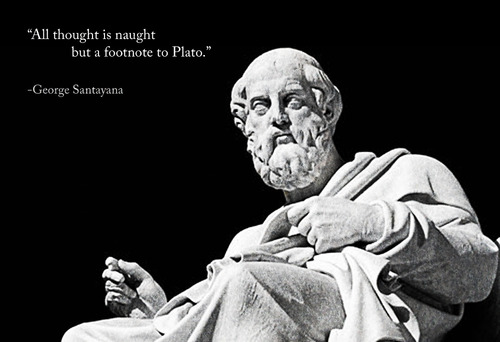 In much of philosophical history, probably because Plato left so many footnotes, there is a hard, and often dichotomous, distinction between the intellect and the a-rational emotions, instincts, etc. As I have argued previously (mostly in relation to my ongoing series of critiques of Ayn Rand), this distinction is not really so hard, and the fact is that our rationality grows out of irrational soil. Our intellectual and emotional selves are intertwined in all sorts of complicated ways.

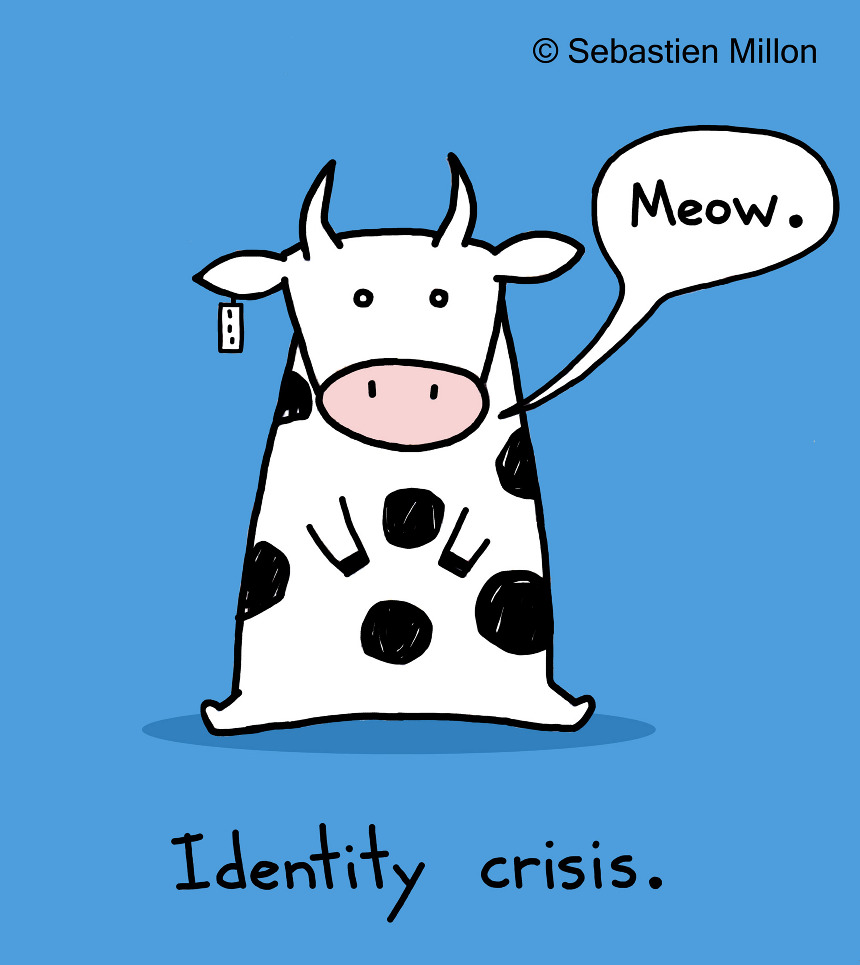


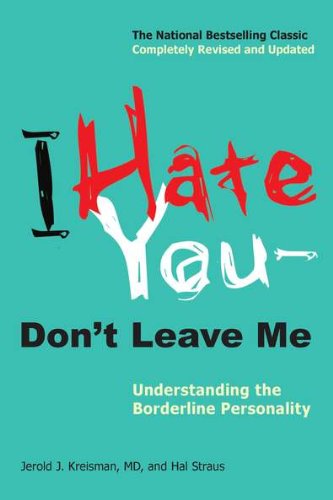










 Skepticism, Properly Applied