What do atheists do for Christmas?


Happy Solstice everyone!

I know, I’m not a pagan, but I do sort of like the idea of celebrating astronomically-inspired holidays.  They are so much more preferable to those holidays that copied off of the pagan ones.  You now, like Christmas.

So, what do atheists do on December 25th? Well, that all depends.  Many, probably most, celebrate Christmas with their families.  Christmas has become, after all, a secular holiday here in the United States, so why shouldn’t they if that’s what they enjoy?

Some do the old Jewish tradition of eating Chinese food, catch a movie, or just relax with a day off.  I have done this myself with some Jewish friends in the past.

Some atheists work on this day so that their Christian co-workers can have the day off.  That’s nice of them.  Plus they might get paid extra for working on a holiday.  Bonus!

So, what do I do? Well, I have traditionally spent Christmas with my family, but I have never really liked the holiday that much.  I am not a fan of the consumerism, awkward family gatherings, and I am certainly not Christian.  I’m not even convinced that Jesus was a historical figure, let alone believing the mythology about his birth.

So Christmas is not a big deal for me, and I stopped celebrating some years back. I insisted that people don’t give me gifts either, because I felt hypocritical taking gifts on a holiday that I didn’t want to celebrate.  My parents still do get me something, but to a lesser extent than they did when I was younger.

But this year, I will be participating in something new.  My girlfriend and I will be be going to my friend Brian Sapient‘s house to celebrate the annual ChristMyAss festivities.  Yes, that’s right folks, that’s Sapient of the Rational Response Squad.
Since I moved out of the Philadelphia area, I have not been able to see Brian or many others from my home town, but come the holidays I will be back in Philly.  And while I am there, I’ll be live on webcam (no, not that kind of live on webcam, pervs…) for your viewing and listening pleasure.

The details of the webcast are as follows.

Place: http://www.rationalresponders.com/rrs_webcam_room (stickam.com)

Date: December 25th, 2009 (AKA Christmas)

Time:

Chat etc: 2:00 PM

Live on Webcam: 6:00-9:00

Stop by early for some chat, music, and introductions, and stay later for the same.  Brian, Seana, and I will be on from 6-9, then we will commit ourselves to a few drinks and hanging out.  I wonder if bars will be open in his area.  It will be Friday night….

I hope to see you there.  What else do you have to do on a Friday evening in late December?

New Atheists, Skepticism, and the Golden Rule


The Golden Rule, with its various incarnations, permeates religious thought.  And while it can be formulated in many ways, the most common way to express it essentially states that you should treat others as you would want to be treated.  It emits an attempt at fairness in action, making sure that one does not make a double-standard  by making exceptions for yourself that you don’t allow for others.

Fair enough.  And while I think that the Golden Rule is best said when it attempts to treat others as they wish to be treated, due to the fact that what I want is not necessarily what others want, I think that this is often problematic because we do not know what others want.  We could ask what people want, I suppose, but the practical application of this is insurmountable on a societal scale.

I think that the general idea is to act such that those actions create a world that is consistent with our desires, while keeping in mind the desires of others and their ideal worlds.   Thus, as a general rule, to act in such a way that would be consistent with a desired world which is created by those types of actions is a good place to start. Figuring out an ideal world that we can all agree on is probably the biggest problem.

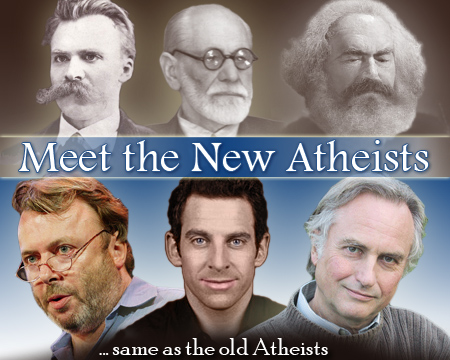
And so what do we, the new atheists, do? (And yes, I still dislike the term).  Our criticisms are not always appreciated by other people, especially strongly religious ones.  We try to speak out in order to be able to gain acceptance in culture, to stop theocratic intrusions into government policies,  and to make sure that theology stays away from science so that we can continue the process of understanding unimpeded by silly mythology (i.e. creationism) and other superstitions.

But are new atheists following the Golden Rule?  Should we follow the Golden Rule?  Are faitheists and other critics of the new atheists following the Golden Rule?

Skepticism and Atheism

Not all atheists are skeptics, nor are all skeptics atheists.  I agree with people such as Matt Dillahunty, that to be a skeptic should lead a person to be an atheist.  Why? Because I don’t think there is any evidence to believe in any gods, and without evidence in such things, one has no cause for a belief in any gods.  Thus to be skeptical concerning the question of gods, without sufficient evidence to believe in them, must lead to atheism as the only reasonable conclusion.  As soon as there is evidence, then a skeptic has to address that evidence.  But there is no good evidence that I know of, and I have been looking.

Skeptics, at least “real skeptics” (I’m being playful, not trying to drag in a “true Scotsman”), encourage criticism of all kinds of beliefs.  Skeptics are all about the evidence, use of rationality to address that evidence, and accepting as true what the evidence points to.

As an implication of this, I think that skepticism would desire a world where open debate, conversation, and challenges to beliefs would be encouraged.  A world where all of the data is explored, all sacred cows inspected, and people are encouraged to have a real desire to know what is true and not just what is preferable or easy.  This is antithetical to faith, by definition, and is what the current public atheism is all about, at least concerning the questions of religion, gods, and faith.  The criticisms of religion are ancient, in many cases.  These ideas being promulgated is what is new, and religious people are not used to hearing these ideas.

Another, hopefully obvious, implication of being a skeptic is that a person should be open to have their own beliefs challenged.  Thus, when the superlatively respected skeptic James Randi wrote this piece the other day about Global Warming, he was appropriately challenged by various people in the skeptical and atheist community.   And while his point may be valid (or not), he is willing to accept the criticism and respond to them, rather than claim persecution as many Christians often do when criticized in the same way.  I would think that Randi  encourages the challenges in general, even if he may not have liked some of them specifically (As his follow-up seems to imply).  The bottom line is that when skeptics make claims, hold beliefs, or sign on to something, they should be willing to accept criticism when it comes their way.

These implications are an essential part of a skeptical worldview.  It is how we want to live, the kind of world we want to live in, and how we think one should act with other people.

Including theists.

Therefore, when the new atheists, insofar as they are also skeptics (and many of the leading atheist speakers and writers at least attempt skepticism), offer public criticism of religion, faith, etc, they are following the rule of treating others as they want to be treated.  They are acting in such a way that is consistent with creating a desired world that the actions they make will create.

I want a world where people’s beliefs are challenged when such criticism is warranted.  I want a world that is not simply based upon faith, but rather evidence, reason, and an attitude of curiosity.  I want to help create an environment where skeptical inquiry is supported by people rather than blind (or at least partially obscured) faith.  And I know that many of my fellow atheists share this desire, and so we are simply following what we think the right thing to do is, according to the very “Golden” rule that religions share.

So, if there is a problem with the actions of atheists these days, then the problem is with the rule itself, not with our actions.

But wait, didn’t I say that I liked the other formulation of the Golden Rule better?

I said, above, that I prefer the idea that one should treat others as they want to be treated, and not merely as how I want to be treated myself.  I said that the issue was that I didn’t know how others wanted to be treated all of the time, creating a practical problem with implementing the idea, not a problem with the idea itself.  I also stated that this will lead to inevitable conflicts of opinion about what kind of world we want to live in.

We know that many religious people tell atheists that they do not want us speaking out.  They don’t want our billboards, our books, or in many cases they don’t even want us (to exist).   Now, if they are willing to lay down their arms, then they might have a point.  And many religious groups do not proselytize, advertise, or otherwise bother the public.  But the simple fact is that religion is part of pur culture and public life, and so to demand that atheists keep quiet is a double standard, violating the very essence of the Golden Rule itself.  We have as much of a right to speak publicly about our lack of beliefs (as well as whatever actual beliefs we hold in addition to that lack) as theists do.  It does not even matter if the United States were a Christian nation (which it is not), because that would not take away our freedom of speech, freedom of conscience, and freedom of opinion.

To simply capitulate to some religious people’s desires to not have us vocal, they further create a double standard when they don’t treat us as we want to be treated; to be allowed to speak publicly if we want to.  The result is the collapse of the rule.  They want to be left alone by us, we want to have a dialogue in the public square where they are, and both cannot be attained.  Some compromise must be reached.

Atheists do not, and should not, disrupt private worship.  Atheists do not, and should not, take god away from people’s lives, mostly because we could not possibly do so anyway.   And despite the mythology by many in the religious community, we are not taking their god out of the public square or schools.  We are only arguing and working towards government neutrality concerning religious ideas.  The government should be secular (which is not the same as atheistic).  Do what you want privately, just don’t expect the government or it employees to condone or lead those activities.

Religious groups should not tell atheists that they cannot advertise on billboards.  They have a right to be offended.  They should not claim that their faith is beyond criticism out of some misplaced desire for respect.  They have to keep in mind that if they do bring their beliefs to the public square, they have to accept the criticism along with the conversions.  If they want to recruit new members, they have to accept that potential new members might offer that very criticism.  And if they want to write books, then they have to accept that we will write books as well.

And, of course, most do except these rules, even if they do so unhappily.  That’s fine, because here we have the right to pursue happiness, not necessarily to be happy.

What I find fascinating is the idea that this criticism is itself is bad.  The idea that we should not criticize is worthy of criticism itself; why is criticism bad? Isn’t the idea that criticism is bad a kind of criticism? What if I am offended by that opinion? What if my strong belief is that criticism is good, and the accomodationist or faitheist  critic of my criticism is violating my rights and tastes? Perhaps they should shut up.  No, I don’t believe that.  They should, I think, re-examine their assumptions and reasoning, however.

I am doing unto others what I would want done unto me.  The believers who want us to shut up are just protecting their beliefs from scrutiny.  Those faitheists who say I should not criticize are not following this Golden Rule, violating it because they don’t want their own beliefs, the idea that people should not criticize certain things, to be criticized .  They might see some hurt feelings if we keep this up while making them look bad, while hiding beneath our shadow, to the rest of our culture.

No.  They are doing a good job of looking bad without our help.

Truthiness of religion


New atheists.  That is what we are called by some.  I find the label somewhat misguided, but I understand why it is applied.

Many people are not used to hearing about atheism, challenges to faith, etc. It is new to them.  They may know atheists, and likely do not know that those people are atheists, but they may know that they don’t attend a church or participate in any faith.  Many people, atheists included (but don’t call them that!) prefer a reverential approach to their believing neighbors.  They don’t bring it up because they don’t really care or they find it distasteful.

And so when they see us, the “new atheists,”TM they view our criticism and challenges as overly aggressive in our tone and approach.  They view these aggressive tactics as hurting our cause in society by pushing people away rather than trying to be their friends.  I don’t see evidence for this harm.  I see theists becoming defensive because they are not used to the criticism.  I see their coddled status being taken away, and they don’t like it.

Too bad.

Why shouldn’t we be critical? Religion does cause harm.  Faith, belief without or in spite of evidence to the contrary, is largely responsible for the anti-intellectual and anti-scientific fervor that exists in various cultures, particularly our own American culture.

But those faitheists and accomodationists will continue to claim that religion is good in many ways and that we are being too harsh in denouncing religion wholesale.  I agree.  I think that there are aspects of religion and religious culture that are good.  Religion can be good; it helps people in need, supplies hope, and it provides a basis for teaching morality. Or at least one kind of morality or another.

Yes, religion can do these things, but I see no reason why only religion of faith can do these things.  A religion of faith? Why add that qualifier, you may ask.  Well, first of all not all religious people necessarily have faith, depending on your definition of faith.  Further, not all people that have faith necessarily have a religion.  Religion is…well, religion is complicated.  I will not try to define this term here, but I want to address it in a tangential way.

The Religious Instinct

There are sets of emotions, behaviors, and dispositions that tend towards ‘religious’ behavior.  It can include rituals, music, states of mind, etc.  But this is an expression of a more general psychological disposition that we all, or at least the vast majority of us, share.  It is expressed through music, poetry, the fine arts, and perhaps even philosophy.  It is an expression of those experiences internal to each of us that feels like it is coming from somewhere…else.

It is sublime, beautiful, and it has its own subtle rules and constraints that we can apprehend in rarer states of mind.  When one is enthralled in an ecstatic moment, there is a kind of flowing of emotion, meaning, and beauty that seems to transcend us.  It doesn’t actually transcend us, but it gives the sensation of transcendence.

As a writer, I know this well.  There are time when, in writing, I find myself almost transported and feel as if the words are coming through me, as if I were but a conduit for some ideas.  I understand the concept of inspiration.  I know why people think that God works through them because I feel that experience myself.

So, why am I an atheist then?

What I look like while inspired

Well, because when I’m in that state of mind, I’m being creative.  I’m using natural tools of my brain to create, understand, and communicate.  I am not being methodical, careful, nor remotely scientific.  That is, I am not concerned with what is true in these moments, even if at some of these moments I may get the delusional idea that there is more truth there than in cold, rational, analysis.

Beauty is truth, and truth beauty?

There is a sense where the moments of beauty and poetry that overcome me seem to reveal a kind of truth.  It feels as if the universe has opened up to me and given me a slice of something that my rational mind was unable to find.  And sometimes, upon further reflection, I find that it may have found a bit of truth before unseen.  But that is the important part of that; upon further reflection.

Because how many times have ideas or thoughts from inspiration turned out to be duds? Most of the time, some if the time? Always? I suppose it depends.  But it is upon sober, rational reflection that we will find whether or not the moment of inspiration has given us gold.  The reason is that there is a difference in approach.  The moments of beauty, sublimity, and transcendence are the result of our brain doing what it does, not as it can be trained to do.

And I’m glad that this part of our minds exist because it is from these ecstasies and sublimities that we create.  Not discover, elucidate, or comprehend, but create.

The aspects of our minds that find revelation,  communicate with the spirits, or attain a slice of heaven are the same parts that write novels, create sculpture, and write poetry.  In this mode of thought there is a freedom of form, expression, and a lack of criticism.  Yes, that’s it; a lack of criticism!

Not that we can’t look at two creations and judge one or the other more or less beautiful (or at least argue about why we think one is more beautiful), but that one looked on its own not criticized in relation to the world, generally.  It is not pointed at and said that the thing does not appear to be like anything else that is real.  A sculpture of a dragon is not looked at and scolded for not representing a real animal.  A poet is not criticized for not representing a real conversation or speech.  A theologian is not criticized for not representing the universe as it really is.  That’s not the point, right?

Well, if you talk to Karen Armstrong, you may get such a response.  But the fact is that theologians, most of them anyway, do claim that they are describing reality. They are not merely creating, they claim.  They are talking about not only truth, but Truth.

But where do these truths come from? Revelation, communion with a deity, book (which ultimately go back to revelation or some claimed historical event), etc.  They come from the mind, and many of them from ancient minds not trained in the meticulous rational skills which would be necessary to analyze these experiences.

When theologians tackle these issues, whether today or the ancient theologians that dealt with these religious beliefs, they only apply rational thinking to keep the stories internally consistent while forgetting that the person who first experienced the idea was as fallible as you or I in determining truth from these internal experiences of ecstacy and transcendence.

Method

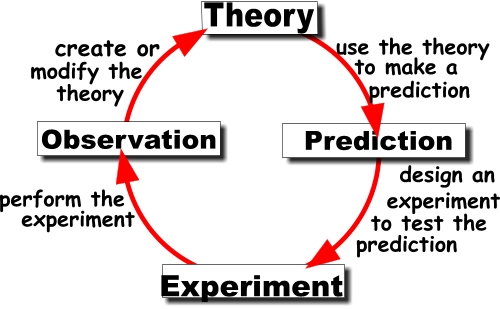
If we want to discover what is real, we need to be meticulous.  We need to check assumptions, use empirical methods, and try to devise a way to prove our idea wrong.  And so long as we cannot prove it wrong and the evidence supports the idea, then we provisionally hold our hypothesis as true.  The longer it withstands scrutiny, the more it becomes a theory.  Not just some guess or inspiration, but an idea that stands up against attempts to knock it down.  In other words, we need to use the scientific method.

Does this sound like what poets do? How about novelists? How about theologians? ‘Well, of course not,’ they will say.  ‘These things are not subject to empirical study.’  Really? Why not? ‘Well, it takes away from the beauty; science cannot explain beauty.’

Perhaps not.  Or perhaps it can.  That is not what is at issue.  What is at issue is that our minds are capable of different kinds of thought.  Some of our mental capabilities provide for us this ‘religious instinct’ that we are all familiar with to some extent.  But this instinct is part of our creativity, and is only tangentially helpful in a pursuit of truth. Our creative powers may, occasionally, provide us with insights into a new way of thinking about a problem, but once we have the idea we must switch to using our learned critical skills on to test the idea.   We cannot just dream and create answers to real world problems, we have to criticize them.

Our creative powers which provide us with the transcendent experiences, sublime emotions, and inspiring ideas are a great tool for the creative process, but not for attaining truth.  If we want to know what is real, we need to be critical, meticulous. and scientific.

Religion claims to have truth; it claims it knows something about what is real.  By being critical of those claims and the methods by which those claims are attained, atheists (‘new’ or not) are not being disrespectful.  Anyone who claims to have the truth and who subsequently calls criticism of their methods or conclusions disrespectful is either insecure about their position or does not understand how to think critically.

In many cases, it is both.

So yes, the parts of our mind that religion uses; the creative, transcendent, and sublime aspects of us that supply us with beauty, love, and all of those wonderful things are great.  So, if that is all that religion is, then there is not much of an argument.  That is, if the vague and meaningless God of theologians like Karen Armstrong is all that religion provides–a thing that need not even exist to be important–then religion is simply a nice story with which I can have little quarrel.

But if religion also deals with what is true, at least in the same use of ‘true’ as we mean when we say something is real, then criticism is warranted.  I may find many aspects of religious practices to be beautiful, but I don’t think they are true.  And that is what is at issue.  If those artistic expressions that come from creative people–mythology, morality stories, and the like–are not intended to be literally true, then they are just stories we can enjoy on their own merit.  But this is not the case.  Christianity, Islam, etc are believed to be actually true and real, not just stories.

Anything that is proposed as the truth in society of culture is open for criticism.  To actually step forward and do so is the responsibility of a citizen who cares about the truth, reality, etc.  To postulate a story about the universe as true and then remove it from the realm of critical analysis, or to not at least try to validate it oneself while having faith in it is not strength nor reverent behavior, but weakness.

Allowing ourselves to be swallowed up by stories birthed in the ecstatic moments of artistic creativity and then to claim it to be true is not clear thinking.  We need to train ourselves to be better thinkers and to accept criticism or to get used to feeling disrespected.

Respect is not warranted when art is presented as truth.  The truth, as the Vorlons say, points to itself.  It does not need us to create it.

The War on Christmas


Over the last few years I have noticed, every time Thanksgiving comes around, this issue arise.  It arises in different places, with slightly different issues, but it arises nonetheless.  For those of you that don’t know what I’m talking about, allow me to induct you into some crazy:

Now, I do not wish to hold up Bill O’Reilly as the standard here, but this is a fight he picks and he speaks for a fair amount of people.  O’Reilly and others on that side (pdf) of this issue seem to think that those of us on the other side want to take away people’s holidays. Why would we want to do that?

Let’s use a couple of recent examples.

In West Chester, PA, there is some trouble getting a “Tree of Knowledge” erected next to the courthouse.  They city could not legally prevent the Freethought Society of Greater Philadelphia from putting it up, so they had to capitulate, although reluctantly.  Thank the FSM for the law forcing people to be fair.  We’ll see what happens next, as the last I heard a creche was put in the only spot the tree easily fit.  Updates to come….

In Chambersburg PA, right in the center of town, is a little public space.  Carl Silverman, a man I have met several times, is a member of PA Nonbelievers (PAN), an organization I have worked with several times, but am not a member of myself.  Chambersburg seems to understand that if they can allow something like a Christmas decoration–say a creche–to be displayed on public ground then another group can put up a display of their own.  There are a bunch of details (and if you wan them you can find them here, here, and here (don’t forget the comments from those loving Christians on that last one).  The bottom line is that the city didn’t just reject the display from PAN, knowing that would be egregiously illegal (it is good that they were aware enough for that), but instead said that no display from anyone would be allowed.  Whether PAN will sue due to viewpoint discrimination or not is to be seen.

But I don’t want to dig into these particular issues any more, while I did want to mention then because they are timely and relevant.  What I wish to explore is the issue itself in the larger view.  Why are Christians so touchy about other displays going up (and not all are, certainly), and why do other people wish to put up their other displays when it is Christmas time?

Well, that’s it right there; it is not Christmas time.  As I write this, it is barely December, let alone December 25th.  And during the next several weeks we will see many holidays.  There will be that Jewish one, that one based upon African traditions, and then there is that one on the 25th, you know, Mithras’ birthday.  Oh, right, Jesus’ birthday too (although even Christians should know that it is likely not his real birthday, if he ever had one).  I get Jesus and Mithra mixed up all the time.

So, this is not the Christmas season, then; at least not wholly.  It is the end of the Fall season (here above the equator anyway), and it is a time when, symbolically, the world dies and, for a few days, there is a transition from the days getting shorter to the days getting longer.  That is, the return of light into the world, the coming of the Son (I meant to type the ‘sun’, of course) into the world, which has been celebrated by many cultures for millennia as a time of year of transition with the various mythologies that accompany the seasonal changes. Christianity is no different.

This time of year is for mythologies of the returning light into the world, and thus a good time of year to have holidays, celebrations, and so forth to keep up our spirits (or a time to find ways to increase the appropriate hormones and neurotransmitters to make us feel happy) in the colder and darker time of year.  For this primarily Christian culture (notice how I didn’t say ‘nation’?) it would then be expected that part of our traditional practice would be to do things like put up nativity scenes, Santas, or Christmas trees, despite what Jeremiah says:

10:1 Hear ye the word which the LORD speaketh unto you, O house of Israel:

10:2 Thus saith the LORD, Learn not the way of the heathen, and be not dismayed at the signs of heaven; for the heathen are dismayed at them.

10:3 For the customs of the people are vain: for one cutteth a tree out of the forest, the work of the hands of the workman, with the axe.

10:4 They deck it with silver and with gold; they fasten it with nails and with hammers, that it move not.

Now, whether or not this is actually saying to not have decorated trees to celebrate Christmas is open to interpretation, especially since Jeremiah wrote before Jesus was ever thought up and thus before O’Reilly and his cohorts started their ramblings.  Personally, I don’t care if that is what the character “God” is saying in the Bible or not, because I don’t think he is a real thing.  But if Christians are trying to be consistent…

Just sayin’

The bottom line here is that I understand why the tradition became to emphasize (to the point of exclusivity, it seems) Christmas during the time between Thanksgiving and New Years in the United States.  The cultural tradition of the United States has been predominantly Christian, and this religious identification has informed the secular traditions as time marched on.  The image of Santa Clause, derived from an historical character from Christianity, eventually became a secular symbol of gift-giving and all of that.  That is, it’s derived from Christian traditions and became something secular.  Just like this season as a whole.

But in the meantime, with the influx of Jews, neo-Pagans, etc as well as the increase in secular communities, Christians-in-name-only, and even atheists, the culture became more diverse than it’s origin.   As a result this time of year includes holidays for many people of various faiths and even celebrations for people with non at all (such as Human Light).  It has become a time of year that includes multitudes of attitudes, a variety of piety, and a party of parties.

So, when people started saying “happy holidays” rather than “merry Christmas,” it was a natural progression of culture.  It does not make sense to say “merry Christmas” to someone, especially if you don’t know them, because you don’t know what holiday they celebrate (or if they celebrate any at all).  It is not a means of removing Christmas, but a courtesy in a culture that recognizes that Christmas is not the only game in town.  Bill O’Reilly says that saying “happy holidays” is offensive, while he’s missing the point that saying “merry Christmas” to some people is offensive.  He just does not get it.

Christmas is the reason for the season, but only in a very narrow and historical way, a way that already is colored in secular images even before the other religious traditions stepped in.  This ‘Christian’ culture is what is dominantly responsible for how Americans celebrate during this time of year.  But most of the season is pure consumerism (and the economy says thankya) and belongs to snowmen, Santa, and some reindeer.  I guess they were Jesus’ pets of something.

Those who wish to celebrate Christmas in their personal and religious manner, can.  I nor any other defender of the wall of separation between church and state (which, while not in the Constitution is implied in the Bill of Rights, and even if it were not it is still a fair and wise idea for both religious and non-religious) will take away your ability to worship or celebrate as you wish.  All we ask is that when you bring your celebration into the public squares of our towns, you either allow others to join in or step back respectfully.

So Christians, nominal or not, this is not your time of year.  You can have it along with all of us, but you cannot own it.  You do not get special privileges simply because you are the majority.  You cannot say that we are taking away anything from you while you are, in the same breath, taking something away from others.  You cannot demand to put up your creche while demanding that atheists, Pagans, etc take away their displays.  There will be no double standard here, if you wish to be fair.

And if you do not wish to be fair because you believe that it is your season and that your holiday is more special because it is the truth, well then you are an imbecile.  You are allowed your idiocy, but you are not allowed to demand that it is simply accepted in the public realm.

This is not your country nor your time of year.  Space and time belong to all of us, so carve out yours and practice as you wish.  But when you come out of your homes, churches, etc and demand that the space we cohabit follows your rules, you are overstepping your boundaries as if you were to tell other people how to dress (like many Muslims do to women).  The false idea of the United States being a Christian nation is being stretched into a view that this time of the year is a Christian time of year.

It is not.

A war on Christmas is not a war, it is a public admittance that Christianity is not the only game in town.  And some people don’t like this particular competition.  They have grown up with emotional ties to the images of Santa, Jesus, and trees decorated with lights and other things.  They are comfortable with that images which are with them from childhood.

Putting up something different, especially if it is derived from people who may not even be Christian, is scary because is disrupts the tradition and interrupts their obliviousness to the harshness of the world for many people  They wish to bury their head in the sands of tradition, and when reality pulls it out, they look like reindeer-in-headlights as they try to adjust to the fact that their illusion of cultural exclusivity of this space and time is just that; an illusion.  And they don’t like it.  It feels like their joy, their childhood, and their identity is being taken away.  When in reality space and time for other views is simply being made along side theirs.

What they do not understand is that this new display is meaningful to other people, and that their creche and their tree may be disliked by others in the same way that they new sign may bother them.  And because we, the non-Christians, are the minority we have just gotten used to shutting up about it and just dealing with it.  You, spoiled and rotten traditionalists that you are, have had your way all this time and have not had to deal with seeing things you disagree with in your town and so now you whine.

Grow up.   You can’t have it all your way.

Our culture has changed and your old myth about the Christian nation and Christian time of year is dying.  You are like children that, for the first time, are beginning to realize that you can’t have everything you want.  You are beginning to realize that your demands and tantrums will not be heeded to by strangers on the street.  You have left the comforting home of believing the world is yours, and are realizing that your traditionalist and conservative worldview are in a public square with others, and that you are only whining for the competition to go away so you can have what you are used to.

Well, guess what; I’m used to something else, she’s used to something even different, and that other guys thinks that all of us are crazy.  Tradition is relative, my friend.  Yours is not special any longer.  Now share the world or go home to mommy and daddy (or to your church) where you don’t have to share, and live in your imaginary world of Christian dominance of space and time.

Happy Holidays

The Origin of Species, Ray Comfort, and profound ignorance


Ah, dishonesty!

The day has come.  We in the atheist and scientific communities have been waiting for it with mild amusement or annoyance.  And to our surprise it came a day early.  We almost missed it as a result.  But I didn’t.

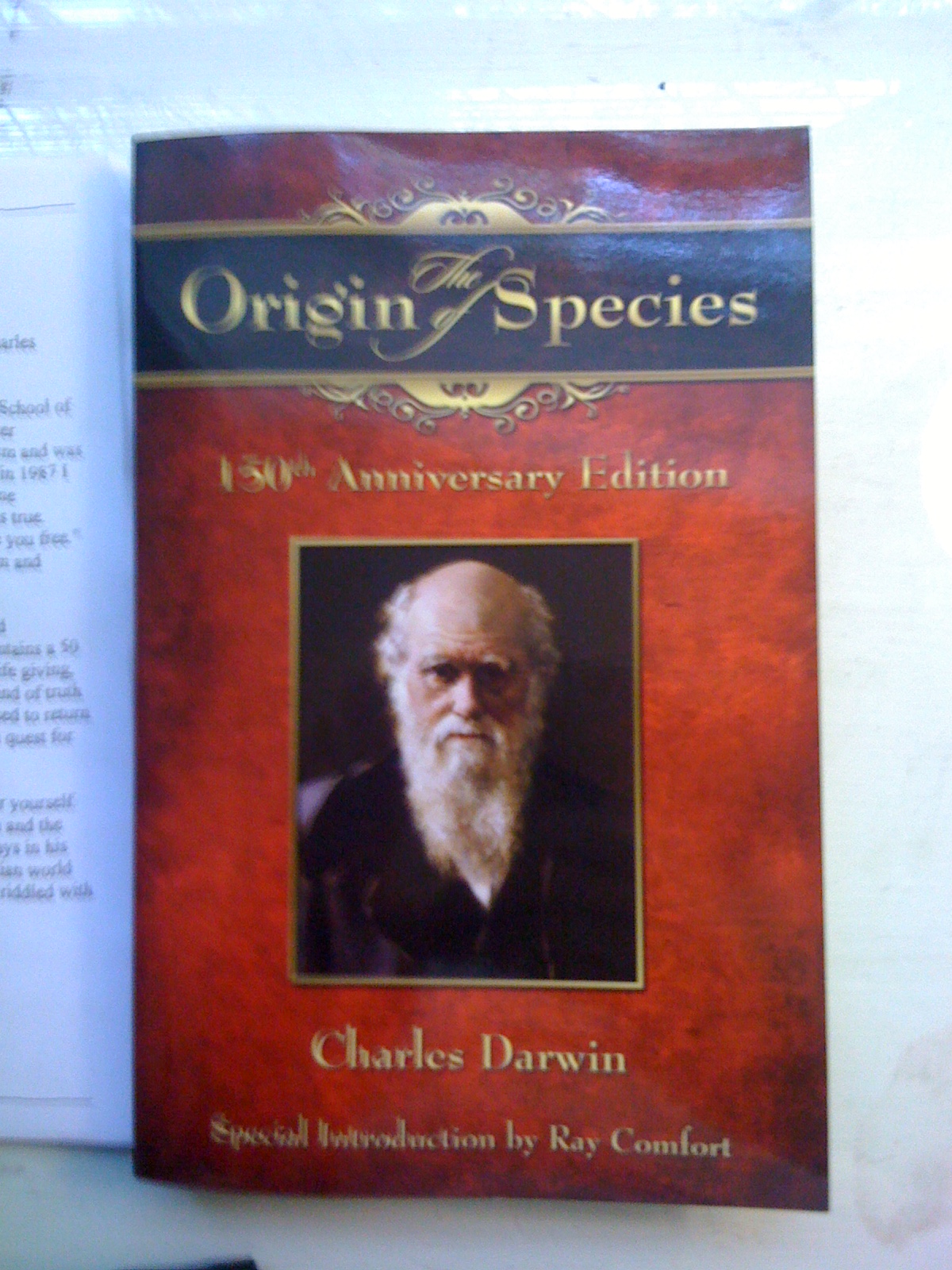
For those of you who were not aware, Ray Comfort, from Living Waters and Way of the Master has recently been talking about passing out free copies of Charles Darwin’s The Origin of Species.  This pivotal book has been all the rage since it was first published in 1859, and it’s impact on science, religion, and culture cannot be denied.  This is a book that must be read by a person if they are to consider themselves a well-rounded, educated, and informed person in today’s culture.  One should at very least be familiar with what Darwin’s essential argument is, what evidence exists to back it up, and what science says about evolution today.

For that, here’s a few good places to start and to keep an eye on:

Why Evolution is True (WEIT)

PBS

Berkeley

But Ray Comfort is not a fan of evolution.  He rejects it and supports intelligent design, so why is Ray Comfort giving away this special 150th Anniversary Edition, precisely?

Well, first a bit about Ray Comfort.  He and his former Growing Pains star Kirk Cameron have been doing ministry about Jesus for some time now.  You may remember the debate that Ray Comfort and Kirk Cameron had with my friend Brian Sapient and the Rational Response Squad.  If you have not seen this debate, I’ll supply a link here.

It was this debate where the infamous crocoduck came from.  This has supplied many chuckles and full belly-laughs from sciency people ever since.  (I want a shirt with the crocoduck on it, btw, so I’ll accept gifts of this sort).

This is an image created by Ray Comfort to try and make the point that transitional fossils do not exist, and that if they did this is the type of thing one would expect to find.  The ignorance contained here is astounding.  I don’t even feel compelled to respond, because it has been done elsewhere with many more lulz attached.

But this is not the full act that these clowns have.  If you have not heard their routine, it is amusing.  Here’s an example that includes some rebuttal:

Now, the banana aside (which Ray Comfort admitted was a bad argument), this is utter tripe.  It is clear that Comfort, Cameron, and the others that are on board with this nonsense do not accept the overwhelming evidence for evolution, so why are they giving away copies of The Origin of Species? Well, it has a lot to do with the 50 page introduction that Ray Comfort includes in this ‘special’ edition.

Well, putting aside some obvious problems with the introduction, this is obviously an attempt to appear as if the creationist loons, like Comfort, have actually considered the evidence and are just coming up with another interpretation.  They simply see the evidence lacking, having studied the subject, and are confident to actually give people copies of this book.

But the fact is that evolution is not derived from the Origin like gospel.  It is derived from Darwin’s arguments, evidence, and observations and then is confirmed by all of the work in biology since.  That is, a hundred and fifty years of research, testing, DNA evidence, fossils, and other information  supports what Darwin wrote and expands on it in ways Darwin could not have predicted because he did not know about DNA or genetics, let alone the thousands of fossils we have uncovered that speak unequivocally for evolution by natural selection.

So, the deal was Comfort and his cronies were to hand out copies of the book all over the country, on college campuses, on November 19th, 2009.  The atheist and science blogosphere was all a-twitter about it and has been anticipating this.  Various responses, reactions, and condemnations have surfaced in various places with varying degrees of tone.  And so what happened when I got to my daily business today, one day before the planned give-away? That’s right folks, Comfort has tried to minimize the planned reactions by science enthusiasts and atheists by jumping the gun and doing it early.

But I managed to get out of the house and find a couple of friendly gentlemen who were passing out the books today anyway.  They were having some conversations with students, proselytizing the Christian message similar to Ray Comfort’s, and I took a copy and talked with them about my concerns for a little while.   And what did I find? Ignorance.

In my conversation with these two gentlemen, I found that not only were these two men ignorant of science, it’s methods, and the evidence for evolution, they displayed no interest in learning about science.  One of them actually said that he was not interested in science.  But he did say that he was interested in the truth.  And while he didn’t understand the basics of rational thinking, epistemology, or even what natural selection was, he maintained that he was interested in the truth.

And what is the truth? Jesus is the truth.  This was not merely claimed as a belief, but as knowledge, knowledge that was not doubted even a little.

Frustrating.  How can a person claim to be interested in the truth and not have any interest in the scientific method–the best method for determining how the world works–and have not even surface understanding of epistemology? his is an indefensible position.  It is irrational, illogical, and not worthy of the respect that some faitheists and moderate religionists say that these beliefs deserve. Their certainty in their beliefs is staggering considering they are not interested in evidence.  What’s worse is that they accused me of being absolutely certain that god does not exist and that evolution is true.  When I told them that neither was true and that I accept evolution only because of the overwhelming evidence for it.

I am a skeptic.  These people, Comfort included, are so removed from skepticism that they will not admit that they might be wrong.  They cannot even see that they don’t actually have evidence, only personal interpretations of experiences which people of other religions claim with equal authority.  I cannot respect Ray Comfort’s beliefs, his certainty, or the certainty of those who believe such absurd things.  And for them to try and pull a stunt like this,by trying to look like they are educated in the science behind evolution when they are not, is dishonest at very least.

“All you need is eyes that can see and a brain that works” is what Ray Comfort says quite often.  But it is clear, from all I have seen of his work, that he might have poor vision and a brain that works only just enough to sound like he’s saying something sensible to people who don’t see through his idiocy.

I’m glad I have a copy of this fine book to put on my shelf, but from what I have already seen, there is nothing in the introduction that is worth keeping.

God as a metaphor (part 3)


See parts one and two

Atheist v. Theist, part ∞

What distinguishes the worldviews of the believer from the non-believer? In many cases, nothing is the most likely answer. But there is a fundamental difference between methodologies, ways of figuring out the world, which leads to better conclusions. The methodology gives one a perspective that will either conform to our experience with the world or it will create cognitive dissonance with the world. The conclusions drawn from a worldview will, therefore, ultimately be the result of that methodology as it has been applied to the experiences and language game of any particular person.

The scientific method is a tool that leans on empiricism. It cannot rely on anything except that which can be observed, directly or indirectly, as having some relationship with the universe in which we live. That is, the objects of science’s gaze must exist within the natural universe, and not be anything, for example, supernatural. When a person utilizes this methodology of science to determine a way of interpreting the world, they are doing so in an attempt to check their conclusions thus far drawn with the world around them. If the scientist finds that what they have observed conflicts with some descriptive model of the world, then revision is necessary to either the experimental observation or to that larger description if the observation stands upon repetition.

This methodology uses the world itself as the foundation, the text from which we gain understanding. The letters of this text are the constituent parts of the world that interact in their subtle and often mysterious ways. The sentences are the various facts and simple objects that orbit our mind. Going further, the great chapters, books, and libraries range from the ideas, people, and cultures with which we interact and in which we swim. This, of course, is metaphorical language. And we all use metaphor as a tool for describing the world when we are unable—or unwilling—to be exact.

Metaphors are not exact enough to be the descriptions of the world we would need to be a exact scientific descriptions. And none of us, I believe, is a scientist through-and-through. None of us utilize the methodology of empiricism sufficiently or solely, as our minds cannot ascertain the world’s reality exact enough to create a sufficient map—a sufficient theory. Thus, we use inexact language to create a broad brush-stroke of a description. These insufficient models of the world can be beautiful, sublime, puzzling, or down-right terrifying. With the range of our languages and imaginations, we can create imagery that can contain important meaning, inspiration, or even fear.

But these descriptions will never satisfy the most rigorous of methodologies. Thus, the tension is realized. We cannot be exact enough, epistemologically, to live up to our most precise of methodologies; science. Does this mean that we simply stop using those methodologies? Does the fact that our minds cannot apprehend the world with sufficient precision imply that we give up on trying to become scientists—or the versuchen of Nietzsche’s ubermenschen?

This is one facet of the tension between science and religion. The mind thinks in inexact metaphors. The many doctrines and ideologies of religious traditions have saved the most beautiful, sublime, puzzling, and terrifying of metaphors from our past, and hold them in esteem. This is why they are so pernicious, because they contain images that we find beautiful and meaningful, not because they are necessarily true.

So, therefore, we should adhere our worldview to the true conclusions of science, right? Not exactly. Science very well may be the best tool humans have at their disposal to distinguish between better and worse descriptions of reality—theories. But telling the difference between two theories to see which conforms better to our empirical data is no better than our best description, which is admittedly dependent upon our inexact perceptual tools (the brain and our extended perceptual tools of technology). Our best theories do not necessarily exactly conform to the world, and thus science is a tool for getting closer to the truth through theory choice. This is why science is perpetually changing, which is a ubiquitous criticism of many of the faithful who misunderstand that this is, perhaps, what makes science so awesome.

Religion offers us no better an option. The descriptions of the world that comes from religion come from a different methodology. Religion has traditionally been the product of descriptions of gods and other proposed divine or natural forces envisioned not from the same process as science. They survived in lieu of or in ignorance of science, not as an equal alternative. Religion depends on the tools of metaphor, imagination, and story-telling that dominated human minds and cultures prior to or adjacently hidden from scientific process.

But religion persists because it clings to the human experience in some way. Humanity’s religious texts would not have survived if they had not contained something of value to human minds. They have undergone a sort of natural selection of their own, and have evolved into a form that adheres to human minds and cultures because human minds and cultures evolved with them. There is a sort of symbiosis involved. Religion speaks in the language of metaphor, and the human mind thinks and talks in metaphor. The relationship is, therefore, fundamentally linked.

So from whence comes atheism?

Atheism is nothing more than looking at the world, through use of some methodology, and finding that one does not—and really cannot—believe that a so-called ‘god’ exists in the world. One question is whether god does not exist literally or does not exist metaphorically. The former would imply that there is no being in the universe that can be associated with the term—there is no referent for the term in reality—and the latter would imply that the idea itself has no meaning or use in our description of the world, even in inexact metaphorical language.

The former, the literal lack of god in the world, is a question for the scientifically minded person. It is a question of what actually exists according to our best data to date. Someone who concludes that there is no god while using this method will most likely say something like ‘I see no evidence of such a being, and thus lack belief until sufficient evidence is presented.’ They are agnostic, in that they don’t ultimately know, but they lack belief, thus are atheists. This person cannot go very far with this without bumping into description, theory, and interpretation. It is at this point when metaphor takes over.

The latter, the person using his metaphorical toolbox, has a more subtle route to atheism. What does the term ‘god’ mean? What, from the data in the world gathered, can we put together into a cohesive concept that we can call ‘god’? Once the data is gathered, some way of making sense of it must develop in order to continue to inform a worldview. To make the connections between ideas that come from new information, we have to use association of concepts and comparisons of ideas to create the interconnected web of ideas in order to literally build a neural network responsible for thought patterns. In the mind, this is viewed as a connected coherent worldview or at least a concept that relates to other concepts—whether in dissonance or not.

If a person has a worldview that cannot find a place to put the term or concept of god that coheres with the rest, then that idea becomes nonsensical to them and they have no choice but to declare it as such—nonsense. From here one can construct many arguments of god being nonsensical, as god being no-thing, because the term doesn’t fit into the set of things that exist, or however they formulate the argument. In the worldview of this type of atheist, the term god does not refer to anything identifiable in their worldview. So what about the theist?

The theist can try to argue that they see evidence for god in the world—in the design, as a cause for, etc of the actual world. But they don’t see god itself, just its interpreted effects. Thus, on the level of data itself, a theist cannot place their idol and expect it to rest there. From a scientific point of view, the claim that god exists is only meaningful if it can be pointed at directly and unambiguously. This has never been done, and until it is done to the sufficiency of the empirical method, the claim is not even meaningful. The conclusion of god as designer or cause is an interpretation, an inexact description, of the data. God is never observed directly, but rather proposed as an explanation for or fundamental ground for the world which is observed. It is always, therefore in the realm of metaphor that god is talked about.

But cannot the same be said of the atheist? Cannot it be said that the atheist has an interpretation that god does not exist behind the world, and thus their lack of god is a metaphor? This is absurd; the lack of observing some object or being is not a metaphor—it is literally nothing. The atheist at this level simply states that a ‘god’ is not observed, and this belief in its existence is not justified. If someone proposes a description of the world that includes a god, the atheist can say that the theist is comparing how the data interacts with a concept they call ‘god,’ and thus god is a metaphor for either the world itself or the cause of or foundation of the world. If god is a metaphor, then one aspect of atheism is simply not accepting said metaphor, and thus being without an ultimate metaphorical description of all things by use of a being called ‘god.’

The distinction between most atheists and most theists is one of a use of metaphor. But since all humans use metaphors in descriptions due to the lack of exact descriptions for the world, it cannot be said simply that atheists lack metaphor altogether, but simply a class of metaphors. In a sense, the idea that the map is not the terrain is relevant, as it is as if the theist, in creating a map of reality, sees a pattern of intent, intelligence, etc that helps construct the map. If they call this fabric that they print their map on ‘god’, then it seems justified in claiming that the fabric of the world must be god too, and thus god exists. The mistake is carrying the role of metaphor that we use in describing the world unto the world itself, where metaphor has no place. Metaphor is a tool of the mind, and to project the language of the mind onto the world itself is to project the device of perception onto the perceived object. Even now I cannot help but use metaphor to describe my point, but what my point refers to is not a metaphor itself.

The scientific method is not completely deprived of metaphor. Even the best and most consistent theory is inexact, assuming a perfect theory is unattainable (whether this is the case is a question for the philosophers of science). But compare the foundations of science with that of religion. Note the degrees of usage of metaphor in each. And, further, note the difference in use of metaphor in the fundamental assumptions of an atheist and a theist. What metaphors underlie the assumptions of an atheist and what metaphors underlie the assumptions of a theist?

Atheists are people that don’t believe in god. Theists are people that believe in god. God is a metaphor to describe the world and how it operates, since it is never observed directly but always inferred from the world. Atheists are people that do not believe that such a specific metaphor is meaningful in describing the world, and a theist is a person that feels that that metaphor has meaning or, in some Platonic sense, that the metaphor is a shadow of some actual being.

But what meaning does god have? What is god? Perhaps god is whatever is meaningful to the theist. Whether a meaningful metaphor can be said to actually exist is not quite the right question in this regard. In this case the importance of god is in the usefulness and affect of the concept on the real world; almost as if the concept of god makes god real. Perhaps one thing which is meaningful to many atheists is not placing too much emphasis on metaphors, but rather to that which their metaphors point. And if the metaphor either points to nothing or to something that can be later named, then ‘god’ ceases to be a useful term.

Once one has used some metaphor of god to indicate what is truly meaningful, the atheist no longer has use for the metaphor of god to have meaning. The atheist then realizes that they never had need for the metaphor.

God as a metaphor (part 2)


See part 1

Metaphor

There is something that is common to all descriptions, something that is a potential stumbling block for many truth-seekers. The commonality is rooted in language, the implications of which have been a subject of philosophy, linguistics, and other fields. Neither an extensive nor exhaustive account of language’s role here is necessary. Rather, a specific relationship between the world and language is relevant; the relative exactitude of some description’s language to the referent itself; how precisely does the description convey what the universe is like?

Specifically, the key factor is that of comparison, analogy, language games, and metaphors. In this essay, I will use metaphor for a short-hand for all of these uses of language, as well as other related ideas that convey an inexact but useful description of our experiences with the world. A metaphor is a comparison of two things by use of description of one object which is intended to describe, analogously, something else. This concept encapsulates the central relationship I want to illuminate here between this tension between description and our quest for understanding. While ‘analogy’ or ‘language game’ might be more apt terms in some cases, I believe the use of one consistent term would serve the purpose not having to distinguish between these differing concepts and stray from my central thesis.

God is a metaphor

That having been said, it may peak the curiosity of my reader the nature of this thesis. Surely, it must have something to do with metaphors, and surely, something of a theological nature is at hand. More specifically, it must have something to do with this thing called ‘god,’ a concept that has presented many a thinker with a range of ideas, feelings, and conclusions. An apt question would be what we mean by such a ubiquitous term; in a world in which religion stakes a large claim of influence and divine presences are considered common, surely we must know what this ‘god’ concept refers to, right?

Quite frankly no, we don’t know what the term ‘god’ is supposed to mean. Theologians talk of the supernatural as being beyond nature or simply as unknowable. Negative theology can define what god is not, but in terms of what the supernatural might be, we cannot say. Anything we could say would be based upon experience with the natural, and thus could not hope to describe the supernatural. As a result, our descriptions of gods and other supernatural beings are nothing but metaphors to invoke a concept. But this concept is natural in origin, and thus cannot be a true description of something that is not natural.

Further, if ‘god’ were supposed to describe something natural, then the question is what it is supposed to represent is open. One could talk about the actions of god, the creative acts of god, etc. But all in all, this use of the term is, at best, a metaphor for natural processes or poorly misunderstood events ascribed to the unknown, where the metaphor of god is placed to fill a gap. The metaphor of god is placed as a quick fix to cover over the whole of mystery. That which we do not know is placed in the lap of a metaphor we call god by theists, rather than remaining a beautiful mystery. This epistemological, emotional, and cognitive band-aid is empty linguistic filler for the unknown spaces in our understanding. Further, saying that god is the beautiful mystery is committing the same fallacy of placing a metaphor over what is essentially a gap in our understanding. If we do not understand something, then filling it with “god” is meaningless.

As an atheist, I understand that I don’t understand; I know that I know nothing, as Socrates is reported to have said. As an intellectually honest person, I must admit that that which I do not know, I must not place a meaningless term like ‘god,’ but rather admit that our understanding is finite. And when we do understand, it’s usually metaphorical in nature.

What is interesting is that many theists seem to understand this too. It has been a tradition of much of Western theology to recognize the profound gulf between our understanding of the world and god’s understanding, or between our being and god’s being. Here, for example, is St. Augustine;

What then, brethren, shall we say of God? For if thou hast been able to understand what thou wouldest say, it is not God. If thou hast been able to comprehend it, thou hast comprehended something else instead of God. If thou hast been able to comprehend him as thou thinkest, by so thinking thou hast deceived thyself. This then is not God, if thou hast comprehended it; but if this be God, thou has not comprehended it.

Here, it seems as if the theological tradition that comes to us through Augustine demonstrates understanding that we don’t know, but yet persists in the belief nonetheless. This is the infamous faith, in which one believes despite this ignorance, this gap, this uncertainty. It is as if, somehow, this feeling of awe, mystery, and humility somehow translates into a kind of existential significance. It is as if the great lack comprehension which we try to simulate in thought cannot be conceived of, so the brain fills it with a pattern of firing neurons that creates, accidentally perhaps, a sensation of a kind of being or meaning that provides something of great value to them.

Surely, this feeling or concept that many attain through this ignorance is very common among humans. It seems that it has deep roots in human psychology, and is often very persistent. But it’s neither universal nor necessary, as many people have never experienced it, at least not as a “god.” Sure, the non-religious experience awe, mystery, and adoration of the world. But there is something that distinguishes between an atheist and theist and their experience of this set of emotions and thoughts.

Tomorrow: part three (Atheist v. Theist, part ∞)

God as a Metaphor (part 1)


The following is a longer article that I want to divide up into three parts.  For part two, and subsequently three, come back in the next couple of days.

Part 1:

Once one has used the finger to indicate the moon,

one no longer has use for the finger.

The elusiveness of Truth.

What is true? What is Truth? Any attempt to describe the nature of reality, of the universe, of our experience of the universe, or any attempt to describe the universe independent of human experience, must necessarily involve some type of language. Systematic descriptions of various levels of rigidity, whose goal it is to explain how the constituent parts of the universe interact and combine to create the complexity we see in the world, vary from person to person and group to group. These descriptions differ as a result of being derived from various points of views—perspectives—and have different sets of assumptions and thus different conclusions. When one doesn’t know where they are going, any road signs or markers along the path can be mistaken for the destination. Similarly, if one does not know the truth, the metaphors we use to dig part of it up can be mistaken for the truth itself.

People from various places, times, and with various cultural environments have tried to make sense of the world—to describe it systematically. In doing so, observers of this quest have found that there are limitations to our abilities to describe the world precisely and accurately. In addition, the experiences, traditions, and other factors that shape our view of the world will effect how our descriptions will be formed themselves. After all, the conclusions that we come up with are formed in the environment of our minds, which are formed in the environment of our cultures and personal experiences.

This situation leads one to wonder whether there is any sense of even asking about something objective or ultimately “True.” This is especially the case since we are steeped in contingent factors which depend on subjective and inter-subjective analyses rather than some hypothetical objective perspective (a concept that seems oxymoronic, to say the least). Plato and his many dualistic philosophical descendents have commented that there is a distinction between the Truth and those things which are mere shadows of that truth, things that are dependent upon circumstance and subjective perceptions. And while I don’t buy this dualism, I recognize that there seems to be a difference between the nature of how the world functions and our low-resolution simulation of it that our minds concoct. This difference has led some to postulate that the concept of truth in-itself is a fiction that has no meaning, or at least is beyond our epistemological capabilities.

The history of science reflects this tension between theory and some hypothetical Grand Unified Theory, and gravity is a prime example of how this tension plays out. We can predict to a good degree of precision, given sufficient information, where a ball will land if thrown or shot in some gravitational field. Newton’s success in describing the inverse square law of gravity was able to give us a relatively accurate mathematical relationship to make such predictions. But in the early decades of the 20th century, an ingenious and somewhat annoying discovery was made by the well-known, if not well-misunderstood, Albert Einstein. Our description of gravity was not precise enough to be considered exact, and we would find that the theory of general relativity would surpass Newton’s observations in descriptive power. But even general relativity proves not to be spot on, either. We are still grasping for the subtleties of quantum gravity with M-theory and loop quantum gravity, and there is no way to know, now, whether these ideas will be any more fruitful in ascertaining the truth of the matter of gravity. Only time and effort will tell.

Whether or not the true description of gravity will one day be found is not the point of this mental exercise. The point is that our relationship with the world is one where our words and the descriptions they formulate have an inexact relationship with their intended referents; the “true” descriptions of how the world actually works. Through our prodding, measuring, and calculating of the world around us, we refine our resolution of the world until we have a theory that can map the terrain sufficiently for our purposes. In terms of technology, our theories do not need to be exact to make objects that suit our purposes—the computer I am typing on is sufficient to demonstrate that. But it is a different project to determine what is True, and human beings from time immemorial have been playing with the questions of what is ultimately True, and there is no sign of this trend going out of fashion any time soon.

But what are of interest include the various methodologies of tackling this question of what is true. Surely, there may be many angles or perspectives from which we can attend to the problem, each using different specifics but describing the same universe, that depend upon the experiences and information accessible to the questioner. This does not imply that any methodology is equally valid or that different methods may be equally effective or efficient at gaining understanding. In fact, it seems quite clear that some methodologies have a clear advantage over others, gleaning more descriptive power than others and therefore having better descriptions than others.

Tomorrow: Part two (“metaphor”)

Atheist in the pews (part 2)


A little while back, I wrote an article about my experience in visiting a Presbyterian church.  I contacted the gentleman who gave that sermon that day, exchanged a few pleasantries, but never heard from him again after he read the article.  But I am not dissuaded!  I press on, and I visit other churches in the hope of maintaining some communication between people like myself and those with whom I share little in terms of metaphysical opinion.

But, as I discovered yesterday (Sunday, October 25th, 2009), I do have a fair amount in common in other areas besides my theological persuasion.  Yes, I might say that I found that I can agree quite closely with a worldview expressed at certain churches on certain days.  And with that, allow me to report what I found at a local Vinyard church yesterday…

A gathering of young, attractive, and slightly swaying people gathers under the chord-changes that seek to immitate the presence of a holy spirit.  Some sing along in praising the resurrection that supposedly brings them joy and peace.  One, standing before them, prays for all those who, assuredly still attached to the unseen powers of the real world, arrive late.  As they sit, a prayer of fear is offered.  It is that which should be learned; fear.  But wait, there’s more! See, God will come to the down-trodden and those in need.  No doubt pain, loss, and fear are felt here. No doubt they come to this place with this need.

One day, every knee will bow

one day, every tongue will confess

they sing.  An insecurity sits in this song which hovers over the crowd like a mist, almost visible it is so strong.  A vindication of their faith lives in these words.  Their belief is justified by that promise this time of all bowing and confessing  which cannot verified, but its hope is palpable here.  Their swaying continues with the new song.  Hope, genuine affection, a few hands raised as if to catch something unseen but certainly felt.  The evidence of things unseen? Perhaps.

Then they sit.  I have been sitting and jotting my impressions.  This has earned me some attention.  They seem to wonder what I am writing, and perhaps why I am writing.  Perhaps they wonder why I am not moved by the spirit as they are.  Perhaps I project.  Perhaps they are just not used to seeing this particular action in this particular place and time.

God comes close to us when we grieve

starts the pastor.  He talks of loss.  There are those that are no longer with us.  We must set aside time and space to grieve for those who are gone.  Do not be satisfied with the thought that they are in a better place. Well said.  But well said for different reasons than the ones I might give.

And this would be the theme for me throughout the next hour.  I, the atheist in the pew, will find myself in agreement with much of what is said in this sermon, but will wonder a recurring question throughout;

What does this have to do with any god?

The inspiration, as it were, for this sermon is Matthew 6: 25-33.  For those of you who don’t remember, it is the section where Jesus instructs us (supposedly) to “look at the birds of the air” and to “consider the lilies of the field.”  In fact, I’ll just quote the section that the sermon was derived from (NRSV):

‘Therefore I tell you, do not worry about your life, what you will eat or what you will drink,* or about your body, what you will wear. Is not life more than food, and the body more than clothing? 26Look at the birds of the air; they neither sow nor reap nor gather into barns, and yet your heavenly Father feeds them. Are you not of more value than they? 27And can any of you by worrying add a single hour to your span of life?* 28And why do you worry about clothing? Consider the lilies of the field, how they grow; they neither toil nor spin, 29yet I tell you, even Solomon in all his glory was not clothed like one of these. 30But if God so clothes the grass of the field, which is alive today and tomorrow is thrown into the oven, will he not much more clothe you—you of little faith? 31Therefore do not worry, saying, “What will we eat?” or “What will we drink?” or “What will we wear?” 32For it is the Gentiles who strive for all these things; and indeed your heavenly Father knows that you need all these things. 33But strive first for the kingdom of God* and his* righteousness, and all these things will be given to you as well.

This is a section that I am well aware of.  I remember a British sketch comedy bit about it that I found funny (I could not locate it to embed–sorry.  If you know of it email me a link).  I will tell you that I think that this passage is plagued with some problems, and as soon as the pastor began his discussion I wrote them down immediately.

But don’t the birds have to work for their food and shelter? The ones that could not died out and the ones that could are still here, so how is this supposed to be an inspirational analogy? Quite simply, I think Jesus is wrong here, and frankly looks quite ignorant of the life of birds and lilies.

The problem is that the passage states that the birds and lilies are taken care of.  The idea is that in a similar way, god takes care of us.  We should not become anxious over our lives because God will take care of things.  We need, says our fearless pastor, strive for peace and simplicity.

Simple enough, right? See, it isn’t up to us.  “We think that we are in charge,” but in fact God is in charge.  God wants us to buy into a discipline of not worrying so much; to live a life of simplicity.  We are complex, but Jesus preached simplicity.  And in this materialist culture where one can get distracted by gadgetry and so forth, we should live by some basic guidelines to simplify our lives.

In a world of competition, we need to avoid the temptations of power in an attempt to maintain a life of integrity and value.

OK, I’m with him so far, mostly.  So what does this have to do with God? What does this have to do with Christianity? I’m with you, my friend, but just because this idea was drawn from a passage from the New Testament, does that make this message a Christian one? Because as you continue to speak, dear pastor, the more I am reminded of Epicurus.

But there is more.  You see, children buy into things easier.

Richard Dawkins is shitting himself…but in a dignified, British way…

I’m being a little unfair, I suppose.  The idea is that we should try and maintain a child-like approach to learning and truth.  We should remain open-minded and receptive.  Perhaps, but not so open-minded that our brains fall out.  In my opinion we need to remain open yet skeptical.  Children are not always so skeptical.  They tend to believe what you tell them because they need to be so open in order to learn and to survive.  Had it been otherwise, those children thousands of years ago who didn’t believe their parents that the tiger didn’t want to be petted would not have survived and that particular trait of needing to verify everything they are told as a child would not have been passed down to the next generation. Simple natural selection.

Child-like, indeed.  It allows the theology to be swallowed easier if we don’t ask too many questions.  Child-like adults all gathered here listen intently, a few subtle motions and grunts of agreement can be pulled out of the quiet congregation.

I was partially with the pastor at this point.  I thought there was some value to the idea to not try and control everything and to try and simplify our lives.  I do not agree that we are not in charge and that God is, only that while we are in charge, there is no point in trying to control everything and to take a step back sometimes.  This will help with anxiety, I agree.  I strongly disagree with the idea that the responsibility is in a god’s hands.  I think this is antithetical to our responsibility, and it seeks to have people not take pride in their accomplishments or to take responsibility for their mistakes.  I do not believe the pastor would agree that this idea promotes irresponsibility, but this is precisely what the logical conclusion of this line of thought leads to, in my opinion.

But then he made a comment that stuck out to me even more.  “Because we lack a divine center, we seek materialism” (or something very similar to that statement).  This is the point where he lost me completely.  See, I’ve never been a man of any god.  I’ve never believed in Jesus, Allah, or any of those silly things, and yet I am in almost complete agreement with his essential message that he will deal with in the next section of his sermon.

He then discusses our insecurity (irony?)  We seek answers, community, etc and sometimes we reach in the wrong direction in life.  Amen, brother!  But what does this have to do with God? Oh, right…without a divine center (that is, without God) we don’t have a goal-post to strive for.  We don’t have s source of wisdom with which to make better decisions in our lives.  Thus the following pieces of advice are really based upon God.

There is a terse reply to such a claim; fucking bullshit.

I call bull on this because I know that I, who have never been a Christian and don’t believe in any gods, agree with the rest of the sermon (mostly).  I have come up with and learned the same pieces of wisdom from secular philosophers (such as the previously mentioned Epicurus), and many of them pre-date the Bible or are from non-Christian sources.  These are not Christian pearls, they are usurped wisdom taken from the real world and illegitimately associated with Jesus for Christians, partially in order to feel special and different in comparison with a materialistic amd power-driven world.

Then, there was a list of ten pieces of advice that was derived from a man whose name seemed familiar but that I could not place at the time; Richard Foster.  And the more the pastor went on and on, the more I kept thinking ‘this reminds me so much of my Quaker school and the stuff they talked about’ and thinking that this guy, this Foster, was ripping stuff off from the Quakers.  And then I remembered (later) that Foster was a Quaker theologian.  And I laughed.  I had simply found yet another liberal Christian church who had a message that was just like the one I had grown up with.  But I had never been a Christian.  I had just attended a Quaker school.  And the Quaker school I went to was dominated by Jews as much as Christians.

But I had learned these ideas not in relation to a god necessarily, but as good rules to live by in society.  These are liberal ideas which can also be found in the Bible (although perhaps not for some), although they are not the only messages contained therein.

Again, what does this have to do with god?

Nothing.  Nothing at all.  All of this God-talk is merely a metaphor (an excellent article, so read it) for these ideas to live by.  These things would be true whether or not thereis a god.  God is being given the credit for this wisdom just because a passage in Matthew happens to touch on the issue, and only sort of.  A better source for this discussion may have been Ecclesiastes, in my opinion. But this is what pastors do; they take a passage and associated with some cultural message and give the credit to their concept of god rather than to themselves.

The bottom line here is that in churches like these where God is talked about but only in ignoring the nasty stuff he has done according to that book, what is being preached is just sense.  It should be common sense (and perhaps it is) but as I watched people react to the sermon, I saw them inspired and in love with this concept of god not realizing that they are giving this god the credit rather than taking it themselves.

We are not the ones in charge, he had said.  God deserves the credit. I disagree as strongly as I can disagree with anything.  This is a disgusting and anti-human message.  It de-values us by making us puppets for a megalomaniacal bully (seriously, read the whole book some time).  It seeks to humble us in a way that not only does not cure the insecurity within us, but perpetuates it.  It is a slave morality, as Nietzsche called it.  It is a way to keep people down under the guise of worship.

And what’s worse is that they don’t realize it.  They don’t see that this message of allowing God to ‘take the wheel’ (as that awful song said) can take away anxiety, sure, but it also takes away the joy of accomplishment, the pride of success (it is not a sin to be proud–what kind of sick and twisted view would claim that out loud and call itself moral?), and the responsibility that we have for the world around us and within us because it takes away the credit of our effort.  It’s all gone to the glory of God.  That’s disgusting!

Do I sound angry? Well, I am a little.  I am angry that people go to these churches to receive mediocre advice that can be found in any number of places without having to prop up a belief in a god for which there is no evidence.  Further, these efforts continues to give credit for this mediocre wisdom to this imaginary being and circularly gives ‘evidence‘ for that god by actually sounding like it makes sense.  After all, things that make sense can only come from God, if you assume that God is the source of all wisdom.  Gotta love circular logic.

The bottom line is that I had a chance to hear a sermon that I agreed with a fair amount, but I didn’t see any reason to believe that it had anything to do with a god.  Modern liberal Christianity still seems to me to be nothing more than a group of young and progressive people who like hearing nice things, especially things that challenge the consumerist and materialistic capitialistic world they live in, and then attributing the ideas to Jesus who will take away their pain and let them live forever.  I wonder if they have really contemplated eternity.  That’s a scary concept.  But Jesus is magic, so he’ll take away that scariness too, I guess.

At least they aren’t Pagans;  man, they annoy the crap out of me.