
The ends of unhealthy relationships


Ever been in an unhealthy relationship? Ever had that relationship go bad and have it end in flames, the coldness reminiscent of the deep vacuum of space devoid of warmth or corporeal presence, or perhaps a little bit of both? I have.  It is awful, painful, and ultimately liberating.  But before your experience traverses the totality of the immediately previous triad, there is often a moment when the reality of it clicks home, a time when all you are capable of feeling is hurt.  The anger and loneliness will come (again), but at that moment all which exists for you is a cognitively-blinding pain which compels a futile grasping towards the emptiness around and, seemingly, within you.

In time, will be the reflection and evaluation through sadness, anger, and even laughter as you remember what was good haunts you for days, weeks, and possibly longer.  Eventually, you will begin to understand that the relationship was unhealthy.  Sure, the relationship didn’t seem so at the time; the sex was good, you had fun with them most of the time, and there were some really good aspects to the person you cared for and with whom you built something important.

Even though sometimes they would be a little bit crazy or unbalanced.  Perhaps they had some strange ideas, insisted upon them, and didn’t seem to allow you the freedom to express your ideas without complaining about being persecuted or somehow oppressed.  Perhaps they had a bad history with relationships which you ignored for various reasons.  Perhaps the relationship afforded you professional, social, or even political benefits which would be difficult to attain without the associations provided therein.

Or perhaps you thought what was good about them outweighed what was bad.  Perhaps you rationalized that the bad was not even really bad, but merely misunderstood quirks and intricacies of the person you loved; things which illuminated their love for you…or something.  Rationalization asserts more sense during its subjective composition it than it does through its dissemination.

But when the relationship ended, it hurt.  It didn’t matter that the reason it ended was probably something that should make you feel better about getting away.  It didn’t even matter that if you stopped to think about it rationally (that is, if you were capable of such a feat under the circumstances), you would realize that you will be much happier removed from such a relationship.  The separation from an established relationship often brings forth sadness, depression, anxiety, loneliness, etc.

It does not even matter if the intimacy of that relationship was fictitious, or perhaps merely one-way.

Breaking up with god

Anyone who has left religion might be noticing some analogs here.  This is, obviously, intentional.  The reason I am drawing some parallels between leaving religion and a break-up from a bad romantic relationship is that I think that there are some interesting comparisons between them.  In fact, my experiences with unhealthy relationships has not only taught me a lot about relationships, but I think it gives me a glimpse of what losing religion might be like, since I never had a religion to lose.

To start with, I suspect that many people stay in bad relationships, and religion, longer than the relationships provide actual happiness.  I think that much of what keeps people in religion is a combination of habit and the comfort of familiarity.  I think that many people stay in relationships whether they are abusive, neglectful, or simply poor romantic matches for similar reasons.  It takes a lot to leave a relationship we are invested in, and even knowing that we need to do so does not make the process easier.

Secondly, I think that people stay in such relationships longer than they should because they don’t recognize how unhealthy the relationship actually has been.  I imagine that the full comprehension of this is never fully known until much later, in many cases.  People often don’t recognize the difference between (co-)dependency and real intimate affection and concern, and this inability perpetuates unhealthy relationships all to often.  The feeling of needing someone, especially if that needing reflects some feeling of possession, ownership, or obligation, is not healthy.  The fear of loss (often in the form of jealousy), or basic insecurity of uncertainty, is not something to be held aloft as the basis for love, let alone “true” love.

And this is the type of relationship which religion instills; a fear of loss, of being owned, and even of feeling obligated to remain in relationships which are unhealthy.

 Healthy relationships

Relationships need to be built upon things like trust, transparency, and honesty.   We do not own our partners, we must be open about what we do, what we want, and what we can and cannot handle.  We need to do the personal work to make sure that we know what we want, to make sure that we have exercised our ability to perpetually grow emotionally and intellectually, as well, in order to make sure never to prematurely cut off what we can handle to some too easily reachable goal which will stagnate who we could be if we challenged ourselves more.

And in terms of our relationship with the universe, our society, and even the “truth,” we need to make sure that we are continuing to challenge our boundaries, presuppositions, and to keep communicating with people with whom we disagree.  The universe is massive, complicated, and often beautiful as well as terrible.  We would be temporal thieves of potential experience, understanding, and perspective by not allowing ourselves to see as much of that beauty—and terribleness!—if we didn’t pursue the world with full thrust towards such potential.
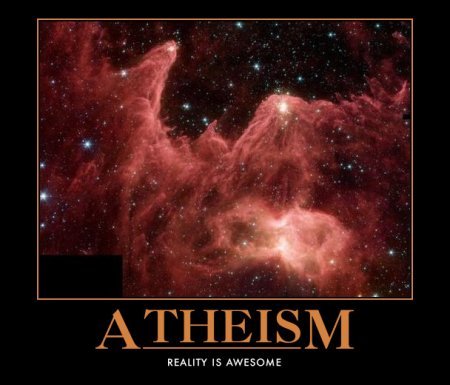
We need to approach people and the reality which we all share with an open mind, open heart, and unbridled willingness to hear the world calling us on our bullshit.  If we do these things, we will be better off in all our relationships, whether they are the two-way relationships of traditional monogamy, multi-faceted relationships of less traditional polyamory, or the one-sides intimacy of our own self-respect or the respect for reality.

For reality cannot love us back, but that does not stop us from finding it beautiful, compelling, and worth our effort to get to know it as intimately as our limited cognitive ability allows us.


Sense which pleases the Lord


Yesterday, Ginny and I spent a fair amount of time editing a new post for today.  We had wanted to make sure that we got the wording just right, trimmed it down enough to not be overwhelming (I do have a tendency to go on and on…), and were almost done….

What I almost did

So, firefox crashed.  The crash message was there so briefly before the window disappeared that I don’t know the nature of the crash, but crash it did.  “No problem,” I thought.  “WordPress saved most of the work, and it’s fresh in my mind.”  But no.  The work was gone, irretrievable, dead. I had never seen firefox crash in this way before, and that it happened right then was extremely irritating, as if some intelligent force were at work.

I was angry.  Ginny came back into the room and was annoyed too.  I considered re-writing the post, but I was too frustrated, tired, and didn’t have the heart for it.

That was the problem, I didn’t have the heart….

So Ginny came over to me and held me and we grieved together briefly and then, well, something else happened.  This time this new thing happened to both of us, in apparent unison.  A feeling of assurance and understanding washed over both of us and looked at each other in coterminous understanding.

It occurred to both of us that perhaps that strange crash, at that moment, was not mere accident.  Why would it happen then, as we worked on a post together for the first time (sort of like a preamble to our coming wedding vows), rather than any other time? What was the significance?

What if some power, some force, or even some intelligence saw this as the right opportunity to reach out to us.  I have been saying for some time that if a god existed, I’d want to know.  Also, I have said that this god would know how to make itself known to me.  Apparently, god was waiting for the right time.  He surely does work in mysterious ways.

What happened next was too sudden, too intense to record.  Most of it was a blur.  There were tears, prayers, and we had to go out to get what we needed in order to complete the right ritual.  We didn’t have time to call a priest or consult the book, we had to get moving before God smited us.  Of course, finding a goat so late at night would be hard, especially without a car.

We totes have to get one of these...makes great BBQ!

But eventually we found a supermarket that had some goat meat which was open all night, and proceeded to acquire it.  It was not much of a “sacrifice,” but it was all we could do under such short notice.  The meat department were nice enough to supply some goat blood too, as that would be necessary.

We burnt it on an altar to the Lord, as is demanded by Him, and left it for the high priests.

Of course, not having our own altar, we had to go to the local Jewish temple.  But their altar was probably inside, and the door was really hard to get through, so we stopped trying and instead used the front steps and left it there for them.  They will be so happy to know that people are returning to the old ways.

Our offering, before the burnt part

I know, I know…I’m new to this, OK? I have not read Leviticus in so long that I just sort of winged it.  It came from the heart.  That’s all the Host of Hosts demands, right? Later today I will re-read the chapters and do it right, but I thought that the attempt was enough to please the nose of the Lord at the time.

It did smell pretty good.  That YHWH sure loves BBQ.

In any case, we then walked home and prayed loudly in the streets for all to hear and enjoy, sharing our new-found relationship with the true god, the King of Kings, with all who were out sinning in the Babylon which is downtown Philadelphia on a Saturday night.  By this time, the bars were near to closing and we were getting nowhere with the people coming out of the bars drunk on their own dirty sin.  So we just had to try and go in and spread some more good news.

This guy asked for some "help" with these 3. I told him I already had the 3 I needed...

Most people were friendly, but they were not in the mood for helping us find an unblemished male goat for a morning ritual.  Plus, the blood all over us from earlier was apparently off-putting.

If these unforgiven Sodomites and Gomorrah-dwellers would only read Leviticus, they would understand that we hadn’t just slaughtered a room full of children, but in fact had been trying to please the God they were ignoring.

But they were too busy ignoring His Throne in their drunken orgy of Baal or whatever.  Hey, I read the gosh-darned book years ago, it’s not exactly fresh in my memory!If not Baal, it was one of those false idols, like Vishnu or something.  That false god loves drunk people.

So, after getting a few hours of sleep (I slept on the couch, not being married to Ginny yet and all), we woke up for an early church service at the local Baptist church, where we tried to show them all how to properly sacrifice a dove (OK, pigeon.  We were short on time, again).  But they were not interested and asked us to leave.  So we left them to their luke-warmness and proceeded down the street.

These guys followed us all the way back to our house, yelling at us. Sinners!

We were lucky enough to catch the start of a Presbyterian service, and since they were already started we quietly sacrificed the pigeon in the back rows, which seemed to offend a few people.  Perhaps they were upset because we did it at the wrong time? I’m not sure, but I don’t remember where the scripture tells you precisely when to do these things, so perhaps they were yelling at us for no reason except that they preferred to sacrifice birds after the communion.

Apparently, our timing was really bad, because they kicked us out too, a few of them following us down the street.  Something about returning a “collection” plate, whatever that is.

But before trying to catch the noon Mass at the Catholic church, we decided that we should share our good news.  Also, sorry Gina and Wes, but we can no longer take part in your sinning lifestyle.  I guess we can still hang out and stuff, so long as you see the light.  You do have a good back yard for burnt offerings, after all.  However, if you don’t see the truth, we don’t want to be associated with people who will burn for eternity.  And no, it’s not classism, whatever kind of Commie talk that is!

We will also have to take the website down soon, or at least change it to burntofferings.com (if that’s available!).  But right now we have to get to Mass!

They’ll be so glad we brought our own sheep!

The Monogamy Delusion?


So, I just finished reading Greta Christina’s new book Why Are You Atheists So Angry: 99 Things That Piss Off The Godless (Kindle version), right after having met her after the Reason Rally, and I will briefly say that I recommend it as a great resource for both believer and heathen alike.  It is a great read for anyone who does not quite understand why we get so fired up about religion and faith.

I use this as a premise for talking about goals of social movements, a question that Greta addresses in her book concerning the goals of the atheist movement specifically, and what this might have to teach the polyamory community.  After watching the atheist movement grow and mature over the last 10 years or so, and given that I am usually thinking about polyamory, I inevitably will ask whether there will ever be a large, organized, coherent polyamory social movement.

And if there were, what would it look like?

As Greta talks about in her book, there are fundamental problems which the larger atheist community addresses through various means.  There are the basic issues of confronting stereotypes, discrimination, and hatred of atheists.  Such things range from moral, legal, and to philosophical issues and are fought for by both theists and atheists.  There is also the front of the atheist community which actively responds to theistic claims, both to truth and socio-political access of levers of power (in the US, this is usually through Christian privilege), with counter arguments of varying levels of intensity.  On the farther end is the ultimate goal of ridding the world—through persuasion—of religion.  Greta and I share that goal.

With that in mind, what types of issues could a polyamory social movement address?

  • are there fundamental cultural, legal, or philosophical problems which polyamory addresses?
  • is there any real and significant discrimination against polyamorous people in the world? If so, is it primarily cultural or legal in nature?
  • Would such a movement be essentially a struggle for equal rights or would it also include questions of truth, such as whether polyamory is the best model for relationships that all people should emulate? (I a thinking about that last point in terms of Sam Harris’ Moral Landscape)

I don’t have any definitive conclusions to these questions right now, nor do I think anyone does.  I ask these questions to tease out some stark differences in the types of problems that the atheist community is dealing with from what the polyamory community has to deal with, whether it will become a larger social movement or not.


Will there ever be a poly equivalent to accommodationists?

In the atheist community, there are those whom like to argue that religion is worthy of respect, should not be criticized, and that there is much about religion that we should perpetuate, learn from, etc.  I have addressed this question numerous times over the last few years, and will not say more than I disagree with this view.  Strongly.

On the other side are people, like myself, who believe that religion is more harmful than not, untrue, and perpetuates the worst parts of our humanity; specifically faith.  I will resist urge to rant about that here.  Resistance is not always futile.

(In other words, urges to rant about faith can be countered with Star Trek references)

So, the question is whether this pattern holds for the polyamory community?  Are there people who will argue that, for example, monogamy is more damaging than not?  That monogamy cannot be a healthy relationship structure? Will people argue that polyamory is objectively better than non-polyamory? Will there, in short, be anti-monogamists? Not merely people who prefer polyamory, think it a better way to live given more options, but actually against the practice of monogamy as an irrational and delusional lifestyle? Will someone write a book called “The Monogamy Delusion”?

Again, not mere amonogamy–the lack of monogamy–but the active social activism against (through persuasion) the continuation of monogamy as a cultural practice.

(Some of you are thinking about Brave New World.  Or, if you are uber-literate, you are thinking of WE.)

Now, I don’t doubt that there are a few people out there who might try to make such an argument.  I’m sure that a rare poly bird out there, or a few, will argue that monogamy is fundamentally wrong, irrational, and possibly a bowing to the worst instincts of humanity; things like jealousy, social conformity, and living against one’s true desires (living inauthentically).

And on some points, I will agree with such people.  I might, in fact, agree with many of the points they will make, and make some of those points myself.   But despite this affinity for such arguments, I am not, at least not right now, one of those people who will make such an argument.  And I want to explain why.


Theism v. monogamy

Theism is a hypothesis about the world, specifically the existence of some supernatural being commonly referred to as a deity, god, etc.  It makes a specific claim which is either testable or untestable.  If it is testable, it has not survived skeptical/scientific analysis so far, and does not appear as f it will ever pass such a standard.  If it is not testable, it is a worthless hypothesis and should be thrown out on those merits alone.  Atheism is the lack of that hypothesis, whether made out of ignorance or through informed analysis, and the arguments it makes are in response to a proposition of how the world is.

Monogamy is a relationship style based upon sexual (and usually romantic) exclusivity between two people.  It is the lifestyle of having one lover, sometimes a spouse, at least at a time but possibly life-long.  It is not a hypothesis about the world, but it is a…choice? (is it really always a choice, given how many people are not even aware of alternatives? A question for another post!).  In any case, monogamy is a structure of one’s relationship, rather than a claim about reality.

What is the significance of this distinction? Essentially, it is the fact that polyamory is not a reaction to monogamy in the same way that atheism is a reaction to theism.  A polyamorous advocate could say something like “this is a better lifestyle for my wants and needs, and it may be better for you” and not “your lifestyle is objectively unproven to be best, true, and so your lifestyle is objectively wrong and you should give it up.” Polyamory is not a reaction against a claim to objective truth, as atheism is.  Polyamory has a relationship, and not always an antagonistic one, to a traditional cultural ideal of monogamy (traditional in much of the world, but certainly not all of it) that feels unnatural to many people.

To clarify the distinction between these two issues, let me ask two questions:

  1. Is it reasonable to consider all of the arguments for and against theism and rationally come out a theist?
  2. Is it reasonable to consider all of the arguments for and against monogamy and rationally come out monogamous?

In terms of (1), there are no good arguments for any gods’ existence, so any skeptic should become an atheist if they properly apply their skepticism to the question of gods.  As for (2), there are people who will, upon honest reflection, discussion, and consideration with their partner, find that they both are actually quite happy, satisfied, and feel no desire to be with other people sexually/romantically.  Those people will be what I call “accidentally monogamous.”  They have seriously considered whether they would want other people in their sexual/romantic life and have concluded that they need no rule about exclusivity but will end up living a monogamous lifestyle, for all practical purposes.

And before anyone thinks to point this out, I admit having argued that a true skeptic should be polyamorous, but I have also argued that monogamy is legitimately rational as a needs-securing lifestyle for at least some people.  To be clear, my view is that polyamory (not having an exclusivity rule) should be the starting position for all relationships, and monogamy is subsequently only fully rational if, and only if (iff), that is what both people actually, authentically, want with each other.  Which means that they would need no rule arguing for exclusivity, because doing so would be redundant because neither is actually interested in pursuing other people.

Wes would probably say that this lack of a need for an exclusivity rule is coterminous with polyamory, and I tend to agree. But I think there is room for debate here about the definition of polyamory, so I am allowing that room in my analysis here.  My views may change in the future, in that I may completely adopt his definition as being sufficient for polyamory.  The consequence of this would be that I might then conclude that all monogamy, unless it is reached “accidentally,” would be irrational and possibly harmful.

I’m not there right now.


Polyamourous evangelicalism?

The conclusion from all of this, as I see it, is that any movement to advance polyamory culturally, socially, or politically will probably be limited to providing information, legal and philosophical challenges, and the decreasing of any discrimination which polyamorous people experience or are legitimately worried about.

I don’t see a strong argument, parallel to atheism’s arguments against theism, religion, and faith, against monogamy.  I see arguments for being polyamorous, but that is not precisely the same thing as being against all monogamy.

There will be people who want to get rid of monogamy, and I will want to hear their arguments why they think we should strive for that (as I would hope atheist accommodationists should want to actually read new/gnu atheist arguments. I’m looking at you, Julian Baggini!).  But for now, I don’t see much room for a “new/gnu poly” movement.  But I suppose only time will tell.

If anyone feels I am being to accommodating to monogamy, I’m open to arguments.

On imaginary friends


Had a great time at the Reason Rally, despite the rain and chilliness, and despite it using every last scrap of social energy this introvert could muster. Adam Savage’s was perhaps my favorite speech, especially this part at the end:

I have concluded through careful empirical analysis and much thought that somebody is looking out for me, keeping track of what I think about things, forgiving me when I do less than I ought, giving me strength to shoot for more than I think I’m capable of. I believe they know everything I do and think and they still love me, and I’ve concluded after careful consideration that this person keeping score is me.

This nicely summarizes a thought that I’ve meant to write about for a while. It’s one of the less obvious negative consequences of religion, and something I myself didn’t realize until I’d been an atheist for several years. The idea of God I grew up with was everything Adam Savage describes in the quote and more: an ever-present companion even in my most profound loneliness, someone to pour out my worries to, share my joy, amusement, and exasperation with, someone who understood me at the deepest level, and, while he might not always approve, always loved and forgave me. Atheists mock theists for their “imaginary friend,” but perhaps they don’t really consider what it would be like to have such a friend that you actually believed existed. It means always being loved, always having support, never being alone. I, like many ex-believers, mourned the loss of this friend deeply when I found it was impossible to believe.

It took me a lot longer to realize that those experiences of feeling loved, supported, and listened to were real. Of course they were: I genuinely felt them. The interpretation I put on them was false, but the feelings were real. And what that means is that that support, that love, that listening ear, was only ever myself. The wise, calm voice I heard speaking back to me, giving perspective on my problems: that was me too. I had all those resources within myself the whole time, but I believed they came from outside of me. I didn’t give myself nearly enough credit. That friendly presence is not lost to me; it’s where it always was.

I started out saying that this was a negative consequence of religion, and I still think it is: religion, for many people, teaches us that the best and wisest part of ourself is not ourself at all, but external. It teaches us that we are dependent on someone else for love, forgiveness, wisdom, and encouragement. And that is a travesty. But on the other hand, perhaps the teachings about God enabled me to develop that part of myself. I don’t know; I’d have to hear from people who grew up atheist, whether they have anything like that sense of self-affirming internal companionship. (Evidently Adam Savage does, but I don’t know his religious history.) My guess is that some do and some don’t; and certainly not all religious people gain that particular thing from their notion of God. For some, indeed, God seems to embody many of the worst aspects of themselves, the bigoted and judgemental, the hateful and fearful. But I was lucky enough to be raised with a version of God that was everything best and wisest and most loving, as I could conceive of it, and perhaps that helped me develop that part of myself in a way I might not have otherwise.

So it may be that this is a possible positive as well as negative aspect of religion: providing a venue for people to shape and nurture their own best impulses. To the extent that my childhood religion did this for me, I’m grateful to it, as much as I resent it for telling me that those things were external to myself. Perhaps one thing the atheist movement should work on is encouraging those impulses, teaching people how to develop that supportive, forgiving, wise voice within themselves. Even though I recognized that it was present and accessible to me, I’ve lost sight of it in recent months, and I think I’d do well to recover it. I’m never as happy, healthy, and well-balanced as when I’m being my own imaginary friend.

On absolute truth and those disrespectful accommodationists


I could not have looked for a better way to sum up the difference between Gnu Atheists and fundamentalist theists on the one hand, and liberal ideologues of all stripes on the other, than this quote from Alain de Botton:

Probably the most boring question you can ask about religion is whether or not the whole thing is “true.”

De Botton is an atheist, but he thinks there’s a lot of useful and interesting stuff in religion, which he goes on to discuss. All well and good, and I agree with him that there is much about religion that’s “useful, interesting, and consoling,” — in fact I myself am still looking for ways to fill some of the holes that leaving religion has left in my life (no, none of them are god-shaped.) But through all the changes I’ve been through, there’s never been a point where I wouldn’t have been deeply offended by the claim that the question of religion’s truth or falsehood is “boring.”

De Botton’s position is very familiar to me. A lot of people, both religious and non-religious, have moved into a space of being fairly indifferent to the actual nature of the universe, and instead seeing religion as purely a social institution or personal mythology. Whatever works for you… all paths lead to God… I believe this, but you don’t have to… they’re all ways of saying the same thing: it doesn’t matter what’s actually true. This is compatible with a lot of religions, as well as with atheism or agnosticism, but it is absolutely incompatible with the monotheistic Abrahamic religions (and perhaps others that I’m less well familiar with.)

In a lot of ways the “I don’t care what’s true” stance is a big improvement, particularly in its social effects. But a key tenet of people who embrace it is not offending anybody, and what they fail to see is that that statement is profoundly offensive to those who do think truth matters. It’s worse than dissent, worse than disagreement: it’s invalidation. It’s saying “I reject the entire foundational concept of your belief. I think the things that are most important to you about your religion are irrelevant.”

A few days ago the story about Mormons baptizing deceased Jews got around, and my take on it was somewhat unusual. If I truly believed that a posthumous baptism was going to gain somebody an (optional) admittance to the eternal kingdom of God, I’d probably do it too! Being the compassionate literalist I am, I’d probably devote a major portion of my life to doing it — if I truly believed. That’s the gift of eternal life, people! Am I going to refrain from giving it just because somebody gets offended? To the extent that these baptisms are being done out of a sincere belief in their efficacy, and not for one of a host of other reasons religious rituals are practiced (I know nothing about the church politics around posthumous baptisms), I can’t fault them for doing these; from their viewpoint, it’s the absolute right and loving thing to do.

I pointed this out on facebook, and somebody responded, “But the people being baptized didn’t believe in the Mormon afterlife!” Which is colossally missing the point. The Mormons doing the baptisms do believe it (I assume, giving them all possible credit.) And under that belief, it doesn’t matter whether what afterlife the other person believed in: your belief is true, and you are helping them to eternal life despite their erroneous beliefs.

The happy, harmonious, multicultural view of religion whereby it’s all just social institution and personal mythology and nobody’s beliefs have a real impact on their life, death, and afterlife is completely ineffective in dealing with people who sincerely belief in the objective truth of their religion. I know; I used to be one. People who stood in that viewpoint appeared hopelessly naive and logically impaired to me. The statement “My religion is objectively true and has real-life consequences” cannot be effectively countered with “To each their own, whatever works for you.” The literalist believer will, at best, dismiss the religious pluralist with an annoyed shrug, and go on literally believing. As long as there are people who say “My religion is objectively true,” there will and should be non-believers who say, “No, it is objectively false,” and I think — have always thought — that those non-believers are giving the believers a hell of a lot more respect than any accommodationist.

Gnosis, pt 2


In my last post, I wrote about my own ups and downs with knowledge and belief about God, and the several-years-long transitional phase where I was truly neither a theist nor an atheist. Today I want to dig into what I think was going on with that.

I’m inclined to compare my transitional phase with the apparent beliefs of a lot of non-theists who nonetheless talk about things like “the universe,” “fate,” or “karma” on a regular basis.  There’s a kind of animistic habit of mind which seems very common to human nature, which insists on attributing intention and consciousness to everything. It’s this habit of mind that remained when my explicit God-belief had vanished from my brain; it’s this habit of mind that made me say “God took away my belief in God.”

On top of that animistic habit, I had a deep and thorough understanding of an internally consistent Christian worldview. Everything that I perceived in the world could be interpreted through the lens of Christianity in a way that made sense on its own terms. Even my loss of belief could be interpreted that way. It did not require mental effort or self-deception to come up with an interpretation of the world that was consistent with Christianity: having grown up Christian, it was easy, almost second nature. That meant that it was still possible to continue believing in (a form of) Christianity with full intellectual integrity; what had changed was that it was also possible not to.

I did some studying; I read The God Delusion and some other writings; and I came to the conclusion that an atheist worldview was also internally consistent. I had hoped that there would be features of reality that couldn’t adequately be explained without a deity, but in my search I found none. I found myself looking at two complete, coherent accounts of reality, both plausible to me, both accounts that I could accept with full intellectual integrity, and entirely incompatible with each other. At that time in my life, I don’t think it’s reasonable to say that I was a theist or an atheist. I found both believable, and consequently couldn’t truly believe either.

I said before that I don’t like to use the word “know” in relation to questions of theism, because of its ambiguity. But if asked at that time in my life whether I believed in a god or not, all I could have honestly said was “I don’t know.” For a few years there, I’d say I was a true agnostic, an agnostic lacking both knowledge and belief.

Halfway through those transitional years I returned to Christianity, not because either my beliefs or my assessments of the truth had changed, but because I wanted it to be true. Not a strong reason, but it was all I had. If I’d had more unbelieving friends at that time, it probably wouldn’t have happened — I’d probably have continued in my agnostic paralysis until the unbelieving neural pathways clicked into place. (I just made that up, but it’s a terrific way of thinking about it… the whole thing was basically like a gear shift, and there was a long period there where the chain was suspended, adjusting over the gears, neither one thing nor the other.) But I was lonely, and all but one of my close friends and family were Christian, so I was looking for a way back in. I never thought that my desire for the Christian God to be real made it more likely that he was real; I just seized on desire as an acceptable stand-in for “faith,” since I didn’t have any of that. And I was backed up in that interpretation by some statements in the first few chapters of Introduction to Christianity, by Joseph Ratzinger, who did rather well in the ranks of his faith profession.

I’ll write more about my ins and outs with religion later; now I have to go rant about truth!

Gnosis


In the last week or so, I’ve begun a project of going through the emails, blog posts, and private journal entries I wrote throughout my deconversion from Christianity. There are a lot of them, and I may pull them together into a book project in the near future, but for now I want to comment on some thoughts they’ve provoked.

One advantage to having detailed personal records like this is that they guard against hindsight bias and retroactive interpretation. I haven’t looked at most of these writings for years, and I find, looking back, that the story I tell now about the trajectory of my deconversion isn’t entirely accurate. When I want to give the short version of my history with religion, it goes something like this: I was raised in a conservative branch of Christianity and accepted it pretty much without question for the first 25 years of my life. Around the time I was 25, I began seriously questioning my faith, and actually stopped believing in God,  although I wasn’t happy about that. I was basically an atheist, though I didn’t use that word, for about a year and a half, then I found a definition of “faith” that allowed me to go back to calling myself a Christian, although never with the same kind of faith as before. Then, around my 29th birthday, the last reasons I had for clinging to Christianity fell away, and I became a full-fledged atheist.

That’s the short version, and it’s broadly accurate, but in retrospect I missed a lot of the complicated nature of that in-between time, between “Yes I am definitely a Christian” and “Yes I am definitely an atheist.” For those who have never had God-belief as an element of their psyche, it might be difficult to understand exactly what was going on there, and it certainly muddies the definitions of “belief” and “knowing” that I’ve been using in the last couple of years. So let me try to explain it.

During part 1, the Christian part of my life, I absolutely believed in God. I would have found it impossible not to. Even if someone had rationally convinced me that there was no good reason to believe in God, I’d have been nodding along and saying, “You’re right, there isn’t a good reason to believe,” and wondering the whole time what God thought of this conversation. It was not something I was consciously maintaining or defending: it was just there, in my brain, a part of the way I thought about the world. To say “I don’t believe in God” would have been a lie, even if I had wanted to disbelieve and had every rational cause for disbelief.

At this time in my life, nearly the opposite is true. If evidence for a god’s existence started springing up all over the place, that internal state of belief still wouldn’t appear in my brain, at least not immediately. I could acknowledge, “Yes, given a Bayesian probability analysis it seems overwhelmingly likely that a deity is the cause of these things we are witnessing,” but in the back of my head I’d still be thinking, “But there can’t really be a deity… let’s keep looking for other explanations!”

It’s important to note before I go further that neither of these belief-states are unchangeable: as evidenced by the fact that my first one did eventually change. I’m no neuroscientist, but my guess is that these belief-states are simply strong neural patterns, habits of thinking that can’t be changed instantly, but only worn away over time as new patterns are developed and rehearsed.

The middle state, that transitional period of 3-4 years, is where things are weird. The things that were going on in my brain at that time don’t fit into a simple category of belief and knowing. The moment that really kicked off that whole transitional phase of my life was a moment where my rock-solid, undeniable belief in God was removed: and my emotional response was anger at God for removing it.

It doesn’t make a lot of sense. I stopped believing in God, and I was angry at God for making me stop believing in him. Clearly, then, on some level I still believed in God, and interpreted even my unbelief through a theistic worldview. But something very significant had changed in my brain, and the best way I could put it to myself was that I had lost my belief.

This state continued, by the way, even after I reclaimed a “Christian” identity. My state of belief didn’t change very much during this time; instead I changed my definition of “faith” to give myself a way back in. My reasons for doing that belong in another post, but from the point of view of mental states of belief and knowing, I didn’t change very much during those 3-4 years.

In atheist circles there’s been a lot of buzz recently about the difference between knowledge, belief, and certainty (prompted mostly by Richard Dawkins’ “shocking” revelation that he wasn’t 100% certain that no god existed, which anyone who’s actually read The God Delusion already knew (actually, anyone who’s read the subtitle of The God Delusion should have known: the word almost is there for a reason, people)). The relevant ground has been pretty thoroughly covered (and is being added to by Shaun even as I write… we’ll see which of us posts first! (I have a parenthetical addiction, by the way; I try not to use at all, because when I start it gets hard to stop)), so all I want to add is my own experience, and how it fits or doesn’t fit into the tidy “atheist/theist” “gnostic/agnostic” categories.

At no point in my life have I been 100% certain that my beliefs about God or gods were accurate. Even aside from evil genius / brain in a jar / Matrix scenarios, I recognize that my foundational assumptions about what constitutes a good basis for knowledge are just that: assumptions, that could be incorrect. I do the best I can with what I have.

I don’t use the word “know” a lot with reference to theism, just because its meaning is too ambiguous. Some people use “knowledge” synonymously with “certainty” (in which case I am an agnostic atheist), some people use it in less absolute terms (in which case I might be a gnostic atheist, depending on how severely you draw the line), and some people equivocate (in which case I’m not playing.)

Belief, now, is a harder question. I don’t think belief is a simple idea, based on my own experience. If all I’d ever experienced were those two states of initial full belief and present full unbelief, I probably would think it was simple. But my transitional phase leads me to think that there are several different strains or mechanisms of belief, which in most people (perhaps) are concordant, but which can also be conflicting. With part of my brain I believed in God, and with part of it I did not, and that was a very different mental state from the ones that came before and after.

Next up: digging a little deeper into the anatomy of that in-between time.

The scientific method is not indebted to religion


Over at Why Evolution is True (which I read religiously!), Jerry Coyne has tackled an article aimed at him on BioLogos…again. I generally agree with the perspective on science and religion espoused by Coyne, and this post was not an exception.  What I want to address is a point made in the BioLogos article Coyne quotes, written by Robert C. Bishop:

Finally, Coyne completely misunderstands the force of the historical examples I gave of science/faith engagement (the Scientific Revolution and 20th century debates about steady state cosmology). They aren’t just points about the religious faith of some scientists in the past. Rather, the scientific methods these scientists created and used were intimately tied up with and motivated by their faith.

He goes on from there, explicating the old canard about how since many early scientists were religiously motivated, therefore the methods of science themselves were motivated by religion.  For example:

Galileo, Boyle and Newton among others developed methods for studying created things on their own terms in such a way that their natures could be revealed to investigators as accurately as possible. This means that they didn’t treat created things as divine or as fronts for the real activity of God, or as shadows behind which genuine reality is working. Instead, they treated pendula, animals, planets and stars as having genuine natures and properties, as responding to and contributing to order, and sought to put themselves in the best methodological and epistemological position to receive all that created things had to teach about themselves.

This all sounds good enough, I suppose.  It is generally true that scientists of the age used terms like “created things” and so forth, and viewed the universe as having a discoverable order, usually attributed to some intelligent force, AKA God.  But watch were Bishop goes next, after the claim that western intellectual culture is dominated by concepts of hierarchical levels of order in reality.

…biblical revelation stands unique historically in recognizing only one distinction and no hierarchy in nature: There is only the Creator and what is created. Everything that is created is of the same ontological order of being. In other words, the being of everything created–terrestrial and celestial–is homogenous in being.

This sounds almost Spinoza-esque in flavor (perhaps with a dash of Leibniz), as if the universe is simply all one thing, including its creator and intelligent force.  If the creator is separate, does that not imply hierarchy? Perhaps I’m splitting hairs.  What makes this more interesting is that Coyne, in his post, is addressing is the fact that the scientific method, specifically concerning evolution, makes the proposition of the supernatural unnecessary towards explaining anything. If there is no hierarchy, and all the universe is subject to the same laws, then why the perpetual appeal to an intelligent designer by BioLogos’ articles, including this one?

But I’m being led away from my point.

In any case, Bishop’s assertion of this unique “ontological homogeneity” derived from Biblical theology (which is not unique to the Bible nor even really actually Biblical, in my opinion) implies that

once the likes of Galileo, Kepler, Boyle, Descartes and Newton grasped hold of ontological homogeneity, the exploration of nature was never the same. The doctrine provided the seeds motivating Galileo, Kepler and the other scientific revolutionaries to see celestial and terrestrial regions as of the same order of being: finite, composed of the same material, operating by the same laws and secondary causes.

The assertion that this ontological worldview was derived from Biblical revelation and theology needs to be justified.  But even if it were true, the implication that the Christian worldview in which these scientists grew was the cause of the scientific method they employed is still dubious.  This is because the scientific method, especially as it is used now, is not based upon the need for revelation, gods, or any creators.  The method is simply the intellectual continuation of the proto-scientific methods that existed before Christian revelation, and was in fact put on hold by Christian history (Library of Alexandria, anyone?).  The fact that these scientists held onto the linguistic conventions of creators, universal order, etc is no more to the point than today’s scientists, even secular or overtly atheist ones, use metaphors from the Christian worldview the West is still mired in. Kepler, Newton, and the rest did hold onto religious belief to some extent, but they also were not subject to the facts that Darwin brought about which tossed away the need for much of what a creator offered to them.  Paley’s argument  still held sway for them because they had not lived at a time when science, and its method, had swept away enough of the theological riff-raff to make them useless.  That is not so anymore, and it has not been for some time.

Imagine some time in the future, say a few hundred years or so from now, where this issue is being discussed.  Imagine some debate between future intellectuals about this era and its scientific community concerning religious belief.  I could imagine some individual quoting Richard Dawkins, Sam Harris, Jerry Coyne, or PZ Myers (who will, at that time, be remembered at the first man to get tentacle implants in an attempt to take over the world) where they use Biblical imagery, metaphors, or even quote some scripture directly because the verse happens to make a point they agree with.  In a world which has moved on from religion as we know it today, where Biblical language has disappeared from common use, this would look like religion to them.  In the same way that Newton’s reference to a creator (or Thomas Jefferson’s for that matter) sounds like a religious reference today, the use of religious metaphors in the future will be strange and sound antiquated (in one possible future, of course).

This is not to say that Newton was not religious, only that relative to his time, his worldview and methods for finding truth were more secular and skeptical (even if he did believe in silly things like astrology).  I might go as far as to say that  Galileo might be on the atheist speaking tour if he were alive today (perhaps the same for Jefferson or Paine).  But what is essential here is that he methods that scientists used by these people were an improvement of methods of finding truth.  They were a step up towards a more perfect method that allows us to see, today, that ideas such as natural selection do not need a god to explain the state of life on Earth.  Even if some of the concepts that allowed this method to develop came from Western religious traditions, this does not imply that those methods are congruent with the worldview that preceded the method’s application to the natural world.

In a sense, that would be tantamount to claiming that because the logical and rational methods used by atheists in debates with theists, atheism owes its existence to Christian revelation and tehology.  When in fact atheism is the recognition that this theology is essentially nonsense, even if the  tools we use to show this was originally developed by people trying to apologize for theology in the past.  It’s an accidental relationship, one that demonstrates a growing up, transcending even, of our species’ adolescent eras.

The tools of rational thought, utilized by theology, are not enough in themselves.  When built upon the foundations of empirical and skeptical methods, they can help us achieve greater insights into the workings of the universe towards a more efficient and powerful understanding of our world.  But when they are used only in conjunction with speculation (AKA revelation) the conclusions are likely to be dubious.  And where those conclusions are occasionally true they will be so only accidentally, as even Paley’s watch, when broken, is rights twice a day.   Where theology helped developed to create the rules of logic, which is to say when it has worked to shape and sharpen the tools scientists use, it wasn’t until these tools reached the hands of people dedicated to testing their hypotheses against the world that we actually saw real progress towards the better understanding of the universe which we have today.  And the longer people like Robert C. Bishop attempt to tie this method to parochial anachronisms of theology, the slower we can reach that future when religion is relegated to linguistic devices and imagery to be used for literary effect by future scientists.


Conversational music of sex and religion


Plato's Symposium

I’ve been thinking recently about conversations.  Polite conversations.  You know the kind I mean; you are at a dinner party with people you do not know well, having lunch with some acquaintances, or maybe you just popped into the local tavern for an ale or two and struck up conversation with some other people doing the same.  The circumstances are immense in number, but the basic situation is the same; you are talking with people casually, and polite conversation will evolve into touching on topics of all sorts.

There are a set of unspoken rules to such things, right?  They are not written (nor will I attempt to write them now), but they are accepted and understood (to some extent). And while those involved in such discussions are usually aware of the mental composition of ideas in relation to other non-verbalized thoughts, most of what they are thinking is left unsaid.  We can’t say everything we think.

There is that filter that I–as well as most people–have which allows me to say one thing and not several others that arose to consciousness but not quite to my tongue.  And some of those alternative thoughts remain in consciousness, treading the waters of my mind while waiting to sink or swim as the polite conversation continues to evolve.  The presence of these unsaid thoughts, in adjacent position to the conversation perceived in my mind as I listen and contribute, will sometimes form a theme of parallel thoughts that are left unsaid but play like a harmonizing phrase to the conversation shared by the society in which I find myself.  That’s how it often is for me, anyway.

But what I long for, what I hope for even, is when those silent themes emerge among the greater score.  When, while the orchestra of conversation begins to grow and increase in complexity, the whine of a violin makes it’s way into the background, playing with the theme in a way that is both beautiful and sublime.  And, eventually, that violin silences the rest of the orchestra, and plays itself while every ear perks to hear it in its quiet grace.  The music of conversation evolves such to set the stage for such moments.

And they often leave us silent.

But that silence is not always appreciation, but is sometimes a tumultuous composition being raised in the the mind of another who does not see the only the beauty of this moment.  They may feel discomfort, anger, annoyance, insecurity, indifference, or even a mad desire to hear more and to repeat the phrasing with another instrument–perhaps an oboe–but does not do so.

Oh what beautiful music we humans are capable of playing, but rarely we do.  Just like with the real world and music, it is often the monotonous babble of popular tones that drown out most of the world.  Subtlety and rarity is left, as Nietzsche commented, to the rare.

Out of metaphor

Enough of music metaphors.  What the hell am I talking about?

One of the things I like about such social situations is the uncertainty of what will transpire.  The anticipation of either heated argument, genuine curiosity and interpersonal intimacy, or polite indifference or discomfort.  It’s almost, well, sexy.

As a person who self-identifies as polyamorous and an atheist, I run into this type of communication anticipation on these two fronts from time to time, and I relish the expectation.  It’s not completely unlike meeting an attractive woman and, while talking with her, noticing her body through the clothes she wears, wondering if she is also trying not to let me notice her own interest while I try to thrust away images that my mind creates of the anticipation of passion thus far unrequited.  I eagerly watch the facial queues for subtle emotional indicators, body language, and changes in tone of voice as certain subjects are hinted at, caressed, and occasionally penetrated. Yes, a conversation is a lot like the anticipation of sex, which makes good conversation a lot like sex.

Good conversation–and good sex–is about the exploration of the other person.  It is about opening up and letting people in while trying to maintain the awareness of their needs as they seek to fulfill yours.  It is about saying what you think, hearing what is said, and responding to what is actuallysaid rather than what you wanted to hear.  It is about actual communication, and not merely saying your bit and then having done with it.

Wait, I thought I was done with metaphor….

*sigh*

I know, but in a sense is not all language metaphor?

You may find yourself with some people you don’t really know very well, and some talk about current events comes up. Perhaps it is Iraq, the healthcare bill, or local politics, but eventually something will approach a more sensitive and controversial topic. Perhaps it is a comment about the recent discovery of documents that indicate that the current pope was responsible for covering up child abuse; perhaps it is playful flirtation between two couples who meet at a bar and play with some rising sexual tension and making jokes about swapping or some other arrangement; or perhaps it is the discussion of polygamy as a force for female subjugation in some FLDS and Moslem communities, and why don’t you ever see a woman with four husbands rather than the other way around.

And then the voice inside me says well, I know this woman….

And that is the sort of thought, that lonely whine of that violin, which is rarely played.

Reactions

Some people are wound tight.  It may be traumatic experiences with either sex, relationships, or religion.   it might just be that some people need to just loosen up a little, but I really can’t generalize while being fair to each person’s circumstances.  What I can say is that in my experience some people react quite defensively, even if they have learned to do so quite subtly, to their comfort zones being poked at.

The part of me that is all about free speech, intelligent conversation, and personal growth wants to merely dismiss this as cowardice or emotional weakness, but that is not really fair nor true in many cases.  I cannot know the cause of such discomfort or caution in the face of certain topics, but I am almost always interested in knowing what those causes are.

It is the intimacy of it that I love.  And it is a desire for this intimacy that has caused some uncomfortable relationships in my life.  The reasons are sometimes clear to me, especially in hindsight.  I have been a person who has been closed off behind my own fears, defensive and reactive at certain questions, perceptions of criticism, etc.  But my desire to grow past this has left me sensitive to the behavior in others, perhaps to the point of projecting it when it is not there? (I cannot say).

Perhaps, but I have trouble imagining that I never recognize it accurately.  In at least one prior relationship, I am certain that I was correct in this conclusion, and I think that it was part of the reason that it is a prior relationship rather than a continuing one.

But I’m straying too far from the point.

Some topics of conversation will bore, frighten, or annoy people.  And often this is for good reason, but still those reasons are interesting in themselves.  And it may not always lead to a meta-conversation, but it may lead in that direction in some cases.  But I enjoy the ability to discuss things of moderate or ultimate concern; philosophical discussions, details about personal experiences or beliefs, or passionate defenses and debates about things of personal stake and interest.

It is in these moments of personal insecurity where intimacy grows.  There is a vulnerability about it, but that is what makes it rare and (perhaps thus) beautiful.  It is scary to trust to open up, especially to people we don’t know well, but there is a certain point where I think it is empowering and powerful to do so.  And in such conversations truth may occasionally be born, and we may find ourselves open to new possibilities and expand our boundaries a little at a time.

I may be wrong; there may be a god.  I may be wrong; polyamory may be ultimately unhealthy.  I may be wrong about many things.  So may you, and so let’s actually discuss them rather than sit silently and let those beautiful phrasings play silently in our heads while we try to imagine what melody plays in our neighbor’s head.  How often do people assume things only to find they are wrong when they actually talk with other people.

(How many times have I had to explain the definition of atheism/agnosticism or explain what polyamory is about if not a fear of commitment)

How many times has Glenn Beck sat and really listened to a progressive or liberal without replacing their music with his own biases?  How many times has Keith Olbermann listened to the music of the Tea Party people?  And no, I’m not advocating the view that necessarily some ideal in between opposing sides is always where the truth is.  “Teach the Controversy” is a joke when there is no controversy except that which is contrived for political or religious effect.  Listening does not compel respect for the idea listened to.  Respect has to be earned by reason and evidence, not merely demanded.

And while I may agree more often with Olbermann than Glenn Beck (who I think may be mentally ill), I still listen, really listen, to what is being said.  I only hope for the same.

Conversation avoids misunderstanding and mis-communication while it builds intimacy.  It works in relationships, religion, politics, and even sex.

We all need to communicate better, including myself.

Jamie Whyte on discussing sensitive topics


From a book I just finished reading called Crimes Against Logic by Jamie Whyte:

Those who take religion, politics, and sex seriously do not adhere to the general prohibition on discussing these topics. And they don’t take offense when they are shown to be wrong.

If you start to feel during a discussion that you are not so much incorrect as insensitive, then you are probably dealing with a respectable bigot.

Only a thug would expose them.

And then he ends the book with the following:

Perhaps it is better to get on with your family and friends, to avoid embarrassment, or to comfort yourself with fantasies than to believe the truth. But those who approach matters in this way should give up any prentensions to intellectual seriousness. They are not genuinely interested in reality.

Separating intellectual from moral seriousness is harder than those who are intellectually frivolous may care to admit.

Interesting thoughts. No need to comment further, I think.