Progress. The word implies a goal, teleology, or purpose. Some, such as Alfred North Whitehead, preferred to think about process. And while my views differ significantly from Whitehead, I agree that process might be the better term for the improvement, over time, of our understanding of the world around us. Purpose implies a purposer, which is what theology is all about. Science does not carry this assumption with it into the lab (nor does it discount its possibility).
 There are a multiple processes we use in our lives, and they have led to increased and subtle understanding of ourselves and of the universe that surrounds us. But not all processes are equal, playing different parts in our lives.
Our thinking is complex, largely hidden from our conscious awareness, and often incoherent. It is often attracted to processes which have lesser pragmatic efficacy, but which nonetheless have psychological gravitation.
The scientific method is a late addition to our intellectual toolbox. It starts with observation, but it’s life-blood is experimentation. It seeks to eliminate bias–to lesser and greater degrees depending upon how an experiment is structured–and thus to attempt objectivity. I prefer the term ‘intersubjectivity,’ at the risk of encroaching on some possibly semantic hair-splitting.
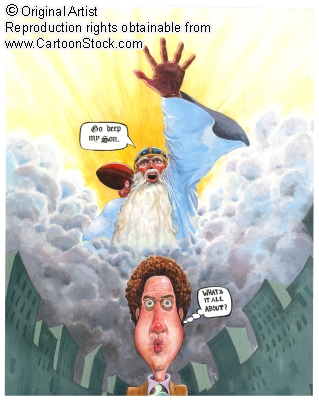 Theology is the study of god(s). More generally, it is the study of the divine, the supernatural, etc. It is an attempt to apply logical and rational thinking to the propositions of revelational thinking which is largely primitive and based open pattern-recognition gone-awry. It, strictly, is not science.
Now, this is not to say that theology is completely separate from science. It is not not even a different epistemological realm of science, despite what Stephen Jay Gould thought (I am not a fan of NOMA). We live in the same universe, under the same laws, whether we are doing theology or science. And some theologians use science in addition to their logical approach to religious or spiritual insights.
The question is which one is pulling the other along or whether they take turns doing the work.
 Well, that may depend on your point of view. If you are working with the Templeton Foundation, for example, you may see some give and take going both ways. Such people tend to see that science and religion influence one-another, and an attempt to not only bridge these processes but to find ways that they intersect is a good thing.
In a larger cultural sense this is true, but perhaps only to the limited extent that they both exist simultaneously and people carry both of them in the same minds and thus they communicate. There is certainly a sense where the ideas of religion influence how scientists think as well as the discoveries of science influencing theology (unless, of course, you are these guys). And as time marches on, the cultural influence will continue, most undoubtedly.
But there is a difference between science and religion in another sense; one that transcends mere cohabitation. While the language, stories, and flavor of religion has helped carve much of our culture, and thus those that live in it, our pragmatic understanding has been dominantly influenced by science rather than theology. There is a difference between the methodologies of science and religion which results in a dramatic personality difference between them. Neither one is misidentified as the other, except in very superficial ways.
Charlatans and shysters from various theological backgrounds have been trying to sell snake oil, utopias, and personal redemption of various kinds to people for ages. From new age self-help, evolving messages of redemption from Christian evangelicals, and religions created by science fiction writers, there are multiple ways that theology has tried to advertise itself as a product that will help you either in this world or the next. But it is rather interesting that with the advent of the scientific method theology has been hanging off the coattails of science, feeding off the droppings left behind in almost unnoticeably slow changes to their beliefs and attitudes.
With new age philosophies and religions loving every moment of quantum mechanics (all while getting it wrong), Christianity getting slowly more and more progressive, and with the invention of religions that even try to call themselves something that sounds scientific, it is clear that the primitive human mind is trying to adapt the “metaphysical need” (as Nietszsche called it) to the realities of scientific processes.
Just imagine what a progressive theologian of several centuries ago would say to Rick Warren now. Imagine what a pre-Christian pagan would say to Deepak Chopra. Imagine how Scientology would be greeted by L. Ron Hubbard ten years before he thought of the idea. The progress of theology has made much of it more modern, tolerant, and informed (even if it only sounds this way), but this was not because of their own efforts.
All good intelligent and open-minded people of today taking the progress of the times into their lives and incorporating them into their modern theologies is quantifiable improvement on society and their religion. The problem is that it is the wrong kind of improvement because it overlooks a more robust update to the theological software (theology 2.0 anyone?) of many religious traditions.
It has been said that Christianity (for example) has been dragged, kicking and screaming, into modernity by other cultural forces. And with it came a new theology that was able to incorporate what science has brought to us via the blood and sweat of those that the once-great Catholic Church once considered heretical. And now the Church accepts evolution, heliocentricism, and perhaps eventually female church leaders as other denominations of Christianity have.
But this is not progressive revelation, it is a reluctant acceptance of overwhelming facts, cultural pressure, and economic interest. These are means to adjust theology to survive in the real world, based upon facts and theories from another method which theology does not fully understand or accept. And even when it does understand this method, it does not employ it to the points of their theology because they believe that the two are different realms. This is not theology growing up, it is theology listening to its better educated, more worldly, and successful little brother named science.
And while there are certainly exceptions, theology of most faiths has neither grown up to understand nor to use the methodologies that science employs. Rather, it accepts the conclusions of those methodologies after they become overwhelmingly true–or at least overwhelmingly accepted among people that either are adherents or potential tithers.
Much of the world’s religious communities have learned to recognize the power of science, but has not quite recognized the methods that science uses as applicable to the theology they continue to adjust. Theology does not discuss things that science cannot deal with because theology makes claims about the world, even if indirectly. If the supernatural influences the real world, then the effects should be open to empirical study at very least.
The proclamations of theology are subject to the same scrutiny as stars, brains, or particles. And while facts about the physical world don’t directly lead to ideas about morality, meaning, or beauty, they certainly can tell us a lot about how these things are increasingly becoming part of science’s domain.
 The hard problem of consciousness, the question of what really caused the universe to exist (if such a question is meaningful), and the nature of the quantum world are still beyond our reach scientifically, but theology provides no methodology for answering these questions which is better than science. Theology provides some answers, sure, but what reason do we have to accept them?
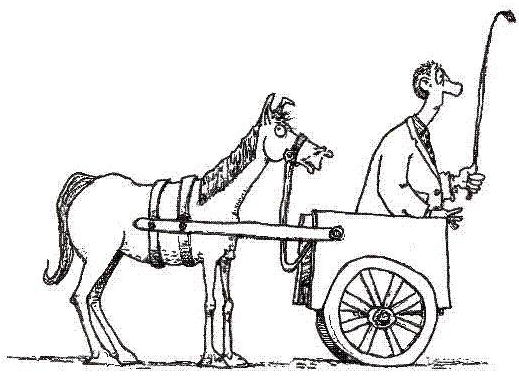
Science is tugging theologians along the path of history and theology is redefining itself based upon what is sees science doing. Theology dons the apparel of the strange places that science ventures, but in a sense this garb is little more than a souvenir which will make it look stylish and trendy. Those who follow in religion’s wake in these trends will think they are modern but they miss that they are only following fashion. Theology wears scientific-colored robes in order to maintain its own goal which is more about maintaining itself rather than pulling the cart of culture along.
 Thus, by re-writing theology in order to put science in a reverential but secondary place behind these divine speculationss, one is surely putting their cart before the horse.


 Skepticism, Properly Applied