T-Shirts!


I had someone ask me about this yesterday, so if anyone else is interested you can get a PolySkeptic T-shirts here:

teeWomen’s cut

Men’s cut

BTW, I don’t get a cent from these purchases. I did the design, but I have not set up any way to get any of the proceeds.

So, if you are interested in one, there is a way to get a shirt (in various colors).

I currently have 2 of these shirts, and wear them somewhat frequently.

Impulsiveness: The invisible villain within


Amygdala-hippocampusI have never had an MRI or any other brain-imaging done to verify this, but I have reason to suspect that I may have a smaller hippocampus and possibly a reduced amygdala.

Why would I suspect such a thing? Well, people who have symptoms of Borderline Personality Disorder tend to have these brain regions of reduced size, especially those with comorbid PTSD (source). People with reduced hippocampi tend to be more impulsive.

Borderlines tend to be impulsive.

Emotional management and impulsiveness are, in many ways, the hallmark of dealing with BPD. If you know a borderline, what you expect is a person who can shift moods quite quickly, and you might see a pattern of destructive behavior. For many borderlines, this takes the form of heavy drug use, unhealthy levels of promiscuity, etc. In other words, impulsive and potentially destructive behavior.


Perpetual fighting and flighting

Fight-Or-FlightHave you ever been suddenly scared and felt yourself become overwhelmingly alert, reactive, or anxious? Your adrenaline spikes, your fight/flight instincts kick in, and while you are more alert you may find that if you tried to apply some rational analysis to the situation you may be unable to do so. Some series of events have kicked up the parts of your brain responsible for quick decision-making, such as defending yourself or running away, but your resources towards rational thinking are temporarily compromised.

Now, imagine that this happened to you frequently, as a response to mild sources of stress or social situations. Imagine that this happened at a party or around certain (types of) people. Imagine if you grew up with this always happening to you, and so you didn’t realize this was abnormal. There are reasons I choose writing as an outlet, and tend to be quiet in person.

Living within a mind populated by fears of abandonment, chronic feelings of emptiness, and drastic mood swings (we’ll get to that in the next post) puts that mind on high alert all the time. Most of the time, I can easily manage impulses, whether they are to eat that whole container of ice cream, responding to that idiotic post or comment on the internet, or punching that douche-bag.  In my life, I have eaten whole containers of ice cream, responded to idiots on the internet, and while it has been very rare (attending a Quaker school probably helped this) I have thrown a couple of punches.

But these types of impulses are not the largest concern for me. In my case, the larger concern is what I will call the potential monster lurking under the dark waters, barely seen but always present. This is the monster that interferes with rational thinking, probably due to the abnormal brain physiology consistent with BPD. You may have known me for years and never realized it was there. A few people do know it well, some of which do not speak to me any more. And yet, some both know about it and are close to me, probably because those people are amazing and awesome.

And, of course, my impulses, great and small, have led to amazing and awesome people leaving me. Hence my intense desire to understand, treat, and heal from the pain that often causes my impulses. Emotions and desires lead to impulses. Impulses can lead to both good and bad actions, but also to a wide range of radical mood shifts.

I have intentionally planned this post directly before the last in this series, wherein I will talk about radial mood shifts and emotional instability, because that instability and shifting is largely due to the presence of an aspect of my mind which sometimes terrifies me and forces me to be perpetually vigilant against an impulsiveness which is usually not a problem.

Usually.


In stead

I need one of these
I need one of these

The fact that we all want to think of ourselves as good, smart, rational people means that we might lean towards self-justification in most cases, and this is also true of myself. But in my case, and I have no idea how this is true for other people, I’m almost always aware of the monster swimming under the murky surface which might, at any moment, cause me to make a poor decision, lash out suddenly and without apparent cause (there is a cause, it’s just usually buried under tons of emotions), or to spend hours or days parrying impulses towards a person who has severely hurt me. These feelings are the source of rationalization, self-justification, and cognitive biases.

When I first drafted this section, I spent some time composing examples of impulses, struggles with internal impulses to act in ways which might hurt people (because I’m being hurt by them), etc. As I kept writing, it became clear to me that the writing itself was a metaphor for itself. I was succumbing to the impulses that I was speaking of, and the tone of the section was highly aggressive, angry, and ultimately full of deep pain.

Because Fear leads to anger, anger leads to hate, and hate leads to suffering. After I wrote several paragraphs, I realized I was writing out of pain, anger, and I was suffering. And I wanted to redirect that suffering elsewhere. Those impulses to redirect pain (and abuse) are what has ended many of my relationships. I found myself doing that here, in writing about impulsiveness. Funny how that happens.

My writing was becoming an attack, not only upon people who have hurt me, but also upon myself. This is the largest, for me, result of my impulsivity.  For me, being impulsive does not play itself out as drug abuse,gambling, or unhealthy sexual promiscuity. I don’t seek fights, stay out all night drinking, or go home with someone from a bar whom I hardly know.

Instead, my impulses lead to a frequent state of mind where the possibility for a rational or philosophical analysis are hindered. I find myself arguing between options which are all impulse-based, led by raw emotion, and I have to calm myself down to think rationally. Often anger and pain are the dominating emotions at such times, but not always. I am aware of this, most of the time, so I can catch it in order to calm myself down and re-evaluate (as I did here). As the years have gone by, this struggle and the subsequent need for re-evaluation has ended up making me too afraid to act in most cases just in case my decision might be made in a compromised state of mind.

That is, just in case my rational attributes are compromised (because if they are, I probably don’t know it) I have learned not to act, most of the time, rather than to act poorly. Of course, I do things quite often and sometimes a poor decision slips in, despite my trying to not allow poor impulses to make the decisions. The problem has become how to act wisely. How can I trust my ability to make decisions when I occasionally make really poor ones? Would trusting myself more make me more or less likely to act impulsively?

My intentions are good, the vast majority of the times (which is to say, I occasionally have impulses which don’t come from good places). I don’t want to hurt people, I want to treat people well, and I want healthy relationships. These are all trustworthy attributes, so long as I’m capable of practicing them in actual behavior (which is the vast majority of the time).  I trust my ability to act morally and responsibly when I’m able to think clearly and rationally. And despite the fact that I usually act rationally and responsibly, that I make mistakes weighs heavily on my mind most of the time. I’m sure none of this is different from most of you who are reading this.

But my having a (likely) abnormal brain physiology, the skills to manage such human impulses require more honing and attention than with most people. We all can occasionally give in to an impulse, hurt someone, and then have to find a way to atone. The problem for me is that the little impulses every day lead to a habit of doing things which create day-to-day struggles for people close to me, which are often the result in tiny slippages of impulse control.

These slips can come to look like I’m a person to be afraid of, to not trust, and at it’s worst can turn into abuse. It is my most important day-to-day concerns to treat people well, anticipate their needs and triggers, and to listen and be self-critical.  When things are very stressful for me, especially when I’m experiencing abuse myself, I have hurt people. I have lost relationships. I have lost trust.

I cannot take back my actions, but I can continue to be self-critical, listen to people around me, and be more aware of the causes of my behavior. And despite my mistakes, I have many people who do trust me because they know that I don’t deny responsibility for my actions, I am working to be better, and that trust is about who we are as people–if we are self-critical, if we are empathetic, and if we seek to learn from mistakes– as much as what we merely do.

And as my environment improves, I learn more about my disorder, and as I heal from traumatic experiences, my ability to manage normal levels of impulses becomes easier and I am less anxious and stressed. Where I, in unhealthy environments, had to be vigilant 24/7, now I just need to be aware of potential stressers and prepare for them when necessary.

Just like everybody else, except I probably have some abnormal brain physiology that makes it harder for me than most people. Lucky me.


Impulsiveness and relationships

communication-problemsWhat does this have to do with polyamory? Well, insofar as a person might be more impulsive in terms of pursuing sexual contact with more people, it might be a problem is some cases. Where increased drug use, gambling, etc affects relationships, it is relevant as well. It will effect communication and other aspects of interaction within relationships, but so long as that polyamorous environment is healthy, emotionally open, and everyone is aware of the issues and adjusts (to some reasonable degree, of course) to those issues, these symptoms are manageable.

Outside of the rare case where impulsiveness might lead to a decision which hurts a partner, most of my concern with impulsiveness comes from how I react to a recurring stressful situation or person. For me, the biggest concern about impulsiveness has been problems with a tendency to communicate with, react to, or act upon partners and metamours in ways, day to day, where I have not taken enough time to govern my impulses. That is, this is relevant to polyamory in the sense that it is relevant to any relationship.

Impulsiveness, and the subsequent shiftiness of moods, make communication difficult much of the time. Despite my desire for intimacy and emotional openness, because I’m managing impulses frequently this will sometimes interfere with my ability to communicate effectively. The resulting anxiety will have effects on my relationships.

I communicate my desires and needs poorly as a result of such anxieties. If I’m being hurt by someone, my ability to address this is hampered by a constant slew of impulses to say or do hurtful things in response. If I’m hurting someone, my ability to make amends is interrupted by an impulse to self-justify. If someone is walking away in frustration or fear, personally attacking me, or I’m being misunderstood or demonized then the problem is that I’m so busy fighting off the strong emotional impulses to lash out due to the fears and emptiness this brings to mind, that I am more likely to confirm any negative opinions of me than to demonstrate otherwise, if I do respond

This, unfortunately, leads to inaction where action is sometimes needed. And while I recognize that the ability to act, when appropriate, is healthier and better, sometimes it feels impossible to do so.  Sometimes it may be unwise to do so, as a borderline, where for otehr people doing so would be good. Having these symptoms, I know that acting in some circumstances will expose me to overwhelming amounts of stress, anxiety, and my ability to manage impulses will probably be broken.

For people with mental health concerns such as depression, anxiety, or a personality disorder which makes speaking up, demanding right treatment, or self confidence hard, to be told that we are somehow failing because of our inaction only rubs salt into the wound, because we already know that.

Any person proceeding with comparable ease in asserting oneself and not being paralyzed by fear, anxiety, or emotional management is in a place of privilege. A place of privilege should be a place of compassion and understanding, not accusation and superiority. I’m in a place where I need understanding, encouragement, and care and not judgment, abuse, and demonization. I’m trying very hard to manage intense impulses, mood swings, and fears every day. If you are not, then making assertive decisions, requests, etc is easy.

Communication will often be hard for me until I reach the point of remission; until I am no longer diagnoseable. Until then, please remember that my disorder may not give me a free pass on my mistakes, but it also does not define me in any essential or fundamental way. Don’t allow anyone to only be defined by their mistakes, because we all make them. We all sometimes succumb to the worst impulses within us,and we all need to remember that each of us has also done good as well as bad.

My impulses, when I’m in a healthy place, are manageable and often good as well as bad. I’m hoping for more impulses to say hello, to give hugs, and to force myself to move past my fears and develop relationships of all kinds. Because some impulses should not be resisted.

Right now, I’m having an impulse to stop writing.


Hall of Reflections


5_2Imagine yourself sitting in a room, of unknown shape, with mirrors at various angles making up the walls.  It could very well be a mirror maze, like the ones you might find at a carnival, down the shore at one of the many boardwalk locales with rides and games, or perhaps in the mansion of some eccentric billionaire with interesting ideas about interior decorating.

If you had sufficient light, could you determine the shape of the room (within your line of sight) without moving around (you could rotate, but not move around)? With simple enough shapes perhaps you could, but as the complexity of the shape and the number of mirrors increases, the task of determining the exact shape would be difficult at best, impossible at worst.

If you placed a computer of sufficient complexity, with cameras and other accessories attached, perhaps it could do so more quickly and efficiently than you or I could. Perhaps some minds, better suited for such tasks, could do it as well. Of course, why you might spend your time calculating the shape of mirrored rooms is your issue.

Wait, I’m the one thinking up ridiculous scenarios.  I hope I’m going somewhere with this….


I’m Going somewhere with this, honestly!

mirror06Sometimes, the internal cognitive structure of my mind feels like a hall of mirrors, where the light is insufficient and I can’t even turn my head in all directions. Trying to figure out the angles, turns, and shape of the environment seems like trying to figure out the shape of a hall of mirrors, similar to the description above.  I think that if only I were super intelligent, I might be able to calculate the shape of my internal self and I could know exactly how to fix what seems broken, or at least what is not ideal.

If I were smart enough, my mental health could simply be rationalized away! Like magic, except rational. So, like rationalized denial, or something.  Shut up! I’m really going somewhere with this, honest.

But then, another idea comes to mind; what if it weren’t a puzzle? What if the information at hand were not sufficient to calculate a solution? What if the mirrors in the hall were so complex that determining the shape of the room could never leave the mathematical realm of probability and enter into deductive logic?

What if you were perpetually forced to guess, anticipate, and be forced to be wrong much of the time? What would that be like?

Oh, right, that would be like reality.

What if it were not possible for me, or anyone, to know the shape of my mind? What if we were all problems, and not puzzles?


A dichotomy or a mere illusory problem?

All-thought-is-naughtIn much of philosophical history, probably because Plato left so many footnotes, there is a hard, and often dichotomous, distinction between the intellect and the a-rational emotions, instincts, etc. As I have argued previously (mostly in relation to my ongoing series of critiques of Ayn Rand), this distinction is not really so hard, and the fact is that our rationality grows out of irrational soil. Our intellectual and emotional selves are intertwined in all sorts of complicated ways.

In philosophy, the distinction between a puzzle and a problem is essentially that a puzzle just takes time processing power, etc to solve.  A problem is something that does not have a rational solution,  and may have no solution at all. While some might say it is here where we dive into the realm of theology, I might lean a little more towards a positivist’s answer that such things might, in fact, be meaningless.

Or, they just might not have solutions that we can find, given our cognitive deficiencies, limited understanding, etc.

My intellect insists that the cognitive landscape within is a puzzle.  When I’m feeling confident in this set of attributes which we refer to as intellect, I believe that given enough time and processing power, I can figure out the problems within my mind, personality, and social self and determine a rational solution to any mental health concerns I might have.

What of the other attributes? I am cautious to call them non-rational, because they are real physical processes which must adhere to some physical, and thus analog, rules.  But they are at least convoluted puzzles, perhaps the parts of which are too hidden to determine how they work. (This, of course, is still my intellect insisting that this is a solvable puzzle, if not an excessively hard one).

Even if it were a puzzle, because the parts are not all accessible to me (I am not conscious of all the cognitive processes in my brain, which is one of the reasons why intelligence is insufficient), the practical result is that there is no difference between it being a potentially solvable puzzle and a problem, from my conscious point of view.

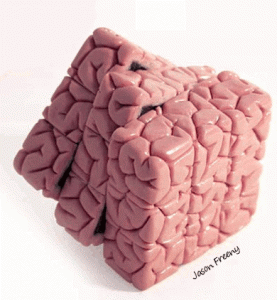
A brain cube!
A brain cube!

So, am I a problem to myself, or am I a puzzle?

My intellect insists I’m a puzzle, and the rest of me insists, perhaps stubbornly, the opposite. In other words, my emotions insist I’m a problem (that’s a little Borderline Personality Disorder joke there…). The problem there is that my intellect is dependent upon emotion, instinct, and unconscious processes to exist, and all of those things rely of the intellect to correct them (assuming we value skepticism to any degree, of course).

Now that’s a hall of mirrors.

If I figure it out, I’ll let you all know.

Instability Multiplied


This will be, without a doubt, one of the hardest posts I will ever write.

The reasons for this are complicated, and I will not dwell on those complications.  I will simply say that to write about this puts on full display all of my deepest fears, my largest failures, and my greatest hope for improvement. And while I value intimacy and appreciate human vulnerability, I recognize how hard those things can be to show to the world.  This is me at my most vulnerable.

Why would a person who has a disorder which makes relationships turbulent, often unstable, and who can bounce between fears of intimacy and personal envelopment willingly enter into an arrangement where they will have multiple relationships? If relationships can be so difficult, then why would a borderline be polyamorous?

Why might borderlines become polyamorous?

Well, there are the actual reasons, and there may be a plethora of reasons people might give which would act as criticisms.  I cannot predict what those accusations and guesses might be, but here are a couple which come to mind when I think about this.

Some might postulate that borderlines might be attracted to polyamory because the fear of intimacy would push a person towards a relationship structure where the “true intimacy” of monogamy is absent.  One can achieve validation, from multiple sources, while not being subject to too much intimacy, due to having to divide up your time.

This, of course, implies that true intimacy is not possible within polyamory, or is at least disadvantaged by it by spreading around the intimacy in a way that is detrimental to any specific relationship.  This assumption is unwarranted, and thus the previous argument would be a red herring, if used.  The truth is that in many ways polyamory can be a gateway to increased intimacy, honesty, and vulnerability for partners.

Some might argue that it is because of the impulsiveness of borderlines that polyamory looks inviting.  Since, some may say, we borderlines often yearn for validation, intimacy, and often try to fill in the holes of emptiness with things like drugs, gambling, or promiscuity, polyamory might be seen as a more acceptable alternative to those extremes; as a way of compromising with our impulsiveness and finding a more acceptable outlet for our desire to get our rocks off. I say more acceptable, because to some people, cheating is considered more acceptable than non-monogamy.

And I cannot deny that this might be a factor for some people who are both borderlines and polyamorous.  This is a question I have wrestled with for a long time, and I am confident that my motivations for being polyamorous are (at least mostly) about what makes polyamory great, rather than what makes me impulsive.  But if I said that I never pursued any relationship out of at least some impulsiveness, I’d be lying.


Degrees, intimacy, and timing

barbed-heartPersonality disorders do not merely bring in sets of foreign behaviors which no neuro-typical people could display and which cause havoc on the normal world blind-sided.  Things like feelings of emptiness, fear of abandonment, and complications with intimacy in relationships are fairly common among most people.  What makes someone a borderline, histrionic, narcissistic, or anti-social (staying within the realm of dramatic/emotional personality disorders) is the degree to which normal human behaviors begin to have more influence over someone’s behavior.  It’s about proportions, degrees, and manageability. Many of the struggles I talk about here will sound familiar to most people, although the degree may be different.

Many people have issues with intimacy.  These issues play themselves out as (in some cases) different needs and wants which effect different people in a variety of ways.  For example, a person may need attention while another does not want to give it just now, or at least in that way. This may either cause an argument, cold distance, or a conversation which brings understanding and increased intimacy.

As we navigate the world, we meet people we want differing levels of intimacy from, and sometimes we might meet 2, 3 or more people who fit us in ways which make us want to develop intimacy (of varying kinds) with all of them.  Our cultural expectations (as they are now) generally lean towards choosing one of these people to be our sexual, romantic, and potentially marital partner.  The reasons for this are complicated, and well beyond the scope of this post.

The point is that we all have complicated needs and wants around intimacy, and we all have differing levels of ability to manage those needs.  A borderline has an issue with management of feelings, fears, etc in a way that those who are neuro-typical do not.  But borderlines also can genuinely love, and love many times over! It may mean we have to work harder at communicating our difficulties, we may have more exposed complications with triggers, and we may be more likely to have turbulence within relationships, but the underlying impulses, needs, and potential for multiplied love is the same as anyone else.

From my own experience, I can say that communicating fears, needs, and desires is hard.  I mean hard.  No, I mean really fucking HARD. It’s easier when intimacy has been established, sure, but it feels nearly impossible when any dislike or emotional coldness is present in the person we have needs from.  This inability has landed me in situations where I have seriously fucked up a relationship by getting myself in a situation where I’m so frustrated, so stressed out, and so anxious that nearly anything becomes a trigger and my partner feels the behavioral effects of that stress.  This has happened many times over my life, and while it happens in slightly different ways each time, it’s the same fundamental problem; fear of intimacy and the complications which derive from that fear.

This fear of intimacy can come in all shapes and sizes and is especially rife in a poly context because it’s not always just about my partners where intimacy becomes a problem. That’s because the issues around intimacy are not limited to people we want romantic and/or sexual connections with.

Speaking for myself, I often desire some level of intimacy with all sorts of people, even people I have no sexual or romantic interest in. I want to be considered, loved, and validated by people in my life. Of course, this does not always happen, which is painful for me day-to-day, especially if the person not giving those things is around all the time. How well a person treats me can have a major effect on my mood, feelings of self-worth, and potential for sustained happiness.

Often, it’s an issue with a metamour (partner of a partner) or close friend of a partner.  I’ve had wonderful metamours who I felt distant from despite their awesomeness, often because my issues arose at bad times and in bad ways which created embarrassment, distance, etc. I’ve had terrible metamours who I’ve been OK with, because our interactions happened when I was managing well.  I’ve had what could have been good metamours who ended up as bad metamours because of terrible communication and incompatible issues.  I’ve seen all sorts of complications with partners of partners, and how we relate is a mixture of how well we are both managing our respective issues.

And, of course, sometimes the issue is with the partner themselves. I’ve had partners who were no good for me, but I didn’t see it because the blinders were on (whether because the sex was amazing, issues hadn’t been exposed, etc).  I’ve had wonderful partners who were good for me, but it didn’t work out simply because I simply fucked up.  I’ve had partners who could have been great only if we had both been at better places, including mental health wise, when we were together.  Ginny and I were talking about how badly matched we would have been if we had met a few years earlier.

How silly it is that this fact is true. If only I had met some partners later (or earlier, depending), perhaps things could have worked out. Timing can be crucial, in such cases. A few years, a few months, etc might make all the difference between a relationship that works or becomes nothing.


So, then why?

Polyamory-picSo, why would a borderline want to be polyamorous? I cannot speak for anyone else who deals with symptoms of BPD, and I would actually want to hear from people in a similar boat as me.  The symptoms can vary in proportion and play out in very different ways, so there may be many reasons for and against being polyamorous if one struggles with such symptoms.  Therefore, I can only talk about why I am, and want to remain polyamorous. For the philosophical reasons (which may, in the end, be rationalizations) you can check out the pages about polyamory and skepticism, properly applied. And while I still agree with those essays and find them valuable as resources for understanding intellectual motivations for being polyamorous, they are only part of the story.

Because intimacy is difficult for me, when I meet a person who I am able to be close with I want to allow myself to be unrestrained in how I can relate to them. I already have enough internal fears to maintain distance from people as it is, so I don’t like living in a world where external restrictions add anxiety and unnecessary rules to this set of issues. Our standard social expectations about relationships can be a little confining, promote jealousy (emotional affairs, for example), and cause any potential intimacy to become surreptitious.

Living in a such a way where I don’t need to be anxious about whether I’m crossing some invisible intimacy line with another person with whom I can talk, share physical contact, etc according to what we want to do (because, of course, consent matters) is hugely freeing and comfortable. Worrying about whether sharing emotional vulnerability with another person might be cheating is not comfortable.

And polyamory gives me the freedom to have relationships of all kinds with any number of people.  Of course, I rarely meet someone who I am really interested in getting to know deeply, right? I rarely like people, or something. I could be described as a misanthrope, perhaps. Except none of that is true. Well, maybe the last one, sometimes.  The truth is that I often want to get to know people. I often like people.

But I’m also often terrified of being rejected, dismissed, or attacked. I often run into people who are struggling with their own mental health issues which cause a conflict in behaviors and treatment (usually on both our parts) which cause tension and anxiety (at least for me).  In some cases, my shyness and fear look like disinterest, when inside I desire emotional contact with people.

But when I meet someone with whom I click and share common desires and interests, it feels amazing. It is so hard to get past those fears of intimacy and open up, that when it does happen it’s really rewarding. When I do so, I’m able to pour them into me, and to give all the vulnerability, consideration, and care that I have into them. I’m so happy that I’m able to open up, let them see who I really am, and hope that they like who they see.

Which is all great, until the other side of that coin gets exposed, in time. And that’s where this gets really hard for me.

*deep breath*

Here it goes…


Sometimes Dr. Jekyll, this Mister Hydes.

breakupIn an ideal world, reaching a place of trusting someone, loving them, and sharing all of your deepest fears and hopes would create a stable, loving, healthy relationship. And even among neuro-typical people, problems emerge. But there is something that happens inside this borderline’s head which goes beyond normal relationship problems.  Sometimes I feel and act crazy.  The result, with some people, is a loss of trust in me, them being hurt by me, and my feeling powerless against my own fear, loss of self-worth, and desperate levels of guilt and shame.

Which, of course, can lead to the other symptoms of BPD being significantly increased.  My impulsiveness spikes (leading to poor decisions about communication).  My radical mood swings (an issue we’ll get to in a later post) will become unstable and unpredictable, leading to long bouts of severe depression, self-harm, and to acute splitting (of a partner, a metamour, and of myself). My anger may spike and I may throw things, yell, and generally scream (metaphorically) for validation and affection (pretty much any time I lose it, that’s what I’m craving and needing).

It is at these moments where the fear of abandonment, the emptiness, and the desire for intimacy turn into a storm of terrifying rage, sadness, and paralyzing fear. And it is these moments which end relationships. It is these moments when I hurt the people I love, which are memories which will keep me awake at night long after the relationship is gone.  It leads to self-hatred, lack of any self-worth, and to thoughts of (and sometimes actual) self harm.

When I feel the most depressed, I start to internalize many horrible things about myself which are not necessarily  true. When i start to believe these things, I know I’m at my lowest.

How does this happen? How does the person who I want to be–the trusting, caring, gentle man who wants nothing more than to love and be loved–become this raging source of hurt, distrust, and distance? It’s because I hide.

It’s very difficult to communicate my needs, especially when they are emotional in nature and especially from people who respond badly to emotional vulnerability.  And so I hide my vulnerability most of the time.  I appear calm, quiet, and normal rather than the intensely emotional and vulnerable person I feel like inside.  I cannot be the gentle, trusting, and caring person I want to be because I’m afraid. And because I’m afraid, I create distance.  And because I create distance I feel unloved.  And because I feel unloved the stress and anxiety lead to my inability to manage every-day emotions, needs, and wants.  And because of that, I make poor, impulsive, decisions.  I hurt people, lose the trust I wanted to earn, and relationships end.

And where I wanted friends, partners, and family, I create enemies. People I wanted to love then hate me, and this hatred reminds me of all the things I’m afraid of and I carry more and more pain to be vulnerable about with people in the future. It’s a kind of vicious cycle which I’m always aware of. And I don’t want any of it.


I can do better, but I need help along the way

optimismAs a person struggling with symptoms consistent with BPD, I need an emotionally open environment which allows for honesty, vulnerability, and support.  Polyamory provides an ideal environment to achieve all of these things because it allows me to develop intimacy with many people.  From a variety of loving partners, metamours, friends, and an extended network of people who are more likely to be emotionally open, I have the ability to choose my family or tribe in a way that will be healthy to me which the monogamous world does not as readily supply.

I love all of my partners (three, currently), and they all offer me different, wonderful, beautiful things.  Also, my partners have great partners of their own, which adds to my environment in different ways.  So long as I keep challenging myself to get better through reading, talking, and other therapies then the person I want to be will dominate among these people around me.  And no matter what the depressed, self-hating, and terrified person I can be from time to time might believe, that part of me will not win.

So, back to the initial question: Why would I want to be polyamorous? Simple; I want to love and be loved, without deference to social expectations and norms.  I am not defined by being a borderline. It is a diagnosis of current struggles which I will get past, and all of the voices of demonization about who I am. whether internal or external, will either have to remain silent or look foolish in time, because I have the capability to maintain healthy relationships with people I love.

My mistakes are lessons, and not definitions.

Just like everyone else

When the abyss looks back: Polyamory and emptiness


Sartre_Nausea_1964I first read Jean-Paul Sartre when I was about 15 or 16.  And, being an angst-ridden teenager, much of his writing resonated with me.  For many years after first reading it, Nausea was a specific novel which stuck with me.  Here, for example, is a scene about half way through the book.  Here, the narrator (it takes the form of a diary) is recording his thoughts about writing a biography of a deceased “M. de Rollebon.”

M. de Rollebon was my partner; he needed me in order to exist and I needed him so as not to feel my existence.  I furnished the raw material, the material I had to re-sell, which I didn’t know what to do with: existence, my existence. His part was to have an imposing appearance. He stood in front of me, took up my life to lay bare his own to me. I did not notice that I existed any more, I no longer existed in myself, but in him. I ate for him, breathed for him, each of my movements had its sense outside, there, just in front of me, in him….

From here, our narrator moves on to realize that he exists.  Profound, I know. Through the rest of the novel, this existence presents itself as a sort-of ubiquitous, nauseating, inescapable heaviness of things.  Much later, in the climax of his “nausea,” our narrator sits in a park where he looks at the root of a tree beneath where he sits. The tree, and its existence, becomes a metaphor for all of existence, and therefore also for ourselves.

…I was floating. I was not surprised, I knew it was the World, the naked World suddenly revealing itself, and I choked with rage at this gross, absurd being. You couldn’t even wonder where all that sprang from, or how it was that a world came into existence, rather than nothingness.  It didn’t make sense, the World was everywhere, in front, behind.

It was unthinkable: to imagine nothingness you had to be there already, in the midst of the World, eyes wide open and alive; nothingness was only an idea in my head, and existing idea floating in this immensity.  This nothingness had not come before existence, it was an existence.

This tension between feelings of nothingness and the ubiquity of existence has always resonated with me.  The feeling of emptiness, of meaninglessness, and of nothing has an inescapable insistence about it.  I exist, certainly, but this existence often carries with is a heavy, unyielding, absurd sense of emptiness.

In other words, I was a fun teenager to hang out with at parties.


Lack of identity

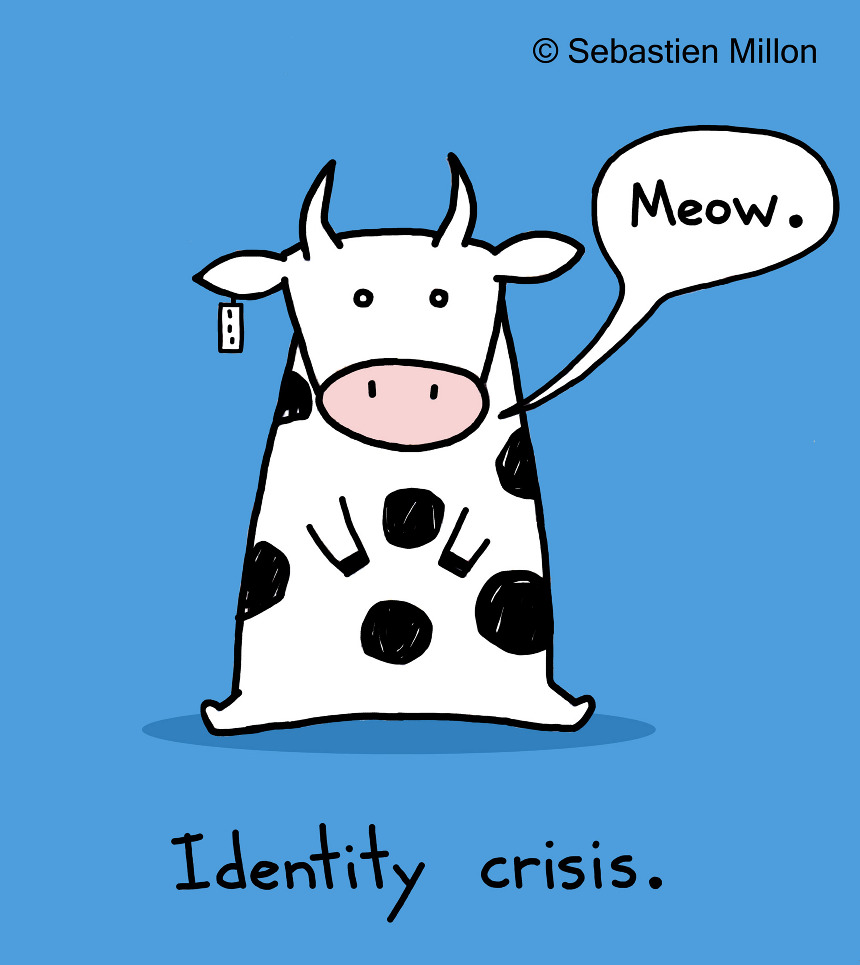
identitycrisis copy_860One of the aspects of a diagnosis of Borderline Personality Disorder is the lack of clear identity.Without a clear sense of self, one can easily define themselves via their relationships, and hold onto that relationship as a defining part of themselves long after the relationship is healthy. This makes letting go of a relationship difficult, because a sense of self, of identity, is still wrapped up in another person either gone or going.

We can dress our inescapable existence, our identity, in any way we like.  We can take on the persona of M. de Rollebon.  We can feel the absurdity of ceaseless existence in the dark bark of a tree in a park.  We can peel away at the layers of ourselves to realize that there is no sense of self which is not constructed and narrated.  For me, the sense of self is largely an illusion, if not an out-right delusion.

We are stories that we tell ourselves.  And sometimes, when we really like a certain kind of story, we insist upon it at the sake of the truth.  The truth is that we are often contradictory, inconsistent, and variable.  We are a legion of selves, many parts of the brain processing many things which (in a metaphorical sense) fight to achieve consciousness and control.  I believe that those people who maintain a static sense of self are just much better at weaving one narrative than I am, but ultimately that narrative is still woven and illusory.*

If we were to take a person with a strong sense of self, and take away the things that they define ourselves by–whether it be a place, a group of people, or an activity–such a person might be left with a kind of boredom and restlessness.  In order to relieve that boredom, a person might yearn for meaning, fulfillment of empty desires, and other people.  In some cases, thoughts about suicide, impulsive (often destructive) behavior, and ultimately the fear of abandonment (or pain from having been abandoned) might feed depression and loneliness.

Being a borderline is like having the definition of who we are never quite forming in the first place. This lack of identity, at least in my case, is generally not felt as a lack at all.  A borderline (in many cases)  never had their identity taken away, they never  had a solid sense of self to begin with, or at least had one grown weakly or stunted. And so long as we aren’t borrowing our identity from other people, leading to a dependent relationship, we might occasionally become aware of this emptiness.

And, what’s worse is that this feeling of emptiness can exist even while surrounded by people.  It is a perception of emptiness, not an actually being alone and without loved ones, necessarily.  It is a feeling that can happen while at a party, at home with people who love you, or even if you have a wife and two girlfriends.  It is a sort of delusion which insists itself upon you, and colors everything you feel, think, or are surrounded by.  For me, this emptiness is a depression and it feeds off of fear (of abandonment, for example) and does not believe that people can actually love you.


Filling the void with others.  Lots and lots of others.

There are good reasons to seek companionship, and there are less good reasons to do so.  There are also ways to evaluate the means by which we do so. Many borderlines will seek out solutions of this boredom and emptiness through destructive behavior, including seeking out sex and relationships merely in order to distract themselves from the loneliness within them.  The tension of the desire for intimacy and the fear of being engulfed leads to them sometimes seek out temporary solutions.

This has not been a major factor in my own life, but I have sometimes felt the pull of this emptiness pushing me in that direction.  That is, even if I had not often sought companionship in this way,  I am familiar with the impulse.  If I’m feeling lonely, I do sometimes feel the impulse to go out to a bar, hoping to meet someone.  Many years ago, when I would occasionally do this, I realized that not only do I not meet people this way (at least, not often), but that even if I did it would not fill the emptiness.

For me, this feeling takes a different path.  Sometimes, the people you love are not there when the feeling of loneliness and emptiness strikes.  I have had moments of severe anxiety and emptiness while (for example) Ginny was on a date that was running much longer than I expected, especially if I receive no communication about it.  While I can be fine alone for much of the time (whether through writing, reading, etc) there comes a time when the feeling of emptiness and loneliness becomes overwhelming, and then each minute of the lack of presence becomes painful.  And this feeling can come on suddenly, without obvious cause, and become quite compelling.

Just because it's bizarre and strange, I include this
Just because it’s bizarre and strange, I include this

In those moments, the desire to seek out more people can arise.  And here is where I think some people might use polyamory (or, in the case of monogamous people, affairs or serial and shallow relationships) as a means to fill in the emptiness, rather than for the sake of pursuing a healthy relationship.  It must happen sometimes to us poly people, us being human and all.  The question is the extent to which this impulse is universal, and thus part of all of our behavior to some extent.

The question is how much of our healthy seeking of others contains some of this emptiness and loneliness at its heart, and whether this heart is always an abyss or whether this perception of darkness and pain are the illusions. I am not sure these questions have good universal answers.

I say this because I am not convinced that any of our motivations are purely good or bad.  I believe that when I feel a genuine desire to be closer to someone, part of this is because they are a person worth being close to but also because there is a need to fill up the emptiness inside of me.  In the end, all there is in this absurd and ultimately meaningless world is each other.  And so to fill up the emptiness with people we love is a wonderful thing, so long as this desire to fill holes in ourselves is more than just a dependency or a temporary fix.

Relationships can be co-dependent, and this is is equally true within polyamory.  The ability, and practice, of loving other people does not prevent co-dependency.  The trick, I believe, is to navigate the waters of filling the emptiness inside us without either creating a narrative of ourselves, others, or the relationship which cannot be shattered or dirtied.  We cannot allow ourselves to create a visage of ourselves, our partners, or our relationships which are not subject to criticism or change.  In creating identities for ourselves, we cannot allow ourselves to create ideals which cannot change, heroes which cannot be questioned, or spaces which cannot be profaned.

We may need identities, but those identities don’t have to be static, idealized, sacred facades.

(see the next post in the series: Instability Multiplied)

_____

*This, by the way, is one of the major differences between Borderline Personality Disorder and Narcissistic Personality disorder; where the narcissist is quite good at creating a narrative sense of self–an identity which cannot be questioned!–a borderline lacks this singular definition of self.

Polyamory and the fear of abandonment


There is an idea which has always simultaneously fascinated and terrified me. It is an idea so simple and powerful, and so obviously true, that calling attention to it, at least for me, feels akin to perpetually indicating the nose on your face.

We are all alone.

David ray Griffin (Thanks, grad school!)

We are “thrown into the world” (as Jean-Paul Sartre put it), alone, terrified, and essentially forced to figure out what the hell is going on.  The beginning of our lives is a sort of slow adjustment to the reality that there is more to the world than us.  We have to learn that the world is not a mere extension of ourselves, and that many of the other things in the world have a similar subjectivity as we do.  We have to discover other people! And, after doing so, while we slowly become individuals with our own identities, preferences, and personalities, we are then capable of having relationships with those other people (as David Ray Griffin put it, other people are indeed objects, just not “mere objects”).

However, sometimes something goes wrong along the way and our sense of self does not develop in the healthiest of ways.  Whether through neglect, abuse, or some type of suffocation, some of us do not create an ideal sense of who we are and thus don’t have the tools to create healthy and proportional relationships with others. One aspect of this, especially for people within some personality disorders, specifically Borderline Personality disorder (in my case), is the fear of being abandoned, rejected, or in general not validated.

Being alone can sometimes feel overwhelmingly lonely and depressing for most of us, but for some this experience takes on another dimension.  As the book I Hate You, Don’t Leave Me put it, borderlines often perceive “temporary aloneness as perpetual isolation.” Thus, many borderlines will flee from being alone, often in dramatic and destructive ways, and often repeatedly.  There is a sense, for many people who suffer from this experience, that we become defined and meaningful through other people rather than through our own actions.

The resulting shifts in mood, potential impulsive (and often destructive) behavior comes from a place of deep insecurity, fear, and lack of clear identity.  These feelings can be transient, chronic, or they can come and go (especially as other diagnoses, such as bipolarity, depression, and anxiety come into play). Whether feelings of emptiness, sadness, or rage emerge, it is clear that there is a significant problem to be addressed here.

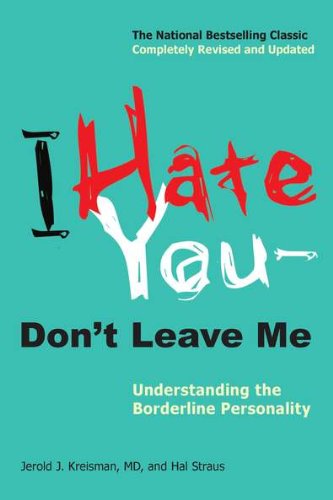
IHYDLMAnd the issue becomes a question concerning to what extent others can help, and in what specific ways they should help.  One potential outcome to these feelings, for many borderlines, is a kind of co-dependence (I Hate You, Don’t Leave Me mentions how narcissists and borderlines can fall into this trap), a relationship of manipulation, or one of out-right abuse.  There are, of course, ways out of these traps.  And navigating these issues becomes an important concern for anybody who has relationships with those who are subject to such fears of abandonment, neglect, etc.

And, naturally, someone who is polyamorous has a related set of concerns, which may differ from the general concerns of people in more traditional and culturally acceptable form of monogamy/monoamory.

So, the obvious questions; is the maintenance of multiple relationships merely an attempt, for a person who might suffer from these symptoms consistent with Borderline Personality disorder, to stave off abandonment, loneliness, etc by hedging their bets? After all, if you have 2 partners, one leaving will not be as bad when you have the other, right? Is polyamory not just another form of the oft-discussed (within borderline literature) issue of transient, unstable, and problematic relationships, where parallel is used in place of serial relationships? Whereas non-poly people might utilize “shingling” (overlapping serial relationships), polyamorous people might do the same thing when they add a new relationship if another is experiencing problems.

I believe that this is at least true for some people, but to what extent this is a motivation for polyamorous people I cannot judge.  It is up to each of us to examine our own motivations, fears, and strengths in order to figure out whether we are doing what we are doing for mostly good or bad reasons.  All of us are capable of selfishness, lack of empathy, as well as loving attention to varying degrees.  If we can figure out where we are not behaving ideally and fix those spots, while simultaneously figure out where we are being good partners and emphasize those traits, I think we will slowly improve as partners as well as individuals.  If we are to improve ourselves, we should do it for others but we should also do it for ourselves.

I could talk all day about how, ideally, we should be free to pursue the people we love in the ways that we love them, without undue deference to social expectations and traditional relationship structures.  If I love 2, 3 or more people, I should be able to honestly, freely, and ethically pursue those relationships.  But there will inevitably be some part of each of us which will self-justify and rationalize a deeper set of feelings and thoughts which derive from a place of fear and need for interpersonal validation.  These feelings are essential factors within all of us, but they have more significance for people with some personality disorders, including BPD.

The lesson is that anyone who has such deep feelings and vulnerabilities should make sure that they are not dominated by them, and to make sure that they try to cultivate the good and minimize the bad.  For people like me, diagnosed with a disorder, this becomes more important.


Polyamory as hedging our bets?

This leaves ammunition for critics to argue that people who are polyamorous are merely seeking validation through multiple relationships, overcompensating for insecurities, or possibly that they are incapable of true (monogamous) intimacy, so they seek multiple shallow intimacies to make up for that inability.  And, I’ll admit, these charges hit me deep inside, in a place where I am not especially comfortable excavating late at night, when sleep will not come.  I admit that this argument has an emotional potency which terrifies me, deep down.  This criticism pokes at the very weakness within me, and so when the idea comes to mind, I feel like recoiling into myself and hiding.

But isn’t that just like a borderline? I, having a skewed sense of identity and self fueled by fear of rejection, abandonment, and even “impostor syndrome.” I have a fear that I might merely be doing all this having of multiple partners, and advocating for it, as a rationalization for being afraid of being alone.  I think, in those moments which torment the soul (metaphorically speaking, of course), that I might just be the kind of person who only is with the people I love because I’m trying to make up for a set of fears, rather than because I genuinely appreciate and care about some people.

"splitting" as a cultural trope.
“splitting” as a cultural trope.

And then, as I allow my mind to calm down and think about this (that is,  allow the fight/flight physiological response to wane), I realize that while these feelings might be potentially problematic in general, they are, at best, merely part of the tapestry which is me.  I am neither the idealized guru of polyamory, contemplating sage-like inspirational maxims about love, living a life of relaxed, reasonable, loving harmony nor am I a manipulative, selfish, and fearful parasite.  This cognitive phenomenon of “splitting“, which is so common for borderlines (as well as other personality disorders), prevents me (often, but not always) from seeing myself and others as nuanced, complicated, and often contradictory people.

It also doesn’t help when people, angry with me, offer me fuel to think of myself as the latter monster.  Having written and said mean, injurious, and abusive things to other people while angry, I understand such outbursts, but they still hurt and get internalized, often.

And whereas the person within the cultural milieu of monogamy might find themselves afraid to leave someone who is not good for them until they have a potential replacement (because the times between relationships is so hard for many people), a polyamorous person still has to deal with loss of a relationship, no matter how many other people they have in their lives.  Losing someone you love, especially if it’s because of the very thing which causes you the anxiety about abandonment, is always hard even if other people love you. Having other partners does not make it much easier to leave or to lose a partner.

Which is not to say it doesn’t help, at least a little, to have loving support around you when things go badly.  Ultimately, however, it is a pain that a person has to handle alone, especially in the middle of the night when we torment and punish ourselves for our mistakes.  But a person who cares and who will listen and give you emotional support does help, even if it doesn’t stick.

Just like in the beginning of life and at the end of life, when we all will face death, the middle is full of moments of being alone.  And while this is a universal human experience, those of us who have a broken sense of self or  experiences with neglect or rejection feel this pain in a different way.  Abandonment will kick us all in the stomach from time to time.  Sometimes it will be our fault, sometimes it will be theirs, but more likely the fault will be distributed around.  And whether we are monogamous (serially or stably) or non-monogamous, that kick hurts.

I am still working out the solution to all this (I may never do so), but for the moment I’m trying to keep in mind that so long as I’m trying to learn from my mistakes, am not allowing my fears to dominate my behaviors, and accepting what is my responsibility, I will be less likely to have my fear of abandonment become a repeated self-fulfilling prophesy.

The tension between my yearning for intimacy, my fear of intimacy, my predilection to hide from the world in solitude, and my fear of that same solitude can only be healed by maintaining healthy, emotionally validating relationships with people who not only treat me well, but who understand that I’m struggling very hard to not push people away or to control, have power over, or to manipulate them.  And while the responsibility for the behavior that does push people away or make people feel manipulated by or abused by me, falls on me alone, it is also true that a healthy cultural and social environment is the responsibility of the individuals which make it up. Everything from micro-aggressions, invalidating communication, to down right lack of consideration and abuse will exacerbate the issues within us all, rather than create a safe and emotionally healthy space.

I will continue to do better on that front, and I will try and seek people who will be trying to do the same, from now on.

Borderline Personality Disorder and Polyamory: An overview


In reading about borderline personality disorder, talking about my symptoms and finding solutions to the problems they cause, and in evaluating the mistakes I have made both recently and in the more distant past in terms of my relationships, I have come to worry about a few things that pertain to being polyamorous.  Over the unpredictable number of coming weeks while I will be writing about this issue, I want to tease apart some complicated, troubling, and ultimately interesting questions (at least to me) about how some personality disorders affect relationships, how relationships can best work for us regardless of such disorders, and what these things can tell us about how we should re-think the expectations of relationships as individuals and as a culture.

I want to deal with these issues in short bursts, rather than one large analysis (you’re welcome, readers).  Today, I want to paint a very tentative overview of the terrain I plan on covering in the next several posts.

There are 9 criteria for diagnosis of Borderline Personality disorder.  While many of them may seem disparate in many ways, they are linked in complicated and often distressing ways, especially in my mind.  There are 5 of these criteria which I believe have immediate effects on relationships whether they are  sexual, romantic, or platonic in nature.  I want to deal with each of these criteria one at a time, but here I just want to summarize them.  I’ll qualify that not all of these criteria are especially strong or problematic for me personally, even if they have some relevance for me.  I cannot speak for any other people who have symptoms consistent with this diagnosis, so the experiences and opinions of others may differ from mine.

(edit: I will add links to posts as they appear)


Fear of abandonment

For many borderlines, although not so much me (being an introvert), temporarily being alone can be perceived as part of a perpetual isolation.  The feelings which arise at times like this can include depression, but also rage at the world in general (depending on the specifics)  There are times, whether late at night, at a party with people who are not trusted or close, or merely between social visits where the feeling of being alone feels heavy and infinite.

I yearn for intimacy, companionship, and love.  When alone, I often feel empty (we’ll get to that next).  I want someone to help make that loneliness go away.  But I’m also too afraid, much of the time, to break the silence by actually reaching out, because deep down I’m afraid that they are over there because they don’t want to be around me.

Chronic emptiness

This is related, closely, with the above fear of abandonment. The overwhelming sense of being alone, rather than being able to simply enjoy the relaxing and uninterrupted freedom of that time, is sometimes potent.

Personally, I am able to enjoy some time alone, but sometimes I cannot do so happily.  Sometimes I can enjoy the time alone until expect someone to be with me.  Waiting for a date, a friend, or just Ginny to come home after I expected them home is among the hardest things I ever deal with day-to-day.  If I expect to be alone the next 4 hours, but then am alone for 6, the last 2 hours are often excruciating. If I have a date at 6, but they show up (especially without letting me know they’re running late) at 7, that last hour is often filled with anxiety, sadness, and feelings of lack of validation. What is usually a case of unforeseen delays or merely differing values of timeliness feel like lack of consideration and lack of care, which are huge triggers for me.

When someone is late in seeing me, the feeling I have is that they don’t care enough about me to be on time.  This, of course, is a perception, and not reality (most of the time).  It is a constant struggle for me, and I try to maintain perspective that someone being a little late is not really a big deal.

Unstable relationships

This, for obvious reasons, will be the most pregnant of issues in relation to polyamory, but because I want to keep this post short I will gloss over much of it today.

Essentially, there is a tension between the desire for intimacy and the fear of engulfment.  There is a dynamic of alternating between being clingy (or merely intimate) and avoidance (or merely distant).  One day I may be wanting all your time, thoughts, and affection, and the next I may be absorbed in a game, book, or other project and barely speak to you.  This is often hard for partners to understand, and has been a source of conflict and hurt feelings for people I care about.

Also here is behavior within relationships which looks manipulative (and sometimes is, but not always).  There is a kind of emotional amnesia that happens within the scope of BPD, related to a lack of object permanence (this may be a result of a problem with the separation-individuation stage of development), which makes borderlines behave in a somewhat self-absorbed and not-completely-empathetic way (I am certainly guilty of this, at my worst) which comes across as manipulative (for me, this is never intentional, although I can recognize it after the fact).

This criteria is where Borderline Personality Disorder is close to Narcissistic Personality Disorder, which is a related disorder, in many ways.  One of the major differences is that with BPD, the subject is more likely to accept fault and responsibility, whereas the narcissist often shrugs off, rationalizes, or completely deny said responsibility or fault.

The result, with both disorders is often repeated mistakes, which for me is among the more frustrating parts of myself which I want to change. I very much want all of my relationships to be healthy, and sometimes I need more than I can give back.  As I progress towards potential remission of these symptoms, I hope to achieve this more than anything else.

Impulsiveness

This criterion, of the 9, is one which is less powerful for myself personally.  For many borderlines, this takes the form of addiction, including extreme sexual promiscuity (which is why I’m including it in a discussion of polyamory, because some people’s eyebrows will raise at the seemingly obvious relationship there), and other behaviors which ultimately seek to overcome the emptiness and lack of strong identity within the borderline.

Seeking that moment of excitement (NRE-junkies, anyone?) to break up the monogamy…I mean monotony…of life is a means to distract ourselves rather than solve a problem (assuming there is a solution).

Radical mood shifts

Anyone who knows me well knows I have struggled with this all of my life. One moment, I can be happy, fulfilled, and contentedly working on whatever I’m doing.  A trigger can change that quite suddenly, and the shift is almost unbelievable in quickness and scope, although this severity has softened very much since I was diagnosed.  What those triggers are, how they relate to being polyamorous, and how to deal with them are issues I have been struggling with very strongly over the last few years.

If you were to go back and chart many of the posts I have written about problems, conflicts, and fears of mine, many of them would be rooted in this arena of mood instability.  But the question I will want to tackle, when I get there eventually, will have more to do with how we might be better off shifting our expectations, defaults, and ideals about how different people can fill roles for us in our life.

If I have learned anything in the last couple of years, it is that no matter how much you love someone, no matter how much you want to be with them, some people are just not any good at certain roles in your life, and so you need to nourish your relationship with them in ways that are mutually beneficial for both of you, if that’s possible, rather than try to have all of your partners be everything to you. Intimacy does not have to cross all thresholds for all relationships. Each relationship needs its own type of intimacy.

Unlike monogamy, polyamory does not create a pressure for your partner to be helpful or great at everything you need.  Some people (for example) can handle wild mood swings, and others cannot.  And while the ultimate goal, for me, is to find ways to minimize those swings, the people who can help me get there will have to do so within their strengths, which may mean that some of the people in my life may not be able to help with all of that struggle, even if I very much would like them to.  Some people can’t be there for some of what I’m struggling with, that has to be OK.

So, that’s the road map.  This is barely a sketch, and I’m sure that I am missing many parts still and more of it will be filled in as I think more about these issues.  For now, I need to get over this insomnia (a result of feeling empty, anxious, and isolated as everyone around me sleeps) and try to get some sleep.

[I’ll be scheduling this post to go live for the morning, but as I finish this, it’s about 4:30 AM]

Thoughts from the Borderline: social fragmentation


In reading about Borderline Personality Disorder recently, I’m noticing a fair amount of conversation about a sort of lament for the loss of aspects of culture which have never really meant anything to me, personally.  The shifts in social structure, changes in the definitions and practices of family, and the contradictions of life, some apparently think, are contributing to behaviors consistent with Borderline Personality Disorder. I hesitate to label it as conservative, but it’s certainly more traditional than I like.

Take the following as an example:

For many, American culture has lost contact with the past and remains unconnected to the future.

…texting, blogging, posting, and tweeting all avoid eye contact.  Increasing divorce rates, expanding use of day care, and greater geographical mobility have all contributed to a society that lacks consistency and reliability. Personal, intimate, lasting relationships become difficult or even impossible to achieve, and deep-seated loneliness, self-absorption, emptiness, anxiety, depression, and loss of self-esteem ensue.

(I Hate You, Don’t Leave Me, page 79)

The overwhelming experience, for me, in reading about BPD is one of a nodding recognition.  Out of the 9 criteria for diagnosis, 7 are strongly consistent with my experience.  But when I read this, I’m left shaking my head and confused.  Is this a generational interpretation? I don’t know, but this does not resonate with me at all.  I will leave any conclusion about how I think about this view until I have read the rest of the book, but right now I’m feeling skeptical about this aspect of the analysis.

The sense of anxiety, loneliness, etc are things I feel but I don’t think the modern digital age, with technology creating some barrier to intimacy, is the cause.  I think I would feel the same way even with eye-contact.  You know why I think that? Because I do, in fact, feel that way when I have eye contact with people.  Being at a party with people I don’t know well is often cause for similar feelings.  An unhealthy environment with people unable or unwilling to understand or consider the complicated emotional landscape within me is as alienating as anything else could be. A person who demonstrates indifference, aggression, and lack of consideration is always worse than mere lack of direct eye contact.

Physical closeness is not the solution, because the problem is one of perceived emotional distance.  I can feel emotionally close to someone through texting, blogging, etc, but there are some times when i cannot feel close to someone when they are holding me, trying to comfort me.  The issue is not physical distance, the problem is that I don’t, often, believe, that anyone could possibly love me, or that I deserve it if they claim to.

The world can often be invalidating and cold, whether through a screen or in the face of human fears played out in little private rooms and public spaces everywhere.  I’m not yet convinced that modernity is exacerbating the problem.

Then there’s this.

Like the world of the borderline, ours in many ways is a world of massive contradictions.  We presume to believe in peace, yet our streets, movies, television, and sports are filled with aggression and violence.  We are a nation virtually founded on the principle of “help thy neighbor,” yet we have become one of the most politically conservative, self-absorbed, and materialistic societies in the history of humankind.  Assertiveness and action are encouraged; reflection and introspection are equated with weakness and incompetency.

(page 82)

This is more like how I feel; like a ball of contradiction.  I yearn for intimacy, but appear cold and indifferent to people who don’t know me well.  I don’t want to hurt the people that I love, but there are obvious examples of where I have.  I’m intelligent, educated, and often feel I can do anything I put my mind to, and yet quite often I find myself in a funk of inaction, depression, and I feel inadequate (yesterday was one of those days).

One of the most resonant aspects of this disorder is what is called “splitting.”  Essentially, it’s the kind of black and white thinking which occurs, especially during periods of intense anxiety (part of the physiology of BPD seems to be a hair-trigger for the fight/flight response, leading to times of sudden extreme anxiety and decreased activity in the Pre-frontal cortex, leading to less ability for nuanced thinking).

Splitting, for me, takes the form of seeing myself, others, or the whole world as either wonderful or fundamentally broken.  The name of the book I’m reading, I Hate You, Don’t leave Me, encapsulates this nicely.  Sometimes I hate myself and think myself worthless (which is not helped when I receive abuse, dismissal, or rejection from people I was or want to be close to).  Sometimes I demonize another person who has hurt me, and sometimes I try very hard to empathize and understand why they did so in an attempt to give the very consideration and empathy I did not receive from them. Sometimes I think the world is ugly and not worth fighting for, and sometimes I want to see it all, warts and all.

Because even the imperfections can be beautiful.

I much prefer when I can see myself, and others, that way.

But I’m not quite ready to throw modern culture, technology, and the shifts in our social structures away.  The lack of consistent identity within myself, as well as the shifting identities of our culture, are (perhaps) not necessarily bad.  Perhaps the solution, for myself and for us all, is not to seek an identity, but to recognize and accept the flux of the many parts of ourselves, good, bad, and nuanced.

Sure, structure is helpful and (at least for me) comfortable.  But perhaps one of the problems with traditional American culture, as well as who we are as people, is the reliance of singular identity, tradition, and consistency.  We all need a revolution now and then, after all.


Intersectionality: Polyamory and Borderline Personality Disorder


This is not a real post. This is more of an overture to future posts about the intersection of being polyamorous and having Borderline Personality Disorder.

Ginny pointed out to me today that I have a fair amount of experience being polyamorous, and while I was diagnosed about 4 years ago, all of my adult relationships have existed within the milieu of having the symptoms consistent with BPD.  I have had relationships of varying degrees of intimacy, seriousness, and spans of time.  I can say that I’ve honestly failed as a partner, been failed as a partner, been very good to partners, and had partners be very good to me.

The more I read and think about my disorder, the more I think about how the factors which play into making relationships more difficult for me are actually quite central to a borderline diagnosis.  And this makes me want to delve into, chart, and analyze these waters where polyamory and BPD meet, not only for my own sake (of understanding myself better), but to possibly make some observations about the relationship between intimacy, fear, communication, and the nature of relationships in our culture.

I have already said much about how our culture views relationships in general, commenting on the expectations of monogamy and the perceived “perversion” of sex-positivity and non-monogamy.  And while I agree with much of that cultural criticism still (I’m sure I could find many of my previous  posts which I would disagree with now), I think there is more to be said about those issues.

I think the direction for me to go, in the future, is to take a closer look at the “emotional” and “dramatic” personality disorders, specifically Borderline but also Narcissistic, Antisocial, and Histrionic as well (which all have similarities), and take a look at how the symptoms which affect relationships might tell us more about mental health, social expectations, and relationship structures.

For now, I don’t want to say too much more.  Instead, I might want to go back and take some notes about how the literature documents how BPD (and the others, perhaps) affects relationship health, and take a look at some of the things that polyamory might have to help, hinder, or perhaps be neutral concerning those struggles.  I have certainly been able to understand (usually after the fact, unfortunately) how the symptoms of BPD were triggered, not communicated well enough, and were significant causes of the problems in a number of relationships (even the ones that didn’t end badly).  I have a feeling that charting such things might tease out some patterns, and I might be able to tentatively conclude some philosophical and social implications of non-monogamy on some of the personality disorders as well as vice-versa.

I’ll admit that this is a challenging and terrifying project, and I hope not to get blown away by the potential scope of it.  I know that each day I don’t succeed in brilliantly mapping out and explaining everything, perfectly, deep inside I will try to punish myself for this failure.

Because that’s part of being a borderline.

But I hope that I am able to work through those feelings and help myself (and hopefully some of you) understand a little more about the world.  I’ll try and remain optimistic.

The Virtue of Selfishness, Chapter 7: Doesn’t Life Require Compromise?


Welcome back to explaining basic ethical thinking to sociopaths.  OK, that’s not fair.  Not all Objectivists are sociopaths.

Today’s chapter is a short one, but one that seems to follow along nicely from where we left off before, with Chapter 4: The Conflicts of Men’s interests. Those of you who are familiar with how numbers work will have noticed that I have skipped from chapter 4 to chapter 7, missing two chapters.  I’m doing this for the same reason as I skipped chapter 2, which was because some of the chapters were not written by Ayn rand, and Rand later disassociated herself from the author of those other chapters.

Also, reading this stuff is frustrating, and I’m trying to minimize the pain.  I know, I know…I’m a selfish bastard.

In any case, on with it!

What is compromise?

A compromise is an adjustment of conflicting claims by mutual concessions. This means that both parties to a compromise have some valid claim and some value to offer each other. And this means that both parties agree upon some fundamental principle which serves as a base for their deal.

This is not an Ayn Rand quote. No, really!

It is the nature of agreement in a trade-relationship.  The nature of compromise is to make sure that each side agrees to what is being traded. A compromise is not a sacrifice:

But if one wanted to be paid and the alleged buyer wanted to obtain one’s product for nothing, no compromise, agreement or discussion would be possible, only the total surrender of one or the other.

Rand likens this to burglary; there is no compromise between a robber and the robbed, and if one asks another to give up something, then this is not compromise.

What value or concession did the burglar offer in return? And once the principle of unilateral concessions is accepted as the base of a relationship by both parties, it is only a matter of time before the burglar would seize the rest.

Don’t give an inch, because if you do you may end up with nothing.  Robbed blind.

Hey! stop compromising my TV!

And this is true! Don’t give the person who breaks into your house anything if you don’t want to.  They genuinely have not earned it, and you don’t have to give it.  And if you do, perhaps the robber will come back for more.  The problem here is the extent of the robber metaphor, because Rand is not merely talking about literal burglars. Rand means much more than that.

There can be no compromise between freedom and government controls; to accept “just a few controls” is to surrender the principle of inalienable individual rights and to substitute for it the principle of the government’s unlimited, arbitrary power, thus delivering oneself into gradual enslavement. As an example of this process, observe the present domestic policy of the United States.

Whoa! Where did that come from? We were just talking about compromise as a tool for fair and equal trade rights, or something to that effect, right? Then we were talking about how that relationship is not like being burgled.  Which was all a fair point to make, and I agree with the idea that being burgled is not like a fair trade.  But where did government control come into this?

This is one of the major plot points for the rest of the book.  We’ve dealt with individual ethics already, and now we will start talking about the relationship between freedom and government control, whether in the form of taxes, trade law, etc. In later chapters, Rand will expound on the issue in more detail.

I’m not an expert of law orthe relationship between individual freedoms, the social contract, or governmental power.  I cannot speak with any authority about the relationship between freedom and government power in specific details concerning the United States’ Constitution or “domestic policy.”  What I can do, however, is spot a false dichotomy.

Once again, Rand has set up up with a situation where there is the reasonable side of freedom of the individual set up against an oppressive and “arbitrary” power which seeks to force us to sacrifice against our will.  We are the reasonable individual who finds a burglar in our house (the government), and we should not have to sacrifice to their demands.  The relationship, Rand seems to be saying, between the people and the government is not a compromise because one side (the individual) does not have the ability to haggle for a better trade or to opt out.

And I have some sympathy for that feeling.  I used to argue that we should have an opt-in tax system.  You choose what you pay for. Don’t care about roads? Don’t pay those taxes (but then should you be permitted to use them?). Don’t care about education? Then don’t pay local school taxes (then should your children be able to use them?). Don’t agree with the war in [insert country here]? Then don’t pay those taxes (but don’t complain when we are attacked). Etcetera.

YouDidntThe problem here (and I want to gloss over the many intricacies of this issue, because I am not that interested in getting sucked into this maelstrom of a topic) is that there are certain roles of government which are inherently shared responsibilities.  We need roads, schools, and defense (to varying degrees, which is the part where it gets complex).  There are certain things which we benefit from paying for, collectively, which if people saw as theft (and some do *cough* tea party *cough*) they might not want to pay for.  But all to often people are blind to the advantages of giving of ourselves for the greater good, in the long run, which that selfish impulse to frame that relationship as theft overlooks.

With government, we all benefit from some level of tax-based collective effort. With interpersonal questions, we all benefit from some level of self-sacrifice, empathy, and effort which does not immediately benefit us.  The question, with each, is how much to give up, to whom, etc.  This false dichotomy between pure freedom and government (or ethical) theft is laughably simplistic and absurd.

But Rand sees this as a dichotomy, much in the same way as life and death (rather than degrees of health, well being, etc).

There can be no compromise on basic principles or on fundamental issues. What would you regard as a “compromise” between life and death? Or between truth and falsehood? Or between reason and irrationality?

Well, I would consider the choices we make and how they affect the likelihood of healthy living in general, how likely those choices were to actually reach truth or merely  rationalized subjective opinions, and how they are to promote actual reason, and not subjective irrationality labeled as objectively true values.

But, then again, I’m not Ayn Rand.

The question “Doesn’t life require compromise?” is usually asked by those who fail to differentiate between a basic principle and some concrete, specific wish.

What, you could ask, could that mean? She continues.

Accepting a lesser job than one had wanted is not a “compromise.” Taking orders from one’s employer on how to do the work for which one is hired, is not a “compromise.” Failing to have a cake after one has eaten it, is not a “compromise.”

Yeah, take that lazy moochers! You can’t get whatever you want! Only Objectivists get that!

The idea here becomes more clear when we read on.  But before we do, I just have to quote this, because every time I read sentences like this in Ayn Rand my head thumps on the desk.

Integrity does not consist of loyalty to one’s subjective whims, but of loyalty to rational principles.

Keep telling yourself that. I’m not going to keep stomping on the error of mixing up what one decrees to be rational, subjectively, and what is actually rational.  Because seriously, that shit is getting old.  But back to the point about differentiating between a basic principle and concrete, specific wishes:

A “compromise” (in the unprincipled sense of that word) is not a breach of one’s comfort, but a breach of one’s convictions. A “compromise” does not consist of doing something one dislikes, but of doing something one knows to be evil.

Like, what?

Accompanying one’s husband or wife to a concert, when one does not care for music, is not a “compromise”; surrendering to his or her irrational demands for social conformity, for pretended religious observance or for generosity toward boorish in-laws, is.

So, being nice and going to that movie or concert that your sweetie-pie wants to see is fine, but any other kind of demand for social conformity, especially if it involved their parents or religion, is not fine.  Now, I might agree with this distinction, but this does strike me as at least somewhat arbitrary.  Perhaps another example will clarify the core issue here.

Working for an employer who does not share one’s ideas, is not a “compromise”; pretending to share his ideas, is.

OK, better.  You don’t have to like your boss, but you shouldn’t pretend to if you don’t.  Got it.  I thought we were talking about freedom and oppression here? I suppose we aren’t going to address that any more, then.  Now, it seems, we’re talking about personal compromises and agreements again.  This is an issue which is very relevant when it comes to polyamory, and relationships in general, especially when we are talking about boundaries and relationships rules.

The idea seems to be that we should be able to come to an agreement with people, but we should not give up our integrity or “compromise” our values in doing so.  If we were to, we would be acting unethically.

The excuse, given in all such cases, is that the “compromise” is only temporary and that one will reclaim one’s integrity at some indeterminate future date. But one cannot correct a husband’s or wife’s irrationality by giving in to it and encouraging it to grow. One cannot achieve the victory of one’s ideas by helping to propagate their opposite.

I want to tease out a distinction here.  The first sentence above seems to be addressing the idea that by giving up, by sacrificing, now I will get something back in the long run.  Rand is reacting to an idea, one which I think is true, that we should be willing to give up something of ourselves for the sake of long-term benefit, not only to oneself, but to other people as well.

But rather than address it in these terms, it becomes about both giving into irrationality (because when someone else’s desires conflict with ours, it’s probably irrationality on their part, amirite?) and achieving victory in the battle for ideas.  Yeah, no narcissism going on there.

Listen, imaginary Objectivist interlocutor in my head, not everything is a competition.  When other people want different things than you, value different things, etc it is not necessarily for irrational reasons.  Your feelings and thoughts about things are not necessarily rational nor are they the only things that can be rational.

Nobody is asking anyone to give up their ideas or values, necessarily (which is to say, sometimes we might be doing so).  What we might be doing is asking you to give up some of your time, mental effort, etc in order to determine what you might be able to learn not only from other people’s ideas but also their values, flaws, strengths, etc.  By viewing this as a competition, you are almost certainly not going to be open to learning anything from people, especially if you disagree.  If a conversation or a relationship is a competition you are trying to win, then you will not be likely to learn much, grow as a person, or to ever understand people who are drastically different than you.

A relationship is not something you win.  A conversation is not something you win.  A debate might be (but even then, not really), but not everything is a debate especially when someone is not trying to debate you.  Your wife or husband is not trying to win a conversation about whether you will come to dinner with your in-laws (and if they are, they are not doing it right).  I am not trying to win by criticizing Ayn Rand’s (or anyone’s) thoughts.  I’m trying to understand.  I do  not seek out ideas in order to either bolster my own ideas or to show why I’m right.  I seek out other ideas in order to test if mine can stand up to scrutiny (ideally, anyway.  I’m human and err, including being occasionally defensive).

Perhaps, you Objectivist interlocutor, you should be more focused on understanding, rather than winning.  And perhaps I, sufferer of a disorder that makes criticism feel painful, should try to remember that as well.  Again, all my criticisms of everything are relevant to me.

If one found it difficult to maintain one’s loyalty to one’s own convictions at the start, a succession of betrayals—which helped to augment the power of the evil one lacked the courage to fight—will not make it easier at a later date, but will make it virtually impossible.

courage_and_conviction
Conviction is more akin to religion than philosophy, Ayn Rand.

Or, perhaps, one should not have more than a minimal amount of loyalty to one’s convictions.  Perhaps opinions and values are things that we should hold tentatively, and not with conviction.  Other opinions and convictions are not the enemy.  They are not the evil at the gates.  Other ideas, opinions, etc are just that; other.  You might learn something from them if you stopped clinging so hard to your own sacred ideas.

Nothing should be sacred.  The ideas in your head, the ideals that you have, nor even the people in your life (in some cases).  Because while trying to maintain a sense of integrity is good, integrity (as I mentioned in a previous post) is not necessarily conviction.  We should not hold so tightly to our values, ideals, and opinions.  We should hold them only insofar as they don’t get blown away by the facts from other sources.

Rand seems to be holding on too tight here, and because so many people value conviction, they see this as a strength of hers  And when you are holding onto something too tight, you won’t notice when the wind of truth wants to carry it away.  We are all too naturally good at self-justification, bias, and error to hold onto such things too tightly.  Because of these biases, we should err on the side of self-correction, rather than trying to win. When you are trying to win, we become jingoistic, nationalistic, and tribal. When the goal of winning is all we see, we cannot notice our own errors.

There can be no compromise on moral principles.

If your moral principle is good, you have no need to defend it.  One should test one’s moral ideals and principles, and insofar as they stay good, we should keep them.  The truth, in the end, points to itself.

The next time you are tempted to ask: “Doesn’t life require compromise?” translate that question into its actual meaning: “Doesn’t life require the surrender of that which is true and good to that which is false and evil?” The answer is that that precisely is what life forbids—if one wishes to achieve anything but a stretch of tortured years spent in progressive self-destruction.

Oh, irony. What if your ideas are not true and good?

Sorry, of course they are; their yours.  And you are an intelligent, good, honest person.  How could a smart, good, and authentic person have ideas which may have flaws? Easily. And the problem is that this selfishness and this conviction to selfish, subjectively derived values, is a harbor for human flaws.  Selfishness as a virtue leads to a mind where one must defend its opinions and ideals because those ideals are the very source of value.  From there, everything looks like a competition.

No, thanks.  I don’t want to play that game.