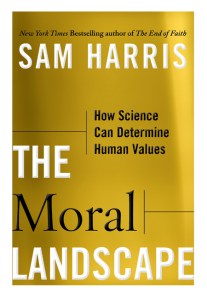
I’m currently (finally) reading Sam Harris’ The Moral Landscape (which I am enjoying so far). I am finding that I agree with Sam Harris much more often than not, and will recommend the book.
Right now, I want to post a few short quotes concern an issue I have been thinking about, as well as arguing about on an email list for atheists.
What are our priorities? How can we make ourselves better people? What is a good person?
Here is a quote from the book which is tangentially related to some recent conversations I have been having via email with some atheists with varying priorities.
I am arguing that everyone also has an intuitive “morality,” but much of our intuititive morality is clearly wrong (with respect to the goal of maximizing personal and collective well-being). And only genuine moral experts would have a deep understanding of the causes and conditions of human and animal well-being.
(page 36)
Inserted at the end of that sentence there is an end note, from which I quote the following:
Many people’s reflexive response to the notion of moral expertise is to say, “I don’t want anyone telling me how to live my life.” To which I can only respond, “If there were a way for you and those you care about to be much happier than you are now, would you want to know about it?”
(page 202)
This is a question that is relevant to religion and faith. I ask, sometimes, a similar question to believers. If there were a worldview out there which could allow you to feel happier, more fulfilled, and could also survive skeptical analysis, would you want to know it? If it were true that religion is indeed a scam, that belief in god(s) is not warranted, and that science truly is the best method we have for attaining knowledge, would you want to know that?
I can only say that I truly would want to know if there were a god. Whether or not I would want a relationship with said being would depend upon the nature of that god. Would theists really want to know if they were wrong? Some would, but perhaps not most.
Harris continues on the next page (in the main text):
Whatever [the Taliban] think they want out of life–like keeping all women and girls subjugated and illiterate–they simply do not understand how much better life would be for them if they had different priorities.
(page 37)
I’m finding that I agree with Harris’ main premise of the book so far. His main idea is that because our behavior, feelings, etc are a result of a physical brain, science is, in principle as well as (possibly) practice, capable of discovering the states of being that would maximize “well-being.” Knowing what ways we might be well is a good start on how we should behave. I will keep reading.
It is not often that I will, within this blog, gives book recommendations. I will even more rarely do so for people you likely have heard of. But I will make an exception right now, because I have just finished a fantastic book by a wonderful writer and thinker named Nicholas Humphrey.
I will not try to summarize or extensively review this wonderful book, for I would not do any justice to Humphrey’s style, intellect, nor his seemingly limitless knowledge of literature, science, and the intersections of both. He talks about religion and faith, but most of the book is dedicated to the question of parapsychology in general, asking questions of soul, Psychokinesis, and ESP. His writing is erudite and his use of language is both playful and profound. His insight into the questions of the soul and its believed (by most people) powers are brilliant, coming at you from an angle I had not seen before reading this book.
The edition I have has a puff on the back by Daniel Dennett, but apparently the newer editions (I found mine at a used book store in East Atlanta–a great little store called Bound to Read Books) has a new forward by Dennett (which I, perhaps obviously, have not read). The fact that Richard Dawkins has done an interview with Nicholas Humphrey does not, in retrospect, surprise me.
In fact, in many ways this book, which was written in the mid 1990’s, is the cultural predecessor to many of the so-called new atheist books that began to be published 10 years later. It is dealing with many of the same issues (the supernatural, the soul, arguments for why belief in such things is not justified) as many more recent books (and some older ones, of course), and it is clear that Humphry has had some influence on at least Dennett and Dawkins, if not other comparable social commentators.
I highly recommend this wonderful book to anyone and everyone, especially if you believe, or think it is good or respectable to believe, in the paranormal. I also look forward to reading more of his work in the future, as he has books on consciousness as well, which is a topic which interests me as well.
I will leave you with this:
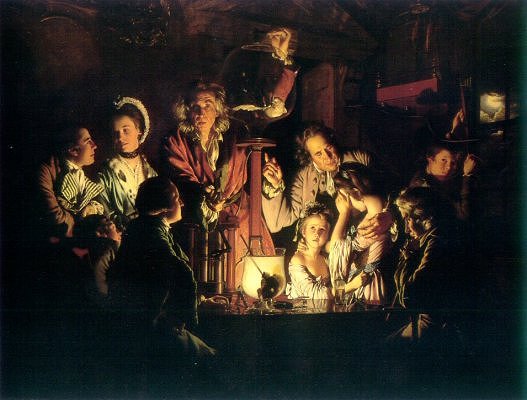
"An Experiment on a Bird in the Air Pump," by Joseph Wright of Derby
The painting is generally regarded as having been intended as a commentary on the scientific Enlightenment. But I suggest we might more pointedly take it to be a picture of the vanity of the paradise promised by religion and the paranormal. For it is they, not science, which if they had their way would pump from the world the elements on which life has taken wing. They, not science, which by blurring the distinction between life and death, destroying the grounding of one mind in one body, confusing issues of personal responsibility, and undermining privacy, would rob the world of the oxygen of individuality on which all things bright and beautiful–natural and cultural–have relied for their creative energy
(From page 224)
For full context of this quote, you will have to read this book.
Today, in a correspondence with some people on an email list about atheist issues, there was some discussion about how, in the past, I had helped with some efforts in Harrisburg, the state capital of Pennsylvania, while living in Philadelphia. I replied thus, also making reference to prior discussions with people on the list about the lively issue, within the atheist and skeptic community, about being offensive or dickish to believers. I thought I would share my response, since I am that kind of guy.
—
Well, me trying to be logical and all, I figured what happened at my state capital might effect me at some point.
I know, silly….
I mean, sometimes I was too busy having interesting conversations with my professors and such, but sometimes one has to actually step up and do something. Beliefs have consequences. And what people in the world believe, as well as the perspective they have on what others believe, effects their decisions and actions. I remember talking with those girls at the Capital building that time we had set up shop. I remember how they, especially the one vocal and pious one, looked at us with “pity” and gave us literature. Yet they refused ours. These girls may not be in control of much directly (they were not representatives), but because they act as intermediaries between those with power and authority, they play a role in the halls of power. Now, maybe our conversation, in which I was polite and respectful to them personally (although I was honest about what I thought about their beliefs) did not have an impact, and maybe over time it did. I just don’t know. But such interactions with people near the levers of power (as well as the more direct approach to the lieutenants and holders of such power) is important in the long struggle we have as citizens and our constitutional rights.
Those who insinuate that any such attempts make other nonbelievers look bad are buying the game they are selling. They are, in fact, ironically being the very dick they tell us not to be.
You here a rumbling in the distance, and from the south approaches a storm. His name is Shaun, and with him rides the gates of Hell for any person who tries to limit freedoms of speech and expression by threats from people too afraid or disinterested (and not in the Platonic sense!) to be themselves to the world, rationalizing it as an attempt to not be a dick. I ride along with people such as Dave Silverman on a wave of honesty, one which hurts the eyes of those who have been stuck the the cave of theistic shadows for too long. “Too bright!” they proclaim, and pretend their injured optical receptors excuse their hurt feelings which are only secondarily related and really are a defense mechanism of fear and insecurity exposed by such light. And besides them, who are curled in a fetal position and lashing out at anything in their temporary overwhelmed state, is your philosophical brethren who (unknown to those blinded and hurt) carries the same light hidden under their heavy coat. Hiding such light, they hold them close, patting their back and whispering to them that they are sorry, that those people don’t represent all of us.
“It’s OK,” they say, “you can believe what you like, I don’t care. Let me be your friend and never be like them.”
While I sit back, amused and frustrated because I am aware that such a person could never really be their friend, because real friendship involves naked and bold honesty. Real intimacy involves the ability to say what one thinks, although perhaps not at the moment of greatest pain, but afterwords when the shock has worn off. I understand what my brethren means when they implore us to not be a dick, but what they don’t realize is that it is not our behavior that seems dickish; it is our perspective that offends, not our presentation of it. And I will not withhold my perspective in fear of it offending, because if the truth offends then should we never speak the truth? To live that way is to acquiesce to the fear and ignorance in which the theistic world lives. It is also to not be honest, which says little for the light they carry, hidden and shameful.
There is room for polite conversations with professors, neighbors, and friends. But there is a time when you realize that in order to talk with some people AT ALL, one must risk offense in order to maintain any level of relationship. With some, you will seem a dick even if you say nothing more than “I don’t believe there is a god.” In such cases, put away the silly desire not to offend, because such people offend themselves without your help. The offense you fear is not from you, but from the world itself that you act as a conduit for. Protect not those that fear the world, because you only protect cowardliness and thus take on its mantle yourselves.
—
What this email also refers to is the fact that I’m moving back to Philadelphia. Exactly when…I’m not sure. Latest April 2011. But soon, nonetheless.
I just realized it’s been a month since I posted anything. Man, life just gets in the way sometimes. In any case, it’s a new year and blogging must go on!
Today, I want to tell you a story. It’s not a true story, but it might be a good story.
It’s about a man who, upon being pestered by his own curiosity, wanted to see what the fuss was all about. He got dressed up, went into town, and arrived outside a place that may or may not have looked anything like this:
The Pearly Gates?
He waits in a longish line for a little while as the door is guarded by a youngish man who is smiling and friendly. People are going in, he can hear music playing, and as the door opens every few seconds or so he can hear the party commencing inside.
Finally, it’s just about his turn to go in. So, as two people enter up the stairway and into a obviously hopping party inside, our protagonist “John” steps up to the bouncer named “Pete”.
Pete: Good evening sir. Name, please?
John: John B. Godless
Pete: Godless, eh? OK, let me check the list.
Pete scans his list, shakes his head and half-smiles to John in a way that displays both disappointment and perhaps some veiled enjoyment.
Pete: Sorry John, you are not on the list.
John: So, that means what? I can’t get into Heaven? I mean, this is the only club in town, right?
Pete: No, there is the downstairs club, Hellfire. Although its sort of a kinky club; lots of being tied up, beaten, and so forth. Not really my sort of thing.
John: Yeah, doesn’t sound like my sort of thing, either. Are you sure there isn’t anything I can do to get into Heaven?
Pete: Look, there are a lot of people trying to get in behind you, and you don’t even know the owner anyway. How do you expect to get in without being his friend.
John: Wait, the owner? Who is the owner, and why does that matter?
Pete: See? You don’t even know Hank. He is the man! I mean, he knows everyone, everything, and runs this town. He is pretty much all-powerful, is what I mean. He’s the nicest guy I have ever known of. He’s pretty much perfect, at least from what I hear….
John: Wait, have you even met him?
Pete: Listen, I just work the door, ok?
John: But you have never met him?
Pete: No. I don’t need to. I have read his book, and it has inspired me to be the person I am today. I could not be here without Hank’s help.
John: OK, whatever. But, didn’t you just say that this guy knows everyone?
Pete: Yes.
John: Great, then he knows me, as well as everyone else in this line, so how about you just prop the door open and come in with me and all these people can just come in. Is the room big enough for everyone?
Pete: Well, yes, it can fit everyone, but that’s not the point. There are rules.
John: Rules, what rules?
Pete: You know, this.
Pete hands John a book entitled “How to be Hank’s Friend.” John looks at it, and recognition dawns on his face.
John: Oh, that! Yes, I have read some of that that. It was not really a very good book, I thought. Archaic, derivative, and sort of cruel, actually. I am really not sure I want to be Hank’s friend, if that is the kind of book he writes.
Pete: Well, why do you want to go to his club then?
John: Well, I’m sort of here already aren’t I? And I have to either go here, to the downstairs club, or just go away right? Given those choices I would prefer this place, I guess. Listen, how about I just head on in, ok?
Pete: sir, that’s not going to happen. You are going to have to go downstairs, sir.
John: Wait, what? Why do I have to go downstairs? I don’t want to go to that club.
Pete: Sorry, those are the rules. Either you get in here or you go downstairs.
John: Nevermind, I’m just going home then.
Two large men step out from behind Pete and surround John
John: Um, what is going on here?
Pete: Don’t resist. You can’t anyway. You are going to the downstairs club.
The two men grab hold of his arms and begin to drag him to a stairway leading downstairs while John struggles to get loose.
John: What the hell is this?
Pete: Sorry, it’s either Heaven or Hellfire. You chose Hellfire
John: What are you talking about? I never chose to go to that club.
Pete signals to the two men to stop for a moment, and they turn John, who has temporarily stopped struggling, back towards Pete.
Pete: It’s in the book written by Hank. His rules, in his town—and it’s all his town, buddy–say that if you don’t become his friend you can’t get into his club and therefore must go to the other, downstairs, club.
John: But it’s just a book! It’s not the rules for the universe or anything, is it? I mean, I read a lot of it, at least what I could get through anyway. I mean, I thought it was a metaphor about how not being his friend was like not being able to go to the cool places in town or something. I didn’t think it was literal, and that people actually believed that silliness. You, or Hank for that matter, can’t do this!
Pete: He can, and he will.
John: But that’s ridiculous, absurd, unjust!!
Pete: It’s in the book.
John: Yeah, but I don’t believe the book. I’ve never even seen this Hank, which is weird considering how powerful, knowledgeable, and nice he is. How can I be his friend if I never even get a chance to meet him.
Pete: You don’t need to meet him. Most of us just send him text messages, emails, or maybe just go to your local Hank center and learn about his great career and accomplishments once a week or so. Just follow his great teachings and you would be successful and you could hang out in the cool club. But now, you will have to go to the downstairs club, that’s just how it is.
John manages to get free from one of the two men’s grasp and tries to step towards Pete, now visibly infuriated.
John: Wait just one damned minute! If This guy is so Powerful, he could at least have sent me a damned text message, email, or even come over for dinner once in my life!
Pete: He’s a busy man. He does not have time to come to your house. and besides why would he have your contact info or have to contact you?
John: Oh that’s bullshit and you know it! You just told me he knows everyone, everything, and can do anything he wants, right?
Pete: Well, maybe he just didn’t want to be friends with you. Maybe he just doesn’t want you in his club.
John: Oh, well then he’s not a very nice guy. I mean, who runs the whole town, only allows two clubs, and then when this elusive and invisible all-powerful jerk sees you coming doesn’t let you into the party? Sounds like an ass-hat to me!
Pete: Or maybe you are just ignoring him?
John: No, never heard from him. Just lots of people talking about him, and I don’t understand why they like this asshole anyway.
Pete: Don’t talk that way about Hank. He does not like it, and then he will be angry with you.
John: So? What’s the difference? I still can’t get into club Heaven, can I?
Pete: Sir….
John: No! You know what? I don’t like this guy, Hank, if he even exists. I’ll bet he’s a made-up character, sort of like the Marlboro Man, designed to market an idea—a product. I’ll bet this is just a big marketing scheme to get people to buy Hank’s books, go to his weekly motivational lectures—run by his so-called protegees because he never shows up to any of them, from what I have seen—and then to make all you so-called ‘Friends of Hank’ feel superior to those of us who won’t get into his club!
Pete: Sir, keep it down, you are upsetting the people in line waiting to get in….
John: I don’t care! They are all sheep anyway, trying to go to this idiotic club. I was only trying to get in because the girl I have been dating said she has been looking forward to going here, and I wanted to see what the big deal was. But I would rather go to the downstairs club with all those people than be this asshole’s friend, damn it!
Pete: Well, you will get your wish, loser! It’s hot down there, and you will be tied down, beaten, and surrounded by all of Hank’s enemies.
John Smiles, straightens himself up, and then laughs a little to himself
John: Well, Pete, I’ll tell you what. A hot, S&M club with free-thinking people who don’t fall for Hank’s self-help manipulation scheme sounds infinitely better than being in that club upstairs with what sounds like really bad music, boring people, and the possibility of being around that megalomaniac Hank. I bid you a good night, and I hope you one day see how absurd your little club is.
Pete looks at him for a moment, then turns away shaking his head. As he does so, a woman brushes past him towards John and reaches out to him, softly touching his shoulder. he turns, sees her, and smiles brightly.
John: Jane? there you are!
Jane: yes, I heard what you said, John. I was behind you in line, and didn’t see you until they started dragging you away. What you said makes so much sense. I think, John, I want to be with you. I want to be Mrs. Godless someday, maybe, as well. Let’s go to that other club, because anything is better than Club Heaven, I think.
She kisses him briefly and takes his hand as they walk together, unaided by the two men, down the stairs to the Hellfire club.
Pete (to the next people in line): Well, some people are just lost. Hank-bless them! They’ll need it, I’m sure. Next! Name please….
Person in line: Borin S. Christian, sir
Pete: now, that’s a better name. In you go!
—
Like I said, not a true story, but perhaps an interesting story.
I’m going to step out from writing about polyamory or religion for a moment. I want to talk about insecurity.
The world needs more sex-positivism
Yes, I am well aware that this personal issue which many people struggle with is applicable to both religion, relationships, and sexuality. And I am further aware that atheists and polyamorous people both can point to how insecurity and its various cohorts are relevant to their points of view, and I occasionally do make that point myself. But today I am not as interested in those issues as I am interested in a thought which occurred to me yesterday in a new way, and that is this;
It is important to be comfortable with your insecurity.
Anyone who knows me well knows that I struggle with insecurity. I have struggled with feelings of fear, inadequacy, and pessimism all of my life, although not consistently. For many years I was unable to recognize this for what it actually is, and then to subsequently look back on my life and recognize at what points these feelings were responsible for acting in ways which damaged friendships, romantic relationships, etc was valuable in shifting how to live my life. It has been a new struggle with mixed success, but one perseveres in failure and partial success towards a goal that may be ill-defined.
(And, of course, eventually it lead me to recognize when the fault was not mine, where at previous times in my life I may have blamed myself for the mistakes of another. Anyone who knows my story about moving to Atlanta with my ex and being abandoned and screwed over by her will know precisely what I’m talking about.)
My personal story aside for the moment, I was thinking yesterday about how there is a significant difference between people who are insecure, afraid, etc and who are aware of it, and (on the other hand) those for whom such a fact would be rejected or suppressed. It is my contention that the level of willingness to accept such an emotional foundation to how one interacts with and views the world is the beginning of transcending such insecurities. It is, in fact, the beginning of emotional security. Because while the fundamental hormonal and chemical realities open which the edifice of behavior is mounted are more difficult to change*, a willingness to be aware, observant, and proactive in planning our actions based upon this knowledge may be essential in behaving in less insecure ways.
Knowing you are insecure, you can be aware of how you will tend to act in situations of anxiety, fear, and discomfort and plan a set of actions that will counter-act such proclivities.
But this requires a willingness to introspect. You must be willing to see what lies inside the caverns of your (for a lack of a better word) soul in order to be aware of your personal psychological landscape. As was written upon the Oracle at Delphi in ancient Greece, yνῶθι σεαυτόν (‘know thyself’). This remains part of the core of my personal philosophy (along side carpe diem et noctis; ‘seize the day and the night’.) Without the willingness and ability to bare your whole self to, at least, your conscious self to the extent that such a feat is possible, there will be behaviors that will not really be wholly yours.
Stuart Hampshire
As Stuart Hampshire has said:
A man becomes more and more a free and responsible agent the more he at all times knows what he is doing.
And the more we know about the psychological mechanisms behind our thoughts and actions, the more we can be aware of what we are doing, and possibly why. And when we are willing to be honest with ourselves, possibly sharing those realities with those close to us, the more we can find ways to grow, mature, and generally better ourselves.
For good measure, I’ll add this quote of Hampshire:
As self-consciousness is a necessary prelude to greater freedom of will, so it is also a necessary prelude to a greater freedom of thought.
—
Because in the end, all life is but a footnote to George Lucas….
In Star Wars, Episode I, Yoda is faced with the young Anakin Skywalker in the Jedi Council. I don’t remember the exact words, but Yoda asked him something like “Afraid, are you? Miss your mother, do you?” The young man seems to be confused what that has to do with anything. Yoda’s response is memorable and prophetic, as he says that it has “everything” to do with it, then continues:
“Fear leads to anger, anger leads to hate, hate leads to suffering.”
And, of course, we all know what happens to Anakin’s fear on his path to becoming (spoiler alert) Darth Vader. We track his story of once where his fear of losing his mother become the key factor in his anger and hate for the village he slaughters, and the suffering he portrays in telling Padmé about his actions. And while most of us don’t slaughter villages of sand people, we do have moments like these from time to time.
We know that bullies act the way they do for a number of reasons, much of which is being abused themselves along with the subsequent feelings of insecurity, fear, etc. But there is also jealousy, which I think is related to this same insecurity and fear. In fact, I think much of human behavior which is damaging has an element of personal fear and insecurity to it. We will not all “turn to the dark side,” and become our own Darth Vaders, but many of us will act in less than admirable ways, clam up and retreat into ourselves, fail to tackle challenges, or pass up experiences because we are not feeling secure about ourselves, are afraid, etc.
This is my experience, and I have talked with others who share this experience. And I am sensitive to this part of human nature in a way that others may not be, and often see it in others. This should be part of growing up and maturing, but the simple fact is that many older people suffer form the effects of insecurity when I would expect to see them have left such things behind. It also effects young, beautiful, and intelligent people just as easily (that reference is for Ginny’s sake, who knows exactly who I’m talking about. I blogged about her about 6 months ago, if you are curious enough to put the puzzle together.)
I picture a world where people are willing to challenge themselves both intellectually and emotionally. I think it can lead to a world where people are less susceptible to the trappings of faith and of interpersonal jealousy. It will not solve the world’s problems, but it will help.
But, honestly, I’m not really hopeful that this will happen on a large scale. I can only work to make sure it happens for myself, and to assist others for whom I care. Know yourself; examine your behavior, your reactions to criticism and different opinion, and push yourself beyond your comfort zone sometimes. And yes, internet trolls, this applies to myself as well. I have not claimed to have mastered said request, only to be aware, and comfortable, with my own insecurity.
And, finally, do seize this life, for it is the only one we have. Life is too short to be paralyzed by our fears.
—
*–I am aware that medication is useful and effective for many people, even if I leave it aside in this analysis.
I was having a conversation the other day with a close friend about purpose. She said that part of what motivated her to do what she does (teach) is to do something that has meaning, but that she might not do it if there was no purpose. She said one of the things that bothers her about astronomy was the fact that it seemed to indicate that the efforts we give here on Earth are largely irrelevant on a cosmic scale. She said that she had, therefore, a faith in a purpose larger than we are; a sort of cosmic purpose.
It is certainly humbling to put ourselves in context, given what we know about the scale of the universe. Moving from where we were a few centuries ago to where we are now, we have gone from the center of a small universe to a tiny part of an immense universe. And that’s surely underestimating it!
Now, theists and other people with ideas about things spiritual tend to believe in some cosmic purpose. But even a few atheists will hold onto such notions from time to time. Perhaps Buddhism could be included into that set. In any case, these theists may not claim to know what this purpose is, but they claim to know or have faith that one exists. And if there is a god or some spiritual existence that exists in the universe, then the likelihood of this being true becomes much higher, although not necessarily the case
But, of course, I’m not one of those people that believes such things. I believe that the vast majority of the universe if non-sentient, unconscious, and inert. Stars, dust, galaxies, nebula, etc. There may be other life elsewhere (in fact, it would seem improbable if there weren’t, although we have no evidence of such life), but even if there is life it is likely an infinitesimal percentage of the universe.
It is life, sentient life specifically, for which purpose has relevance. Purpose is a thing that only applies to things that are capable of abstraction, and therefore things which are conscious. Purpose is not relevant as an attribute for things which have not sentience. It would be like talking about the effect of the strong nuclear force between pillows; it’s simply a fallacy of scale, if you would. Talking about purpose on a cosmic scale simply makes no sense.
In addition, it may actually turn out to be a category error; parts of the universe have the property of consciousness, thus the potential of the concept of purpose, but this does not apply to the whole. One cannot simply project the purpose they have at their scale (that of culture, and personal relationships), and apply it to the universe any more than they can project their concept of god onto the universe. What exists in our heads as concepts and bodies as feelings do not necessarily exist beyond us; there may be no referent to your concept of cosmic purpose or gods.
Now, one might try and argue for a kind of cosmic consciousness, or perhaps a god of some sort, but this merely becomes a distraction from the point. I’m taking for granted the absence of such things, because I am an atheist after all. I see no evidence for any cosmic awareness, sentience, nor do I know of any mechanism which could be demonstrated to be the infrastructure of such a cosmic consciousness. You see, one would have to propose some other way of creating consciousness (and therefore things like meaning and purpose) without physical brains or computers of some other kind. That, or they would have to argue something like a relationship between galaxies (perhaps based on gravity or something) that acts somewhat like a neural net, making the universe a sort of brain. A wild suggestion, indeed, and one that I doubt could stand up to the most basic of scrutiny.
What we know is that we are somewhat intelligent primates on a small rock orbiting an average star. We have purposes. My purpose here, in writing this post, is to try and make a point to you that if you think about a cosmic purpose, you may have to re-think your hypothesis. (Whether I succeed or not is hardly to the point to whether this is my purpose). But the purposes we feel, whether consciously created by ourselves or not, can only stretch so far. I will tentatively argue that the limit of this purpose-stretching is the limits of culture. The edge of our cultural influences seem to be the furthest we can stretch our purposes, it seems, because it is the limit to where our intentions can reach.
Now, perhaps there will be a day when our culture has more vast influence. And perhaps, in the distant future, we may discover a way to influence the cosmos itself. Then, and only then. can we start talking seriously about a cosmic purpose. For the moment, the concept of cosmic purpose seems to have no real referent in the world outside our minds.
And reality is that which continues to exist when we stop believing in it.
Anyone who has been paying attention to the atheist blog-o-sphere in recent months is familiar with the issue of accommodationism. Anyone who has been following the atheist community at all knows a little about the issue of labels; Atheist, weak atheist/strong atheist, agnostic, humanist, etc. Within these, and many other, issues lie a multitude of canards about atheists and issues related to the philosophy of religion that atheists commonly talk about.
One of those issues that comes up by people attempting to be reasonable has been annoying me recently, although it certainly is nothing new. Just yesterday I was watching a documentary about one man’s search for whether God makes sense, called (appropriately) “Does God make sense?” In it, we see interviews in which religious leaders and atheists answer questions about belief, skepticism, etc. In the end, we get a sort of cop-out, a non-controversial moderation of opinion that will offend few and say little.
Does God makes sense? Our documentary narrator and interviewer concludes that both arguments have “circularities” and “endless regressions”; “Arguments? I love them all. But they all falter.” And finally, “I wish I were certain.”
Ah yes, this old canard! Both the atheists and the theists think they are certain, and that reasonable people are not certain so we therefore reasonable people cannot unambiguously side with any ‘extreme’. I’ve dealt with this before, somewhat, in talking about arrogance. I’ve also dealt with the canard of atheist and theist being the extremes of a continuum with moderate positions (say, here and here). But now I want to deal with another facet of this poorly cut piece of glass being passed off as a beautiful jewel. I want to deal with the idolization of the moderate.
Shared by large swath of people in our culture, there is a sense that it is somehow laudable, and perhaps a prerequisite for being considered respectable, to eschew the extremes. Jon Stewart’s recent Rally to Restore Sanity and/or Fear is a prime example of this trend occurring in our culture. The idea is that those on the extremes are, well, extreme and therefore unreasonable. In order to be reasonable and sane we must keep a distance from both shores and sit comfortably somewhere in the middle, safe from controversy that might start a *gasp* conversation that may challenge others’ views. We may lean one way or the other, but be should sit near the middle.
squatting in between those on the side of reason and evidence and those worshiping superstition and myth is not a better place. It just means you’re halfway to crazy town.
That is, sometimes the extreme is not a position of crazy. Sometimes the extreme position is just right. So when I see people trying to navigate the question of religion, god, etc and they conclude that the only reasonable position to be in is somewhere between the crazy theist fundamentalists and the crazy atheists, I want to ask why the atheist position is crazy.
And when I do, I get back either a look of perplexity upon being unable to identify examples of atheist fundamentalism or a bunch of positions that no atheist I know holds. In other words, the extreme they point to is a straw-man, if they can point to anything at all.
But hidden within this is an admittance that I find interesting. These moderates seem to recognize that the beliefs supported by religious fundamentalism–that is, supported by what the various scriptures actually say–are crazy. They seem to recognize that the faith that those on the side of religious belief are not-acceptable to reasonable people. They reject literalism, yes, but they also reject rejecting some watered-down version of that same faith (erroneously labeling that rejection as an equivalent faith). And, instead, they maintain a new kind of faith; a faith in the moderate, the in-between, the safe. They create the watered-down religiosity that they refuse to reject, in fact. It’s why they refuse to reject it; it’s their faith.
No, this is not to say that it is really safe, at least not in any way that will stand up to intellectual scrutiny. It has to do with the fact that it will be culturally safe because so many people accept (without evidence or question, usually) the canard that a moderate position between apparent extremes is preferable, respectable, and will not make you stand out at a party.
It’s politics, really. It’s an attempt to not be controversial. Again, it’s not an attempt to not actually hold a controversial opinion, just not to hold a controversial opinion around the people they hang out with; other moderates with the same faith. They have the numbers on their side, surely, and even when they don’t they will often appear rational. The religious crazies will at least be sated that they are not atheists (even if they are), and the atheist will be sated that they are not thanking Jesus before dinner (even if they are). You see, moderation is not so much about the opinion itself as it is about the being quiet among people with which they might otherwise have differences. They neither discuss or think much about such controversial issues, so they default to the position of moderation while dismissing strong opinions as non-preferable. They accommodate in order to get along.
Politics. Except that when the polemical politicians speak up, they simply regard them as more of the crazies, even if they are not. (And yes, they often are)
My mother is fond of the phrase “happy medium,” implying a pseudo- Aristotelian temperance of opinion. A very close friend is usually of a similar temperament, and tries to find some position of compromise; but being a government attorney, this is not surprising. And these skills are often good skills to have, and I employ them myself. But more is going on here, I think, than good practice of rationality. In some cases, I think it’s a kind of faith in the truth of moderation itself. I It is, I think, a cultural phenomenon that is perhaps as predictable and as common as it is, well, average.
And I, who will stand near the so-called “extreme” of opinions about theology and sexuality, look at the people trying to be moderate and see them as, well, conservative. This is essentially how I view accommodationism; as a position of being stuck in a respectful position in regards to religion mostly for the sake of appearing reasonable to the moderates of the world. And it is not that they are trying to be conservative; they are not intentionally trying to maintain the status quo in any way, they just simply stop progressing at some point, and became comfortable. Whether out of discomfort, fear, disinterest, or the occasional actual intent to stay where they are because they prefer it, it creates a cultural phenomenon that to those still progressing, looks like rigidity and sterility.
I will observe that I think that the liberalism of many generations often becomes the conservative of the next. Where sex outside of marriage was rebellious and liberal for a couple of generations ago, while I was growing up casual sex started to become normal. And now that I look at those with whom up I grew, I see them as being conservative sexually. You know, idealizing monogamy and all that. A close friend told me not so long ago that polyamory is not for adults. I find this funny and ironic.
I see those same people not being religious (although they may retain some emotional connection to some vague “spirituality”), and they are not willing to call themselves atheists or even to consider that my position, which they don’t understand and which they assume must be as crazy as the fundamentalist warning hellfire on the street-corner (without having any idea what that would imply), is reasonable.
Why can’t the position of the gnu atheist be reasonable? Simple. Because it is not moderate, and moderation is good. This, ladies and gentlemen, is the new faith. It is a new faith of non-controversial, ‘let’s just live and let live’, mentality.
But it’s really always been this way, I think. But I think they often forget that there should perhaps be moderation in everything; including moderation.
Strong opinions are not always crazy. Sometimes they only seem extreme and strong because they reject things that really are ridiculous, and the contrast is glaring, loud, and diverting. Perhaps it is time for great, diverting, contrast to faith of all kinds. Perhaps it’s time for the anti-faith to arrive. But to be anti-faith is to be loud even in a whisper. But perhaps it’s time for more people to stop whispering and proclaim loudly that faith is not a benefit but a detriment to being reasonable. Perhaps it’s time to call out that accommodationists are accommodating something crazy, even if they are only half-way to crazy town.
For many, the realization that they don’t believe in god–that they have *gasp* become an atheist (!)–is a significant moment. In many cases, it is accompanied with some sadness, possibly anger, and of course the realization that now one can finally eat those babies guilt-free.
And following the necessary subsequent orgy, such a person will return to life and re-join society as an outsider, because they now view their former co-believers as silly, deluded, mindless fools who are only worthy of mockery and derision.
Ah, but I am getting ahead of myself.
That comes much later. That comes, when they finally graduate to the upper echelon of atheist, the elite, the creme de la heathen. See, those silly atheists who are not willing to mock, openly, the beliefs and lifestyles of others with whom they share not opinions metaphysical are not real atheists.
</sarcasm>
Surely, the realization that one does not believe in god says little to nothing concerning not only what they do believe, but what types of behaviors they will exhibit upon accepting this fact. Many will remain quiet, and they may not even reveal this piece of personal revelation to anyone except close friends, and then only when the question is relevant.
In short, what one does with this lack of belief varies.
Look out! It's going to charge!
I, for example, will tend to be more confrontational, direct, and open about my lack of belief in gods. I am, as Jerry Coyne has ‘coyned’ it, a Gnu Atheist.
(Here’s a little clarification, for those who are interested in the meaning of and history of such terms.)
But how do you know you are, in fact, a gnu atheist. Well, it is not enough to merely not believe, but you have to be viewed, specifically by other atheists, as being aggressive, obnoxious, or rude. And for many atheists, there will be a moment where you are attacked, spoken rudely to, or criticized by other atheists, for attacking, being rude to, or criticizing religious belief.
This happened to my lovely lady-friend just yesterday for the first time. Yesterday, in other words, may be her graduation day for becoming one of the elite, Gnu atheists. So I dedicate this post to her great achievment, a perch from where she can look down upon both religious and accomodationist alike.
Having been attacked for being rude (rudely), and for having spoke her mind to someone who didn’t think it was appropriate to do so, and so therefore spoke his mind, I verily grant thee, Ginny, with the title of Gnu Atheist, with all the powers and responsibilities that come with such an august title.
If nature offers us a difficult knot to untie, let us …not use to untie it the hand of a being who immediately becomes a fresh knot, harder to untie than the first.
I love this quote. It is a more articulate way of communicating the same point that Richard Dawkins has made in The God Delusion, and which has subsequently called sophomoric and made in a place of ignorance of theology.
I am a daily reader of The Friendly Atheist, as well as a number of other blogs, and I usually agree with Hemant on a number of topics. Today, I don’t agree with his (probably tentative) reaction to this post on his blog today. Here’s his (again, probably tentative) conclusion:
There’s nothing wrong with waiting.
But there’s nothing wrong with having safe sex before marriage, either.
Why do I disagree with this? Because I think there may be something very harmful about waiting. Further, having sex before marriage may be the only way to have a fully satisfying sex life after marriage. That is, one might be satisfied, but perhaps not as happy as they could be sexually, without having tested the various grounds out there.
Experience and Communication
Sexuality is complicated. When we are young and inexperienced, we not only don’t know what to do, we really don’t know what we want. And even if we know what we want, that does not imply that we can know what others want, especially if those things are not the same (or incompatible). The ability to give to others what they need sexually to some degree depends on sufficient experience with different types of sexuality and our experience with how to respond to those needs. I doubt that anyone can be prepared for this with only one partner for whom they wait until marriage.
And, perhaps most importantly, when we are inexperienced we rarely communicate about sex, especially during the act itself. Does that feel good? Do you want me to do that harder, softer, or not at all? Would you like to be spanked, or to spank me? All legitimate questions. And there are many more questions in addition to these, of course. Without prior experience to feed off of, how would people know to ask such questions?
It takes more than two, baby!
Perhaps the greatest tragedy is to have two inexperienced people trying to figure sexuality out together. This is not to say that two people with no experience cannot figure it out, but it will take time, patience, and possibly some research. Most importantly, it takes honesty and a willingness to push ourselves. We cannot find what lies deep inside if we are afraid to look there.
But let’s be honest here; most people who decide to wait until marriage are coming from religious backgrounds with conservative views about sexuality. There will be exceptions, of course, but this phenomenon of waiting is primarily religion-driven, I’d be willing to bet. People who were brought up to believe that sex is sinful, except in marriage (and possibly even within marriage, if it gets kinky), are the ones doing the waiting.
These are not people to likely discuss their sexuality in the open, even with their new spouse. They have become so used to repressing the topic, that in order to then suddenly be sex-positive will be a rare exception and not the rule by any measure of the term. Further, because of their lack of experience with other lovers, they will not even know what it is they are lacking. This is why people need to find themselves a more experienced ethical slut to help them along before they move onto marriage. Hell, they may need that before they are ready for a serious relationship.
Finding it too late?
And what happens in situations like this, where young people wait until marriage, is that perhaps they get married too soon, or to the wrong person, because they don’t know better. How could they know? They have little experience to draw from, remember? And then they find themselves married, perhaps enjoying the sex, but after some time they feel as if something is missing.
With a likely inexperienced lover, they may have desires that they don’t know how to express. In this situation, most people will not explore their sexuality until after years of pushing back desires that will seem abnormal, wrong, or perhaps sinful. This is probably why so many people get married only to come out years later as homosexual. But in many other cases people have a vanilla (that is, “normal”) sex life until they discover their inner kinks later on, and then you see them as they should have found themselves while much younger.
I cannot tell you how many people I have met that say that they wish they knew what they did now, about themselves sexually specifically, 20 or 30 years before. I meet people in the polyamory communities who only opened up to their kinky side when they were in their 40s, 50s, or later. Imagine all the years they could have been enjoying sexuality more passionately, ecstatically, and with more people if they just didn’t hold back. And no, not all these people did wait until marriage, but how could a person who does so avoid this fate? Again, some will avoid it even if they do wait, but most will not.
Everyone should have been exploring their sexuality as teenagers, young adults, and ideally exposed to sex-positive environments as children. If children grow up knowing that sex is a healthy thing, they will be able to find what they are into easier as they grow up. And if they get a chance to be sexual as they grow up, of course progressing on their own terms and as they grow comfortable, then they will be able to know that a person is sexually compatible with them.
I mean, how awful would it be to make a commitment to someone who you are not sexually compatible with? Granted, they don’t have to be monogamous with them (although those that save themselves are more likely to attempt monogamy, I’d bet…at least in the short-term), but to be married to someone who you can’t be your sexual-self with? How many people are trapped in loveless and/or sexless (or, with unsatisfiable sex) marriages. And of course they can just get a divorce, right?
Because people with conservative sexual ideas tend to be OK with that too….
No, do not save yourself for marriage. Marry someone (if you marry at all) who fits your sexuality. If you want orgies every weekend, marry someone who is into that. If you want plain old missionary position for 50 years, then by all means at least test out the product before you buy it. Hell, even vanilla sex can be better or worse with the right or wrong person.
You don’t have to be a slut. But find a way to explore your sexuality, and to teach your children to explore their sexuality, in healthy ways. Don’t let them repress their sexuality in the name of some absurd sacredness to sex that is somehow ruined by having it. For Dionysus’ sake, have some sex, and enjoy it!

 I’m currently (finally) reading Sam Harris’ The Moral Landscape (which I am enjoying so far). I am finding that I agree with Sam Harris much more often than not, and will recommend the book.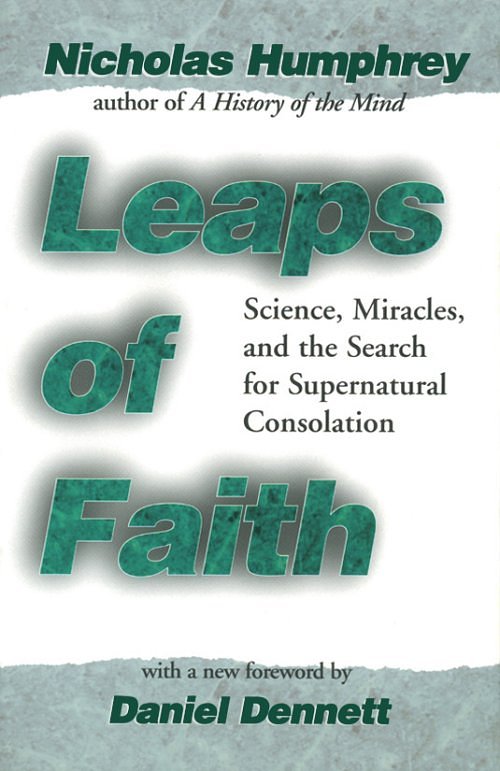




 Skepticism, Properly Applied