So, I attended Dragon*Con last weekend. It was sort of a last minute thing, really. See, my friend Margaret Downey was scheduled to speak there and needed an assistant. I was in need to go to Atlanta to do some apartment hunting, and things fell together nicely.
Margaret Downey (left) with Eugenie Scott of the NCSE
If I were a less rational person, I might have thought some intelligent design was at work. But I’m a skeptic. And luckily for me, there was a track at DC for people like me. The skeptrack dragon can be seen to the right with two of it’s guests.
Margaret Downey has been doing a variety of characters over the years to deal with a number of issues related to skepticism, atheism, and freethought in general. On Friday night, she did a presentation about anti-superstition parties, and superstition in general, at the Skeptrack section of Dragon*Con as the Friggatriskaidekaphobia Treatment Nurse.
After all, we know that there are lots of people who are into science fiction and fantasy who believe lots of silly woo things. The skeptrack, organized by Derek of Skepticality, is focused on trying to introduce skeptical thinking into this culture, as a sort of outreach to the larger community of slightly nerdy, geeky, and sciency people. The fact that Dragon*Con 2009 attracted more tha 45,000 people means that there are a lot of people to reach out to, and in future years they hope to become a larger and more significant part of the event. I’ll look forward to that.
I mean, we all like to meet some celebs, right? I got a chance to meet some of the cast from Babylon 5, which was pretty sweet because it is among my favorite sci-fi shows. I also got to see people from Stargate, Star Trek, and he recent Battlestar Galactica (don’t get me started on how annoying I thought the ending to that was…).
Those Skephicks love them some aliens.
On top of all that there were some pretty awesome costumes. In the picture to the left, Maria from the skepchicks is getting to know the local alien population a little better.
Of course, alcohol was involved, and hopefully she won’t have any little aliens popping out from her stomach anytime soon.
And what was great about the plethora of costumes, from a male heterosexual point of view, was how economical many girls can be with their costumes. I mean, making a whole costume while using so few materials? Brilliant! I must say my head was turned on more than a few occasions, which distracted me sufficiently as to not get my camera out in time. My lovely girlfriend, who stayed back in Philadelphia for work training, would have been thoroughly amused by this. Actually, she would have likely done the same thing with the many guys who were not afraid to show off their various attributes. We are quite a pair. And speaking of great pairs…never mind.
And there certainly were a lot of people there.
Just one shot from one of the many hotels involved in the convention on Saturday night.
And I got a chance to meet some pretty cool people there as well as well as catch up with some friends I only tend to see at such events. A few drinks, late night conversations, fun panel discussions, tens of thousands of people and science fiction. What else does one want from a weekend?
And you read correctly above; I was looking for apartments. My lovely lady and myself will be relocating to Atlanta come October 2009, just a few weeks away. But there is a good set of communities down there so we will be able to make ourselves at home. I’ve already been in communication with people from a skeptical community down there, I will be in contact with the atheist and polyamorous communities, and then I will have to find myself employment in Atlanta. We are moving because of Seana’s new job, and I love her enough to relocate to be with her.
Philadelphia is a great city and I will miss living here. What I won’t miss is cold winters with snow, slush, and ice. A nice cool winter with occasional snowfall seems much preferable. I will miss hot, fresh Philly pretzels off the conveyor late at night, however.
But I’ll still continue to be your friendly neighborhood atheist, polyamorous geek.
Conservative fundamentalist Christians don’t like criticism of their worldview. And there are all sorts of perspectives from which they receive such criticism; from atheists, other religions, and even other denominations. Perhaps the other denominations don’t criticize as much as they at least share some absurdities in common, but nonetheless they do get some from that corner.
But I’ve noticed something about more liberal religious people; they are not used to being criticized. After all, it is often their whole mantra of tolerance, acceptance, and bringing together of people that they emphasize. Hippies. I’m talking about hippies, people.
And it isn’t only Christians…oh no, not in the least. In my lifetime I have had very unhappy reactions to questions, challenges, and criticism of theology from liberal Christians, Pagans (especially one Wiccan woman who I thought was going to hunt me down and ritually murder me for asking about the 5 elements), and other ‘newage’ (yes, it rhymes with sewage) “spiritual but not religious” types who despise man-made religion but have created their own. All religions start out as personal spiritual creations, people!
Having attended a very liberal and religious school for 13 years (A Quaker school in Philadelphia), I became very familiar with how people of this persuasion behave. They are open and tolerant of others views (although for some this is a pretense), they want everyone to get along, and they absolutely hate when their view is not tolerated (although they may try to tolerate your intolerance). They are being tolerant, after all; they should receive the same tolerance, right?
The fact is that liberal Christians, Pagans, and other new age people believe absurd things as much as any conservative nutjob. They are simply different kinds of nuts. So when I see people talking about things such as “The Secret,” “What the Bleep do We Know,” magick, crystals, Jesus as some all-loving hippy, or the fact that god is female, I just want to throw my hands up in a fit of frustration over the absurdity of it all.
Hey, liberal tolerance-driven ‘spiritual but not religious tolerance monkeys; you cannot expect to be left un-criticized just because you think that criticism is bad or disrespectful of people’s beliefs Criticism can be very good, and saying one should not criticize is criticism. Jesus was no hippy about peace. In fact, he specifically says so in Matthew 10:
34 ‘Do not think that I have come to bring peace to the earth; I have not come to bring peace, but a sword. 35For I have come to set a man against his father,and a daughter against her mother, and a daughter-in-law against her mother-in-law; 36and one’s foes will be members of one’s own household. 37Whoever loves father or mother more than me is not worthy of me; and whoever loves son or daughter more than me is not worthy of me;
And Paganism is not older than Christianity. I know that most of them say that it should be revered because it is ancient and they will whisper snidely to one-another that Christians are practicing some new religion in comparison, but that is total crap. Paganism is based loosely on myths and legends that are quite old, but as it exists today it is less than 100 years old. Pagans, you’ve been had.
The worst part is that people in these camps often have such vague and unspecified ideas that you can’t even pin them down. It is as if they have some feeling that something in the universe loves them and so they attach a whole bunch of gobbledygook to it and think they are somehow more in tuned with nature and the universe while us metaphysical naturalists are just missing it.
No, I’m not missing anything. Not missing your mamsey-pamsey crap at all….
So sure, you liberal religious people don’t discriminate against gays as much, you don’t try to enforce virulent views on the world through legislation, and you have more enlightened views about women (although some take it too far and try to elevate women above men, quite ironically) and you promote peace. But the fact is that the bases for your spiritual and religious beliefs are as tenuous as those of conservative evangelicals. In fact, many of these vague and ultimately absurd and meaningless spiritual views are more annoying to me.
The major issue for me is the general view of science by many people that fall into the liberal side of the question. Science is the best method we have to determine truth. It is not just another narrative equal to any other. Your crystals will not heal you, homeopathy is ridiculous, and your chi (or ki) is not blocked. There are some things that show that acupuncture might have some helpful effects, but you cannot influence the universe directly with you thoughts because of quantum non-locality.
There is a culture war going on. Part of it is between believers and non-believers, but really the more interesting battle is between believers of different things. The mamsey pamsey ideas and the literalists (although both sides pick and choose verses and ideas from their various traditions) put on a cultural show of absurdity that people like myself–atheists mostly–sit back and just shake our heads at.
It is not completely unlike matter and anti-matter. When they meet they anihilate each-other and we are left with not photons but skeptical disbelief, which sort of works because skepticism is a kind on illumination.
Crap, I may have accidentally just created another vague, mamsey pamsey, liberal theology with my analogy. Man, being a ‘spiritual but not religious’ vague-theology-having, holier-than-thou tolerance monkey is easier than I thought; I think I just joined or created another version right here.
You are now required to tithe to me, your sacred prophet, in order to receive more wisdom.
I don’t generally try and define God. It is not my place to tell people what a god is. I will generally ask what a person believes and why, and then deal with what I hear rather than attack straw-men.
And yet there are some attributes that are generally associated with God, especially in western culture. When you press most people, they will define the omni-max god; the god they believe in to be omniscient, omnipotent, and maybe even omnipresent. Sometimes, omni-benevolence even added, although that last one makes no logical sense in light of the previous three.
I refer, of course, to the famous question posed by Epicurus:
Is God willing to prevent evil, but not able?
Then he is not omnipotent.
Is he able, but not willing?
Then he is malevolent.
Is he both able and willing?
Then whence cometh evil?
Is he neither able nor willing?
Then why call him God?
This is, perhaps, one of the most eloquent ways of illuminating the problem of evil. I shows two things; the first is that the skepticism about the nature of god in light of reality is ancient. The second is that the logical problems of a god with all of the attributes listed above are of legitimate concern for anyone who takes such things seriously.
And many do take this issue seriously. There is a whole area of study within theology and apologetics called theodicy designed to respond to this problem of evil. It is not my intention to evaluate theodicy here or to expound upon the problem of evil itself. It is brought up because it lays tangentially next to an issue that brings up some of the same type of logical problems.
Free will. Perhaps one of the most complicated philosophical problems to struggle with, and one I will not even attempt to solve here, is the question of how we can be free. I’ll say, briefly, that I don’t think that the question is as simple as the dichotomy of determinism and free will. One of the reasons is that I don’t think that the universe operates under circumstances that allow the question to be rationally parsed so simplistically. Essentially, I tend to agree with compatibilists.
One of the issues is how free will is defined. Obviously, our will is not absolutely free. I cannot will impossible things, or even possible things that are beyond my cognitive or physical ability. My will is limited to what is possible for me to accomplish. The question is to what extent do the predictable laws (if they can actually be called laws) of nature determine what options an agent has at any point. To what degree is cause and effect responsible for our decisions?
So what does this have to do with God? Well, if God is omniscient and omnipotent, does that not imply that God knows everything and has the power to make the universe any way that it wants? That’s what the words seem to imply to me, but perhaps my Latin is weak. Would this not imply that every word I type here, the position you are in sitting or standing while reading it, and whether you are tapping your foot or not were all things known by God when it created the universe? If so, in what sense did we choose these actions?
Apologists will insist that God gave us free will, and so we have the ability to choose our daily actions. This way, our obedience or disobedience to god are our responsibility. In fact, some apologists will argue that our belief is our responsibility (I disagree; belief is not subject to the will. I believe or disbelieve because I have been convinced or not, not because I choose to). But what does the deciding? Are our bodies not part of the so-called creation which is subject to the laws of nature? Is there a part of us that is not effected (and yet affects) the rest of us such that it is not subject to the same laws?
Pardon my skepticism–no, scratch that, I will not apologize for my skepticism–but I see no reason to believe that any such thing exists as part of us. From what we have been able to tell, our thoughts, feelings, decisions, and opinions are all housed in a biological machine of the brain and body which are part of the chain of cause and effect like everything else. Our decision-making powers are all subject to being altered by states of emotions, how tired or intoxicated we are, etc that leaves little to no room for contra-causal free will, let alone a vehicle for such a thing.
But back to a deity; what sense does it make to say that a God who knows everything and is capable of creating the universe any way it wants to (perhaps within logical possibility, if this is in fact a limitation on God. If so, then so much for the transcendental argument for God), at the same time is not responsible for any “choice” that anyone makes? If I choose to type the word ‘poppycock’ right now, one question could be whether I could have chosen any other word, but the more pertinent question here is whether this was really my choice at all if God created the world exactly this way and knew that this word ‘poppycock’ would be the one I would choose at that time. Otherwise God is not omniscient.
Poppycock?
A common apologetic is to argue that God chooses not to know certain things. That in giving us free will, God gives us a gift of choice. This is nice to assert, but it does not hold up to scrutiny. “But God can do anything!” some will say. Yes, but that is precisely the question at hand; does it make any sense for God to be omnipotent and omniscient (that, in itself may be redundant) and yet for people it created to be free to make choices? I don’t think so.
Something has to give here. God’s nature will have to be reevaluated (and many theologians do just that, I am aware), our freedom will have to be reevaluated (and reformed theology deals with this), or we have to get rid of this concept of an omni-max god. My interest here is to have people realize that the omni-max god has theological and philosophical issues that need to be dealt with. One cannot simply say, and stand on rational foundations, that God is all-knowing and all-powerful and that you actually chose to submit your life to him and that because I have not I am damning myself. That is absurd.
If God is truly omni-max, then I am exactly as God intended; an unrepentant non-believer who openly challenges the theology that it is solely responsible for. I don’t do it out of hatred for any concepts of gods or even of those who follow it. I do it because it is absurd. And if this omni-max God is real, then it knows my reasons for not believing and has not seen fit to have made me any other way.
All too often I will hear from theists (but not exclusively), that there is plenty of evidence for what they believe. And sometimes there is. In that case, well bravo! Now we have something to talk about. But inevitably, somewhere along in many discussions, the dialog comes down to their faith. That is, when the evidence that they demonstrate either has not convinced someone else or they are shown why the evidence is insufficient, they pull out the faith card.
But what is faith? It is the believe in things despite the lack of evidence. It actually may be, in some cases, the belief in something despite contradictory evidence. Creationism is a prime example. Despite the overwhelming evidence for evolution by natural selection, some people still think that magic man done it.
And, of course, creationists don’t have any evidence of their own, just lame apologetics. But the same goes for gods in general. What’s worse is that the evidence pointed to, even if reasonable, points to some vague higher power rather than their very specific deity with all of its personality. But they believe anyway.
There is a very short and quick response to such faith and the attempt to show such evidence.
If you had evidence, you would not need faith.
That’s right, folks, faith is what is pulled out because you have insufficient evidence. The whole idea of faith is that one believes something despite the lack of evidence. So if one actually did have evidence (as theists, creationists, birthers, etc do not) then their belief would never have to appeal to faith because they would have something demonstrable to point to and then we could all take a look at their evidence and deal with it.
Pulling out faith is akin to admitting that one has no rational reason to believe in what they believe. They have admitted that they have no evidence to bring. Sure, they will trot out apologetics, but these are only brought out either in some ironic sense (they are putting us on, perhaps?) or or because they don’t see the extreme irony of being people of faith trying to provide evidence. It’s almost like saying that one does not need evidence (faith, after all, is better in many of their minds) but insisting that they show evidence anyway because they know, deep down, that evidence is how the rest of the world (including themselves for every other belief they hold) is how the world makes decisions. It’s a beautiful little display of compartmentalization and irony, unfortunately not intended to be funny.
It’s quite adorable to watch. It’s almost as adorable as watching a small child pour tea for their imaginary friends while introducing you to them. It is play, so you say hello and drink some pretend tea (perhaps its supernatural or transcendent tea–what is the difference between the transcendent and the non-existent anyway?).
Except they are adults, which makes it a little weird.
So, the next time someone tell you that they have faith AND evidence, perhaps you could stifle your laughter at the joke, because they might not get the irony.
I have not been to church in many years, at least outside of weddings and such. I often think about dropping in for a sermon to see what people are hearing from the pulpit. But a few days ago my girlfriend, who has just recently become rather distant from the Christian message and theology from which she was raised, suggested that we go to the church at which she is still a member in order to get a closer look. So, while I prefer to do other things of Sunday mornings. I agreed and we planned to attend the 11:00 service at a church in downtown Philadelphia.
I must say it was rather odd to walk into the building with the organ playing and people singing (we got there just a few minutes after the service started–parking issues). I felt a bit like an ethnologist trying to blend in and not be noticed. This necessitated no identifying atheist clothing as well as using her car to get there, as mine has a few bumper stickers that would give me away.
My goal was to observe quietly and not to draw attention to myself or disrupt their services. I won’t name the church, but I will say that it is a Presbyterian church, a denomination which I had never previously attended services for. Calvinists. In other words had I talked to some of the people, they might have concluded that I was not one of the predestined to be saved. Poor me. Created to be absent from God in Hell for eternity.
I didn’t want to stand out, but I couldn’t exactly participate either. I sat, quietly, while others stood and sang (nobody wants to hear me sing anyway) and watched as others bowed their heads in prayer. I ended up making eye contact with a few people who were doing something similar, even if they very quickly snapped back to praying at being caught looking around. There was a little girl next to me whom was playing the whole time, and she gave me a curious look once or twice as I sat and took notes.
The sermon finally came. The reading was from Hebrews, chapter 11:32-38. The subject; strength through weakness; strength through faith. Now, these verses mention such luminaries of faith and weakness as David and Jephthah. The David of mass murdering, rape, and destruction and the Jephthah whom killed his own daughter, as attested to in Judges chapter 11. These were given, among other similar characters, as people who found strength in weakness.
I’m must disagree. These were not men who knew weakness as much as they knew power and destruction, except the kind of weakness which allows one to commit mass murder. This is usually the weakness of insecurity and fear that one uses to fuel the need to inflict their will upon the powerless. The kind of insecurity that religion has often used for millennia to conquer its enemies.
The minister who gave the sermon said that faith is “not thinking you can” but rather “believing God can.” He continued by saying that “this is not a gathering of strong people,” but of the weak and needy, those suffering in hard times and who need God. When I heard this, I felt despair rise inside me. I imagine I was not the only one. But my dispair was one of feeling sickened at seeing open (if unconscious) emotional manipulation in front of me.
Marketing 101: Make your audience feel a lack of something in their lives. Then present something to fill that gap. This will lead you to sell your product better.
He continued by saying that “this is not all that there is.” Heaven. This life is but a small step before eternity. It does not matter as much, “now is a preparation,” so suffer through this struggle of life in faith and heaven awaits you.
But that wasn’t the worst. The worst was when he pulled out the “enemy.” This enemy was not named, but the enemy asks questions like “what has your faith gotten you?” and “why believe in God?” I’m sure that many in the congregation have a family member, a co-worker, or even a neighbor who is skeptical, an atheist, etc. This part of the sermon is supposed to address the doubts that people have, the temptation of the enemy to become skeptical. Those questioners are the enemy. I am the enemy.
He went on to criticize the “despicable heroes of Western culture” who are interested in material things, money, and this life. These are the “anti-heroes” not worthy of the respect we give them. Instead, this minister holds up the aforementioned David and Jephthah as the heroes of faith we should look up to. What a reversal! Nietzsche would have smiled before he scrawled something beautiful and corrosive in response.
Now, I’m not all about material wealth and status. I agree, as I have discussed elsewhere, that there is a problem with our culture that needs addressing. However this sermon creates a false dichotomy between faith and materialism. This sermon overlooks people like myself who abhors faith and yet is critical of the petty materialism of our culture as well. From the minister’s point of view, if one lacks faith one becomes subject to the fashions and tides of the world, it seems.
Faith and struggle. These times, for many (including myself), are times of struggle. And I will give credit for the sermon addressing and condemning the so-called prosperity gospels (there was an article about this in the New York Times a couple of days ago), as they only seek to feed off of people for the church’s prosperity. But I think that the message of this church I attended is not that much better. It tells people to not be too concerned with this life, because there is something better coming. Slave mentality. Instead of robbing the congregation of its money (although they did ask for donations with the trays being passed around), the sermon robbed the people of their confidence, self-worth, and enjoyment of the now.
There was a teasing that came next. “What does faith guarantee you?” he asked, pausing and making commentary before answering. The anticipation mounted, the mind reeled in trying to anticipate an answer (heaven, happiness, love, what?), and for it to lead to the answer of “God” was akin to absurdities my mind could not be so self-destructive to think up without imploding in a fit of paradox.
“Faith guarantees you God.” guarantees? How? This is one of the most absurd things I could think of, although I should not have been surprised. There is a sort of moment in the mind at the presentation of absurdities where the mind reaches a sort of impasse that can be beautiful. I imagine that for many people this is not unlike the presence of God, lost in the mystery of the end of ones mind and seeking the abyss that lies beyond. Yes, there is a certain beauty in paradox and absurdities, but this beauty is manipulated for the needs of a God-message here.
Now, the good minister was not kind enough to define faith, so I can only refer to the same book and chapter from which he drew his sermon (Hebrews 11, in case the absurdities above have wiped your memory):
1Now faith is being sure of what we hope for and certain of what we do not see. 2This is what the ancients were commended for.
So, belief in God which we hope for but cannot see gives us God? This is a very good example of epistemologically immature thinking. This is what I addressed earlier in talking about the false hope of faith. This faith does not guarantee anyone God, but it might guarantee the delusion of God. Hope, “because God is.” Faith attaches us to God. This is the message that was left at the end of the sermon. The hope of faith gives you God because faith guarantees you God.
This is what is wrong with much of the Christian community; circular thinking. As a non-believer in the pews, all I could do was look around me with my figurative jaw gaping with disbelief as to how people can hear this message and not have fallacy-alarms blaring in their heads. Instead, many nodded, I heard a few amens, and there were hopeful smiles.
It is only a message of slave morality, of slave mentality, that could orient oneself to the unseen as the gift of believing in it. It is philosophically no different than me believing I can fly like Superman because I believe that I can. I simply cannot understand how this sermon does not cause people to walk out and never return.
But they will return, getting up on Sunday to come back for more. I don’t know if I will, but I might. I am perpetually fascinated by this thing called faith and what behavior it causes. I find it despicable, pathetic, and sad overall, but fascinating nonetheless.
This was supposed to be a congregation of more educated and intelligent people. And yet I find sophomoric platitudes that a freshman taking philosophy should be able to flatten. I find nothing challenging or inspiring. I find nothing even beautiful in this (although the hymns are closer to this). I find only ugliness called hope, as if the faith that this message is hopeful and beautiful makes it so.
I spend a fair amount of time writing about religion, atheism, and related matters. Why do I care so much? Why do I bother? Why not just spend time doing something more constructive than writing articles?
Is it because, deep down, I know the truth about god (and monogamy) but I have to rebel publicly in order to convince myself that I’m doing the right thing or living the right way? Or is it because I’m so twisted up and confused inside, fearful and insecure that I am projecting all of my issues onto concepts of god and rejecting them? Or is it because I just have to be heard, that I have to be right, and I want as many people to know it as possible?
Now, I cannot speak for other atheists, at least not with authority. I can only say that my motivation is genuine and considered. I am of the opinion that a cultural discussion and sharing of ideas is crucial if we are to continue to grow and mature as not only a society but as individuals. All too often the things we disagree with are left unsaid or said in the echo chambers of like-minded groups. All too rare is the communication between those groups with differing worldviews.
Now, I’ve been accused of being unaware or uninterested in the perspective of those with faith. Because I treat their views harshly and use strong language, I must, say some, have no interest in an honest evaluation of their arguments. If I say, for example, that there is no good argument for Christianity, it implies a certain close-mindedness rather than an openness, right?
But what am I faced with? Virgin births, resurrection of a god-man, and little to no historical evidence that any of it happened and I am supposed to orient my life towards the teachings of this person, this god, that the “evidence” presented is chock full of bad arguments, logical fallacies, and outright lies. If anyone were to present that type of evidence for anything outside of religion, the statement that there is no good reason to think it is true would not be found to be obnoxious, arrogant or unwarranted.
The simple fact is that the claims of much of contemporary theism are obnoxious and arrogant in themselves. I am not arrogant for not believing them and saying so proudly, am I? Something like 45% of people in the United States believe in some form of creationism. In other words, they deny evolution as some sort of mass conspiracy or lie; now that’s irony. We are supposed to lie down for this and be respectful of these views?
I’ve said it before, but there is an important difference between respect for persons and respect for ideas. There is no room for respect for certain ideas, creationism is perhaps prime among them in today’s world, but the respect for a person is still important. This is the distinction between an ad hominem and an argument against an idea. It is sort of like the idea of hating the sin and not the sinner.
I don’t hate religion and I don’t hate religious people. In fact, I like quite a few religious people, even if they don’t think they are actually religious and call themselves ‘spiritual’ or something like that. I think that many religious ideas are harmful, absurd, and can be shown to be so. Some people, including atheists, think that efforts by myself and the big names in the so-called new atheist movement are making them look bad and are hurting their efforts. With all due respect, atheist appeasers, what efforts?
Recently a bunch of people from the Secular Student Alliance visited the creation “museum” in Kentucky. They did this for many reasons, one of which was because they wanted to get an up-close look at what people are being shown. The bottom line is that Ken Ham and his AiG crew are using bad science and misleading hundreds of thousands of people with either poor science or bold-faced lying for Jesus. What response should be taken besides what people like PZ Myers and Jerry Coyne are doing? Should we be more polite like Michael Ruse or Mooney and Kirshenbaum?
I get that people get defensive when they are challenged. I get that there is room in the discussion for calm and measured responses. But there is a point when the only reasonable reaction is laughter and mockery. There comes a point when calm and respectful interlocution is only acting to legitimize a view that is not legitimate. Thus, those that argue to “teach the controversy” have it all wrong; if we were to teach the real controversy we would be doing precisely what the new atheists are doing. We would be showing precisely what is wrong with the arguments used by those who want to be part of the debate when, in fact, they are not. They are trying to reorient the debate to include themselves. They are trying to squirm their way in and we will mock them to where they belong, which is not even on the fringes.
We are not afraid of criticism. We don’t avoid conflict with our worldview, we are just tired of people who are so obviously incorrect trying to pretend that they have a legitimate claim to make. There is no longer room to tolerate absurdities in the discussion. If you have a good criticism or question, present it to the discussion and if it is a valid concern it will be addressed. And if it is dismissed because it has already been answered many times and refuted sufficiently, don’t whine about how you are being expelled.
There is a sort of cult of martyrdom and persecution complex within much of the conservative religious world. When cartoons depicting Mohammed as violent surface, Moslems react violently. When Christianity is legitimately criticized in the public discussion, they cry about being persecuted and that God is being kicked out of society. This is silly. If their god exists, there would be nothing one could ever do to kick it out. Nobody is taking your private worship away, only preventing it from becoming public by mixing politics and religion.
The new atheists are here to challenge theism, whether it be Christianity, Islam, new age silliness, etc because religion (both organized and cult-like anarcho-personal religion) has held sway in ways that are damaging to our world. They are propping up anti-science and anti-criticism that only seeks to defend itself from looking at itself honestly.
What about the liberal religionists?
I want to say a few words about those who are not part of the conservative movement in religion. Those who accept evolution, science, support progressive ideas like same-sex marriage and who generally don’t have an issue with atheists and other skeptics. How do you reconcile the fact that the books you base your beliefs about god also contain ideas that you reject? Why do you only accept part of the scripture? Is this not hypocritical?
We appreciate you not being Dark Ages backward. But why do you compartmentalize your views such that you accept one thing on faith? Why is faith good? Why isn’t faith considered backward?
And why aren’t you challenging your conservative cousins?
We don’t hate you, we hate that you are making us do your dirty work because you are too cowardly to do it yourself. Cowardly, perhaps, because you realize deep-down that a challenge to them is also a challenge to yourself. You cannot undercut their faith without undercutting your own.
There is a genuine conflict between tendencies in religious thinking and the scientific method. One must compartmentalize one’s mind to believe in science and virgin births. Recognize this conflict and deal with it. Until you do that, many of us will continue to lack respect for your worldviews, but we will continue to respect your ethical and legal right to believe and express what you believe.
I just hope you respect my belief that your beliefs may be worthy of mockery.
All too often I hear from people that there is proof of god everywhere. The trees and the birds, our hands and our feet, the flesh-eating bacteria and the natural disasters that destroy cities. OK, those lasts two are not generally used to argue in favor of a loving god, but they are pretty complex, aren’t they?
And that’s the key here: complexity. How could all of these things with their complex parts, elaborate interactions with the rest of nature, and our intricate brains that can think about it all just get here by chance? They could not have done it on their own, right? So there must have been some intelligence, some designer, to give the world it’s complexity.
It is unfortunate that there is such a deficiency of understanding of science and of critical thinking in our culture. Science education may be partially to blame, but we must be willing to take the responsibility for ourselves as well. And as a result of this there is a severe lack of understanding of the theory of natural selection (as well as the other evolutionary pressures) and thus a misunderstanding of the fact of evolution as they intersect with these questions of complexity.
There are great resources for learning about these things online, and so any person can go and find out what scientists say about evolution. The key here is to understand that the process does not claim chaos or complete randomness. The question about evolution is not a false dichotomy between an intelligent designer or random chance. There are many believers in various gods that accept the fact of evolution (Ken Miller and Francis Collins being two prominent examples). Natural selection is a definite process, is not random, and is well supported by physical evidence.
The major component of randomness in evolution is the mutation of genes. But most of these mutations have no effect at all, and only sometimes do they have a harmful or helpful effect. It takes environmental factors, lots of time, and other factors to make a mutation effect the population at large. And it is the process of natural selection that does the actual work, not the random mutation.
But my point here is not to explain natural selection or to spell out the evidence for evolution. That is the responsibility of each person to do on their own in conjunction with schools and museums. Start with the link above, a trip to the museum, or even a recent biology textbook (and not one produced by the Discovery Institute such as Of Pandas and People, as they have been shown to be untrustworthy during the Kitzmiller case).
And so what about this claim that complexity requires intelligent design? Well, even if we didn’t have a good scientific answer to the claim (which we do), there is another problem with it that can be shown without knowing anything about evolution.
Here is the argument as I have seen it:
The world (universe) is full of complex things
complex things need designers
therefore, a designer of the world (universe) exists.
Ray Comfort is known for arguing that if you see a painting we know there is a painter, if their is a building there is a builder, etc. It is certainly true that things we create have designers, and they certainly are intelligent. But the analogy does not carry through to all things because not all things are constructed in a factory. Other things reproduce biologically and are put together by very complex natural processes that we, admittedly, don’t fully understand. And as far as universes go, I’ve never seen one made, so while I can go to the car factory, I can’t go to the universe factory.
But more importantly is the assumption that all things need intelligent designers to exist simply because they are complex. We know that simple things can become complex through natural selection, but even if we don’t know this we can ask if all things that are complex need a designer, then wouldn’t the designer itself, being a complex thing, need its own designer?
In short, what created god?
Now, the common reply is to state that god is eternal and has always existed. This is special pleading. What that means is that the point is making a special exception of the rules for illegitimate reasons. The question here is whether a god exists, and so in deciding this issue one cannot take as given a special exception for the thing that is in question. One cannot simply define god into existence by saying that it is not subject to the rule that all complex things need a creator. If one did, the results would be somewhat silly.
The bottom line for intelligent design, and whatever people are trying to disguise creationism as these days, is that there is no evidence to support it. Despite Michael Behe’s best attempts, there is no irreducibly complex thing that cannot be explained without the need of an intelligent designer. Natural selection is sufficient to explain complexity in our biological world.
And further, even if it could be shown that an intelligent designer would be necessary, this would still be a far cry from associating this intelligence with any particular god. An intelligent designer would not imply that it had anything to do with any theology or mythology (as if there were a difference) of any religion. A Christian does not win any points for his beliefs even if intelligent design were true. Because if it were true, the Moslem, Jew, Hindu, etc would step up and claim that it is their god that is the intelligent designer.
Luckily for us, that is not an issue because the proposal of an intelligent designer does not stand up to scrutiny. The irony, perhaps, is that intelligent design needs people of lesser intelligence, or at least understanding, to propose it.
If complexity needs a creator, so does the complex creator. God is nothing but a pseudo-answer to a non-problem when it comes to the complexities of the world and how to explain them.
Many of us in the atheist and skeptical community have noticed this trend within many people. It is certainly not unique to religious people nor is it ubiquitous within religious groups, but this particular force is quite strong with many believers. It is projection, and it is a form of insecurity and lack of self awareness.
How does it work? Well, it is quite simple, actually. Have you ever met a guy who is just a little too homophobic? You know, the guy who even at the slightest accidental touch or slightly long eye-contact from another guy provokes some comment such as “hey, what are you a queer or something?”In other words, the reaction is to call the other person a homosexual. Why would they do this? Now, in some cases it might just be because they are an ass, but it seems to me that in some cases this is the fear of their own homosexual feelings. Perhaps they are bisexual, even if only a little. Perhaps those impulses scare them because they don’t want to be teased by other people like them.
Thinking about it again, the better example is people like Mark Sanford, who promoted family values all the while involved in his own sex scandals. But theists can do the same type of thing. A common example of this that I see is the accusations that certain people make of atheists. We want to live a life of sin and so we ignore god’s rules. We are ignorant and don’t know or want to know the truth. There are other examples as well, but these should be sufficient for now.
How are these accusations projections? Well, maybe sometimes they aren’t. But I have talked with people and have found that replies to atheists by theists come in this form when the theist is in denial about their own actions and thus hoists them onto their interlocutor.
Many Christian men come to their faith while young and after dealing with some issue; whether it be alcohol abuse, womanizing, excessive pornography use, etc. I saw this in college and graduate school multiple times, and have heard similar stories from many people before and since. In many cases it’s more than one thing, and they find, within the messages of Christianity, a way to be saved from these problems. But their desire does not go away. They still want to look at porn, drink, and have some casual sex but they have turned the corner and are living a life under their idea of god, changed (they claim) by their rebirth.
And so, when they see people like me who enjoys a couple of good beers in an evening, who has sexual experiences that I don’t feel guilty about, and can freely look at porn if I want to (I actually don’t have much interest in porn, but am certainly not offended by it), they project their unrequited desires onto me, seeing their former selves as me, hiding from god because I want to continue to live this sinful life.
They could not be more wrong. I’m not living an immoral life; I don’t go around having casual sex (I’m polyamorous and am interested in relationships primarily), I don’t drink to excess (I prefer quality to quantity), and I don’t go out of my way to see porn (although if it’s in front of me I might check it out). I don’t see these things as sinful or wrong in themselves. They can be used in ways that can make the acts wrong, of course.
They have the problem that they are struggling with, and I sympathize with this because we all have issues we deal with as we try and improve ourselves. They were using people or overdoing something they liked to do and went as far as to see the whole activity as wrong, rather than its misuse or excess as being the problem. Instead of reading the Bible, perhaps they should have read Aristotle’s Nichomachean Ethics; as what they need is moderation, not prohibition.
The other reply I get frequently is sometimes more damning; ‘you atheists are irrational’ or ‘atheists are just afraid of the truth’ or something like that. When I talk to them, I find that it is them that is ignorant and afraid of the truth. They don’t know the history of their religion, its theology, nor have they read all of their scriptures. They think I’m avoiding god but it is them who is over-focusing on god; they are missing other points of view because they have swapped one addiction (whether it be sex, porn, alcohol, etc) for another (god).
Especially if their theology has them reject evolution or the so-called big-bang theory, they almost never don’t understand the basic theories let alone the scientific method. And when you bring these things up, you see fear, insecurity, and anger in them as you are picking apart the edifice of their reborn self.
And then what happens? They project that fear and anger onto us, and then we become the angry atheists of contemporary lore. This, in my opinion, is the most common form of projection. My passion for the subject, my confidence in tone in presenting my view, causes fear, insecurity, and thus anger in those who are not so confident and they project their emotion onto me.
There is a lot of insecurity and fear within religious communities about their beliefs, especially the more fundamentalist groups. And I will not deny that there are some angry and insecure atheists, as I know a few of them. I am insecure in some ways myself, but not when it comes to my lacking belief in any gods. In this I’m pretty sure and secure, and my breadth of knowledge on the topic of religion began as an honest attempt to evaluate religion and led me to remain skeptical of religious claims. I’ve not been convinced, am open to be convinced, and no matter how often I say this I still get comments that say that I’m claiming that god does not exist and I’m being dogmatic.
I’m sorry, but it is most theists who claim that god does exist and are dogmatic. Stop projecting your behavior onto me.
Stop allowing your fears and insecurities to govern your behavior. Recognize them as part of what you have to deal with, become conscious of how what scares you motivates you to not see things within yourself.
Finally, am I projecting? Possibly a little. But I think that this is a common human psychological behavior pattern, and I do see it frequently. I have had some Christians I’ve talked to admit that they are insecure, sometimes, about their beliefs and they think that others, including atheists, are guilty. And so they sometimes are. But being aware of it is a first step in finding a solution. If we want to continue a mature and informed dialogue about these issues, everyone, including atheists, needs to be aware of how we use projection to tear down the other rather than admit our own flaws.
We all need to inspect the logs in our eyes before attending to the splinter in others’ eyes.
A little while back brother Sam Singleton descended onto Philadelphia, and your truly, brother Shaun, got a chance to meet him. Brother sam is angry. Brother Sam thinks you should be angry too.
Many critics of atheism will comment that atheism is just another religion or that it requires faith. So, is it a religion? Does it require faith to be an atheist?
Put simply; no, that is ludicrous. Atheism is a religion in the same way that baldness is a hair color. It requires faith in the same way as people who don’t believe in the Invisible Pink Unicorn requires faith; in other words it doesn’t.
But before I address the question in more depth, I would like to supply a quote of Einstein’s which I find to be thought provoking and relevant:
The most beautiful and deepest experience a man can have is the sense of the mysterious. It is the underlying principle of religion as well as all serious endeavor in art and science. He who never had this experience seems to me, if not dead, then at least blind. To sense that behind anything that can be experienced there is a something that our mind cannot grasp and whose beauty and sublimity reaches us only indirectly and as a feeble reflection, this is religiousness. In this sense I am religious. To me it suffices to wonder at these secrets and to attempt humbly to grasp with my mind a mere image of the lofty structure of all that there is.
It is in this sense that an atheist might be considered religious, and no other. Richard Dawkins has expressed a similar view, and agrees that he is religious in this sense. This deep awe of mystery is something that can be appreciated with or without a belief in any deity.
However, it seems disingenuous to equivocate this specific and unorthodox use of the word “religious” with it’s more common use; to conflate this sense of awe that atheists can feel with what we usually call “religion.” A universally accepted and universal definition of religion is a difficult task. That is, many definitions that we can refer to will seem to exclude some other things that we generally call religious as well as include others that seem like a stretch to include. If we say religion requires God, then we are leaving out religious traditions that often don’t require a god such as much of Buddhism. If we stretch the definition to something like ‘devotion’ to something or something equally vague, then we essentially define it to be meaningless; does my interest in hockey make hockey a religion? Is baseball a religion? How about stamp collecting?
The term “religion” refers to both the personal practices related to communal faith and to group rituals and communication stemming from shared conviction. “Religion” is sometimes used interchangeably with “faith” or “belief system,”[2] but it is more socially defined than personal convictions, and it entails specific behaviors, respectively.
This seems like a fair definition, thus I will use it as a guidepost for my attempt to answer the question at hand. It may not be the most accurate of definitions, but I believe it to be largely uncontroversial and it suffices for our use here.
So, what’s an atheist? My definition, a definition shared by many atheists within my radar, is that atheism is the lack of belief in god. Some will include those that say god does not exist (the so-called “strong” atheists), but I believe that the only necessary aspect of atheism is the lack of belief. The assertion that god does not exist is certainly sufficient for someone being an atheist, but said assertion is certainly not necessary but rather in addition to the lack of belief.
So, with these definitions in hand, let me address the relevant questions.
Is atheism the lack of religion?
I address this because some people try to answer the question of whether atheism is a religion by suggesting that atheism is simply the lack of religion. This does not hold up for a number of reasons. The first, as mentioned above, is that it would imply that non-theistic religions are actually not religions at all. Despite the fact that Zen Buddhism does not claim that gods do not exist (nor that they do!), I think that most of us would agree that Zen should be included as a religion. It has specific practices, is based on a person (the Buddha as well as other Buddhist teachers), and is shared by a common group (other Buddhists).
One might argue that Zen might not technically be atheistic, as it seems to be more of a position of doubt. However, I argue that the distinction between atheism and theism is sharp; there is no middle ground. The proposed middle ground of agnosticism is incorrect, as agnosticism is an answer to what we know, not what we believe. I, for example am an agnostic atheist; I lack belief in gods, but ultimately I do not claim to know for sure. Thus without an active and conscious belief in god, one is an atheist. This includes people who reserve judgment. Further, if any Zen Buddhist could be found that did not believe in gods, this lack of belief would not be in contradiction with his or her being a Buddhist, and therefore someone could be both a Buddhist and an atheist.
Another reason is that the simple lack of belief in the gods does not necessarily make one anti-religious. There are many beautiful rituals, writings, and other aspects of religious practice that someone who did not accept the claims of gods can appreciate. Further, one might still remain as part of a theistic community and participate in the rituals, songs, etc without believing in the god of said religion. In this sense, we might call that person a religious atheist, just like the Buddhist above. I’m sure that there are many people taht don’t believe in god but still particupate in religion, quietly.
The question of whether one believes in God has nothing to do with being religious; someone who is a theist is not necessarily religious. Simply believing gods exist does not mean that person is also a member of some religion or not. The point being that atheism is not simply the lack of religion, as a person’s atheism/theism does not have anything directly to do with being religious or irreligious. Theology does not imply religion, nor religion theology.
Does atheism require faith?
People, such as Ray Comfort from Way of the Master, have tried to argue that there are no atheists. His argument is that in order to prove that god does not exist; the atheist would have to know everything. Nobody knows everything, so nobody can know there is no god. Looking past Comfort’s misunderstanding of what an atheist is, the point he’s making is that when someone says they believe there is no god, they are making a faith claim; one that many apologists claim is a stronger claim than the theist makes. Atheists are, according to people that propose this argument, believing something extraordinary without being capable of knowing it for sure. This is simply not the case.
What is faith? The way I understand and use the term, it means a belief in something either despite the lack of evidence for it or evidence against it. If there were evidence, there would be no need for faith. Faith is not held for rational reasons, but rather outside of rationality. Atheism cannot require faith because atheism does not require any beliefs at all–rational or not.
To believe in the stories of the various religions which have little to no supporting evidence one must accept them despite this lack of evidence. Most Christians believes that Jesus Christ lived, preached, performed miracles, was crucified, and on the third day rose from the dead. They believe this person was God-incarnate. This is an article of faith, as no historical evidence could verify this. Even if the historical events that were supposed to have happened actually occurred, the belief that Jesus was God is something that must be accepted by faith. In short, faith has an object it believes in
Atheism does not require faith because it is simply a lack of a specific kind of belief. Atheism only exists because some people make claims; they claim there is a god, and it’s like this, that, or some otehr thing. The atheist simply rejects the claim. When someone comes along and says that the atheist has a belief–that god does not exist–they are incorrect because they misunderstand what atheism is. As I discussed above, this assertion that god does not exist, while held by many atheists, is not the definition of atheism itself but is an extension of the lack of belief.
Conclusion
So, what does all this amount to? Atheism is the lack of belief in any and all god concepts that particular theists propose. It is the responsibility of the theist, the one making a theological claim, to bear the burden of proof. Their religious conviction (whatever it may be), if it claims a god exists, is the proposal and the atheist hears that proposal and says “no, I don’t believe that.” The atheist is not making any claim at all. What the atheist does is reject the claim and lack belief in the gods the theists propose.
The only thing that ties atheists together is the shared lack of belief–and this is a very loose tie. Getting atheists to organize, agree, or in general share anything in addition to this lack of belief is like herding cats. There are no rituals, social coherence, or beliefs at all. There is a simple lack of belief. That’s it. If two atheists happen to share a belief, it is a coinidence and there is no significance to atheism at all.
Part of the confusion is, I think, based in the fact that atheism has the ‘-ism’ in it. This is because atheism comes from a-theist, not because it comes from athe-ism or anything like that. It’s not a positive assertion but a lack of acceptance of millions of assertions by theists. That is, atheism is the lack (a- means lack of, or ‘without’) of theism (belief in god).
And if particular atheists act in a religious way, either in awe of their beliefs (a la Einstein’s mysteries) or in some evangelical fervor to spread their atheism to the world, this is not evidence of them being religious necessarily. Their actions might share common characteristics of religious people, but that’s merely because these characteristics are part of human nature and have been understandably adopted by religion over the millennia. Religion is a human activity, so its attributes will be common to most humans, even the ones that happen to not believe in god. But atheism itself is a specific answer to a particular theological/philosophical question. Anything else the person who gives this answer does is strictly in addition to their being an atheist. It is not part of their atheism.
So, unless we are willing to call the lack of belief in god, which has no beliefs, rituals, etc at all, a religion, atheism does not qualify as a religion. Again, an atheist can be religious, and a theist can be non-religious, but this does not make atheism a religion any more than it makes theism a non-religion; theology and religion are separate issues. Anyone who claims atheism is a religion needs to be called on it and corrected.




 Conservative fundamentalist Christians don’t like criticism of their worldview. And there are all sorts of perspectives from which they receive such criticism; from atheists, other religions, and even other denominations. Perhaps the other denominations don’t criticize as much as they at least share some absurdities in common, but nonetheless they do get some from that corner.

 The sermon finally came. The reading was from Hebrews, chapter 11:32-38. The subject; strength through weakness; strength through faith. Now, these verses mention such luminaries of faith and weakness as David and Jephthah. The David of mass murdering, rape, and destruction and the Jephthah whom killed his own daughter, as attested to in Judges chapter 11. These were given, among other similar characters, as people who found strength in weakness.
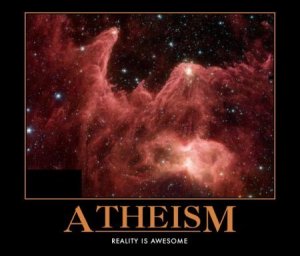 I spend a fair amount of time writing about religion, atheism, and related matters. Why do I care so much? Why do I bother? Why not just spend time doing something more constructive than writing articles?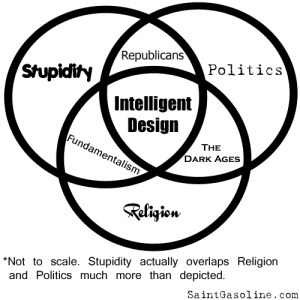
 The bottom line for intelligent design, and whatever people are trying to disguise creationism as these days, is that there is no evidence to support it. Despite Michael Behe’s best attempts, there is no irreducibly complex thing that cannot be explained without the need of an intelligent designer. Natural selection is sufficient to explain complexity in our biological world.

 Skepticism, Properly Applied