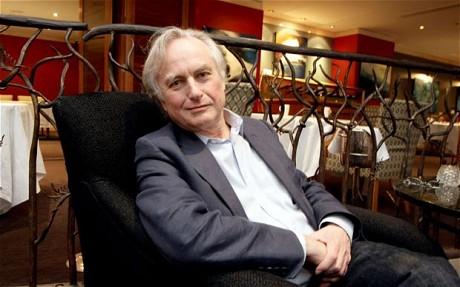
So, there has been some discussion all over the web, especially the atheist blogosphere, about Richard Dawkins’ recent revelation that he is not 100% certain that god does not exist (actually, this has been his consistent view for many years, as many have already commented).
Much has already been said, so much of what will follow may be redundant, but in an email exchange today on a local email list, someone said the following:
I’m 100% certain god doesn’t exist as well. I’m also 100% certain that Santa Claus doesn’t exist, and I’m 100% certain that gravity is not the cause of microscopic or invisible elves that apply glue to the bottom of my feet….
He went on, but this is the important part. I responded to him and wanted to post that response here, because while it is not comprehensive of all the relevant issues, it addresses something that is overlooked by many atheists who claim more certainty than they can chew.
Here is my reply:
—
The problem with this 100% certainty is the meaning of the term ‘god’ there. If you mean, by that generic term, the specific god as described in the Bible (for example), then you are on pretty firm ground. But the term itself does not point to any specific god, but to the larger metaphysical/theological concept with many possible referents.
While it may seem trivial, I can point out that in history certain political figures have been thought of as gods. The Sun has been considered god to many cultures as well. You may argue that the definition of god does not allow such things to be meaningfully called “gods”, and there is some room for argument there, but my counter to most of them would be to say that the more transcendent, incomprehensible, etc concept of god that we think of today is basically a theological pull-back to vagueness as a response to the advance of empirical knowledge about the world.
What I mean by this is that while gods were once commonly thought of as either real beings which people could interact with (Zeus liked the ladies, for example) or general forces in nature which were directly responsible for events in the world, our understanding of nature, exponentially increased by the evolution of the scientific method, has pushed those concepts further and further from physical things which were super-human to completely transcendent and supernatural in nature (if that sentence can even be sensible at all…).
And even given the arguments against the supernatural in general (at least in terms of its ability to interact with nature and still be transcendent), there are still concepts of gods still used which either could not be dis-proven and which are also compatible with what we understand about the universe (therefore there is no way to be 100% certain of them not existing) or they are actualy physical things, like people, idols, etc which can be demonstrated to exist, even if we don’t think of them as being worthy of the title ‘god’. It is not for us to determine what the definition of ‘god’ is for believers; it is for us to ask “what do you believe, and why do you believe it?” Let semantics stand aside.
I am guessing that your certainty is pointing to very specific, and probably Abrahamic, definitions of gods. If so, I will say that those concepts are logically incoherent, assuming you take all scripture to be equally valid. Because if you consider some scripture more relevant, then all you need to do is decide which descriptions from scripture you like (based upon some logical criteria, say) and use those verses to define what god is. And depending on how one does that, they could believe in a god which is logically coherent but which has no evidential support. And many theologians do just that.
To such gods, all you can say is that “I have no proof that such a being does not exist, but I also see no reason to accept any claims that it does exist.” That is what being an agnostic-atheist is; not 100% certainty, but lacking belief (whether due to lack of evidence or otherwise). By making the broad statement that you are 100% certain that god doesn’t exist, you have not allowed for the possibility that the person who hears that phrase has a logically coherent concept of god which, technically, cannot be dis-proven. Therefore, claiming certainty of that level would seem unjustified to that theist.
And that seeming, by that theist with their logically-coherent god, would be correct. Because even while they still have the burden of proof to demonstrate such a god, you then claim the ability to demonstrate that their god certainly does not exist, which you cannot do in every case, especially theirs.
“Every plant that my heavenly Father has not planted will be pulled up by the roots. 14 Leave them; they are blind guides.[d] If the blind lead the blind, both will fall into a pit.” [Matthew 15:13-14]
So, I’ve been reading Nietzsche again.
See, I went and got myself a Kindle. And I was getting free copies of all these books I already have (and will be donating many books at some point in the future to make shelf space for…something). And I downloaded a copy of The Antichrist which I have not read in many years. It is a fascinating book that makes many points that would be familiar to many gnu atheists. I have thought more than once of sending a passage to Jerry Coyne, Eric MacDonald, or even PZ Myers because they all have reminds me of things Nietzsche has said in this little book.
So, then the other day, on the way home from work, I read section 32 of said book. Before quoting and commenting, I want to point out that Nietzche does not identify as an atheist*, although his views seem pretty consistent with how the term is used today. I think it is fair to consider him an atheist for the purposes of simple categorization (as if Nietzsche could be easily categorized!) but recognize that he didn’t self-identify with the term.
As an introduction to today’s thought, allow me to make an observation. Many atheist writers, especially ones I read, talk about how Christianity, or theism generally—perhaps merely the concept of faith itself!—is philosophically and even methodologically opposed to basic critical thinking, skepticism, and secularism. There is a real worldview difference between the very religious and the essentially secular culture which surrounds it. Some call it a culture war, and this label is as good as any I suppose, but it is at bottom (one is tempted to say de Bottom) it is a difference of perspectives, whether those at odds see the underlying methodological distinctions or not.
I think part of Nietzsche’s point in section 32 of The Antichrist to point out that the faith of the Christian is incapable of seeing this perspective for what it is—a privileged perspective. But before he can make any such observations, he has a few necessary bushes to beat around. He starts the section with the following:
I can only repeat that I set myself against all efforts to intrude the fanatic into the figure of the Saviour: the very word impérieux, used by Renan, is alone enough to annul the type. What the “glad tidings” tell us is simply that there are no more contradictions; the kingdom of heaven belongs to children; the faith that is voiced here is no more an embattled faith—it is at hand, it has been from the beginning, it is a sort of recrudescent childishness of the spirit. [links obviously not in the original]
Nothing surprising yet. Nietzsche several times observes the child-like attribute of Christian faith, not that this observation should be surprising at all given that this idea is native to the New Testament. For example, in the book of Luke, chapter 18:15-17 (NIV):
“15 People were also bringing babies to Jesus for him to place his hands on them. When the disciples saw this, they rebuked them. 16 But Jesus called the children to him and said, “Let the little children come to me, and do not hinder them, for the kingdom of God belongs to such as these. 17 Truly I tell you, anyone who will not receive the kingdom of God like a little child will never enter it.” [emphasis mine]
But Nietzsche seems to see a significance to this childishness which I think many gnu atheists either miss, or is no longer largely true. Nietzsche continues:
The physiologists, at all events, are familiar with such a delayed and incomplete puberty in the living organism, the result of degeneration. A faith of this sort is not furious, it does not de nounce, it does not defend itself: it does not come with “the sword”—it does not realize how it will one day set man against man. It does not manifest itself either by miracles, or by rewards and promises, or by “scriptures”: it is itself, first and last, its own miracle, its own reward, its own promise, its own “kingdom of God.” This faith does not formulate itself—it simply lives, and so guards itself against formulae.
Now, in light of the history of Christianity, the evangelical nature of Christians throughout their history (and no sign of it slowing!), and the various formulas by which sects argue (with atheists and with each other), one might think that Nietzsche is being either naive or ignorant here. But Nietzsche is quite aware of the history and character of Christianity, and seems to be saying such to raise your eyebrows here, in order to set you up.
So, given that he is certainly aware of the objections rising in your mind, let us follow his bread-crumb trail to see where it is leading:
To be sure, the accident of environment, of educational background gives prominence to concepts of a certain sort: in primitive Christianity one finds only concepts of a Judaeo-Semitic character (—that of eating and drinking at the last supper belongs to this category—an idea which, like everything else Jewish, has been badly mauled by the church). But let us be careful not to see in all this anything more than symbolical language, semantics[6] an opportunity to speak in parables. It is only on the theory that no work is to be taken literally that this anti-realist is able to speak at all. Set down among Hindus he would have made use of the concepts of Sankhya,[7] and among Chinese he would have employed those of Lao-tse[8]—and in neither case would it have made any difference to him.—With a little freedom in the use of words, one might actually call Jesus a “free spirit”[9]—he cares nothing for what is established: the word killeth,[10] whatever is established killeth. The idea of “life” as an experience, as he alone conceives it, stands opposed to his mind to every sort of word, formula, law, belief and dogma. He speaks only of inner things: “life” or “truth” or “light” is his word for the innermost—in his sight everything else, the whole of reality, all nature, even language, has significance only as sign, as allegory.—
In writing this, Nietzsche is pulling you in, especially if you are prone to seeing an ecumenical nature to religion. He seems to want to sketch the humanity of Jesus in order to create a larger picture, a larger historical and ideological contrast, of Christianity. Nietzsche here seems to be addressing the character of the ‘Saviour’ as a foil for the church which he sees as degraded and stagnant (“Oh how repulsive is this falsified light, this stake air!”). He is seeing the humanity hidden under ecclesiastical religion, a humanity too-well hidden by the finery of its tattered garb.
Here, Nietzsche the philologist comes through clearly. He is seeing the Gospels as a picture into a life lived by a man who stands prior to the dogmas of the church as they would become. It is here that the liberal believer, the ecumenicalist, and in general the respectable atheist can step up and try to claim Nietzsche as their own, as a representative of those for whom standing up and proclaiming that religion is a part of our humanity (even if it is not true), and we gnu atheists who despise and degrade it (as if it needed our help for that) ought to be ashamed of ourselves. But it’s not quite that simple.
Nietzsche continues:
Here it is of paramount importance to be led into no error by the temptations lying in Christian, or rather ecclesiastical prejudices: such a symbolism par excellence stands outside all religion, all notions of worship, all history, all natural science, all worldly experience, all knowledge, all politics, all psychology, all books, all art—his “wisdom” is precisely a pure ignorance[11] of all such things.
Hermann Hendrich's 'Parsifal'
And it is here we see the first strong glimpse of what Nietzsche is enlightening us to. From a purely formal point of view, Nietzsche’s cloaked criticism of Wagner here (the phrase “pure ignorance” is from Wagner’s Parsifal, which was largely responsible for Nietzsche’s turning into the greatest critic of his former friend) is perhaps an analogy of his criticism that lies beneath it. That is, this cloaked criticism is itself a clue that Nietzsche is not here cuddling up with the Gospels, but is rather creating a caricature, again a foil, of both the Gospel and its subject in contrast to the Christianity which we find ourselves faced with in modernity.
Nietzsche continues:
He has never heard of culture; he doesn’t have to make war on it—he doesn’t even deny it…. The same thing may be said of the state, of the whole bourgeoise social order, of labour, of war—he has no ground for denying “the world,” for he knows nothing of the ecclesiastical concept of “the world”…. Denial is precisely the thing that is impossible to him.—In the same way he lacks argumentative capacity, and has no belief that an article of faith, a “truth,” may be established by proofs (—his proofs are inner “lights,” subjective sensations of happiness and self-approval, simple “proofs of power”—). Such a doctrine cannot contradict: it doesn’t know that other doctrines exist, or can exist, and is wholly incapable of imagining anything opposed to it…. If anything of the sort is ever encountered, it laments the “blindness” with sincere sympathy—for it alone has “light”—but it does not offer objections….
This observation lies in stark contrast to one of the sharpest criticisms of religion by many new/gnu atheists today; that religion and faith are anti-life, anti-science, and ultimately anti-reality. And while it is true that religion is all of these things, what I think Nietzsche is pointing out here is that this is a perspective that can only be seen from the outside, from one who looks at faith from the outside, and not from the inside of Christian faith.
(Remember, one does not need to have faith to look at it as if from the inside. This is the essence of accomodationism)
The Christian worldview, insofar as it is child-like, is not against the world or its various useful methodologies, technologies, or philosophies; it is unaware of them. A young child does not misbehave because it is against the rules of behavior and social interaction, the child cannot conceive of them yet. The child is just being child-like, yet to become aware of the society in which it is swimming, just like the proverbial fish. In much the same way, one whose entire world is lived within the simplicity of faith, worship, and promised salvation cannot see the conflict inherent with those who do not live with them in that world.
They see the world outside as rejecting this simplicity, and cannot comprehend why those outside would reject it. They see us secularists as the source of the conflict, and whine about persecution and oppression of simply living their lives according to the values (not their values, because that would require awareness of another possible value). They cannot see that their own worldview (if they are even aware that theirs s a worldview!) is in conflict with reality—they have no concept of “reality” as those who are methodologically aligned with science are!
In the end, it is just another privilege. In this case it is a religious privilege which blinds them to their own ignorance—they are ignorant that they are ignorant. As Christopher Hitchens pointed out many times, they are in chains and glad of it. They do not see their imprisonment for what it is, and they act in ways that look like whining children to the rest of us. They demand special privilege, undue respect, and don’t understand why we don’t give it to them.
It’s for the same reason you don’t allow a small child to do whatever it wants. That child has not yet learned to be an adult, and so we protect it and sometimes find it adorable, but we don’t allow it free reign lest it destroy itself and the things we value.
—
*Consider the following:
“God”, “immortality of the soul”, “redemption”, “beyond” — Without exception, concepts to which I have never devoted any attention, or time; not even as a child. Perhaps I have never been childlike enough for them? I do not by any means know atheism as a result; even less as an event: It is a matter of course with me, from instinct. I am too inquisitive, too questionable, too exuberant to stand for any gross answer. God is a gross answer, an indelicacy against us thinkers — at bottom merely a gross prohibition for us: you shall not think!
So, it’s no secret that I despise people like Rick Santorum. I mean, the guy is pretty clueless, homophobic (but I repeat myself!), and the couple of times I met him he creeped me out as few have. He’s smarmy, slimy, and pretty consistently socially conservative.
I’ll give him credit for at least being pretty consistent (in today’s political climate, that actually is a virtue), and being conservative is not necessarily bad in itself…right?
So, in reading a post on Friendly Atheist today about a speech Rick Santorum recently gave, I bumped into a quote by the man himself that went as such:
I always say that if your faith is true and your reason is right, you’ll end up at the same place. Why? Well because God created us, created the universe, created reason. And, of course, why would God create something where your faith would bring you one place and your reason would bring you another if your faith is true? Right? [Scattered applause.]
I also believe as a public official that you have a right to speak to people of faith and no faith. You have to present a reason why you want to advance a certain public policy. Not just because, “that’s what my faith teaches me and that’s why I believe it.” That’s fine, but from the standpoint of public policy, it’s insufficient, because you need to appeal to people who may not share your faith.
That is actually quite an interesting idea. I think I agree…with Rick Santorum.
Of course, he goes the opposite direction as I do with how we implement this idea, but at least he recognizes that if reason goes a different direction than his faith, there is a problem. Also, many people seem to believe that their faith is sufficient for implementing policy. You would be surprised (or not, if you have been around religion enough) how uncommon that point of view is.
So, I don’t want to address specifically what he says about public policy and religion per se. I just want to say a few words about the relationship between faith and reason, and perhaps a few things about intelligence and conservatism.
I don’t think Rick Santorum is stupid. I also don’t think he’s particularly intelligent, enlightened, or has a good grasp of sufficient perspective in order to be a good leader for either the United States or any group of people. His views on Islam are pretty extreme (which is fine; so are mine I suppose), but he seems to fail to recognize that much of what he says about Islam could be said about Judaism and Christianity.
I don’t know specifically what his “reasons” are about Christianity, nor how he meshes reason with his faith, but it is clear that he disagrees with me about how religion and faith relate. Where I see them at necessary odds, he seems to think that reason and faith do lead to the same conclusions (or at least can do so) as he is a practicing Christian who said the first paragraph above, where he implies that reason is a good tool to employ.
I am skeptical at his ability to think critically, as well as many of the other conservative candidates, and I wonder whether the vast majority of his fans are not, well, complete idiots. The ones I have talked to seem to be just that, despite my desire to believe that most people are basically smart if not misguided and ignorant. Sure, I’m sure a few fairly intelligent and educated people like him, but they seem to be an exception rather than the rule.
So, what of intelligence and political conservatism? I mean, there has been some talk of it recently (here is a quick post by a colleague of mine about the recent studies hitting the news), and if there is any legitimacy to the idea that bigotry, low intelligence, and right wing politics are significantly linked then, well, should liberals use this? Is it truly arrogant to think of ourselves as better educated, intelligent, and therefore more likely to have better opinions if we are liberal-leaning skeptics who know something about critical thinking?
Or is it just more ammunition for people calling us arrogant jerks?
Personally, I don’t care if people think me arrogant. If I’m wrong, demonstrate that I am wrong and I’ll try and change my views accordingly. But in conversations with racists, libertarians, and conservative theists over the years I have found myself feeling smarter, better educated, and better informed than my interlocutors. Is this bias or is it something different? Is it a little bias, but mostly difference in intellect and education?
I just don’t know. And if Hamby is right in saying that
When the science demonstrates that liberals are in fact more intelligent and tolerant, they sheepishly retreat to their labs, unwilling to publicly admit the characteristics that made them skeptic scientists in the first place, and virtually unmovable in their refusal to admit the logic demanding more intelligent liberals in office. Far from a “liberal conspiracy” to take over the country, there is arguably an unspoken agreement to cover up the growing body of evidence that there is a scientific difference between the parties. It’s far too boorish and elitist to point to our own studies demonstrating how smart we are.
well, then perhaps we liberal-minded skeptics should not be quiet about feeling smarter than bigoted conservatives, right? I mean, if it is true that conservatives simply think themselves superior (due to the Dunning-Kruger effect, perhaps) and so they barge through our culture with ignorant and simplistic ideas which do damage while cautious skeptics sheepishly pull back, unsure of our own adeptness, then this spells disaster for our culture.
It means that the truly intelligent and capable people tend to be self-critical and shy while less capable and less intelligent people charge through the world leaving destruction and stupidity in their path. Destroying educational institutions, insisting upon their privileged religious worldviews, and calling any skepticism of their power, authority, or conclusions oppression, lack of patriotism, or treason. What a nightmare!
If all this is true (and it is indeed a colorful example of liberal porn), then it amounts to a real problem for our political landscape for many years to come.
All I can say is that I hope that this view is not accurate. I hope this is but pure fear-mongering, hyperbole, and another example of the polarity of our political climate gone mad.
But if it’s true, that uncertainty above is just another intelligent, educated, and capable liberal pulling back rather than trudging forward in the fight against the dangers of conservative politics.
My head hurts. I’m going to go read some Nietzsche or something….
So, today is Darwin Day. That is, on this date in 1809 Charles Darwin was born, and so every February 12h many scientifically-minded people, including many in the skeptical and atheist community, celebrate the life and works of this man. And while I have some reservations about elevating Darwin to some quasi sainthood, which seems (Perhaps unconsciously) implicit in doing such, I am glad to have a day to remember the extremely important impact of his ideas on our view of the world. In many ways, evolution and the mechanisms which underlie it were a serious blow to the explanatory role of theology, which lays sick and holding dearly onto life as we speak.
Well, many of us know its already really dead, and merely being propped up and puppeted—poorly!—by those still intoxicated on the putrid fumes of theology.
But I allowing myself to be distracted. See, there was something else I intended to talk about today…. Oh, right!
Happy 3rd anniversary to this blog!
That’s right, folks! On February 12th 2009 (which was the 150th anniversary year of The Origin of Species, as well as Darwin’s 200th birthday!), I posted my first words on this blog.
And since then much has changed. I have gone through some pretty awful times, lived in Atlanta for a while, had some more awful times, and then met my future wife before moving back to Philadelphia. I have covered topics as wide ranged as the history of religion, commentary on culture and atheism, polyamory, sex, and (of course) philosophy. I doubt that will change much, but I will talk briefly about what kinds of things I have been thinking about recently which will turn into blog posts in the future.
In the next year, I want to start focusing on what I see as an interesting phenomenon from my point of view. See, I have been part of the atheist community for about 10 years now. I know many people within it (although many of the newer and younger contributors have slipped by me since I have not been financially secure enough to go to any conventions recently), and I follow what is talked about in the bloggosphere (I read like 30 blogs), on youtube, and behind the scenes much more than I talk about here. In many cases, I don’t comment on issues that arise because others are already doing so. So, for example, when the kerfuffle with the Amazing Atheist came up recently, I sat back and watched others tear him to pieces (I always thought he was a douche bag though).
But one thing I have been noticing recently is that the struggle that the atheist community has been through, the relative attention it is now receiving, is something that those in the polyamory community will have to deal with in the future…probably. I have already seen pieces of this recently, both in my writing and elsewhere. Many of the same cognitive biases, types of arguments, etc which atheists have long (and repeatedly) responded to from theists or their accommodaters, I sometimes see in response to polyamory–even from skeptics! There are exceptions (JT Eberhard, for example), but in my opinion if sexuality, relationships, and our emotional issues surrounding them were to receive the same skeptical treatment that religion has, more people would not only be accepting of polyamory, but they would internalize many of the lessons it has to teach. This does not mean everyone would (or even should) become polyamorous, but it should mean that the unhealthy, sex-negative, cheating over sharing mentality of our culture would decrease, even if many people would still find themselves content and happy while being actively monogamous.
I want to create a rhetorical platform for polyamory. I want to foresee the social implications of its collision with mainstream culture, anticipate the reactions from people of all kinds (the conservative Christians will have a field day saying “see, told you! We allowed homosexuality and now this!”), and use what I have learned from the atheist community to help people understand polyamory (much like how Greta Christina taught us how the atheist community could learn from the gay community).
But more broadly, I want to start connecting the dots between skepticism, sexuality, and the default status of exclusivity in our culture. I want people to be more educated about their sexuality, emotional issues related to it, and about better ways to communicate with people around them. I want people to have what they want without hurting other people to get it. I want the monogamous and cheating culture to gradually transform into a culture which values sharing ourselves as emotionally mature and authentic people.
Yeah, I’m an idealist. Sue me.
So, I’m probably not going to get all of that, I know. But perhaps we can make some inroads, create a few more skeptics in the world, and bring to light the related issues of both religious belief and sexuality. And maybe, before I die at a ripe old age after a happy life with people I love, I can see a world where cheating is not seen by most as morally preferable to sharing.
I don’t often talk with pagans about religion and science, mostly because I don’t run into many, but find it a different environment for discussion than talking with Christians, Jews, or Moslems.
If you are interested in the discussion, you can find it in the comments here.
There has been a bit in the news over the last week or so about Islam. There was an incident in London recently where a planned meeting was cancelled due to threats by a Moslem with a camera phone, for example (I’m mobile, otherwise I would link that story). And today there is some talk about what Karen Armstrong has said about Islam, one example can be found at Jerry Coyne’s blogwebsite.
A word which is often used in such conversations is Islamophobia. It has been a politically charged word for years now, especially after 9/11, and pops up again with the perpetuation of Islam in the news, especially in the context of violence, oppression of women, and issues surrounding sharia law and secular laws.
A few years ago, for example, the lovely man that is Rick Santorum (gag) came to speak at the University of Pennsylvania (at the Hillel building, if I remember correctly) during some “Islamophobia week” (or something like that) in order to speak about the horrors of Islam and the wonderful alternative of the truly peaceful and wonderful Christianity.
(I threw up a little in my mouth while I typed that)
During the Q&A, I challenged Santorum on this distinction by pointing out that Jeebus (I may have actually said “Jesus” as to not confuse him) and Allah were both the God of Abraham, and by pointing out that the god of Islam was so awful, he was ignoring not only that it is the same basic god concept as JHWH/Jesus, but much of the Bible demonstrates the equality of atrocity of his own god. How could he justify the harsh criticism of Islam given the relatedness to his own god and similar attrocities in his own scripture?
Let’s just say that this question was not received well by Mr. Santorum. He became visibly flustered and angry and both challenged me to argue such a “ridiculous” case while not really allowing me to do so nor answer the question at all. He rejected the premise of the question and called me an idiot or something similar It was pretty much what I expected.
So, back to Islamophobia.
See, I don’t think this is the right word, at least not from my point of view. I am not afraid of Islam. I am concerned what Islam may do if it is allowed to influence policy and law in the West (its influence in the Middle East and elsewhere is already problematic). But I am not afraid of the religion nor its adherents.
What I have is an extreme dislike of Islam, bordering on hate. I find it an ignorance-perpetuating, women-oppressing (men-oppressing, as well), violence-causing, and ultimately dangerous ideology. I hate what it has done to much of the world, creating a repressive and restrictive way of life for millions of people.
It is a faith, much like Christianity, which asks people in the age of technology and science to believe ancient superstition on pain of not mere death, which is infinitely more humane than that which it does offer, but on pain of eternal torture. It is a disgusting and anti-human (anti-life!) ideology not worthy of our reverence nor our tolerance.
Yes, people have the right to be Moslems. And rather than hate them I feel pity for them. It too often makes women into cattle, men into misogynists, and all of us into slaves–Islam means ‘submission’ after all.
So no, Islamophobia is not the right word. We should not fear Islam, we should see it as our enemy. Not in the way that we make war with Moslems (the Ummah), but in the way that we don’t allow its doctrines, superstitions, or laws creep any closer to the rest of the world. The people under Allah’s metaphorical thumb are victims, and those who seek to expand Islam are the most affected by this virus.
I am anti-Islam. I fear it not, so I am no Islamophobe.
The other day I was watching one of the older and more experienced teachers deal with several 3-year-olds with practiced skill. It occurred to me that the skill of knowing what children are likely to do, how to respond to them in groups, and generally how to work with groups of children has analogues to poly relationship skills.
We, as teachers, can tell a lot about parenting tendencies by watching their children. And it is clear that some parents surely are taking their responsibility with more or less…let’s call it wisdom. And I imagine that many parents might make different decisions if they had more experience with children.
Its not unlike us more experienced polyamorous people watching younger and less experienced people in relationships (whether they are learning about polyamory or are monogamous). We see mistakes, or the seeds of mistakes, arise. If only they had more experience! (And if only we could have the experience we will have, but have it now). We always have more to learn.
I have identified previously the fact that maintaining multiple relationships simultaneously forces you to become better at communicating, dealing with interpersonal and psychological problems, etc. Well, in many ways working in childcare is similar in that it shows you many ways children can behave, and how groups of them illuminates their character as they learn about themselves and the world.
Just like polyamory.
Its hard to hide your inner demons and imperfections in the more difficult circumstances of your partners and their partners interacting in ways that may irk you or make you uncomfortable. And spending a whole day (or weeks!), through garious changes in mood and environment, with children is similarly illuminating.
So, people who have children surely know a lot about their own offspring (hopefully, anyway). But to understand children in general takes experience with groups of them, especially if they all have different home lives from which they draw their worldviews. Similarly, people with one partner know a lot about how to maintain a relationship with that person (again, hopefully). But to be good at relationships, that either requires having had many relationships either serially or in parallel. I have had both.
And, to tie this to religion, having more experience with different ideas about the universe and the supernatural leads you to a perspective where you are able to see the nature of religion and how it interacts with our psychology and society. Knowing more about different religions leads you to start seeing what makes them all-to-human enterprises, rather than divine.
Inexperience leads to perochial perspectives. Diversity in experience leads to a broadening of perspectives. My academic background in religion, culture, and philosophy has lead me to the broader perspective that religion is largely unjustified and harmful. My experience with my own desires and with relationship leads me to the conclusion that monogamy, at least as a natural and default relationship structure, is a deception and a lie of tradition.
It struck me today that one of the reasons that so many theologically-minded writers are so enamored by teleological thinking when it comes to evolutionary theory—whether it be Intelligent Design, theistic evolution, etc—is that they are so accustomed to thinking teleologically. What I mean is that because theologians seem to simply make stuff up*, they have the freedom and malleability to fit whatever environment they find themselves in, so they are always thinking about designing their ideology to fit the world. This, on the surface, might seem like what one should do, except they also hold onto the core nonsensical propositions while doing so—while reinterpreting them!
The very process of doing theology is exactly backwards to how science works, which is part of why the conversation between theologians and scientists often goes so wrong; their methods are in opposition. The idea of theistic evolution (that god created the world and subsequently guides evolution) is at odds with scientific ideas about how evolution works. There is no need for guidance for it to work, so (for example) the official Catholic Church’s acceptance of evolution as a fact, though guided by god (an idea shared by many people as well) is not the scientific concept accepted by evolutionary biologists. Similarly, Intelligent Design, the cultural political attempt to sneak creationism into us with the guise of “science,” has similar themes underneath. It all is about keeping the idea of design or purpose in a mechanism which needs none in order to work.
And what this reminds me of, this predilection for shaping oneself into the hole it finds itself sitting in, is Lamarkian evolution. You see, early in the development of evolutionary science, there was some debate about how changes in species occurred. One idea, which is now rejected by the scientific community since we know how genes, mutation, and other forces work, was that some organism would change according to the environmental pressures it finds itself in and passes along those changes to the next generation. A common example used to illustrate this is a giraffe that finds its neck too short gets a longer neck (or at least the idea of one), and passes this change onto its offspring.
If some theological idea does not fit with the world, a newer theologian comes along and proposes a new way to see things; a new way to “interpret” the scriptures or the tradition in order to fit better. And as the progress of science has marched along, theology has followed and changed its spots to fit to not be too egregiously out of style with the current scientific consensus. But it is done in such a way as to just change enough to not be noticeable to most people. It changes slowly, little by little, such that the theological concepts talked about seriously now in universities don’t seem to most people to be absurd or too far from their original tradition (which they define, of course).
But take a sophisticated theologian from 2012 (happy new years, btw) and send him to even a comparatively liberal and open-minded seminary from 1000 years ago, and they would be cast out as heretics, unbelievers, atheists even!
But it isn’t really their fault; they have to change to survive. It’s just a shame that they can’t get rid of the core absurdities of their theologies. You know,m stuff like gods and other supernatural crap.
I’ll say it again; theology is intelligently designed, but not intelligently enough.
*”Some time ago, when Jerry Coyne was preparing for his debate with John Haught, I recommended a book of modern theology in which a number of different theologians explained the very different ways in which Christian theology is done nowadays. The result that I hoped would derive from reading the book is what happened to me when I read it: that it would become obvious that theology in fact makes things up; that there is no basis for agreement between theologians, and that the bases for theological positions are as diverse as the positions themselves. That is, there is no basis for doing theology. Theology is like a mood that people have in the presence of sacred texts and the history of thought about them. It has no rational ground.” –Eric MacDonald (source)
So, I was one of the many people who saw Cee-Lo Green (who I had not heard of until someone named him at the party last night) singing John lennon’s anthem Imagine, which has always been a favorite among many humanists, including myself.
I didn’t notice the change in words mostly because the room was singing the correct words in unison, and the noise overwhelmed the audio from the feed. In any case, if you are unaware, he changed the words in the second verse from “And no religion too” to “And all religion’s true,” supposedly in an attempt to be inclusive and accommodating.
But seriously, all religion true?
H/T Hemant Mehta
Is Cee-Lo Green not aware that this idea of all religions being true, rather than be all nice and lovey-dovey, would be a disaster of epic proportions? Rather than be inclusive and respectful, as his apology via twitter seems to indicate was his itention, this idea that all religions being true is not only dangerous but impossible.
Imagine a world where all the religions were true. This would not be a paradise of love, compassion, and peaceful diversity. If the sacred texts of the world were representative of what was real, then it would mean that there are real supernatural powers at odds with one-another. It would be like the ancient Greeks of Romans, except some of the gods think they are all-powerful and demand that the other gods and their followers be converted or slaughtered. It would amount to real total warfare on a global, even cosmic, scale.
No, Cee-Lo, this is not a beautiful dream you imagine in your lyric-changing. It is a representation of your ignorance of what religion is. We already have a world where, in many places, you can believe what you want and practice your religion as you want. That is not the same as wishing all religions true, however. We are permitted, here in the West especially, to believe as our conscience and philosophy leads us, but I hope to the FSM and IPU the that all religions are not true. I would rather live ina universe which does not implode via logical paradox or by universal supernatural warfare.
That’s why Lennon’s original lyric was so profound; because it saw that religion was a cause for strife, not tolerance and peace in our world. Next time, just sing the damned song as John Lennon wrote it!
I do appreciate getting comments on my blog. But sometimes someone comments that, despite their seemingly jovial and friendly appreciation for what I have to say, gets it so horribly wrong that I cannot leave it without response.
A while back I wrote this piece about gnu atheism, and the other day I received this response. By all means go and look at it for full context, but I quote enough of it below for you, dear reader, to get the gist. I will not reproduce the entire comment here in the name of brevity as well as to avoid unnecessary repetition.
But I thought some of what I said in response might be worthy of posting as a blog post, and so here it is.
—
Well, I thank you for your thoughts, but I have to respond to some of this because I find many flaws here.
It sounds like a gnu atheist is essentially a citizen scientist.
OK, sure. I can agree to that
It occurred to me some time ago that atheists spend a lot of time pointing out the silliness of religion but little time considering reasonable alternatives. We offer parodies of religion, but have we ever considered that it may well be possible to offer an alternative to “believers” that provides many of the features that make religion attractive to them?
There is a sort-of stock reply to a lot of what you said, especially about finding an alternative, or something to replace religion with. It is to say that what do you replace cancer with when you get rid of it?
Religion has some good aspects to it (they are human things appropriated by religion. No, usurped is better), but where it is unique it is poisonous and unnecessary. Instead of replacing those things, we need to outgrow them. We need to grow up as a species.
You said:
If we postulate that all information in the universe is conserved, then it would seem inevitable that at some point in the future our descendents or some other sentient beings in the universe would discover how to access that information….
No, information is not conserved. Energy is conserved (it is equivalent to matter), but the information is lost.
We may be able to find technological ways to store that information and upload it. This is, in fact, the dream of many transhumanists who look forward to a much longer life lived either in some sort of Matrix world or even in some technological bodies which won’t get sick, can be fixed easier, etc.
To me this is no different, philosophically, from looking forward to a heaven that follows this broken, sinful, world. It says that this life is not only insufficient, but essentially worthless. It de-values human life, and makes us overlook it in the hopes for something better. It is precisely what is wrong with religion, not what we should save from it.
Until such technological feats are a reality, this is dreaming away our lives. Sure, let’s research the possibilities, but please enjoy this life because it is almost certainly all that we will have.
Faith is of course necessary, but not blind faith, but rather faith based on reason and knowledge – faith in the potential of the human race to evolve and improve, faith made stronger by continued and serious skepticism, faith in the scientific method.
No. A thousand times no.
Faith is poisonous. It is the rotten center of all that is not rational or scientific. Faith is the exact opposite of skepticism and science.
What you seek is reasonable expectations based upon empirical study. Faith is the vileness of insisting that something is true in the face of all that demands that it is a lie. It is the assertion of truth where no justification can be found. It is believing in what has not been shown to be the case.
Ancestor worship would be one handy way to keep our descendents interested in us. Of course we might also simply provide a source of entertainment or research material. There’s plenty of potential for future judgment, which seems to be required by some people to behave themselves. Those that eventually grant us afterlife may judge some to be more deserving than others, and, yes, there’s even the potential of torment and suffering. God would be that future society, hopefully our descendents, that develop the capability of granting us our afterlife.
A millions times, no. Worship nothing. To worship is to place it where it cannot be reached, probed, questioned. If anything is worthy of reverence, it is that nothing is beyond question. Do not elevate any aspect of reality to a place beyond question, for that is where we lose ourselves to mental slavery.
Idle speculation. However I note that it’s just now approaching the time of the Solstice, and that would be an auspicious time, and convenient holiday, to mark this beginning of the Gnu great religion. ;^)>
Religion is to be outgrown; plain and simple. I want no part of any “gnu religion.”

 So, there has been some discussion all over the web, especially the atheist blogosphere, about Richard Dawkins’ recent revelation that he is not 100% certain that god does not exist (actually, this has been his consistent view for many years, as many have already commented).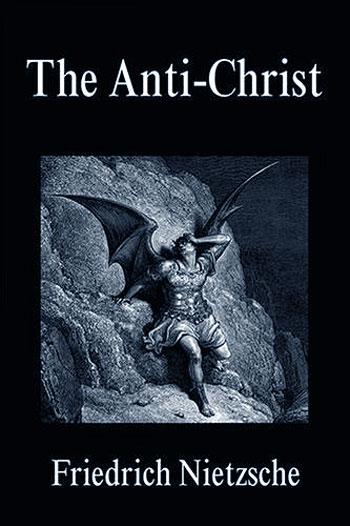


 Skepticism, Properly Applied