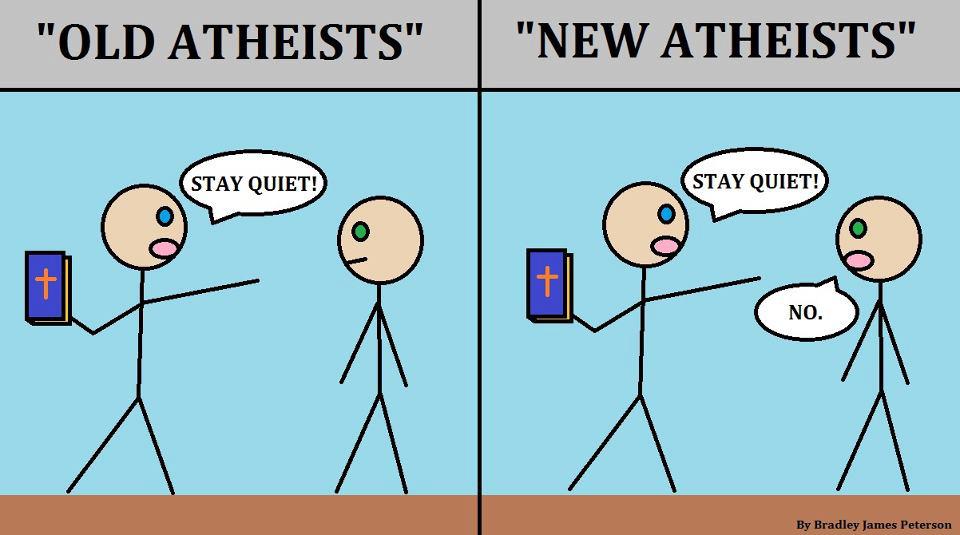
PZ Myers and Michael Ruse’s mis-attribution of the fault in our wars


I have been writing, reading, and thinking about the issue of accommodationism for some time.  Type ‘accommodationism’ in the search box above for some context, as there are too many posts to link to here.  I will say that  I have tended to agree with Jerry Coyne’s views about the relationship between religion and science most of the time, and I tend to agree with PZ Myers more often than not.

Yesterday, PZ Myers put up a post about Michael Ruse which I largely agree with, but I want to address something, not because it makes me disagree with the point PZ makes, but because I think it takes a step back and gives some larger perspective on this issue.  Here’s the relevant section from PZ’s post, quoting Ruse:

But wait! There are more paradoxes! One of the big problems with the New Atheism, says Ruse, is the way we idolize and support our leaders unquestioningly.

There are other aspects of the New Atheist movement that remind me of religion. One is the adulation by supporters and enthusiasts for the leaders of the movement. It is not just a matter of agreement or respect, but of a kind of worship. This certainly surrounds Dawkins, who is admittedly charismatic.

We worship Dawkins? And possibly Hitchens and Harris? Has he ever noticed how much we all freaking argue with each other? There are no saints and popes in the New Atheist movement.

Oh, wait, yes he has noticed. In the very next paragraph.

Freud describes a phenomenon that he calls ‘the narcissism of small differences’, in which groups feud over distinctions that, to the outside, seem totally trivial. It is highly characteristic of religions: think of the squabbles about the meaning of the Eucharist, for instance, or the ways in which Presbyterians tear each other apart over the true meaning of predestination. For those not involved in the fights, the issues seem virtually nonsensical, and certainly wasting energies that should be spent on fighting common foes. But not for those within the combat zone.

The New Atheists show this phenomenon more than any group I have ever before encountered.

So which is it? Blind, unquestioning worship of our leaders, or incessant fractiousness and dissension? It doesn’t matter. Ruse is just spinning his wheel of deplorable sins and accusing us of whatever random flaw pops up.

I will point out that PZ has missed that these two ideas are not, in fact, in necessarily contradiction, even if Ruse’s argument is ridiculous (which it is).  It is logically possible that people in the atheist movement idolize atheist leaders and that fractious arguments also result, just like with religion.  All it would take is a hypothetical Dawkins follower to argue with a Sam Harris follower, insofar as Harris and Dawkins would disagree.  And there are some people I have met who do seem to look up to some atheist “celebrities” with some level of idolization, but this is to be expected.  We are human, with personal flaws, after all.  The ideal, however, does not have anyone idolizing anyone.  I, for example, respect some people more than others, but I’ve never been a person who idolizes anyone, and never get fanboyish around well-known people, nor do I understand why other people do.

And I agree that there are arguments within the community, but I see this as largely a good thing even though in some cases it is evidence of bad ideas remaining among atheists (such as misogyny and privilege).  There is a lot of work to do before our culture matures emotionally, cognitively, and in terms of being aware of our privileges and biases.  And as a result of that, many atheists will tend to be stuck behind their own blindness, and fractures will exist which we need to addressed in the form of criticism and education of those people.  Hence Atheism+.

But what Ruse is identifying here is not so much that the atheist community is like religion, but that when groups of people gather for any common cause, belief, or lack of beliefs, they tend to have similar behavior patterns of idolization, arguing, etc.  So yes, the atheist community has some behavioral issues which are reminiscent of religion, but once again the error is in mis-attributing such things to religion, when in fact religion is the result of human group behaviors not the cause of it.  Ruse is showing how atheist communities are acting human, just like religious groups.  Why does Ruse make the (apparently unconscious) assumption that these behaviors fundamentally belong to religion?

Our goal—as skeptics and atheists concerned with our culture, our beliefs, and our actions—should be to improve how we all think, behave, and interact.  Those working on including social justice in their actions, whether atheist or religious, are taking a step in the right direction in such terms.  But what new/gnu atheism is about, Michael Ruse, is about asking whether the views some group has are true or not.  We must take as a given that we will err in how he think, behave, and interact, but the question which concerns us is whether our ideas are true, not whether our community is perfectly ideal.

That’s the long-term goal, and it will take time to get there.  And, as I understand it, this is what efforts such as Atheism+ were developed to answer.  Because if we want to address the human flaws and how they emerge in the atheist community, we have to understand how psychology turns into sociology; how our personal flaws turn into groupthink and tribalism.  The problem with religion is not that it fractures, idolizes its leaders, and then fights among themselves.  No, that’s a human problem which we all have to deal with.  The problem with religion is that it isn’t true; that they are arguing over fantasies.

Skeptical atheists, at least, are arguing over what is true with a methodology which works; science.  And if they are not using science and skepticism well enough, then we can use skeptical criticism to point out how and why.  When does religion do that? Religion uses logic on top of the assumptions of its theology, but it rarely, if ever, appropriately uses empirical methodology and good skepticism.

Michael Ruse is stuck comparing religion to atheism in ways which must be true because they are activities done by humans.  Where atheism and religion are alike, it is attributable to anthropology (what I have my undergrad degree in).  What Ruse misses, and what PZ does not articulate well in this case, is that what does separate religion from atheism is the concern for truth of worldviews rather than behavior of participants.

Because sure, some atheists go around  idolizing people and arguing over small details, but our goal is to help them personally grow until they are mature, skeptical, knowledgeable people with good cultural and personal perspective.  And unlike religion, we actually have real ways to achieve that because we do not have any scripture, doctrine, or limitations of criticism.

We have the best methods in our hands, no rules about where we cannot inquire, and only our personal flaws to hold us back.  That tempered by caring about what is true, rather than what is comforting, preferable, or sanctioned is a good road to progress.
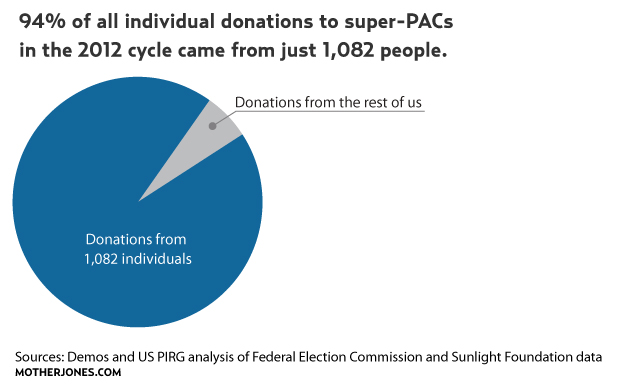

Atheism+: We are the 99%?


OK, first off the bat, it’s quite obvious that atheists are not the 99%.  While atheist/nonreligious numbers are growing, we have yet to break even 15% (The Crommunist has a break down of some numbers here).  But does this mean that our atheist+ values are not similar to the values of the 99%?

What seems pretty clear to me is that the focus on social justice in the atheist/skeptic/secular community cannot be an accident of history.  The Occupy movement of last year,  which continues in a transformed state, has obviously had ripple effects throughout the political and social world.  The 99% meme is now a part of our language and culture, and it has created an ideological watershed that will likely become part of our legacy as a set of generations active today.

So, to what extent are the values and goals similar to those of the Occupy movement? Well, I’m not sure, but people who are concerned with social justice will recognize the real divide between the economic elite and those below them.  The haves and the have-nots.

Control of the levers of political, and thus to a large extent social and cultural, power are in the hands of extremely wealthy people.  Most of the rest of us get to vote, but forgive my cynicism in pointing out that many people are frankly uninformed and thus have an oversimplified view of policy and thus support idiots.

Hence the current Republican party.  Is it a surprise that science, education, and social equality are not on the list of things-to-do for people who have done such a good job of swaying an electorate with propaganda and emotional appeal in the place of news and public policy? It shouldn’t be.

The Republican party is in serious need for a takeover by people who, while I disagree with them philosophically in most cases, have some important contributions to make to political thought.  You know, the old style intellectual conservatives a la Barry Goldwater.

Clearly Atheism+ is heavily progressive.  My guess is that atheists who lean conservative in this political climate will tend to not support the cause, and if they do so they will do so weakly.  And I don’t mind that it is progressive, because I am largely progressive myself, as are the other people here at PolySkeptic.  Hell, as I said yesterday, I am in favor of being radical, and perhaps I could be described as radical politically, to some extent.

So, do we try and overtly tie the messages and goals of the Occupy movement with Atheism+, or do we think that many of the Occupy people might resent that and leave their meme to their use, and simply help where we can?  Can we call ourselves part of this larger social movement? Because while people in the 1% are probably both atheist and theist, nonreligious and religious, clearly most of the atheists are part of the 99%, and the values of atheism+ contribute t0 the values of Occupy.

The Occupy movement is not about religion or god-belief, although certainly the levers of power have historically been tied to institutions such as the Catholic church and other theocratic forces.  But today the most wealthy don’t, as a rule, sit near an altar, a throne, or in the metaphorical clouds as gods or demigods.  Their power is levered by money, political maneuvers, and ideology.  All tools utilized by religion, sure, but we cannot directly tie the atheist movement to the 99% Occupy movement.

What we can do is point out that many atheists share the popular values of equality, social justice, and the existence of fair opportunity for all people.  Our culture, political institutions, and approach to problem-solving is in dire need of adjustment, and in some cases demolition and rebuilding.  Too much innate privilege is further privileged, too little room for proper application of skepticism is allowed, and too many people are uneducated about how to fix it or even think about it.

As Thomas Jefferson said to William S. Smith Paris in a letter written in 1787;

God forbid we should ever be 20 years without such a rebellion. The people cannot be all, & always, well informed. The part which is wrong will be discontented in proportion to the importance of the facts they misconceive. If they remain quiet under such misconceptions it is a lethargy, the forerunner of death to the public liberty.

We have been too long without a real change in political and social atmosphere.  We, as a culture, are stagnating.  I don’t know what the best solution is, but I know the direction we are going as a culture cannot be it.

To get to a world of social justice and reason and to not continue on this path which empowers so few and keeps ignorant, distracted, and stupid so many, we need drastic change.  While we debate such easy questions as gay marriage, “legitimate rape,” and the place of religion in public policy, the vast majority of us are being swindled without full realization.  The classic misdirection of the pickpocket, except the pickpocket lives in a massive estate and pick-pockets millions of people every day.

We are not powerless, but we are not utilizing our powers.  We need more things like Occupy and Atheism+.  We need education, information, and a set of values to follow towards cultural and political transformation.

Praying for College Students? 10-10-10


So, apparently there is this thing called 10-10-10.  On August 10th, 2012, at 10AM, for 10 minutes, people are supposed to pray for all of the students headed off to college in a few weeks.

I never understood things like this.  I mean, I don’t believe prayer works, but even if I were to lend some legitimacy to prayer as an idea, are prayers which are done at a certain time, by many people, about a particular thing supposed to be more powerful?

Is this akin to getting a bunch of people to sign a petition to the president? (please sign that, BTW,if you already have not.)

Well, let’s take a look at Matthew 18:19 (ISV):

Furthermore, I tell you with certainty that if two of you agree on earth about anything you request, it will be done for you by my Father in heaven,

So, the book of Matthew claims that any two people who get together for a cause, and pray (appeal?) to sweet baby Jesus (or perhaps in his grown up avatar of old-bearded-white-guy.  Sort of like The Dude, but not as cool) then he shall do your bidding.  Something like that.  I personally never gave much thought to mentally controlling the universe through imaginary friends.

Image from the TV show ‘God, the Devil, and Bob.’ Apparently God (right) is an old hippie and Satan (left) was me in grad school. Except I drink beer. And I don’t have horns. Maybe.

What is clear here is that such a thing as 10-10-10 is not intended primary as a petition to the lord and creator of the universe.  It is intended as social media.  It is intended as a media campaign to get people to think about something.

Just not to do anything.

Because there is no reason, empirical, logical, etc, to think that prayer can accomplish anything.  Rather than waste time praying, we need to do.

And there are things we can do to help freshmen starting in college.  Hopefully, we have already worked towards giving them the best high school education we could, including excellent intellectual foundations in science, writing, and study habits.  Hopefully their parents, friends, and the world around them generally have given them good models for rational thinking, self-challenging, and emotional strength.

But now that there are people going off to be more independent, most for the first time, we can begin trusting them now.  We have to start thinking of them as adults, treating them as adults, and give them the wisdom of adult understanding of the world.

This means a healthy scientifically-based understanding of sexuality and safety.  It means at least a basic understanding of personal finances.  This means expectation of leaving your likely-parochial worldview; a preparedness to meet and interact with people with vastly different worldviews than they know.  It means these and many more things.

But in general, if we are concerned with students and young people in general, we need to be working, not praying, to make the world around us better.  We need to be educating ourselves, challenging our sacred or merely closely-held beliefs, and we need to address real problems head-on.

No god is going to help us.  Because if a god exists, it is clearly not interested in getting its ‘hands’ dirty.  The paltry, megalomaniacal, jealous god of many scriptures is not one I would depend on, even if I thought ‘He’ existed.  All evidence points to the only way we are going to get through this life is through mutual effort.

If I were the type of person to try and liberalize scripture to some warm-fuzzy interpretation, I would take Mt. 18:19, quoted above, as an ecumenical, almost secular message about working together.  It would mean that our actions, working together, would be the hand of some god, rather than our own effort.  But that is simply overly-metaphorical and ultimately anti-humanistic.

So, the next time I have a beer in my hand I will tip it in salute to all the new freshmen out there, as well as those getting ready to enter the “real world” at the end of the year.  Remember to challenge yourself, question your assumptions from time to time, and to get out and actually experience the world and other people.

Go out and have some (or a lot of) consensual sex, learn new things, develop a quirky hobby, listen to new music, read something not assigned by a professor, and occasionally have all night sessions of philosophical or personal discussions. In short I think students should learn, enjoy life, and transcend what they currently are.

Don’t take advice from conservative-minded people who seem afraid of “temptation” and leaving your confines of a tiny, religious, worldview.  More and more young people are leaving religion.  Let’s help that trend accelerate.  With the SSA around, I know that there are excellent people already doing so.

What do you think we can do to help students prepare for college or for life-after-college?

Thinking about “the OTHER side” with friends


OK, so I don’t know why I have not been reading Dan Fincke’s blog, Camels with Hammers, for longer than that last month or so.  I don’t always agree with him, but he and I share a number of things, including graduate degrees in philosophy, a love of Nietzsche, and being atheist bloggers.  It’s too bad he’s not poly or I might have to have a man-crush or something.

This is what Patrick Stewart does after reading the beginning of this post

OK, not that last part.  I’m totes hetero.  Except for Patrick Stewart during the days of Star Trek: TNG.

Anyway, I’m getting off-topic (already), so I’ll just leave my Kinsey rating to the side for a moment and get to what I want to talk about today.

I had a long conversation with some friends last week about atheism, polyamory, privilege, etc that was rather frustrating all-around.  In an email exchange, a friend wrote to me, and this was my response.

I think I address some issues which are interesting to readers here, so enjoy.

[I’ve changed names of people involved for the sake of anonymity or someshit]

I find it interesting that you read that post and got this from it:

I’m not sure which viewpoint you meant to espouse here – doesn’t this stand for the proposition that any prominent view can be blindingly pervasive?

I find it interesting because this may be a related tangent to the post, but it is not what Dan Fincke was talking about (as I understand it).  For me, the core of the post was this section (Quoted only to highlight it, not to have you read it again, necessarily):

And this is not because they are either brainwashed or intemperate, but rather because they know what you think already and are sick of it. They too were systematically enculturated to internalize the same values, beliefs, practices, and assumptions that you were. What you are about to say to them was drilled into their heads, quite often to their own detriment, with both words and consequences. And sometimes those words and consequences were extremely harsh in order that the point you want to make to them might sink deep into their little, obtuse heads. Whatever you are going to say, they have heard it already from their parents, their lovers, their religious leaders, their friends, their coaches, their colleagues, their teachers, and/or their employers. The assumptions you want to make explicitly clear to them, in order that they finally “get it”, have already determined the course of their lives in ways you can hardly imagine.

They have met you before. They have thought your way before, they have felt your way before, and they have valued things your way before. They have lived in your world their whole lives. They walk around with you already in their head.

They have struggled through hard experiences, wrestled with challenging educators, and engaged in a whole lot of personal reflection in order to learn  how to think differently, in order that they might successfully think and feel at cross-currents with not only explicit sociopolitical pressures but implicit ones embedded in language, social norms, religious practices, and, even, what are taken to be moral assumptions.

People who come from your own culture and yet think so wildly differently from what you think you know to be common sense do not just wind up that way because they are stupid or emotional or have mysteriously not been presented with basic information or arguments yet. They have, in all likelihood, had some bad experiences and been exposed to challenging ideas that you have not seriously had to contend with yet. They have, in all likelihood, thought through the issues at hand in intricately complex ways that you have not even begun to take seriously.

Of course this does not mean that they have necessarily come to correct conclusions in all, or even in most, matters. Their radical reeducation may be mistaken. They may have drawn the wrong conclusions from their experiences in any number of areas or in any number of ways. They may have something to learn from a dialogue or a debate with you.

But neither you nor they will learn anything if you just dismiss them as someone who needs you to explain to them the obvious that they might overcome their apparent obtuseness. Nothing is going to be learned if you condescend to them by telling them they haven’t heard out the “other side” and that they are just some sort of extremist who does not get basic facts about the world. Nothing is going to be learned if you strawman what is strange and unfamiliar in what they are saying so that you never give it the slightest chance to prove itself to you and to expand your horizons. You are not going to grow if you look for their most obvious mistakes, interpret their views to have the worst possible implications, or try to attack their personal failings as a convenient excuse to shut them down without listening to them.

This is not talking about how persuasive or prominent an idea is, at least not directly. As I understand it, Fincke is talking about how worldviews skew how we approach topics.  It’s talking about how a person can get at a problem from a view that others, who have not dove into the intricacies, simply don’t see.  The simplistic view that those people, who have not dove in, is often paired with an untested certainty about their view.

I say “untested” because they have not dealt with the subject deeply and seriously, so they are incapable of understanding it in the way that the expert (or even non-expert activist) does.  It does not mean they are lacking in intelligence or anything like that, just that they currently lack the relevant experience to comprehend the various subtleties of the problems.

As an example, let me address your question about self-doubting ideologies, where you said

So it would cut against any ideology which isn’t self-doubting, including atheism?

I’m curious why you see atheism as not being self-doubting.  Granted, there are atheists who may not doubt (as there are theists who do not doubt), but this is either a false claim to cover up insecurity or a semantic problem. Atheism per se is nothing more than the lack of belief in any “gods” (whatever those are supposed to be).  Atheism is a tentative conclusion based upon rational thinking, logic, and empiricism; in short, it’s due to skepticism; the lack of supporting evidence leads to the lack of belief in supernatural entities.

Any intelligent and mature thinker knows that their opinions, conclusions, etc are always tentative.  The strength of their certainty is dependent upon the strength of the evidence in support for a position, ideally.  My certainty that there are no theistic gods is very high (for deistic gods, not as high), and if I am given sufficient reason or evidence to doubt this certainty, that lack of belief is subject to change.  If there is good reason to think there are any gods, I want to know and am willing to change my mind.

But my experience with theology, science, philosophy, etc have led my certainty to grow quite strong, and the area for possible evidence for such beings is vanishingly small.  That is, the gaps for “the god of the gaps” grows smaller the more we learn about the universe.  But in the end I will always concede that I might be wrong, that there may be a god, gods, or something supernatural.  I simply see no reason to suspect that I am wrong, currently.

So in other words atheism is always tentative and thus, in a sense, self-doubting.  An atheist should always doubt (everyone should).  If I were to be precise, I would point out that because atheism proposes nothing about the world at all (it is a negative position; a- + theism=atheism), it is not even categorically meaningful for it to not be subject to doubt because it proposes nothing to doubt or not.  Theism is the position, the claim, and atheism is the rejection of the claim and logically implies nothing else, directly.  The only way to meaningfully doubt atheism is to be exposed to evidence or good reason to believe in a god.  And an atheist should be open to the possibility of such (And there are atheists, like PZ Myers, who [seem to] disagree with that statement…for reasons too complicated to get into here).

The point of the post, as I understand it, is to show that ideas, whether popular, mainstream, etc (or not) are subject to a kind of bias, often called privilege, which creates a problem in communication.  The Christian talking to me, for example, talks as if I have never heard the story of Christ.  Or at least that if I know the words, I have failed to comprehend the meaning and significance of the story.  But not only do I know the story, but I know the history, theology, etc better than they do (quite likely; studies have shown that atheists know more about religion than practitioners of those religions do, in most cases).

I know it more because I have spent years studying the subject.  I have superior experience, so when I talk with people with other specialties (say, the law or robot-building), I run into ideas about the subject which fail to demonstrate sufficient understanding, let alone expertise.  And the arguments that I hear are attempts to show a narrative which I not only understand (and better than the arguer), but which I have transcended, rejected, and have replaced with a superior narrative.

Like I said before; I would not try and argue a legal position with you (or anyone else who has studied such things) without understanding that my views on the subject are sophomoric (at best), and I would lend more weight on what you would say, even though I am aware that you may not actually be correct.  But I hear people add their views about religion, atheism, philosophy, etc frequently who have little idea about what they’re talking about, because they are intelligent people and these are mere matters of critical thinking (or whatever their justification may be).

There seems to be a view in our culture that subjects such as religion and the complex issues surrounding “new atheism” are accessible to any educated person (and, I suppose it is if they do the work), and so many people feel (whether atheist or theist) like they can just confidently explain to me the popular narrative and I’ll simply get that I’m making it more complicated, extreme, etc than it has to be.  When [name redacted] referred to me as “one-dimensional,” I wanted to say I saw him as sophomoric and simplistic, but I realized that wouldn’t help conversation.  When I hear that, I feel like I’m talking to the freshman in philosophy class who thinks he knows everything because he read ahead and knows what the next reading offers as an answer.  But that freshman doesn’t have a grasp on the problem at hand, and just looks stupid from the point of view of the expert.

There exists a (privileged) narrative about religion, faith, atheism, science etc in our culture which is largely nonsensical and flatly wrong.  It sounds sensible at first hearing (that is, it’s compelling and persuasive and thus hard to respond to easily without explaining the underlying narrative), but it’s dubious and has been shown to be so by people such as myself for years.  And yet this narrative drives the mainstream cultural opinion where the mass media, most of the middle class, and even educated people swim and pass around the memes which we, the experts in the field, know to be absurd.  And so we get frustrated, labeled as angry, irrational, and “one-dimensional.”

The reason we seem one-dimensional is that whenever we talk to people like [name redacted], in the role he played during that conversation, we are viscerally reminded of the narrative we find so ridiculous, and have to confront it again.  It seems like was are reactionary and combative, but we are defending ourselves against the dominant narrative.  We are combating a privilege you have, can’t see, and everyone walks away frustrated.  We have to explain the basics of the problem, for the thousandth time, to someone who thinks their opinion is intelligent when it isn’t.

So yes, we come across as angry, repetitive, and one dimensional.  We have the choice of that, or shutting up.

This image sums that up for me, perfectly:

Secularism v. religious privilege


QualiaSoup is among my favorite YouTubers (others include Evid3nc3, The Thinking Atheist, Darkmatter2525, NonStampCollector, and of course the vlogbrothers).  His analyses of various issues are coupled with helpful visual components which make his arguments powerful and compelling.  Here’s the latest:

And while this video focuses on the United Kingdom, the principles are pretty universal, and thus apply to the United States as well.

I have worked with Separation of Church/State groups and have done activism on this front, along side my atheist activism, for a long time.  Because I live in a relatively liberal part of the country (and world), I tend to not feel the cultural necessity to keep the pressure on such issues as strongly, and local groups here are not as active as they are elsewhere (like they are in the Midwest, the South, and specifically Austin, TX).  But keeping secularism as a goal and ideal is important to me, and I think we need to remember that there is a fight right now against religious privilege, who are framing it as the right to their religious freedom.

It’s not religious freedom that is being fought for by conservatives and their religious allies; it’s religious privilege.  Secularism is the solution to religious privilege, and does not threaten religious freedom at all.

The God Particle was Framed


Last week, mostly in the comments section of my post on the difficulties of defining words clearly and universally, to everyone’s satisfaction, Wes and I discussed (among other topics) the importance of rhetorical framing. CERN’s recent announcement of the near-certain discovery of the Higgs-Boson (a.k.a. the “god particle”) has elicited surprising reactions from theists, and I think framing explains their response.

Some of you may have seen this Twitter feed making the rounds. When I first saw it, I was puzzled. How can theists claim that a discovery that demystifies a major, previously unanswered, question about the physical world is bad for atheism? I considered the possibility that the Twitter feed was a joke (and it may still be, though I think it’s serious), but then I came across other christian apologists making the same case. Many theists do, indeed, see this discovery as proof of their god’s existence. But why?

The answer, at least in part, is that apologists have reframed the term “god particle.” Fifty years ago, when physicist Peter Higgs hypothesized his eponymous boson, it was simply called the Higgs boson. The metaphor of a “god” particle comes from nobel laureate Leon Lederman’s 1993 book, The God Particle: If the Universe Is the Answer, What is the Question? In most press accounts, the phrase is bracketed by quotation marks, a rhetorical move meant either to indicate words/phrases that are being used in ways that might differ from their denotative meanings or to show potential biases of the word/phrase’s originator. When Rush Limbaugh called Sarah Fluke a “slut,” people reported that Rush had used that word to describe her, not that they were using it themselves.

By placing it in quotation marks, the mainstream media, then, frames “god particle” as a term that could at least be open to debate. I think they do this with varying degrees of success, and using the term at all gives it credibility that scientists wish it would not have. I think there’s plenty of blame to go around here. Scientists generally do a poor job of framing issues in the public discourse. Perhaps this is because they see language in general, and the language of the media especially, as needlessly slippery, and they do not want to engage in discussions involving terms/concepts that are not clearly, objectively provable. In a way, that’s what I’d expect of scientists: it’s what makes them good at science. However, it also reflects a type of black-and-white thinking that doesn’t always help factions make their rhetorical points.

But the media is also to blame for assuming its audience needs figurative language to understand complex ideas (though figurative language is certainly useful for this purpose, one must choose one’s metaphors carefully), for so readily and uncritically using normative (in this case theistic) figurative language, and for not doing the minimal amount of research needed to know that Leon Lederman himself thinks the term “god particle” is problematic. On this last point, I’m not sure it’s entirely fair to let Dr. Lederman off the hook. He has joked that his idea to call it the “goddamn” particle was shot down by editors, but he has also said that he used the term “god particle” because the Higgs boson was “so central to the state of physics today, so crucial to our final understanding of the structure of matter, yet so elusive.” It seems Dr. Lederman could think of no better way to communicate uncertainty than appeal to a deity, so he may have been foist by his own petard (along with the entire physics community, which is no stranger to using theistic metaphors to make its points).

Christian apologists, however, have used framing to remove the quotation marks completely. For them, “god particle” is not a metaphor but a descriptor. They refer to biblical passages like Colossians 1:15-18:

He is the image of the invisible God, the firstborn over all creation. For by Him all things were created that are in heaven and that are on earth, visible and invisible, whether thrones or dominions or principalities or powers. All things were created through Him and for Him.

For apologists, then, the discovery of the Higgs boson particle is the discovery of the “invisible God.” This line of apologetics lauds scientific discoveries like the one at CERN as proof of the validity of the teleological argument. The problem, of course, is that they’re begging the question. The mere fact that we’re able to see a logical order to the material world does not prove that an unseen “logical” creator of that world exists. Whether or not that creator exists, our observations will be the same.

The thing about framing, though, is that it’s not always the same as misunderstanding–or, more insidiously, misusing–language. In the case of “god particle,” the problem is that the phrase’s two constituent words are abstract enough to allow myriad interpretations. The word “god” has almost a dozen definitions and “particle” has five. The definition of “particle” is particularly flexible, so it’s not altogether surprising that apologists would see “all things…that are on earth, visible and invisible, whether thrones or dominions or principalities or powers” as being made up of “one of the extremely small constituents of matter.” Somewhat ironically, the definition of “particle” with respect to English grammar is “a small word of functional or relational use.” In other words, a particle itself doesn’t belong to a clear category: it is not easily quantifiable. To the extent that it fits into a linguistic structure, its role in the logic of that structure is unknown/invisible, or at least not categorizable.

I’m not saying that I think apologists are right to see the discovery of the so-called “god particle” (see, was the “so-called” so hard to use?) as proof of a deity’s actual existence, of the universe’s “intelligent design,” etc. But I think that Leon Lederman’s choice of words was problematic, that the media’s dissemination of his phrase (utterly divorced from its original context, mind you–Lederman was worried his phrase might offend theists) was irresponsible, and the scientific community’s inability (or lack of desire) to frame the debate in a way most advantageous to its own case contributed to apologists’ declaration of victory.

Atheists (or materialists, secularists, etc.) see the world in a way that we believe is fundamentally right, but we don’t have the power of cultural normativity–and its concomitant ease of rhetorical framing–on our side. As a result, we must be especially vehement in pointing out the ways in which dominant groups use framing to buttress their hegemony. We must understand, however, that framing is a technique we also use. Demystifying framing is necessary in order to understand how it functions, but demystification alone does not necessarily change the rules of the rhetorical game.


I am an atheist (and what that means)


I recently returned from a sesshin, a multi-day Buddhist retreat. That may be an odd way to start a post on an atheist blog, but between the sesshin and conversations I’ve had recently with Shaun, Alex and a good friend who has a doctorate in religious studies, I’ve been thinking a lot about what religion is and what exactly it means for me to be an atheist.

There is no doubt that Buddhism is, for many people and governments, a religion. it is certainly treated that way in America, where it has (at least officially) the same protected status as other religions. However, it is equally true that for many practitioners, including myself, Buddhism is not a religion, but a philosophy. Stephen Batchelor is only the most outspoken of those arguing that the Buddha was not a religious leader but a social activist. Western Buddhism has fused psychotherapy and neuroscience to the practices of meditation and the outlook Buddhism espouses.

Buddhism has always been based in what Judson Brewer, in a recent Buddhist Geeks podcast, called “evidence based faith.” Early sutras record the Buddha saying that no one should follow him based on faith alone, but that everyone should test his ideas and if they are not useful, or if someone finds something better, the ideas should be discarded. The Dali Lama has said that if science disproves any of the claims of Buddhist belief, it is Buddhism that must change, not science. So I feel quite comfortable saying I am a Buddhist atheist.

That’s not the point of this post however, because that’s a well understood point and not worth a whole separate post. However, at the sesshin, I took part in jukai, the Zen ceremony of transmitting and accepting the precepts. I did a lot of bowing. I promised to uphold the precepts. There was group chanting. Afterwards, Alex, who was there as a guest, later said he was a bit uncomfortable with the “cult-like” atmosphere at times. It made me think seriously about why I am comfortable with chanting and bowing and rules in the context of Zen Buddhism and not in the context of Catholicism or Islam. Having though seriously, here are my conclusions.

First, there are many aspects of religion that I see as neutral or even positive, especially creating  community and allowing space to contemplate big questions like “what is the meaning of life.” And, interestingly, if you ask someone with an MA in philosophy or a PhD in religious studies what the definition of religion is, they are much more likely to talk about the actions a religion performs than the doctrines or beliefs about gods (here’s where I should totally have links to some of the definitions my friend mentioned, but we were in the car for the conversation and I was driving so I didn’t write any of the names down).

It was during the last of these conversations that I realized I am, very literally, an atheist. That is, I am against god, or the concept of god. I’m not really against “religion” per say, because I think it’s a big, amorphous idea that is hard to define. But I am absolutely against the idea of a God especially as presented by the big three monotheistic religions , for two very specific reasons.

1. This view of God locates morality outside the human realm and that is dangerous.

The all powerful god who sets up rules of conduct which are outside of context and time removes responsibility for individual humans to thoughtfully evaluate complex situations and decide what the best response is. I’ve  had the common experience of atheists, being asked by a religious person why I bothering being “good” if I don’t believe in god. I find this question deeply frightening because what it says about the questioner is that the only reason that person is ethical is fear of not getting into heaven. No compassion for others, or an innate sense of fairness and justice or a belief in the social contract. Just fear of hellfire. That is not someone I want teaching my kids (if I had any) or running my government!

2. God is resolutely irrational

God is deliberately and explicitly about faith–the non-rational trust in something that not only cannot be rationally proven, but must not be. If god can be contained by rationality, if god must obey the laws of the universe, if god can be proven, then god’s power is severely diminished if not broken entirely. The point of god is to be beyond human understanding, so that things that don’t make sense to us (why bad things happen to good people, for example), we can take comfort in the belief that god has a plan and it is good.

For me, god is a dangerous concept, because it locates decision making and consequences outside of the human sphere and pretends there can be absolute right and wrong, good and evil. When this is translated into the realm of public policy, civil rights, education and sexuality, it must necessarily cause suffering, because the human world is not absolute.

So I’m fine bowing and chanting at the retreat. I’m fine with religion. What I’m not at all fine with is god. I am an atheist.

Religious Conversions Happen for Social Reasons


Editorial Note: This post was written by Wes Fenza, long before the falling out of our previous quint household and the subsequent illumination of his abusive behavior, sexual assault of several women, and removal from the Polyamory Leadership Network and banning from at least one conference. I have left Wes’ posts  here because I don’t believe it’s meaningful to simply remove them. You cannot remove the truth by hiding it; Wes and I used to collaborate, and his thoughts will remain here, with this notice attached.

—–


Some of you may have heard of Lea Libresco’s recent conversion to Catholicism. A lot of people have been posting about it, but Chris Hallquist has the best take I’ve seen on the topic:

I was briefly puzzled when I heard about atheist blogger Leah Libresco’s conversion to Catholicism. But I was immediately un-puzzled when I read Dan Fincke’s post on it, which reminded me that “the very premise of Libresco’s blog was that she was romantically involved with a Catholic.” Oh yeah. Duh.

Meaning and Happiness


I’m not going to address the canard that without god we can’t have meaning in our lives. OK, yes I am. But only briefly, and the rest will only deal with that question indirectly. Yes, it is quite obvious that people without a belief in gods have meaning in their lives. Perhaps not inherent, absolute, and cosmically significant meaning, but those things are illusory, just like gods.

I have been, since childhood, rather introspective. I do a lot of thinking about thinking, reflecting on experience, and asking simple “why…” questions about mundane things that most people take as granted.  To me, the beginning of skepticism begins with the ability to ask why something is, and then asking for reasons to keep accepting it.  I never merely accepted the way things are and that they need to be that way. Thus, my becoming a degenerate deviant is not surprising.

Ultimately, I think seeing polyamory, atheism, and skepticism as deviant and degenerate is, well, unfortunate and morosely funny.  It does not speak well of our species that such basic values as demanding evidence for claims and then not accepting worldviews that can’t stand up to such demands is the weird thing. But I digress…

Anyway, I’m one of those annoying people who thinks asking why we do and believe certain things is good. I also am interested in various experiences. I was very interested in meditation while young, and much of what I learned and experienced during those times in my life have influenced how I see the world, how I think, and how I try and improve as a person.  I “experimented” with drugs while younger (meaning I enjoyed their effects while on them), and while I have little interest in such things now, I am glad that I had those experiences.

When I got to college, I was very interested in taking as many courses that dealt with religion, philosophy, and anthropology as I could. I was interested in questions about meaning, belief, and knowledge in culture and psychology. Is there any surprise that I graduated with a degree in ‘religious anthropology”?  Is there any surprise that I write about religion, think about religion, and ultimately oppose religion?

I knew that the history of ideas which dealt with meaning, experience, etc are contained in philosophy, theology, and religion. I also knew that I didn’t believe in any gods, had strong issues with religions, both organized and less-than-organized, and that I had an attraction to science and philosophy.

After reading religious thinkers from over the centuries, including many scriptures and apologetic writing, I knew that these things had something to offer us, even if much of it was meshed with absurd theological assertions and assumptions; I knew that it is all too easy to conflate interesting psychological insights with the tradition adjacent to their origin. That is, I understood that a Catholic, Moslem, or Hindu thinker could say something interesting, insightful, or even true without that idea having any logical relevance to the theology they believed.

So, any sophisticated theologian who attempts to claim that this gnu atheist is unfamiliar with sophisticated theology, I can confidently reply that they are simply incorrect. No Courtier’s Reply can stick to me, especially since the Reply is absurd on its face.


For a few years I have thought about how we, as a community of reason, could talk about such things outside of a theological context.  I mean, philosophers do it all the time, right? (And I do have a MA in philosophy).  Then today I ran into this post by Dale McGowan which talks about the importance of social interactions in happiness.  It is a quick review of a study about why religion makes people happier.

Essentially the point is encapsulated here, stolen from McGowan’s post, in these quotes by Chaeyoon Lim:

[Life satisfaction] is almost entirely about the social aspect of religion, rather than the theological or spiritual aspect…

and Raising Freethinkers co-author Amanda Metskas:

[T]heology is less important to most churchgoers than a number of other benefits. In many cases, they attend despite the theology. It is telling that only 27 percent of churchgoing US respondents to a 2007 Gallup poll even mentioned God when asked for the main reason they attend church. Most people go for personal growth, for guidance in their lives, to be encouraged, to be inspired—or for the community and fellowship of other members. These, not worship, are the primary needs fulfilled by churches. (p. 206)

This is illuminating, and speaks to precisely the point that many gnus have discussed over the last few years; it is not the beliefs which make people happy (they are usually harmful), but it is the social connections that keep many people in church.

The implication, I believe, is that we do need to do more to create social environments for atheists and such.  Skeptics in the pub, conventions, campus groups, etc are all great steps in that direction, even if some people take things too far in terms of emulating religion.  That is, Alain de Botton is wrong precisely because he does not just want to keep the social aspects around, but he wants to keep some of the theological parts alive too.

Part of what will cultivate community, I think, will be organizing under a banner, a label (or a very small set of labels at most), and a small set of major organizations who represent what we do share, our political concerns, and our social presence.  The Reason Rally was a step in defining much of these things, and the next few years will have a lot to tell us about the nature of our collective message, what organizations will be saying them, and how broad we need to be to draw people in.

We have issues, as a community, in terms of drawing in the voices of women, ethnic and racial minorities”, genderqueer people, and even blue collar secularists.  I don’t know what all the solutions are, but I am keeping my ears tuned to people who offer some and will be thinking and writing about it from time to time.

I know I am guilty of many of the things that turn many people away; my writing is esoteric, my tone is sometimes harsh, and I include commentary which does not fit in with most atheists and skeptics (specifically polyamory.  To what degree, if any, I may change any of this will depend on the strength of arguments, the evidence supporting said arguments, and my ability to actually change.

But I think we, the community of reason and skepticism, have a lot to say about how to create meaning in important ways and how to live lives of general contentment and happiness.  Fore me, my life project to be happy lead me to atheism and polyamory, while sharpening my skeptical tools along the way.  I think my story and views have something to add to this conversation.

Sunday, Bloody Easter


Jesus had a bad weekend for your sins.

Listen, I don’t accept the crucifixion and then the story of how Jesus rose on the third day for a second.  There is simply no corroborating evidence for it, it parallels too many pre-Christian stories, and the oldest Gospel, Mark, didn’t originally contain the story of the resurrection.  There is a lot out there to read about the issue of the resurrection, and I am certainly no expert (although I know one person who has expertise in related academic fields), so I will leave it to them to address that particular issue in more detail.

But if I did accept the story, that is, the bare facts that some guy (let’s call him Jesus, Yeshua, or Frank for all I care) almost 2000 years ago was wandering around with 12 dudes while preaching about some messianic Jewish story or how the Kingdom of Heaven is at hand, or possibly within you, was arrested, detained, questions, tortured, crucified, and then buried only to appear, alive, a couple of days later…. Well, so what?

Let’s say that I was willing to grant that this happened.  It does not have to mean I have to accept the interpretation of those who claimed to have been witnesses.  I don’t have to accept the dominant narrative that evolved into the Gospel stories nor the earlier Pauline accounts, via his letters to other people who started worshiping this guy around the Mediterranean Sea, do I?.  In fact, this historical fact, if assumed true, does not address the existence of any gods at all, necessarily (nor does it address whether that person was a god, let alone THE god…or at least one of three hypostases of god…whatever).  It would be a mysterious situation that would pique my curiosity (and skepticism), but if it happened then we would have to deal with it as a real event and figure out how it might have heppened.

The problem is that we are so far removed from the historical events, blind to essential details, that the type of necessary investigation would be impossible.  There is nothing to do with the facts other than wonder about them.  So, what does this type of story have to do with god, religion, hundreds of years of violence, repression of scientific and intellectual freedom to advance, and hierarchical infrastructures of people whom are generally automatically revered because they apparently know this guy who rose from the “dead”?

In a word; nothing.  At least it shouldn’t, if we were being rational about things.

Many Christian apologists have claimed that what makes Christianity unique is the fact that it is based upon not mere mythology, but historical fact.  Paul, in the first letter to the Corinthians famously said that

15:14 And if Christ be not risen, then is our preaching vain, and your faith is also vain.

and for many Christians this is the crux (lol) of the matter.  For them, the “miracle” of the resurrection is the fact that defines their faith.  And despite the fact that I (as well as many other people) do not think that it happened, this is irrelevant because even if it did actually happen it does not lead to the salvation story that many Christians want it to tell.


What happened to Jesus, if it happened at all like it is portrayed in Christian orthodox theological terms, was not a sacrifice.  If Jesus was god, or at least one with god, and if Jesus knew this, then it is not a sacrifice because he suffered no actual harm and no real loss,.  It is a bad couple of days, a stubbed toe, an inconvenient breeze in the face of eternity as a freaking all-powerful god! It would be less of a sacrifice than the sacrifice of effort and time it would take to flip a switch within arm’s length in order to save people from certain death by some killing machine, created by some super-villain.

Except in the case of Christianity, God is not only the switch-flipper, but God is also the mad super-villain who created the killing machine as well as the switch itself.  I simply cannot find meaning in this Easter story beyond metaphors for all sorts of themes surrounding rebirth, which are used by most religious traditions and which don’t imply that we are all evil sinners worthy of eternal torture for being what God made us to be so that he would have to send himself to have a bad couple of days to make up for lack of good planning concerning the fate of billions of people throughout all of history.

Yeah, that’s the story of Christianity, people.

Ok, so what if Jesus was a man, albeit a unique and important one? What if Jesus was a man inspired by a true god, or at least the chosen messenger of god, whose efforts in delivering said message would be rewarded with eternal paradise on the right hand, or even down the street from, the real God of the universe(s)?  Then it is merely a form of substitutional atonement; an awful event, morally, if ever there was one.  I’ve heard the apologetic responses, but the story of the atonement, or the replacing of the sacrificial sheep with Jesus (the most unblemished of sacrificial lambs) is absurd.  How does another person dying do anything for my imperfections? The level of theological rationalization around this issue is frankly staggering, and we need to see it for what it is.  The idea simply makes no sense, whatsoever, and it robs us of our personal responsibility for our own misdeeds.

Jesus dying for our sins, whether as god or man (or as some weird genetic cross-breed of god-man), is quite simply absurd and silly.  It appeals to us emotionally and can be rationalized into some meaningful pulp, but it has no nutritional value whatsoever.  It is irrational, un-skeptical, and even immoral in nature.

If anything, it’s just another old religious metaphor for the rebirth of the world, in Spring, from the death that is winter, with the addition of theological concepts which absorb us in self-deprecation and is ultimately anti-life.  You know, like symbols reminiscent of life, birth, and youth but bathed in blood and depressing self-hate.

It’s too bad we don’t have anything this time of year which is like that without all the blood, death, and anti-humanistic rhetoric built-in.

Oh, right, yes we do! Symbols of fertility, birth/rebirth, and youth surround our more secularized version of Easter.  Pagan will try to take credit, and they do deserve some of it, but this is simply human behavior; we want a way to symbolize and celebrate the return of life to the world.  Our history and literature is replete with such symbols and celebrations, and Christianity has (once again) seized them and used them as their own.

But in this case, the thieving Christians, specifically the Catholic Church, didn’t even have the common decency to re-name the holiday! Easter? really? EASTER?

I mean, come on, people? It’s bad enough that Christians stole Christmas, but at least in that case they chose an original name, right?

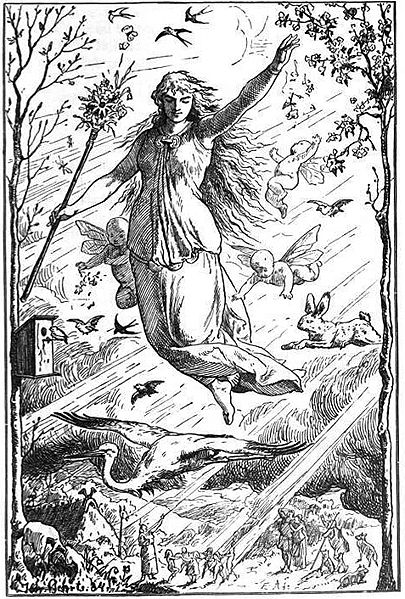
So, here is Ostara (she goes by many names, but essentially she is Ēostre/Easter.  Check the link if you want to know more about the pagan mythology and history of celebrations and rituals surrounding her and this time of year.  But if you don’t, at least take home with you the idea that this holiday is not merely Christian, and insofar as it is Christian it is not the story that the Pope or your pastor tells on Easter morning.

Please, learn your history.  If you are a Christian, please learn where your ideas came from.  Try to understand the context, the subtleties, and even the blatant cultural influences which shape how you see the world.  View the Jesus story as a metaphor, a metaphorical narrative, and possibly not a very good one, which tells you something about our psychology and needs, but not about historical or metaphysical truth.

Jesus, if such a person existed and died via crucifixion, is not the solution to your sense of ultimate personal lacking.  Your imperfections, misdeeds, and falling short of some ideal morality cannot be solved by a person dying, nor subsequent rising from said death, nor from some contrived ‘God sacrifices himself to himself to make up for a law he made about a piece of fruit that nobody ever actually ate’ theology.  You must take responsibility for yourself, toss aside this metaphysical concept of sin, and stop sacrificing this life for some promised other life.

This life is all we have, and we must do what we can to make it all that we want it to be.  So stop bowing to a pseudo-sacrifice and start living in a world which is currently blooming with things wonderful, terrible, and worth working for now

Happy Easter, everyone.