I recently sent in my contribution to The Marriage Project, a blog which collects women’s thoughts about marriage, whether they are married, wish or intend to be married, or plan never to marry. It’s a cool project and it was fun to think and write about the questions. I like the pull quote she chose for the title of mine, and also this one that follows immediately:
To me there’s a big difference between saying, “I plan to spend the rest of my life with you, and I will work to make sure that is a happy and fulfilling experience for us both,” and saying, “I promise I will be with you forever.”
I’ve thought a lot, over the years, about how people respond to power. It was the primary theme of my science fiction novel, which is entitled Power. In many ways, this book, as well as many things I have written, thought about, etc over my life have been an exploration of how a person might react to any power, whether given or earned.
Would I trust myself to have ultimate power? Would I trust most people with such power? Would I trust anyone with ultimate power?
The simple fact is that nobody should have ultimate power, whether we could trust them or not. The power we have should be limited and given carefully. Our political process, currently, is not especially good as it favors the wealthy and more often than not gives power to people who seek it for their own ends. And while I don’t agree with Plato that “Philosopher Kings” would be the best solution, I think that the seeking of power is indeed part of the problem and perhaps some reluctant leaders might be a step in the right direction.
All the power I want is the power to make my own decisions, affect people positively wherein I have the intimate relationship to do so, and to prevent harm where I can. I don’t want to manipulate, not even if I believed that it was for the good of the manipulated. I’m not arrogant enough to believe that I could tell the difference between my selfish interests and what is actually good for someone else. I don’t want power over people, nor do I want people to have unnecessary power over me. I will grant power where I think it’s fair to do so (a laJohn Rawls), as I believe we all should.
Our own lives, how we manage our selves, relationships, and projects are the test we are all taking every day. How our society looks is an epiphenomenon of many cultural concepts which cause individual actions and behaviors. In short, our individual decisions add to the whole, and the influence of ideas we spread has some small effect upon the world around us.
Currently, many parts of our society are not doing well on this test. The question is whether you are part of the problem or the solution. My goal is to be part of the solution more than I am part of the problem, knowing that we all will make mistakes and that the good actions of others may make up for my errors, and my good may outweigh their errors. Together, we can help each other err less, and grow more.
But if on the whole we are doing more good than harm, we should see the steady progress which we humans are capable of.
And those who seek power should, perhaps, be taking the orders sometimes, and not giving them as much. The ability to be louder is not a sign of being a good leader, and perhaps the quiet have things we should be intentionally listening for.
Not that introverts should take over, necessarily. Only that the noisy should learn to shut up and listen now and then.
This is cross-posted from my brand new tumblr! Where I’m hoping to collect tons and tons of stories, pictures, videos, etc that also go under this theme of, “these are some amazing ways people have loved me.”
***
Dear Younger Ginny,
I’m writing to the girl who sat across from her mentor, tearfully talking through issues with the boy you were dating. Your mentor listened for a long time, and then asked, “Ginny. Does he make you happy?” And you thought for a minute and said, “No, not really.” And she said, “If he doesn’t make you happy, you can break up. You don’t need a reason or justification.”
It was a revelation to you then, and based on what’s happened in the last 15 years, it didn’t entirely sink in. So I want to tell you some true stories.
You have always loved opinionated and argumentative men, and a part of you probably always will. One day, you were sitting on the living room floor arguing about a feminist issue with the particular opinionated and argumentative man you were dating. It started as an intellectual argument, but at some point it started to hit you personally really hard, and you began to cry. And this man immediately backed off his point, said, “I’m sorry, hon, what is it?” and listened attentively while you explained through your tears why this issue felt so personal and how you’d been hurt by this thing before. He took you seriously and treated your emotions as a sign that your point was more valid, not less, and he made sure your feelings were being cared for before returning to the discussion. (This interaction, and others like it, was a key point in your decision to marry that particular opinionated and argumentative man.)
One day your friends, who know how important your birthday is to you and how lonely you’ve been feeling, will print up signs and hang them all over campus, so you see “Happy Birthday Ginny!” on doors and bulletin boards all day long, and many classmates wish you a happy birthday.
One day, just after having sex, you will cry in your lover’s arms, and he will hold you tightly until you are done, and he will stroke your hair and thank you for your trust, and invite you to talk or not depending on what you need.
One day, you will brave ice and snow to spend a day with your sweetheart, and you will walk in the door and he will greet you with a giant smile and a hug and a kiss, and then hand you a latte he’d just made, to drink while he finishes making an epic breakfast.
One day, you will hurt someone you love. You will actually do this a lot. And the person you hurt will tell you, tremblingly and sometimes with tears, and you will apologize and they will hear and forgive you, and you will talk together about ways you can keep from hurting them like that in the future, and they will believe that you can do better and will treat you like a good and loving person who made a mistake.
One day you will write about your hesitance to open a bottle of unopened cream in your boyfriend’s house, as a symbol of your general hesitance to make waves or take up space for yourself, and two different people will immediately write to you and tell you you can always open stuff in their house because they love you and you are family.
One day you will plan the perfect birthday party for yourself, which involves ice cream and singing and Buffy, and your friends and lovers will all work with you in ways big and small to make it happen, and your husband who’s not terribly into singing or Buffy will spend his day cleaning the house and setting up a media system for it. And many people will come, and when the first song starts they will all join their voices with yours and it will be just as you had dreamed and your heart will be full to bursting.
There are so many other stories I could tell, but this is a beginning. The point is this: you can and will be loved, and loved well, according to the needs of your heart. There will be many times that you believe you don’t deserve this kind of love, or that nobody exists who could possibly give it to you. Those are lies. There is so much love in your future that is nourishing and sustaining and brings joy to your heart. Seek it. Ask for it. Rise with courage and do the hard work you need to do, not to earn that kind of love, but to become capable of receiving it.
One of the criticisms which has appeared over the last several years, in response to the rise of the atheist/skeptic community, is that we atheists/skeptics are just like those religious people (as if that were a criticism worth taking seriously). But even while that criticism is silly, we can still step back and take a look at commonalities of human behavior, including how these behaviors inform and compel behavior of people in both religious and non-religious communities.
In the skeptical community in particular, emphasis is often on methodology. What tools are we using to figure things out? How much emphasis do we put on empiricism? How about rationalism? Most skeptics utilize, primarily, the scientific method which utilizes logic, empiricism, and applies a probabilistic approach to truth.
But these tools are used with the intent of discovering what is true (or at least what is likely to be true). And so once we have those answers, how certain should we be? Should we be willing, once a conclusion seems to be very certainly true, to defend it as the right answer?
This tension, between the best methodology and the best answers, is reminiscent of the tension throughout much of religious and theological history between orthopraxy (correct action/practice) and orthodoxy (correct belief/doctrine). If you look at the history of religion, this tension plays out over and over again and can teach us quite a lot about human behavior.
My general view of religion is that it follows the rules of how culture operates. If you want to understand religious behavior, understand cultural, social, and idividual behavior. As a result of this view, I could also say that if we were to track some of the arguments between skeptics/atheists about whether it is the conclusions (or definitions) which matter more than the methodologies we use, you might see the similarities start to emerge from the mess.
The Best of Religion and Skepticism
If we were to be forgiving of the many atrocities (both of practice and of beliefs) of religion, we could take a look at the many mystical, introspective, and social boons which religion provides to so many people. At its best, religion provides a perspective of ourselves, our communities, and the world itself which is both beautiful and awe-inspiring. So long as we can avoid the metaphysical bird-catchers* that these perspectives are often glued to, we can walk into and within religion without detriment to ourselves or the world around us.
Of course, we could have those same perspectives and experiences without religion. Science and logic do not strip away such things, although they may often cause our minds to reject them for the sake of what appears to be a cleaner and more precise description of the world (and it often is such, but perhaps not always).
And whether or not we step away from religion, insofar as we are capable of practicing good skepticism, we will be armed with a methodology which can aid us in a plethora of ways and provide us with yet more peep-holes into reality, including the murkiest part of reality; ourselves.
Skepticism gives us a sieve through which falls bias, delusion, and deception. What remains is a jumble of truths, in need of structure and meaning, which we can push and pull with our fingers like children at play with rocks, toys, or sand.
What may become a problem is what happens when we start to build castles out of that sand. For, in a sense, we are prone to see what we make as the truth. Objects made of truth do not necessarily make larger truths, for truth is also contained within structure, and not merely components.
Getting caught up in constructions
We create narratives, structures, and often monuments of truth. Now, I personally believe that a real world exists, and in many cases our descriptions of this reality are reliable and ‘true’, if by ‘true’ we mean that it coheres with our experience and stand up to scrutiny. Some Platonic TRUTH simply has no meaning, at least not one that we, sentient and subjective beings taht we are, can participate in.
So I believe that it’s valid to say that we know something, insofar as that thing has survived skeptical analysis, especially if it has done so repeatedly and without significant contradiction. So we can say that our understanding of how gravity works (insofar as we understand how gravity works) is true because the description keeps predicting and explaining results. Similarly, we can say that evolution is a fact which is explained by the theory of natural selection (among the other parts of biological theory related to evolution) because the theory keeps being supported by evidence.
These facts about the world are real things which we can point to and demonstrate why we accept them as true, but this demonstration is dependent upon the methodology. Methodology is the thing that determines the structure of truths, after all. Again, trye structure is as important as true components. The “correct” answers which science provides for us would be meaningless without the methodology by which we discover and construct those answers.
If we are to have a new set of facts replace such an answer, it would be the methodology which would bring it to us.
Deconstructing our sand castles
Let’s go back to religion. I’m going to unequivocally say that the largest failure of religion, in general, is the set of facts it proposes as the truth. This is for two reasons.
The first reason is that when science and religion butt heads, science always either agrees or it wins. In the places where science and religion agree, all religion has done is either used, somewhere in the past, some skeptical methodology to find that answer or it simply got lucky. It is the accidental nature which leads us to the second reason.
The second reason that religion fails in the face of science is that when it comes to belief, the very methodology of religion is backwards. Where religion finds answers that work, it can only do so by borrowing from science or by getting lucky. Religion does not try to prove itself wrong, it looks for support for what it already believes or merely asserts without an attempt to provide evidence, and then calls it “faith.”
In the skeptical world, the tension between method and answer works differently than it does in religion; with religion, the tension between orthopraxy and orthodoxy ultimately revert back to the right answers; to orthodoxy. Even in religious traditions which tend to lean heavier on practice over doctrine, it is the doctrines, or at least metaphysical beliefs, which anchor it as a religion rather than a philosophy.
Even with religious interpretations which focus on moral action, personal growth, etc, it is the beliefs of that group which act like a gravitational center. Otherwise, you would not have a Buddhist or a Muslim, you’d just have people who value certain ways to live, surrounded by Buddhist or Islamic scenery. The more individuals in religious communities move away from doctrine as their focus, the more they move away from religion and towards secular philosophies.
We humans must be more careful with how closely we attach ourselves to conclusions. Conclusions create a center of gravity, which does help create a community, but it also can be the parent of tribalism, groupthink, and ultimately the narratives which become doctrine.
Within the skeptic/atheist world, certain centers of conclusion-gravity exist as well, and they define the borders between factions, not unlike what has happened with religion except that so far those lines have not become full walls which define different sects.
Not that some of the distinctions are not important; and not that I don’t think that some factions in the rift are more right than others, but I worry that the focus will become, just like with religion, the conclusions themselves, rather than the method by which they came to those conclusions. Tribalism breeds orthodoxy and diminishes focus on methodology–on orthopraxy.
Over there on this side, they all know that this thing is true that this person over there is like that and so they all dislike that person. This person becomes not part of the other group, and any contribution from them is suspect to them. Next thing you know, all the friends of this person have created their own narrative and then we have factions, tribes, and points of conflict. They have banners to put on flags, for when they arrive at the field of battle. They have identifiers to make sure they don’t kill their own.
You know, “friendly fire.”
And rather than focus on how we got to that battle field, why they chose that banner, or even what the other people with another banner think, the soldiers focus on the narratives, gripes, and injuries that their friends have suffered. And thus skeptics, atheists, and other people who think of themselves as intelligent fall prey to the oldest of humanities weaknesses; rightness.
Righteousness.
What orthodoxy do you cling to? How do you know that thing and what are you going to do, how are your going to live, and what right actions are you going to practice to either confirm or deny that right doctrine. How are you going to justify that righteousness of yours?
Is skepticism or atheism like religion? No
Are skeptics and atheists like religious people? Yes
Because we’re all people.
Let’s focus on why we disagree, more than what we disagree about. Once we have a better handle on why we disagree, the disagreements will still be there, probably. In the end, we may still hate each other, but at least we didn’t merely bow to a flag that may or may not even be true.
Good luck out there.
—
*”To confront man henceforth with man in the way in which, hardened by the discipline of science, man today confronts the rest of nature, with dauntless Oedipus eyes and stopped-up Odysseus ears, deaf to the siren songs of old metaphysical bird-catchers who have all too long been piping to him “you are more! you are higher! you are of a different origin!”—that may be a strange and extravagant task but it is a task” (Beyond Good and Evil,§230)
Being a fan of RPGs (Role Playing Games, for all you n00bs), the concept of leveling up is very familiar to me. For the uninitiated, the basic idea is that when solving puzzles, slaying enemies, or using skills in the world (of the game, of course), your character eventually gains enough experience to go from one level to another. With the new level, comes new powers, attributes, and in many cases the ability to access new things.
In real life, we gain new experiences all the time. The quality of the lessons of those experiences depends, greatly, on how difficult the task was. Are you getting really good at remembering to put the trash on the curb on trash day? Are you learning the streets of your new neighborhood? Did that argument with your friend, partner, or family member teach you something about yourself or even them? Did surviving some trauma make you more resilient?
Obviously, in real life there are not quantifiable levels. I don’t gain more “hit points” as I get stronger, but I may have a noticeably improved ability to withstand criticism, manage difficult feelings, or even to allow myself to be increasingly vulnerable (thanks to a friend for recommending this book to me, it has been a good read so far). And after a particularly difficult ordeal, we may feel such a significant difference that we feel like we are, in some ways, new people. The difference after some growth can feel more than merely quantitative, and in some cases it can have a qualitative feeling. The best analogy I can think of is that it’s like leveling up.
Recently in my real life, I feel like I’ve leveled up.
Different directions
Good/Evil character images from Fable
But here’s the thing. Experience and growth can go in many different directions. We have many cultural tropes which I could pull from, to make my meaning clearer. Perhaps the most recognizable would be the distinction between Jedi and Sith, as in the Star Wars universe. I could also refer to the game Fable, which has you not only level up, but your actions move you along a continuum from more “good” to “evil.” In this game, if you steal something, kill someone innocent, etc then you lose points, and slide a little (or a lot) towards the “evil” side of the scale. The decisions you make in the story line determine what kind of character you are in the long run (I usually lean strongly towards the good side, in games like this).
Either way, you have the opportunity to become more powerful, effective, and you can win the game. You can win the game as an evil character.
(But at what cost! What about the children!!!)
I find this analogy simplistic, compared to real life, but as an image to use it is at least somewhat helpful so I’ll stick with it. In real life, the decisions we make do determine our character. But unlike the game Fable, turning evil will not make you look demonic nor will making good choices make you look more like a wise sage or saint. As with a saying which we get from Christian mythology (which Fable is obviously dependent upon), the devil may often appear to you in a pleasing shape, but it’s also true that the good may also not be easily recognizable. This is because in real life the experience of leveling up after an ordeal may indeed make you more powerful, but it will not necessarily make you better or healthier.
Power, in some sense, is neutral. Leveling up does not necessarily make us better people. If the attributes you work on making stronger are attributes which make you less compassionate, more defensive, etc, then you may be stronger, more capable of success in many situations, but perhaps your increased power will be more of a detriment, if not for yourself than maybe for other people. Many a sociopath has become very successful and powerful, after all. Also, many a sociopath can blend in to the crowd, getting away with all sorts of shenanigans unseen.
What attributes do you upgrade when you level up?
I’m a big fan of The Elder Scrolls games, especially Skyrim. I started playing again recently (although I simply can’t play more than an hour or so these days without wanting to rejoin reality, which I think is a good thing). In Skyrim, when you level up, you get to add points to one of many possible attributes, whether it is one-handed, speech, or smithing. What attributes you choose to upgrade will have implications for how successful you’ll be in making various decisions throughout the game.
So, if we were to try and stretch this analogy to real life, we could talk about what personal attributes we want to focus on improving, as we find ways to take lessons from events in our lives. Do we want to build a wall around ourselves, like armor? Do we want to improve our ability to communicate, like increasing persuasion? Do we want to add a point to archery, so we can do better damage to our opponents from a distance? (OK, the confusion between analogy and reality here makes me sound like I’m doing target practice in my basement, or something…). Do we want to improve our critical thinking skills, in order to tell the difference between truth and illusion? (This skeptic always says yes to this last one, but that attribute does not really come up in a world of magic, dragons, and gods like Skyrim, or Tamriel in general).
In any case, in real life it is the actual practice of said attributes which leads to the leveling up, I think, than the other way around. My ability to communicate my emotional needs better is a means to my becoming stronger. My ability to look self-critically at my mistakes and to work to learn about myself in order to not make those mistakes again have made me stronger. My ability to resist (for the most part) the desire to simply demonize and blame other people for succumbing to flaws which many of us share is a result of that increased strength.
But I could have gone down a different path. I could have taken the lesson that I should just keep more people at a distance, proclaim my superiority, and blamed everyone else while deflecting all accusations coming my way. I could have strengthened the all-too-human impulse to rationalize and defensively push away all culpability, and attack relentlessly anyone who would threaten the illusory shell that this move requires. I could have made attributes within me stronger which would indeed help me in the world, but they would not help me be a better person. Because sometimes protecting oneself is not one of strength. Sometimes armor makes us weaker. Sometimes maintaining the illusion of strength actually hurts us.
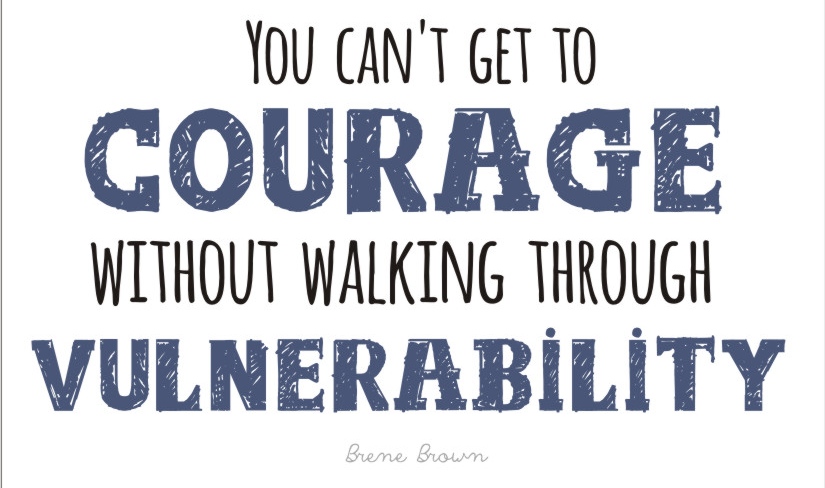
Sometimes, as I have learned over the years, exposing all of our vulnerabilities and standing naked to the world, with all of our scars and imperfections exposed, is the only way to become strong.
And you can’t be vulnerable when you spend so much effort on creating armor and weapons alone. In real life, strength comes from investing in inner strength. The more you hide, defend, and attack, the more you can be hurt. Over-committing to an attack puts you off balance, exposes the holes in your armor, and all that hiding can have only left you atrophied and weak under that armor.
I am stronger, today, than I was a year ago. I am better, today, than I was a year ago. But not all people are better then they were, having traversed the ordeals of time and space. Simply having been through something does not make them better, even if it does make them stronger. A strong sword arm, after all, can only hurt people.
A person can indeed hurt me if I willingly expose my vulnerabilities, but the fact that someone might actually try to do so is what causes me pain. It’s when we forget that we are also scared, vulnerable, and imperfect when we feel justified in attacking others or hurting them even if we don’t want to do so. I’d do better to resist such sets of behavior myself (so would we all), but I am less likely to stop calling out behavior when it is genuinely hurtful to me or people close to me. If anyone wants me, or anyone else, to stop talking about the pain which they have caused other people, then take responsibility for it, do the work to actually grow, and make yourself less likely to do it again. If not, we will have every right to keep calling those people on their shit and being critical of their behavior.
Same goes for me. If I’m not continuing to do the work I need to do, then I welcome compassionate criticism. I will hopefully be stronger in another year, and I will try to put my efforts into strengthening the attributes which will make me more compassionate, less afraid, and more vulnerable. I hope, deeply, that we all do the same to the best of our ability.
The last three nights I spent no time unable to sleep due to immense anxieties, self-doubts, or anger. For context, nearly every night over the last few months have been full of anxiety, anger, and pain keeping me up way too late, and this my not getting enough sleep. I know that this does not mean I will never have insomnia again. I know that this does not mean that I am forever out of the woods of mental health concerns. What I also know, however, is that I have dealt with the majority of the trauma that has plagued the last several months of my life, and I am finally ready to move on.
Yes, I will still have some processing to do about what to learn and how to grow, moving forward. Yes I will still have to deal with the presence of our former family as part of our local poly network, which will cause continued tension for us. But rather than drowning in the effects of those things, they will become small obstacles now, and I can try and create a newer, better, sense of self. I can re-build and re-define what this blog is and what I have to say with all of my experience as am atheist, polyamorous skeptic.
I have seen a lot, done a lot, understood a lot, and been completely vexed and overwhelmed by a lot more. What I have been through has made me stronger, wiser, and better able to see myself and the world around me. One consequence of this is I will be writing things which will contradict some older posts which exist here.
But this is not a contradiction in any personal sense. Anyone who would potentially quote something I wrote 2 years ago, compare it to what I would say now or in a month to demonstrate that I’m inconsistent, confused, or perhaps just a flip-flopper will fail to understand what growth and change means on a personal level. The person I was 2 years ago is, in many ways, not the person I am now or who I want to be. I was very angry 2 years ago, about things I didn’t even understand at that time.
Take, for example, the tag line of this blog: “criticism is not uncivil.” The idea behind this, originally, was that the truth is primary to any other concern. The idea was that if a disagreement about some fact, interpretation, etc poked its head up, rationally constructed criticism was not an inappropriate response. If you believe that a god exists, my criticism of this idea did not have to consider your emotional association to this idea, because there is a distinction between attacking an idea and attacking a person (is what I argued). And no, emotional attachments do not change the truth of a thing, but they should change how we have the conversation.
Now, if we were unemotional robots we wouldn’t have to worry about such things. The problem is that our very rational thinking itself is at least partially dependent upon not only emotion, but cognitive biases and self-justification. Our opinions, even if they happen to be opinions which would stand up to careful and empathetic scrutiny, exist in a soup of feelings, associations, rationalization, and will often have room for improvement.
So, what of that tagline? I am not sure yet. I don’t know if I want to keep it or change it. I could still keep it, and have it mean more that criticism, at least when done with consideration of all our human facets, is not uncivil. I still believe that criticism is essential for our personal and cultural growth, I just don’t accept that our criticism has to be unconcerned with our emotional realities.
Empathetic criticism is not uncivil?
Nah, I don’t like that.
In any case, the blog will indeed go on. The podcast may also continue (we did some recordings, but much of it was either lost or was not really good enough to release), but we’ll see when and how often that happens.
If you have any suggestions, thoughts, etc, please share them.
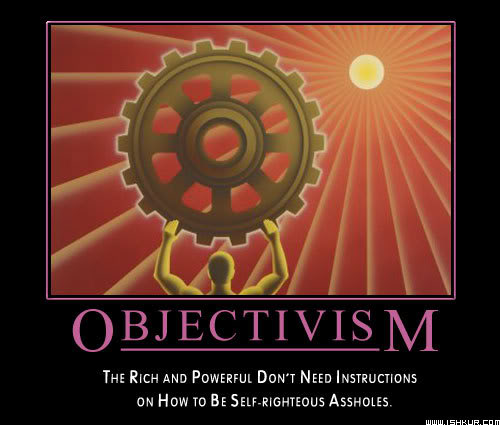
OK, I give up on the analysis of Ayn Rand. It’s repetitive, annoying, and it’s not getting us anywhere. Ayn Rand was a terrible philosopher, she should not be taken seriously, and selfishness simply cannot be the basis for anything ethical. So, instead, let’s look at some idea which might actually get us towards an objective ethics.
Or, more precisely, an intersubjective ethics.
Why not objectivism?
Clearly, Rand’s rationalized whims dubbed objective was a philosophical failure. Her system was egoism in disguise, a projected set of values onto the tapestry of the universe. In the end, it was no different from Plato’s ironic projection of his thoughts onto the outside of the cave (ironic because it was the very phenomenon of projection that he thought he was correcting). Ayn Rand thought her selfish values were universalizable.
But beyond Rand’s particular brand of “Objectivism”, there is a further problem with moral objectivism as it is conceived in ethical philosophy. Here, for example, is how the distinction between objective and relativistic ethics is described on the Internet Encyclopedia of Philosophy:
The metaphysical component of metaethics involves discovering specifically whether moral values are eternal truths that exist in a spirit-like realm, or simply human conventions. There are two general directions that discussions of this topic take, one other-worldly and one this-worldly.
If you read the rest of that section, you will see this distinction played out between immutable objectively true moral codes or values pitted against either individualistically derived or culturally maintained sets of ideas which are dependent upon human thought. Here are a couple snippets from that page:
Proponents of the other-worldly view typically hold that moral values are objective in the sense that they exist in a spirit-like realm beyond subjective human conventions. They also hold that they are absolute, or eternal, in that they never change, and also that they are universal insofar as they apply to all rational creatures around the world and throughout time.
…
Technically, skeptics did not reject moral values themselves, but only denied that values exist as spirit-like objects, or as divine commands in the mind of God. Moral values, they argued, are strictly human inventions, a position that has since been called moral relativism…. In addition to espousing skepticism and relativism, this-worldly approaches to the metaphysical status of morality deny the absolute and universal nature of morality and hold instead that moral values in fact change from society to society throughout time and throughout the world. They frequently attempt to defend their position by citing examples of values that differ dramatically from one culture to another, such as attitudes about polygamy, homosexuality and human sacrifice.
Ever since I started reading philosophy, around the age of 14 or so, something about this distinction bothered me. It bothered me so much that my MA thesis was geared around the ontological aspects of this same distinction, as it pertained to the relationship between science and religion (ontology, to be more specific) especially.
I have come to conclude (tentatively, of course) that this philosophical dichotomy–whether between ontological realism or anti-realism, objectivism or relativism, etc–is a kind of cognitive splitting. And sure, I’m aware that many thinkers have existed in the many grey areas between such extremes, but I feel that defining the problem in such dichotomies isn’t helping and perpetuates us thinking of these questions in terms of ethics being either objective or relative, when it might be neither.
I believe that there is a nuanced and subtle way to appeal to the cognitive, emotional, and social advantages of both objective morality and relativism. If this approach is sufficiently powerful, it could establish a metaethical, normative, and potentially applied ethical way of thinking which achieves the best of both worlds, as it were, without sacrificing either reality or the sense of shared values. That is, such an approach may satisfy our desire for consistency and meaning which objectivist approaches provide, while at the same time allowing our individual subjective experiences to not be truncated by proposed “objective” truths which those experiences might contradict.
Truth, after all, must rise out of subjective experience and be weeded out by empirical methodologies. Truth is not derived from meditating on universal imaginary worlds, revelation from gods, or ideologies. Truth is the thing that individual people conceive of and offer to the rest of us to test, criticize, and perhaps accept as worthy of adoption. We should think of whims, values, and ethical preferences the same way.
The parts of us that are attracted to the certainty of an objective moral foundation, whether from religion, reason, etc, look for a way to project our individual experiences, values, and conclusions onto the world. It creates the illusion that our values are not merely opinion. But the parts of us which recognize the diversity and (often) contradictory nature of those subjective experiences will balk at the possibility of there being an objective reality to ethics. Whether people see this subjective diversity as the source of evil, chaos, or mere inefficiency, it creates a problem in establishing any shared ethics.
Whether we feel compelled to myopically obsess over our own values and desires or to altruistically sacrifice for the sake of the whole (as well as all the grey areas in between, of course) are one type of approach to addressing this problem, but it is not the only way.
Ethics as an emergent property of society
There is no Platonic world of Ideas, divine creator, or some other objective source of moral conclusions or values. Moral values only make sense within the scope of a plurality of sentient beings who interact, and it is only with such beings that questions of harm, welfare, rights, etc can become relevant. This, to most, might seem to imply that any conversation about morality must be relativistic, subjectivist, and possibly ultimately selfish or nihilistic in nature.
Oh Jack Chick….
And it is certainly possible to construct a normative ethic which stays within this realm of relativism. Ayn Rand did it (poorly), Nietzsche did it (brilliantly, but often misunderstood), and there are many others to choose from. But if we remain convinced of and mired in the realm of relativism, problems arise related to whose subjective whims to follow (if we should follow any, of course) and how to proceed with establishing guidelines, social rules, or even laws. If there is no objective source, how can we escape pure, selfish, ethical egoism?
This has been the lament of many moralists, and not only from religious conservatives. Their arguments are sophomoric and trite, but they are obviously hitting on an issue with cognitive, emotional, and social weight because it keeps working. The lament of meaninglessness, poignantly illustrated by Dostoevsky with his claim that without god “all is permitted,” is trotted out frequently by those terrified of subjectivism and relativism.
And relativists of all stripes will attempt to respond with other meaningful values. Some might say that we can and should create our values. We can get together, agree on some basic principles and rules, and decide to abide by it or face whatever consequences we also agreed to. Social contract theory, in essence, is where potentially conflicting and disagreeing people agree on how to run our lives as a group.
Some might point to an ideal as a sort of agreed upon arbitrary replacement for the idea of an objective source. It would be sort of like creating an idol, giving it qualities, and asking everyone to try and emulate this idol. In the absence of a clear objective source, we idolize either a person (which we might deify), an idea (such as democracy, freedom, etc), or even a set of traditions which define who we are, how we behave, and who we demonize. We often do all of these things to various degrees.
All of these approaches necessitate that we utilize our subjective perspectives in some manner. But because they emerge as private experience, walled away from the rest of the world behind a veil of subjectivity, does not mean that we have to conclude that morality is a selfish enterprise. In fact, if we remain behind those walls, then we cannot do ethics at all. The ideas have to come from us, ultimately, but we have to use our ability to communicate, understand, and agree to implement any of these ideas as ethical constructs.
The usual suspects
While such a set of values would grow out of subjective soils, it would either live or die in the real, intersubjective, world based upon how well it survives the trials of communication, interaction, and contradictions between other individuals and ourselves. A selfish whim or value will either work as a shared value, or it will not. No one individual can decide this alone (although individuals may articulate it better), because whether it works is not subject to any one person (or even a set of persons who happen to accidentally agree), but to how the value supervenes on the group.
When a value is presented by a person to a group, society, or even all of sentient life, it can be evaluated in a different environment from which it grew. As this idea moves away from individuals and towards the diversity of subjective opinions, it will either survive as a value which can be shared, or it won’t. No matter how well this value suits a person, or even a small group of like-minded individuals, if it cannot be applied to the group then its value as a moral foundation or value may be weak.
If you cannot show how the idea which you value in your life among yourself, friends, or family, is useful or helpful to everyone then it might not be a value which most people can share. My (hypothetical) selfish interest to do whatever I want, and not care about the desires of others, cannot be a shared value because there is a logical contradiction to applying it to the group. The idea is self-refuting when applied to the ethically relevant group;society.
Kant and the Scientists
Much like Kant’s categorical imperative, if the value a person presents to the world cannot provide value to the group, then the idea may be useless and possibly amoral (if not down right immoral). The philosophical and scientific study of ethics is, therefore, an epiphenomenon of subjectivist, relativistic, preferences. But rather than remaining at that limited and myopic level of description, looking at the effects of introducing those subjectivist preferences to the group dynamic creates an emergent property, ethical philosophy, which acts as a sieve for what moral principles are valid for consideration.
Thus, it does not create an objectivist ethic, because such a thing is impossible. It creates, however, a level of description which acts very much like objectivity in relation to our minds. It is a reality outside of us, but it was created by our collective effort, communication, and understanding. Being intersubjective, it is always being revised and updated just like a scientific theory. The strength of its propositions is directly related to how well it survives criticism and attempts to sink it.
It is not selfish, because selfishness is incapable of the relevant understanding and concern necessary to create the conversation which could sustain it. It is not absolute, because it is subject to actual circumstances which might change. It adjusts to our preferences, values, and thus is perfectly suited for progression and improvement as our understanding of ourselves, the world, and communication is improved.
It is also not relativistic. It is not culturally relative because all cultures have to deal with the realities of the facts about human psychology, harm, and the inter-related aspects of human existence. All cultures are subject to the same reality, and merely having the mass opinion that, for example, slavery is acceptable does not survive the larger skeptical, empirical, and rational analysis of the effects of slavery on people. It’s also not relativistic in the sense of being a matter of whims, because being subjected to scrutiny from any and all people erases that.
It is, however, skeptical and scientific. While this approach begins as individual subjective preferences, just like with other questions about the nature of reality it gets exposed to other people who will try to demonstrate problems with those ideas. Morality, values, and meaning are not ontologically different from other facts. The facts about how I feel, why I feel that way, etc are empirical questions. Once we realize that we are talking (when talking about ethics) about how to best implement ideas about how to behave in relation to other people, the question is one of doing the empirical work to find out how my feelings interact with the feelings of other people.
Because if I accept the reality that other people exist, have similar types of internal experiences as I, and that I’m capable of figuring out some things about those feelings, preferences, and whims, then ethics becomes a philosophical puzzle about how best to arrange guidelines, rules, or laws about how to interact which maximizes the experience of people. And then we can pull in questions of consequences, best habits and personality traits, and fairness (among other considerations) in order to figure out the details.
Ethics is an enterprise for science. Just like with facts about the nature of reality, it starts with subjective experiences and through epiphenomenal processes the emergent property of true things comes about(ideally). But for it to work we all have to be willing to be wrong, especially about our own values. Our preferences, even if they are working for us, might be better supplanted by other values (in some cases). We cannot allow ourselves to rationalize our selfish preferences as a fundamental value. We cannot allow self-justification, groupthink, or tribalism to convince us that our group has superior values. If our values are hurting other people, it is very possible they are not the best values.
And, most importantly, we can not allow ourselves to idolize, deify, or even consider settled, our values. They must always be open for criticism and debate. There is no room for sacred ideals, ideologies, or tribalistic jingoism in values. The more isolated our values are, the more exposure makes them defensive or aggressive, and the less communication with alternatives exists, the less powerful those values will be.
Ethics is not merely relative and it is not objective. But it can be shared as an intersubjective reality and it can draw from our most personal experiences and values. In the end, ethics cannot rely on either any ultimate reality or personal preference; it must rely on reality potentially telling us that our preferences might be harmful and in need of alteration.The truth points to itself, but the truth is also not written in stones, ideals, or hearts. It is only written, collectively, in the great conversation which I hope we all keep having.
This post by the always-excellent Captain Awkward got me thinking. It’s about an adult daughter whose parents began a polyamorous relationship with a third woman, who now lives with them (the parents, not the daughter). The parents and new partner are all trying to get the adult daughter to develop a close relationship with the new partner, and the daughter is balking. I think the Captain’s advice is sound, and I appreciate that she mostly approaches it like any step-parent relationship, which in essence it is, while also giving a nod to the fact that the non-monogamy aspect is playing a role in the daughter’s reactions. I don’t want to talk about that situation in particular, but it got me thinking about the larger question of what is reasonable and unreasonable to expect when it comes to our families and our partners, especially when we have more than one.
Some people would argue that it makes no difference whether we have one partner or multiple partners; our families should treat them all the same way. I have sympathy for the argument but I think it omits a lot of complicating factors. Even setting aside families that flat-out disapprove of non-monogamy (which is its own can of worms to deal with), the reality is that our culture has some deeply engrained assumptions about what love and commitment and exclusivity mean. For most of us, it took a fair amount of mental and emotional work to overcome those in ourselves; it is unreasonable to expect our families to just dump all their engrained beliefs about non-monogamy and behave the way we want them to from the get-go. And especially if our relationship was monogamous or de facto monogamous for some years, they likely have a level of investment in our first partner, and are going to have weird, complicated feelings about the way a new partner fits in. So I think there needs to be some delicacy in how we handle our family’s relationships with poly partners.
I have also, for a long time, said that in-law relationships are the best analogue we have for metamour relationships, in a lot of cases. We’re connected to somebody primarily on the basis that we both love and are loved by the same person; beyond that, we may have a lot in common and be great friends, or we may grate on each other at every encounter. The tools for handling in-law and metamour relationships are often similar.
With all that in mind, I want to lay out what I feel like are a reasonable set of expectations for how we treat loved ones of loved ones, whether we’re connected to them by blood, romance, or just intimate friendship. I’m going to first lay out my outline of what I think we are and are not obligated to do with regard to our loved one’s loved ones. Then I’ll dig deeper into the thoughts and principles that back these obligations. This post is going to be very general in addressing relationships of all kinds, and in a following post, I’ll write about specific situations that add an extra layer of difficulty or complexity, such as jealousy and differing values or beliefs.
With loved ones of loved ones, I believe we are obligated to:
acknowledge that person’s place in our loved one’s life
make an initial effort to get to know and like them; if the relationships last for many years, make repeat efforts every few years or so if the first ones didn’t take
do our best to understand the good things that that person brings to our loved one’s life, and even if we can’t understand it, accept that there must be some
accept with grace their presence at events our loved one is hosting or that are in our loved one’s honor, such as birthdays
show them basic courtesy and consideration whenever we are thrown together
avoid speaking negatively about them to our mutual loved one, unless there is a specific problem that needs to be solved
give our loved one room to speak happily about them from time to time
I believe we are not obligated to:
actually like them or love them, or pretend that we do
spend one-on-one time with them or interact deeply with them
hear about them every day or every time we see our loved one
accept their presence at events we are hosting or that are in our honor
Obviously, most of these are bare minimums, designed for situations when we and the other loved one don’t get along. For the most part, I think they apply even when the other loved one is not behaving well; when they’re openly hostile or passive-aggressive toward us. In those cases, the mutual loved one may have some responsibility to intervene or at least to avoid putting us in the position of having to see much of each other.
Relationships are not just between two people; most of our relationships exist in a communal context of some kind. We see our friends and families in groups at parties, holidays, vacations, weddings. There’s a particular joy in being surrounded by multiple people you love and like, whether it’s three people or thirty. Even my introverted self delights in the feeling of connection and support when I’m with people who all know different pieces of me, who are all there for me in different ways. When everybody in a room is getting to enjoy the same feeling — “Here I am, surrounded by people I love and like and who love and like me” — that’s real community, and it’s a beautiful thing.
Of course it doesn’t always work out that way. Just because I love Alex and Bryce doesn’t mean Alex and Bryce will like each other, or even be able to stand each other. When my loved ones don’t like each other, it means that for me to be surrounded by the people I love, at least some of those people have to be spending time with someone they dislike.The more intimate and prolonged the setting (and the greater the dislike), the harder a burden this is on them. So a balance needs to be struck.
In general I believe that we should do what we can to make our partners happy — but not to the extent of abandoning our own sense of self or making ourselves miserable. This is why I say that we should make an initial effort to get to know and like loved ones of loved ones, and should make repeated efforts over the years if the first one didn’t go well. People grow and change, and two people that clash horribly at 20 may able to be great friends at 35. If we can give our loved one the gift of liking the other people they love, we should do so. (Usually the reason we might resist this, and develop an antagonistic relationship with someone we would normally like, has to do with jealousy of some kind, which I’ll talk about in the follow-up post to this.)
However, I’m pretty ferociously in favor of people’s right to feel the way they feel, and not be pressured — by themselves of others — to fake or force feelings just for someone else’s convenience and happiness. If you don’t like someone, you don’t like them, and piling on guilt and obligation isn’t going to make those feelings go away. Your loved one’s love for someone shouldn’t compel you to spend massive amounts of time in their company.
In most cases, I think it’s fair that I should get to have the people I love most near me at important, celebratory occasions that are about me, and that they should all make the effort to make the experience as pleasant and free of strife as possible: thus the obligations to accept the presence of our loved one’s loved ones at such events, and to show them basic courtesy. (The possible exception to this is when there’s a deep history of hurt between the two outlying loved ones, such as a divorce or breakup. I’ll discuss that situation more in the follow-up post.)
At the same time, Alex and Bryce should get to celebrate their important events and milestones surrounded by people that they love and like, and it’s unkind for me to impose them on each other if they strongly dislike each other, especially if it’s a very small gathering where they’ll have a harder time avoiding each other.
In US culture, at least the part of it that I inhabit, there’s a very strong pattern of viewing people who are married, living together, or long-term monogamous partners as a social unit. If one person is invited to a thing, the other one is assumed to be invited as well. In many circles, in order to have a party or group event with one half of a couple and not the other, you have to designate it a “girls’ night” or “guys’ night” — which doesn’t work so well if the couple are the same sex, or if the friend group isn’t segregated into men and women. I have a whole host of thoughts on the social unit trope, which I’d like to write about separately, but in brief: I’d love to see the assumption that people have to travel in pairs loosened, for a whole host of reasons. It sucks for poly people, at least those not using a primary-secondary model, and it sucks for single people, and it sucks for loved-ones-of-loved-ones everywhere who don’t really want to spend an evening together but can’t let go of the assumption that an invitation to one person must include an invitation to their partner.
Going back to the the list of obligations: for many of us, part of having a close relationship with someone is sharing what’s on our mind, what’s exciting and interesting and important to us. And in many cases that involves talking about another person we care about — whether it’s “Jamie did the nicest thing the other day” or “Kim and I keep fighting about this one thing.” This is normally not an issue, but when the person we’re talking to hates Jamie or Kim, suddenly it’s a huge deal. Even if they want to be supportive, they’re going to have to be managing their own feelings about Jamie or Kim while listening. Again, a balance needs to be struck between “I can’t ever talk about Kim because Jamie hates hearing it” and “Every time I hang out with you it’s Kim this and Kim that!” Where exactly the balance falls is something that should perhaps be explicitly negotiated and discussed.
Another thing that makes these relationships fraught is the implicit value judgement in saying, “I dislike this person that you love.” Are we saying that we think their judgement and taste in friends is lacking? Even if we don’t mean that, are they going to think we do? Saying something like, “I don’t know how you can stand Dallas,” or “I don’t know what you see in Shelby,” can come awfully close to saying “What’s wrong with you that you like this person?” And “what’s wrong with you that you feel X?” is pretty nearly always damaging to hear from a loved one.
So while I think it’s important to own and acknowledge our feelings about our loved one’s loved ones, whether they’re positive or negative, I also think we need to be careful not to make the false jump from “I dislike Jamie” to “Jamie is a sucky person.” A key hallmark of maturity is being able to separate personal, subjective feelings from objective realities. To say that another person is unbearably annoying is true, as long as I’m only making a claim about their effect on me. I can find someone unbearably annoying, while someone else finds them funny and adorable, and neither of us has to be wrong. Even with more arguably objective traits, such as how self-centered or intelligent or polite a person is, we each have our own priority list of the things that make someone likeable and worth spending time with, and our lists will likely not match perfectly with our loved one’s lists.
This is why I say we should make an effort to understand and appreciate what our loved one values in the other person. If you’re like me, it’s really fun to spend time doing the, “Oh, I see, to YOU it’s really important that someone be self-aware and socially skilled, while I don’t really care about that as long as they’re kind and well-meaning” kinds of calculations with your loved ones. You get to figure out what qualities are important to you in your friendships and what’s important to your friends in their friendships, and how all those things dovetail and intersect. Even if dissecting personalities isn’t a hobby of yours, it’s worth taking the time and effort to notice at least a few positive qualities in the loved ones of people you love. It helps build a barrier against the resentment you might feel at the way this person hits your own personal buttons, it protects both you and your loved one from feeling like your dislike of that person is a negative pronouncement on your loved one, and — most importantly to me — it exercises your understanding that your loved one is a distinct person from you, with values and needs and interests that are different from yours, and that you need to be able to acknowledge and honor those things if you are going to love them effectively.
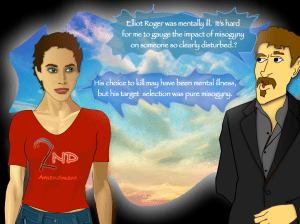
I have been reading and thinking about issues surrounding cultural narratives (of misogyny, for example), mental health, and personal responsibility a lot, lately. In the wake of the Elliot Roger mess, the blogosphere is rife with arguments about whether mental illness or misogyny are primarily to blame. Personally, I think that distinguishing these two, clearly, is not always an easy task. Destructive cultural narratives grab a hold of the parts of us consistent with mental disorder, and mental disorder exacerbates those cultural tropes.
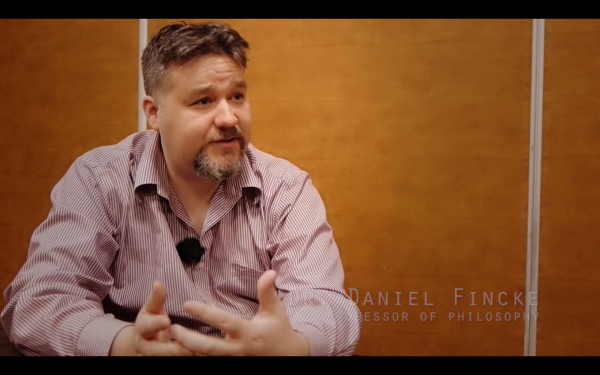
I have not had enough motivation to dive in and add my thoughts, and so I have been doing a fair amount of lurking, rather than writing, on this topic. Luckily for me, Dan Fincke is here to help sort it out, because he does so much better than I could. Go and read the whole thing. It’s well written, thoughtful, and even touches some issues I’ve been thinking and writing about concerning mental health, recently.
Here’s a couple of samples that resonated with me:
We need to be much less interested in throwing people in bins of “rational” or “crazy” and deal much more with the complexities of real people’s brains. And the mentally ill and those with other disorders need treatment and compassion and accommodation so that they are as empowered to live as quality lives as possible. They don’t need demonizing and false mental links forged between homicidal rampages and their maladies.
I have been thinking about this myself, recently. Because no, our disorders are not excuses, but they are real phenomenon with causes and effects. When someone is struggling near you and you don’t make any effort to understand, empathize, and accommodate to some extent in order to create a safe, nurturing environment for them, then the struggles we have with mental illness will only be exasperated.
People with mental health concerns don’t need coddling, mere tough love, or demonization. We need empathy, support, truth and we need appropriate space to grow, heal, and thrive. In my experience, too many people are unable to give all of these things. To fail in this regard is to perpetuate the cultural failure of dealing with mental illness appropriately. Individual behavior supervenes into culture, both in terms of the families we create and the societies we share.
This is why Kant’s idea of the categorical imperative is so powerful (even if it is limited); if you want to act in a selfish way which does not make the world better, you are part of the problem. If you defend a philosophical position of selfishness (*cough* Ayn Rand *cough*) and are not willing to give of yourself, to accommodate to those near you,or to really listen, then you are part of the problem. If we seek a world with better mental health, more social justice, and one where groupthink, tribalism, and self-justification are minimized, we must be willing to be compassionate and, in some cases, accommodating.
I especially like Dan’s discussion about Nietzsche’s concept of ressentiment in context to all of this.
The worst possible response to this is to suffer ressentiment as our reaction. As Nietzsche characterized the concept of “ressentiment” it’s when you cannot have something good and it makes you so envious and enraged that you attack its very value.
Especially this distinction:
What many men seem to fear in feminism is that it’s “bitter women who adopt a female supremacist ideology based on their bad experiences with a few men”. They accuse it of being an overcorrection based on a man-hating ressentiment. Hence the #notallmen meme. “Not all men are like that” doesn’t serve as a useful reminder not to pathologize all men and all of men’s sexuality in an overcorrection against predatory forms of it, which is a fine and important qualifier in criticisms. Instead “not all men” is often said in such a way as to say, “there is nothing wrong with our culture’s ideas about gender and there is nothing for me to introspect about, a few bad apples don’t spoil the bunch”. This conveniently would get almost all men off the hook from having to learn anything or do anything different in response to the complaints of women. (As an atheist critic of theistic religions, I constantly have to deal with the equivalent “get out of self-criticism free” card “Not all religious people are like that!” waved in my face all the time.)
and this,
Arguments against the word “feminism” are often coupled with declarations of egalitarianism. They are essentially saying, “we should just be concerned with equality and not with the needs of women in particular“. Yet, the reason feminists think there’s no contradiction in being focused on women as a means to equality is because there are a number of ways that women are specifically treated as unequal and subordinate socially, morally, and politically in our culture and around the world. There is special attention to women in particular because women’s equality is missing in particular.
which is similar to a point I was making a while back in response to this post by Evid3nc3, which I still disagree with.
And, of course, any time the Stoics are brought in, I swoon a bit. Because, well, I’m a nerd. Shut up!
As the Stoics rightly teach us it is only a source of misery to put our own feelings of self-worth up to the opinions of others to control. If you are dependent on other people liking you in order to like yourself, you’re making yourself vulnerable to something you cannot control. And no amount of raging and domineering towards the people you feel are withholding their approval from you will solve the problem. You need to focus on what true personal excellences look like and cultivate those.
This is especially relevant to my disorder, and this point is brought up repeatedly in writing about BPD. I will do what I can to take these words to heart. For me, a consistent self-worth is hard to maintain. I need to remind myself, every day, that people love me. In time, I will be able to do this on my own (and I will hope to receive it from others as well), but when times are tough, I rely on validation from others quite often.
And, of course, the payoff:
In a secular culture we need to take active responsibility for shaping our own norms and values rationally. We shouldn’t be deferring to common sense–it’s riddled with harmful prejudices. We shouldn’t be dangerously rehearsing outmoded and unfair biases. We should all feel ourselves to be actively responsible for exactly what values and norms we perpetuate. We should all scrutinize them for flaws and work to fix them. We all need to feel responsible to do this. We all need to feel responsible to have constructive discussions with other people we influence and who influence others. Yes, all men need to do this.
I have never had an MRI or any other brain-imaging done to verify this, but I have reason to suspect that I may have a smaller hippocampus and possibly a reduced amygdala.
Why would I suspect such a thing? Well, people who have symptoms of Borderline Personality Disorder tend to have these brain regions of reduced size, especially those with comorbidPTSD (source). People with reduced hippocampi tend to be more impulsive.
Borderlines tend to be impulsive.
Emotional management and impulsiveness are, in many ways, the hallmark of dealing with BPD. If you know a borderline, what you expect is a person who can shift moods quite quickly, and you might see a pattern of destructive behavior. For many borderlines, this takes the form of heavy drug use, unhealthy levels of promiscuity, etc. In other words, impulsive and potentially destructive behavior.
Perpetual fighting and flighting
Have you ever been suddenly scared and felt yourself become overwhelmingly alert, reactive, or anxious? Your adrenaline spikes, your fight/flight instincts kick in, and while you are more alert you may find that if you tried to apply some rational analysis to the situation you may be unable to do so. Some series of events have kicked up the parts of your brain responsible for quick decision-making, such as defending yourself or running away, but your resources towards rational thinking are temporarily compromised.
Now, imagine that this happened to you frequently, as a response to mild sources of stress or social situations. Imagine that this happened at a party or around certain (types of) people. Imagine if you grew up with this always happening to you, and so you didn’t realize this was abnormal. There are reasons I choose writing as an outlet, and tend to be quiet in person.
Living within a mind populated by fears of abandonment, chronic feelings of emptiness, and drastic mood swings (we’ll get to that in the next post) puts that mind on high alert all the time. Most of the time, I can easily manage impulses, whether they are to eat that whole container of ice cream, responding to that idiotic post or comment on the internet, or punching that douche-bag. In my life, I have eaten whole containers of ice cream, responded to idiots on the internet, and while it has been very rare (attending a Quaker school probably helped this) I have thrown a couple of punches.
But these types of impulses are not the largest concern for me. In my case, the larger concern is what I will call the potential monster lurking under the dark waters, barely seen but always present. This is the monster that interferes with rational thinking, probably due to the abnormal brain physiology consistent with BPD. You may have known me for years and never realized it was there. A few people do know it well, some of which do not speak to me any more. And yet, some both know about it and are close to me, probably because those people are amazing and awesome.
And, of course, my impulses, great and small, have led to amazing and awesome people leaving me. Hence my intense desire to understand, treat, and heal from the pain that often causes my impulses. Emotions and desires lead to impulses. Impulses can lead to both good and bad actions, but also to a wide range of radical mood shifts.
I have intentionally planned this post directly before the last in this series, wherein I will talk about radial mood shifts and emotional instability, because that instability and shifting is largely due to the presence of an aspect of my mind which sometimes terrifies me and forces me to be perpetually vigilant against an impulsiveness which is usually not a problem.
Usually.
In stead
I need one of these
The fact that we all want to think of ourselves as good, smart, rational people means that we might lean towards self-justification in most cases, and this is also true of myself. But in my case, and I have no idea how this is true for other people, I’m almost always aware of the monster swimming under the murky surface which might, at any moment, cause me to make a poor decision, lash out suddenly and without apparent cause (there is a cause, it’s just usually buried under tons of emotions), or to spend hours or days parrying impulses towards a person who has severely hurt me. These feelings are the source of rationalization, self-justification, and cognitive biases.
When I first drafted this section, I spent some time composing examples of impulses, struggles with internal impulses to act in ways which might hurt people (because I’m being hurt by them), etc. As I kept writing, it became clear to me that the writing itself was a metaphor for itself. I was succumbing to the impulses that I was speaking of, and the tone of the section was highly aggressive, angry, and ultimately full of deep pain.
Because Fear leads to anger, anger leads to hate, and hate leads to suffering. After I wrote several paragraphs, I realized I was writing out of pain, anger, and I was suffering. And I wanted to redirect that suffering elsewhere. Those impulses to redirect pain (and abuse) are what has ended many of my relationships. I found myself doing that here, in writing about impulsiveness. Funny how that happens.
My writing was becoming an attack, not only upon people who have hurt me, but also upon myself. This is the largest, for me, result of my impulsivity. For me, being impulsive does not play itself out as drug abuse,gambling, or unhealthy sexual promiscuity. I don’t seek fights, stay out all night drinking, or go home with someone from a bar whom I hardly know.
Instead, my impulses lead to a frequent state of mind where the possibility for a rational or philosophical analysis are hindered. I find myself arguing between options which are all impulse-based, led by raw emotion, and I have to calm myself down to think rationally. Often anger and pain are the dominating emotions at such times, but not always. I am aware of this, most of the time, so I can catch it in order to calm myself down and re-evaluate (as I did here). As the years have gone by, this struggle and the subsequent need for re-evaluation has ended up making me too afraid to act in most cases just in case my decision might be made in a compromised state of mind.
That is, just in case my rational attributes are compromised (because if they are, I probably don’t know it) I have learned not to act, most of the time, rather than to act poorly. Of course, I do things quite often and sometimes a poor decision slips in, despite my trying to not allow poor impulses to make the decisions. The problem has become how to act wisely. How can I trust my ability to make decisions when I occasionally make really poor ones? Would trusting myself more make me more or less likely to act impulsively?
My intentions are good, the vast majority of the times (which is to say, I occasionally have impulses which don’t come from good places). I don’t want to hurt people, I want to treat people well, and I want healthy relationships. These are all trustworthy attributes, so long as I’m capable of practicing them in actual behavior (which is the vast majority of the time). I trust my ability to act morally and responsibly when I’m able to think clearly and rationally. And despite the fact that I usually act rationally and responsibly, that I make mistakes weighs heavily on my mind most of the time. I’m sure none of this is different from most of you who are reading this.
But my having a (likely) abnormal brain physiology, the skills to manage such human impulses require more honing and attention than with most people. We all can occasionally give in to an impulse, hurt someone, and then have to find a way to atone. The problem for me is that the little impulses every day lead to a habit of doing things which create day-to-day struggles for people close to me, which are often the result in tiny slippages of impulse control.
These slips can come to look like I’m a person to be afraid of, to not trust, and at it’s worst can turn into abuse. It is my most important day-to-day concerns to treat people well, anticipate their needs and triggers, and to listen and be self-critical. When things are very stressful for me, especially when I’m experiencing abuse myself, I have hurt people. I have lost relationships. I have lost trust.
I cannot take back my actions, but I can continue to be self-critical, listen to people around me, and be more aware of the causes of my behavior. And despite my mistakes, I have many people who do trust me because they know that I don’t deny responsibility for my actions, I am working to be better, and that trust is about who we are as people–if we are self-critical, if we are empathetic, and if we seek to learn from mistakes– as much as what we merely do.
And as my environment improves, I learn more about my disorder, and as I heal from traumatic experiences, my ability to manage normal levels of impulses becomes easier and I am less anxious and stressed. Where I, in unhealthy environments, had to be vigilant 24/7, now I just need to be aware of potential stressers and prepare for them when necessary.
Just like everybody else, except I probably have some abnormal brain physiology that makes it harder for me than most people. Lucky me.
Impulsiveness and relationships
What does this have to do with polyamory? Well, insofar as a person might be more impulsive in terms of pursuing sexual contact with more people, it might be a problem is some cases. Where increased drug use, gambling, etc affects relationships, it is relevant as well. It will effect communication and other aspects of interaction within relationships, but so long as that polyamorous environment is healthy, emotionally open, and everyone is aware of the issues and adjusts (to some reasonable degree, of course) to those issues, these symptoms are manageable.
Outside of the rare case where impulsiveness might lead to a decision which hurts a partner, most of my concern with impulsiveness comes from how I react to a recurring stressful situation or person. For me, the biggest concern about impulsiveness has been problems with a tendency to communicate with, react to, or act upon partners and metamours in ways, day to day, where I have not taken enough time to govern my impulses. That is, this is relevant to polyamory in the sense that it is relevant to any relationship.
Impulsiveness, and the subsequent shiftiness of moods, make communication difficult much of the time. Despite my desire for intimacy and emotional openness, because I’m managing impulses frequently this will sometimes interfere with my ability to communicate effectively. The resulting anxiety will have effects on my relationships.
I communicate my desires and needs poorly as a result of such anxieties. If I’m being hurt by someone, my ability to address this is hampered by a constant slew of impulses to say or do hurtful things in response. If I’m hurting someone, my ability to make amends is interrupted by an impulse to self-justify. If someone is walking away in frustration or fear, personally attacking me, or I’m being misunderstood or demonized then the problem is that I’m so busy fighting off the strong emotional impulses to lash out due to the fears and emptiness this brings to mind, that I am more likely to confirm any negative opinions of me than to demonstrate otherwise, if I do respond
This, unfortunately, leads to inaction where action is sometimes needed. And while I recognize that the ability to act, when appropriate, is healthier and better, sometimes it feels impossible to do so. Sometimes it may be unwise to do so, as a borderline, where for otehr people doing so would be good. Having these symptoms, I know that acting in some circumstances will expose me to overwhelming amounts of stress, anxiety, and my ability to manage impulses will probably be broken.
For people with mental health concerns such as depression, anxiety, or a personality disorder which makes speaking up, demanding right treatment, or self confidence hard, to be told that we are somehow failing because of our inaction only rubs salt into the wound, because we already know that.
Any person proceeding with comparable ease in asserting oneself and not being paralyzed by fear, anxiety, or emotional management is in a place of privilege. A place of privilege should be a place of compassion and understanding, not accusation and superiority. I’m in a place where I need understanding, encouragement, and care and not judgment, abuse, and demonization. I’m trying very hard to manage intense impulses, mood swings, and fears every day. If you are not, then making assertive decisions, requests, etc is easy.
Communication will often be hard for me until I reach the point of remission; until I am no longer diagnoseable. Until then, please remember that my disorder may not give me a free pass on my mistakes, but it also does not define me in any essential or fundamental way. Don’t allow anyone to only be defined by their mistakes, because we all make them. We all sometimes succumb to the worst impulses within us,and we all need to remember that each of us has also done good as well as bad.
My impulses, when I’m in a healthy place, are manageable and often good as well as bad. I’m hoping for more impulses to say hello, to give hugs, and to force myself to move past my fears and develop relationships of all kinds. Because some impulses should not be resisted.












 Skepticism, Properly Applied