Justice Scalia is Scared of Genitals, OR Sexnegativity and the Law


Editorial Note: This post was written by Wes Fenza, long before the falling out of our previous quint household and the subsequent illumination of his abusive behavior, sexual assault of several women, and removal from the Polyamory Leadership Network and banning from at least one conference. I have left Wes’ posts  here because I don’t believe it’s meaningful to simply remove them. You cannot remove the truth by hiding it; Wes and I used to collaborate, and his thoughts will remain here, with this notice attached.

—–


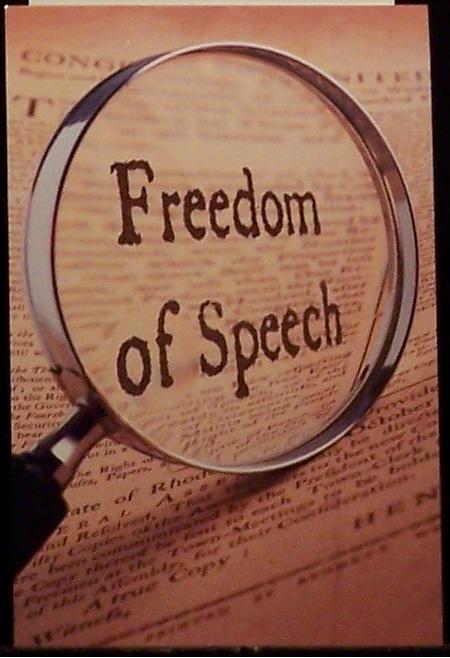
So, you may not know this, but speech in America isn’t completely free.  You’ve probably heard of the “fire in a crowded movie theater” exception.  However, unless you’ve gone to law school, you probably don’t have much of an idea what is protected, and what isn’t.  Here’s a quick quiz.  Some of these things are protected speech, and some are not:

  1. Flag burning
  2. Cross burning (for explicitly racist purposes)
  3. Cursing in public
  4. Cursing at the Supreme Court
  5. Pornography
  6. Hate speech
  7. Advocating violent overthrow of the government
  8. Depictions of animal cruelty

If you guessed “all of those are protected,” you would be WRONG!  All of them are protected… except for pornography.  According to our Supreme Court, certain categories of speech are “of such slight social value as a step to truth that any benefit that may be derived from them is clearly outweighed by the social interest in order and morality.”  These categories are generally limited to “fighting words” and obscenity.

Obscenity is not what you’re thinking, though.  “Obscenity,” according to our Supreme Court (and most recently by Justice Scalia), is limited to strictly sexual imagery.  Not cursing.  Not blood & gore.  Not torture.  Just sex.

How obscene!

The Court never really offers a rationale WHY sex has no value to a society; it just operates under the assumption that sexual imagery is less than worthless, and can be actively harmful.  Look back at the list at the top of the post.  The Court has held, at one time or another, that each one of those examples has enough value to our society to be worthy of protection.  But not sex.  When it comes to sex, it’s just too dangerous.

I don’t know what happened to make SCOTUS so afraid of sex, but let’s hope the next generation approaches the issue with a little more sanity.

Happiness, Polyamory, and “The Good Life”


Editorial Note: This post was written by Wes Fenza, long before the falling out of our previous quint household and the subsequent illumination of his abusive behavior, sexual assault of several women, and removal from the Polyamory Leadership Network and banning from at least one conference. I have left Wes’ posts  here because I don’t believe it’s meaningful to simply remove them. You cannot remove the truth by hiding it; Wes and I used to collaborate, and his thoughts will remain here, with this notice attached.

—–


A study has been kicking around the blogosphere recently called The Ordinary Concept of Happiness (and Others Like It).  The study purports (convincingly, to my mind) to show that when people try to evaluate whether another person is happy or in love, they are not merely trying to identify a mental state, but are making moral/evaluative judgments about the person herself.  You can test it out yourself with the following video:

The researchers found that when they were presented with a woman in a situation that most would consider a good life or dating a good man, they were likely to accept her mental state as indicative of her actual happiness (or unhappiness) or state of being in love.  When they were presented with a bad life, or a bad man, people only tended to trust her mental state when it indicated that she was unhappy.  Her mental state showing happiness or being in love was distrusted by most respondents.  The researchers theorize that this is because people make evaluative judgments about the woman in question, and this impacts their evaluations of of happiness or love (but no unhappiness or lust).

Will Wilkinson theorizes that this is due to normative descriptions of happiness, which I find convincing.  However, the effect is the same – if you’re not living the kind of life that people think of as a good one, people won’t believe you when you say that you are happy.

It’s fairly obvious how this relates to polyamory.  To most, polyamory is not what they think of when they think of a rich, fulfilling, happy life.  Most think of having multiple relationships as disrespectful, irresponsible, reckless, and unfulfilling (much like many of the activities described as part of the “bad life” in the video above).  Therefore, people will be unwilling to trust that our lifestyle makes us happy, despite our subjective mental states.

This presents an interesting problem for the polyamorous – how do we make polyamory more accepted by society at large?  So far, most strategies I’ve heard involve showing people that we are polyamorous, and that we are happy and fulfilled.  However, the above study seems to suggest that we are working backward, that even if people believe that we think we’re happy, they’ll be reluctant to agree.  The research suggests that in order for people to believe that polyamory can make us happy, they will need to accept that polyamory is the type of activity that leads to a happy, fulfilling life.

The question is – how the hell are we supposed to convince people of that, if the evidence that we are happy isn’t enough?  What other evidence is there?

Having Low Standards for Attractiveness is Not a Bad Thing


Editorial Note: This post was written by Wes Fenza, long before the falling out of our previous quint household and the subsequent illumination of his abusive behavior, sexual assault of several women, and removal from the Polyamory Leadership Network and banning from at least one conference. I have left Wes’ posts  here because I don’t believe it’s meaningful to simply remove them. You cannot remove the truth by hiding it; Wes and I used to collaborate, and his thoughts will remain here, with this notice attached.

—–


Wes here again.  Today I want to talk about standards.  Specifically, I want to talk about standards for physical attractiveness.

Many people have expressed to be something along the lines of “I have high standards when it comes to women/men,” meaning that they don’t find many people sexually attractive.  Often, people consider this a point of pride.  I can sort of see their point.  I think it goes something like this:

only attractive people can afford to have high standards
I have high standards                                            
I am attractive

The fact that this is (obviously) a fallacious argument isn’t really the point.  The point is that having high standards makes people feel good about themselves.

I feel that having high standards in this context is a bad thing.  More than that, I consider it an unfortunate fact of life that we feel attraction on a purely physical level at all.  While this almost certainly had evolutionary advantages, these have largely evaporated in modern-day society.  Today, there is seemingly no (non-socially enforced) benefit to discriminating in our choice of romantic partner based on physical characteristics.  How a person looks has very little bearing on the things that I consider important in a relationship.

Attraction is important, but only in a circular way.  Physical attraction is only important in a relationship because people feel for each other on a physical level.  Dating someone to whom you’re not physically attracted is a bad idea because that’s a vital part of a relationship.  But it has no value in other contexts.  Physical attraction does not add value to any other part of a relationship.  To put it a different way, if one were attracted to everyone, one’s relationships would not suffer for it.

When it comes to physical characteristics, I have low standards, although they are higher than I’d like.  I wish that I was equally attracted on a physical level to everyone.  If that were the case, I would be free to make choices about romantic & sexual partners based on things that add value to a relationship, such as intelligence, kindness, emotional IQ, shared interests, and other factors which directly relate to compatibility.  These things certainly make a person more attractive to me (even on a physical level), but I still respond much more to a person’s appearance.  I consider it unfortunate that a person’s physical appearance matters to me at all, but such is life.

Physical attraction is largely biological, so I don’t know what we can do about this, but I think most agree that there is at least a component that is socially created.  If we were able to realign society’s values somehow so that physical appearance was less important, it would probably have a significant effect on this sort of thing.  Maybe?  And while I’m dreaming, I’d like a pony….*

*first one in the comments to identify the reference gets a prize

Polyamory Isn’t All About You


Editorial Note: This post was written by Wes Fenza, long before the falling out of our previous quint household and the subsequent illumination of his abusive behavior, sexual assault of several women, and removal from the Polyamory Leadership Network and banning from at least one conference. I have left Wes’ posts  here because I don’t believe it’s meaningful to simply remove them. You cannot remove the truth by hiding it; Wes and I used to collaborate, and his thoughts will remain here, with this notice attached.

—–

Hi there.  I’m Wes.  You might know me as Gina’s husband, or as Ginny’s boyfriend.  I probably won’t post very often, but I will when I find the time.  My posts will probably feature my personal philosophy, and possibly legal issues if anything interesting comes up.

Today, I want to talk about why anyone who is really in love ought to be polyamorous.  First, let’s clarify what I mean by “polyamory.”  When I talk about a polyamorous relationship, what I mean is a relationship that doesn’t have rules against either partner pursuing other sexual or romantic relationships.  You can be polyamorous without dating more than one person.  The important thing is that there is no formal or informal agreement between partners to be exclusive, and each partner enthusiastically consents to the other seeing other people.

I talk about polyamory a lot.  When I mention it, people generally say “I could never do that.  I’m too jealous.” or some variation thereof.  When pressed, it becomes clear that, generally, though people would like to be able to date more than one person in a vacuum, people don’t think it would be worth the emotional pain of having their partner be “unfaithful,” and the strain that it would put on the existing relationship, with resulting stress, animosity, fighting, etc.  All of which is a big pain in the ass.

This, I submit, is the wrong way to look at it.  The most convincing reason, to me, to be polyamorous, has nothing to do with what *I* want for myself.  The convincing argument is this: I love my partners.  For brevity’s sake, I’ll just talk about Gina, my wife, as she was the only one I was with when we decided to be polyamorous, but were I to rethink my decision today, all of this would apply equally to Jessie and Ginny.  To be monogamous would be to say to Gina “if you develop a sexual or romantic interest in someone other than me, I want you to ignore or suppress those feelings,” because exploring them would hurt me.  Put simpler, it would be saying “If you get what you want, that is bad for me.”  Monogamy, like all rules in a relationship, sets the two partners against each other.  For one to gain, the other must lose.

I wanted to be polyamorous because I wanted Gina to have the things that she wanted.  I wanted what makes her happy to also make me happy, even if it sometimes inflames my insecurities.  That’s what love is, to me.  So I don’t look the decision to be polyamorous in terms of what I’m getting out of it (though I’m getting a lot).   I look at it in terms of what it means to love someone.  I don’t understand how a person can claim to love his partner, but still seek to prevent his partner from gaining happiness in the “wrong” way.

To this, people often say “well, neither of us want to see anyone else.”  Which is great, if it’s true.  But if your partner isn’t interested in seeing anyone else, then you don’t need an exclusivity agreement.  It would be completely meaningless.  The only reason to agree to be monogamous by rule is because you anticipate the situation in which one of you wants to date someone else.  There are four possible scenarios:

Explicitly Monogamous Relationship:

1. Neither partner wants to see anyone else –> monogamy!

2. One or both partners want to see someone else –> forced monogamy, with all of the nasty implications described above

Polyamorous Relationship:

3. Neither partner wants to see anyone else –> monogamy!

4. One or both partners want to see someone else –> they do!

As you can see, if neither partner wants to see someone else, the results for an explicitly monogamous couple and a polyamorous couple are exactly the same, and no exclusivity agreement is required.

People (often people who aren’t in relationships yet) also often say “I want to meet someone who only wants me.  That’s a condition of my having an intimate relationship with someone.”  They tend to phrase this in terms of values or compatibility, as in “I only want to date people who share my values.”  And while people can set whatever goals they like, by explicitly agreeing to be monogamous, partners are still limiting each other’s future desires in the way I described.  Almost everyone feels desire for someone other than their primary partner at some point, and it’s a mug’s game to try to predict if you will or won’t, when you’re talking about a long-term relationship.  Also, If you really meet someone who doesn’t want anyone else, you don’t need the agreement.  The agreement only matters if one or both partners want to see someone else.

So next time you think about polyamory, and you’re tempted to say “I could never do that,” I urge you to think about why not.  If you truly love your partner (or will truly love your theoretical future partner), isn’t it the only thing that makes sense?