Human, gamer, philosopher, godlike being, atheist, nonmonogamous, pariah, contrarian by nature, probably occasionally right human who writes nonsense to very few people.
Some people come here only to downvote my posts. That seems sort of ridiculous, right?
(BTW, I’m adding the video as an afterthought because I thought it was appropriate)
I was just enjoying a warm (OK, towards the hot end…) day in downtown Decatur, GA when I was approached by a woman who looked like she may have been homeless, but after conversation she was just unemployed and struggling to keep afloat. She was asking me if I may be willing to help her out because she wanted to get a burrito. We were, after all, just outside the Raging Burrito, which is a great little place to get some good food and good ales.
In any case, we started talking, and ended up talking for quite a while. She is a Christian, and through conversation I told her I am an atheist, and so we talked a little about religion. The conversation was average, so I won’t bother relating it here, but one thing that stuck me was the fact that this discussion was not unlike what Socrates would have done during his time; talking with people in town about philosophy, religion, whatever. And it struck me to ask her if she had read and Plato in her life. She said she had, but it had been a long time. And I said to her that if I had my copy of the Modern Library (you know, those old cloth-bound books that you see in old used books stores…I love them and have a collection of them on my shelf), I would give it to her since I have a larger collection of all of Plato’s works. I told her about how Socrates would sit with people in Athens and they would talk, sort of like we were, about all sorts of things.
So, then,after a while, I thought that there was this great little used books store a few blocks away, and so I hopped over and bought a copy of the same book (The Works of Plato) that I have on my shelf at home and rushed back to the square to hope to catch her. I found her, sitting outside of Raging Burrito enjoying a soda and handed her the book. See, I believe that books are precious, and to be shared, and the book only cost me $5. She took it, thanked me, and then proceeded to thumb through it. I went off to read my own book (currently reading The Blind Watchmaker by Richard Dawkins for the first time–and enjoying it).
When I was done reading the chapter I was on, I decided to head to the Raging Burrito myself and get a Belgian Ale and maybe a burrito (where I sit now, as I type, enjoying a Leffe). As I entered, I noticed that the table where she had been sitting before was unoccupied, but she had left the book there.
She did want it.
And then I re-played some of the conversation we had earlier. She had said, several times, was that all people needed was Jesus. Does that translate into all people need is the Bible? So, even if I were to give her a book with interesting ideas for free that she might enjoy now, later. or maybe even in a few years, she could not take it?
Had I insulted her in some way by giving her this book? I’m just not sure. The cynical part of me thinks that she rejected it because it may challenge her beliefs. Perhaps because it was recommended by a heathen like me, someone obviously in league with Satan, it could only be bad. I had heard Christians before say that all that they needed was the Bible.
Nietzsche said once (in Beyond Good and Evil) that when one is cynical one should pay attention, for they might be onto something (OK, seriously paraphrasing from memory here…).
I hate to think that a Christian, especially one who was imploring me to be open-minded, could not accept a gift of Plato’s dialogues. I was especially hoping she’d read the Euthyphro.
So, now I have an extra copy of Plato’s works in a nice cloth-bound volume. The next person I run into who seems like they would like such a gift is free to take it.
[edit: This issue continues to be relevant in the skeptical community. I’ll link this.]
—
Within the skeptic community, there is a sort of fault, a split, that is often avoided because it is an issue of some contention. And we know how much skeptics avoid contentious issues! I mean, to do that would be unfortunate–one might stir up some deep-held beliefs that people have.
I’m an atheist. I’m also a skeptic. And while I have participated in the atheist community longer than the skeptical community, I have been part of both for some time. I listen to Skepticality regularly, will often refer to skepdic.com or snopes.com when looking up information. And while I have not yet gone to TAM (but would very much like to this year), I have had the honor of meeting Randi himself once [and later again at DragonCon 2010, where I had dinner with him and Jamy Ian Swiss], who was very friendly in introducing himself with a joke during an Anti-Superstition party in Philadelphia a few years ago. This coming weekend I am attending the Atlanta Skepticamp. In general, I demand evidence for claims, as any good skeptic should.
That is what skepticism is all about, right? According to Skeptic.com’s about page,
“[s]kepticism is a provisional approach to claims. It is the application of reason to any and all ideas — no sacred cows allowed. In other words, skepticism is a method, not a position.”
A good start. Like science, skepticism is not so much about what we conclude as being true (or at least supported by evidence) but the method by which we approach finding answers. It is a disposition, perhaps, more than any set of conclusions.
To be skeptical is to demand evidence upon hearing a claim about the world. Of course, non-extraordinary claims may not be sufficient to demand evidence; claims such as “I had eggs for breakfast,” for example, may not get your skeptical dander up. Extraordinary claims require extraordinary evidence (said Carl Sagan). The common usage of the term ‘skeptic’, however, is often to conflate it with the term “cynic” (which is itself a term that has diverged from it’s ancient roots), which implies a kind of dismissive attitude towards claims rather than a desire to seek evidence for the claims. Skeptics are not, ideally, debunkers of beliefs so much as investigators of beliefs and seekers of evidence. And when such evidence does not exist (or is dubious), the belief is not held by the skeptic.
Within the skeptical community you will hear talk of cryptozoology, UFOs, psychics, and astrology, for sure, but not too much discussion about religion or faith. Why is that? Well, it is because many people who identify as skeptics are, nonetheless, religious. That is, they believe things about the universe such as the existence of god(s), but apply their skepticism elsewhere.
OK, well, let’s step aside for the moment and take a look at atheism. I’ve addressed my definition of atheism before (as well as whether it can be considered a religion), and so I won’t go on at length. Essentially, my definition oft atheism is the position of not having any belief in any gods. That is, if ‘theism’ means belief in god(s), then atheism is simply the negation-causing ‘a-‘ attached to that term, meaning the lack of such a belief in god(s). It is not the belief that there are no gods, because that is a subtle but importantly different position to hold; there is a difference between saying that there are no gods and saying that I don’t currently believe that there are. The former assertion brings with it the burden of proof, while the latter lack of belief does not bring any burden of proof into play.
My position, as an atheist, is that of a response; when someone says that they think there is a god or that god exists, I simply am saying “I don’t believe you.” This is an essentially skeptical position. I am saying that the evidence is not sufficient, from my point of view, to accept such a claim. Any person who calls themselves a skeptic must hold this position unless they have evidence for the existence of god; evidence which I have not seen (or accepted as sufficient). If they believe by faith alone, then they are not applying their skepticism to their belief in god(s), and thus lose some skeptical street cred (see video below). Faith and skepticism are at odds here.
Matt Dillahunty, the current president of the Atheist Community of Austin, host of the Atheist Experience and the Non-Prophets (both of which I have been following for several years now), has come out strongly with essentially the same position as mine (I think), as can be heard in the following:
Matt and I corresponded a little while back concerning a post at skepchick.com that addressed this very issue. And while it is true that none of us are completely rational about everything, the bottom line is that by ignoring such a large aspect of one’s life, such as the belief in a god (whether one is a deist or a Christian) is a hit against one’s skeptical credentials. Simply admitting that one is not being rational about something does not excuse the lack of skepticism. It would be sort of like an astrologer admitting that they are not being rational about their belief in astrology, but considering themselves a skeptic because they are skeptical about vaccinations causing autism and Bigfoot.
So, can one be a skeptic and be a believer in god(s))?
No, I don’t think so.
I contend that there is no good evidence for the existence of a god. If there is, I have not seen it. And if there is good evidence or reasons to believe in god(s), I want to see it. But in my many years of having discussions, thinking about this issue, and writing about it, I have not yet been presented with good reason to believe. Not even those skeptical theists have good reasons to believe, from what I have seen. Thus, believing in a god, despite the lack of evidence for it’s existence is a non-rational position. A skeptic is supposed to reserve belief for positions that are supported by evidence, not believed despite the lack of evidence (or evidence to the contrary). A skeptic believing in a god despite the lack of evidence is no different than a skeptic believing in the Loch Ness Monster with similar scanty evidence.
And despite the fact that stating this may cause some rifts among certain ‘skeptical’ people, I think it is important to address because of one very important reason; it is true. And if it is not true, then it must be argued to be so, not simply stated. If it is possible to be a consistent skeptic and be a believer in god(s), then that implies that there is good reason to believe in such entities. And if there is reason to believe in deities, then the issue between skeptics and atheists is that atheists are wrong to lack belief in gods because there is evidence out there that is sufficient for belief.
But if there is not sufficient evidence to believe in any gods, then to be a skeptic and a theist is a contradiction. A skeptic, being consistent, will be an atheist. They will not say there is no god, but they will join me in saying that they simply see no reason to believe there is a god.
Love is difficult. Relationships are difficult. Maintaining more than one relationship is exponentially difficult, but perhaps it has joys that offset the difficulties therein. That is the idea behind polyamory–or at least one of them, anyway.
It is difficult to maintain a relationship with two people when one is struggling with one of them. The insecurities, fears, and other emotions and considerations which cause tension in relationships are compounded by the problem of another person being involved. It can quickly look like the other is an escape for the problems of the one relationship, which can often become true.
Poly people often talk about the multiplied relationships; the relationship between one and their primary, one and their secondary, the primary and the secondary, etc. But what is, perhaps, overlooked is an aspect of this complexity that applies to monogamous circumstances as well; the relationship between our various selves and with others.
We all, from time to time due to circumstances of profession, play, and intimacy wear different hats. There are aspects of ourselves which are subdued or expressed due to their needs, and we have to maintain a relationship between these facades in our lives in much the same way that we have to maintain relationships with others. And sometimes these different parts of ourselves don’t play nice, and conflict will emerge in much the same way as they do with polyamorous relationships or even in monogamous situations where friends and family influence the relationships (often through manipulation, but not always).
In short, I think that their are skills and lessons to be shared between the fields of psychology, relationships, and polyamorous wisdom.
I, for example, am usually seen by people that do not know me well as even-tempered, quiet, and perhaps even sweet. Anyone who knows me well is probably already laughing or shaking their head slightly in disbelief at the description. But the truth is that there is a large part of me that is temperate, reticent, and charming even. But under that partial-facade is a passionate and opinionated individual with ideas that don’t conform well to much of contemporary culture. That is, I’m not always a firebrand, but a firebrand I certainly am at times.
These parts of myself do not play well together. And when the passionate storm inside meets the other, there is internal conflict over how to proceed behaviorally. It is much like the argument in atheist circles about the tone of approaching religious folks–the passion of the so-called “new atheist” and the attempted respect of the “accommodationist” meet in a swarm of disagreement where the issues are not so much about substance as style–although substance is a factor as well.
I’ll apologize in advance for all the Babylon 5 references to come, but to those with ears, hear;
There is order and chaos here. Vorlons and Shadows live within this shell of a body, and the battle between harmony and conflict give rise to the conflict between them which, in turn, spawns beauty.
Perhaps it is a mistake to give too much exercise to the quieter and orderly aspects of me, because this side of me allows the other side to surprise people too much. But it is not pretend, it is just not the whole story. The part of me that is passionate enjoys a good argument, passion, and conflict. I believe in these times we tap into something inside us that contains truths that are not as raw when calm, and this is why we will tend to be harsherand say things we would not otherwise say. And when relationships survive these obstacles they only grow stronger where weaker ones are left dead. And despite the feelings of loss at such times, we learn and grow because we ultimately become stronger as a result of the culling that the Shadows of our soul inflict. The truth, as the Vorlons say, points to itself. Who are you? What do you want? These are questions which create conflict as well as provide us with perfect moments of beauty.
For me this is beautiful. After all, truth is beauty, and beauty truth, right? But truth cannot come only through orderly living–one needs to get under the skin to prompt chaos to create its own patterns of revelation for us. It’s why there is so much to be learned from tragedy.
But this is not seen as beautiful to many, and so this aspect of my personality is not seen for what it is for me, inside–in my “soul” if you would permit the antiquated term. I long for those that can see my soul for what it is. Perhaps I need practice with it to show it in full color all at once. It can be blinding, after all, when only seen occasionally or at times of uncertainty.
In conclusion, I need to find a way–and I think this is applicable to others as well–to show the passionate side of my self in a way that is not so contrasting to the other parts of me, so that they don’t seem so bright and surprising when they surface. Also, so that they are not so bright when they are let out of their common darkness due to starvation for air. A starved beast is much more dangerous when left unattended, after all.
We must love our selves before we can love others. Harmony in self before harmony in our relationships. There is always work to be done.
I’ve been thinking recently about conversations. Polite conversations. You know the kind I mean; you are at a dinner party with people you do not know well, having lunch with some acquaintances, or maybe you just popped into the local tavern for an ale or two and struck up conversation with some other people doing the same. The circumstances are immense in number, but the basic situation is the same; you are talking with people casually, and polite conversation will evolve into touching on topics of all sorts.
There are a set of unspoken rules to such things, right? They are not written (nor will I attempt to write them now), but they are accepted and understood (to some extent). And while those involved in such discussions are usually aware of the mental composition of ideas in relation to other non-verbalized thoughts, most of what they are thinking is left unsaid. We can’t say everything we think.
There is that filter that I–as well as most people–have which allows me to say one thing and not several others that arose to consciousness but not quite to my tongue. And some of those alternative thoughts remain in consciousness, treading the waters of my mind while waiting to sink or swim as the polite conversation continues to evolve. The presence of these unsaid thoughts, in adjacent position to the conversation perceived in my mind as I listen and contribute, will sometimes form a theme of parallel thoughts that are left unsaid but play like a harmonizing phrase to the conversation shared by the society in which I find myself. That’s how it often is for me, anyway.
But what I long for, what I hope for even, is when those silent themes emerge among the greater score. When, while the orchestra of conversation begins to grow and increase in complexity, the whine of a violin makes it’s way into the background, playing with the theme in a way that is both beautiful and sublime. And, eventually, that violin silences the rest of the orchestra, and plays itself while every ear perks to hear it in its quiet grace. The music of conversation evolves such to set the stage for such moments.
And they often leave us silent.
But that silence is not always appreciation, but is sometimes a tumultuous composition being raised in the the mind of another who does not see the only the beauty of this moment. They may feel discomfort, anger, annoyance, insecurity, indifference, or even a mad desire to hear more and to repeat the phrasing with another instrument–perhaps an oboe–but does not do so.
Oh what beautiful music we humans are capable of playing, but rarely we do. Just like with the real world and music, it is often the monotonous babble of popular tones that drown out most of the world. Subtlety and rarity is left, as Nietzsche commented, to the rare.
Out of metaphor
Enough of music metaphors. What the hell am I talking about?
One of the things I like about such social situations is the uncertainty of what will transpire. The anticipation of either heated argument, genuine curiosity and interpersonal intimacy, or polite indifference or discomfort. It’s almost, well, sexy.
As a person who self-identifies as polyamorous and an atheist, I run into this type of communication anticipation on these two fronts from time to time, and I relish the expectation. It’s not completely unlike meeting an attractive woman and, while talking with her, noticing her body through the clothes she wears, wondering if she is also trying not to let me notice her own interest while I try to thrust away images that my mind creates of the anticipation of passion thus far unrequited. I eagerly watch the facial queues for subtle emotional indicators, body language, and changes in tone of voice as certain subjects are hinted at, caressed, and occasionally penetrated. Yes, a conversation is a lot like the anticipation of sex, which makes good conversation a lot like sex.
Good conversation–and good sex–is about the exploration of the other person. It is about opening up and letting people in while trying to maintain the awareness of their needs as they seek to fulfill yours. It is about saying what you think, hearing what is said, and responding to what is actuallysaid rather than what you wanted to hear. It is about actual communication, and not merely saying your bit and then having done with it.
Wait, I thought I was done with metaphor….
*sigh*
I know, but in a sense is not all language metaphor?
You may find yourself with some people you don’t really know very well, and some talk about current events comes up. Perhaps it is Iraq, the healthcare bill, or local politics, but eventually something will approach a more sensitive and controversial topic. Perhaps it is a comment about the recent discovery of documents that indicate that the current pope was responsible for covering up child abuse; perhaps it is playful flirtation between two couples who meet at a bar and play with some rising sexual tension and making jokes about swapping or some other arrangement; or perhaps it is the discussion of polygamy as a force for female subjugation in some FLDS and Moslem communities, and why don’t you ever see a woman with four husbands rather than the other way around.
And then the voice inside me says well, I know this woman….
And that is the sort of thought, that lonely whine of that violin, which is rarely played.
Reactions
Some people are wound tight. It may be traumatic experiences with either sex, relationships, or religion. it might just be that some people need to just loosen up a little, but I really can’t generalize while being fair to each person’s circumstances. What I can say is that in my experience some people react quite defensively, even if they have learned to do so quite subtly, to their comfort zones being poked at.
The part of me that is all about free speech, intelligent conversation, and personal growth wants to merely dismiss this as cowardice or emotional weakness, but that is not really fair nor true in many cases. I cannot know the cause of such discomfort or caution in the face of certain topics, but I am almost always interested in knowing what those causes are.
It is the intimacy of it that I love. And it is a desire for this intimacy that has caused some uncomfortable relationships in my life. The reasons are sometimes clear to me, especially in hindsight. I have been a person who has been closed off behind my own fears, defensive and reactive at certain questions, perceptions of criticism, etc. But my desire to grow past this has left me sensitive to the behavior in others, perhaps to the point of projecting it when it is not there? (I cannot say).
Perhaps, but I have trouble imagining that I never recognize it accurately. In at least one prior relationship, I am certain that I was correct in this conclusion, and I think that it was part of the reason that it is a prior relationship rather than a continuing one.
But I’m straying too far from the point.
Some topics of conversation will bore, frighten, or annoy people. And often this is for good reason, but still those reasons are interesting in themselves. And it may not always lead to a meta-conversation, but it may lead in that direction in some cases. But I enjoy the ability to discuss things of moderate or ultimate concern; philosophical discussions, details about personal experiences or beliefs, or passionate defenses and debates about things of personal stake and interest.
It is in these moments of personal insecurity where intimacy grows. There is a vulnerability about it, but that is what makes it rare and (perhaps thus) beautiful. It is scary to trust to open up, especially to people we don’t know well, but there is a certain point where I think it is empowering and powerful to do so. And in such conversations truth may occasionally be born, and we may find ourselves open to new possibilities and expand our boundaries a little at a time.
I may be wrong; there may be a god. I may be wrong; polyamory may be ultimately unhealthy. I may be wrong about many things. So may you, and so let’s actually discuss them rather than sit silently and let those beautiful phrasings play silently in our heads while we try to imagine what melody plays in our neighbor’s head. How often do people assume things only to find they are wrong when they actually talk with other people.
(How many times have I had to explain the definition of atheism/agnosticism or explain what polyamory is about if not a fear of commitment)
How many times has Glenn Beck sat and really listened to a progressive or liberal without replacing their music with his own biases? How many times has Keith Olbermann listened to the music of the Tea Party people? And no, I’m not advocating the view that necessarily some ideal in between opposing sides is always where the truth is. “Teach the Controversy” is a joke when there is no controversy except that which is contrived for political or religious effect. Listening does not compel respect for the idea listened to. Respect has to be earned by reason and evidence, not merely demanded.
And while I may agree more often with Olbermann than Glenn Beck (who I think may be mentally ill), I still listen, really listen, to what is being said. I only hope for the same.
Conversation avoids misunderstanding and mis-communication while it builds intimacy. It works in relationships, religion, politics, and even sex.
We all need to communicate better, including myself.
The concept of rebirth is a motif that repeats itself frequently in many parts of human creativity. In the hero’s journey in mythology, a common metaphor or literal event in religion, and it permeates even the mundane, if not in smaller ways.
The “born again” concept is not unique to evangelical Protestantism, but perhaps that term is best associated with such groups. The concept of coming back, especially through a transformation, is central to Christianity. What is the resurrection but a kind og returning or rebirth? What is being “born in Christ”?
Now, don’t worry too much, because I have not become a born-again Christian. This is not a post about my rebirth as a new Christian or anything like that. But in a sense it is a sort of small rebirth for me. It has been some time since I have updated this blog. It is a sort of return to writing, hopefully reborn as someone different in some small ways. Perhaps not, but in any case it is a rebirth of the blog itself, having been away for a little while.
Recent events in my life, details of which are not necessary to explicate here, have put writing aside for me. It was not that I did not have the time, it was that I did not have the will. The muse of my creativity had vanished, and I needed to give the one that lay on life-support inside me time to heal. In hurting deeply and profoundly, I found it difficult to compose much of anything. But I believe that the time has come to attempt to regain my ability to compose and share my thoughts with the world.
Transformations
There have been times in my life when I felt like, in experiencing something powerful or intense, I needed to redefine myself. Perhaps some loss has been felt, perhaps I have wronged someone, or perhaps I have found myself feeling the need for change. I’m sure that everyone has felt something like this at some point in their life, and have found a change coming as a result.
Often, these moments are associated with some spiritual or religious feeling. For many people, this many be their god reaching out to them, perhaps a change in their soul, or some other spiritual or religious feeling. I am not unfamiliar with such feelings, myself. It is as if a part of us switches on in such moments, seeking for meaning, structure, and purpose. Religion seems to have evolved to answer such needs, which is why it compels us so easily; it is designed in part by people in such situations, thus it answers the call of these moments.
The association with the beliefs held, in order to give these feelings structure, is understandable. Our brains are pattern-recognition devices, after all. When we have complex experiences we will seek to explain them in some way, categorize them into our worldview. And that worldview was itself created by the same kinds of minds that feel these moments of need.
But for somebody like myself, such experiences do not point to something spiritual or godly. When I feel the need for change, transformation, or longing it does not draw me closer to a god or to some larger power around me. What it does is clue me into the fact that my brain is doing something abnormal (if it were normal, I would not be trying to figure out what the experience is because I’d have grown used to it and found the experience less interesting). And a complex thing like a brain is bound to do abnormal things, especially when it receives abnormal stimuli.
Those moments of ennui, existential crisis, etc that strike us at times in our lives are, thus, not very surprising when you think about it. I, for example, have been experiencing much stronger emotional states recently, and I understand it is because I have experienced a change in my life that effects me day-to-day. For some, this would be a wake-up call to attend to the divine or to some spiritual realm in some ritualistic way. For me it is a time to re-evaluate and take stock on what is new, what is the same, and what is to be done about any of it.
And in a sense, am I not doing the same thing as those that resort to ritual, prayer, or divine wisdom? Is there not some psychological similarity between one who prays, meditates, or merely thinks? Surely, they are not exactly the same, but there seem to be similarities beyond the superficial.
What is the difference between one who transforms themselves “in Christ,” one who finds some small enlightenment in meditation, and one who, in re-evaluating their life, comes out feeling different, new, and having gained new perspective? I’m sure that many differences and similarities could be discovered if we were to study such a question, but I would bet that those three individuals would be able to share many experiences and perspectives among one another after such a transformation. After such a rebirth.
One of my goals in my life has been to continue the conversations between such people. It is one of the reasons I think the conversation is important. It is why I find religion and philosophy so interesting, and it is why I write such a blog.
From a book I just finished reading called Crimes Against Logic by Jamie Whyte:
Those who take religion, politics, and sex seriously do not adhere to the general prohibition on discussing these topics. And they don’t take offense when they are shown to be wrong.
If you start to feel during a discussion that you are not so much incorrect as insensitive, then you are probably dealing with a respectable bigot.
Only a thug would expose them.
And then he ends the book with the following:
Perhaps it is better to get on with your family and friends, to avoid embarrassment, or to comfort yourself with fantasies than to believe the truth. But those who approach matters in this way should give up any prentensions to intellectual seriousness. They are not genuinely interested in reality.
…
Separating intellectual from moral seriousness is harder than those who are intellectually frivolous may care to admit.
Interesting thoughts. No need to comment further, I think.
It is not a position I would have anticipated being in at this point. Boy meets girl, girl meets boy’s girlfriend, girlfriend and girl get along and become friends. Boy dates girl, boy falls in love with girl, girlfriend breaks up with boy, boy stays with girl. Girl gets job in Atlanta, plans on moving there, and boy decides to go with her to start a new life. Change in location causes anxiety, frustration, fear, and girl very suddenly breaks up with boy, moves out, and cuts off contact with boy. Boy is alone, sad, and in a new place where he knows few. Boy is still polyamorous, but he hurts too much now to love. Boy is polyamorously single.
Becoming single while polyamorous
It can be difficult, being single. Several years back I decided I was going to be single. I had ended an awful relationship with a girl named Lauren whom had ruined me financially and decided I needed time to heal. For more than a year I did not date at all, and eventually discovered that I was capable of being alone and happy. The happy part took a while, but it came.
Eventually I met a girl, Amanda, and began dating again. She was moving to Denver, and we had little time together. It was intense, and I decided to spend the summer with her in Colorado. That lasted a week. Perhaps it should have been then that I should have taken the lesson that moving to a new city, even if only temporarily, to be with a person that you have not known very long but care about deeply is not a good idea. Perhaps it is a good idea in some cases, but I’m now zero-for-two.
But all of that was before I was actively polyamorous. When the girl I was living with broke up with me last year I had another wonderful girl to hold me at night and console my great pain. It softened it, but it still hurt. But not this time. This rime she was my sole love, and when she left….
For now, the project is to move on. I know that the pain, regrets, and sleepless nights will eventually pass. I know that I will love again, eventually. But in the midst of such circumstances, it is hard to keep these pieces of knowledge present in thought.
But, then the obvious question; how to be polyamorous? I mean, when a single person who is ready to date and wants to be polyamorous, how do you start? When I am ready to move on, where will I begin? As a single heterosexual poly, I will address this question from my point of view. My experience as a gay or bisexual poly is severely limited as is my experience as a female of any kind being polyamorous. Thus you may have to fill in some gaps for circumstances other than my own.
The Single’s scene
Meeting single women and telling them you are polyamorous, even if it is after the second or third date, may not be the wisest course of action. Telling them after you’ve been dating for a while is probably much worse. Telling them up front does not always mean that even if they don’t run away screaming things will be alright in the long run.
Most people don’t know what polyamory is, and when they hear the word, they are more likely to hear “polygamy” or something like that. The concept does not fit with most people, quite simply.
There is, in the single and dating world, a sort of acceptance that you are going to not be strictly monogamous. But this is not polyamory; it is a sort of game where the way to win is to find that one person with whom you decide to settle with. Monogamy is the goal, even if it is a long-term goal. In the mean time people are just having fun and not committing.
So when someone like myself comes along and is not looking for monogamy in the long run, it probably looks like a person with commitment issues. And when I am with someone with whom I want to commit to a more long-term plan, I usually want a time where I focus on her alone in many cases. Then once we are settled, established, and secure then I can explore other options. It is sort of a reversal from the monogamous single’s scene. And, of course, different polyamorous people go about this in different ways than I do.
As a single guy I can go out and enjoy the promiscuity of single culture as well as anyone. But this is not very appealing to me because it is largely shallow or superficial. I may meet someone with whom I will share commonalities, but to sift through it all is time and money consuming. There must be another option.
Poly Communities
And there are places to meet other polyamorous people. Polymatchmaker is one, for example. There are local meetup groups, email discussion groups, etc. I have been a part of a community in Philadelphia and met some people in the past. Now that I have been in Atlanta I have met a few people, but I have not known them very long or very well.
So, how do you approach polyamorous people when you are interested in dating them? Well, first you should get to know them at least a little bit. Meeting them might be helpful, too. But once you have met someone who you are interested in, tell them what you are interested in. Tell them what you want.
From a monogamous point of view, flirting with or asking a woman (or man) on a date of some kind while their significant other is around would usually be a very quiet and secluded conversation done while you are hoping nobody can overhear. It would be done in the hopes of something clandestine, and perhaps this is part of the excitement.
Flirting with someone with their partner near-by, perhaps even with their arm around them, is usually a game that monogamous people play at in jest or at most because deep down many people like the idea of the flirtation. To me that speaks volumes about monogamous dating culture.
Polyamorous people are as different as people of any other group. Some will want you to just come out and ask, others might prefer more subtlety. Some will want you to be friends (and possibly lovers) with their partner, and some will never want you in the same room with them. Some will want to be all over you that moment and others will prefer to take their time, get to know you, and eventually get to a physical relationship. Sometimes that never happens and people have poly partners where sex (no matter how it is defined) is not a part of their relationship.
Getting what you want
As a single guy in polyamory, I have to first figure out what I want. In fact, this is true whether you consider yourself polyamorous or not. Upon figuring out what you want, pursue it directly while keeping in mind that it may not happen.
One of the first things I learned while being polyamorous is learning how to say no and learning how to accept a no from someone else. There is nothing wrong with telling the person you are attracted to that you would like to take them out, take them home, or have them on the table right there. There is also nothing wrong with them saying no, and then possibly talking about something else or wishing them a good day and moving on.
More importantly, there is nothing wrong with what you want. Depending on what that is, there may be something wrong with acting on it, but the desire itself is not the problem (although someone might be able to think of a few desires that may indicate something wrong with a person, such as wanting to rape or murder, but that’s not what I’m talking about). Wanting to be single is fine, wanting to love and be loved is fine, wanting your friend’s girlfriend is fine. In fact, wanting your friend and his girlfriend is fine. What you do about it is where the thorniness begins.
Weighing the risks of transforming your wants to your pursuits can be dangerous ground. Be careful to accept rejection of what you want. The fear of rejection is strong in many, but without risk there is no gain. In love, the risk of the vulnerability of opening oneself up can leave you hurting or broken, but the alternative is the hurting and brokenness of never having tried. Find what you want, pursue it, and be prepared to be told no.
All in all, being single while you are polyamorous is not much different than being single and not being poly. It is about finding what you want. My advice is to not assume monogamy. In fact, perhaps you should not assume polyamory either. Pursue each desire on its own terms and be open with your partner(s) with what you want. You may get it, you may not, but your desire is only out of your reach based upon those whom you desire and your willingness to act on your desires.
Progress. The word implies a goal, teleology, or purpose. Some, such as Alfred North Whitehead, preferred to think about process. And while my views differ significantly from Whitehead, I agree that process might be the better term for the improvement, over time, of our understanding of the world around us. Purpose implies a purposer, which is what theology is all about. Science does not carry this assumption with it into the lab (nor does it discount its possibility).
There are a multiple processes we use in our lives, and they have led to increased and subtle understanding of ourselves and of the universe that surrounds us. But not all processes are equal, playing different parts in our lives.
Our thinking is complex, largely hidden from our conscious awareness, and often incoherent. It is often attracted to processes which have lesser pragmatic efficacy, but which nonetheless have psychological gravitation.
The scientific method is a late addition to our intellectual toolbox. It starts with observation, but it’s life-blood is experimentation. It seeks to eliminate bias–to lesser and greater degrees depending upon how an experiment is structured–and thus to attempt objectivity. I prefer the term ‘intersubjectivity,’ at the risk of encroaching on some possibly semantic hair-splitting.
Theology is the study of god(s). More generally, it is the study of the divine, the supernatural, etc. It is an attempt to apply logical and rational thinking to the propositions of revelational thinking which is largely primitive and based open pattern-recognition gone-awry. It, strictly, is not science.
Now, this is not to say that theology is completely separate from science. It is not not even a different epistemological realm of science, despite what Stephen Jay Gould thought (I am not a fan of NOMA). We live in the same universe, under the same laws, whether we are doing theology or science. And some theologians use science in addition to their logical approach to religious or spiritual insights.
The question is which one is pulling the other along or whether they take turns doing the work.
Well, that may depend on your point of view. If you are working with the Templeton Foundation, for example, you may see some give and take going both ways. Such people tend to see that science and religion influence one-another, and an attempt to not only bridge these processes but to find ways that they intersect is a good thing.
In a larger cultural sense this is true, but perhaps only to the limited extent that they both exist simultaneously and people carry both of them in the same minds and thus they communicate. There is certainly a sense where the ideas of religion influence how scientists think as well as the discoveries of science influencing theology (unless, of course, you are these guys). And as time marches on, the cultural influence will continue, most undoubtedly.
But there is a difference between science and religion in another sense; one that transcends mere cohabitation. While the language, stories, and flavor of religion has helped carve much of our culture, and thus those that live in it, our pragmatic understanding has been dominantly influenced by science rather than theology. There is a difference between the methodologies of science and religion which results in a dramatic personality difference between them. Neither one is misidentified as the other, except in very superficial ways.
Charlatans and shysters from various theological backgrounds have been trying to sell snake oil, utopias, and personal redemption of various kinds to people for ages. From new age self-help, evolving messages of redemption from Christian evangelicals, and religions created by science fiction writers, there are multiple ways that theology has tried to advertise itself as a product that will help you either in this world or the next. But it is rather interesting that with the advent of the scientific method theology has been hanging off the coattails of science, feeding off the droppings left behind in almost unnoticeably slow changes to their beliefs and attitudes.
With new age philosophies and religions loving every moment of quantum mechanics (all while getting it wrong), Christianity getting slowly more and more progressive, and with the invention of religions that even try to call themselves something that sounds scientific, it is clear that the primitive human mind is trying to adapt the “metaphysical need” (as Nietszsche called it) to the realities of scientific processes.
Just imagine what a progressive theologian of several centuries ago would say to Rick Warren now. Imagine what a pre-Christian pagan would say to Deepak Chopra. Imagine how Scientology would be greeted by L. Ron Hubbard ten years before he thought of the idea. The progress of theology has made much of it more modern, tolerant, and informed (even if it only sounds this way), but this was not because of their own efforts.
All good intelligent and open-minded people of today taking the progress of the times into their lives and incorporating them into their modern theologies is quantifiable improvement on society and their religion. The problem is that it is the wrong kind of improvement because it overlooks a more robust update to the theological software (theology 2.0 anyone?) of many religious traditions.
It has been said that Christianity (for example) has been dragged, kicking and screaming, into modernity by other cultural forces. And with it came a new theology that was able to incorporate what science has brought to us via the blood and sweat of those that the once-great Catholic Church once considered heretical. And now the Church accepts evolution, heliocentricism, and perhaps eventually female church leaders as other denominations of Christianity have.
But this is not progressive revelation, it is a reluctant acceptance of overwhelming facts, cultural pressure, and economic interest. These are means to adjust theology to survive in the real world, based upon facts and theories from another method which theology does not fully understand or accept. And even when it does understand this method, it does not employ it to the points of their theology because they believe that the two are different realms. This is not theology growing up, it is theology listening to its better educated, more worldly, and successful little brother named science.
And while there are certainly exceptions, theology of most faiths has neither grown up to understand nor to use the methodologies that science employs. Rather, it accepts the conclusions of those methodologies after they become overwhelmingly true–or at least overwhelmingly accepted among people that either are adherents or potential tithers.
Much of the world’s religious communities have learned to recognize the power of science, but has not quite recognized the methods that science uses as applicable to the theology they continue to adjust. Theology does not discuss things that science cannot deal with because theology makes claims about the world, even if indirectly. If the supernatural influences the real world, then the effects should be open to empirical study at very least.
The proclamations of theology are subject to the same scrutiny as stars, brains, or particles. And while facts about the physical world don’t directly lead to ideas about morality, meaning, or beauty, they certainly can tell us a lot about how these things are increasingly becoming part of science’s domain.
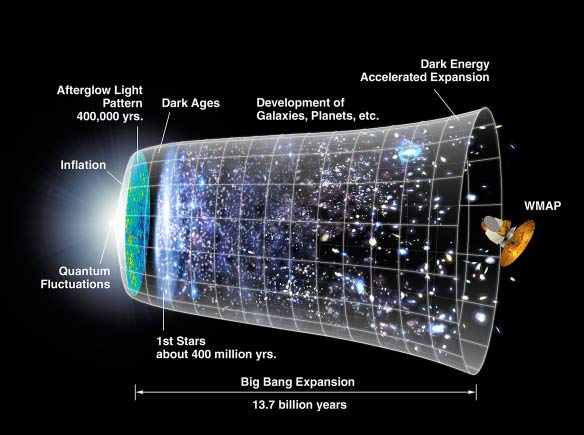
The hard problem of consciousness, the question of what really caused the universe to exist (if such a question is meaningful), and the nature of the quantum world are still beyond our reach scientifically, but theology provides no methodology for answering these questions which is better than science. Theology provides some answers, sure, but what reason do we have to accept them?
Science is tugging theologians along the path of history and theology is redefining itself based upon what is sees science doing. Theology dons the apparel of the strange places that science ventures, but in a sense this garb is little more than a souvenir which will make it look stylish and trendy. Those who follow in religion’s wake in these trends will think they are modern but they miss that they are only following fashion. Theology wears scientific-colored robes in order to maintain its own goal which is more about maintaining itself rather than pulling the cart of culture along.
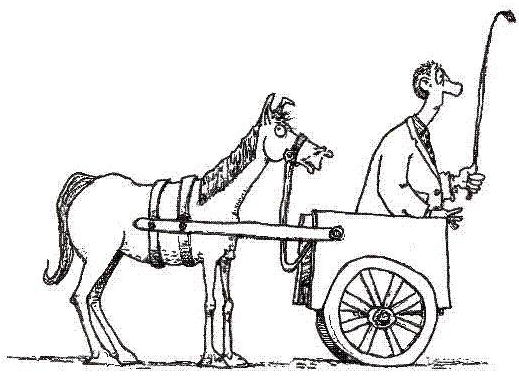
Thus, by re-writing theology in order to put science in a reverential but secondary place behind these divine speculationss, one is surely putting their cart before the horse.
I have been involved with polyamory groups for a few years now, both in Philadelphia and Atlanta. I have met some pretty cool people through these groups, and have had some interesting discussions and learned a lot from people. But one thing I have noticed in the past, and it is true here in Atlanta as well, is that there is a very significant overlap of polyamorous people and Paganism.
Now, the term Pagan is too large to try and define here, so I will not try. But there is also a large segment of the Pagan population that is also into certain things which I, as well as many other skeptics, often refer to as Woo.
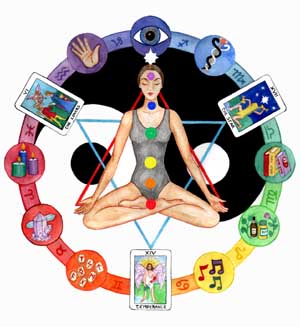
What is Woo, you ask? Woo is is chakras, vibrations, and astrology. Woo is metaphysical silliness that uses words like ‘energy’ (but not even close to it’s physics meaning) or even worse ‘energies’. Woo is the New Age, or as some call it, ‘newage’ (rhyming with ‘sewage’). It is a significant part of the new Paganism, while having little or nothing to do with pre-Christian Paganism.
And at the same time it has its own life outside of pagan communities. Some of it lives within liberal Christian communities as well. Some of it lives by itself in psychics, Tarot card readers, and in pseudo-scientific practitioners that use techniques that are proven to not be effective. Charlatans, unconsciously or deceptively, they all are. As far as all of the skeptical inquiry into such matters has so far shown, these beliefs are not justified.
In an age of Twilight, Oprah, and the liberal love of spirituality mixed with pseudoscience, it is sometimes difficult to be a skeptic without sometimes feeling cynical. There are people convinced that vaccines are dangerous, an idea which endangers people. There are people who don’t take their children to doctors, only to pray while they watch them die. And while these ideas are dangerous on a personal and societal level, Woo is downright annoying and insipid.
When people start talking about their energies merging with someone else’s energies, with their chakras opening up, crystal power, or something about their quantum Secret, I wonder how bad our educational system is in terms of preparing people for scientific literacy. I wonder how people can swallow such idiotic crap without even trying to question it skeptically.
One good book that I read recently concerning this subject is Quantum Gods by Victor Stenger. In this book, Stenger talks about such things as What the Bleep do we Know?, The Secret, cosmic consciousness, charlatan-Gurus who filch millions from credulous people, and the vast misunderstanding (and possible intentional deception by people such as Deepak Chopra) of all things ‘quantum.’
Paired with a few chapters about how physics actually works, Stenger shows how such New Age beliefs simply do not hold up to scrutiny. Real physics–science in general–is a beautiful thing that does not need to be made artificially more beautiful by adding in chakras or even prophecies (Celestine or otherwise).
Another great resource is the James Randi Educational Foundation, which offers a million dollars to anyone who can prove the reality or effectiveness of paranormal abilities. So far, nobody has won the money, even though people like Sylvia Brown and Uri Gellar are very aware of Randi and his challenge. The same goes for chakras, energies, and other New Age ideas; none have stood up to any serious scrutiny by the larger skeptic community.
None.
And so as I navigate the world of polyamory, more so than other areas of my life, I find myself confronted with these kinds of New Age ideas. In other aspects of my life I find myself confronted by evangelical Christians, people whom are sometimes chastised by Pagans for their views while the Christians see them as Satanic. Now, the Christians I understand, even if I disagree with them about most things; they were raised in an environment that derives from an ancient book that has cultural grips on them. It is embedded in our culture and becomes part of them at a young age.
But New Age, despite its attempts to claim its ancient origins, is new. Quite frankly, I have studied some of the old Pagan traditions and found them nothing like the new religious movements such as Wicca and other communities which I have observed. And while they tend to be more liberal and open-minded about many social issues, they are muddle-headed about the nature of reality, perhaps more so than many of the fundamentalist Christians I meet.
And what is so frustrating is that because they view themselves as so open-minded, so tolerant, etc, they sometimes take criticism worse than Christians ever do. I have seen Pagans become enraged at hearing tough questions about their beliefs. Perhaps because so much of the New Age worldview encourages emotional openness, many of them are thin-skinned because their beliefs are almost never criticized, especially while they are in ear-shot. They are not as used to the criticism as more well-known beliefs, such as Christianity, might be.
But since I am told that I should keep an open mind about such things (which I do by the way), I will end this little rant with an excellent video by qualiasoup about open-mindedness.
We should keep an open mind, but not so open that our brains fall out.
Some say Mrs. Claus is with him because he's hung....
The reason for the season? If you ask many a Christian this week about what the reason for all of these lights, decorated trees, Mistletoe, gift-giving and merriment is, they will inevitably say that Jesus is the reason for the season. After all, that is what this coming holiday is all about, right? Jesus’ birthday (did you remember to get him a gift?)
But the history of this holiday is much murkier than that. Today, I want to trace some of the influences on how we celebrate Christmas by taking a quick glance of the obvious pagan roots of the holiday while noticing how little it fits in with a conservative image of Christianity (more about that here). Heck, it may not even fit in well with most liberal ones.
Briefly, Christmas is the result of the Church, for hundreds of years, trying to incorporate pagan traditions into their own in order to more easily bring pagans into Christianity. By melding pagan traditions with stories about Jesus Christ, not only did it calm the pagans down by allowing them to keep their traditions, it subsequently created the Christmas we celebrate today, with little of it deriving from the Bible.
Jesus Christ!
The New Testament is all about Jesus. Jesus did this, that, and some other things and some people wrote about them. One of those things was being born (supposedly). And in this being born some people came, bringing gifts, and then years of apparent nothing before he was much older and wiser (and, apparently, he was God)
Bill Donohue is going to sue me...
But when did this happen? The bottom line is that we do not know. What we do know is that it did not happen on the date December 25th (or any corollary date of another calendar), not even likely that time of year. Scholars simply do not know, because the records that we have are not clear about when this event would have happened, if it ever did happen. Most guesses seem to think that the Spring was much more likely, and some dates such as March 28th, May 20th, and even September 11th exist as guesses.
Concerning what year Jesus was born, we are not clear either . The Catholic Church is even clear that the date probably did not happen in the year 1 AD (or the year 0, for that matter). The bottom line is that nobody is sure of what Jesus’ birthday is, let alone how old he is exactly. I guess it really doesn’t matter. The idea is that we set a day aside (sorry, a month aside) to celebrate this event. The important thing is that we have a time of year where we can celebrate good Christian things, right?
Saturn’s Alias
Saturnalia
Back in Roman days, they had their own festivals. For a week at the end of the year, starting on December 17th, the Empire would start their Saturnalia festivities. During this week, and among other activities, Romans would choose an “enemy of the Roman people,” whom they would feed, pleasure, and generally fatten them up…for the kill. Literally! They would murder them at the end of the festivities as the representation of evil or the “Lord of Misrule.” It was sort of like the old scapegoat idea from the ancient Jews. Now we are starting to see how it connects to Jesus, right?
Not quite.
See, the problem is that when, in the 4th century, the Roman Empire officially accepted and then adopted Christianity as the religion of Rome, not everyone was happy about it. See, in addition to the fattening up and killing of some (probably) innocent person, there was also sexual license (sometimes meaning rape) and other merriment going on that week of Saturnalia which people seemed to like.
Thus, it was decided that in order to keep the (pagan) people happy, Christians were permitted to continue celebrating Saturnalia and to make the last day of the festival, December 25th, as the birthday of Jesus. Never mind that Mithra already had a birthday on that date, and that it looked like Jesus had already stolen a bunch of things from this older pagan god (such as being the mediator between god and man, being the way to obtain immortality, came to save humanity from evil, etc), because Jesus Christ was trendy while Mithra was sooo 6th century BC.
Get with the times, man!
Is the Sun invincible?
Speaking of Mithra….
Sol Invictus
See, those pagans, with their silly beliefs, had this idea that around the end of December the days suddenly started getting longer. Many stories likened this to the sun dying throughout the year, and for a few days it just seemed to be that the days stopped getting shorter and then, in turn, longer again. This was seen as a cause for celebration that the sun will not die and the next year will come after all. That’s a good thing, according to ancient pagans.
Mithra has many stories associated with him. His association with the sun is well-known, especially by the ancient pagans (who might be around still, since Mithra was supposed to provide immortality as well as save them from evil). So one of the important days for those that followed the Mithraic rituals was December 25th, the dies natalis solis invicti, or ‘the birthday of the invincible sun.’ Due to the existing pagan holiday and the Church’s desire to incorporate pagan people into the Christian world, Jesus’ birthday was associated with this date during the 4th century.
Santa knows if you have been naughty or Nicaea
The 4th century was a pivotal time for the development of Christianity. In 325 CE, after Constantine solidified his control of the Roman Empire at the battle of Milvian Bridge (313 CE), Constantine wanted to make sure that his Empire would have a central and official Church that could be a solidifying force for the people throughout. To do so, he would have to settle the various disputes between the churches. Thus he convened the Council of Nicaea in 325.
Besides voting on which books to include into the canonical Bible, the council created the Nicene Creed, which defined the orthodox teachings about who Jesus was, what happened to him, etc. Up for grabs was whether Jesus was a man, the son of God, or God himself. Athanasius’ view won out over others, such as Arius who was considered a heretic afterward. But we are straying from the point.
Bishop Nicholas of Myra
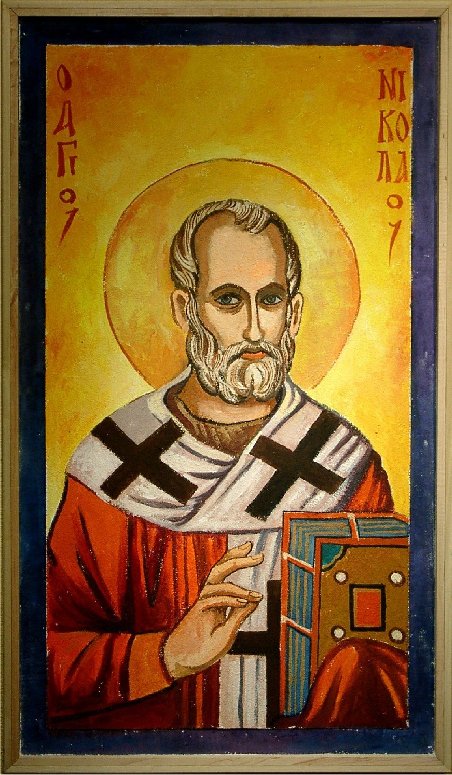
One of the senior Bishops who attended this council was the Bishop of Myra, who was born Nicholas of Parara, Turkey (270-346 CE). He was a popular and influential Bishop who had followers for many centuries after his death. In the 11th century his bones, considered holy relics, were moved to Bari, Italy. During this time the relics, as well as Nicholas’ image and persona, was associated with a pagan goddess called Pasqua Epiphania, who was known for leaving gifts in children’s stockings according to legend.
Eventually, people would start to give gifts to each other on January 6th, which was the date of Nicholas’ death. This tradition spread to the Germanic and Celtic people later, who further associated the image of Bishop Nicholas with their god Wodon (where we get the word ‘Wednesday’). Wodon had a long white beard and rode a horse through the heavens in autumn, according to the mythology.
Eventually the Catholic Church, in its continued attempts to integrate pagans into the Church, adopted the Nicholas cult into official Catholic tradition. They changed the date of the traditions of gift-giving and so forth to December 25th to coincide with the changed accepted date of Jesus’ birth.
During the 19th century Nicholas became Saint Nicholas. The imagery of the god Wodon with Saint Nick had already taken root throughout much of Europe. But in 1809, with Washington Irving’s Knicherbocker History, we see (satirically) a reference to this image of Saint Nicholas as the Wodon-like, flying-horse riding, white-bearded man who was referred to as Santa Claus, which was the Dutch name of this derived image.
In 1822, Dr. Clement Moore wrote a poem, partially based upon Irving’s book, called A visit from St. Nicholas which goes something like this:
‘Twas the night before Christmas, when all through the house
Not a creature was stirring, not even a mouse;
The stockings were hung by the chimney with care,
In hopes that St. Nicholas soon would be there;
etc.
It was here that we see the image of Santa Clause appear, with his blending of images from Wodon, Pasqua Epiphania, and other images such as the replacement of Wodon’s horse with eight flying reindeer. This is a poem we still listen to this time of year, but very few of us know where the images come from.
1931 image of Santa Claus from a Coca-Cola ad.
Later, with the drawings of Thomas Nast, who invented the ideas of elves, the North Pole, and his list of naughty and nice children, the image comes closer to our own. It was not until 1931, when Coca Cola developed the red suit (to match their red labels), that the Santa we know today come to be.
The evolution from influential Bishop to red-suited jolly man with elves came over 1500 years. And it was the efforts of the secular marketing industry that sealed it for us. Thus, the images of Santa, the central image of Christmas today in many ways, is entirely based upon mixed pagan folklore and consumerist imagery.
Jews and Christmas
Jews did not start celebrating Hanukkah as a major holiday until relatively recently. This was probably due, at least in part, to the fact that they had no Christmas to celebrate and wanted a party of their own. And they beat out the Roman’s week long celebration of Saturnalia by upping the ante to eight days. Competitive and innovative, the Jewish people can be quite often.
But Christmas has not always been a time for Jews to have a nice day off to do whatever they do on December 25th now. In the past, Jews were often harassed, humiliated, their property destroyed, and in some cases they were even killed.
In 1466, Pope Paul II made the Jews run naked through the town. In the 18th and 19th centuries many forms of anti-Jewish sentiment prevailed. In 1881 in Warsaw, Poland 12 Jews were killed, many more maimed, and property destroyed. Christmas was a time for fear throughout much of Europe for Jews. Anti-Jewishness runs deep in Christian history, and a lot of it was expressed during Christmas time.
In a post-NAZI era, we often forget that the hate of Jews was rampant in the Christian world. We forget that ghettos, stereotypes, and false ideas about Jews killing and eating Christian babies were common. And with heightened emotions, pressures, and so forth that still exist around this time of year someone had to be blamed. It was often the Jews who felt the brunt of that.
So, what about the Trees and such?
Decorating trees was also a part of pagan tradition. The Ashiera cult was known for decorating, painting, and otherwise displaying trees as part of their worship. This was even known to that ancient prophet Jeremiah, who wrote thus about it:
10:1 Hear ye the word which the LORD speaketh unto you, O house of Israel:
10:2 Thus saith the LORD, Learn not the way of the heathen, and be not dismayed at the signs of heaven; for the heathen are dismayed at them.
10:3 For the customs of the people are vain: for one cutteth a tree out of the forest, the work of the hands of the workman, with the axe.
10:4 They deck it with silver and with gold; they fasten it with nails and with hammers, that it move not.
10:5 They are upright as the palm tree, but speak not: they must needs be borne, because they cannot go. Be not afraid of them; for they cannot do evil, neither also is it in them to do good.
A Jimmy Willing rendition of a cut and decorated tree
But in a further attempt to placate the Germanic pagans, this tradition was largely adopted by Christians and has become part of our celebrations. Some Christians are aware of the verses from Jeremiah quoted above, but most either don’t care or claim that Jeremiah is not actually talking about Christmas trees. Well, technically he wasn’t, but he was talking about a similar pagan tradition that did ultimately inspire Christmas trees. A few Christians don’t put up Christmas trees for this reason.
Some Christians, due to the pagan influenced nature of the holiday, don’t celebrate Christmas at all. In Massachusetts, from 1659-1681 for example, Christmas was banned by the Puritans. So much for the traditional American holiday being part of what America is all about. I guess the Puritans didn’t know anything about traditional America. Of course many Christians celebrated anyway, despite Puritanical views. Thus, our traditional holiday is still strong.
So, the next time you are under some Mistletoe, (derived from the pagan story of Baldar, who was killed by Hoder with a Mistletoe arrow while fighting over some apparently hot chick named Nanna), remember that we kiss under it because of the sexual license of the old Roman Saturnalia. But, remember also that Mistletoe was a sacrificial poison used by Druids in order to perform human sacrifices. I know that makes me want to do some kissing!
It’s just a fun tradition!
I know. I get that it is no longer about these old pagan traditions, at least not for most people. I also know that for most people it is not about Jesus. This should make sense since it’s association with Jesus is shaky anyway.
I know people like pretty trees, lights (not to mention Yule logs), and good food with people they love. All of this is great, and I would not ask anyone to stop celebrating. I love to celebrate. My personal view is that there is little of meaning in the holiday itself that I want to be a part of. I am all about getting together, eating good food, etc., and so I like the parties and gatherings that happen this time of year.
But I don’t say “merry Christmas” because it is not the holiday I am celebrating but rather life in general. It is not the day that makes me want to do these things, it is just my nature that does.
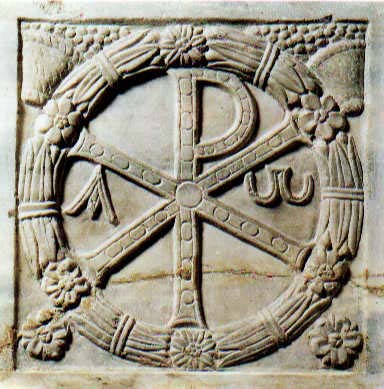
Nor do I write “X-mas.” The reason is that the “X” is not supposed to take Christ out and make it secular. The “X” is one of the oldest symbols of Christ. The ancient Christians would write the “X”, which is how the Greeks wrote the letter “chi” which Christ starts with in Greek, to symbolize their Christianity. The common symbol of Jesus from early on, which is still used, is the Chi-Rho symbol, which is an expansion of the simple “X” first used.
Thus X-mas is not an atheist or generally secular creation to get Christ out of Christmas. It is a reference to an ancient Christian symbol, and is thus more likely to take the pagan Santa out of Christmas. But either way, Pagan or Christian, Christmas does not suit me. I prefer not to participate in the rituals and so forth. You do what you like, and enjoy however you do it.
I wish you all a good day, whatever day it is.
—
For more detail about the history of Christmas, check this out.











 Skepticism, Properly Applied