
I just found this survey about monogamy created by the site GoodInBed.com and took it. There are some results over at Foxnews.com (yes, that FoxNews), if you are interested.
(H/T Polyamory Daily)
I just found this survey about monogamy created by the site GoodInBed.com and took it. There are some results over at Foxnews.com (yes, that FoxNews), if you are interested.
(H/T Polyamory Daily)
Occasionally I check out the blogs at wordpress (which is the software this site is run on) for tags like “religion” or, in today’s case, “relationships,” to see what people are writing about. And most of the time I find a bunch of crap, but occasionally I find something interesting. Today, I found a couple of posts that touched on polyamory.
Over at Emilystarz, we have a post simply called “My Life” which is about a fairly common situation of a woman who has a man in her life who has been, and wants to be, sexual with other people. The added complication of a baby between them makes the situation more frustrating to see, and it is obvious to me that this is just one more situation where monogamy is not working for at least one person in the relationship.
Now, all I know from the post there is what is written, so any advice I have is most-likely crap. But I think people in such situations should be aware of polyamory, even if they ultimately decide against it, part ways, or whatever. I think that this issue of responsible non-monogamy needs to be part of the conversation, not only in specific cases such as this, but in all similar cases with relationships.
I think it needs to be part of our cultural conversation about relationships. With that in mind, let’s move onto the next post I found. In this case we have a writer asking for advice, and getting an awful response. It’s over at lovejays.com, and it is entitled “Playing the Field.” here’s the gist:
Q: Dear Love Jays,
Is it okay I’m dating one guy (we aren’t exclusive) and sleeping with another?
A: Dear Double Dippin’,
Non-exclusive dating gives you the freedom to date, sleep, or hang out with anyone your little heart desires. Dating is a time when you get to explore several options and decide which person (if any) has the potential of becoming more serious.
So, is it okay that you’re dating one and sleeping with another? Technically, yes. Would I recommend continuing this behavior? No. Sex embodies much more emotions than just the physical exchanges of pleasure between our “money spots”. Sex was designed to be shared between two people who are committed to each other and share something special. Casually having sex with people will eventually take its toll on the mental psyche of woman or man. I’m sure there are several of you who want to rebuttal my last statement, but rest assured – you will have your “aha” moment one day. Long story short, sex simply makes things complicated – physically and emotionally.
Easy advice – pick one and stick to ‘em! It’s much much easier to focus your attention on one person and will save you from emotionally damage, even if you are unaware of it at this moment.. If you get bored of him, on to the next one. That’s the beauty of dating!
Sincerely,
Mr. J
This, quite frankly, is the poly equivalent to reading a creationist argument for an atheist. Reading this is like looking at a train wreck of relationship advice.
To deconstruct what is wrong with this advice, I would have to start from page one of polyamory. I’d have to link so many posts from this blog in the past…I just don’t have the energy to do it.
Oh fine…here a couple of examples:
But, onto the post. Let’s do it a piece at a time:
Non-exclusive dating gives you the freedom to date, sleep, or hang out with anyone your little heart desires. Dating is a time when you get to explore several options and decide which person (if any) has the potential of becoming more serious.
This is not awful. If I were to try and be fair to this, I could even partially agree with this. The first sentence, in fact, is spot on. It’s a statement of fact, but then with the following sentence it takes a turn for the worse.
Where it says “…and decide which person (if any) has the potential of becoming more serious,” it could be read to mean that we use this time to decide which people are worth keeping around, which is true for polyamory as well. But the “more serious,” as we shall see, implies exclusivity. Exclusive does not mean more serious, nor vice-versa.
“Mr. J” continues:
So, is it okay that you’re dating one and sleeping with another? Technically, yes. Would I recommend continuing this behavior? No. Sex embodies much more emotions than just the physical exchanges of pleasure between our “money spots”. Sex was designed to be shared between two people who are committed to each other and share something special.
Sex does often involve many emotions, and should be dealt with responsibly, both in terms of physical safety and emotional maturity. My experience with sex with many people over the years in serially monogamous, polyamorous, and group sex environments has shown me that we are capable of sex in more ways than most people have imagined.
Sex is great between two people. It has the capability to draw them emotionally close, bring great pleasure, and is even good exercise. But there is no necessary damage to that relationship just because you have it with other people. The only way this is possible is by not being safe (and thus subjecting yourself to potential infections) or to not developing your emotional self such that you deal with emotional issues such as jealousy.
Things like jealousy are real issues that need to be dealt with, and it is fortunate that they can be dealt with. And let’s not forget that some people are simply not prone to it in the same way. But jealousy is not, in itself, an excuse not to pursue our desires. Rather, it is a challenge to work on. Like fear, it stands against us and makes us dip into the well of our baser instincts. It makes us act irrational, possessive, and petty rather than mature and rational. Jealousy is not something to be proud of; it is something to try and heal if we can.
Sex can be shared between two people who share something special, sure. It’s great when that happens. But it does not imply that at some other time those same two people might also have some special sexy time with some other people with whom they share a close and special relationship. Further, sex can also can be shared between three or four people who share something special, or even between some people who just sort of like each other a bit and like each others’ bodies. This conservative view of sex espoused by “Mr. J” is simply not true in general, and so it should not be espoused as general advice.
It may be true for Mr. (and/or Miss.) J, but if it isn’t true for many people, then it’s only true by accident and not by necessity or generally. Nonetheless, he continues:
Casually having sex with people will eventually take its toll on the mental psyche of woman or man. I’m sure there are several of you who want to rebuttal my last statement, but rest assured – you will have your “aha” moment one day.
I, and many other committed polyamorous (and swinging) people out here in the world have a different experience. My “aha” moment was realizing that the mythology of the ideal “one” that exists for each of us was the problem. Mr. J needs to check his assumptions about the very nature of relationships before proclaiming general truths about love and sex, because there are many of us who find his view, well, parochial.
Still, he persists:
Long story short, sex simply makes things complicated – physically and emotionally.
It sure does. How does this imply that we should have to limit ourselves to one person, ultimately? Because it’s easier? It might be easier, except when you are in love with two people, when you have to repress your natural sexuality in favor of a cultural construct which asks us to repress much of that sexuality, etc for the sake of an ideal. There is a real existential agony that can exist in moments when we yearn for two loves, and feel like we have to choose. How awful to be told that you, in fact, should choose rather than consider other options, such as polyamory, swinging, etc. How trite. How small-minded. How limited—and limiting!
Why, for the sake of all that is not holy, would anyone have to choose simply because it is superficially “easier”? It’s only easier because it conforms to the narrative you, Mr. J, are drowning in. Swim to the surface, Mr. J, and breathe pure air.
So, my advice to Double Dippin’; Love who you love, how you love them (even if it’s just dirty, fun, sex) openly, honestly, and with consideration and respect. Don’t let Mr. J’s conservative views on sexuality ruin your ride in life or force you to choose when you may not have to.
That’s all I can stomach, today.
Over at Polytical, there is a summary and discussion of a recent small, anonymous, survey of polyamorous people which may be interesting to people who are interested in such things.
UK Poly Mailing List Demographic Survey Results
I was interested to see that the largest segment of them were atheist/agnostic/humanist. Granted, it is the UK and not The US, but I like to see poly people who are also atheist/agnostic/humanist.
The overwhelming majority of people were white; 92%. This seems about on par with, if not slightly above, the demographics of the UK in general (at least from the census from 2001, which may be out of date). I would be interested to see the comparative demographics of polyamorous people in the US compared to the general population. My guess is that the percentage of white people in the poly community would be higher than the general population. That because while I don’t think polyamory is privileged, it is definitely easier to be polyamorous when you have privilege.
And, unfortunately, privilege and race often co-mingle. It’s part of why I care about social justice, and thus support the whole atheism+ thing.
In any case, take a look at the survey results if you like, and let me know if you see more similar surveys in other parts of the world.
From September 28-30, in Harrisburg, PA, there will be a gathering of non-believing heretics and other good folk in good ol’ central PA (AKA Pennsyltucky). Not far from the Amish (which, for some reason get conflated with the Quakers, with whom I am much more familiar and which have a very different history), these conference-goers will get a chance to mingle with such luminaries as Dan Barker, Dave Silverman, Herb Silverman, Jamila Bey, Michael Newdow, Sharon Hill, and Sam Singleton!
In short, it’s the 2012 Atheist Conference in Pennsylvania at the Crowne Plaza Hotel in Harrisburg, PA.
In recent years, more states have organized local conferences, and it is a sign that the larger community of reason is becoming more complex. There have long been such conferences, but most have been on the national level (or international level, in the case of AAI), with fewer at the local/state level. There has been, of course, the United Coalition of Reason (COR), with it’s local chapters (including the PhillyCoR led by my friend Staks Rosch).
And, having been an activist for a number of years, having lived in PA for the vast majority of that time, I of course should be going, right?
Well, probably not. Since I have been unemployed for a few months (I will be starting work within the next couple of weeks, but not in time to have money for the conference, most likely), I have not had extra money for such endeavors, and so it looks like I will not be able to make this conference. I had considered doing just Saturday, but since I no longer own a car I will be relying on a bus, which I may end up doing anyway if I decide to go.
But if you are in the area and you have the means to go, I encourage you to do so. And if you have an extra seat for me, I’ll come along!
Meh, worth a try….
OK, first off the bat, it’s quite obvious that atheists are not the 99%. While atheist/nonreligious numbers are growing, we have yet to break even 15% (The Crommunist has a break down of some numbers here). But does this mean that our atheist+ values are not similar to the values of the 99%?
What seems pretty clear to me is that the focus on social justice in the atheist/skeptic/secular community cannot be an accident of history. The Occupy movement of last year, which continues in a transformed state, has obviously had ripple effects throughout the political and social world. The 99% meme is now a part of our language and culture, and it has created an ideological watershed that will likely become part of our legacy as a set of generations active today.
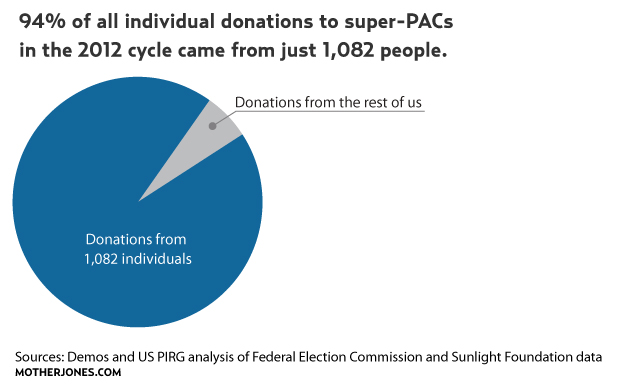 So, to what extent are the values and goals similar to those of the Occupy movement? Well, I’m not sure, but people who are concerned with social justice will recognize the real divide between the economic elite and those below them. The haves and the have-nots.
Control of the levers of political, and thus to a large extent social and cultural, power are in the hands of extremely wealthy people. Most of the rest of us get to vote, but forgive my cynicism in pointing out that many people are frankly uninformed and thus have an oversimplified view of policy and thus support idiots.
 Hence the current Republican party. Is it a surprise that science, education, and social equality are not on the list of things-to-do for people who have done such a good job of swaying an electorate with propaganda and emotional appeal in the place of news and public policy? It shouldn’t be.
The Republican party is in serious need for a takeover by people who, while I disagree with them philosophically in most cases, have some important contributions to make to political thought. You know, the old style intellectual conservatives a la Barry Goldwater.
Clearly Atheism+ is heavily progressive. My guess is that atheists who lean conservative in this political climate will tend to not support the cause, and if they do so they will do so weakly. And I don’t mind that it is progressive, because I am largely progressive myself, as are the other people here at PolySkeptic. Hell, as I said yesterday, I am in favor of being radical, and perhaps I could be described as radical politically, to some extent.
So, do we try and overtly tie the messages and goals of the Occupy movement with Atheism+, or do we think that many of the Occupy people might resent that and leave their meme to their use, and simply help where we can? Can we call ourselves part of this larger social movement? Because while people in the 1% are probably both atheist and theist, nonreligious and religious, clearly most of the atheists are part of the 99%, and the values of atheism+ contribute t0 the values of Occupy.
The Occupy movement is not about religion or god-belief, although certainly the levers of power have historically been tied to institutions such as the Catholic church and other theocratic forces. But today the most wealthy don’t, as a rule, sit near an altar, a throne, or in the metaphorical clouds as gods or demigods. Their power is levered by money, political maneuvers, and ideology. All tools utilized by religion, sure, but we cannot directly tie the atheist movement to the 99% Occupy movement.
What we can do is point out that many atheists share the popular values of equality, social justice, and the existence of fair opportunity for all people. Our culture, political institutions, and approach to problem-solving is in dire need of adjustment, and in some cases demolition and rebuilding. Too much innate privilege is further privileged, too little room for proper application of skepticism is allowed, and too many people are uneducated about how to fix it or even think about it.
As Thomas Jefferson said to William S. Smith Paris in a letter written in 1787;
God forbid we should ever be 20 years without such a rebellion. The people cannot be all, & always, well informed. The part which is wrong will be discontented in proportion to the importance of the facts they misconceive. If they remain quiet under such misconceptions it is a lethargy, the forerunner of death to the public liberty.
We have been too long without a real change in political and social atmosphere. We, as a culture, are stagnating. I don’t know what the best solution is, but I know the direction we are going as a culture cannot be it.
To get to a world of social justice and reason and to not continue on this path which empowers so few and keeps ignorant, distracted, and stupid so many, we need drastic change. While we debate such easy questions as gay marriage, “legitimate rape,” and the place of religion in public policy, the vast majority of us are being swindled without full realization. The classic misdirection of the pickpocket, except the pickpocket lives in a massive estate and pick-pockets millions of people every day.
We are not powerless, but we are not utilizing our powers. We need more things like Occupy and Atheism+. We need education, information, and a set of values to follow towards cultural and political transformation.
With the recent label of Atheism+ becoming all the rage, I have been thinking about things like social justice a little bit more than usual. As a self-described liberal/progressive, even as a voting independent, I do care about creating a world of fairness and compassion. But I am hampered by a relative privilege which prevents me from fully, naturally, grasping how badly our society needs to consider social justice as necessary.
This blog is undoubtedly a place where we talk about “first world problems.” I address the assumption of monogamy, theism, unskeptical thinking, and a host of other intellectual problems which take place at all levels of society, but which are mostly relevant among the educated elite of our world. That is, the educated Western middle class, which you are likely a part of if you are reading this, are subject to really poor thinking, but their problems are pretty insignificant when it comes to the crippling poverty, violence, oppression, and so forth which some other bloggers address. But they still matter.
I am under no delusion that most of the things we discuss here at PolySkeptic are of lesser importance than many of the issues which social activists deal with. But what I am willing to say is that the methods we employ—skepticism, logic, and a willingness to accept challenge—are the methods that we need to employ to solve problems of all levels and kinds.
Take, for example, this article from Phillymag.com about PTSD in Philadelphia (it’s quite excellent, so take the time to read it all). It addresses the cycle of violence, physical brain damage from experiencing violence, and cyclical behavioral effect of said damage on cities such as Philadelphia. The article takes a scientific approach to the problem, painted with set of narratives, and talks about how we need to approach this on a large scale, as a society.
From the article (page 4):
There’s a solution available—a remedy that might change this city’s funereal culture. But when entire neighborhoods become toxic, the medicine has to be vast in scope. “You really only have two choices,” says Drexel’s Sandra Bloom. “You can remove the person from the environment, or you can change the environment itself.”
So, says Bloom, individual treatment can be helpful, including both talk therapy and pharmaceutical interventions. But big cities like Philadelphia, with large neighborhoods subjected to decades of violence, need to think in broader, more dramatic terms. “To treat large populations and cause a cultural shift,” she says, “we need to look at the kinds of group treatments”—including group therapy sessions and a wide mobilization of mental health resources—“that have been employed in war-torn places like Rwanda and Bosnia.”
Upon first reading, this seems an outrageous statement. In 1994, Rwandans suffered 800,000 deaths in 100 days. But Bloom’s point isn’t that the horror visited upon Rwandans and the murder and injury rates in Philadelphia are statistically equal. Her point is that they are shared experiences of protracted violence that have shaped the way entire communities think and live.
There are so many assumptions, experiences, etc which make up our worldview that we are almost completely unaware of. We are often so blind, not only to what life is like to others, but even to why we think and behave the way we do, that to try and solve these kinds of problems seems daunting. Our lives are framed by our experiences, our environment, and we too easily obstructed by such things to see that the problems around us affect us. We are interconnected in cultural, political, and ideological ways which are usually unseen, but we should try to see them better if we care about solving them.
Whether we are talking about PTSD/violence cycles, poverty and political/legal systems of keeping people poor, religious indoctrination and skeptical skills, or the assumption of monogamy and how that affects how we think about love, relationships, and sex, we have to be aware that any solution will have to be broad and persistent. We need people aware of the problem and who are capable of helping in some way.
That is what social justice is about. And now we are starting to see that the atheist movement is being included into the set of social justice issues, and is subsequently willing to group together, as atheists, to lend some hands in spreading ideas, proposing solutions, and hopefully to get our hands dirty in addressing social justice issues. Many atheist groups have been doing so for years, and now we have a label for such efforts. I cannot imagine a good reason to oppose this label.
As a community, we have had the discussions, are becoming more aware of the problems, and are realizing we need to create formal and informal organizations to move towards better ways to address the issues which surround and bind us. Call it Atheism+, call it secular humanism (but perhaps with a generational upgrade), or call it snarfwidgitry for all I care.
But realize that if we are to survive this adolescence of the human race, we need to address some of the fundamental problems, from the crippling poverty, oppression, etc to the lack of application of skepticism to questions of relationships.
We have to be willing to question all of our assumptions, learn to check our blind spots (including privileges), and not simply accept the prevailing wisdom as wise.
In short, we need to be at least a little radical, or we will continue to make the same mistakes over and over again. Because while we are not inherently Fallen and sinful, we are inclined towards behaviors which are damaging to ourselves and other, and we need to actively work to counteract such inclinations to be better as people, societies, and a species.

Found via Reddit, but here’s the link for the picture.
I don’t know if any places near me have these, but I think these are awesome. If anyone in the Philadelphia area sees these, let us know!
That is all.
In reading about this new Atheist+ issue generated by Jen and others around her (especially Greta), I have seen various social issues included in the list of causes that people want to support. Women’s issues, POC issues, trans issues, LGBT issues, neuro-atypicality issues, etc have been enumerated, for good reason, but I have seen no mention of issues related to polyamory.
So here is my question; am I being irrational in thinking that polyamory should be included in such lists, or are many people behind in not including this as a social justice issue?
As a quick note for those that don’t know; I live in a house with 4 other polyamorous people. One is my wife, another my girlfriend, and the other two are my girlfriend’s husband and his girlfriend. So these questions are not merely academic for me; they are real questions with potential serious significance.
There are real-world fears around being polyamorous. Coming out at poly has consequences similar to coming out as gay, for example. Parental rights can get complicated with polyamorous families. Visitation and end-of-life rights, afforded to legal spouses, becomes problematic when you have more than one serious long-term partner. In short, all of the rights that one gets as a spouse cannot easily be extended to other partners, which can create problems.
The foundation of this problem is the cultural lack of familiarity with what polyamory is about. We are not the same as swingers (although there are often overlaps). We do experience some forms of social discrimination, stereotyping, etc. I have been told that I have chosen this lifestyle, but I cannot choose how many people I love any more than I can choose what genders I love. I have discussed my view on the issue of choice, or orientation, in terms of polyamory here, but I will briefly sum it up in saying that I do not choose my desires and my feelings, but I can choose to act on them or not.
And why would I repress my actual desires? Would I do so for the sake of cultural norms which make no sense? No.
I am not aware of large scale cultural campaigns to react against polyamory comparable to reactions against ‘the gay agenda’. There are not common stories of poly people being beaten, fired, or killed. There is a persistent social stigma against it, and it is presented as the conclusion of the slippery-slope for things like gay marriage (” if you allow anyone to marry, the next thing that will happen is 3 people getting married!” The horror!), and there are the many legal issues briefly mentioned above.
And I will briefly mention that advocating for polyamorous rights and protected status in society is made more complicated in context with polygamy and its relationship to fundamentalist Mormons, Islam, and the patterns of abuse against women, and young girls, in those communities. So it is a complicated issue, but I do think it is a social justice issue.
I think that we need to keep that in mind during these discussions about adding social justice issues to our atheist activism.
edit: I saw Jen’s follow-up post as well. I like this image best:

—-
A couple of days ago (I’ve been moving and such), Jen wrote this post on her blog about how the atheist community has been a “boy’s club” and how we need to help progress towards a “third wave” of atheism. The key part is this:
I don’t want good causes like secularism and skepticism to die because they’re infested with people who see issues of equality as mission drift. I want Deep Rifts. I want to be able to truthfully say that I feel safe in this movement. I want the misogynists, racists, homophobes, transphobes, and downright trolls out of the movement for the same reason I wouldn’t invite them over for dinner or to play Mario Kart: because they’re not good people. We throw up billboards claiming we’re Good Without God, but how are we proving that as a movement? Litter clean-ups and blood drives can only say so much when you’re simultaneously threatening your fellow activists with rape and death.
It’s time for a new wave of atheism, just like there were different waves of feminism. I’d argue that it’s already happened before. The “first wave” of atheism were the traditional philosophers, freethinkers, and academics. Then came the second wave of “New Atheists” like Dawkins and Hitchens, whose trademark was their unabashed public criticism of religion. Now it’s time for a third wave – a wave that isn’t just a bunch of “middle-class, white, cisgender, heterosexual, able-bodied men” patting themselves on the back for debunking homeopathy for the 983258th time or thinking up yet another great zinger to use against Young Earth Creationists. It’s time for a wave that cares about how religion affects everyone and that applies skepticism to everything, including social issues like sexism, racism, politics, poverty, and crime. We can criticize religion and irrational thinking just as unabashedly and just as publicly, but we need to stop exempting ourselves from that criticism.
Yes, I agree. We, in the blogosphere have been talking a lot about “new” (or “gnu”) atheism, but in the same way that a Jr. leads to a III, we can have the future of the skeptic/atheist movement be a third wave where we include all of the various effects that religion, theological thinking, and non-skepticism generally affects our lives.
In short, we need to transcend mere atheism and move onto application of skepticism to all aspects of culture, beliefs, and actions. We need a new skepticism.
I have been trying to do just that for years at this blog. I saw the kinds of arguments that people had about god, religion, and things like science, and saw parallels between how we think about monogamy and polyamory. I saw unskeptical thinking leading people towards conservative views about sex and relationships, and I began to draw those lines using what I had seen in the skeptical community since I ran into it a decade ago.
In the years that I have run this blog (and after subsequently adding some new writers), I have broadened my focus to include questions of orientation, gender, and have even wrote about my own neuro-atypicality. Yes, I still focus on atheism and polyamory most of the time, but that is because these are the subjects I know best. I look to people like Ginny (my lovely wife) to write about gender, trans, sexology issues (when she’s not burdened by grad school work, that is). And Wes and Gina do their things, whether controversy or convulsions of laughter.
In doing this, I have come to a fairly progressive perspective, which I suppose is no surprise to anyone who knows me. I support LGBT rights, including the right to marry, raise children, etc. I support people who are simply trying to live their lives with political and legal freedom afforded to them not according to theological concerns, but by rational and empirical arguments based on fairness and compassion.
But most importantly, I support the freedom of speech and thought, without which the freedom to act would be parochial and hindered. As Keenan Malik recently said,
Whatever one’s beliefs, secular or religious, there should be complete freedom to express them, short of inciting violence or other forms of physical harm to others. Whatever one’s beliefs, secular or religious, there should be freedom to assemble to promote them. And whatever one’s beliefs, secular or religious, there should be freedom to act upon those beliefs, so long as in so doing one neither physically harms another individual without their consent nor transgresses that individual’s rights in the public sphere. These should be the fundamental principles by which we judge the permissibility of any belief or act, whether religious or secular.
(H/T Greg Mayer over at WEIT)
I support maintaining a skeptical community that fights for the truth, is aware of concepts like privilege and how it influences or worldviews, and which perpetually self-improves by allowing for criticism and dissent, when dissent is warranted.
To conclude, I agree with Jen that we need a third wave of atheism. And whether we think of it as an atheist movement, a skeptical movement, or a social justice movement led by skeptics and atheists, the important thing is that we must keep challenging ourselves to understand more, listen better, and remember that religion and non-skeptical thinking has effects which may not be immediately obvious to us, with our perspective. Religion effects different groups in different ways, and so we need to be inclusive in order to progress towards the goal.
The goal of making ourselves, as activists, obsolete.
I grew up in Philadelphia. I love Philadelphia. For college and grad school, I was not far away, and I visited often. I love being in and near major cities, for many reasons. It has something to do with easy access to culture and more tolerant and accepting people. In other words, you can get away with being weird easier.
A few years ago I was involved with a woman (she-who-shall-not-be-named…oh fuck it, her name was Seana), who got a job in Atlanta. The relationship was going well, and at the time I was not working and decided to take the risk of moving to Atlanta with her. ‘Risk’ being the operative word. Turns out that she was an evil monster worthy of fantasy-lore, and I ended up not with her anymore. I think that’s for the best.
But while down there, after having my heart yanked out, stomped on, and then rebuilt in order to smack it around with a badminton racket (some people have strange kinks), I met Ginny, and luckily she didn’t like badminton that much. So we started dating and her academic pursuits led her to the Philadelphia area and thus I eventually moved back to Philadelphia and have lived here for the last year-and-a-half or so.
Until now.
Now, I live in New Jersey (which is totes better than that old Jersey, from what I hear). And this has been the source of epic teasing–of me, by me–because we Philadelphians are raised to make fun of New Jersey. It’s the perfect set-up for self deprecating humor, really. Also, it’s Philly tradition or someshit. I think it has something to do with people waiting in lines at Geno’s or Pat’s at 3:30 AM being generally stupid while figuring out how to order a cheesesteak.
Naturally, we assume they are all from New Jersey.
Well, look at me now! I’m living in New Jersey. Granted, I’m only a PATCO ride from Philly, but I’m almost in another universe, really.
I kid, I kid…and then some years later I goad. Wow, that was a really terrible and spontaneous attempt at a pun which probably fails in text. Oh well, it’s typed now and there is nothing I can do about it anymore, so I will have to live with it. And so will you.
It’s actually sort of awesome because my life now has the soundtrack written by the collaboration of the various love-babies of Bruce Springsteen and Jon Bon Jovi.
So, why “PolySKeptic Compound”? Well, it’s because now all of us polyskeptic writers (at least, those of us that survived the great PolySkeptic wars…see here, here, here, and here for example) now live under one roof! And if Jessie would actually accept my invitation to contribute, we could have the whole house involved! A blog orgy…or something.
OK, maybe not “orgy.” Polyamory is not all about the sex, right? Think of it as an orgy of fun. Not that orgies aren’t fun…. You know, never mind! I don’t want to hear your anticipated groans of disapproval at my terrible humor. No orgies then, goddammit! Also, there is no god. Probably. And if there is a god, then it’s a total dickwad.
OK, so back to the point. We are living in the same house now. I got rid of a lot of books for the move but I still have a lot of them around me. There’s also a lamp shaped like a guitar. And cats. Cats are assholes, BTW. I like them and all, but they scratch at your door early in the morning. And it’s hard to get them into the microwave.
Like, really hard.
So, now that I’m living in The Jerz, perhaps we’ll start making videos and call it “Jersey? Sure!” in which we shall make baby Jesus cry with our orgies of fun-but-not-as-fun-as-sex-orgies-fun. Also, no Snooki. It’s funny because it sort of sounds like I said “no nookie.” Really, it’s funny. Also, I’m working on my abs so I can be “The Circumstance” and be world famous for something other than my hilarious jokes and intimidating intelligence.
Gina is laughing. That’s all that matters.
The rest of you can eat a bag of dicks.
With a spoon.
—
So, this is what happens when I wake up at 7:30 in the morning….
But, in all seriousness now, I’m quite happy to be here, and I look forward to my new life in New Jersey. Hell, beer is cheaper here.
 Skepticism, Properly Applied
