Fighting it off


With the Summer now really over, the days getting cooler (I’m already cold. I don’t want think about January), and the days getting shorter and shorter, I’m on the edge of the seasonal changes to mood that happens to me every Fall.

That, compounded by a recent loss of a relationship that was important to me means that I am on the verge of a depressive period which I am going to have to deal with. It’s like I’m feeling the first signs of the flu coming on, and while I know I’ll get through it (you know, probably) I know that for a little while I’m not going to be OK.

And I don’t know what to think about that. It all seemed so easy and clear when I was feeling great just a month (or so) ago. I was feeling confident, I had strong relationships, and the Summer was my playground. I was Ingressing all over the city, enjoying the warmth, and I was busy most nights with friends, lovers, and partners.

And now my motivation to be social is diminishing. I can feel it seeping from me like blood from a cut, slowly draining away my ability to stay attentive, engaged, and feeling fully alive. Yesterday, for the first time in many months, I spent an entire evening playing a video game. After the first half hour, I felt satisfied with gaming for the day. But rather than get up to do something else, I just sat there and played more. And then 3 hours went by, just like that.

Last Fall it was Skyrim. Soooo much Skyrim. What a great game, but there is definitely a point at which one is over-doing it.

And then I think about last Fall. Man, so much has changed in a year. I remembered how awful it was for me a year ago. With the exception of someone I had just started seeing then, I was mostly not doing well at all. I was in a long, arduous, unhappy funk all of last Fall. Everyone around me saw it. I was moody, non-communicative, and it led to things going badly between me and someone I deeply cared for, then. There were bright spots in there, but it was awful. And so I find myself thinking a lot about what to do about this. I cannot avoid it completely, but I can mitigate it, can’t I?

I know this gets better. I don’t know exactly when, but it will. You know, probably.

So, if you see me this Fall and I seem a bit more quiet and subdued than usual, then it’s probably because I’m feeling shitty. If you are inclined, come and give me a hug. Hugs always help.

But the most obvious piece of evidence that I’m not doing well? I have not even reached 500 words and I’m done writing.

Something is wrong here…..


Wolves in Sheep’s Clothing


[TW: rape, sexual assault]

I still follow a number of atheist blogs, which I sometimes read and sometimes skip past depending on the topics they explore. In recent months, one of the raging conversations has been the ongoing issues related to skepticism, rape culture, and “radical feminism.” I’ve written about these subjects previously, and don’t want to deal with those issue directly (there’s already a lot of that being discussed, and I don’t feel like I have anything significant to add), but something about these conversation has felt very familiar to me recently.

No, I am not trying to snidely imply that this is an old conversation that we’ve all heard before and should be tired of. It has been one which has been happening for a while, but it is one that needs to happen because some people are still not getting it.

No, In this case, the familiarity has more to do with seeing parallels of much of this “drama” in my own life. The familiarity is one of “oh, that thing they’re arguing about concerning skeptic/atheist leaders being sexual predators, possible rapists, and general dingbats whose supporters attempt to smear you for pointing out their dingbattery…that looks really familiar!”

All too familiar…

So how about the polyamorous community?

Hiding in plain sight

Thinking about all of this got me wondering about how many people fly under the radar, not only in the mega-communities of all kinds, but all of the local communities. How many people who consistently lie, manipulate, and take advantage of people for their own benefit (among other terrible behavior) are there all around us? I mean, it’s a behavior set which operates best in the shadows, and the very success of such behavior necessitates hiding, creating a false facade, and having sympathetic advocates. The perpetrators of such things are usually not simply loners waiting in alleys, they are people within your own community, hiding in plain sight and pretending to be something they are not.

ColbertfriendThere are strategies which some people use to hide their awfulness. If you are racist, it helps to have non-white “friends” or co-workers to keep around to make any accusation of racism seem absurd, except for those who know better. If you are a misogynist, keep your female friends and partners close, so that if someone says you treat women badly you can have them speak up for you. Similarly, if you have problems with sexual consent, make sure you have your feminist friends and partners willing to speak up for you, so that when you do decide to just do what you want with a woman who you think you can get away with it with, the accusation will look ridiculous (especially to your partners who you emphasize consent with!).

How many people are there like this around us all the time? Well, the terrifying answer is that we don’t know. That’s why it’s so scary. Often, they are around us all the time and we have no idea who they really are, because they hide it so well. This is compounded by the fact that many people who have had bad experiences with someone may choose to be quiet about it, and only close trusted friends will know. A desire to not stir up drama, unwanted attention, or possible backlashes are among the many reasons that people who behave poorly don’t get outed more.

Yes, backlashes. Because sometimes victims get blamed, by both bystanders and those guilty of the infringement.  If someone knows they are guilty or wants to hide a mistake, sometimes the best way to hide is to redirect attention or to just ignore it and hope it goes away. Some people faced with accusations will not only refuse to accept any responsibility (or really acknowledge the accusation at all), but will go further and re-direct the accusations elsewhere. A good defense is a good offense, I suppose.

Other people will just depend on the background noise of normal every-day life to drown it out, knowing that some people who get hurt will just slide into the crowd and not pursue more conversation or desire for some recompense. Others may simply believe they didn’t do anything wrong in the first place, and will view accusations as absurd, annoying, or an attempt to sully their reputation (you know, rather than a description of the violation of another person).

Advocate Camouflauge

But there’s a deeper, and more disturbing, set of strategies I have seen employed as well.

Some people are especially skilled at pretending, hiding, and creating support networks to vouch for them. It’s much better to have advocates than to appear defensive by responding oneself, after all.  As a close friend said, in reference to someone neither of us trusts, “if you rape 1-in-5, you will still have 4 to vouch for you.” That is, if someone talks about consent often and practice it with most people, the exceptions will be easier to hide in the shadows of consent’s facade. If a person gets off on being in control, having influence, and doing what they want to other people while ignoring consent now and then, such a person is much more likely to keep getting away with it by talking a good consent game.

Sometimes the best way to appear innocent is to clothe yourself in the garb of, and to mimic, those who would be the first to convict you if they knew who you really were. The terrifying idea I’m describing here is to hide among those that would be your greatest critics (if they were to see the other kind of behavior) while saving that other behavior for people who seem unlikely to fight back or actually matter to you. It’s essentially being careful who you victimize, while making sure that you surround yourself with advocates of (for example) social justice who you stay within bounds around, so they can be your character’s alibi and voucher.

Here’s one example I’ve seen. If you are a guy who wants girls to like you, then start by calling yourself a feminist, talk and write about consent and befriend and partner up with feminists who you treat mostly well, then occasionally feed that deep desire to take control and power over people with some other people who you perceive as being “safe” to ignore those feminist consent lines. If anyone calls you on it, all you need to do is turn it around on the accuser and then sit back and watch your feminist partners defend you while you can sit back, feeling…well, I have no idea how that would feel. I have no inclination to find out, either.

itsatrapOn top of that, you get to be around attractive feminist women who you might get to sleep with and whom will act as ways to attract other women to you, since those women will vouch for you. You get to treat most of the women in your life relatively well while creating a situation where you can occasionally get away with some power trip (or perhaps it’s just a deep desire which cannot be denied all the time. Either way, it’s manipulative and deeply troubling). You get to occasionally treat people like crap all the while maintaining a flock of feminist women who will pronounce you safe to other approaching women.

Except you aren’t safe. You are a predator, camouflaged among feminists so you can get away with your crossing consent lines when it suits you. And it does happen, doesn’t it? Perhaps not very often, but when it does happen you don’t have to atone, apologize, or even acknowledge it because you’ve created a believable facade of a person you are not. You have created a facade of a decent human being.

And what’s worse is when such people do a little of both with other partners, all based upon what blind-spots each partner has. Such a person will know that some can be manipulated and influenced and still be an advocate, at least for a while. After the influence starts to wear off and it becomes clear that they see you more as a means towards their own needs and desires than someone interested–or capable–of a genuinely mutually beneficial relationship, all such a mind needs to do is move onto another person.  In extreme cases, such a person might (for example) assassinate the character of the disillusioned person and gaslight them, attack them, and write them off because they aren’t useful to you anymore.

The above description* is a recipe for coldly calculated patterns of using other people for one’s own purposes rather than creating genuinely mutually beneficial relationships in which the needs and desires of others are considered. Creating healthy relationships is not a game about what you can get away with while trying to appear acceptable by the community in which you participate while doing so. But this is only one of many descriptions of problematic behavior. It just happens to be one I’m more familiar with because I saw it up close.

Victims of such behavior will look at the advocates of these manipulative people and can only shrug their shoulders and crawl back into their hole of self-doubt, fear, and trauma which will never be dealt with on the advocates’ end because he would never do that. Except, he did and many will believe.

Celebrities as proxies

I’ve met Michael Shermer. It was years ago, and I remember that everyone in the room wanted to talk with him. He’s smart, engaging, and tells fairly good stories.  He’s also done really excellent work in the skeptic community, written some good books, and has some really important things to say. He’s also a douchebag. He may, in fact, be a rapist and a sexual predator. There have been a number of accusations, arguments about responsibility, and many have come out in support of him in light of these accusations.

There is no contradiction between a person having very good qualities, friends, and advocates and someone who is just terrible. People like Michael Shermer are popular examples, and in a sense stand as a lightning rod for conversations about things like sexual predation, rape, and rape culture. But these celebrity examples of these conversations are community proxies for conversations about the kinds of people and issues we are surrounded with in our own lives, perhaps every day.

Our local communities have people who are known to be problematic in specific ways.  That group of people is known for being really tribalistic, dismissive, and gossipy unless you agree with them about whatever they care about. This guy over here is known to get into heated arguments, and sometimes fights, especially if he’s drunk. That girl is known to make racist comments and jokes, but mostly she’s pretty cool (I guess). Oh, and that guy? Oh, he’s a known to take advantage of women when they’re drunk or just to do what he wants to them unless they specifically ask him to stop. You know, maybe he’ll stop if you ask, so just don’t get paralyzed by fear because silence is totally the same thing as consent (pro-tip; no it’s not). You know….he’s probably a sexual predator. But you know, whatever. He’s smart and fun to be around and he throws good parties, so as long as he cuts that out, you know most of the time, we’ll look past it and pretend it’s not happening.

Also, there are askholes (which is among my favorite new words).

There is an idea that one reason celebrities are a thing many people talk about with each other is that since communities have become so large, most people (especially if they live in other parts of the world) don’t have a common set of concerns and people to gossip about. Celebrities, whether they beat their fiance, did something really awesome and generous for someone, or got married, are a proxy for the old village gossip about the locals. Michael Shermer, being well-known in the skeptic community, is the person we talk about when we talk about things like rape and rape culture, but in smaller communities perhaps have their own Michael Shermers.

We have our local examples of such people, and a lot of the same infighting, smear campaigns, and tribalism which takes place on the blogoshere and at conferences is also happening on the local level, on smaller scales.

And it’s hard! It’s hard because unless you see certain behavior you can’t be sure about the veracity of an accusation, especially if the accused behaves normally or acceptably most of the time. It’s hard if the person in question is someone you work with, hang out with, and maybe even generally like. It’s hard because sometimes you aren’t sure if you should believe it, and if you want to be a good skeptic you need more evidence than an accusation.

And shadowy people are really good at covering their tracks with the aforementioned facades, advocates, and mostly good behavior (especially with certain people) which is what most people will see.The distinction is not what they do, it’s about how they proceed after the deed is done. A decent person will take responsibility and try and use it as a lesson for growth and potential change.

We all make mistakes. I have certainly made many myself and I have worked to not hide them, but instead to make them part of my motivation to grow and change. I have hurt people in the past, I have been a poor partner, and I will probably make more mistakes in the future. The issue is how we move on from mistakes and misdeeds, and it is quite tempting to try and shift the narrative to shift the focus on our mistakes onto something else, or to avoid the responsibility which is ours.

Accusations can have repercussions for our standing in a community, but it is ultimately our actions which matter. Michael Shermer, might never recover (professionally and within the skeptic community) if he were to admit to any sexual assault, but it would be the right thing to do (assuming the accusations are true). But such a guilty person would recover far better if they didn’t shirk their moral responsibility from the beginning, and rather just admitted their misdeeds.

If such a person, celebrity or not, is guilty, then worrying about reputations and community standing rather than the affect upon victims is behavior which demonstrates a lack of perspective on what is important and moral in scope. The people around us who behave poorly need to be given room to atone for mistakes, but in some cases the mistakes were more like decisions. Sober, calculated, and intentional decisions are harder to forgive.

The sad truth is that maybe some people cannot be redeemed. One has to be able to recognize error in order to be redeemable.

See also rabbitdarling’s contribution

*Yes, it is based on real experiences. I will not name him [yes I will. His name is Wes Fenza], but many of you know exactly who I’m talking about.

Barrier Protection


I think this is a wonderful article, and I’m passing it along.

The Slut's avatarSlut, Ph.D.

I love and hate the way poly people use condoms.

*********************

Before I go any further, I suppose I should explain that I spent years theorizing and researching the way men and women around the world make decisions about and negotiate contraceptive use; it’s what my dissertation was on, and I have written several academic papers on the topic. Amusingly, my academic background makes me at best only slightly better at actually negotiating contraceptive (condom) use with real people than your average monogamous person, and I’m definitely less skilled at it than your average poly slut. I manage it, but without much finesse. Instead of being helpful, my academic background just makes me very conscious of how profoundly mediocre I am at it, and leaves a voice in the back of my head continually affirming a theoretical paper that I wrote in graduate school arguing that contraceptive negotiations are all…

View original post 1,874 more words

Description v. Prescription in Polyamory


In the past, I’ve talked about whether monoamory or polyamory is better, and concluded, essentially, that so long as we are aware of either possibility and we pursue our desires authentically, I’m not concerned where we end up. Today, I’d like to take a look at a set of issues within relationships which fall under the same logical structure, and tease out why I think things like rules and promises, especially when they are intended to remain in place indefinitely, are not only unwise but may be self-defeating.


Negotiation as an Ongoing Process, and not a Scripture

DeMilleTenCommandmentsDVDcoverOur culture has a handy trope for a rule which is set “in stone.”  Whether the image come from the old Ten commandments movie (or the Mel Brooks version), or from the Old Testament itself, we understand what it means to create a rule or promise which is not designed to change. The idea is that some person or group has handed down a rule which is meant to be kept indefinitely. It is either thought of as a moral commandment or an agreement with no defined end. In other words it is treated, in some cases, as scripture.

The absolutism of this set of circumstances is comforting, at least to some, but it has an air of moral absoluteness which simply does not fit with the nature of relationships (or anything, really) which depend upon communication, growth, and adjustment to change. The stability and structure of such an agreement might be comforting, but this comfort is an illusion and is often short lived.

Such rules can take the place of agreements, requests, or demands but in any of these cases the same fundamental problem will arise. Of course, the issue of coercion, abuse, or simple fear might also play a role, but at bottom all of these situations suffer from the simple mistake of thinking that it’s possible to create a set of rules which will be relevant after new experiences, growth, and changed circumstances have thrown aside all of our assumptions and intentions.

If we make such rules, we must keep in mind that as we experience more, as the circumstances change, and as we grow (both in our set of desires and our ability to handle new situations), the rules we made might not be relevant anymore. In some cases, the rule might end up no longer being necessary, and yet many people hold onto them out of habit. Because it’s the rule. Because it became scripture, and as many people can attest to, scripture sometimes just stays even after you don’t have any need for it.

In other cases, the rule might end up becoming a crutch upon which we lean in order to avoid facing the fact that the circumstances have, in fact, changed or that the rule was a smoke-screen for some fear. But the bottom line is that the rule may not match up with current needs, desires, and relationships, and so it might be better to see that rule as a temporary agreement to be reconsidered now or in the future.

Especially people new to polyamory, the tendency is to create some hard boundaries, rules, etc in order to create some sense of safety or protection against all sorts of things. But as time goes on, relationships form and new desires may arise which run against these rules created early on. So, what do you do? Do those rules become scripture or do you re-evaluate, re-negotiate, and possible change the nature of your relationship as a result?


Prescription versus description

Thinking of rules as a means to protect ourselves is problematic, at best. No rules we can create will protect us from the things we fear, because the things we fear might always happen no matter what rules we adopt.  Fear needs to be dealt with directly, and not through defense mechanisms. Rules, in this case, are often more about identifying what our fears are, and making such rules absolute seeks to avoid dealing with that fear as much as actually avoiding harm.

As any monogamous person likely knows, the rule to not have other sexual or romantic partners does not necessarily prevent our partners from the interest in other people, which is the real source of the problem as much as the potential acts themselves.  When polyamorous people employ similar rules about levels of intimacy, the difference is one of quantity, not quality. Making the exclusivity limited to one person or a few does not solve the problem of fearing the loss of intimacy. Trying to defend this intimacy is absurd; if they want to give it to us, they will regardless of whether they also give it to other people.

So, what if we thought about rules as a description of an idealized reality rather than a defense? What if we thought of it as a guideline to staying on the path or achieving the kind of life that we want to live? That is, rather than a defense or a set of ways to protect ourselves, what if we thought of rules as a means to keeping ourselves pointed in the right direction and not distracted by road-side attractions along this path?

That’s certainly an improvement over looking at rules as absolute dictates and Hobbes-esque defenses against harm (although guidelines will be this as well), but what if we went even further than this? What if we stopped using the model of prescribing the direction we were going, and adopted a model of exploration? What if instead of defining where we are going, where we will be, and what the destination were to look like, we were looking towards the horizon and discovering what we found?

What if, in our relationships, we are map-makers rather than law-makers?

Laws have to be changed, reinterpreted, and often simply scrapped in order to keep up with our lives. Laws and rule are, in many ways, fundamentally conservative and traditional approaches to reality. Necessary for many reasons, but they are not a force for change or growth in themselves.

In order to change, we need to be explorers, curious and skeptical. As Nietzsche said, we need to be attempters in life (cf Nietzsche, BGE §42 and §210) reaching for the possibility just beyond us. Rules may be relevant for a while, as explorers, but eventually we will run into a new land where the rule simply does not apply. Eventually, we will have to start being ethnologists and adopt a new perspective, and realize that not only is the land upon which we walk different, but the walker is different as well. As we explore, we will change, and the person who left our home shores with notions about right, wrong, civility, etc might no longer exist.

Carrying your civilization into another and remaining the same misses the point of traveling. The point is to grow and change, not to carry your old self to new lands. We don’t want to be imperialists, do we?


An example; Primary and Secondary

Consider this; the difference between the rules set up in monogamy and the rules polyamorous people set up around primary and secondary relationships are usually logically similar. In monogamy, you surround your partner with a metaphorical fence and say “no more in here,” while with polyamorous relationships you might say “only one, maybe two or three, in here. The rest of you are relegated to second-class relationships.”Why prescribe this hierarchy? Why go out of your way to define it as such? If someone feels at home in that fence, why would you make a rule saying they can’t come in?

When we set out on our journey of relationships, if we define these roles beforehand we might find a couple of things could happen. First, we might find that it creates unnecessary distance and feelings of inadequacy for “secondary” partners. It’s one thing to actually be less intimate and close to someone, it’s quite another to be defined as such regardless of whether it’s true or not.

Meeting someone, dating them, getting close to someone is already a complicated enough without having artificial boundaries set on how important that person is allowed to be to you in addition to all that. If someone defines my relationship for me, as would be in the case if I were a relegated secondary, it would not change how I would feel about my new partner but it would make me wonder how close I’m allowed to feel or how close I’m allowed to be.

I’m just not sure if “allowed” is a relevant concept when it comes to how we feel about people. Rules, in many cases, attempt to define how we are allowed to feel in addition to how we are allowed to act. Setting boundaries and rules on actions is one thing (and is important). Setting rules about how we are allowed to feel is quite another (and absurd). So the question is whether things such as relationship status is a function of actions or feelings, primarily.

Are statuses–things like being primary, secondary, etc–things we  prescribe or are they things we describe? It’s probably both, but I think that how we actually feel is the primary factor in the nature of a relationship. And so no matter how much we may want and try to prescribe that from the start, how we actually feel will be the primary factor in how close a person is to us. Holding someone at a distance merely because of a rule is, in my opinion, not a decent way to treat another person. And it feels shitty when it happens to you.

Further, you may find that no matter how much you try and pre-define a relationship, that rule might be impotent in terms of actually preventing a person from getting really close. This can lead to situations where someone calls person A their primary, but person B (relegated to secondary status) might end up being equal or greater in terms of intimacy in the long run. Trying to prescribe these statuses thus simply seeks to create rules about territory you have not explored yet, like trying to decorate a room you’ve never been in. You don’t know how close your partner will be to their new partner, and trying to set a rule about it will have as much effect as defining how many chips you’re allowed to eat from the bag.

Clearly, there will be distinctions in terms of how close you are to a person, how much time you spend with them, etc. Clearly, terms such as primary and secondary are useful terms to describe how relationships actually are right now, and I would not try to argue for any “relationship anarchy” which would attempt to argue for use ridding ourselves of labels.

But just like how the dictionary does not prescribe meaning (they simply log use of words, and reflect the world rather than define it), labels such as primary, secondary, etc are descriptions of the nature of a relationship more than a pre-ordained rule about what role someone will play in our lives.

Conclusions

It is undoubtedly true that some relationships are closer and more intimate than others. Insofar as words like primary and secondary have use in the context of relationships, they should be descriptive terms. But these descriptions are not chiseled in stone, and in 2 or 5 years things might be different. We must be aware that this might happen, and that when it does we have to be allowed to re-define our relationships to reflect reality, rather than impose our preferred reality onto our relationships.

The feelings we have for people will exist no matter what labels and rules we have.  Prescribing our relationships is, at best, a conservative attempt to maintain the status quo of the intimacy we have with someone. But that intimacy will remain, grow, or diminish not based upon any prescription, but instead upon the actual changing nature of the relationship. And as relationships change and grow themselves (and sometimes they grow apart), we should view the journey as an exploration, and we should be map-makers, not law-makers, of our lives.

In short, we should be curious, open, and skeptical of the new terrain which is the future and not merely carry our assumptions, preferences, and comfortable spaces with us. Let our experiences, and not our presumptions, define us.


Power Corrupts


I really like DarkMatter2525’s new video:

I’ve thought a lot, over the years, about how people respond to power. It was the primary theme of my science fiction novel, which is entitled Power.  In many ways, this book, as well as many things I have written, thought about, etc over my life have been an exploration of how a person might react to any power, whether given or earned.

Would I trust myself to have ultimate power? Would I trust most people with such power? Would I trust anyone with ultimate power?

The simple fact is that nobody should have ultimate power, whether we could trust them or not. The power we have should be limited and given carefully. Our political process, currently, is not especially good as it favors the wealthy and more often than not gives power to people who seek it for their own ends. And while I don’t agree with Plato that “Philosopher Kings” would be the best solution, I think that the seeking of power is indeed part of the problem and perhaps some reluctant leaders might be a step in the right direction.

All the power I want is the power to make my own decisions, affect people positively wherein I have the intimate relationship to do so, and to prevent harm where I can. I don’t want to manipulate, not even if I believed that it was for the good of the manipulated. I’m not arrogant enough to believe that I could tell the difference between my selfish interests and what is actually good for someone else. I don’t want power over people, nor do I want people to have unnecessary power over me. I will grant power where I think it’s fair to do so (a la John Rawls), as I believe we all should.

Our own lives, how we manage our selves, relationships, and projects are the test we are all taking every day. How our society looks is an epiphenomenon of many cultural concepts which cause individual actions and behaviors. In short, our individual decisions add to the whole, and the influence of ideas we spread has some small effect upon the world around us.

Currently, many parts of our society are not doing well on this test. The question is whether you are part of the problem or the solution. My goal is to be part of the solution more than I am part of the problem, knowing that we all will make mistakes and that the good actions of others may make up for my errors, and my good may outweigh their errors.  Together, we can help each other err less, and grow more.

But if on the whole we are doing more good than harm, we should see the steady progress which we humans are capable of.

And those who seek power should, perhaps, be taking the orders sometimes, and not giving them as much. The ability to be louder is not a sign of being a good leader, and perhaps the quiet have things we should be intentionally listening for.

Not that introverts should take over, necessarily.  Only that the noisy should learn to shut up and listen now and then.

Good luck on your test.

Misanthropy no more! (part 2)


In Part 1 of this long essay I talked about how I have, previously, considered myself a misanthrope.  I used the mythology of Star Wars, specifically the Jedi/Sith division, to illustrate two types of approaches to making judgments about ourselves and others, based upon the differences in approaches which such divisions display. I called them the “good” and “bad,” with the scare quotes because neither is strictly good nor bad in themselves, because that is how we, culturally, tend to identify them, based upon our cultural traditions based in part upon Christian ideas. The distinction, between humility and confidence, is one of a healthy continuum but which has the capability to be expanded into self-deprecation and arrogance, which are not healthy.

From there, I want to deal with what I will call the ugly and the beautiful, which I will hope to illustrate below.


The ugly

The devil hath power
To assume a pleasing shape.

-Hamlet

The gravity of both humility and confidence, if tempered, are not dangerous nor unhealthy by themselves. But if not tempered either can be used by other attributes within us, and they can either cultivate a manipulating or a manipulated set of behaviors.  If intentionally cultivated towards the excesses of self-deprecation (especially if hidden within false empowerment) or arrogance (especially if hidden from any self-doubt), it can lead to disconnection from people, dislike (of others and/or ourselves), and possibly delusions of superiority or lack of self-worth.

The ugly does not seek to empower others, nor even ourselves, necessarily. At best, the ugly is merely a kind of blindness, both of others but more importantly of ourselves. But at its worst the ugly is intentional and uncaring; a targeted, intelligent, manipulation of not only facts, but a cold indifference to the actual nature of people and who they are, in the name of making them useful to one’s selfish desires. At worst, the ugly is nihilism incarnate, sucking on the apathy, fear, and hatred in the world like a predatory vampire.

At best the ugly is a mistake of perception and self-delusion, and at worst it derives from the uncaring sociopathic or psychopathic potential within many of us to not even care what people actually are, so long as they are means towards some selfish end. And, what’s worse, is that sometimes this ugliness can hide in plain sight; the devil often assumes a pleasing shape, so says Shakespeare, influenced by Christian mythology..

The ugly is not stupidity, ignorance, nor lack of power. The ugly is also not intelligence, understanding, nor power itself. The ugly is (in part, at least) apathy, nihilism, and isolation which has the capability of pulling us towards the ascetic self-deprecation of unworthiness or the greedy self-indulgence of feelings of superiority over others. Sometimes, it manages to do both in the same person, perhaps played out in the confused sense of unworthiness covered by delusions of superiority, as a sort of defense against the unpleasant uncertainty and nuance of one’s self-image.

Our various abilities to empathize, sympathize, and to maintain compassion differs based upon physiological factors we did not choose. We are, in a sense, thrown into the world, stuck within the wetware of our brains and forced to make sense of it all, unable to escape the perspective which such physicality insists upon us. And it is through this physiological computer that we comprehend and structure our worldview.  Our lens to the world is this physiology which we did not choose, and so it is no surprise that when we have different wetware we develop different software–by that I mean our ideas, perceptions, and character.

Differences in perspective and worldview are not just about ideas. In many ways, it’s about how, and by what physical processes, those ideas formed. Understanding of others, especially empathy, is the only means we have to close this gap in difference and to create concepts of morality, interpersonal understanding, or even love. Without empathy, we can only maintain shadows of these feelings; rules/obligation, judgment, and requited, often co-dependent, desires.

When we meet others with a different kind of brain it can look confusing and overwhelming to us, and we may not understand the nature of the difference. If person A was born with a natural ability to empathize, such a person will be less likely to manipulate and more likely to be manipulated. If person B has little ability to empathize, they are more likely to not even notice, or care, that they manipulate, and are probably harder to manipulate. And, of course, their ability to manipulate is tied to how much attention they pay to understanding other people, and I wonder if it might be the case that when they learn how to manipulate, they think they are doing what naturally empathetic people do.

This is a disquieting thought, for me.

And, of course, most people are in the gray areas between the super-empathetic and those who struggle to even comprehend the concept of empathy. For most people there is a continuum. For most people, the ability to manipulate, understand, judge, and feel compassion for others depends more on mood, experience, and the specific people we associate with as much as physiology. For most of us, there is a real struggle for the ugly (or the beautiful) within ourselves and from external sources.

Therefore, for most people the ugly is one string tugging their behavior in one direction or another, including how they feel about other people. It is a temporary influence which, in more healthy times, may fade into the background and become largely impotent while it gives way to other attributes. But for others, I think, this ugly is the primary, and perhaps in some cases the only, string which pulls them.

Such people simply may not understand the concepts or experience of empathetic and compassionate concern for other people. And if they do, they might not care or see them as weaknesses or hooks to pull people around by.

And then such people become the source of the strings of others, pulling them towards this ugliness. They become one source of misanthropy, collecting people mired in anger, hatred, and judgment temporarily.  Often, they collect as many people as they can, so long as they are useful, especially if such people are willing to exist around this misanthropy due to cowardice, apathy, or through being led to believe that they might be an exception to such misanthropy–a nice thought, to be an exception! The longer such people remain in such quarters, the longer it feels natural, normal, and even superior.

Such un-empathetic people, largely functional because they grew up adjusting to the world in the way their brain works, may eventually become aware of the difference between them and others and intentionally use their practiced skill of emulating empathy, love, and understanding to get what they want. In some sense, they may even believe that are being empathetic, that they understand, and that they actually are superior.

Telling the difference between such a person and someone who is clueless, insecure, or narcissistic is often difficult. Being clueless, insecure, or narcissistic are forgivable, but being intentionally manipulative, dishonest (especially while claiming honesty as a value), and using people insofar as they are useful is not.

Such people are largely incapable of actually caring for anyone except for how those people add or take away from their own selfish desires. Such people will collect misanthropes, the insecure, and even social justice warriors. Such people know how to blend in, learn the ropes, and fall within the scope of acceptability for such people with misanthropic tendencies. They can blend in, like a chameleon, so long as they are getting what they want from the people around them, all the while stroking the parts of them which brings out the judgment, criticism, and anger.

Such things, useful tools they are, can be manipulated by our own minds or by others who reinforce them.

Such people perpetuate the judgmental, critical, and angry sources of distrust, dislike, and disregard of other people. Such people are the nexus of misanthropy. I am as susceptible as anyone to its pull, know the landscape well, and no longer wish to participate in this worldview. I will resist this ugliness within me and around me.

I prefer something else.


The Beautiful

The idyllic tools we focus on, whether the “good” or the “bad” are just that; tools. The ugly can use the tools to encourage and cultivate feelings which separate us from each other, or they could, perhaps choose another path. Beautiful (or as Brene Brown calls them, “Wholehearted”) people (and here I mean beauty in the sense of internal beauty) will not feel compelled to cultivate the separating sense of being superior or entitled. Beautiful people will choose to cultivate compassion, empathy, and will judge with the attempt to understand rather than create distance.

I wish to be a source of encouraging the beautiful in people. I wish to bring out the feelings of care, compassion, and the best within them. I want actual emotional and mental health, not the false-empowering sense of growing towards “superiority,” “power,” or even “righteousness.” We are not necessarily healthy because we feel superior and powerful. Those feelings are a false sense of maturity and growth which accompany a toxic and often abusive dynamic, one which I have seen up-close all too well.

I’d prefer to note but not focus on the flaws I notice in people and look for the strength, maturity, and potential growth behind it.  Rather than focus on feeling superior, perfect, or even more capable, I’d rather behave with patience, attention, and empathy so that I could be satisfied with being enough, at least for right now,and help others feel the same way. I wish to keep growing; to learn more, understand more, and to be a better friend, lover, and partner to people around me. But the desire to be, or at least to be seen as, superior is a distraction from simply being well, healthy, and open to the beauty in other people.

Actually being healthy now is never about being superior, more healthy than other people, and especially not about “winning” in some imagined competition. Being healthy, day-to-day, is more subtle. Being too focused on being better than other people will surely make it hard to see, let alone achieve.

Am I healthy now? I don’t know, and that may not even be the primary concern for actually being healthy. Have I done enough, today, to love myself and others? Am I honest with myself and others? Am I allowing my true feelings and self to emerge from the mire of fear, distrust, and dislike I may feel? Am I allowing myself to care about, more than feel superior to, other people? Is my focus on how we’re alike, or how I might be superior?

At bottom, I don’t know what the beautiful is. It’s harder than the ugly, it seems to me. It takes more courage, vulnerability, and actual strength than simply dismissing other people are not worth my time. Because whether we actually are better than other people doesn’t matter. Arguments about degrees of intelligence, mistakes, blame, maturity levels, and such are missing the point. The point is if that’s the conversation or thoughts you are having, you are perpetuating whatever inequality there might be rather than creating a safe space to cultivate its change.

Because even if someone were superior (whatever that means), the feeling of superiority only widens the separation rather than encourage the closing of that gap. I’ve been on both ends of this perception, and I don’t like the feeling I have had on either side of it. The allure and addiction of the feeling of power which comes along with illusions of superiority are difficult to see past, but I am not superior to those who can’t see past it. The difference really is that I realize that neither of us is inherently superior, which is itself humbling.

I also don’t like the feeling of someone claiming superiority over me. Because even if it isn’t true, it creates a lack of motivation within me (that’s one kind of manipulation this perception causes). It does not make me want to try harder or to even believe in what strengths I have. And even if it were to motivate me, the tone of this motivation often becomes toxic.

At it’s worst, it can compel a desire to reply with my own feelings of superiority. The feelings of pride, power, and the false narrative of superiority then echoes within me, and I find myself becoming competitive, leading to me to want to prove that I’m the superior one. And thus the cycle can begin, unless I am able to activate my ability to be empathetic, patient, and understand what s happening in order to stop it from starting.

Then, the beautiful within me is able to not need to reply. I am enough, I know. I don’t need to be better than this person, nor does this person have any actual power over me just because they feel powerful and superior to me. When I can struggle past their ability to manipulate me, then I feel healthy, happier, and can go on with my day without feeling affected by other people’s misanthropy.

I won’t play that game. I don’t need to, because it’s not a fun game to play and I don’t grow or find health, playing it.


No more misanthropy, for me
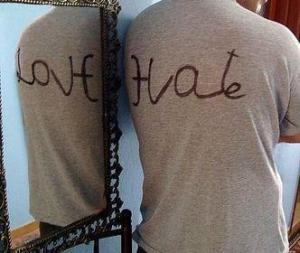
Love-and-Hate-love-26960142-332-280Insofar as I don’t like someone, that person has earned it. That should be the standard, I believe. If I don’t like you it’s not that I’m superior, that the world is stupid, or that they have not proven their worthiness to me. If I don’t like someone, they have earned that dislike through their actions towards me or other people. And my like for them will evolve and grow based on how they may change themselves, and so dislike is not universal nor permanent.  I do not desire the toxicity of misanthropy in my life from here on out.

And if you think I’m stupid or clueless for this approach, I guess I’d be interested in why you think that but I would ask you why you insist upon thinking me stupid? Why must your idea be superior to mine? Why must you be right? What’s so wrong about being incorrect? We all do it, and while the truth matters being wrong is not a moral failing and should not be the standard by which we judge a person’s character.

Dislike of people has to be based on specific actions and attributes of those people.  No person knows enough about most people to be able to justifiably, fairly, or wisely judge the characters of so many people, so easily. To be a misanthrope is to judge from the gate, on first impressions, and to assume the worst in people with little to no knowledge or understanding. We should not universalize specific interactions to people in general, and we should err to the side of allowing people to surprise us, just in case our impressions of them are completely wrong.

So, I choose to not allow the feelings of being better, more knowledgeable, more mature, etc to dominate my character because such things are goals (at best) and not the road beneath me. I am not superior to you, but neither are you superior to me.  I do not hate you (the generic you), either.

To all you misanthropes out there, I urge you to try and find the connection you have with other people, rather than what separates you. I have found that even within people whom have hurt me and people I do not like, I find spaces of similarity, commonality, and potential connection. Because of those similarities, I cannot hate them any more than I can hate myself.

Sartre was wrong about at least one thing: Hell isn’t other people.

Other people are reflections of our own selves, and ultimately misanthropy amounts to simple self-hatred hidden behind an attempt to create separation where uncomfortable similarity persists.


Misanthropy no more! (part 1)


I’ve had people think of me as a misanthrope, sometimes even a cynic. Some people might see me as unfriendly, shy, or aloof. There are reasons for these opinions; I am a little aloof (I chose to study philosophy, after all), I am a little shy, and I can be, in some cases, unfriendly.

Sometimes this unfriendliness is because I’m in a bad mood, and therefore I’m sorry because you probably don’t deserve it. Sometimes it’s because someone’s being an asshole, in which case go fuck yourself. Sometimes it’s because I don’t, in fact, like someone, in which case do better or get used to me being unfriendly. But this dislike is an exception, rather than the rule. And being a person who used to feel the opposite, I have some thoughts about my former misanthropy and why I now choose to not exercise the misanthropic aspects of myself, when I can help it.

Our views about people, whether individually or as sets, tells us a lot about ourselves, especially our ability to perceive and to judge well.  Whether those conclusions about other people are tentative, well-considered, or reactionary are part of the analysis we should consider. Whether they are fundamentally emotional and subsequently rationalized is, perhaps, among the most important questions we can ask of our views of others. How we see people tells us about what aspects of our perception we focus on.

There is a place for things like anger, judgment, and criticism. These are tools which can be used well or poorly, and how we use these tools is the important factor. We cannot simply claim that anger is bad, being judgmental is wrong, or that criticism is not warranted.  We have to understand the context of those things, because it is often our emotional states, focus, and values which determine how we use such tools. The tools have to be wielded. How we wield them, whether towards liking and trusting others or dislike and distrust, will help shape our characters.

But before we get there, I want to take a look at something else, which is related.  I want to look at some simplified categorizations of attributes which contribute to how we form opinions about ourselves and others.  I will call these attribute sets, for the sake of the habit of hitting on tropes, the good, bad, ugly, and even the beautiful.


The “good” ideal

Let’s take a look at a fictional, and yet popular philosophy (which in some cases is actually a real religion in some places), one which started as science fiction. (Not like that ever happens).

This type of philosophy is fairly universal, and has its roots in many real philosophies such as Taoism, Zoroastrianism, and has been utilized in many tropes from various cultural origins such as Westerns, Samurai myths, etc. I am talking, of course, about the Jedi philosophy.

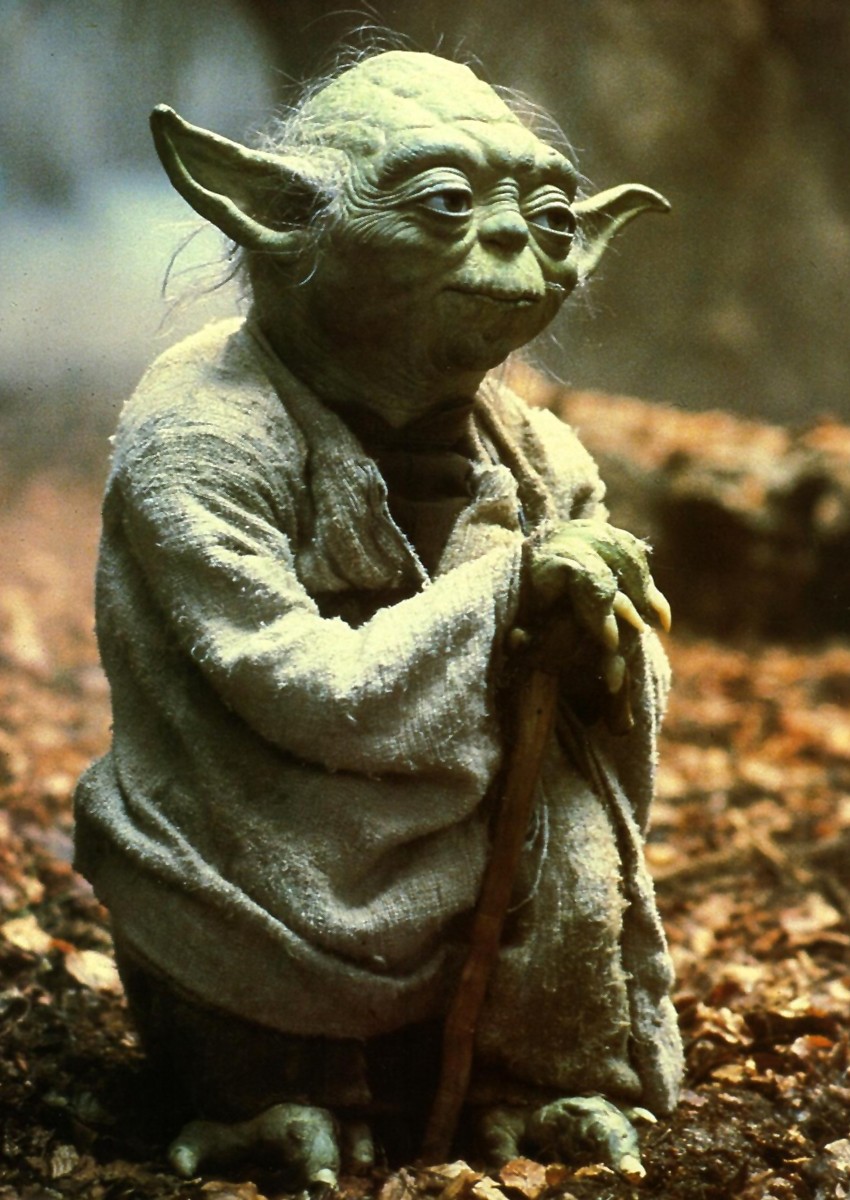
Here is the quintessential Jedi, Yoda, while training Luke Skywalker:

YodaYoda: Yes, run! Yes, a Jedi’s strength flows from the Force. But beware of the dark side. Anger, fear, aggression; the dark side of the Force are they. Easily they flow, quick to join you in a fight. If once you start down the dark path, forever will it dominate your destiny, consume you it will, as it did Obi-Wan’s apprentice.
Luke: Vader… Is the dark side stronger?
Yoda: No, no, no. Quicker, easier, more seductive.
Luke: But how am I to know the good side from the bad?
Yoda: You will know… when you are calm, at peace, passive. A Jedi uses the Force for knowledge and defense, NEVER for attack.

As we see in the saga that is Star Wars (a flawed execution, so far anyway, of a wonderful universe.  For many reasons), this view is positioned against the Sith, who use the “dark side” of the force which includes manipulation, lies, and the raw power of the dark side of the force to achieve various kinds of goals with little to no appeals to compassion or care of any kind.

The Jedi emphasize an almost ascetic, Buddhist-like, approach to life. No attachment, passivity, peace, and knowledge. This is the worldview of many people who might be classified as scholars, poets, and even religious mystics. It is one that focuses around compassion, empathy, and patience.

Nietzsche might have some comments about this, calling it a morality of “ressentiment” perhaps (cf. Beyond Good and Evil and The Geneology of Morals). And some of those comments might be valuable and true, but that moves too far from the scope here, so I’ll leave that aside for now (but seriously, read more Nietzsche!).

With this perspective on how to live, we are left with patience, kindness, compassion and empathy in how we view people. And this has value because, at bottom, we all have flaws, struggles we’ve overcome (and more we have to work on!), and so the flaws we might see in others are a reflection of ourselves. This view encourages us to reserve judgment, not because judgment is wrong or undeserved, but because pulling out the judgment tool too quickly gets in the way of our ability to sympathize, understand, and see those other people as mirrors for ourselves. By training ourselves to put away that tool, especially early on, we train ourselves to be patient and to allow our opinion to grow with experience, not quickly and with the bias which attaches itself to critical tools.

This approach to ourselves and to others will allow our patience and judgment to form over time, giving us the perspective to make better judgments, so long as we have the courage to actually dig in and use our critical and judgmental faculties in our patience, from time to time. It allows us to look more deeply at ourselves, others, and the similarities which overlaps ourselves.

The problem, however, is when we see this ideal as the only means to health, truth, or behavior. The problem is when passivity leads to complacency, being manipulated, or allowing the powerful to remain too powerful over us. Sometimes, we need to be more than merely reactive to harm. The problem is also when we allow ourselves to accept a self-deprecating view of ourselves as incapable, inferior, or unworthy.


The “bad” ideal

Ugh, people are so fucking frustrating sometimes! How can they be so damned stupid? Why can’t they just do things the right way? Why do I always have to explain this to them, again and again? Why can’t they just learn how to think? Why can’t they just grow up?

That’s it, I’m done with them. I hate people. A few, of course, are exceptions, but people are just stupid, the world is stupid, and I’m superior to them.

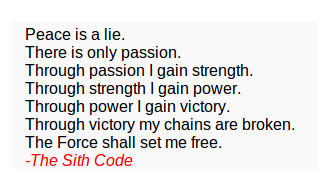
SithIf you’ve known me for a long time, you very well may have heard me say things like the above. In times of frustration, I may still think such things. Because some people are frustrating. Some people do actually seem to be clueless, privileged, and fractally wrong much of the time. And it’s frustrating to be around, sometimes.

Such ideas don’t spawn out of our minds without a source. They come from the same places as pride, self-worth, and self-confidence. Such things are valuable, and have a place in a healthy person. But when these attributes are not tempered (Aristotle, anyone?), they can become  alluring, stroke our need for validation, and even become addictive.

This set of feelings is just as human as the “good” ideal above, and is not, in fact, “evil” or even necessarily “bad.” (Nietzsche fans are possibly gripping tightly at the potential conflationary association of the two…). They are, in many respects, the yin to the “good” ideals’ yang; as part of a balancing act that human emotions play on our sense of self worth, perception, and self-narrative. Humility and confidence, if we want to be simplistic about it. Both are part of the human experience and valuable in themselves, so long as they don’t become self-deprecation or arrogance.

Unfortunately for us, not all the "bad" are as easily identifiable and Darth Maul
Unfortunately for us, not all the “bad” are as easily identifiable and Darth Maul

A feeling of inherent superiority can come from this path; not as a passing feeling, but as an attribute and part of our vision of our very self. It becomes part of the narrative of our essence, rather than a description of some particular success or achievement. Winning the debate, the game, or the promotion are instances of success, but it does not necessarily mean that we are superior, essentially. Essential superiority is an illusion, one which can only separate us.  Perhaps a misanthrope seeks this separation, but I find this attitude toxic and unhealthy. I now this from experience of having felt this way, previously, and having lived among similarly toxic narratives.

In dealing with the world around us, sometimes we can only take so much. People hurt us, frustrate us, or just bore us, sometimes. There are times when leadership, instruction, or correction are necessary. There are also times when passion and power are needed, so long as they are not abused or excused when they over-reach.

The problem is when we universalize this feeling of being better, not merely at this thing or right now but in general. When we start to feel like we are better than most people, whether morally or in terms of wisdom or maturity, we can sometimes achieve a perception of superiority over people which is an illusion. This power creates a sense of being entitled to make decisions for people and even to disregard their feelings, thoughts, or experience. In time, if maintained long enough, it turns into a kind of arrogance, wherein the thoughts and feeling that we have are inherently better, because other people are inferior.

And why, if we are superior, would we like inferior people? What’s to like about a person who has not done the work (or might even be incapable) to become superior as well? Perhaps they are not even really people at all, or perhaps only trivially so. Perhaps they are merely plebs, without any real content or importance except as pawns, NPCs, or tool in our own personal quests (in fact, RPG’s tend to poke at the trope of the superior hero, relative to the mere characters around them who you can overpower easily). Misanthropy is when we tip the scales a little towards seeing ourselves as an exception to the set of people in the world; we don’t count the same way as they do because we’re the special hero, an exception to the common rules.

It is a tendency which can lead us to lead groups of people towards many things, become leaders, and become respected. But at the same time, contained within this tendency is one which may make us feel qualitatively different from other people, and to look down upon them, and then we might begin to manipulate people, use them, and to abuse them.

For such superior people, self-knowledge and the perspective which comes from patience, empathy, and compassion is a threat to the narrative of superiority. When we allow ourselves down this path, we become critical of people in general, disliking all the flaws that they exhibit, and become too distracted by this perceived superiority to see any in ourselves to see anything else, most of the time.

And, of course, we rationalize this. We see the people we take advantage of as weak, stupid, or in some other way actually inferior.  We create an entire rationalized worldview around the fact that we become so short-sighted, so selfish, and in some cases (though not all) so scared that we end up othering everyone else into mere objects, rather than people.

With exceptions, of course. We will find others who feel similarly, and create societies of superior people, tittering about the poor, the stupid, or the immature all around. (Ayn Rand, anyone?).

We start to celebrate our unique superiority, laughing at all the incapable people. Atheists often do it to theists (and the other way around), some people who view themselves as poly-capable do it to people who, they think, are doing polyamory wrong (or just badly), and humans do it to humans.

And isn’t that the point? Humans do it to humans! By some vain sliver of reality we humans are capable of carving out a whole pie of superiority, turning some small advantage in this space into the whole of advantages.  We turn small bits of being “better” over there to just being better.

And these, the “good” and the “bad,” are the scales upon which we dance. We are capable of each tune, to our varying degrees, and I think most of us have experienced some amount of both sides of this scale. I certainly know the bitter, lonely lows of self-deprecation as well as the seeming highs of feeling powerful, capable, and superior. Whether it’s brain chemistry, treatment by others, or whatever cause, I have known both.

So now we venture into the realm of the attributes of humankind which pull us towards either direction. There is, in short, ugliness and beauty within all of us (I hope, anyway). These attributes will tug us towards the excesses of confidence or humility, and are the true sources of power within us. Let’s move forward, then.


On to Part 2, where I will discuss the ugly, the beautiful and sum up my feelings about misanthropy.


Speaking of tribalism…


Ingress_logo_512pxSo, due to the pecking and poking of some people I know, I downloaded Ingress yesterday. I’ve known about the game for a little while, but didn’t get it immediately.  

If you don’t know what Ingress is, look it up. It’s a game played with GPS smartphones, and is based upon a science-fictiony story-line based upon some “transdimensional intelligence that may be infiltrating our dimension through XM Portals.”

Aside from all the background story, it’s a game about claiming territory by use of phones in order to maintain control of areas and, metaphorically, people. But instead of playing sitting at a computer, you have to physically go to locations to play.

So, since I love walking through the city anyway, it seems like something which might be fun.

Fictions, Factions, and Fractures

yin-yang-ingressThe first question I asked myself, is what side would I take?

The Enlightenment are defined thus:

Faction attempting to help the Shapers infiltrate Earth.  Followers believe that the Shapers bring a powerful Enlightenment that will lead to an evolution of humankind.

And the Resistance is defined this way:

Faction defending the Earth from the Shaper ingression. They are seen by some as being fearful of change or progress, but the Resistance is firm in its belief that it is protecting humanity.

I admit that I felt some affinity for the implications of both sides of this game, but as someone pointed out to me last night, my love of The Dark Tower might make me lean towards the Resistance.  Anyone who knows the series will know why, but briefly: powers within that fictional universe seem to be using the powers of the Tower in malicious ways, while claiming to be bringing order and peace. Roland and his ka-tet are the Resistance against these attempts. I, obviously, side with Roland Deschain, of the line of Eld.

But at the same time, I have previously considered myself more of a Vorlon than a Shadow, even if ultimately I side with John Sheridan.  And this got me thinking about the forces of chaos and order, and I re-discovered, in a new way, something about myself.

Order out of Chaos

Having had so many tumultuous emotions most of my life, I have craved order, rationality, and structure. For so many years, I sought to bring together the forces, impulses, etc within me into a structured, controlled, and rational whole. 

But you can’t structure chaos, at least not from the beginning. Chaos, when unleashed, is too messy, too complicated, too undefined to be stacked and sorted, and so it’s often best to let it make a little bit of a mess. And then it struck me; all those years of trying to put everything away in their correct places have built up a very strong and useful strength of creating order out of chaos, so why was I afraid of the chaos?

Why not allow my emotions to flow freely? Why not allow the creativity to just flow, unafraid of whether it was good, worthy, or structured correctly? I didn’t need to edit or govern my emotions and creativity as it came out, because I’m really good at doing that after the fact.

My emotions are not dangerous, in themselves, but when they are restricted, governed, and held back they become a problem. My creativity is not bad, but when it’s restrained and given too intentional a shape, it’s not as raw and vulnerable.

In short, I need to trust myself, because what is inside me is not a monster, not stupid, and not unworthy. What is inside me is interesting, caring, and sometimes beautiful. All these years of governing what fell through the portals of myself has been a kind of voluntary censorship. It will take time to retrain my instincts to do less of this restraining, governing, and controlling, but I think it’s a worthy goal.

Oh, right, Ingress….

I went with the Resistance. Not because I necessarily believe that the “Shapers” are trying to take over and enslave us. This is not a conservative reaction of fear against what might be an actual change and enlightenment. I chose resistance because all of my life I would have made the other choice, and this time I don’t want control to win. 

I want a little chaos. I want a little Shadow. I want a little Resistance of the order I’ve enforced on myself for so many years, because I know that if that control is worth utilizing, I already have that muscle toned. I want to strengthen my muscles of resisting that order.

Also, which side you choose doesn’t really matter. The game cares little for the science fiction behind it.

Skepticism: Orthodoxy v. Orthopraxy


One of the criticisms which has appeared over the last several years, in response to the rise of the atheist/skeptic community, is that we atheists/skeptics are just like those religious people (as if that were a criticism worth taking seriously). But even while that criticism is silly, we can still step back and take a look at commonalities of human behavior, including how these behaviors inform and compel behavior of people in both religious and non-religious communities.

In the skeptical community in particular, emphasis is often on methodology.  What tools are we using to figure things out? How much emphasis do we put on empiricism? How about rationalism? Most skeptics utilize, primarily, the scientific method which utilizes logic, empiricism, and applies a probabilistic approach to truth.

But these tools are used with the intent of discovering what is true (or at least what is likely to be true). And so once we have those answers, how certain should we be? Should we be willing, once a conclusion seems to be very certainly true, to defend it as the right answer?

This tension, between the best methodology and the best answers, is reminiscent of the tension throughout much of religious and theological history between orthopraxy (correct action/practice) and orthodoxy (correct belief/doctrine). If you look at the history of religion, this tension plays out over and over again and can teach us quite a lot about human behavior.

My general view of religion is that it follows the rules of how culture operates.  If you want to understand religious behavior, understand cultural, social, and idividual behavior. As a result of this view, I could also say that if we were to track some of the arguments between skeptics/atheists about whether it is the conclusions (or definitions) which matter more than the methodologies we use, you might see the similarities start to emerge from the mess.

The Best of Religion and Skepticism

If we were to be forgiving of the many atrocities (both of practice and of beliefs) of religion, we could take a look at the many mystical, introspective, and social boons which religion provides to so many people. At its best, religion provides a perspective of ourselves, our communities, and the world itself which is both beautiful and awe-inspiring. So long as we can avoid the metaphysical bird-catchers* that these perspectives are often glued to, we can walk into and within religion without detriment to ourselves or the world around us.

Of course, we could have those same perspectives and experiences without religion. Science and logic do not strip away such things, although they may often cause our minds to reject them for the sake of what appears to be a cleaner and more precise description of the world (and it often is such, but perhaps not always).

And whether or not we step away from religion, insofar as we are capable of practicing good skepticism, we will be armed with a methodology which can aid us in a plethora of ways and provide us with yet more peep-holes into reality, including the murkiest part of reality; ourselves.

Skepticism gives us a sieve through which falls bias, delusion, and deception. What remains is a jumble of truths, in need of structure and meaning, which we can push and pull with our fingers like children at play with rocks, toys, or sand. 

What may become a problem is what happens when we start to build castles out of that sand. For, in a sense, we are prone to see what we make as the truth. Objects made of truth do not necessarily make larger truths, for truth is also contained within structure, and not merely components.

Getting caught up in constructions

We create narratives, structures, and often monuments of truth. Now, I personally believe that a real world exists, and in many cases our descriptions of this reality are reliable and ‘true’, if by ‘true’ we mean that it coheres with our experience and stand up to scrutiny. Some Platonic TRUTH simply has no meaning, at least not one that we, sentient and subjective beings taht we are, can participate in. 

So I believe that it’s valid to say that we know something, insofar as that thing has survived skeptical analysis, especially if it has done so repeatedly and without significant contradiction. So we can say that our understanding of how gravity works (insofar as we understand how gravity works) is true because the description keeps predicting and explaining results. Similarly, we can say that evolution is a fact which is explained by the theory of natural selection (among the other parts of biological theory related to evolution) because the theory keeps being supported by evidence.

These facts about the world are real things which we can point to and demonstrate why we accept them as true, but this demonstration is dependent upon the methodology. Methodology is the thing that determines the structure of truths, after all. Again, trye structure is as important as true components. The “correct” answers which science provides for us would be meaningless without the methodology by which we discover and construct those answers.

If we are to have a new set of facts replace such an answer, it would be the methodology which would bring it to us.

Deconstructing our sand castles

Let’s go back to religion. I’m going to unequivocally say that the largest failure of religion, in general, is the set of facts it proposes as the truth. This is for two reasons.

The first reason is that when science and religion butt heads, science always either agrees or it wins. In the places where science and religion agree, all religion has done is either used, somewhere in the past, some skeptical methodology to find that answer or it simply got lucky. It is the accidental nature which leads us to the second reason.

The second reason that religion fails in the face of science is that when it comes to belief, the very methodology of religion is backwards. Where religion finds answers that work, it can only do so by borrowing from science or by getting lucky. Religion does not try to prove itself wrong, it looks for support for what it already believes or merely asserts without an attempt to provide evidence, and then calls it “faith.”

In the skeptical world, the tension between method and answer works differently than it does in religion; with religion, the tension between orthopraxy and orthodoxy ultimately revert back to the right answers; to orthodoxy. Even in religious traditions which tend to lean heavier on practice over doctrine, it is the doctrines, or at least metaphysical beliefs, which anchor it as a religion rather than a philosophy. 

Even with religious interpretations which focus on moral action, personal growth, etc, it is the beliefs of that group which act like a gravitational center. Otherwise, you would not have a Buddhist or a Muslim, you’d just have people who value certain ways to live, surrounded by Buddhist or Islamic scenery. The more individuals in religious communities move away from doctrine as their focus, the more they move away from religion and towards secular philosophies.

We humans must be more careful with how closely we attach ourselves to conclusions.  Conclusions create a center of gravity, which does help create a community, but it also can be the parent of tribalism, groupthink, and ultimately the narratives which become doctrine.

Within the skeptic/atheist world, certain centers of conclusion-gravity exist as well, and they define the borders between factions, not unlike what has happened with religion except that so far those lines have not become full walls which define different sects.

Not that some of the distinctions are not important; and not that I don’t think that some factions in the rift are more right than others, but I worry that the focus will become, just like with religion, the conclusions themselves, rather than the method by which they came to those conclusions. Tribalism breeds orthodoxy and diminishes focus on methodology–on orthopraxy.

Over there on this side, they all know that this thing is true that this person over there is like that and so they all dislike that person. This person becomes not part of the other group, and any contribution from them is suspect to them. Next thing you know, all the friends of this person have created their own narrative and then we have factions, tribes, and points of conflict. They have banners to put on flags, for when they arrive at the field of battle. They have identifiers to make sure they don’t kill their own.

You know, “friendly fire.”

And rather than focus on how we got to that battle field, why they chose that banner, or even what the other people with another banner think, the soldiers focus on the narratives, gripes, and injuries that their friends have suffered. And thus skeptics, atheists, and other people who think of themselves as intelligent fall prey to the oldest of humanities weaknesses; rightness.

Righteousness.

What orthodoxy do you cling to? How do you know that thing and what are you going to do, how are your going to live, and what right actions are you going to practice to either confirm or deny that right doctrine. How are you going to justify that righteousness of yours?

Is skepticism or atheism like religion? No

Are skeptics and atheists like religious people? Yes

Because we’re all people.

Let’s focus on why we disagree, more than what we disagree about. Once we have a better handle on why we disagree, the disagreements will still be there, probably. In the end, we may still hate each other, but at least we didn’t merely bow to a flag that may or may not even be true.

Good luck out there.

*”To confront man henceforth with man in the way in which, hardened by the discipline of science, man today confronts the rest of nature, with dauntless Oedipus eyes and stopped-up Odysseus ears, deaf to the siren songs of old metaphysical bird-catchers who have all too long been piping to him “you are more! you are higher! you are of a different origin!”—that may be a strange and extravagant task but it is a task” (Beyond Good and Evil,§230)

Leveling Up


super-mario-brosBeing a fan of RPGs (Role Playing Games, for all you n00bs), the concept of leveling up is very familiar to me. For the uninitiated, the basic idea is that when solving puzzles, slaying enemies, or using skills in the world (of the game, of course), your character  eventually gains enough experience to go from one level to another. With the new level, comes new powers, attributes, and in many cases the ability to access new things.

In real life, we gain new experiences all the time. The quality of the lessons of those experiences depends, greatly, on how difficult the task was. Are you getting really good at remembering to put the trash on the curb on trash day? Are you learning the streets of your new neighborhood? Did that argument with your friend, partner, or family member teach you something about yourself or even them? Did surviving some trauma make you more resilient?

Obviously, in real life there are not quantifiable levels. I don’t gain more “hit points” as I get stronger, but I may have a noticeably improved ability to withstand criticism, manage difficult feelings, or even to allow myself to be increasingly vulnerable (thanks to a friend for recommending this book to me, it has been a good read so far). And after a particularly difficult ordeal, we may feel such a significant difference that we feel like we are, in some ways, new people. The difference after some growth can feel more than merely quantitative, and in some cases it can have a qualitative feeling.  The best analogy I can think of is that it’s like leveling up.

Recently in my real life, I feel like I’ve leveled up.


Different directions

Good/Evil character images from Fable

But here’s the thing. Experience and growth can go in many different directions. We have many cultural tropes which I could pull from, to make my meaning clearer. Perhaps the most recognizable would be the distinction between Jedi and Sith, as in the Star Wars universe. I could also refer to the game Fable, which has you not only level up, but your actions move you along a continuum from more “good” to “evil.” In this game, if you steal something, kill someone innocent, etc then you lose points, and slide a little (or a lot) towards the “evil” side of the scale. The decisions you make in the story line determine what kind of character you are in the long run (I usually lean strongly towards the good side, in games like this).

Either way, you have the opportunity to become more powerful, effective, and you can win the game. You can win the game as an evil character.


(But at what cost! What about the children!!!)

I find this analogy simplistic, compared to real life, but as an image to use it is at least somewhat helpful so I’ll stick with it. In real life, the decisions we make do determine our character. But unlike the game Fable, turning evil will not make you look demonic nor will making good choices make you look more like a wise sage or saint.  As with a saying which we get from Christian mythology (which Fable is obviously dependent upon), the devil may often appear to you in a pleasing shape, but it’s also true that the good may also not be easily recognizable. This is because in real life the experience of leveling up after an ordeal may indeed make you more powerful, but it will not necessarily make you better or healthier.

Power, in some sense, is neutral. Leveling up  does not necessarily make us better people. If the attributes you work on making stronger are attributes which make you less compassionate, more defensive, etc, then you may be stronger, more capable of success in many situations, but perhaps your increased power will be more of a detriment, if not for yourself than maybe for other people. Many a sociopath has become very successful and powerful, after all. Also, many a sociopath can blend in to the crowd, getting away with all sorts of shenanigans unseen.


What attributes do you upgrade when you level up?

wpid-skyrim-skills-to-level-100-quickly1I’m a big fan of The Elder Scrolls games, especially Skyrim. I started playing again recently (although I simply can’t play more than an hour or so these days without wanting to rejoin reality, which I think is a good thing).  In Skyrim, when you level up, you get to add points to one of many possible attributes, whether it is one-handed, speech, or smithing. What attributes you choose to upgrade will have implications for how successful you’ll be in making various decisions throughout the game.

So, if we were to try and stretch this analogy to real life, we could talk about what personal attributes we want to focus on improving, as we find ways to take lessons from events in our lives. Do we want to build a wall around ourselves, like armor? Do we want to improve our ability to communicate, like increasing persuasion? Do we want to add a point to archery, so we can do better damage to our opponents from a distance? (OK, the confusion between analogy and reality here makes me sound like I’m doing target practice in my basement, or something…). Do we want to improve our critical thinking skills, in order to tell the difference between truth and illusion? (This skeptic always says yes to this last one, but that attribute does not really come up in a world of magic, dragons, and gods like Skyrim, or Tamriel in general).

In any case, in real life it is the actual practice of said attributes which leads to the leveling up, I think, than the other way around. My ability to communicate my emotional needs better is a means to my becoming stronger. My ability to look self-critically at my mistakes and to work to learn about myself in order to not make those mistakes again have made me stronger. My ability to resist (for the most part) the desire to simply demonize and blame other people for succumbing to flaws which many of us share is a result of that increased strength.

But I could have gone down a different path. I could have taken the lesson that I should just keep more people at a distance, proclaim my superiority, and blamed everyone else while deflecting all accusations coming my way. I could have strengthened the all-too-human impulse to rationalize and defensively push away all culpability, and attack relentlessly anyone who would threaten the illusory shell that this move requires.  I could have made attributes within me stronger which would indeed help me in the world, but they would not help me be a better person. Because sometimes protecting oneself is not one of strength. Sometimes armor makes us weaker. Sometimes maintaining the illusion of strength actually hurts us.

Sometimes, as I have learned over the years, exposing all of our vulnerabilities and standing naked to the world, with all of our scars and imperfections exposed, is the only way to become strong.

vulnerability

And you can’t be vulnerable when you spend so much effort on creating armor and weapons alone. In real life, strength comes from investing in inner strength. The more you hide, defend, and attack, the more you can be hurt. Over-committing to an attack puts you off balance, exposes the holes in your armor, and all that hiding can have only left you atrophied and weak under that armor.

I am stronger, today, than I was a year ago. I am better, today, than I was a year ago. But not all people are better then they were, having traversed the ordeals of time and space. Simply having been through something does not make them better, even if it does make them stronger. A strong sword arm, after all, can only hurt people.

A person can indeed hurt me if I willingly expose my vulnerabilities, but the fact that someone might actually try to do so is what causes me pain. It’s when we forget that we are also scared, vulnerable, and imperfect when we feel justified in attacking others or hurting them even if we don’t want to do so. I’d do better to resist such sets of behavior myself (so would we all), but I am less likely to stop calling out behavior when it is genuinely hurtful to me or people close to me. If anyone wants me, or anyone else, to stop talking about the pain which they have caused other people, then take responsibility for it, do the work to actually grow, and make yourself less likely to do it again. If not, we will have every right to keep calling those people on their shit and being critical of their behavior.

Same goes for me. If I’m not continuing to do the work I need to do, then I welcome compassionate criticism.  I will hopefully be stronger in another year, and I will try to put my efforts into strengthening the attributes which will make me more compassionate, less afraid, and more vulnerable.   I hope, deeply, that we all do the same to the best of our ability.